On This Page
Description
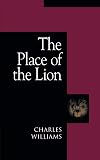
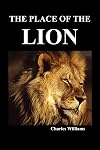
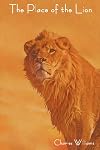
One man must save the human race from total destruction when a small British village is invaded by a terrifying host of archetypal creatures released from the spiritual world In the small English town of Smetham on the outskirts of London, a wall separating two worlds has broken down. The meddling and meditations of a local mage, Mr. Berringer, has caused a rift in the barrier between the corporeal and the spiritual, and now all hell has broken loose. Strange creatures are descending on show more Smethem-terrifying supernatural archetypes wreaking wholesale havoc, destruction, and death. Some residents, like the evil, power-hungry Mr. Foster, welcome the horrific onslaught. Others, like the cool and intellectual Damaris, refuse to accept what her eyes and heart tell her until it is far too late. Only a student named Anthony, emboldened by his unwavering love for Damaris, has the courage to face the horror head on. But if he alone cannot somehow restore balance to the worlds, all of humankind will surely perish in the impending apocalypse. An extraordinary metaphysical fantasy firmly based in Platonic ideals, The Place of the Lion is a masterful blending of action and thought by arguably the most provocative of the University of Oxford's renowned Inklings-the society of writers in the 1930s that included such notables as C. S. Lewis, J. R. R. Tolkien, and Owen Barfield. With unparalleled imagination, literary skill, and intelligence, the remarkable Charles Williams has created a truly unique thriller, a tour de force of the fantastic that masterfully engages the mind, heart, and spirit. show lessTags
Recommendations




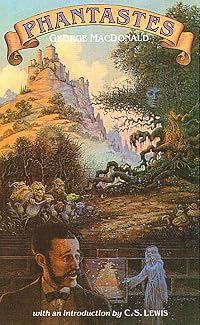

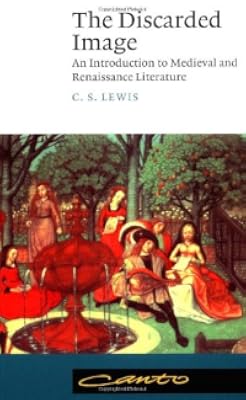


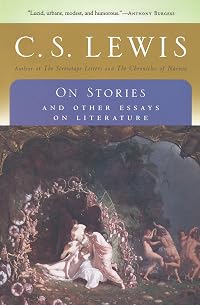

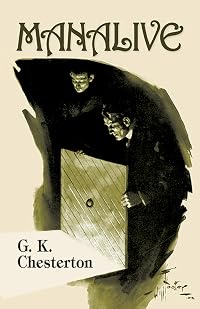





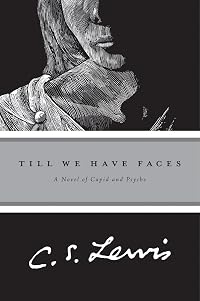

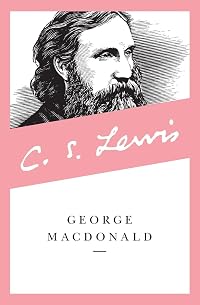

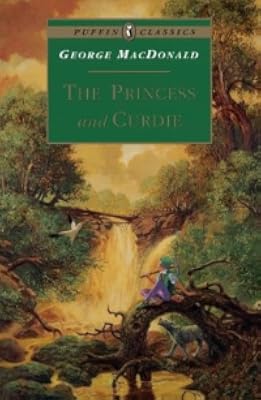
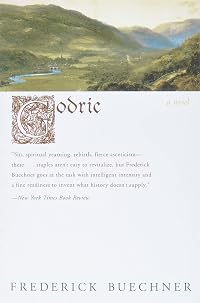







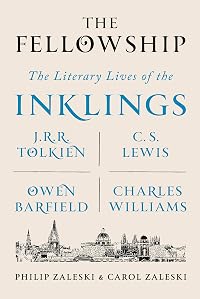


Member Recommendations

Member Reviews
What can I say about this deeply odd book?
I'd read a couple of Charles Williams' novels along time ago. They were out of print and it was fun tracking them down, before the internet destroyed the fun of hunting for books in ramshackle stores.
The fantastical story of The Place of the Lion moves along at a fair pace. Some of the strange phenomena are rather beautifully described. Beyond that? Anomalies and contradictions... Unlike his drinking partners, Tolkien and Lewis, Williams makes explicit his Christian message in his battle between Good and Evil. This stretches credence from time to time as his rather stuffy and academic characters are turned into super-heroes. It's like imagining your local vicar transformed into the Incredible show more Hulk. It's not really clear whether the appalling class prejudice is Williams' own or supposed to be the folly of his characters. Much of the dialogue comes straight out of a Biggles adventure and the obscurantism of the vocabulary deployed suggests the petty elitism of Will Self.
What can I say, then? You won't read anything else like it, that's for sure... show less
I'd read a couple of Charles Williams' novels along time ago. They were out of print and it was fun tracking them down, before the internet destroyed the fun of hunting for books in ramshackle stores.
The fantastical story of The Place of the Lion moves along at a fair pace. Some of the strange phenomena are rather beautifully described. Beyond that? Anomalies and contradictions... Unlike his drinking partners, Tolkien and Lewis, Williams makes explicit his Christian message in his battle between Good and Evil. This stretches credence from time to time as his rather stuffy and academic characters are turned into super-heroes. It's like imagining your local vicar transformed into the Incredible show more Hulk. It's not really clear whether the appalling class prejudice is Williams' own or supposed to be the folly of his characters. Much of the dialogue comes straight out of a Biggles adventure and the obscurantism of the vocabulary deployed suggests the petty elitism of Will Self.
What can I say, then? You won't read anything else like it, that's for sure... show less
The Place of the Lion is a unique mixture of the gnostic and the gothic. In this twilit fantasy where pseudo-Dionysian theology meets Lovecraftian horror, the barrier between the ephemeral and the empyrean is ruptured and a small town in England is savagely menaced by Platonic Ideals, or something like them. Will the reality we know be utterly destroyed by the Real? Highly recommended, with the caveat that you have to know your New Testament and early Christian Neoplatonism and have a little Latin to get the most out of it.
Once again, Mr. Williams fantasizes the eruption of eschatological events into the ordinary life of the provincial British bourgeoisie. The result is something like the literary offspring of the mating of P.G. Wodehouse with the Book of Revelations. One thing that is rarely discussed, though, is the strange brand of comedy that ensues. For example, picture a young woman sitting at her breakfast table and pondering the remarkable events of the previous evening: A giant pterodactyl, which seems to incarnate the essence of her own self-centeredness and bears something of a resemblance to Peter Abelard, has attempted to assault her by smashing through her bedroom window, ultimately destroying the upper stories of her house while virtually show more obliterating her father in the process. In the nick of time, she is saved from complete physical and spiritual annihilation by the arrival of her boyfriend riding a unicorn and with an enormous eagle resting on his shoulder. Little wonder she seems distracted as she butters her toast!
I agree with other reviewers who note that a passing familiarity with Plato's Ideals is really all the philosophical preparation a reader needs to jump into this novel. However, a little extra reading regarding Abelard's take on "universals" might add a little extra spice - since Abelard is the subject of the heroine's (the pterodactyl girl) doctoral dissertation. I'd suggest the article "The Medieval Problem of Universals" in the online Stanford Encyclopedia of Philosophy. show less
I agree with other reviewers who note that a passing familiarity with Plato's Ideals is really all the philosophical preparation a reader needs to jump into this novel. However, a little extra reading regarding Abelard's take on "universals" might add a little extra spice - since Abelard is the subject of the heroine's (the pterodactyl girl) doctoral dissertation. I'd suggest the article "The Medieval Problem of Universals" in the online Stanford Encyclopedia of Philosophy. show less
This book is certainly the least accessible of Charles Williams' novels I've read so far. Principal characters discuss matters like Neoplatonism and angelology in ways that I understood, but would likely mystify the general reader. There is also a little plot sloppiness: for example, trains become inoperable, and then a character takes a train on the allegedly impassable line, with no explanation of how it was restored. The conclusion lacks plot closure in some important respects, with the cause of the book's central crisis never really explained, despite the exposition of how it becomes mystically resolved.
The central concern of The Place of the Lion is a class of theriomorphic "Celestials" that answer to the denotations of Christian show more archangels, Platonic ideas, Gnostic archons, and so forth. These are somehow unleashed on the countryside by a minor theosophical organizer named Berringer, and they proceed to sow terror and ecstasy among the locals. The first two Celestials to emerge are the Lion and the Serpent, as manifestations of archetypal Strength and Subtlety.
Although the characters overtly reference Plato and Abelard, the theology central to the book's plot is very much that of Pseudo-Dionysius, with the protagonist Anthony Durrant prosecuting cataphatic mysticism, while his complementary character Richardson is engaged in a severely apophatic aspiration. Gnostic elements are also conspicuous; the philosophy graduate student Damaris Tighe takes the role of the inferior Sophia in a redemptive process that also makes Anthony Durrant into a possessor of the Holy Gnosis.
A friend recently pointed out the class-constrained character of Williams' diction (which he finds off-putting), and I did notice that this novel was not only fully as class-conscious as the other Williams I've read, but that the omniscient third-person narrator seems to assume and validate class prejudices more often than overturn them.
On the whole, I enjoyed this book, but I found it to be the weakest of the author's books I have yet read. show less
The central concern of The Place of the Lion is a class of theriomorphic "Celestials" that answer to the denotations of Christian show more archangels, Platonic ideas, Gnostic archons, and so forth. These are somehow unleashed on the countryside by a minor theosophical organizer named Berringer, and they proceed to sow terror and ecstasy among the locals. The first two Celestials to emerge are the Lion and the Serpent, as manifestations of archetypal Strength and Subtlety.
Although the characters overtly reference Plato and Abelard, the theology central to the book's plot is very much that of Pseudo-Dionysius, with the protagonist Anthony Durrant prosecuting cataphatic mysticism, while his complementary character Richardson is engaged in a severely apophatic aspiration. Gnostic elements are also conspicuous; the philosophy graduate student Damaris Tighe takes the role of the inferior Sophia in a redemptive process that also makes Anthony Durrant into a possessor of the Holy Gnosis.
A friend recently pointed out the class-constrained character of Williams' diction (which he finds off-putting), and I did notice that this novel was not only fully as class-conscious as the other Williams I've read, but that the omniscient third-person narrator seems to assume and validate class prejudices more often than overturn them.
On the whole, I enjoyed this book, but I found it to be the weakest of the author's books I have yet read. show less
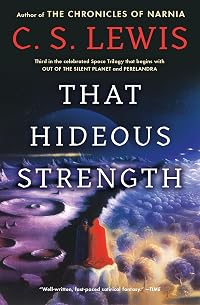
A rather enigmatic novel steeped in esoteric mythology. To get the most out of this you will need to be at least an ameteur medievalist with the ability to suspend reason a bit. Charles Williams was one of the Inklings, an informal literary discussion group associated with the University of Oxford, England, for nearly two decades between the early 1930s and late 1949. Shows some affinity to Lewis' "That Hideous Strength," but is somewhat less accessible.
The Place of the Lion tells the story of an angelic invasion of an English town. If it's not stopped, the entire world will be destroyed by their terrifying power.
It's an idea that's full of wonderful possibilities, but it moved like molasses. In order to understand anything, you have to be familiar with Neoplatonism. Even the romantic subplot was carried out via the hero and heroine discussing Neoplatonistic thought. It's as bad as it sounds.
The much-less-interesting-than-actual-Plato philosophical skim milk is mixed into every single action scene. Every. Single. Action. Scene. They are murky at best, and usually opaque.
It has some good moments, and some vivid scenes, and it's not altogether terrible. You won't regret reading it, but show more there are much better books to spend your time with. show less
It's an idea that's full of wonderful possibilities, but it moved like molasses. In order to understand anything, you have to be familiar with Neoplatonism. Even the romantic subplot was carried out via the hero and heroine discussing Neoplatonistic thought. It's as bad as it sounds.
The much-less-interesting-than-actual-Plato philosophical skim milk is mixed into every single action scene. Every. Single. Action. Scene. They are murky at best, and usually opaque.
It has some good moments, and some vivid scenes, and it's not altogether terrible. You won't regret reading it, but show more there are much better books to spend your time with. show less
I think of this and Shadows of Ecstasy as the "milder' Williams novels. The others tend to be too grim for my taste. I think this may have been the first one I read. It consists of manifestations of Platonic ideal qualities, who (or which) are not as overtly good or evil as the great powers in the some of the other novels, though in a few cases their manifestations do destroy humans who happen to be affected by them,.
Members
- Recently Added By
Talk Discussions
Past Discussions
The Place of the Lion - Charles Williams Group Read in Inklings (May 2021)
Author Information

74+ Works 6,938 Members
Charles Williams (1886-1945) joined, in 1908, the staff of the Oxford University Press, the publishing house in which he worked for the rest of his life. Throughout these years, poetry, novels, plays, biographies, history, literary criticism, and theology poured from his pen. At the beginning of the Second World War the publishing house was show more evacuated to Oxford where, in addition to his own writing and his editorial work for the Press, he taught in the University. show less
Series

Belongs to Publisher Series
Work Relationships
Is contained in
Charles Williams Omnibus: War in Heaven / Many Dimensions / The Place of the Lion / Shadows of Ecstasy / The Greater Trumps / Descent into Hell / All Hallows' Eve / Et in Sempiternum Pereant by Charles Williams
Война в небесах. Ч. 1 [Война в небесах. Иные миры]. Ч. 2 [Место льва. Старшие Арканы. Тени восторга]. Ч. 3 [Сошествие в Ад. Канун дня всех святых. Стихи] by Charles Williams
Common Knowledge
- Original publication date
- 1931
- First words
- From the top of the bank, behind a sparse hedge of thorn, the lioness stared at the Herfordshire road.
- Last words
- (Click to show. Warning: May contain spoilers.)In a minute he looked at her. "I say, you're not cold, are you?" he asked. "I wish you'd got a coat or something." "It's not very far," she answered. "No, I'm not cold."
Classifications
Statistics
- Members
- 757
- Popularity
- 37,321
- Reviews
- 11
- Rating
- (3.87)
- Languages
- English, German, Italian, Turkish
- Media
- Paper, Audiobook, Ebook
- ISBNs
- 32
- ASINs
- 16