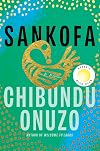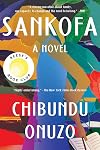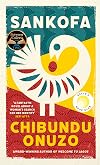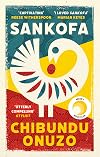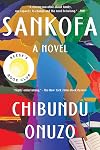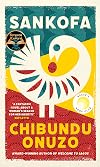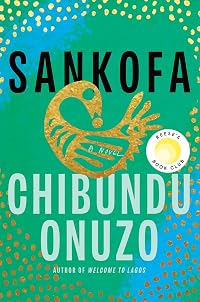
Sankofa
by Chibundu Onuzo
On This Page
Description
Fiction. Literature. The exhilarating story of a mixed-race woman who goes in search of the African father she never knew. After years of being a daughter, a wife, and a mother, Anna finally has the time to wonder who she really is. But the only person who can tell her-her mother, the only parent who raised her-is dead. Searching through her mother's belongings one day, Anna uncovers a few clues about her father, whom she never knew. Student diaries chronicle his involvement in radical show more politics in 1970s London, involvement that eventually led him to return to Africa, where he became the president-some would say dictator-of a small nation in West Africa. And he is still alive. When Anna decides to track her father down, a journey begins that is disarmingly moving, funny, and fascinating. It raises universal questions of race and belonging, the overseas experience for the African diaspora, and the search for a family's hidden roots. Masterful in its examination of freedom, prejudice, and personal and public inheritance, Sankofa is a story for anyone who has ever gone looking for a clear identity or home and found something more complex in its place. show lessTags
Recommendations




Member Reviews
A delightful slow burn that dances from the implausible to the unbelievable to the magical and back again. It is a story of a woman learning to allow herself to imagine, and how often she walks into walls she should be able to see. If I allow myself one complaint, it is that Anna is at times blindingly oblivious to her own faults in service of the plot. But that is, perhaps, the core of her development.
There are a number of novels out in the past few years in which someone returns/visits for the first time the African country of their birth/their parents/their ancestors. This one stands apart from the rest both in the quality of the writing and in how it refuses to follow any expected path.
Anna is separated and her Welsh mother's death has unsettled her. She never met her father, a student who returned home to Africa before she was born. Clearing out her mother's things, she finds his diary from his time in London and decides to find him. What she finds out about him is that his life was far from ordinary and while she felt she got to know who he was from his account of being a Black man in England during Enoch Powell's heyday, who show more his is now is a far different person.
Traveling to a small country on the west coast of Africa, Anna is out of her element. Always made to feel like an outsider in England, she's surprised to find that she's seen as an outsider in Africa, too. Her father is elusive and placed so far outside of what she's used to, Anna behaves in ways that surprise her.
This is a novel that kept turning in directions I didn't expect and I loved how nuanced and complex Onuzo allowed the story to become. There are no easy solutions or correct choices here, just the ones made by fallible human beings. And what looks like good from one angle, is not necessarily good from the other side. I'm eager to read this author's previous novels. show less
Anna is separated and her Welsh mother's death has unsettled her. She never met her father, a student who returned home to Africa before she was born. Clearing out her mother's things, she finds his diary from his time in London and decides to find him. What she finds out about him is that his life was far from ordinary and while she felt she got to know who he was from his account of being a Black man in England during Enoch Powell's heyday, who show more his is now is a far different person.
Traveling to a small country on the west coast of Africa, Anna is out of her element. Always made to feel like an outsider in England, she's surprised to find that she's seen as an outsider in Africa, too. Her father is elusive and placed so far outside of what she's used to, Anna behaves in ways that surprise her.
This is a novel that kept turning in directions I didn't expect and I loved how nuanced and complex Onuzo allowed the story to become. There are no easy solutions or correct choices here, just the ones made by fallible human beings. And what looks like good from one angle, is not necessarily good from the other side. I'm eager to read this author's previous novels. show less
Another recommendation from Between the Covers (BBC2), this one a success! I was absolutely captivated by the story, about a woman of dual heritage (Welsh mother, African father) who leaves the confines of her middle-aged life in London and travels alone to West Africa after discovering her father's diaries hidden in her late mother's effects.
Anna Graham has only ever known one half of her family history, a black child growing up in a white family who could neither protect nor prepare her for the racism faced by multiracial children in 1970s London. Now in her fifties, separated from her husband and with a grown but distant daughter, Anna is once again forced to question her identity. When her mother dies and Anna is left to sort show more through her personal papers, she discovers a diary written in 1969 by Francis Aggrey, her West African father. After reading her young father's account of racist attacks in London and his increasing political fervour, Anna feels that she has found a key to her heritage. She also learns from a scrapbook of newscuttings that Francis returned to his African roots and gained independence for his country, Banama, becoming the first prime minister. Now called Kofi Adjei, Anna's father is still alive and Anna is determined to meet him and explore the missing half of her ethnic origins.
Anna is a sympathetic narrator, gathering strength from her physical and spiritual journey to Africa. I could empathise with her quest to find out more about her father, never having known my own, and how biological inheritance is still important even when raised in a loving family: What did I want from him? What do children want from absent fathers? It was too late for any encounters with Francis Aggrey to be formative. I was too much of an adult for him to erase the confusion of my childhood. And yet, if I truly believed this, why was I here? Her first meeting with Francis/Kofi is painful to read but of course he relents and the story is shared between Anna and her new family – no half brother or sisters, because ‘we don’t have that in Africa’.
I also loved the meaning of the title, Sankofa, which is represented by a bird flying forward while facing backwards – or go back to your past to move on. Anna has to make sense of her father’s history and how he has changed from the young man in the diary to figure out what she wants from her own life, her marriage and her nationality. The ending was both surprising but also very fitting – I was scared for Anna at one point, only to realise that she actually needed shaking up!
Relatable characters and a heart-warming story of self-discovery. Recommended! (I'm also excited to discover that the author has written an African take on Romeo and Juliet, which I have added to my wishlist!) show less
Anna Graham has only ever known one half of her family history, a black child growing up in a white family who could neither protect nor prepare her for the racism faced by multiracial children in 1970s London. Now in her fifties, separated from her husband and with a grown but distant daughter, Anna is once again forced to question her identity. When her mother dies and Anna is left to sort show more through her personal papers, she discovers a diary written in 1969 by Francis Aggrey, her West African father. After reading her young father's account of racist attacks in London and his increasing political fervour, Anna feels that she has found a key to her heritage. She also learns from a scrapbook of newscuttings that Francis returned to his African roots and gained independence for his country, Banama, becoming the first prime minister. Now called Kofi Adjei, Anna's father is still alive and Anna is determined to meet him and explore the missing half of her ethnic origins.
Anna is a sympathetic narrator, gathering strength from her physical and spiritual journey to Africa. I could empathise with her quest to find out more about her father, never having known my own, and how biological inheritance is still important even when raised in a loving family: What did I want from him? What do children want from absent fathers? It was too late for any encounters with Francis Aggrey to be formative. I was too much of an adult for him to erase the confusion of my childhood. And yet, if I truly believed this, why was I here? Her first meeting with Francis/Kofi is painful to read but of course he relents and the story is shared between Anna and her new family – no half brother or sisters, because ‘we don’t have that in Africa’.
I also loved the meaning of the title, Sankofa, which is represented by a bird flying forward while facing backwards – or go back to your past to move on. Anna has to make sense of her father’s history and how he has changed from the young man in the diary to figure out what she wants from her own life, her marriage and her nationality. The ending was both surprising but also very fitting – I was scared for Anna at one point, only to realise that she actually needed shaking up!
Relatable characters and a heart-warming story of self-discovery. Recommended! (I'm also excited to discover that the author has written an African take on Romeo and Juliet, which I have added to my wishlist!) show less
Anna Bain Graham, a forty-something mixed-race British woman, grew up in England with her mother and never knew her father. Anna is in the midst of her own personal crisis. She and her husband are estranged due to his infidelity, and she is contemplating divorce. Upon her mother’s death, she discovers her father’s diary and goes in search of him. Her search takes her to West Africa, where she learns more about her father and herself.
This novel explores race, belonging, identity, and different forms of power. It is told in first person by protagonist Anna. The first half is dedicated to the discovery of the diary and figuring out how to find her father. The pace picks up in the second half when she arrives in Bamana.
Onuzo does a show more marvelous job of creating the fictional African country, complete with culture and political backstory. She examines how revolutionary ideals can devolve into corruption. She explores the way identity can become fractured. In Anna’s case, she has denied her personal power, allowing herself to be directed by circumstances and the will of others. Her trip to Africa helps her come to terms with the past. There is a segment that veers into the surreal, which did not quite fit with the rest of the story, but overall, I enjoyed it very much. show less
This novel explores race, belonging, identity, and different forms of power. It is told in first person by protagonist Anna. The first half is dedicated to the discovery of the diary and figuring out how to find her father. The pace picks up in the second half when she arrives in Bamana.
Onuzo does a show more marvelous job of creating the fictional African country, complete with culture and political backstory. She examines how revolutionary ideals can devolve into corruption. She explores the way identity can become fractured. In Anna’s case, she has denied her personal power, allowing herself to be directed by circumstances and the will of others. Her trip to Africa helps her come to terms with the past. There is a segment that veers into the surreal, which did not quite fit with the rest of the story, but overall, I enjoyed it very much. show less
I haven’t read a book this quickly in a long time. I just always wanted to know what was happening next. Very distracting!
The protagonist, Anna, is the mixed race daughter of a white Welsh mother. She has never met her father and knows almost nothing about him. When her mother dies Anna discovers a journal written by her father when he was an exchange student from a small African country, living in London.
I hate to give away surprises from a novel so I will just say that after much consideration she tries to find out about her father with the hope of meeting him. She has grown up in a racist country, raised by a mother and grandfather who don’t understand what she is facing and so can’t support her in all the ways she needs. As an show more adult, she finds herself at a turning point in her life where the relationships she has are not satisfactory, including the one with her self.
Anna‘s journey is never straightforward. She is in turns extremely passive and rudely confrontational. There are times when I found myself losing sympathy for her, and yet the reality is that when we are struggling with these issues we are not always clear thinking, fair, or wise.
I like Sankofa very much. I like the unpeeling of Anna‘s psyche and the slow revelation of her roots. I love watching her in her fathers world, as she grapples with more than she can understand. show less
The protagonist, Anna, is the mixed race daughter of a white Welsh mother. She has never met her father and knows almost nothing about him. When her mother dies Anna discovers a journal written by her father when he was an exchange student from a small African country, living in London.
I hate to give away surprises from a novel so I will just say that after much consideration she tries to find out about her father with the hope of meeting him. She has grown up in a racist country, raised by a mother and grandfather who don’t understand what she is facing and so can’t support her in all the ways she needs. As an show more adult, she finds herself at a turning point in her life where the relationships she has are not satisfactory, including the one with her self.
Anna‘s journey is never straightforward. She is in turns extremely passive and rudely confrontational. There are times when I found myself losing sympathy for her, and yet the reality is that when we are struggling with these issues we are not always clear thinking, fair, or wise.
I like Sankofa very much. I like the unpeeling of Anna‘s psyche and the slow revelation of her roots. I love watching her in her fathers world, as she grapples with more than she can understand. show less
Anna Bain Graham, a forty-something mixed-race British woman, grew up in England with her mother and never knew her father. Anna is in the midst of her own personal crisis. She and her husband are estranged due to his infidelity, and she is contemplating divorce. Upon her mother’s death, she discovers her father’s diary and goes in search of him. Her search takes her to West Africa, where she learns more about her father and herself.
This novel explores race, belonging, identity, and different forms of power. It is told in first person by protagonist Anna. The first half is dedicated to the discovery of the diary and figuring out how to find her father. The pace picks up in the second half when she arrives in Bamana.
Onuzo does a show more marvelous job of creating the fictional African country, complete with culture and political backstory. She examines how revolutionary ideals can devolve into corruption. She explores the way identity can become fractured. In Anna’s case, she has denied her personal power, allowing herself to be directed by circumstances and the will of others. Her trip to Africa helps her come to terms with the past. There is a segment that veers into the surreal, which did not quite fit with the rest of the story, but overall, I enjoyed it very much. show less
This novel explores race, belonging, identity, and different forms of power. It is told in first person by protagonist Anna. The first half is dedicated to the discovery of the diary and figuring out how to find her father. The pace picks up in the second half when she arrives in Bamana.
Onuzo does a show more marvelous job of creating the fictional African country, complete with culture and political backstory. She examines how revolutionary ideals can devolve into corruption. She explores the way identity can become fractured. In Anna’s case, she has denied her personal power, allowing herself to be directed by circumstances and the will of others. Her trip to Africa helps her come to terms with the past. There is a segment that veers into the surreal, which did not quite fit with the rest of the story, but overall, I enjoyed it very much. show less
Chibundu Onuzo takes me to unexpected places and pretty much always makes me glad to arrive there—even if "there" wasn't the destination I originally had in mind. I loved Sankofa the moment I began reading, and anticipated a book that would continue to offer me exactly what the first chapters did: sharp, articulate criticism of racism in 1970s London and a quieter reflection on relationships across time and culture. These elements remained throughout the book, but were gradually overtaken by a much more biting examination of life in post-colonial Africa.
Onuzo sets the later half of the book in the nation of Bamana, also referred to as the Diamond Coast. Bamana actually was an African state, established in the mid-17th Century and show more overthrown in the second half of the 19th Century. It was located in what is now the nation of Mali. This existence/nonexistence works well, allowing Onuzo to explore more recent African politics without the constraints of fitting into the history of a particular contemporary state.
The central character, Anna, is the daughter of a young British woman and an African father who boarded in her home while studying in Britain. Her father left at the end of a year of studies before her mother realized she was pregnant, and Anna's mother chose to raise her as a single parent. As the Black daughter of a white mother, Anna grew up aware of the way race shapes the way others perceive her, but her mother refused to acknowledge the role of race in any of Anna's experiences.
After her mother's death, Anna finds a journal that belonged to her father, written while he was in England, gradually becoming active in revolutionary circles. Her father, as he appears in this journal, is a thoughtful man, carrying the substantial weight of his identity and reflecting constantly on questions of identity, politics, and ethics.
After some research, Anna discovers that a) her father is still living and b) that he spent more than 30 years as the ruler of post-colonial Bamana, elected democratically, but becoming increasingly authoritarian. He may have been responsible for the deaths of student protestors. He brought wealth to parts of post-colonial Bamana, but that wealth was held within a limited number of individuals while the rest of the nation continued a "traditional" life—perhaps close to genuine tradition in more isolated areas, but that sort of poverty-as-tradition in more urban areas.
Yes, Anna travels to Bamana. Yes, she meets her father and many half siblings. Her relations with this family that is just meeting her are complicated, varied, and at times disturbing. This is the material that occupies the second half of the novel.
Because I had mapped out my own version of this story as I read the earlier parts, I was unsettled by its second half—but the reader gets to read what is written; it's the writer who does the writing. The story Onuzo has crafted is well worth reading. Traveling the path she carves out with her words was a voyage I hadn't anticipated that I found engaging.
I received a free electronic review copy of this title from the publisher via NetGalley; the opinions are my own. show less
Onuzo sets the later half of the book in the nation of Bamana, also referred to as the Diamond Coast. Bamana actually was an African state, established in the mid-17th Century and show more overthrown in the second half of the 19th Century. It was located in what is now the nation of Mali. This existence/nonexistence works well, allowing Onuzo to explore more recent African politics without the constraints of fitting into the history of a particular contemporary state.
The central character, Anna, is the daughter of a young British woman and an African father who boarded in her home while studying in Britain. Her father left at the end of a year of studies before her mother realized she was pregnant, and Anna's mother chose to raise her as a single parent. As the Black daughter of a white mother, Anna grew up aware of the way race shapes the way others perceive her, but her mother refused to acknowledge the role of race in any of Anna's experiences.
After her mother's death, Anna finds a journal that belonged to her father, written while he was in England, gradually becoming active in revolutionary circles. Her father, as he appears in this journal, is a thoughtful man, carrying the substantial weight of his identity and reflecting constantly on questions of identity, politics, and ethics.
After some research, Anna discovers that a) her father is still living and b) that he spent more than 30 years as the ruler of post-colonial Bamana, elected democratically, but becoming increasingly authoritarian. He may have been responsible for the deaths of student protestors. He brought wealth to parts of post-colonial Bamana, but that wealth was held within a limited number of individuals while the rest of the nation continued a "traditional" life—perhaps close to genuine tradition in more isolated areas, but that sort of poverty-as-tradition in more urban areas.
Yes, Anna travels to Bamana. Yes, she meets her father and many half siblings. Her relations with this family that is just meeting her are complicated, varied, and at times disturbing. This is the material that occupies the second half of the novel.
Because I had mapped out my own version of this story as I read the earlier parts, I was unsettled by its second half—but the reader gets to read what is written; it's the writer who does the writing. The story Onuzo has crafted is well worth reading. Traveling the path she carves out with her words was a voyage I hadn't anticipated that I found engaging.
I received a free electronic review copy of this title from the publisher via NetGalley; the opinions are my own. show less
Members
- Recently Added By
Lists

Books Read in 2022
5,168 works; 114 members

History: Africa & Latin America
38 works; 1 member

Reese Witherspoon Book Club
100 works; 4 members

Reese's Book Club
122 works; 2 members
Author Information

4+ Works 944 Members
Awards and Honors
Distinctions
The Guardian Book of the Day (2021-06-19)
Notable Lists
Common Knowledge
- Canonical title
- Sankofa
- Original publication date
- 2018
Classifications
Statistics
- Members
- 459
- Popularity
- 66,493
- Reviews
- 25
- Rating
- (3.95)
- Languages
- English
- Media
- Paper, Audiobook, Ebook
- ISBNs
- 15
- ASINs
- 3