
Passenger to Frankfurt
by Agatha Christie
On This Page
Description
Christie's superb stand-alone mystery, Passenger to Frankfurt, is a true masterwork of surprise and suspense, as a diplomat comes to the aid of a terrified woman in an airport, only to find that his identity has been stolen and his life is suddenly in serious jeopardy. Sir Stafford Nye's flight home from Malaya takes an unprecedented twist when a young woman confides in him that someone is trying to kill her. In a moment of weakness, he agrees to lend her his passport. Unwittingly, the show more diplomat has put his own life on the line. When he meets the mystery woman again, she is a different person, and he finds himself drawn into a battle against an invisible-and altogether more. show lessTags
Recommendations

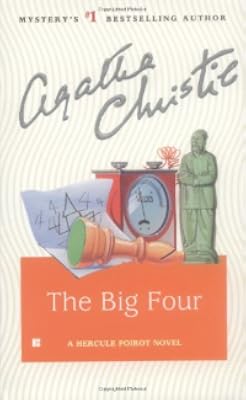















Member Recommendations
Member Reviews
Summary: Sir Stafford Nye helps a woman in the Frankfurt airport by giving her his cloak, passport, and boarding ticket to England and finds himself caught up in a global plot.
Sir Stafford Nye is a middle aged diplomat on his way home from Malaya when approached by a woman claiming that the re-routing of her flight jeopardizes her life, and asks that Nye help her by giving her his cloak, passport and boarding ticket. To make it all seem plausible, she says she will drug his beer while he leaves behind the cloak with passport and boarding ticket to step away for a moment. When he returns, they are gone, he drinks his beer and is eventually wakened, holding the stuffed Panda he had purchased for his niece, Sybil. Panda will return!
He show more treats it as a strange embarrassment until a colleague in security tells him he saved Mary Ann, an important agent who is variously known as Daphne Theodofanous and Countess Renata Zerkowski. When his passport is returned, he places a “personal” and ends up meeting her at the opera Siegfried, where she leaves a program with an important clue. Before he knows it, he is involved with her in an espionage plot designed to thwart the rise of a fascist organization sowing mayhem in the world led by a child purportedly sired by Hitler, but masterminded by an obese Bavarian countess.
Throughout, Nye tries to understand what is his part. He also learns rule number one in espionage–trust no one. Indeed, a traitor has infiltrated the intelligence organization directing “Mary Ann’s” efforts. At times, we wonder if Mary Ann is to be trusted.
Indeed, it was puzzling to me what role Nye plays beyond his initial unusual act of trust, other than his connection to his Aunt Mathilda who actually seems to have more to do with the denouement than Nye.
It’s an odd story, implausible at a number of points. The redeeming element is the mysterious Mary Ann. This was written when Christie had turned eighty and was the last of her spy stories. Perhaps the other element of the story is Christie’s prescient appreciation of the compelling attraction of fascism. Few would have credited this in 1970, when the horrors of fascism were still fresh. That aspect of this work is, sadly, far more plausible fifty years later. show less
Sir Stafford Nye is a middle aged diplomat on his way home from Malaya when approached by a woman claiming that the re-routing of her flight jeopardizes her life, and asks that Nye help her by giving her his cloak, passport and boarding ticket. To make it all seem plausible, she says she will drug his beer while he leaves behind the cloak with passport and boarding ticket to step away for a moment. When he returns, they are gone, he drinks his beer and is eventually wakened, holding the stuffed Panda he had purchased for his niece, Sybil. Panda will return!
He show more treats it as a strange embarrassment until a colleague in security tells him he saved Mary Ann, an important agent who is variously known as Daphne Theodofanous and Countess Renata Zerkowski. When his passport is returned, he places a “personal” and ends up meeting her at the opera Siegfried, where she leaves a program with an important clue. Before he knows it, he is involved with her in an espionage plot designed to thwart the rise of a fascist organization sowing mayhem in the world led by a child purportedly sired by Hitler, but masterminded by an obese Bavarian countess.
Throughout, Nye tries to understand what is his part. He also learns rule number one in espionage–trust no one. Indeed, a traitor has infiltrated the intelligence organization directing “Mary Ann’s” efforts. At times, we wonder if Mary Ann is to be trusted.
Indeed, it was puzzling to me what role Nye plays beyond his initial unusual act of trust, other than his connection to his Aunt Mathilda who actually seems to have more to do with the denouement than Nye.
It’s an odd story, implausible at a number of points. The redeeming element is the mysterious Mary Ann. This was written when Christie had turned eighty and was the last of her spy stories. Perhaps the other element of the story is Christie’s prescient appreciation of the compelling attraction of fascism. Few would have credited this in 1970, when the horrors of fascism were still fresh. That aspect of this work is, sadly, far more plausible fifty years later. show less
A Fascist Conspiracy
A review of the William Morrow eBook (September 1, 2022) of the original Collins Crime Club (UK September 1970) and Dodd, Mead & Co. (US late 1970) hardcovers.
This is one of Agatha Christie's (1890-1976) final written books, along with [book:Nemesis|31304] (1971), [book:Elephants Can Remember|148584] (1972) and [book:Postern of Fate|102311] (1973). Although [book:Curtain|81903] (1975) and [book:Sleeping Murder|16300] (1976) were published later, they were actually written decades earlier in the 1940s as show more planned send-offs for long-time fan favourites Hercule Poirot and Miss Marple.
Unlike the other 3 late books, Passenger to Frankfurt does not have any fan favourite characters in it. There is no enjoyable banter such as between Hercule Poirot and Ariadne Oliver or between Tommy and Tuppence Beresford. We have instead a rather odd pair of lead characters diplomat Sir Stafford Nye and international woman of mystery Mary Ann (who has various other aliases) who drift through the book on various vague missions.
Eventually it is revealed that a group of evil forces are seeking to bring about a sort of 4th Reich New World Order with a supposed "Young Siegfried" as its figurehead. To do this they are fomenting chaos throughout the world in order to spark revolutions among young people to overthrow the old. Of course they are stopped in the end, but it felt like an Unsatisfactory Ending Alert was warranted.
I can't resort to giving my beloved Agatha Christie a 1-star, but I can only raise this to a 2-star thanks to sentimental bias and perhaps her somewhat prescient view of how totalitarian forces and regimes use chaos and dissension in order to assume power in the end. A warning to us all.
The novel Passenger to Frankfurt counts against my Complete Agatha Christie binge read goal, so I now have 9 novels (including 3 remaining Westmacotts), 3 short story collections, 9.5 full-length theatrical plays, 2 shorter 1-act or radio plays) and 1 autobiography left to go.
Addendum
This is a reckoning of my remaining Agatha Christie TBR novels. The novels read are stroked through and those yet to be read are counted on the right hand side of the listing. The reckoning does not include the 3 posthumous novelizations of Agatha Christie stage plays made by Australian writer Charles Osborne, although I was initially counting them as I worked through the binge.
Note: The stroke-throughs cannot be seen on all platforms (mobile phones for instance), but the number count on the right hand side of the remaining titles should be clear enough.
1. The Mysterious Affair at Styles
2. The Secret Adversary
3. The Murder on the Links
4. The Man in the Brown Suit
5. The Secret of Chimneys
6. The Murder of Roger Ackroyd
7. The Big Four
8. The Mystery of the Blue Train
9. The Seven Dials Mystery
10. The Murder at the Vicarage
11. The Sittaford Mystery
12. Peril at End House
13. Lord Edgware Dies
14. Murder on the Orient Express
15. Why Didn't They Ask Evans?
16. Three Act Tragedy
17. Death in the Clouds
18. The A.B.C. Murders
19. Murder in Mesopotamia
20. Cards on the Table
21. Dumb Witness
22. Death on the Nile
23. Appointment with Death
24. Hercule Poirot's Christmas
25. Murder Is Easy 1
26. And Then There Were None
27. Sad Cypress
28. One, Two, Buckle My Shoe
29. Evil Under the Sun
30. N or M?
31. The Body in the Library
32. Five Little Pigs
33. The Moving Finger
34. Towards Zero
35. Death Comes as the End
36. Sparkling Cyanide aka Death Remembered
37. The Hollow
38. Taken at the Flood
39. Crooked House
40. A Murder Is Announced
41. They Came to Baghdad 2
42. Mrs McGinty's Dead
43. They Do It with Mirrors
44. After the Funeral
45. A Pocket Full of Rye
46. Destination Unknown 3
47. Hickory Dickory Dock
48. Dead Man's Folly
49. 4.50 from Paddington
50. Ordeal by Innocence 4
51. Cat Among the Pigeons
52. The Pale Horse 5
53. The Mirror Crack'd from Side to Side
54. The Clocks
55. A Caribbean Mystery
56. At Bertram's Hotel
57. Third Girl
58. Endless Night
59. By the Pricking of My Thumbs
60. Hallowe'en Party
61. Passenger to Frankfurt
62. Nemesis
63. Elephants Can Remember
64. Postern of Fate
65. Curtain 6
66. Sleeping Murder
As Mary Westmacott
66. Giant's Bread 7
67. Unfinished Portrait 8
68. Absent in the Spring
69. The Rose and the Yew Tree
70. A Daughter's a Daughter
71. The Burden 9 show less
A review of the William Morrow eBook (September 1, 2022) of the original Collins Crime Club (UK September 1970) and Dodd, Mead & Co. (US late 1970) hardcovers.
‘Things go wrong, sir, sometimes, and they don’t always go wrong because people have made them go wrong. What you might call the Almighty takes a hand, or the other gentleman–the one with the tail, I mean.’
This is one of Agatha Christie's (1890-1976) final written books, along with [book:Nemesis|31304] (1971), [book:Elephants Can Remember|148584] (1972) and [book:Postern of Fate|102311] (1973). Although [book:Curtain|81903] (1975) and [book:Sleeping Murder|16300] (1976) were published later, they were actually written decades earlier in the 1940s as show more planned send-offs for long-time fan favourites Hercule Poirot and Miss Marple.
Unlike the other 3 late books, Passenger to Frankfurt does not have any fan favourite characters in it. There is no enjoyable banter such as between Hercule Poirot and Ariadne Oliver or between Tommy and Tuppence Beresford. We have instead a rather odd pair of lead characters diplomat Sir Stafford Nye and international woman of mystery Mary Ann (who has various other aliases) who drift through the book on various vague missions.
Eventually it is revealed that a group of evil forces are seeking to bring about a sort of 4th Reich New World Order with a supposed "Young Siegfried" as its figurehead. To do this they are fomenting chaos throughout the world in order to spark revolutions among young people to overthrow the old. Of course they are stopped in the end, but it felt like an Unsatisfactory Ending Alert was warranted.
I can't resort to giving my beloved Agatha Christie a 1-star, but I can only raise this to a 2-star thanks to sentimental bias and perhaps her somewhat prescient view of how totalitarian forces and regimes use chaos and dissension in order to assume power in the end. A warning to us all.
The novel Passenger to Frankfurt counts against my Complete Agatha Christie binge read goal, so I now have 9 novels (including 3 remaining Westmacotts), 3 short story collections, 9.5 full-length theatrical plays, 2 shorter 1-act or radio plays) and 1 autobiography left to go.
Addendum
This is a reckoning of my remaining Agatha Christie TBR novels. The novels read are stroked through and those yet to be read are counted on the right hand side of the listing. The reckoning does not include the 3 posthumous novelizations of Agatha Christie stage plays made by Australian writer Charles Osborne, although I was initially counting them as I worked through the binge.
Note: The stroke-throughs cannot be seen on all platforms (mobile phones for instance), but the number count on the right hand side of the remaining titles should be clear enough.
1. The Mysterious Affair at Styles
2. The Secret Adversary
3. The Murder on the Links
4. The Man in the Brown Suit
5. The Secret of Chimneys
6. The Murder of Roger Ackroyd
7. The Big Four
8. The Mystery of the Blue Train
9. The Seven Dials Mystery
10. The Murder at the Vicarage
11. The Sittaford Mystery
12. Peril at End House
13. Lord Edgware Dies
14. Murder on the Orient Express
15. Why Didn't They Ask Evans?
16. Three Act Tragedy
17. Death in the Clouds
18. The A.B.C. Murders
19. Murder in Mesopotamia
20. Cards on the Table
21. Dumb Witness
22. Death on the Nile
23. Appointment with Death
24. Hercule Poirot's Christmas
25. Murder Is Easy 1
26. And Then There Were None
27. Sad Cypress
28. One, Two, Buckle My Shoe
29. Evil Under the Sun
30. N or M?
31. The Body in the Library
32. Five Little Pigs
33. The Moving Finger
34. Towards Zero
35. Death Comes as the End
36. Sparkling Cyanide aka Death Remembered
37. The Hollow
38. Taken at the Flood
39. Crooked House
40. A Murder Is Announced
41. They Came to Baghdad 2
42. Mrs McGinty's Dead
43. They Do It with Mirrors
44. After the Funeral
45. A Pocket Full of Rye
46. Destination Unknown 3
47. Hickory Dickory Dock
48. Dead Man's Folly
49. 4.50 from Paddington
50. Ordeal by Innocence 4
51. Cat Among the Pigeons
52. The Pale Horse 5
53. The Mirror Crack'd from Side to Side
54. The Clocks
55. A Caribbean Mystery
56. At Bertram's Hotel
57. Third Girl
58. Endless Night
59. By the Pricking of My Thumbs
60. Hallowe'en Party
61. Passenger to Frankfurt
62. Nemesis
63. Elephants Can Remember
64. Postern of Fate
65. Curtain 6
66. Sleeping Murder
As Mary Westmacott
66. Giant's Bread 7
67. Unfinished Portrait 8
68. Absent in the Spring
69. The Rose and the Yew Tree
70. A Daughter's a Daughter
71. The Burden 9 show less
This is Agatha Christie in her weirdest "clash of the civilizations" mode. It's a spy novel, not a mystery, and gets into some weird post-WWII conspiracy/fascism/anti-modern-movements stuff, and has some real terrible fatphobia. She seems terrified of young people and the modern age. She equates a fictional re-emerging fascist movement in Europe with Che Guevera and followers in Central America and the Civil Rights movement in the USA, which made me both 1) baffled and 2) grossed out.
It is also just a poorly written book, *spoilers* I'm pretty sure the happy ending is supposed to involve the reader approving of scientists permanently altering people's personalities but,I don't know, maybe that means that the bad guys won. I can't tell show more because it was all poorly written and very confusing.
Then there's a wedding, or rather the moments just before a wedding, because it's Agatha Christie.
And the main guy brings the not-actually-Hitler's-son actor back to his elderly aunt as an organist, even though he still has a *swastika branded on his foot.* Like... like a cat leaving a mouse on your pillow. "Here, I got you a pretend fascist heir!" Wut.
There is one well-written very classic-Christie bit with an older military man and him grumbling about getting his clothes brushed that made me laugh. Best part of the book. show less
It is also just a poorly written book, *spoilers* I'm pretty sure the happy ending is supposed to involve the reader approving of scientists permanently altering people's personalities but,I don't know, maybe that means that the bad guys won. I can't tell show more because it was all poorly written and very confusing.
Then there's a wedding, or rather the moments just before a wedding, because it's Agatha Christie.
And the main guy brings the not-actually-Hitler's-son actor back to his elderly aunt as an organist, even though he still has a *swastika branded on his foot.* Like... like a cat leaving a mouse on your pillow. "Here, I got you a pretend fascist heir!" Wut.
There is one well-written very classic-Christie bit with an older military man and him grumbling about getting his clothes brushed that made me laugh. Best part of the book. show less
This book surely ranks as one of the strangest ever written by Agatha Christie. Far from a "mystery" or crime story, it's a drama involving international events and mysterious world-wide conspiracies.
The plot is a vast muddle, too incomprehensible make sense of. As seen through the author's eyes, the world has seemingly gone mad, full of student unrest, sexual promiscuity, and drug use. According to this book’s convoluted plot, these are the result of a massive conspiracy to bring the world to anarchy, a plot hatched by… by whom? It’s not a Communist plot (as one might expect for a writer who lived through the Cold War); rathershe hearkens back to the villains of her middle years, since it’s all a massive neo- Nazi conspiracy. show more Massive amounts of money are involved, flowing across international borders, subverting governments. Hitler supposedly was smuggled into Argentina at the end of WW2 (his body double was left in the bunker) where he had a son whose ankle was tattooed with a swastika, but he’s actually the son of someone else and is being used in the plot. There’s a Countess who plans to be leader of the fascist world, and a scientist named Professor Shoreham who has invented a drug called Project Benvo that makes people altruistic (though he had a stroke and shelved the project); and a villain named Kleek tries to kill a Lord Altamount by poison but is foiled so the nurse shoots the Lord who dies of shock, and the violence leads the Professor to resurrect his Benvo Project; and then Hitler’s supposed son is going to become an organist at the church, and then there’s a final chapter where suddenly Sir Stafford Nye is going to marry a woman named Mary Ann whose life he saved at the beginning of the book by giving her his airline ticket. whew. I had to extract a lot of this from Wikipedia; getting it out of the would have taken many hours.
I side with the critics who wondered if the elderly Mrs. Christie quite understood the world in which she found herself in the late 1960s – with its drugs, sex, and student protestors. One of her characters – a woman – complains about all the student protestors… “Shouting about Vietnam and all that. What do any of them know about Vietnam? None of them have ever been there, have they?” Wow. I have to side with the critic who wondered whether the old dear understood what the phrase “Third World” means. Mrs. Christie uses it as a label for the utopian world that the rebellious youth hoped to create.
This book is a curiosity, but not one to read except for those who want to be able to have read everything written by Agatha Christie. Out of sympathy for the dear old lady, others should avert their eyes. show less
The plot is a vast muddle, too incomprehensible make sense of. As seen through the author's eyes, the world has seemingly gone mad, full of student unrest, sexual promiscuity, and drug use. According to this book’s convoluted plot, these are the result of a massive conspiracy to bring the world to anarchy, a plot hatched by… by whom? It’s not a Communist plot (as one might expect for a writer who lived through the Cold War); rather
I side with the critics who wondered if the elderly Mrs. Christie quite understood the world in which she found herself in the late 1960s – with its drugs, sex, and student protestors. One of her characters – a woman – complains about all the student protestors… “Shouting about Vietnam and all that. What do any of them know about Vietnam? None of them have ever been there, have they?” Wow. I have to side with the critic who wondered whether the old dear understood what the phrase “Third World” means. Mrs. Christie uses it as a label for the utopian world that the rebellious youth hoped to create.
This book is a curiosity, but not one to read except for those who want to be able to have read everything written by Agatha Christie. Out of sympathy for the dear old lady, others should avert their eyes. show less
A minor diplomat's flight is re-directed to the Frankfurt Airport, where he meets a mysterious woman who asks him for his passport and boarding ticket so that she can go in his place on the connecting flight, or else she is at risk of being murdered. He soon finds himself wrapped up in an international intrigue with fatal consequences.
This book starts off interestingly enough with several successions of cat-and-mouse games. It's almost like a 'cozy' spy thriller, if such a thing existed. But then about halfway through, it really starts to go off the rails. We stop seeing our two main leads and spend a lot of time with various stuffy old men in boardrooms conversing on the dangers of the "youth" and what to do about it without ever show more getting anywhere.
Now, some of those youths are neo-Nazis and should rightly be feared. Others are simply critical of the Vietnam War, for example, or are fighting for racial equality. Still others are in the depths of drug addictions. These seem to all be lumped together as one massive issue across the globe. The book has no real villain and no real focus as a consequence. No wonder that Christie wrote herself into a corner and 'solved' the whole thing by one double agent being unmasked (even though that didn't really solve anything....).
Also, this book really shows its author's age, with several references to one character being "yellow" (i.e., Asian) and one use of the n- word. The only reason I give it two stars is because the first few chapters started out strong; too bad Christie's writing then took a steep downhill plummet. show less
This book starts off interestingly enough with several successions of cat-and-mouse games. It's almost like a 'cozy' spy thriller, if such a thing existed. But then about halfway through, it really starts to go off the rails. We stop seeing our two main leads and spend a lot of time with various stuffy old men in boardrooms conversing on the dangers of the "youth" and what to do about it without ever show more getting anywhere.
Now, some of those youths are neo-Nazis and should rightly be feared. Others are simply critical of the Vietnam War, for example, or are fighting for racial equality. Still others are in the depths of drug addictions. These seem to all be lumped together as one massive issue across the globe. The book has no real villain and no real focus as a consequence. No wonder that Christie wrote herself into a corner and 'solved' the whole thing by one double agent being unmasked (even though that didn't really solve anything....).
Also, this book really shows its author's age, with several references to one character being "yellow" (i.e., Asian) and one use of the n- word. The only reason I give it two stars is because the first few chapters started out strong; too bad Christie's writing then took a steep downhill plummet. show less
I love Agatha Christie's mysteries. They generally glue me to the book, until I've finished reading then. Not this one, though it had its moments.
The gist of it: Stafford Nye an excentric and "failed" diplomat, decides to save a woman's life. During a delayed flight in Franfurt, he meets a mysterious woman, who asks him to let her take his identity. He agrees, and they fabricate a story of how he lost his passport, and drank drugged beer.
Obviously, the entire government is up in arms about it, though you have to do some serious between the lines reading to notice this. They're awfully vague about everything...
And then... the plot starts to get a life of its own. A few times it seemed to have reached some sort of conclusion, only for it show more to be swiftly abandoned in favor of something completely different. Quite frustrating really, when you read and read, and JUST when you feel that you're finally seeing where things are going, a completely different subplot takes the spotlight.
Another thing that I disliked, was the immense number of characters. And each set of characters seems to have its own subplot, with (apparently) little relation to other subplots. But don't worry, by the end of it, everything is tightly linked together. If only you can keep on reading till the last chapter...
All in all, a very confusing book, with too many characters and too many subplots. I wouldn't say it was a complete waste of time, but I've definitely read much better. So if it's a choice between this, and another one of Christie's mysteries, choose the other one.
P.S. I loved the character of Lady Matilda, though (Stafford's great aunt)! Very amusing, but at the same time quite a sneaky socialite. :D show less
The gist of it: Stafford Nye an excentric and "failed" diplomat, decides to save a woman's life. During a delayed flight in Franfurt, he meets a mysterious woman, who asks him to let her take his identity. He agrees, and they fabricate a story of how he lost his passport, and drank drugged beer.
Obviously, the entire government is up in arms about it, though you have to do some serious between the lines reading to notice this. They're awfully vague about everything...
And then... the plot starts to get a life of its own. A few times it seemed to have reached some sort of conclusion, only for it show more to be swiftly abandoned in favor of something completely different. Quite frustrating really, when you read and read, and JUST when you feel that you're finally seeing where things are going, a completely different subplot takes the spotlight.
Another thing that I disliked, was the immense number of characters. And each set of characters seems to have its own subplot, with (apparently) little relation to other subplots. But don't worry, by the end of it, everything is tightly linked together. If only you can keep on reading till the last chapter...
All in all, a very confusing book, with too many characters and too many subplots. I wouldn't say it was a complete waste of time, but I've definitely read much better. So if it's a choice between this, and another one of Christie's mysteries, choose the other one.
P.S. I loved the character of Lady Matilda, though (Stafford's great aunt)! Very amusing, but at the same time quite a sneaky socialite. :D show less
Finally after reading a lot of excellent Agatha Christie novels I found her very worst one.
Passenger to Frankfurt is a global-scale-thriller-spy-drama written not long after the 1968 uprisings and demonstrations. The only thing I get out of this novel, which is full of completely ridiculous ideas, is that the author was scared of what was happening around her.
The story has no cohesion, no clever turns, no interesting and believable characters, no probable development...
Do not read this book. There are hundreds of thousands of better books, and the worst thing, if you read this you might get put off Agatha Christie forever and that would be a bad thing.
Passenger to Frankfurt is a global-scale-thriller-spy-drama written not long after the 1968 uprisings and demonstrations. The only thing I get out of this novel, which is full of completely ridiculous ideas, is that the author was scared of what was happening around her.
The story has no cohesion, no clever turns, no interesting and believable characters, no probable development...
Do not read this book. There are hundreds of thousands of better books, and the worst thing, if you read this you might get put off Agatha Christie forever and that would be a bad thing.
Members
- Recently Added By
Lists

Crime and Mysteries to Read
746 works; 31 members

British Mystery
469 works; 14 members

Agatha Christie
28 works; 3 members

Detective Stories
343 works; 5 members

Published in 1970
58 works; 7 members

Books Read in 2019
4,052 works; 110 members

TBR
77 works; 1 member

1970 Club
85 works; 2 members

Agatha Christie Chronology
93 works; 1 member
Author Information

2,171+ Works 441,604 Members
One of the most successful and beloved writer of mystery stories, Agatha Mary Clarissa Christie was born in 1890 in Torquay, County Devon, England. She wrote her first novel, The Mysterious Affair at Styles, in 1920, launching a literary career that spanned decades. In her lifetime, she authored 79 crime novels and a short story collection, 19 show more plays, and six novels written under the name of Mary Westmacott. Her books have sold over a billion copies in the English language with another billion in 44 foreign languages. Some of her most famous titles include Murder on the Orient Express, Mystery of the Blue Train, And Then There Were None, 13 at Dinner and The Sittaford Mystery. Noted for clever and surprising twists of plot, many of Christie's mysteries feature two unconventional fictional detectives named Hercule Poirot and Miss Jane Marple. Poirot, in particular, plays the hero of many of her works, including the classic, The Murder of Roger Ackroyd (1926), and Curtain (1975), one of her last works in which the famed detective dies. Over the years, her travels took her to the Middle East where she met noted English archaeologist Sir Max Mallowan. They married in 1930. Christie accompanied Mallowan on annual expeditions to Iraq and Syria, which served as material for Murder in Mesopotamia (1930), Death on the Nile (1937), and Appointment with Death (1938). Christie's credits also include the plays, The Mousetrap and Witness for the Prosecution (1953; film 1957). Christie received the New York Drama Critics' Circle Award for 1954-1955 for Witness. She was also named Dame Commander of the Order of the British Empire in 1971. Christie died in 1976. (Bowker Author Biography) show less
Some Editions
Awards and Honors
Series
Belongs to Publisher Series
Work Relationships
Is contained in
1960s Omnibus: Endless Night, By the Pricking of My Thumbs, Passenger to Frankfurt, Postern of Fate by Agatha Christie
Murderers Abroad: They Came to Baghdad / Murder in Mesopotamia / The Mystery of the Blue Train / Passenger to Frankfurt / So Many Steps To Death by Agatha Christie
Common Knowledge
- Canonical title
- Passenger to Frankfurt
- Original title
- Passenger to Frankfurt
- Original publication date
- 1970-09-01
- People/Characters
- Gordon Chetwynd; Lady Matilda Cleckheaton; Henry Horsham (Security); Munro (Colonel); Sir Stafford Nye; Sir George Packham (show all 15); Ephraim Pikeaway (colonel); Eric Pugh; Mr. Robinson; Countess Renata Zerkowski (Mary Ann, Daphne Theodofanous); Edward Altamount, Lord Altmount; Lisa Neumann; Robert Shoreham; Millie Jean Cortman; Charlotte von Waldsausen
- Important places
- Frankfurt am Main, Hesse, Germany; London, England, UK; Bavaria, Germany
- Epigraph
- ‘Leadership, besides being a great creative force, can be diabolical…'
Jan Smuts - Dedication
- To Margaret Guillame
- First words
- The Author speaks:
The first question put to an author, personally, or through the post, is:
"Where do you get your ideas from?"
The temptation is great to reply: "I always go to Harrods," or "I get them mostly at th... (show all)e Army & Navy Stores," or, snappily, "Try Marks and Spencer." (introduction)
"Fasten your seat belts, please." - Last words
- (Click to show. Warning: May contain spoilers.)"Panda's been in it since the beginning - ever since Frankfurt..."
- Original language*
- English
- Canonical DDC/MDS
- 823.914
*Some information comes from Common Knowledge in other languages. Click "Edit" for more information.
Classifications
Statistics
- Members
- 3,018
- Popularity
- 5,905
- Reviews
- 68
- Rating
- (2.83)
- Languages
- 18 — Chinese, Czech, Danish, Dutch, English, Estonian, Finnish, French, German, Hungarian, Italian, Lithuanian, Polish, Slovenian, Spanish, Swedish, Turkish, Portuguese (Portugal)
- Media
- Paper, Audiobook, Ebook
- ISBNs
- 110
- UPCs
- 3
- ASINs
- 79