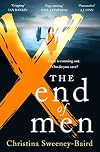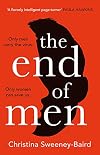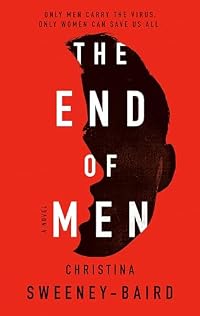
The End of Men
by Christina Sweeney-Baird
On This Page
Description
"Glasgow, 2025. Dr Amanda Maclean is called to treat a young man with a mild fever. Within three hours he dies. The mysterious illness sweeps through the hospital with deadly speed. This is how it begins. The victims are all men. Dr Maclean raises the alarm, but the sickness spreads to every corner of the globe. Threatening families. Governments. Countries. Can they find a cure before it's too late? Will this be the story of the end of the world - or its salvation?"--FantasticFiction.com.Tags
Recommendations
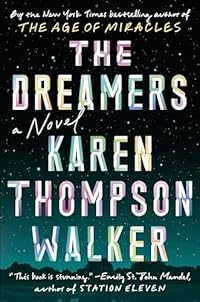
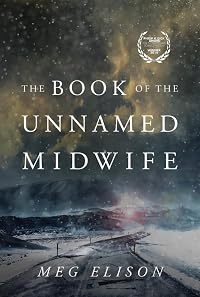
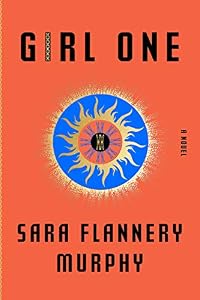

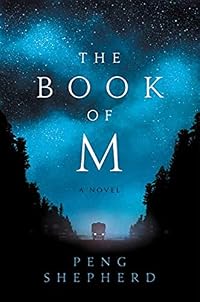
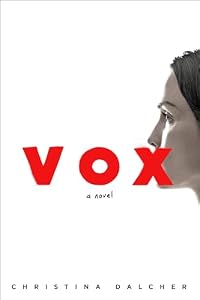


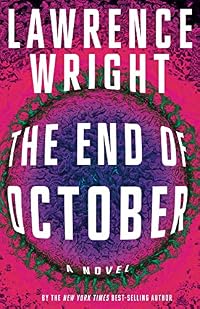
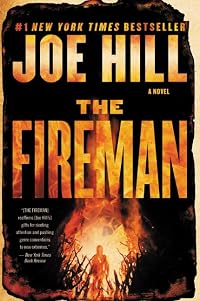
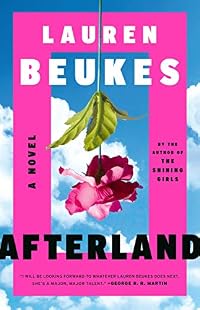
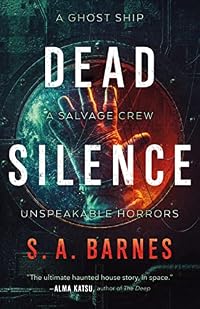
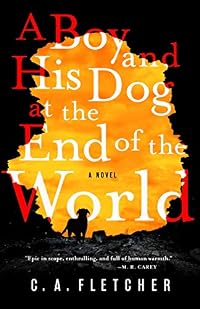
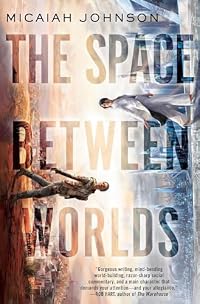
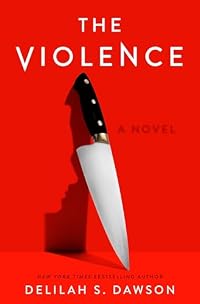
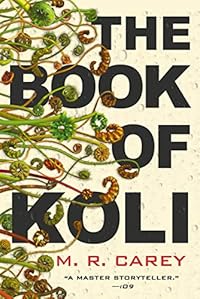
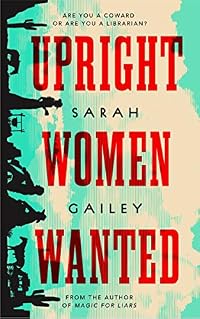
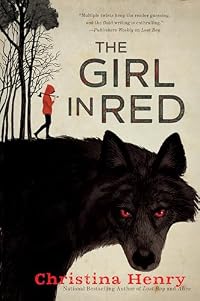
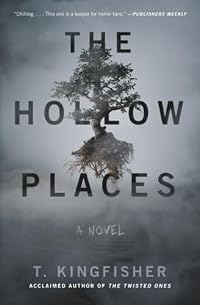
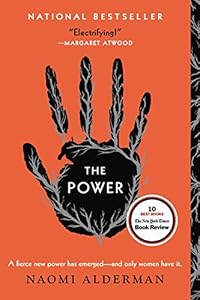

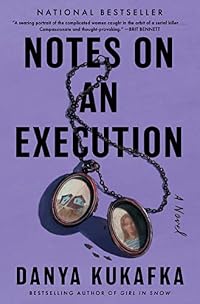
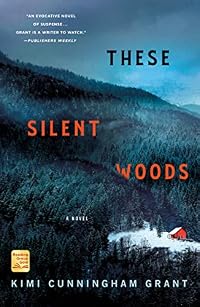
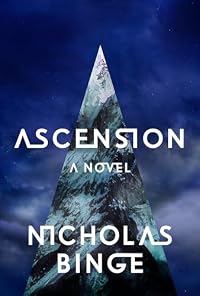
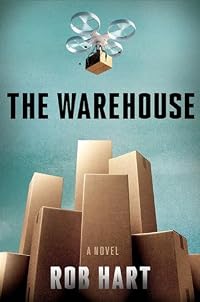
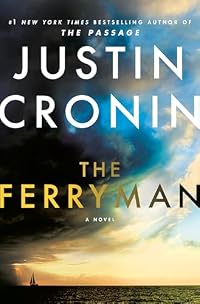
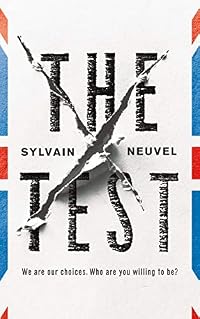
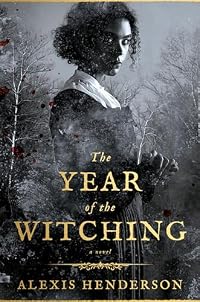
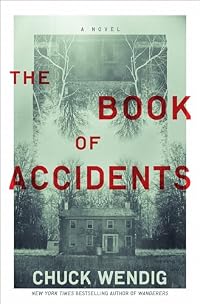
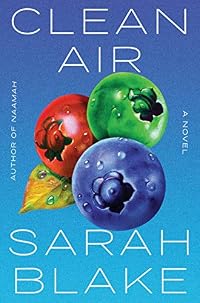
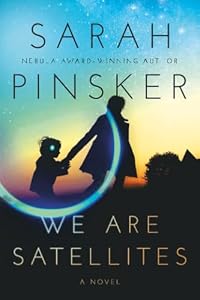
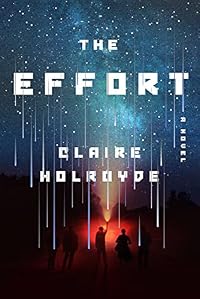
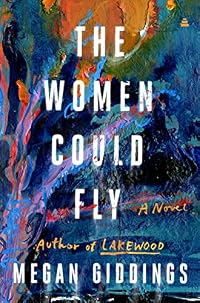
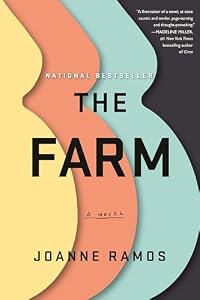
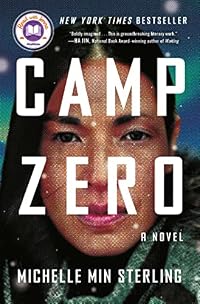
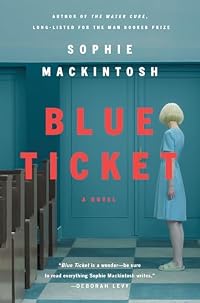
Member Recommendations
Member Reviews
This book was written before the pandemic and has been hailed by wealthy white women as “eerily prescient” (this was said by Paula Hawkins, an author worth an estimate $16 million). It’s not. In fact, there are few similarities between this fiction and our reality. The primary one is that Christina Sweeney-Baird and her characters embody the privileged of those wealthy enough to sit at home sipping tea and having zoom meetings while those of us with essential jobs masked up and went to work, danger be damned, because rent is due on the 1st and your landlord has kindly waived the pet fee, but you don’t have a pet so what good is that even anyways.
I need people to stop acting like this book timely or prescient (Christina show more Sweeney-Baird claims to have been described as Cassandra in her acknowledgments). People have been writing books about viruses ravaging the world for ages, Christina Sweeney-Baird is not a visionary for happening to do it right before a virus ravages our world.
This book is filled to the brim with women and there was not a single instance I could see myself in any of them. They are, with very few exceptions, straight, white, well off or wealthy, and able bodied. Their husbands and sons are dying, which if I had either would probably hit me harder. The grief of losing fathers and friends is almost completely ignored. The grief of losing your boyfriend isn’t even addressed! All the women in this book are either married or single. This wouldn’t rile me like it does if the book focused on one character. However, there are many, many narrators and while Christina Sweeney-Baird has taken great pain to differentiate them, they all feel the same.
[Side note: there is one lesbian character in this book. It would have been really interesting to see some sort of comparison to the AIDS epidemic, where gay women were, for the most part, not dying, but were deeply involved in caring for the dying men in their community. I know Christina Sweeney-Baird is british but a girl can hope. We do not see this. This lesbian character acts as a foil to the morally upright straight women. I do not think this is on purpose but oh my god. I honestly would have preferred to have no gay characters.]
I suppose if you are a married white woman (to a man of course) between the ages of 25-60 who works a white collar job and has or plans to have children (sons are preferable but you can still enjoy the book if you have daughters), this is the book for you. Women like you need more representation in media. If you are a liberal man married to one of these women, I suppose you can read the book and try to understand how wealthy white feminists think (you are married to one though, so I would hope you already do understand them). show less
I need people to stop acting like this book timely or prescient (Christina show more Sweeney-Baird claims to have been described as Cassandra in her acknowledgments). People have been writing books about viruses ravaging the world for ages, Christina Sweeney-Baird is not a visionary for happening to do it right before a virus ravages our world.
This book is filled to the brim with women and there was not a single instance I could see myself in any of them. They are, with very few exceptions, straight, white, well off or wealthy, and able bodied. Their husbands and sons are dying, which if I had either would probably hit me harder. The grief of losing fathers and friends is almost completely ignored. The grief of losing your boyfriend isn’t even addressed! All the women in this book are either married or single. This wouldn’t rile me like it does if the book focused on one character. However, there are many, many narrators and while Christina Sweeney-Baird has taken great pain to differentiate them, they all feel the same.
[Side note: there is one lesbian character in this book. It would have been really interesting to see some sort of comparison to the AIDS epidemic, where gay women were, for the most part, not dying, but were deeply involved in caring for the dying men in their community. I know Christina Sweeney-Baird is british but a girl can hope. We do not see this. This lesbian character acts as a foil to the morally upright straight women. I do not think this is on purpose but oh my god. I honestly would have preferred to have no gay characters.]
I suppose if you are a married white woman (to a man of course) between the ages of 25-60 who works a white collar job and has or plans to have children (sons are preferable but you can still enjoy the book if you have daughters), this is the book for you. Women like you need more representation in media. If you are a liberal man married to one of these women, I suppose you can read the book and try to understand how wealthy white feminists think (you are married to one though, so I would hope you already do understand them). show less
Reading this book in a post-pandemic 2022, I can see why it created such a buzz when it was released. The End of Men was written before Covid-19, and the story revolves around a global pandemic with a 90% mortality rate, which came to be known as The Plague. In this story, only men became ill or died with the virus, although women could be carriers. The book begins in 2025, with a Doctor first realising that there is a common link between a very small number of patients who are all mysteriously dying of an unknown cause, with the same symptoms. As the virus takes hold and spreads around the world, there is widespread panic – there were riots, protests, a race for a vaccine. People were told to stay home, shops were closed, public show more transport was grounded, and families were divided for fear of transmitting the disease. Of course in the real world this now all feels very familiar.
The book is written from the points of view of several characters, the vast majority of which are women. Some only occupy a couple of chapters, while others are main characters which drive the narrative. Despite the large amount of narrators, I did not find it difficult to keep track of who was who, and each character was clearly drawn and believable. There were also a few newspaper articles and blog posts which made up chapters of their own, again all of which added to the story.
As for whether I liked the book – put it this way, I started this book on a long haul flight; I had downloaded a couple of films to watch during the journey but I didn’t get to them, because I could NOT put this book down. I would have found it very uncomfortable reading in 2020, but felt able to tackle it now, and I found it utterly absorbing, with every page and every character drawing me in, whether I liked them or not. It actually made me cry on a number of occasions when people were discussing their sorrow and grief, either for the people they had lost or the lives that they had planned and now would never had. Not all of the characters were likable, and some of them did some pretty awful things, but these were people dealing with a situation they never could have envisioned.
I stayed up late one night (I was jet-lagged but that wasn’t going to stop me) to finish it, and when I had read the last page, I thought it was one of the best books I have read in recent years. If I could read all books with the urgency I read this one, I would triple my reading output!
Anyway, I highly recommend this book (although beware that it may be triggering to people who are suffering emotionally with the fallout from Covid-19), and will definitely be buying anything else that Christina Sweeney-Baird writes. show less
The book is written from the points of view of several characters, the vast majority of which are women. Some only occupy a couple of chapters, while others are main characters which drive the narrative. Despite the large amount of narrators, I did not find it difficult to keep track of who was who, and each character was clearly drawn and believable. There were also a few newspaper articles and blog posts which made up chapters of their own, again all of which added to the story.
As for whether I liked the book – put it this way, I started this book on a long haul flight; I had downloaded a couple of films to watch during the journey but I didn’t get to them, because I could NOT put this book down. I would have found it very uncomfortable reading in 2020, but felt able to tackle it now, and I found it utterly absorbing, with every page and every character drawing me in, whether I liked them or not. It actually made me cry on a number of occasions when people were discussing their sorrow and grief, either for the people they had lost or the lives that they had planned and now would never had. Not all of the characters were likable, and some of them did some pretty awful things, but these were people dealing with a situation they never could have envisioned.
I stayed up late one night (I was jet-lagged but that wasn’t going to stop me) to finish it, and when I had read the last page, I thought it was one of the best books I have read in recent years. If I could read all books with the urgency I read this one, I would triple my reading output!
Anyway, I highly recommend this book (although beware that it may be triggering to people who are suffering emotionally with the fallout from Covid-19), and will definitely be buying anything else that Christina Sweeney-Baird writes. show less
Terrifying. Prophetic. Thoughtful.
The End of Men, amazingly, was finished approximately one year before the 2020 COVID pandemic struck. This novel tells the tale of a fictional global pandemic in the year 2025, which is eerily similar in many ways to COVID with its sudden onset, horrifying sweep across victims, and devastating societal, economic and psychological impact. This pandemic, (or “plague” as it is referred to in the book) however, has one major difference - the disease is hosted or incubated in women and only attacks and kills men. Pretty much all of them.
The pace of this story is quick, the tension relentless, as the weight of the impact becomes heart-sickeningly stunning (given what we’ve seen lately, however, maybe show more not really all that impossible to believe?) (It’s such a kick to think the author wrote this well before our first “real” global pandemic.)
The story is written from the POV of several characters, including Catherine, a social anthropologist with a husband and young son, as well as several women who work in and around the medical profession. Catherine is probably the most relatable character - you feel for her so deeply that her life and its inconceivable progression become our own chilling descent into the (almost “deja-vu”-like, for us ) madness of this sudden and horrifying deluge.
And oh, what an ingenious premise for a book - the sex-specific nature of the onslaught gives the author a wonderful opportunity, (which she fully leverages ) to play with powerful themes and fascinating imaginings of a world forever transformed - one which women must take the reigns to salvage and rebuild. Childbirth, heterosexual love and marriage, power, war, weaponry, democracy, politics, greed, friendship, and of course, gender and women’s “place” in society - all are brought to the forefront in this terrific read, in a world in which may be about to end.
No spoilers here, you will have to read this fantastic book to find out where this story takes us.
A great big thank you to NetGalley, the publisher, and the author, for an advance review copy of this book. All thoughts presented are my own. show less
The End of Men, amazingly, was finished approximately one year before the 2020 COVID pandemic struck. This novel tells the tale of a fictional global pandemic in the year 2025, which is eerily similar in many ways to COVID with its sudden onset, horrifying sweep across victims, and devastating societal, economic and psychological impact. This pandemic, (or “plague” as it is referred to in the book) however, has one major difference - the disease is hosted or incubated in women and only attacks and kills men. Pretty much all of them.
The pace of this story is quick, the tension relentless, as the weight of the impact becomes heart-sickeningly stunning (given what we’ve seen lately, however, maybe show more not really all that impossible to believe?) (It’s such a kick to think the author wrote this well before our first “real” global pandemic.)
The story is written from the POV of several characters, including Catherine, a social anthropologist with a husband and young son, as well as several women who work in and around the medical profession. Catherine is probably the most relatable character - you feel for her so deeply that her life and its inconceivable progression become our own chilling descent into the (almost “deja-vu”-like, for us ) madness of this sudden and horrifying deluge.
And oh, what an ingenious premise for a book - the sex-specific nature of the onslaught gives the author a wonderful opportunity, (which she fully leverages ) to play with powerful themes and fascinating imaginings of a world forever transformed - one which women must take the reigns to salvage and rebuild. Childbirth, heterosexual love and marriage, power, war, weaponry, democracy, politics, greed, friendship, and of course, gender and women’s “place” in society - all are brought to the forefront in this terrific read, in a world in which may be about to end.
No spoilers here, you will have to read this fantastic book to find out where this story takes us.
A great big thank you to NetGalley, the publisher, and the author, for an advance review copy of this book. All thoughts presented are my own. show less
4.5 rounded up to 5
CW:suicidal ideation/thoughts/non-described actual suicides, detailed scenes of grief, loss of loved ones, medical descriptions of deaths
Well I am shooketh!
I enjoyed this one so much and found it 'unputdownable' and so absorbing! I was really invested in what was happening despite the story jumping from POV to POV so frequently. I absolutely loved that it looked at what might happen if there was a situation where the current global gender balance changed. A fascinating take on how we as a society would evolve under these circumstances. This most definitely would only be appropriate for NZ Y12 experienced Readers and above. I will be thinking about this one for ages!
CW:
Well I am shooketh!
I enjoyed this one so much and found it 'unputdownable' and so absorbing! I was really invested in what was happening despite the story jumping from POV to POV so frequently. I absolutely loved that it looked at what might happen if there was a situation where the current global gender balance changed. A fascinating take on how we as a society would evolve under these circumstances. This most definitely would only be appropriate for NZ Y12 experienced Readers and above. I will be thinking about this one for ages!
A virus affecting only men, and which is nearly 100% fatal, breaks out in Scotland. Dr. Amanda McClean reports this potential new pandemic to authorities when she begins seeing patients suffering a serious but unknown new illness, but her warnings are ignored, even ridiculed. And soon the virus is raging out of control, spreading world-wide, and decimating the male population of Earth.
In sections titled "Before." "Outbreak," "Panic," "Despair," "Survival," "Recovery," "Strength," "Adaptation," and "Remembrance," the novel takes us over a number of years beginning with the onset of the virus, following the lives of several women, including the doctor who first observed and reported it, the scientists seeking a vaccine, and intelligence show more analysts studying societal and other changes necessary for a society which is largely female. We like to thing we are a society of equality of the sexes, but really, how many female plumbers, electricians, auto mechanics, garbage collectors, etc, etc, do you see?
I enjoyed this book of speculative fiction. The story is well-paced, the characters were very real. The world-building was thoughtful, and the ways in which society would have to adapt are well considered.
Recommended.
3 stars show less
In sections titled "Before." "Outbreak," "Panic," "Despair," "Survival," "Recovery," "Strength," "Adaptation," and "Remembrance," the novel takes us over a number of years beginning with the onset of the virus, following the lives of several women, including the doctor who first observed and reported it, the scientists seeking a vaccine, and intelligence show more analysts studying societal and other changes necessary for a society which is largely female. We like to thing we are a society of equality of the sexes, but really, how many female plumbers, electricians, auto mechanics, garbage collectors, etc, etc, do you see?
I enjoyed this book of speculative fiction. The story is well-paced, the characters were very real. The world-building was thoughtful, and the ways in which society would have to adapt are well considered.
Recommended.
3 stars show less
In 2025, a mysterious virus breaks out in Scotland that seems to only affect men. Dr. Amanda MacLean reports it as soon as she treats the first two victims, but she is dismissed as hysterical. By the time they start taking the virus seriously, it's too late and the virus is a global pandemic that takes 90% of the men.
We follow accounts in the first person point of view of quite a few women as they deal with the virus' consequences. Dr. Catherine MacLean, a social historian determined to document the human experiences during the "male plague"; Dawn, an intelligence analyst tasked with helping the government with creating a new female lead society; Elizabeth and Lisa, scientists desperately working to develop a vaccine; and many more. show more Through their accounts and more, The End of Men shows us what the world could be if a virus wiped out most of the male population.
Christina Sweeney-Baird actually wrote this book right before the Covid-19 pandemic, which I found kind of crazy. I did compare it a lot to how the world handled the Coronavirus. I know a lot of people don't want to read or watch a movie that's based on Covid-19, at least maybe not right now, but I found it interesting.
The novel showed quite a few perspectives on how the absence of men changed society, from personal losses and daily life changes, to political changes, such as the workforce, fertility, and what a family looks like. Though it gave us multiple POVs, it did take me a bit at the beginning of each chapter as I had to remember who was speaking. Sometimes I wouldn't remember until I was mostly through that section and they mentioned their career or their male member(s) who had died, but it never bothered me too much. At the beginning of the sections, the number of days since the pandemic was given, but once it got past 365 days, I lost count of how long it had been. It might just be because I'm horrible at math (probably) but I sometimes wished it would have just said something like, "2 years, 3 months".
I'm glad the author gave us a bit of a range of characters dealing with the virus, but I would have honestly loved to have seen more, especially since we had a few grieving mothers and widows. It was slightly explored that not all women were equally devastated by the virus and went on to live better lives, such as victims of abuse. We even got a look into a male blogger who believed women made this plague on purpose - that one made me smile.
Overall, this novel was a very thought-provoking page turner. I would recommend this book to those who like dystopian, science fiction books. show less
We follow accounts in the first person point of view of quite a few women as they deal with the virus' consequences. Dr. Catherine MacLean, a social historian determined to document the human experiences during the "male plague"; Dawn, an intelligence analyst tasked with helping the government with creating a new female lead society; Elizabeth and Lisa, scientists desperately working to develop a vaccine; and many more. show more Through their accounts and more, The End of Men shows us what the world could be if a virus wiped out most of the male population.
Christina Sweeney-Baird actually wrote this book right before the Covid-19 pandemic, which I found kind of crazy. I did compare it a lot to how the world handled the Coronavirus. I know a lot of people don't want to read or watch a movie that's based on Covid-19, at least maybe not right now, but I found it interesting.
The novel showed quite a few perspectives on how the absence of men changed society, from personal losses and daily life changes, to political changes, such as the workforce, fertility, and what a family looks like. Though it gave us multiple POVs, it did take me a bit at the beginning of each chapter as I had to remember who was speaking. Sometimes I wouldn't remember until I was mostly through that section and they mentioned their career or their male member(s) who had died, but it never bothered me too much. At the beginning of the sections, the number of days since the pandemic was given, but once it got past 365 days, I lost count of how long it had been. It might just be because I'm horrible at math (probably) but I sometimes wished it would have just said something like, "2 years, 3 months".
I'm glad the author gave us a bit of a range of characters dealing with the virus, but I would have honestly loved to have seen more, especially since we had a few grieving mothers and widows. It was slightly explored that not all women were equally devastated by the virus and went on to live better lives, such as victims of abuse. We even got a look into a male blogger who believed women made this plague on purpose - that one made me smile.
Overall, this novel was a very thought-provoking page turner. I would recommend this book to those who like dystopian, science fiction books. show less
I love "end of the world as we know it" stories. Yes, even as we are living during a time that felt that way for a bit, I'm still willing to read about a fictional virus. It's really interesting to compare the novel to how the world reacted to COVID (the novel was written pre-COVID). The change from a male dominated society to a female dominated society is also ripe for exploration.
It's style reminded me of a smash-up of World War Z: An Oral History of the Zombie War and The Power.
It's style reminded me of a smash-up of World War Z: An Oral History of the Zombie War and The Power.
Members
- Recently Added By
Lists

Top Five Books of 2022
736 works; 272 members

Books Read in 2022
5,164 works; 113 members
Author Information

1 Work 518 Members
Awards and Honors
Awards
Common Knowledge
- Canonical title*
- La Fin des hommes
- Original title
- The End of Men
- Dedication
- For my mum, Margarita.
I'm so very glad to be your daughter. - First words
- Do you need to dress up for Halloween if you're a parent?
- Canonical DDC/MDS
- 823.92
- Canonical LCC
- PR6119.W46
*Some information comes from Common Knowledge in other languages. Click "Edit" for more information.
Classifications
Statistics
- Members
- 518
- Popularity
- 57,550
- Reviews
- 18
- Rating
- (3.76)
- Languages
- 7 — English, Finnish, French, German, Polish, Portuguese, Spanish
- Media
- Paper, Audiobook, Ebook
- ISBNs
- 25
- ASINs
- 6