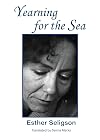
Yearning for the Sea
by Esther Seligson
On This Page
Description
Seligson's feminist retelling of Homer's Odyssey centers Penelope and her feelings of loss and desire. Yearning for the Sea picks up the story at the point of Ulysses' return to his wife Penelope, twenty years after the destruction of Troy. He has faced a long struggle to overcome the obstacles interposed by the gods against his return, while she has worked to hold off her obligation to remarry and provide Ithaca with a new ruler. What did this twenty-year separation mean to this man and show more this woman who, after having loved each other in the flower of their youth, are now re-encountering one another as strangers marked by the separation itself? That is the portal through which Esther Seligson enters into a confessional world of the senses, of sexual desire, of love and its absence, of loneliness, and of nostalgia for lost time and lost youth. show lessTags
Member Reviews
Disclaimer: I received an ARC via publisher as a result of the LIbrarything Early Review program.
One of the reasons why I prefer the Iliad to the Odysseus is because Penelope. It isn’t Penelope herself really. It is Penelope waiting patiently at home surrounded by men who want to marry her and steal her money while her husband is out banging every nymph he comes across as he “struggles” to get home. I think I always wanted Penelope to whack him upside the head. When I got older, it was also because Penelope would have been killed if she had, understandably, declared her husband dead and remarried.
It sucks to be Penelope.
Seligson, a Mexican/Jewish author, tackles the question of what Penelope was thinking and even doing while show more she waited those years for her husband to return, even when bards would come to the palace and sing about Ulysses banging away on a nymph.
Seligson’s Penelope’s solution to the problem isn’t to take a battle axe to her husband’s head, though I would not blame her. Nor is to demonize the other women, which is something that we see other writers do. Circe is good so Penelope must not be good, and so on. This trend occurs in the most popular retellings, like redeeming a woman in a male centered story means making all women worse than the men. Seligson does not do this, and in it is so refreshing. There is a level of understanding between Penelope and Eurycleia that speaks at a deeper connect, two women in world where they are not deemed important. Sisterhood is not the right word; it is far truer than a
The story is told through four voices, though Telemachus who starts the story has the shortest and briefest account. His letter serves little more than an introduction to the meat of the story. Penelope’s letters make the meat of the story but both Eurycleia and Ulysses have voices too. The voices do match the historic literary characters.
The novella is actually a version of Penelope that deserves far more attention. It presents a more nuanced and fleshed out – finally Penelope is given a real voice. show less
One of the reasons why I prefer the Iliad to the Odysseus is because Penelope. It isn’t Penelope herself really. It is Penelope waiting patiently at home surrounded by men who want to marry her and steal her money while her husband is out banging every nymph he comes across as he “struggles” to get home. I think I always wanted Penelope to whack him upside the head. When I got older, it was also because Penelope would have been killed if she had, understandably, declared her husband dead and remarried.
It sucks to be Penelope.
Seligson, a Mexican/Jewish author, tackles the question of what Penelope was thinking and even doing while show more she waited those years for her husband to return, even when bards would come to the palace and sing about Ulysses banging away on a nymph.
Seligson’s Penelope’s solution to the problem isn’t to take a battle axe to her husband’s head, though I would not blame her. Nor is to demonize the other women, which is something that we see other writers do. Circe is good so Penelope must not be good, and so on. This trend occurs in the most popular retellings, like redeeming a woman in a male centered story means making all women worse than the men. Seligson does not do this, and in it is so refreshing. There is a level of understanding between Penelope and Eurycleia that speaks at a deeper connect, two women in world where they are not deemed important. Sisterhood is not the right word; it is far truer than a
The story is told through four voices, though Telemachus who starts the story has the shortest and briefest account. His letter serves little more than an introduction to the meat of the story. Penelope’s letters make the meat of the story but both Eurycleia and Ulysses have voices too. The voices do match the historic literary characters.
The novella is actually a version of Penelope that deserves far more attention. It presents a more nuanced and fleshed out – finally Penelope is given a real voice. show less
 This review was written for LibraryThing Early Reviewers.
Esther Seligson's Yearning for the Sea is much more than a reimagining of the end of Homer's Odyssey. It quickly moves beyond this conceit into a very real portrayal of nuanced emotion, the messiness of love, desire, and hatred, and the competing narratives of two people in a relationship. Who is right? Whose needs hold more weight?
Poetic, moving, and though slim, this novella holds a vast ocean to immerse yourself in.
Poetic, moving, and though slim, this novella holds a vast ocean to immerse yourself in.
This review was written for LibraryThing Early Reviewers.I really love the premise of Yearning for the Sea: that Penelope was anything but pleased to spend a ten years of virtuous chastity fending off unwanted suitors with a smile by day and undoing the previous day's labor by night...all while her husband took his sweet time getting home so he could rack up martial glory and sexual conquests on the way.
Seligson's Penelope, by contrast, mourns and seethes with sexual frustration and resentment at the once-devoted husband who finds it so easy to not return home. I very much liked this aspect of the book. The introduction to this translation speaks of "Seligson's version" of the "epic tale," and therein lies the source of my disappointment. Yearning for the Sea is not epic; it's not even a show more retelling, but rather four short interior monologues delivered by Telemachus, Eurycleia, Penelope, and Ulysses. There's rumination but no action, and any reader without prior familiarity with the Iliad and the Odyssey will have precious little idea what's going on. I, however, wanted (and had expected) a bona fide retelling of the story from start to finish a la Madeline Miller's novels, or even as a short story treatment along the lines of Stephen Fry or Natalie Haynes' recent works. Instead, Yearning for the Sea is a series of short character studies set after all the action's concluded. It's a shame because Seligson's portrayals are intriguing, and I would have loved to have seen them fleshed out in proper story format.
The translation itself is very well done, and the introduction and translator's note have left me eager to learn more about Seligson's life and other writings. My reaction to this book is obviously colored by the expectations I had going into it; readers who pick the volume up knowing what it is and is not are in for an excellently pointed take on Penelope's treatment by Ulysses and millennia of readers who've not questioned the idea of a blindly devoted wife who put her life on hold to wait ten years for a husband who's not very interested in hurrying home. show less
Seligson's Penelope, by contrast, mourns and seethes with sexual frustration and resentment at the once-devoted husband who finds it so easy to not return home. I very much liked this aspect of the book. The introduction to this translation speaks of "Seligson's version" of the "epic tale," and therein lies the source of my disappointment. Yearning for the Sea is not epic; it's not even a show more retelling, but rather four short interior monologues delivered by Telemachus, Eurycleia, Penelope, and Ulysses. There's rumination but no action, and any reader without prior familiarity with the Iliad and the Odyssey will have precious little idea what's going on. I, however, wanted (and had expected) a bona fide retelling of the story from start to finish a la Madeline Miller's novels, or even as a short story treatment along the lines of Stephen Fry or Natalie Haynes' recent works. Instead, Yearning for the Sea is a series of short character studies set after all the action's concluded. It's a shame because Seligson's portrayals are intriguing, and I would have loved to have seen them fleshed out in proper story format.
The translation itself is very well done, and the introduction and translator's note have left me eager to learn more about Seligson's life and other writings. My reaction to this book is obviously colored by the expectations I had going into it; readers who pick the volume up knowing what it is and is not are in for an excellently pointed take on Penelope's treatment by Ulysses and millennia of readers who've not questioned the idea of a blindly devoted wife who put her life on hold to wait ten years for a husband who's not very interested in hurrying home. show less
This review was written for LibraryThing Early Reviewers.This was an ARC, a brief, and very literary novella, translated from Spanish. Esther Seligson was a Mexican writer, poet, playwright, and sounds like quite the character. This is the story of the Odyssey from Penelope's viewpoint. Seligson's version of Penelope is sexier and more impatient than the traditional version.
I liked that the book explored Penelope's character from different points of view. Here is Penelope's voice "I spent this morning trying to reproduce a beat, the beat of our lovemaking of former days, oblivious as if frozen in a dream, and I felt a great stirring in the air, a huge commotion among the seagulls, and the dog, your dog, has not stopped barking for one second."
Here is Ulysses "Fate does not come calling only show more once in a lifetime, but how often are we able to hear, follow, obey its call?"
We also hear from Telemachus, and from the nurse, Eurycleia. The different voices allow us to think about the roles of women throughout history and what it takes to challenge the assigned role. show less
I liked that the book explored Penelope's character from different points of view. Here is Penelope's voice "I spent this morning trying to reproduce a beat, the beat of our lovemaking of former days, oblivious as if frozen in a dream, and I felt a great stirring in the air, a huge commotion among the seagulls, and the dog, your dog, has not stopped barking for one second."
Here is Ulysses "Fate does not come calling only show more once in a lifetime, but how often are we able to hear, follow, obey its call?"
We also hear from Telemachus, and from the nurse, Eurycleia. The different voices allow us to think about the roles of women throughout history and what it takes to challenge the assigned role. show less
This review was written for LibraryThing Early Reviewers.Beautiful and intense, this reimagining of Odysseus's homecoming finds Penelope gone to retrace his journey that took him too long to traverse. She's left him a letter, which her son, by way of her nurse, delivers in chunks. Having given up waiting for him only after twenty years, just as he's arriving back, having concluded that he must have stopped loving her and he must have, mustn't he, enjoyed, even relished the distractions and barriers to his return, their re-encounter, Penelope laments the time she spent waiting for him, the lust and longing she buried for him, the time game she invented, and wonders whether she was more herself in his absence than before he left. Certainly a bit dense in certain passages, Esther Seligson's tale show more requires several re-reads and gets under the skin to linger there for a good while.
Thanks to the publisher and LibraryThing for a free copy. I thoroughly enjoyed it. show less
Thanks to the publisher and LibraryThing for a free copy. I thoroughly enjoyed it. show less
This review was written for LibraryThing Early Reviewers.This was a delightful quick and complicated read. Introduced by Telemachus, fragments about Penelope’s wait for Odysseus and her response when he arrives home. Odysseus and Eurycleia also get a chance to speak, but Penelope has the last word. It packs a lot into 35 pages, it’s more like a fragment itself instead of a novella . . .
This review was written for LibraryThing Early Reviewers.I received this novel through a LibraryThing giveaway.
I enjoy retellings of classic tales so I entered this giveaway. I was expecting something along the lines of Circe. This is not Circe. It's a very slim novel telling Penelope's story from four viewpoints. Of course, Penelope's voice was the most compelling, raw, angry and emotional. I had an hour to kill one day and read it all in one sitting, fascinated by the author's approach and vision for the story. The Introduction and Translator's notes helped me appreciate the story more.
This story reminded me of my mid-life crisis several years ago, where my anger and resentment led me to take action that was puzzling to some people. The pain of staying exceeded the fear of leaving, so I show more left. This led to an uncomfortable but ultimately satisfying path. I wish Esther Seligson would have continued Penelope's story and I would have read it. show less
I enjoy retellings of classic tales so I entered this giveaway. I was expecting something along the lines of Circe. This is not Circe. It's a very slim novel telling Penelope's story from four viewpoints. Of course, Penelope's voice was the most compelling, raw, angry and emotional. I had an hour to kill one day and read it all in one sitting, fascinated by the author's approach and vision for the story. The Introduction and Translator's notes helped me appreciate the story more.
This story reminded me of my mid-life crisis several years ago, where my anger and resentment led me to take action that was puzzling to some people. The pain of staying exceeded the fear of leaving, so I show more left. This led to an uncomfortable but ultimately satisfying path. I wish Esther Seligson would have continued Penelope's story and I would have read it. show less
This review was written for LibraryThing Early Reviewers.Members
- Recently Added By
Lists

The wanderings of Odysseus
61 works; 6 members
Author Information
13+ Works 48 Members
Some Editions
Classifications
- Genres
- Fiction and Literature, Historical Fiction, Romance, Fantasy
- DDC/MDS
- 864 — Literature & rhetoric Spanish Literature Spanish essays
- BISAC
Statistics
- Members
- 18
- Popularity
- 1,392,769
- Reviews
- 11
- Rating
- (3.75)
- Languages
- English
- Media
- Paper
- ISBNs
- 1