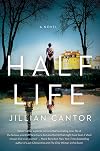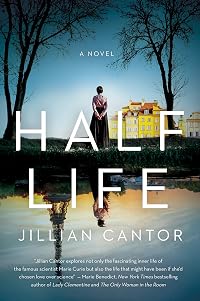
Half Life
by Jillian Cantor 
On This Page
Description
"In Poland in 1891, Marie Curie (then Marya Sklodowska) was engaged to a budding mathematician, Kazimierz Zorawski. But when his mother insisted she was too poor and not good enough, he broke off the engagement. A heartbroken Marya left Poland for Paris, where she would attend the Sorbonne to study chemistry and physics. Eventually Marie Curie would go on to change the course of science forever and be the first woman to win a Nobel Prize. But what if she had made a different choice? What if show more she had stayed in Poland, married Kazimierz at the age of twenty-four, and never attended the Sorbonne or discovered radium? What if she had chosen a life of domesticity with a constant hunger for knowledge in Russian Poland where education for women was restricted, instead of studying science in Paris and meeting Pierre Curie? Entwining Marie Curie's real story with Marya Zorawska's fictional one, Half Life explores loves lost and destinies unfulfilled - and probes issues of loyalty and identity, gender and class, motherhood and sisterhood, fame and anonymity, scholarship and knowledge. Through parallel contrasting versions of Marya's life, Jillian Cantor's unique historical novel asks what would have happened if a great scientific mind was denied opportunity and access to education. It examines how the lives of one remarkable woman and the people she loved - as well as the world at large and course of science and history - might have been irrevocably changed in ways both great and small."--Back cover. show lessTags
Recommendations












Member Reviews
This novel explores a historical "what if" that really resonated with me - what if Marie Curie had stayed in her native Poland and married a different man? In alternating chapters, the story plays out. The historical Marie goes to Paris, meets and marries Pierre Curie, and together they pursue groundbreaking scientific research. The imagined Marya marries a budding mathematician, they struggle to make ends meet, Marya pursues her education but it's limited and many years before she can take formal courses and do any kind of research. Both women ponder, at times, their own choices and happiness, wondering if different paths were open to them. Overall, I really loved this book, I appreciated the questions it asked of the reader, and the show more story it presented. show less
Thanks to Book Club Cookbook's GalleyMatch program and publisher Harper Perennial for an advance reader's copy. All comments and opinions are my own.
For me, this book sounded so much better than it was. What if Marie Curie had stayed in Poland instead of moving to Paris to study and eventually becoming one of the earliest women scientists, the discoverer of radium, and the first woman to be awarded two Nobel Prizes? Jillian Cantor uses a dual storyline to tell the true story of Marie and the fictional one of Marya, the woman who stays in Poland, marries budding mathematician Kaz Zorawski, and with him has a daughter who becomes a piano prodigy.
The author is qualified but she didn't give me a reason to care for either Marie nor Marya, show more and the concept she used was limiting. We know the story of Marie Curie, or can easily read about her in Wikipedia. What Cantor added was imagining the details of Marie's relationship with husband Pierre Curie and later her romantic liaison with a married man. Marie never realizes (or admits) she is "the villain" in that adulterous liaison. In the fictional segment when Cantor creates Marya's story, she includes many of the same real-life characters from Marie's world though different things happen to them in the fictional account. This caused confusion for me - wait, didn't this person die? Isn't this person in love with someone else? These questions and more like them distracted me and I lost momentum while reading.
I want to add that I read this with my book club and the response of the other nine readers was quite mixed. Some really liked it, some sort of liked it, and a few felt as I did.
My question for Cantor: if you are going to imagine a different life for Marie if she had stayed in Poland as Marya, why would you craft a slightly mundane, predictable narrative? I was never invested in the lives of either woman, although Cantor does a good job of describing the discrimination and belittlement of women during this time period. Even though this is a novel exploring loves lost and destinies unfulfilled, it is told without liveliness and emotion. I just can't recommend it. show less
For me, this book sounded so much better than it was. What if Marie Curie had stayed in Poland instead of moving to Paris to study and eventually becoming one of the earliest women scientists, the discoverer of radium, and the first woman to be awarded two Nobel Prizes? Jillian Cantor uses a dual storyline to tell the true story of Marie and the fictional one of Marya, the woman who stays in Poland, marries budding mathematician Kaz Zorawski, and with him has a daughter who becomes a piano prodigy.
The author is qualified but she didn't give me a reason to care for either Marie nor Marya, show more and the concept she used was limiting. We know the story of Marie Curie, or can easily read about her in Wikipedia. What Cantor added was imagining the details of Marie's relationship with husband Pierre Curie and later her romantic liaison with a married man. Marie never realizes (or admits) she is "the villain" in that adulterous liaison. In the fictional segment when Cantor creates Marya's story, she includes many of the same real-life characters from Marie's world though different things happen to them in the fictional account. This caused confusion for me - wait, didn't this person die? Isn't this person in love with someone else? These questions and more like them distracted me and I lost momentum while reading.
I want to add that I read this with my book club and the response of the other nine readers was quite mixed. Some really liked it, some sort of liked it, and a few felt as I did.
My question for Cantor: if you are going to imagine a different life for Marie if she had stayed in Poland as Marya, why would you craft a slightly mundane, predictable narrative? I was never invested in the lives of either woman, although Cantor does a good job of describing the discrimination and belittlement of women during this time period. Even though this is a novel exploring loves lost and destinies unfulfilled, it is told without liveliness and emotion. I just can't recommend it. show less
I cannot praise Jillian Cantor enough for her book, "Half-Life". The what "was" and what "might have been" theme of this novel is mesmerizing. Jillian blends fact and fiction so seamlessly that sometimes it is hard to tell which is which. Different loves and tragedies develop in both lives. There is no such thing as a "perfect" life. There is, however, happiness in each life. One must cling to all the love, hope, happiness, and outright joy that each day of our lives brings for (to?) us. Throughout the novel Marie/Marya remain true to themselves and who they are deep down inside. They strive to be the best person they can be and live their lives fully. Everyone must read this book.
Fascinating concept--what would Mme. Curie's life have been had she decided to marry the young man to whom she had been engaged instead of going to Paris and studying science? The author attempts to answer this question in alternating chapters: Marie with her life progressing as in reality and the Marya chapters positing her possible life had she chosen to stay in Poland and marry.
This is very much a Sliding Doors type of narrative, where half is based on truth, half on speculation. For the most part, the two storylines are distinct, but they were close enough in some content that I sometimes couldn't remember which variation a particular event happened within. Overall, an enjoyable read.
Wow, such a great book and so unique. The look at the life of Marie Curie and what might have happened if a few decisions of hers has been different was fascinating. Highly recommend this one to all who want a different approach to historical fiction.
Writing Quality: 10/10
Image / Illustration Quality: 10/10
Character Development: 10/10
"Couldn't Put It Down"-ness: 10/10
Intellectual Depth: 10/10
Originality:10/10
Writing Quality: 10/10
Image / Illustration Quality: 10/10
Character Development: 10/10
"Couldn't Put It Down"-ness: 10/10
Intellectual Depth: 10/10
Originality:10/10
Historical fiction account of Marya Sklodowska, aka Marie Currie.
Marya was supposed to marry wealthy Kazimierz Zorawski in Poland but his mother disapproved of his choice and the wedding never happened.
Marya left Poland and travelled to Paris where she studied at the Sorbonne and worked in a laboratory with Pierre Curie. They married and together, they won the Nobel prize for physics in 1903.
Cantor tells two stories, the real life of Marie Curie and the imagined life of Marya Sklodowska had she stayed in Poland, defied the will of Kazimierz’s mother and married.
Marya was supposed to marry wealthy Kazimierz Zorawski in Poland but his mother disapproved of his choice and the wedding never happened.
Marya left Poland and travelled to Paris where she studied at the Sorbonne and worked in a laboratory with Pierre Curie. They married and together, they won the Nobel prize for physics in 1903.
Cantor tells two stories, the real life of Marie Curie and the imagined life of Marya Sklodowska had she stayed in Poland, defied the will of Kazimierz’s mother and married.
Members
- Recently Added By
Author Information

16 Works 2,379 Members
Jillian Cantor was born and raised in a suburb of Philadelphia. She earned her BA in English from Penn State University and an MFA from the University of Arizonia. She is the author of best-selling and award-winning novels for teens and adults. Her title's include The Hours Count Margot, The Lost Letter, and In Another Time. (Bowker Author show more Biography) show less
Jillian Cantor is a LibraryThing Author, an author who lists their personal library on LibraryThing.
Common Knowledge
- Canonical title
- Half Life
- People/Characters
- Marie Curie
Classifications
Statistics
- Members
- 127
- Popularity
- 256,178
- Reviews
- 8
- Rating
- (3.55)
- Languages
- English
- Media
- Paper, Audiobook, Ebook
- ISBNs
- 14
- ASINs
- 2