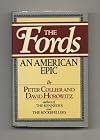
The Fords: An American Epic
by Peter Collier, David Horowitz
On This Page
Description
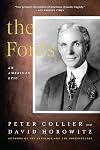
The Fords: An American Epic is the dramatic story of three generations of Fords and of the dramatic conflict between fathers and sons played out against the backdrop of America's greatest industrial empire. The story begins with Henry I, the mechanical wizard, tinkerer, and mad genius who drove the automobile into the heart of American life and conquered the world with it. But in the end he became an embittered crank who so possessively loved the company he built that when his son, Edsel, show more tried to change it to suit the times, Henry destroyed him. It was left to Edsel's son, Henry II, to avenge him and save the Ford Motor Company. From the details of Henry I's illicit affair, which produced an illegitimate son, to the life and loves of "Hank the Deuce" and his celebrated feud with Lee Iacocca, this is an engrossing account of a vital chapter in American history. The authors have added a new preface to this now classic work, showing how Henry II's line lost out to the line of his brother William Clay Ford in the quest to control the company in the twentieth century. show lessTags
Recommendations






















Member Reviews
According to his mother, Henry Ford was a "born mechanic." His father, brothers, and sisters were less charitable, for Henry would have every clock or toy with a wind-up mechanism in pieces, which he would then attempt to reassemble. He was an inveterate experimenter. Once, dissatisfied with his father's explanation of what would happen if he plugged up the hole on the teakettle when boiling water, Henry did so. The kettle blew up spewing boiling water and shrapnel into his cheek.
Peter Collier and David Horowitz retell these and other stories in The Fords: An American Epic. I had heard Collier interviewed about his new family history of the Roosevelts on Brian Lamb's Booknotes. I was intrigued so I ordered all of Collier's previous show more histories.
Ford was constantly tinkering with cars, and it is ironic that he made his name racing cars that broke all the existing speed records, though driving them scared him to death, convincing him, perhaps, that small, reliable, efficient, and safe cars were what he wanted to build. He was also a visionary who realized the enormous effect a cheap vehicle would have on the society. "The proper system, as I have it in mind, is to get the car to the people... just as one pin is like another pin when it comes from the pin factory."
Ford was not the inventor of the assembly line. It was actually the conception of several others, but he was the first to realize its potential. More significant was his early attitude toward his employees. Much to the consternation of his competitors, he doubled his workers' salaries at a time of labor unrest. The idea was not his, but that of James Couzens, his business manager. Ford had to be persuaded as to the amount ($2.50 to $5.00), but immediately Ford realized its benefits, for it turned his workers into immediate allies and part of the middle class, making them able to buy his product, which kept dropping in price. The reaction was mixed among the business community. The Wall Street Journal, in a classic statement of rapacity disguised as religion, editorialized that Ford's raises were "blatantly immoral, a misapplication of Biblical principles in a field where 'they don't belong."'
Another Ford innovation was his Sociological Department. Ford believed that he could renovate humans. He would hire ex-cons and other social misfits, believing that a good job could resurrect any soul. His "social workers" would visit the homes of his workers to paternalistically verify they were using their money wisely, investing, saving, educating themselves, and becoming better citizens. "I do not believe in charity, but! do believe in the regenerating power of work in men's lives."
The Ford family story reflects some of the benefits of a single-owner business: better focus, ability to plow more money into the company. That single-minded focus can also become an albatross, and so it was in Henry Ford's case. He refused to see the changes in American culture that no longer regarded the car as a mechanism to get from one place to another - a role the Model T fulfilled very nicely - but as emblems of status and comfort. Henry's son Edsel saw these changes, and as president of the company, tried to implement some of them, but a power struggle (not much of a struggle really with Henry holding all the cards) resulted. Henry fired Edsel's allies, and the result was bad feeling (and loss of market share to General Motors) that injured the company and family for years.
Ford had accomplished something no other major industrialist had he gained complete control over his company. He should have been on top of the world, but his sunny optimism disappeared following a libel suit he brought against Robert McCormick's Chicago Tribune. McCormick hadn't liked Ford's forays into peace activism - McCormick has been described as the greatest mind of the fourteenth century. During the trial, Ford was humiliated by the Tribune's attorneys who ridiculed his homespun manners. Ford never forgave the legal profession after that experience, and he withdrew even more from the public eye, now despising notoriety he had previously relished.
His myth continued to swell. "Henry Ford had become a representative American. He was a man of limited formal education, yet he had inspired something like mass hypnosis in the American heartland. lie stood for the populist values that grassroots Americans believed in, values which were increasingly under assault in the modern world."
The collapse of the Edsel is told in humorous detail. The Ford brothers were barely speaking to one another by that time, yet pictures were taken by the image-makers, showing them smiling and ostensibly happy. Another public relations wizard purchased 5,000 handcrafted fireworks from Japan that exploded and released a nine-foot scale model that floated to earth on a parachute. Evidently the front grill was considered by some critics to resemble female genitalia, so there were the inevitable jokes about the tail-fin bedecked Cadillac backing into an Edsel and producing an Edsellac.
The internal machinations, the battle between Henry Ford (the grandson) and Lee Iaccoca are spectacular, each building a power-base, with Iacocca, in particular, doing anything to wrest control of the company away from the Ford family. It is sad, however, to read of such flagrant disrespect for customers and the company's long-term future, while preserving and building one's own empire. Given the implosion of General Motors, one has to wonder how much worse they are than Ford. show less
Peter Collier and David Horowitz retell these and other stories in The Fords: An American Epic. I had heard Collier interviewed about his new family history of the Roosevelts on Brian Lamb's Booknotes. I was intrigued so I ordered all of Collier's previous show more histories.
Ford was constantly tinkering with cars, and it is ironic that he made his name racing cars that broke all the existing speed records, though driving them scared him to death, convincing him, perhaps, that small, reliable, efficient, and safe cars were what he wanted to build. He was also a visionary who realized the enormous effect a cheap vehicle would have on the society. "The proper system, as I have it in mind, is to get the car to the people... just as one pin is like another pin when it comes from the pin factory."
Ford was not the inventor of the assembly line. It was actually the conception of several others, but he was the first to realize its potential. More significant was his early attitude toward his employees. Much to the consternation of his competitors, he doubled his workers' salaries at a time of labor unrest. The idea was not his, but that of James Couzens, his business manager. Ford had to be persuaded as to the amount ($2.50 to $5.00), but immediately Ford realized its benefits, for it turned his workers into immediate allies and part of the middle class, making them able to buy his product, which kept dropping in price. The reaction was mixed among the business community. The Wall Street Journal, in a classic statement of rapacity disguised as religion, editorialized that Ford's raises were "blatantly immoral, a misapplication of Biblical principles in a field where 'they don't belong."'
Another Ford innovation was his Sociological Department. Ford believed that he could renovate humans. He would hire ex-cons and other social misfits, believing that a good job could resurrect any soul. His "social workers" would visit the homes of his workers to paternalistically verify they were using their money wisely, investing, saving, educating themselves, and becoming better citizens. "I do not believe in charity, but! do believe in the regenerating power of work in men's lives."
The Ford family story reflects some of the benefits of a single-owner business: better focus, ability to plow more money into the company. That single-minded focus can also become an albatross, and so it was in Henry Ford's case. He refused to see the changes in American culture that no longer regarded the car as a mechanism to get from one place to another - a role the Model T fulfilled very nicely - but as emblems of status and comfort. Henry's son Edsel saw these changes, and as president of the company, tried to implement some of them, but a power struggle (not much of a struggle really with Henry holding all the cards) resulted. Henry fired Edsel's allies, and the result was bad feeling (and loss of market share to General Motors) that injured the company and family for years.
Ford had accomplished something no other major industrialist had he gained complete control over his company. He should have been on top of the world, but his sunny optimism disappeared following a libel suit he brought against Robert McCormick's Chicago Tribune. McCormick hadn't liked Ford's forays into peace activism - McCormick has been described as the greatest mind of the fourteenth century. During the trial, Ford was humiliated by the Tribune's attorneys who ridiculed his homespun manners. Ford never forgave the legal profession after that experience, and he withdrew even more from the public eye, now despising notoriety he had previously relished.
His myth continued to swell. "Henry Ford had become a representative American. He was a man of limited formal education, yet he had inspired something like mass hypnosis in the American heartland. lie stood for the populist values that grassroots Americans believed in, values which were increasingly under assault in the modern world."
The collapse of the Edsel is told in humorous detail. The Ford brothers were barely speaking to one another by that time, yet pictures were taken by the image-makers, showing them smiling and ostensibly happy. Another public relations wizard purchased 5,000 handcrafted fireworks from Japan that exploded and released a nine-foot scale model that floated to earth on a parachute. Evidently the front grill was considered by some critics to resemble female genitalia, so there were the inevitable jokes about the tail-fin bedecked Cadillac backing into an Edsel and producing an Edsellac.
The internal machinations, the battle between Henry Ford (the grandson) and Lee Iaccoca are spectacular, each building a power-base, with Iacocca, in particular, doing anything to wrest control of the company away from the Ford family. It is sad, however, to read of such flagrant disrespect for customers and the company's long-term future, while preserving and building one's own empire. Given the implosion of General Motors, one has to wonder how much worse they are than Ford. show less
Ratings
Members
- Recently Added By
Author Information

24+ Works 2,800 Members
Peter Collier is an author who often collaborated on his boooks with David Horowitz. Together they co-wrote books about dynasty families like: The Rockefellers: An American Dynasty (1976), The Kennedys: An American Drama (1984) and The Fords: An American Epic (1987), and in 1994 Collier published The Roosevelts: An American Saga, with Horowitz show more contributing. In addition, Collier wrote a novel, Down River (1979); a children's book, The King's Giraffe (with his wife, 1996); and books honoring military figures like Medal of Honor: Portraits of Valor Beyond the Call of Duty (2003). During the 1960s and '70s, Collier and Horowitz worked together on the New Left journal Ramparts, but "made a 180-degree turn and began writing books and articles from the conservative side of the spectrum. Their 1989 book, Destructive Generation: Second Thoughts About the Sixties, attacked what they perceived to be the nostalgia that had grown up around that decade. In 1998, Collier founded Encounter Books, which has published a range of authors, many of them conservative. Peter Collier passed away on November 1, 2019 from leukemia. He was 80 years old. (Bowker Author Biography) show less

85+ Works 4,832 Members
David Horowitz is the author of numerous books, including the New York Times bestseller Unholy Alliance, as well as The Professors, and his celebrated autobiography Radical Son. He is president of the David Horowitz Freedom Center and founder of the online news magazine FrontPageMag.com.
Series
Belongs to Publisher Series
Andanzas (124)
Work Relationships
Common Knowledge
- People/Characters
- Henry Ford
Classifications
- Genres
- Nonfiction, Biography & Memoir, History, General Nonfiction, Business
- DDC/MDS
- 338.7 — Society, government, & culture Economics Production Business Enterprises
- LCC
- TL140 .F6 .C65 — Technology Motor vehicles. Aeronautics. Astronautics Motor vehicles. Aeronautics. Astronautics Motor vehicles. Cycles
- BISAC
Statistics
- Members
- 222
- Popularity
- 147,561
- Reviews
- 1
- Rating
- (4.00)
- Languages
- English, Spanish
- Media
- Paper, Ebook
- ISBNs
- 10
- ASINs
- 4