
Peter Collier (1) (1939–2019)
Author of The Kennedys: An American Drama
For other authors named Peter Collier, see the disambiguation page.
About the Author
Peter Collier is an author who often collaborated on his boooks with David Horowitz. Together they co-wrote books about dynasty families like: The Rockefellers: An American Dynasty (1976), The Kennedys: An American Drama (1984) and The Fords: An American Epic (1987), and in 1994 Collier published show more The Roosevelts: An American Saga, with Horowitz contributing. In addition, Collier wrote a novel, Down River (1979); a children's book, The King's Giraffe (with his wife, 1996); and books honoring military figures like Medal of Honor: Portraits of Valor Beyond the Call of Duty (2003). During the 1960s and '70s, Collier and Horowitz worked together on the New Left journal Ramparts, but "made a 180-degree turn and began writing books and articles from the conservative side of the spectrum. Their 1989 book, Destructive Generation: Second Thoughts About the Sixties, attacked what they perceived to be the nostalgia that had grown up around that decade. In 1998, Collier founded Encounter Books, which has published a range of authors, many of them conservative. Peter Collier passed away on November 1, 2019 from leukemia. He was 80 years old. (Bowker Author Biography) show less
Image credit: What Would the Founders Do?
Works by Peter Collier
The Rockfellers 1 copy
Associated Works
Tagged
Common Knowledge
- Legal name
- Collier, Peter Anthony
- Birthdate
- 1939-06-02
- Date of death
- 2019-11-01
- Gender
- male
- Education
- University of California, Berkeley (BA, MA - English Literature)
John Burroughs High School - Occupations
- journalist
editor
biographer
novelist
children's book author - Organizations
- Ramparts
Heterodoxy (magazine)
Encounter Books - Nationality
- USA
- Birthplace
- Hollywood, California, USA
- Places of residence
- San Francisco, California, USA
Nevada City, California, USA - Place of death
- Sacramento, California, USA
- Associated Place (for map)
- California, USA
Members
Reviews
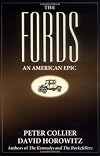
According to his mother, Henry Ford was a "born mechanic." His father, brothers, and sisters were less charitable, for Henry would have every clock or toy with a wind-up mechanism in pieces, which he would then attempt to reassemble. He was an inveterate experimenter. Once, dissatisfied with his father's explanation of what would happen if he plugged up the hole on the teakettle when boiling water, Henry did so. The kettle blew up spewing boiling water and shrapnel into his cheek.
Peter show more Collier and David Horowitz retell these and other stories in The Fords: An American Epic. I had heard Collier interviewed about his new family history of the Roosevelts on Brian Lamb's Booknotes. I was intrigued so I ordered all of Collier's previous histories.
Ford was constantly tinkering with cars, and it is ironic that he made his name racing cars that broke all the existing speed records, though driving them scared him to death, convincing him, perhaps, that small, reliable, efficient, and safe cars were what he wanted to build. He was also a visionary who realized the enormous effect a cheap vehicle would have on the society. "The proper system, as I have it in mind, is to get the car to the people... just as one pin is like another pin when it comes from the pin factory."
Ford was not the inventor of the assembly line. It was actually the conception of several others, but he was the first to realize its potential. More significant was his early attitude toward his employees. Much to the consternation of his competitors, he doubled his workers' salaries at a time of labor unrest. The idea was not his, but that of James Couzens, his business manager. Ford had to be persuaded as to the amount ($2.50 to $5.00), but immediately Ford realized its benefits, for it turned his workers into immediate allies and part of the middle class, making them able to buy his product, which kept dropping in price. The reaction was mixed among the business community. The Wall Street Journal, in a classic statement of rapacity disguised as religion, editorialized that Ford's raises were "blatantly immoral, a misapplication of Biblical principles in a field where 'they don't belong."'
Another Ford innovation was his Sociological Department. Ford believed that he could renovate humans. He would hire ex-cons and other social misfits, believing that a good job could resurrect any soul. His "social workers" would visit the homes of his workers to paternalistically verify they were using their money wisely, investing, saving, educating themselves, and becoming better citizens. "I do not believe in charity, but! do believe in the regenerating power of work in men's lives."
The Ford family story reflects some of the benefits of a single-owner business: better focus, ability to plow more money into the company. That single-minded focus can also become an albatross, and so it was in Henry Ford's case. He refused to see the changes in American culture that no longer regarded the car as a mechanism to get from one place to another - a role the Model T fulfilled very nicely - but as emblems of status and comfort. Henry's son Edsel saw these changes, and as president of the company, tried to implement some of them, but a power struggle (not much of a struggle really with Henry holding all the cards) resulted. Henry fired Edsel's allies, and the result was bad feeling (and loss of market share to General Motors) that injured the company and family for years.
Ford had accomplished something no other major industrialist had he gained complete control over his company. He should have been on top of the world, but his sunny optimism disappeared following a libel suit he brought against Robert McCormick's Chicago Tribune. McCormick hadn't liked Ford's forays into peace activism - McCormick has been described as the greatest mind of the fourteenth century. During the trial, Ford was humiliated by the Tribune's attorneys who ridiculed his homespun manners. Ford never forgave the legal profession after that experience, and he withdrew even more from the public eye, now despising notoriety he had previously relished.
His myth continued to swell. "Henry Ford had become a representative American. He was a man of limited formal education, yet he had inspired something like mass hypnosis in the American heartland. lie stood for the populist values that grassroots Americans believed in, values which were increasingly under assault in the modern world."
The collapse of the Edsel is told in humorous detail. The Ford brothers were barely speaking to one another by that time, yet pictures were taken by the image-makers, showing them smiling and ostensibly happy. Another public relations wizard purchased 5,000 handcrafted fireworks from Japan that exploded and released a nine-foot scale model that floated to earth on a parachute. Evidently the front grill was considered by some critics to resemble female genitalia, so there were the inevitable jokes about the tail-fin bedecked Cadillac backing into an Edsel and producing an Edsellac.
The internal machinations, the battle between Henry Ford (the grandson) and Lee Iaccoca are spectacular, each building a power-base, with Iacocca, in particular, doing anything to wrest control of the company away from the Ford family. It is sad, however, to read of such flagrant disrespect for customers and the company's long-term future, while preserving and building one's own empire. Given the implosion of General Motors, one has to wonder how much worse they are than Ford. show less
Peter show more Collier and David Horowitz retell these and other stories in The Fords: An American Epic. I had heard Collier interviewed about his new family history of the Roosevelts on Brian Lamb's Booknotes. I was intrigued so I ordered all of Collier's previous histories.
Ford was constantly tinkering with cars, and it is ironic that he made his name racing cars that broke all the existing speed records, though driving them scared him to death, convincing him, perhaps, that small, reliable, efficient, and safe cars were what he wanted to build. He was also a visionary who realized the enormous effect a cheap vehicle would have on the society. "The proper system, as I have it in mind, is to get the car to the people... just as one pin is like another pin when it comes from the pin factory."
Ford was not the inventor of the assembly line. It was actually the conception of several others, but he was the first to realize its potential. More significant was his early attitude toward his employees. Much to the consternation of his competitors, he doubled his workers' salaries at a time of labor unrest. The idea was not his, but that of James Couzens, his business manager. Ford had to be persuaded as to the amount ($2.50 to $5.00), but immediately Ford realized its benefits, for it turned his workers into immediate allies and part of the middle class, making them able to buy his product, which kept dropping in price. The reaction was mixed among the business community. The Wall Street Journal, in a classic statement of rapacity disguised as religion, editorialized that Ford's raises were "blatantly immoral, a misapplication of Biblical principles in a field where 'they don't belong."'
Another Ford innovation was his Sociological Department. Ford believed that he could renovate humans. He would hire ex-cons and other social misfits, believing that a good job could resurrect any soul. His "social workers" would visit the homes of his workers to paternalistically verify they were using their money wisely, investing, saving, educating themselves, and becoming better citizens. "I do not believe in charity, but! do believe in the regenerating power of work in men's lives."
The Ford family story reflects some of the benefits of a single-owner business: better focus, ability to plow more money into the company. That single-minded focus can also become an albatross, and so it was in Henry Ford's case. He refused to see the changes in American culture that no longer regarded the car as a mechanism to get from one place to another - a role the Model T fulfilled very nicely - but as emblems of status and comfort. Henry's son Edsel saw these changes, and as president of the company, tried to implement some of them, but a power struggle (not much of a struggle really with Henry holding all the cards) resulted. Henry fired Edsel's allies, and the result was bad feeling (and loss of market share to General Motors) that injured the company and family for years.
Ford had accomplished something no other major industrialist had he gained complete control over his company. He should have been on top of the world, but his sunny optimism disappeared following a libel suit he brought against Robert McCormick's Chicago Tribune. McCormick hadn't liked Ford's forays into peace activism - McCormick has been described as the greatest mind of the fourteenth century. During the trial, Ford was humiliated by the Tribune's attorneys who ridiculed his homespun manners. Ford never forgave the legal profession after that experience, and he withdrew even more from the public eye, now despising notoriety he had previously relished.
His myth continued to swell. "Henry Ford had become a representative American. He was a man of limited formal education, yet he had inspired something like mass hypnosis in the American heartland. lie stood for the populist values that grassroots Americans believed in, values which were increasingly under assault in the modern world."
The collapse of the Edsel is told in humorous detail. The Ford brothers were barely speaking to one another by that time, yet pictures were taken by the image-makers, showing them smiling and ostensibly happy. Another public relations wizard purchased 5,000 handcrafted fireworks from Japan that exploded and released a nine-foot scale model that floated to earth on a parachute. Evidently the front grill was considered by some critics to resemble female genitalia, so there were the inevitable jokes about the tail-fin bedecked Cadillac backing into an Edsel and producing an Edsellac.
The internal machinations, the battle between Henry Ford (the grandson) and Lee Iaccoca are spectacular, each building a power-base, with Iacocca, in particular, doing anything to wrest control of the company away from the Ford family. It is sad, however, to read of such flagrant disrespect for customers and the company's long-term future, while preserving and building one's own empire. Given the implosion of General Motors, one has to wonder how much worse they are than Ford. show less

My reactions to reading this book in 1991.
This book is a general collection of essays on various topics.
“Requiem for a Radical” sets the metaphor for most of this book and the radical experience. It’s hard to feel sorry for Fay Stender’s attack at the hands of a follower of Black Panther George Jackson. Stender spent a good chunk of her life excusing people like her attacker, saying they were victims of society and racism, vanguards of revolution. She worked hard and effectively at show more freeing them. Her attack seems to be a case of reaping what you sow. As Collier and Horowitz point out, her radical ideas helped kill her and true innocents. Yet, and this is the disturbing revelation Collier and Horowitz really want driven home, her fellow radicals can’t give up the faith, admit their error, pull the veil from their eyes.
“Doing It” is the tale of complete losers: the Weatherman. Losers as humans, they only seemed to have a lust for violent revolution; smashing society, the system; seeking transcendence and “breaking on through to the other side”. Losers as revolutionaries, they were dangerous incompetents who committed mercifully few bombings. As loser intellectuals, they share an amazing talent for a total lack of introspection and historical irony and appreciation. The Weathermen seem the archetypal spoiled rich kids unaware of the irony of their pose, of the gifts of their inheritance.
“Post-Vietnam Syndrome” seems out of place here, not obviously involving radical left-wing politics. Besides being an exercise in dichotomy, it seems to me that the cop and criminal play their roles amid the wreckage left by the politics of the left vis-a-vis the criminal justice system. And the criminal is a black man obviously capable (and who did) make it in the white world but chose a life of crime. It’s also an interesting tale of two lives inextricably intertwined, first as comrades, then advesaries.
“Baddest” is simply the evil life and sleazy times of street thug Huey Newton, christened revolutionary messiah by the New Left. It’s amazing how they kowtowed to him and the grotesque excuses and protection they afforded him.
“Divided Loyalties” outlines a real Leftist plot complete with front groups run by Cuban intelligence officers and Congressman who let Communists write their official reports, “neutral” think tanks serving a leftist cause. I would have liked more information on some of the references to official government documents. In fact, one of my objections to this book is its very limited bibliography. In one sense, though, it is not needed. This is partially Horowitz’s and Collier’s memoir. They are the primary source here.
“McCarthy’s Ghost” is a vindication of my statement that Joe McCarthy was the best thing that ever happened to the Communist party. It's not that Horowitz and Collier are fans of McCarthy. They’re not. They see him as slanderous, irresponsible, and, like Whitaker Chambers, very destructive to anti-communism because, for leftists around the world as well as in America, calling someone a McCarthyite is like Lenin calling Kautski a traitor -- an instant way to quell the search for truth. Horowitz and Collier point out McCarthy did find communists, that communists -- especially American communists with their slavish devotion to Stalin -- had divided loyalties, that if their political philosophy was of honest opposition they shouldn’t have lied about them, that anti-McCarthyites perilously weakened the FBI’s security apparatus, and the institutionalized anti-anti-communism. The Communist party is the only political party in America that doesn’t have to reveal its funding.
“Slouching Towards Berkeley” shows what happens when the New Left gets its own town: living under the umbrella of the Bill of Rights prevents gulags in Berkeley, but it still shows enough of the hell of the New left vision made concrete. A pothole-infested city with a foreign policy, no concentration camps here just a place where residents (few deserving) of public housing must pass a loyalty oath, where the blacks (much touted as the cause of Radical Berkleyians) suffer under government that will not respond to them, where city property is cleverly diverted for use by radical left causes, where liberals are despised by the New Left more than the all but extinct conservatives, and, as explained wonderfully in the closing anecdote, not very progressive dogs just can’t shake that pack instinct.
“Radical Innocence, Radical Guilt” is an angry chapter that blasts the Radical Left between the eyes. Horowitz and Collier rip apart the sham “honesty” of many recent books by unrepentant sixties' radicals with their strategic ommissions of fact and doctored chronologies. But their biggest target is the New Left’s all-consuming lie that America made the Revolution fail, a lie systematically created and spread by the evil Noam Chomsky. America supposedly made Castro commie, made the Khmer Rouge do it, drove the Sandinistas away. Horowitz refutes this by recollecting a conversation he had with Castro.), IOf course, the American devil invocation is the last New Left defense. First comes denial. Eeven if the truth is known, it must be denied for the sake of the revolution. Then come claims of exagerration about Communist brutality, then the diverting arguments of numbers (e.g. Pol Pot killed not 3, but 1 million).
In the last three sections of the book, Collier and Horowitz bravely, eloquently, and poignantly tell of their own journeys of recantation and apostasy. For each, especially Horowitz, leaving the New Left meant leaving a religion of always blooming Utopia and totalitarian poetry, turning their back on a paradigm that explained everything and outlined morality and promised earthly paradise, of denying a lifetime of adult belief and action and thought to enter into a dark, mature vision of an imperfect world, betrayal by comrades, self-delusion and courageous admission of complicity in evil deeds. As Horowitz says of his dad and his Old Left colleagues, their innocence was only due to their impotentcy. The New and Old Left implicitly and explicitly worshipped totalitarian terror. The murder of Horowitz’s friend by Black Panthers he compares to Stalin’s purges. As he says, the actions of the New Left differed from Stalin only in scale. Both began their journeys after the horrors of Vietnam which they smugly said would never happen.
While both cherish America, democracy, and capitalism, they clearly are not at home with conservatives. Their outlook for the future is grim perhaps because they know their new enemies’ cunning all too well and can never share in the sometimes overblown optimism of some conservatives.
And they tell, as perhaps their greatest service, of the seductive, siren song of Communism: it’s appeal to justice, fairness, equality. For the radical leftist, their is no revolutionary past -- only the future, no failed revolutions -- only a promising new one, no evil in Marxism-Leninism -- only evil men. But Collier and Horowitz show the “luminous words of the great promise” are terror, murder, poverty. They judge the New Left not be its proclaimed intentions but by its concrete results. It is not evil men that betray the revolution, it is that the philosophy is evil. show less
This book is a general collection of essays on various topics.
“Requiem for a Radical” sets the metaphor for most of this book and the radical experience. It’s hard to feel sorry for Fay Stender’s attack at the hands of a follower of Black Panther George Jackson. Stender spent a good chunk of her life excusing people like her attacker, saying they were victims of society and racism, vanguards of revolution. She worked hard and effectively at show more freeing them. Her attack seems to be a case of reaping what you sow. As Collier and Horowitz point out, her radical ideas helped kill her and true innocents. Yet, and this is the disturbing revelation Collier and Horowitz really want driven home, her fellow radicals can’t give up the faith, admit their error, pull the veil from their eyes.
“Doing It” is the tale of complete losers: the Weatherman. Losers as humans, they only seemed to have a lust for violent revolution; smashing society, the system; seeking transcendence and “breaking on through to the other side”. Losers as revolutionaries, they were dangerous incompetents who committed mercifully few bombings. As loser intellectuals, they share an amazing talent for a total lack of introspection and historical irony and appreciation. The Weathermen seem the archetypal spoiled rich kids unaware of the irony of their pose, of the gifts of their inheritance.
“Post-Vietnam Syndrome” seems out of place here, not obviously involving radical left-wing politics. Besides being an exercise in dichotomy, it seems to me that the cop and criminal play their roles amid the wreckage left by the politics of the left vis-a-vis the criminal justice system. And the criminal is a black man obviously capable (and who did) make it in the white world but chose a life of crime. It’s also an interesting tale of two lives inextricably intertwined, first as comrades, then advesaries.
“Baddest” is simply the evil life and sleazy times of street thug Huey Newton, christened revolutionary messiah by the New Left. It’s amazing how they kowtowed to him and the grotesque excuses and protection they afforded him.
“Divided Loyalties” outlines a real Leftist plot complete with front groups run by Cuban intelligence officers and Congressman who let Communists write their official reports, “neutral” think tanks serving a leftist cause. I would have liked more information on some of the references to official government documents. In fact, one of my objections to this book is its very limited bibliography. In one sense, though, it is not needed. This is partially Horowitz’s and Collier’s memoir. They are the primary source here.
“McCarthy’s Ghost” is a vindication of my statement that Joe McCarthy was the best thing that ever happened to the Communist party. It's not that Horowitz and Collier are fans of McCarthy. They’re not. They see him as slanderous, irresponsible, and, like Whitaker Chambers, very destructive to anti-communism because, for leftists around the world as well as in America, calling someone a McCarthyite is like Lenin calling Kautski a traitor -- an instant way to quell the search for truth. Horowitz and Collier point out McCarthy did find communists, that communists -- especially American communists with their slavish devotion to Stalin -- had divided loyalties, that if their political philosophy was of honest opposition they shouldn’t have lied about them, that anti-McCarthyites perilously weakened the FBI’s security apparatus, and the institutionalized anti-anti-communism. The Communist party is the only political party in America that doesn’t have to reveal its funding.
“Slouching Towards Berkeley” shows what happens when the New Left gets its own town: living under the umbrella of the Bill of Rights prevents gulags in Berkeley, but it still shows enough of the hell of the New left vision made concrete. A pothole-infested city with a foreign policy, no concentration camps here just a place where residents (few deserving) of public housing must pass a loyalty oath, where the blacks (much touted as the cause of Radical Berkleyians) suffer under government that will not respond to them, where city property is cleverly diverted for use by radical left causes, where liberals are despised by the New Left more than the all but extinct conservatives, and, as explained wonderfully in the closing anecdote, not very progressive dogs just can’t shake that pack instinct.
“Radical Innocence, Radical Guilt” is an angry chapter that blasts the Radical Left between the eyes. Horowitz and Collier rip apart the sham “honesty” of many recent books by unrepentant sixties' radicals with their strategic ommissions of fact and doctored chronologies. But their biggest target is the New Left’s all-consuming lie that America made the Revolution fail, a lie systematically created and spread by the evil Noam Chomsky. America supposedly made Castro commie, made the Khmer Rouge do it, drove the Sandinistas away. Horowitz refutes this by recollecting a conversation he had with Castro.), IOf course, the American devil invocation is the last New Left defense. First comes denial. Eeven if the truth is known, it must be denied for the sake of the revolution. Then come claims of exagerration about Communist brutality, then the diverting arguments of numbers (e.g. Pol Pot killed not 3, but 1 million).
In the last three sections of the book, Collier and Horowitz bravely, eloquently, and poignantly tell of their own journeys of recantation and apostasy. For each, especially Horowitz, leaving the New Left meant leaving a religion of always blooming Utopia and totalitarian poetry, turning their back on a paradigm that explained everything and outlined morality and promised earthly paradise, of denying a lifetime of adult belief and action and thought to enter into a dark, mature vision of an imperfect world, betrayal by comrades, self-delusion and courageous admission of complicity in evil deeds. As Horowitz says of his dad and his Old Left colleagues, their innocence was only due to their impotentcy. The New and Old Left implicitly and explicitly worshipped totalitarian terror. The murder of Horowitz’s friend by Black Panthers he compares to Stalin’s purges. As he says, the actions of the New Left differed from Stalin only in scale. Both began their journeys after the horrors of Vietnam which they smugly said would never happen.
While both cherish America, democracy, and capitalism, they clearly are not at home with conservatives. Their outlook for the future is grim perhaps because they know their new enemies’ cunning all too well and can never share in the sometimes overblown optimism of some conservatives.
And they tell, as perhaps their greatest service, of the seductive, siren song of Communism: it’s appeal to justice, fairness, equality. For the radical leftist, their is no revolutionary past -- only the future, no failed revolutions -- only a promising new one, no evil in Marxism-Leninism -- only evil men. But Collier and Horowitz show the “luminous words of the great promise” are terror, murder, poverty. They judge the New Left not be its proclaimed intentions but by its concrete results. It is not evil men that betray the revolution, it is that the philosophy is evil. show less

Quite a detailed account of the family from the early one who came from Ireland, to Joe Kennedy who married Rose Fitzgerald, daughter of another Boston Irish politician, to JFK and Bobby, and Teddy and the others, down to the generation of the 1980s. Despite not getting help from the family directly, the authors did very well. Took a while to read and skimmed the last quarter of it. Extremely interesting if you want to know about them and "Camelot" and the dark side too.

This is definitely a worthy "sequel" to a book like "The FitzGeralds and the Kennedys". FotK chronicles the classic immigrant story, while KaAD chronicles the same family as it falls into chaos in the 70s.
It's well documented and pulls no punches, but remains sympathetic to the "third generation" of Kennedy children, providing a point of view that seems as if the authors were actually there for all of it. It really follows Robert Kennedy's children, who did not have the good luck that show more Caroline and John did in having a sensible mother and the whole world adoring them.
Ethel Kennedy couldn't handle raising eleven children alone. She either behaved cruelly towards them or she ignored them completely, and they sort of went feral. The book focusses the most on Robert Junior, the wild one who carried around a pet falcon and once rode the rails like a hobo, and beautiful, fragile David, the only one of the children to witness his father being shot. David descends into drug abuse and dies, while Robert works through his issues in his own time and grows up to become an environmental activist.
In spite of the shocking events of the book, the Kennedy children who survived grew up to be passionate liberal political activists and leaders (except the late Michael, but nobody seems to know what happened there). They're a great example of how people can overcome the past to go on to do great things, and a great example of the priviledged giving more than they take. show less
It's well documented and pulls no punches, but remains sympathetic to the "third generation" of Kennedy children, providing a point of view that seems as if the authors were actually there for all of it. It really follows Robert Kennedy's children, who did not have the good luck that show more Caroline and John did in having a sensible mother and the whole world adoring them.
Ethel Kennedy couldn't handle raising eleven children alone. She either behaved cruelly towards them or she ignored them completely, and they sort of went feral. The book focusses the most on Robert Junior, the wild one who carried around a pet falcon and once rode the rails like a hobo, and beautiful, fragile David, the only one of the children to witness his father being shot. David descends into drug abuse and dies, while Robert works through his issues in his own time and grows up to become an environmental activist.
In spite of the shocking events of the book, the Kennedy children who survived grew up to be passionate liberal political activists and leaders (except the late Michael, but nobody seems to know what happened there). They're a great example of how people can overcome the past to go on to do great things, and a great example of the priviledged giving more than they take. show less
Lists
Awards


You May Also Like


Associated Authors
Statistics
- Works
- 24
- Also by
- 8
- Members
- 2,814
- Popularity
- #9,125
- Rating
- 3.8
- Reviews
- 23
- ISBNs
- 147
- Languages
- 7

