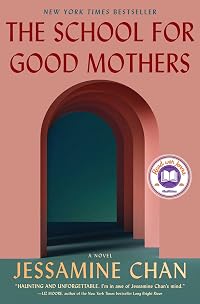
The School for Good Mothers
by Jessamine Chan
On This Page
Description
"Set in near-future America, The School for Good Mothers introduces readers to a government-run reform program where bad mothers are retrained using robot doll children with artificial intelligence. Protagonist Frida Liu, a 39-year-old Chinese-American single mother in Philadelphia, loses custody of her 18-month-old daughter, Harriet, after she leaves Harriet home alone for two hours on one very bad day. To regain custody, Frida must spend a year at a newly-created institution, where she show more practices parenting with bad mothers from all over the county. There, she learns to love an uncannily life-like toddler girl doll in order to demonstrate her maternal instincts and prove to her family court judge that she deserves a second chance. Frida is an outsider in every way: better educated, more affluent, and the only Asian. The mothers, whose transgressions range from benign to horrific, are under constant surveillance. If they don't pass all the school's tests, their parental rights will be terminated. Inspired by dystopian classics such as 1984, Never Let Me Go, and The Handmaid's Tale, the novel eviscerates the dominant American parenting culture, while highlighting the tragedy of state-sponsored family separation. Is there one right way to mother? Can a bad mother ever be redeemed? With warmth, heart, and dark humor, the novel tells a timeless story of a mother fighting to win back her child, and her struggle to hold onto her integrity while being indoctrinated"-- show lessTags
Recommendations


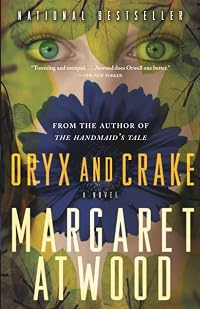
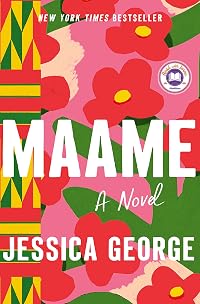

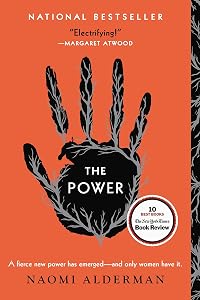
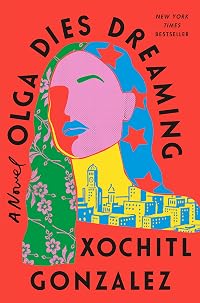


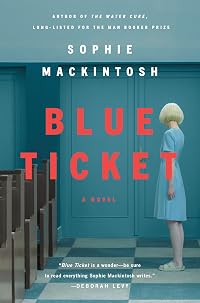
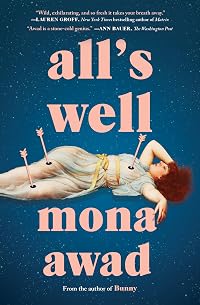
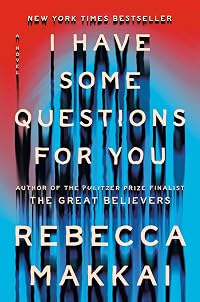
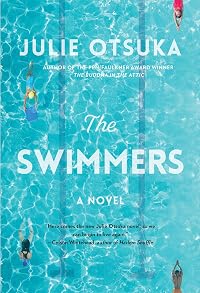

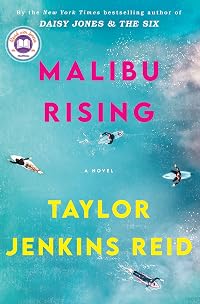
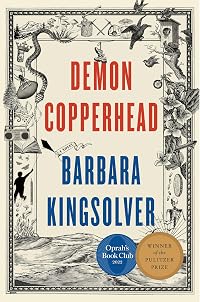
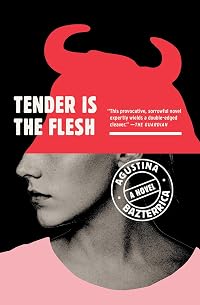
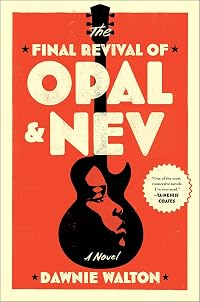
Member Recommendations
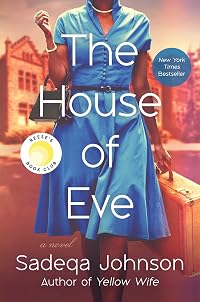
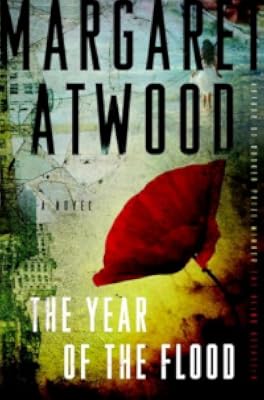
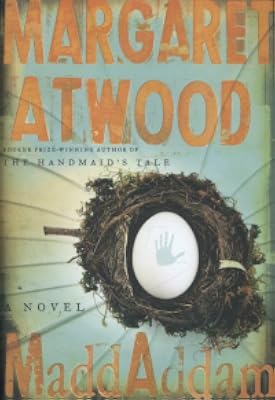
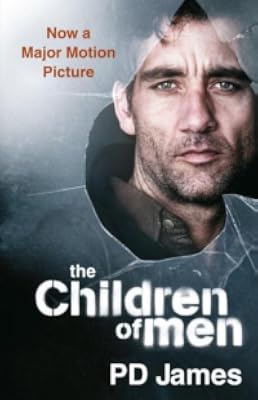
novelcommentary Similar themes
Member Reviews
Disturbing but Riveting
In a near future America, there is an exactness of who is a good mother and anyone not meeting this characterization will be cloistered for retraining.
Frida Liu, a divorced co-parenting Chinese America mother, has had an awfully bad day, when she leaves her 18-month daughter, Harriet, alone at home for two hours while she runs out for a coffee and stops at her office to answer a couple of emails. Meanwhile, Harriet strapped in an ExerSaucer wakes up from her nap screaming, neighbors call the police, and Harriet is removed from the home.
Frida finds she is now required to attend the newly implemented Government-run rehabilitation boarding school for “bad mother” for a year. At the school, the “bad mothers” show more will be retrained on how to be a “good mother” on robot children. Frida will need to pass all the training modules to be considered for having her parental rights restated at the end of the year.
While I certainly agreed Frida committed an act that required intervention and correction, I would say kudos to Chan writing skills in how the story reveals the complexities of her story exploring the expectations of mothers and the systems, or rather the lack of systems for supporting mothers.
This book also served to illustrate what looks like an equitable solution in reality works is often strife with colorism, sexism, and classism with goals often unattainable except for the economically privileged.
I often myself thinking of what Voltaire once said, “Those who can make you believe absurdities can make you commit atrocities.”
This compelling and heart-wrenching tale with Hand Maiden vibes and horror aspects makes for a quick read and deserves to be a screen series.
I received a copy of this book from NetGalley and the publisher in exchange for an honest review. show less
In a near future America, there is an exactness of who is a good mother and anyone not meeting this characterization will be cloistered for retraining.
Frida Liu, a divorced co-parenting Chinese America mother, has had an awfully bad day, when she leaves her 18-month daughter, Harriet, alone at home for two hours while she runs out for a coffee and stops at her office to answer a couple of emails. Meanwhile, Harriet strapped in an ExerSaucer wakes up from her nap screaming, neighbors call the police, and Harriet is removed from the home.
Frida finds she is now required to attend the newly implemented Government-run rehabilitation boarding school for “bad mother” for a year. At the school, the “bad mothers” show more will be retrained on how to be a “good mother” on robot children. Frida will need to pass all the training modules to be considered for having her parental rights restated at the end of the year.
While I certainly agreed Frida committed an act that required intervention and correction, I would say kudos to Chan writing skills in how the story reveals the complexities of her story exploring the expectations of mothers and the systems, or rather the lack of systems for supporting mothers.
This book also served to illustrate what looks like an equitable solution in reality works is often strife with colorism, sexism, and classism with goals often unattainable except for the economically privileged.
I often myself thinking of what Voltaire once said, “Those who can make you believe absurdities can make you commit atrocities.”
This compelling and heart-wrenching tale with Hand Maiden vibes and horror aspects makes for a quick read and deserves to be a screen series.
I received a copy of this book from NetGalley and the publisher in exchange for an honest review. show less
Thank you to NetGally for providing an advanced review copy. Dystopian world that doesn't seem to far from reality. In the current climate of school board meeting insanity and SO much discussion of "good parenting", this book hits a nerve. You follow a later 30 something mom, Frida, that has "one very bad day" that haunts her for the entire story and sets in motion a series of repercusions one could only dread as a parent. CPS arrives, her child is sent to her father and Frida is drug through an inept and pre-deteremined outcome of a court. Given the choice of being listed for life as a bad parent and custody stripped from her or attending a reformatory school for bad parents, she chooses the later. She is promised that in one year's show more time she can return to her daugher, Harriet, who is just shy of 2 currently. However, she has to live and learn in this new reforming program which becomes a hellish nightmare of mental games - all with good intentions of makng her a better mother. The skepticism of government knowing best and what consistutes good parenting and the stereotypes of mom's role vs dad's role plays out perferctly in this novel. You will find yourself agreeing and then disagreeing. As a parent of two teens, I completely related to these pressures that are in our society and within the stereotypes. I highly recommend this book. It will definitely make you think. show less
Frida is a single parent to a toddler. This wasn't how it was supposed to be. She and her husband had planned a future together, but halfway through her pregnancy, he found someone younger and less pregnant to love instead and now Frida is struggling. She's taken a lower paying job that lets her work from home on the days she has custody of Harriet, but Harriet has an ear ache that kept her up all night and Frida needs some papers from her office to complete an overdue task. So she makes the mistake of leaving her child to run a quick errand. An errand that took a little longer than planned and when she gets home, it's to find the police there and child services taking her daughter away. Soon after, Frida is sentenced to a year in a show more reeducation program for bad mothers.
Frida is incarcerated with a diverse group of mothers whose transgressions swing between actual abuse to the allegations of an ex-husband. Each woman must been seen to learn her lesson and become a good mother, with the help of AI robots designed to look like appropriately-aged children. As the women work through the lessons of parenting -- an approach that says that every moment a mother must be vigilant and attentive. This is a version of the world just slightly different from our own and the differences seem all too plausible.
Frida isn't an entirely likable character and her mistake toes the line against what is acceptable, but she's also very human and a good conduit for showing this repressive world and what it might entail. Chan is a talented writer and the novel is well-plotted. I don't generally like dystopian fiction, but this book kept me turning the pages, invested in Frida's life. show less
Frida is incarcerated with a diverse group of mothers whose transgressions swing between actual abuse to the allegations of an ex-husband. Each woman must been seen to learn her lesson and become a good mother, with the help of AI robots designed to look like appropriately-aged children. As the women work through the lessons of parenting -- an approach that says that every moment a mother must be vigilant and attentive. This is a version of the world just slightly different from our own and the differences seem all too plausible.
Frida isn't an entirely likable character and her mistake toes the line against what is acceptable, but she's also very human and a good conduit for showing this repressive world and what it might entail. Chan is a talented writer and the novel is well-plotted. I don't generally like dystopian fiction, but this book kept me turning the pages, invested in Frida's life. show less
This novel is heartbreaking. A mom, at her wit's end, can't take another moment of her daughter being ill, crying, and in pain. Frida adores her daughter, Harriet, but in a moment of weakness she leaves her child alone for a few hours. Child Protective Services is called to evaluate Frida's fitness to be a mother. Frida is sent to a school to teach bad mothers how to be good mothers. The lengths at which these women are tested in frightening and demeaning. The standards they are held to are unreal and made me so angry. Frida tries so hard, but nothing seems to go right.
This book was very difficult to read. Of course, we want children to be in safe, loving homes. But this novel depicts protective services in such a way that I wonder how show more much is true, and how much the system works against parents who are trying their best.
Thanks to Simon and Schuster and Edelweiss for the ARC. All opinions are my own and freely given. show less
This book was very difficult to read. Of course, we want children to be in safe, loving homes. But this novel depicts protective services in such a way that I wonder how show more much is true, and how much the system works against parents who are trying their best.
Thanks to Simon and Schuster and Edelweiss for the ARC. All opinions are my own and freely given. show less
Frida Liu, recently-divorced mother of a toddler, is struggling to get by. Her ex-husband has a young, peppy girlfriend. Frida's career is going nowhere, and her finances are tight. But at least she has Harriet, her beloved daughter. Until her Very Bad Day. Sleep deprived, overheated, and not thinking straight, Frida leaves Harriet in her Exersaucer while she runs out to get an iced coffee. She'll be right back -- except, she remembers she needs a file from her office. She gets caught up answering emails, and before she knows it, more than two hours have gone by -- and a neighbor, hearing Harriet's cries, has reported Frida to Child Protective Services. Now, if Frida wants to regain joint custody of her daughter, she must attend a show more year-long government program to retrain negligent mothers. Separated completely from the outside world, the women in this program are given robotic dolls to care for. They face high demands and constant monitoring. But if they can pass, it will all be worth it -- right?
So, parts of this story worked for me, and parts did not. I found the nanny state pictured in this near-future America frighteningly believable, though the program that Frida and the other "bad mothers" are put in is, of course, over the top with the gaslighting and emotional (and sometimes physical) torture that they endure. It's clear that the program sets the mothers up for failure, and one wonders what the government gets out of this system? I was also bothered by the lack of attention to child development displayed by the social worker and other officials. The robotic dolls were a fascinating element; there's potential for more story there. I felt that the second half of the book dragged on. The ending was bittersweet, more bitter than sweet, really. If the premise interests you, give this a go -- but don't expect an uplifting read. show less
So, parts of this story worked for me, and parts did not. I found the nanny state pictured in this near-future America frighteningly believable, though the program that Frida and the other "bad mothers" are put in is, of course, over the top with the gaslighting and emotional (and sometimes physical) torture that they endure. It's clear that the program sets the mothers up for failure, and one wonders what the government gets out of this system? I was also bothered by the lack of attention to child development displayed by the social worker and other officials. The robotic dolls were a fascinating element; there's potential for more story there. I felt that the second half of the book dragged on. The ending was bittersweet, more bitter than sweet, really. If the premise interests you, give this a go -- but don't expect an uplifting read. show less
In this insightful novel, Frida, a Chinese-American mother, suffers from a parenting lapse and loses custody of her beloved daughter. Her only hope of regaining custody is to complete a year-long, residential reeducation program. As might be expected, the program’s arbitrary standards and emphasis on surveillance reflect modern society’s contradictory ideas regarding motherhood and privacy. The twist is that the program’s inmates are supposed to demonstrate their parenting progress by mothering AI robots designed to look and behave like children.
I found this novel gripping, effective, and all too plausible. Highly recommended.
I found this novel gripping, effective, and all too plausible. Highly recommended.
Okay, buckle in, folks. Apparently, I have a lot to say about this one.
I'm trying to think of ANY reason I wouldn't give this book 5 stars, and I...can't think of a single one. The School for Good Mothers is truly unique. The plot is compelling, the world-building is realistic, and the characters are human. Something about the storytelling here is so special and layered and well-composed without coming across as pseudo-intelligent and unnecessarily indulging to the audience.
First of all, the characters are so well constructed without being overly written. I feel such an intense pity for almost every character in this book, and that's not an easy thing to achieve in a work of fiction. Nothing about these characters or their stories made show more them particularly likable(or hatable for that matter), but they're certainly complex in all the right areas. Even our secondary and background characters felt appropriately developed.
More importantly, The layers and layers of social commentary in The School for Good Mothers left me reeling. I found myself pausing to process what I had just read every few pages.
Chan discusses the issues of being a second-generation adult in this country with ease. These issues are challenged with such a systematic and clinical hand that it's almost impossible to ignore the complexities that come with parenting a child of color. And with these complexities come even further challenges as Chan proposes that there genuinely are no cut-and-dry solutions when raising a child. This is a struggle with which I don't particularly identify, yet Chan opens a window into this world for outside viewers that is so clear and heavy that I don't know if I'll ever be able to close it.
Beyond the issues of culture faced by both our protagonist and many other characters comes the issue of gender. The governmental institution created in this novel is so incapable of properly creating well-adjusted parents, both fathers and mothers, that somehow we go beyond satire and circle right back around to reality. Now, I could go on and on about the unbearable expectations placed on a mother in our society, but I'll spare you my soapbox rant and just say: read. this. book.
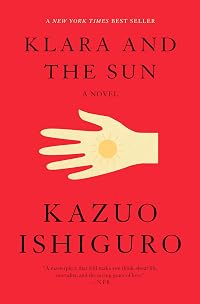
(On a side-note, for some reason, I feel like is everything Klara and the Sun wanted to be. It turns out the concept of a robotic child surrogate isn't entirely unbelievable; it just needed to be reframed.)
So, needless to say, I'm an English major(I know, I know, Hanna shut up). I write about books for grades every single day, and(clearly) that mindset seeps its way into my personal life. It's kind of hard for me to read any book for fun without analyzing and underlining and annotating. All too often, I find that the stories I read for pleasure don't really offer any intellectual content. The School for Good Mothers absolutely scratched the itch in my silly little monkey brain that has been begging for an articulate yet fun story for a while now. 5/5, highly recommended to any and all readers. Disregarding all of the chaos mentioned above, this is genuinely a good casual read as well- and a story rarely achieves both levels simultaneously.
Thank you, Brian, for this recommendation; it turns out Writers & Lovers is going to have some competition for best book this year because this is going to be a tough one to beat. show less
I'm trying to think of ANY reason I wouldn't give this book 5 stars, and I...can't think of a single one. The School for Good Mothers is truly unique. The plot is compelling, the world-building is realistic, and the characters are human. Something about the storytelling here is so special and layered and well-composed without coming across as pseudo-intelligent and unnecessarily indulging to the audience.
First of all, the characters are so well constructed without being overly written. I feel such an intense pity for almost every character in this book, and that's not an easy thing to achieve in a work of fiction. Nothing about these characters or their stories made show more them particularly likable(or hatable for that matter), but they're certainly complex in all the right areas. Even our secondary and background characters felt appropriately developed.
More importantly, The layers and layers of social commentary in The School for Good Mothers left me reeling. I found myself pausing to process what I had just read every few pages.
Chan discusses the issues of being a second-generation adult in this country with ease. These issues are challenged with such a systematic and clinical hand that it's almost impossible to ignore the complexities that come with parenting a child of color. And with these complexities come even further challenges as Chan proposes that there genuinely are no cut-and-dry solutions when raising a child. This is a struggle with which I don't particularly identify, yet Chan opens a window into this world for outside viewers that is so clear and heavy that I don't know if I'll ever be able to close it.
Beyond the issues of culture faced by both our protagonist and many other characters comes the issue of gender. The governmental institution created in this novel is so incapable of properly creating well-adjusted parents, both fathers and mothers, that somehow we go beyond satire and circle right back around to reality. Now, I could go on and on about the unbearable expectations placed on a mother in our society, but I'll spare you my soapbox rant and just say: read. this. book.
(On a side-note, for some reason, I feel like is everything Klara and the Sun wanted to be. It turns out the concept of a robotic child surrogate isn't entirely unbelievable; it just needed to be reframed.)
So, needless to say, I'm an English major(I know, I know, Hanna shut up). I write about books for grades every single day, and(clearly) that mindset seeps its way into my personal life. It's kind of hard for me to read any book for fun without analyzing and underlining and annotating. All too often, I find that the stories I read for pleasure don't really offer any intellectual content. The School for Good Mothers absolutely scratched the itch in my silly little monkey brain that has been begging for an articulate yet fun story for a while now. 5/5, highly recommended to any and all readers. Disregarding all of the chaos mentioned above, this is genuinely a good casual read as well- and a story rarely achieves both levels simultaneously.
Thank you, Brian, for this recommendation; it turns out Writers & Lovers is going to have some competition for best book this year because this is going to be a tough one to beat. show less
Members
- Recently Added By
Lists

Recommend the 20 best books you've read in the last five years
2,168 works; 603 members

Books recommended by Barack Obama
295 works; 29 members

Books Read in 2023
5,638 works; 147 members

Books Read in 2022
5,226 works; 115 members

Anticipated 2022 & Early 2023 Releases
209 works; 4 members

Netgalley Reads
468 works; 3 members

Books Set in Pennsylvania
17 works; 5 members

Obama Reads
181 works; 3 members

Barak Obama's Summer Reads
14 works; 1 member

Borrowed Books 2023 (Books We Have Read BUT do NOT Own)
41 works; 1 member

Top Five Books of 2023
767 works; 317 members

Barack Obama's Summer Reading List 2022
14 works; 2 members

Books Read in 2024
4,727 works; 128 members

Top Five Books of 2024
795 works; 264 members

Read with Jenna
91 works; 2 members
Author Information

1 Work 1,603 Members
Some Editions
Awards and Honors
Awards
Distinctions
Notable Lists
Common Knowledge
- Canonical title
- The School for Good Mothers
- Original publication date
- 2022
- People/Characters
- Frida Liu; Harriet; Emmanuelle
- Important places
- Philadelphia, Pennsylvania, USA
- Epigraph
- I wanted to find one law to cover all of living, I found fear. A list of my nightmares is the map of the way out of here.
-Anne Carson, Plainwater - Dedication
- For my parents
- First words
- "We have your daughter."
- Last words
- (Click to show. Warning: May contain spoilers.)I am a bad mother, she'll say. But I have learned to be good.
- Blurbers
- Moore, Liz; Sykes, Pandora; Zumas, Leni; Jones, Robert; Machado, Carmen Maria; Cook, Diane
- Original language
- English
Classifications
Statistics
- Members
- 1,602
- Popularity
- 14,252
- Reviews
- 72
- Rating
- (3.53)
- Languages
- 7 — Dutch, English, German, Italian, Portuguese, Slovenian, Swedish
- Media
- Paper, Audiobook, Ebook
- ISBNs
- 26
- ASINs
- 9