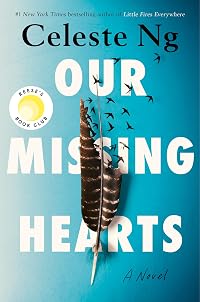
Our Missing Hearts
by Celeste Ng
On This Page
Description
Twelve-year-old Bird Gardner lives a quiet existence with his loving but broken father, a former linguist who now shelves books in Harvard University's library. Bird knows to not ask too many questions, stand out too much, or stray too far. For a decade, their lives have been governed by laws written to preserve "American culture" in the wake of years of economic instability and violence. To keep the peace and restore prosperity, the authorities are now allowed to relocate children of show more dissidents, especially those of Asian origin, and libraries have been forced to remove books seen as unpatriotic-including the work of Bird's mother, Margaret, a Chinese American poet who left the family when he was nine years old. Bird has grown up disavowing his mother and her poems; he doesn't know her work or what happened to her, and he knows he shouldn't wonder. But when he receives a mysterious letter containing only a cryptic drawing, he is drawn into a quest to find her. His journey will take him back to the many folktales she poured into his head as a child, through the ranks of an underground network of librarians, into the lives of the children who have been taken, and finally to New York City, where a new act of defiance may be the beginning of much-needed change. Our Missing Hearts is an old story made new, of the ways supposedly civilized communities can ignore the most searing injustice. It's a story about the power-and limitations-of art to create change, the lessons and legacies we pass on to our children, and how any of us can survive a broken world with our hearts intact"-- show lessTags
Recommendations

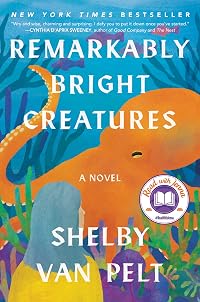
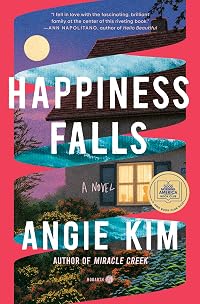
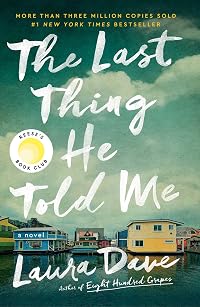

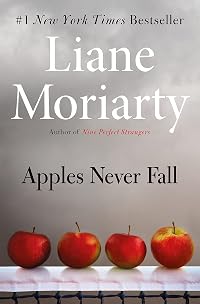



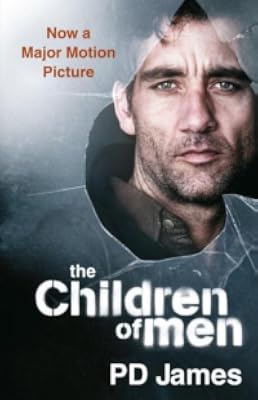
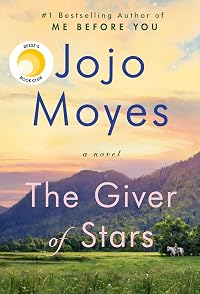
Member Recommendations
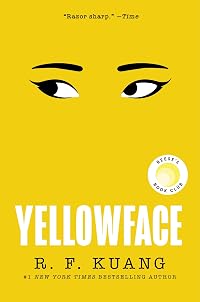
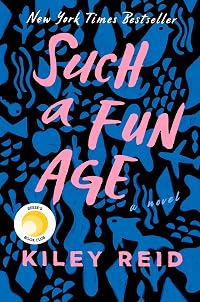
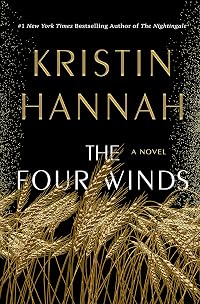
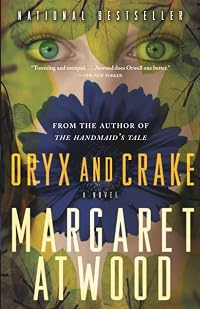
lottpoet for the similar folksy selling of the indoctrination/assimilation/re-culturing of the children by removing them from their families (summer camps in Roth's book, permanent enforced foster care in Ng's)
Member Reviews
Celeste Ng's Our Missing Hearts is a slow, tense yet tender exploration of a family separated in the wake of a dystopian future eerily similar to our contemporary United States and the bond between a mother and the son she had to abandon. It is the definitive dystopian work of this burgeoning decade, pulling intensely from a number of current issues facing America, including the push for book bans in both school and public libraries in the name of protecting children, growing anti-Asian sentiment exacerbated by the COVID-19 pandemic, and the history (and present) of removing children from their families as a means of political control. While it does suffer from rather heavy-handed exposition for a sizable chunk of the novel, Ng's most show more recent novel still shines when it focuses on the power of words and the tenuous dynamic between the protagonist, Bird Gardner, and his mother.
The novel is told from two perspectives, Bird Gardner and his mother, Margaret Miu, as they go on a journey to reunite and understand who each other has become in their absence against the backdrop of a growing, odd little rebellion. Bird can barely remember life with his mother before she was taken by him due to her violations of PACT—Preserving American Culture and Traditions—which allow for children to be removed from their homes and separated from their parents in the name of preventing the spread of "dangerous" or "un-American" views. Suddenly, Bird receives a mysterious postcard from her, which sends him on a quest that has him traversing the hollow shells of public libraries and the streets of New York City to find his mother. When he finds her, Margaret shares why she had to leave him and, afterwards, all the testimonials she's gathered of other parents whose children were taken under PACT. The two slowly rebuild their bond as Margaret finalizes her act of defiance and an old promise to a mother: tell their stories.
As always, Celeste Ng's prose is beautifully rendered. She has such a knack for creative, compelling metaphors that serve to conjure a distinct image and tone throughout all her books. It makes moments of tenderness, of violence, of hope all the more guttural to the reader.
My one qualm, as stated earlier, is that the novel is particularly heavy-handed with the exposition towards the middle half of this book once Bird and Margaret are reunited. I think it is important to delve into the backstory of Margaret to understand her willing naivety and the way her perspective on PACT shifts once her own words became a calling card for anti-PACT sentiment and protests against the re-placement of children. However, it grinds the momentum to a halt with extended flashbacks which, at moments, feel more like a history textbook. Unfortunately, the narrative and Bird's perspective as a child who cannot remember the Crisis strains against the idea of "show, don't tell" and struggles to convey exposition in a seemingly organic manner.
I think dystopian fiction lives or dies by its conclusion and Our Missing Hearts is no exception. I remember reading both 1984 and Fahrenheit 451 in my senior year of high school as part of a dystopian unit for my AP Literature class. I enjoyed both, but I always preferred the latter due to its more ambiguous, but still hopeful ending. I will not spoil the ending of this book for those who have not read it, but there is a solid balance of stakes and hope for the future of this United States. It recognizes that part of the success of discriminatory and fascist institutions is individualism and a willing ignorance to the harms being committed against others. Others whose full humanity you do not recognize because they are not within your immediate circle of community. The possibility of solidarity is not entirely lost, though, and the hope and perseverance that the novel closes on is poignant and actually made me tear up while reading. show less
The novel is told from two perspectives, Bird Gardner and his mother, Margaret Miu, as they go on a journey to reunite and understand who each other has become in their absence against the backdrop of a growing, odd little rebellion. Bird can barely remember life with his mother before she was taken by him due to her violations of PACT—Preserving American Culture and Traditions—which allow for children to be removed from their homes and separated from their parents in the name of preventing the spread of "dangerous" or "un-American" views. Suddenly, Bird receives a mysterious postcard from her, which sends him on a quest that has him traversing the hollow shells of public libraries and the streets of New York City to find his mother. When he finds her, Margaret shares why she had to leave him and, afterwards, all the testimonials she's gathered of other parents whose children were taken under PACT. The two slowly rebuild their bond as Margaret finalizes her act of defiance and an old promise to a mother: tell their stories.
As always, Celeste Ng's prose is beautifully rendered. She has such a knack for creative, compelling metaphors that serve to conjure a distinct image and tone throughout all her books. It makes moments of tenderness, of violence, of hope all the more guttural to the reader.
"Her cries wordless sounds, hanging in the air like shards of glass."
My one qualm, as stated earlier, is that the novel is particularly heavy-handed with the exposition towards the middle half of this book once Bird and Margaret are reunited. I think it is important to delve into the backstory of Margaret to understand her willing naivety and the way her perspective on PACT shifts once her own words became a calling card for anti-PACT sentiment and protests against the re-placement of children. However, it grinds the momentum to a halt with extended flashbacks which, at moments, feel more like a history textbook. Unfortunately, the narrative and Bird's perspective as a child who cannot remember the Crisis strains against the idea of "show, don't tell" and struggles to convey exposition in a seemingly organic manner.
I think dystopian fiction lives or dies by its conclusion and Our Missing Hearts is no exception. I remember reading both 1984 and Fahrenheit 451 in my senior year of high school as part of a dystopian unit for my AP Literature class. I enjoyed both, but I always preferred the latter due to its more ambiguous, but still hopeful ending. I will not spoil the ending of this book for those who have not read it, but there is a solid balance of stakes and hope for the future of this United States. It recognizes that part of the success of discriminatory and fascist institutions is individualism and a willing ignorance to the harms being committed against others. Others whose full humanity you do not recognize because they are not within your immediate circle of community. The possibility of solidarity is not entirely lost, though, and the hope and perseverance that the novel closes on is poignant and actually made me tear up while reading. show less
Celeste Ng has written another powerful book. This time it is about what happens when fear overtakes our senses, and people unite against a race, against literature, against protests.
In this world, PACT, Preserving American Culture and Traditions has become the law, and anyone who shows any anti-American tendencies will be removed, or their children will be removed.
Bird, a young boy, lives with his dad, Ethan. His mother has been gone for 3 years. But, Bird receives a note from her, with cats on it. Bird takes this as a sign, and begins to search for clues to lead him to his mother.
A frightening tale that isn't too far off from reality. Asian American hate, and children being separated from families is happening right now.
In this world, PACT, Preserving American Culture and Traditions has become the law, and anyone who shows any anti-American tendencies will be removed, or their children will be removed.
Bird, a young boy, lives with his dad, Ethan. His mother has been gone for 3 years. But, Bird receives a note from her, with cats on it. Bird takes this as a sign, and begins to search for clues to lead him to his mother.
A frightening tale that isn't too far off from reality. Asian American hate, and children being separated from families is happening right now.
2022. A well- written, accessible novel about fascist creep. An economic depression is blamed on China, with the usual resulant anti-Asian sentiments and violence cropping up. Children are routinely taken away from their parents. Questioning authority becomes impossible in The U. S. Neighbors report each other for anything suspicious. The protagonist, Bird, is a boy whose Asian mother left to keep him safe with his white father. But where is she and is she really involved in the resistance?
LOVED this one.
This book is set in the near future in the USA. Life is ruled by PACT: the protection of American culture and traditions. Which means foreigners, especially anyone who looks Asian, are suspect, as China is seen as the biggest threat to American values. Under PACT rules, children can be removed from their parents if the parents expose them to unamerican ideas or activities.
The story revolves around Bird, who has an Asian mother and white father. His mother has written books banned under PACT and Bird's father takes steps to distance him and his son from any suspicion that they share the mother's beliefs. But Bird misses his mother and when an opportunity arises to find her, he takes it.
This book is evocative of so many show more actual events, such as the residential schools and the "Sixties Scoop" programs in Canada where Aboriginal children were taken from their families. And the way immigrant children are separated from their families at the US border. It is also reminiscent of Communist regimes where neighbours were encouraged to report each other. And of George Orwell's "thought police".
It's also a good story about love, loyalty and doing what you can to stand up for what is right.
Like I said, I loved it. show less
This book is set in the near future in the USA. Life is ruled by PACT: the protection of American culture and traditions. Which means foreigners, especially anyone who looks Asian, are suspect, as China is seen as the biggest threat to American values. Under PACT rules, children can be removed from their parents if the parents expose them to unamerican ideas or activities.
The story revolves around Bird, who has an Asian mother and white father. His mother has written books banned under PACT and Bird's father takes steps to distance him and his son from any suspicion that they share the mother's beliefs. But Bird misses his mother and when an opportunity arises to find her, he takes it.
This book is evocative of so many show more actual events, such as the residential schools and the "Sixties Scoop" programs in Canada where Aboriginal children were taken from their families. And the way immigrant children are separated from their families at the US border. It is also reminiscent of Communist regimes where neighbours were encouraged to report each other. And of George Orwell's "thought police".
It's also a good story about love, loyalty and doing what you can to stand up for what is right.
Like I said, I loved it. show less
In a near future United States, America has suffered through the Crisis, a collapse worse than the Great Depression. PACT (Preserving American Culture and Traditions) is what pulled the country back together, but at great cost: by pinning the blame on China, all Asian Americans are suspect, as is anyone who speaks out against PACT. To enforce submission and compliance, the government will remove children from homes where the parents are a bad influence, so parents live in fear.
Bird's mother, Margaret Miu, was a poet whose lines became the rallying cry of anti-PACT activists, throwing suspicion on her; in order to protect Bird, Margaret and Bird's white dad, Ethan, agree that Margaret will leave, cutting off all connection to the show more family, when Bird is nine. Three years later, Bird receives a letter from his mother, and follows his memories of the stories she told him to find the clue that will bring him to her.
In New York, Margaret was reunited with her old friend from the Crisis, Domi, now in charge of an electronics empire, and Bird is reunited with his mother and with his friend Sadie, a foster child who is searching for her parents. Margaret is working on a project that Bird and Sadie believe will change everything - but will it make enough of a difference?
Heartbreaking. And as Ng mentions in the Author's Note, "There is a long history, in the U.S. and elsewhere, of removing children as a means of political control."
Quotes
People didn't like to talk about it, liked to hear about it even less: that the patriotism of PACT was laced with a threat. (40)
She was always doing that, telling him stories. Prying open cracks for magic to seep in, making the world a place of possibility. (101)
...but if there's one thing he remembers from stories, it's that people who offer help along your way - whether directing you to treasure or warning you of danger - should not be ignored. (105)
The librarian sighs. How can you know, she says, if no one teaches you, and no one ever talks about it, and all the books about it are gone? (114)
How porous the boundary was between him and world, as if everything flowed through him like water through a net. (148)
...the wind scrapes across the top of the city like a knife leveling flour from a cup... (151)
Here [in New York] no one noticed you, she realized. Which meant you could do anything, be anything. (158)
It can't go on, everyone said, but it kept going on. (177)
Left unsaid was that unity required a common enemy. One box in which to collect all their anger; one straw man to wear the hats of everything they feared. (186)
It happened so slowly that you might not even notice it at all, like the sky turning from dust to dark. (228)
[Sadie] looked around. There was the street lamp. And here in front of her was the magical doorway that might take her home. (252)
...[Bird's parents had] loved him so fiercely it had made them dangerous. (290)
Is anyone listening, out there? Are people simply rushing by? And how much of a difference can it make really, just one story, even all these stories taken together and funneled into the ear of the busy world - a world moving so quickly that voices and sounds Doppler into a rising whine, so distracted that even when your attention snags on the burr of something unusual, you are dragged away before you can see it, uprooting it like a bee's spent stinger. It is hard for anything to be heard and even if anyone hears it, how much of a difference could it really make, what change could it possibly bring, just these worlds, just this thing that happened once to one person that the listener does not and will never know. It is just a story. It is only words.
She does not know if it will make any difference. She does not know if anyone is listening....But still: she turns another page and goes on. (299)
Bird. Why did I tell you so many stories? Because I wanted the world to make sense to you. I wanted to make sense of the world, for you. I wanted the world to make sense. (301) show less
Bird's mother, Margaret Miu, was a poet whose lines became the rallying cry of anti-PACT activists, throwing suspicion on her; in order to protect Bird, Margaret and Bird's white dad, Ethan, agree that Margaret will leave, cutting off all connection to the show more family, when Bird is nine. Three years later, Bird receives a letter from his mother, and follows his memories of the stories she told him to find the clue that will bring him to her.
In New York, Margaret was reunited with her old friend from the Crisis, Domi, now in charge of an electronics empire, and Bird is reunited with his mother and with his friend Sadie, a foster child who is searching for her parents. Margaret is working on a project that Bird and Sadie believe will change everything - but will it make enough of a difference?
Heartbreaking. And as Ng mentions in the Author's Note, "There is a long history, in the U.S. and elsewhere, of removing children as a means of political control."
Quotes
People didn't like to talk about it, liked to hear about it even less: that the patriotism of PACT was laced with a threat. (40)
She was always doing that, telling him stories. Prying open cracks for magic to seep in, making the world a place of possibility. (101)
...but if there's one thing he remembers from stories, it's that people who offer help along your way - whether directing you to treasure or warning you of danger - should not be ignored. (105)
The librarian sighs. How can you know, she says, if no one teaches you, and no one ever talks about it, and all the books about it are gone? (114)
How porous the boundary was between him and world, as if everything flowed through him like water through a net. (148)
...the wind scrapes across the top of the city like a knife leveling flour from a cup... (151)
Here [in New York] no one noticed you, she realized. Which meant you could do anything, be anything. (158)
It can't go on, everyone said, but it kept going on. (177)
Left unsaid was that unity required a common enemy. One box in which to collect all their anger; one straw man to wear the hats of everything they feared. (186)
It happened so slowly that you might not even notice it at all, like the sky turning from dust to dark. (228)
[Sadie] looked around. There was the street lamp. And here in front of her was the magical doorway that might take her home. (252)
...[Bird's parents had] loved him so fiercely it had made them dangerous. (290)
Is anyone listening, out there? Are people simply rushing by? And how much of a difference can it make really, just one story, even all these stories taken together and funneled into the ear of the busy world - a world moving so quickly that voices and sounds Doppler into a rising whine, so distracted that even when your attention snags on the burr of something unusual, you are dragged away before you can see it, uprooting it like a bee's spent stinger. It is hard for anything to be heard and even if anyone hears it, how much of a difference could it really make, what change could it possibly bring, just these worlds, just this thing that happened once to one person that the listener does not and will never know. It is just a story. It is only words.
She does not know if it will make any difference. She does not know if anyone is listening....But still: she turns another page and goes on. (299)
Bird. Why did I tell you so many stories? Because I wanted the world to make sense to you. I wanted to make sense of the world, for you. I wanted the world to make sense. (301) show less
A PACT of Suppression
Review of the Penguin Audio audiobook edition narrated by Lucy Liu released simultaneously with the Penguin Books hardcover (October 4, 2022)
Celeste Ng's Our Missing Hearts imagines a not-too-distant future dystopian America which goes through an economic crisis in which China and by extension all Asian countries are scapegoated. This results in nationalist elements enacting a so-called PACT (Preserving American Culture and Tradtions) Act which is consequently used to control the population through ever looser interpretation. One aspect becomes the removal of children from families who have been identified as having dissident views.
The story centres on 12-year old show more Noah "Bird" Gardner the son of etymologist Ethan Gardner and poet Margaret Miu. The story begins in a flash forward from the Crisis in the midst of PACT America where Miu has been separated from her family and son. We gradually learn that she has become a symbol of the anti-PACT movement through her book of poetry "Our Missing Hearts", although we don't know if she has been imprisoned, executed or is on the run and underground. Bird receives clues to his mother's possible continued existence and sets out in an attempt to find her. Further discussion of the plot would get into spoiler territory.
This was a powerful and compelling story which I listened to in only a few days mostly during travel to seasonal gatherings and events. It felt completely plausible due to its many historical and recent parallels whether from slavery to indigenous residence schools to immigrant family separation to the anti-Asian racism which was inflamed by the COVID Pandemic. It leads to a dramatic conclusion in which the individual stories of tragedy and suppression can still be a message of hope, endurance and inspiration to others.
Trivia and Links
Author Celeste Ng reads the Author's Note afterword in this audiobook edition and recommends the following additional reading:
On the history of American political control of families by the forced separation of children:
Taking Children: A History of American Terror (2020) by Laura Briggs.
On anti-Asian discrimination:
The Making of Asian America: A History (2015) by Erika Lee.
Yellow Peril!: An Archive of Anti-Asian Fear (2014) edited by John Kuo Wei Tchen & Dylan Yates.
Infamy: The Shocking Story of the Japanese American Internment in World War II (2015) by Richard Reeves.
From a Whisper to a Rallying Cry: The Killing of Vincent Chin and the Trial that Galvanized the Asian American Movement (2021) by Paula Yoo.
While Ng acknowledges that the version of the folk story of "The Boy Who Drew Cats" is her own variation, the classic version is The Boy Who Drew Cats (1898) translated by Lafcadio Hearn from the original Japanese language series "Japanese Fairy Tales" by Hasegawa Takejirō. show less
Review of the Penguin Audio audiobook edition narrated by Lucy Liu released simultaneously with the Penguin Books hardcover (October 4, 2022)
This is America. We don't burn books, we pulp them.
Celeste Ng's Our Missing Hearts imagines a not-too-distant future dystopian America which goes through an economic crisis in which China and by extension all Asian countries are scapegoated. This results in nationalist elements enacting a so-called PACT (Preserving American Culture and Tradtions) Act which is consequently used to control the population through ever looser interpretation. One aspect becomes the removal of children from families who have been identified as having dissident views.
The story centres on 12-year old show more Noah "Bird" Gardner the son of etymologist Ethan Gardner and poet Margaret Miu. The story begins in a flash forward from the Crisis in the midst of PACT America where Miu has been separated from her family and son. We gradually learn that she has become a symbol of the anti-PACT movement through her book of poetry "Our Missing Hearts", although we don't know if she has been imprisoned, executed or is on the run and underground. Bird receives clues to his mother's possible continued existence and sets out in an attempt to find her. Further discussion of the plot would get into spoiler territory.
This was a powerful and compelling story which I listened to in only a few days mostly during travel to seasonal gatherings and events. It felt completely plausible due to its many historical and recent parallels whether from slavery to indigenous residence schools to immigrant family separation to the anti-Asian racism which was inflamed by the COVID Pandemic. It leads to a dramatic conclusion in which the individual stories of tragedy and suppression can still be a message of hope, endurance and inspiration to others.
Trivia and Links
Author Celeste Ng reads the Author's Note afterword in this audiobook edition and recommends the following additional reading:
On the history of American political control of families by the forced separation of children:
Taking Children: A History of American Terror (2020) by Laura Briggs.
On anti-Asian discrimination:
The Making of Asian America: A History (2015) by Erika Lee.
Yellow Peril!: An Archive of Anti-Asian Fear (2014) edited by John Kuo Wei Tchen & Dylan Yates.
Infamy: The Shocking Story of the Japanese American Internment in World War II (2015) by Richard Reeves.
From a Whisper to a Rallying Cry: The Killing of Vincent Chin and the Trial that Galvanized the Asian American Movement (2021) by Paula Yoo.
While Ng acknowledges that the version of the folk story of "The Boy Who Drew Cats" is her own variation, the classic version is The Boy Who Drew Cats (1898) translated by Lafcadio Hearn from the original Japanese language series "Japanese Fairy Tales" by Hasegawa Takejirō. show less
I thought that Our Missing Hearts was a terrible title. But after finishing Celeste Ng's new novel, I realized that it was the only possible title. Our Missing Hearts is set in a slightly different, but not unfeasible version of the United States after an economic depression that is blamed on China. Because China is blamed, People of Asian Origin (or PAOs as they are known) are scrutinized along with anyone else who speaks or acts out against the PACT (Protect our American Culture and Traditions) Act which is adopted as the result of the depression. Under the Act, children may be removed from homes deemed to be unsuitable because they expose children to UnAmerican ideas. Censorship cleanses libraries and schools of any subversive show more material, including the poetry of Margaret Miu, a Chinese-American woman, who goes into hiding to avoid the removal of her son, Bird. The title of Miu's poetry book, “Our Missing Hearts” becomes the slogan of a movement in opposition to the removal of children from their parents.
Our Missing Hearts depicts a slippery slope into overt racism and authoritarianism as well as the pain of families who have lost their children and will never know their fate. It more than depicts it. It makes the reader feel, in some small way, the lifelong emptiness and sorrow that the disappearance of a loved one leaves in the heart. Highly recommended. show less
Our Missing Hearts depicts a slippery slope into overt racism and authoritarianism as well as the pain of families who have lost their children and will never know their fate. It more than depicts it. It makes the reader feel, in some small way, the lifelong emptiness and sorrow that the disappearance of a loved one leaves in the heart. Highly recommended. show less
Members
- Recently Added By
Published Reviews
ThingScore 100
"I won’t give away the splendid conclusion of Ng’s book ... The gears in this story for the most part mesh very well. And Bird is a brave and believable character, who gives us a relatable portal into a world that seems more like our own every day."
added by lquilter
Lists

Top Five Books of 2022
736 works; 272 members

LibraryReads, October 2022
9 works; 1 member

Speculative Fiction to Read
706 works; 32 members

Indie Next Picks
196 works; 4 members

Best-Reviewed Books of 2022
10 works; 1 member

2022 GoodReads Choice Fiction Awards
20 works; 1 member

Dublin Literary Award 2024 Longlist
66 works; 4 members

Books That Made Us Cry
278 works; 145 members
Still to Read 2022
5 works; 1 member

Reese Witherspoon Book Club
100 works; 4 members

Reese's Book Club
122 works; 2 members
Author Information

Celeste Ng was born in Pittsburgh, Pennsylvania and raised in Shaker Heights, Ohio. She attended Harvard University and studied English. She went on to graduate school at the University of Michigan and earned her Master's of Fine Arts in writing. While attending the University of Michigan, Ng won the Hopwood Award for her short story, What Passes show more Over. Ng was a recipient of a Pushcart Prize in 2012 for her story Girls, At Play. Her debut novel, Everything I Never Told You: A Novel, is a literary thriller that focuses on an American family in 1970s Ohio. This book won Amazon book of the Year in 2014. Little Fires Everywhere is her second novel, published in September 2017. (Bowker Author Biography) show less
Some Editions
Awards and Honors
Awards
Distinctions
Notable Lists
Series
Belongs to Publisher Series
Contemporánea [Alba] (52)
Common Knowledge
- Canonical title
- Our Missing Hearts
- Original title
- Our Missing Hearts
- Original publication date
- 2022
- People/Characters
- Margaret Miu; Noah “Bird” Gardner; Ethan Gardner; Dominique “Domi” Duchess; Sadie Greenstein; Marie Johnson
- Important places
- Cambridge, Massachusetts, USA; New York, New York, USA; Philadelphia, Pennsylvania, USA
- Epigraph
- In the terrible years of the Yezhov terror I spent seventeen months waiting in line outside the prison in Leningrad...
Standing behind me was a woman, with lips blue from cold...Now she started out of the torpor common... (show all) to us all and asked me in a whisper (everyone whispered there): "Can you describe this?"
And I said: "I can."
Then something like a smile passed fleetingly over what had once been her face.
~ Anna Akhmatova, "Requiem, 1935-1940" - Dedication
- For my family
- First words
- The letter arrives on a Friday.
- Last words
- (Click to show. Warning: May contain spoilers.)I would like that, very much.
- Canonical DDC/MDS
- 813.6
- Canonical LCC
- PS3614.G83
Classifications
Statistics
- Members
- 2,596
- Popularity
- 7,292
- Reviews
- 119
- Rating
- (3.90)
- Languages
- 11 — Czech, Danish, Dutch, English, Finnish, French, German, Italian, Portuguese, Spanish, Swedish
- Media
- Paper, Audiobook, Ebook
- ISBNs
- 39
- ASINs
- 9