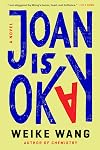
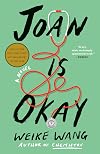
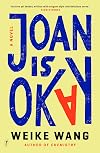
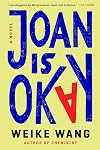
Joan Is Okay
by Weike Wang
On This Page
Description
NEW YORK TIMES EDITORS’ CHOICE • A witty, moving, piercingly insightful new novel about a marvelously complicated woman who can’t be anyone but herself, from the award-winning author of ChemistryLONGLISTED FOR THE ANDREW CARNEGIE MEDAL • “A deeply felt portrait . . . With gimlet-eyed observation laced with darkly biting wit, Weike Wang masterfully probes the existential uncertainty of being other in America.”—Celeste Ng, author of Little Fires Everywhere
ONE OF THE BEST BOOKS show more OF THE YEAR: The New York Times Book Review, The New Yorker, NPR, The Washington Post, Vox
Joan is a thirtysomething ICU doctor at a busy New York City hospital. The daughter of Chinese parents who came to the United States to secure the American dream for their children, Joan is intensely devoted to her work, happily solitary, successful. She does look up sometimes and wonder where her true roots lie: at the hospital, where her white coat makes her feel needed, or with her family, who try to shape her life by their own cultural and social expectations.
Once Joan and her brother, Fang, were established in their careers, her parents moved back to China, hoping to spend the rest of their lives in their homeland. But when Joan’s father suddenly dies and her mother returns to America to reconnect with her children, a series of events sends Joan spiraling out of her comfort zone just as her hospital, her city, and the world are forced to reckon with a health crisis more devastating than anyone could have imagined.
Deceptively spare yet quietly powerful, laced with sharp humor, Joan Is Okay touches on matters that feel deeply resonant: being Chinese-American right now; working in medicine at a high-stakes time; finding one’s voice within a dominant culture; being a woman in a male-dominated workplace; and staying independent within a tight-knit family. But above all, it’s a portrait of one remarkable woman so surprising that you can’t get her out of your head. show less
Tags
Recommendations


Member Reviews
Joan is Okay is a difficult novel to describe in a sentence or two. It’s mainly a character driven read of a woman who enjoys different things to everyone else – or so she thinks. Over the course of the novel, she tries new things and learns how to discard those she doesn’t like.
Joan is an intensive care doctor. Her main affinity is for the machines (one of the early delights of the novel is her describing how she would like to put googly eyes on the ECMO machine) and the work. She loves her job and finds order in it, preferring it to friendship and family. When her father dies, she goes to China and back over the weekend for the funeral and then back to work. To her colleagues and superiors, this is odd. But to Joan, work is show more home. But then things start to happen. While her dedication to the job is lauded, it’s suggested that she doesn’t work so often. Her new neighbour wants to talk to her, and give her books to read and a television to watch. Joan’s mother comes to the US from China and they talk on the phone and visit. Joan starts to understand things like Seinfeld and Friends. Then the COVID-19 pandemic comes and Joan starts to reject the things that don’t work in her life, the things that are too much. By the end, you know that Joan both was and is okay.
I enjoyed most of this story. The ending felt a little too hurried, but perhaps when the dates started appearing the in text and mentions of a virus in China, I wanted to speed things up a bit. Like many people during the pandemic, Joan has time to think and ponder her relationships with family and others. It’s a bit repetitive and although there are no easy answers to how Joan, her mother and her brother feel about their place in the world it was a bit circular. Joan comes back to almost the same point she was at the start of the novel, but things are a bit clearer about what she wants and what she is happy to discard. So there is growth and reflection, wisdom and a boldness to Joan at the end.
Wang writes spare prose with a bite, some lines have a dry humour to them, others make you laugh out load. The immigrant experience is not sugar coated, and the way the characters adapt or accept their new lives is varied. It’s a solid read, one you should read slowly rather than speed through.
http://samstillreading.wordpress.com show less
Joan is an intensive care doctor. Her main affinity is for the machines (one of the early delights of the novel is her describing how she would like to put googly eyes on the ECMO machine) and the work. She loves her job and finds order in it, preferring it to friendship and family. When her father dies, she goes to China and back over the weekend for the funeral and then back to work. To her colleagues and superiors, this is odd. But to Joan, work is show more home. But then things start to happen. While her dedication to the job is lauded, it’s suggested that she doesn’t work so often. Her new neighbour wants to talk to her, and give her books to read and a television to watch. Joan’s mother comes to the US from China and they talk on the phone and visit. Joan starts to understand things like Seinfeld and Friends. Then the COVID-19 pandemic comes and Joan starts to reject the things that don’t work in her life, the things that are too much. By the end, you know that Joan both was and is okay.
I enjoyed most of this story. The ending felt a little too hurried, but perhaps when the dates started appearing the in text and mentions of a virus in China, I wanted to speed things up a bit. Like many people during the pandemic, Joan has time to think and ponder her relationships with family and others. It’s a bit repetitive and although there are no easy answers to how Joan, her mother and her brother feel about their place in the world it was a bit circular. Joan comes back to almost the same point she was at the start of the novel, but things are a bit clearer about what she wants and what she is happy to discard. So there is growth and reflection, wisdom and a boldness to Joan at the end.
Wang writes spare prose with a bite, some lines have a dry humour to them, others make you laugh out load. The immigrant experience is not sugar coated, and the way the characters adapt or accept their new lives is varied. It’s a solid read, one you should read slowly rather than speed through.
http://samstillreading.wordpress.com show less
The Publisher Says: A witty, moving, piercingly insightful new novel about a marvelously complicated woman who can’t be anyone but herself, from the award-winning author of Chemistry
Joan is a thirtysomething ICU doctor at a busy New York City hospital. The daughter of Chinese parents who came to the United States to secure the American dream for their children, Joan is intensely devoted to her work, happily solitary, successful. She does look up sometimes and wonder where her true roots lie: at the hospital, where her white coat makes her feel needed, or with her family, who try to shape her life by their own cultural and social expectations.
Once Joan and her brother, Fang, were established in their careers, her parents moved back to show more China, hoping to spend the rest of their lives in their homeland. But when Joan’s father suddenly dies and her mother returns to America to reconnect with her children, a series of events sends Joan spiraling out of her comfort zone just as her hospital, her city, and the world are forced to reckon with a health crisis more devastating than anyone could have imagined.
Deceptively spare yet quietly powerful, laced with sharp humor, Joan Is Okay touches on matters that feel deeply resonant: being Chinese-American right now; working in medicine at a high-stakes time; finding one’s voice within a dominant culture; being a woman in a male-dominated workplace; and staying independent within a tight-knit family. But above all, it’s a portrait of one remarkable woman so surprising that you can’t get her out of your head.
I RECEIVED A DRC FROM THE PUBLISHER VIA NETGALLEY. THANK YOU.
My Review: First things first: I think Joan's neurodivergent. There. I said it.
What else is Joan? A disappointing daughter, who isn't going to give her mother the expected grands. An annoying sister, who is resolutely unimpressed with her brother's lavish getting-and-spending lifestyle. A breathtakingly good, effective ICU doctor at the outset of the Plague. A clueless, oblivious object of somewhat diffident romantic interest...utterly unrequited...for her neighbor. And most of all, most satisfyingly and unbreakably, Joan is herself.
If you don't like to read "women's fiction" because it's about men (how to catch), read this book. It's about Others (how to evade), when it's about anyone not Joan. And that was exactly why I enjoyed the read so much. Joan's struggles are typical for an atypical person, and her intelligence isn't a problem but a solution, making her an extra delightful companion for this reader. As everyone around her tries to make her feel she's missing out, lacking something, somehow wanting for something, and until she decides for herself what she thinks, she remains upset and at sea. In her enforced idleness (bereavement leave? for a father she felt little connection to still less affection for, shouting abuser that he was?) she loses the armor of being too busy to deal with all the mishegas of ordinary life.
It is great to read about the woman lead's sense of self being explored and resolved without a boyfriend at the beginning, middle, or end of the process. It is bracing to read the genuinely painful experience of the first-generation American in attempting to come to a happy resolution to a parent's desires when these are rooted in a wildly different world. But then, as the visibly different as well as culturally different as well as neurologically different (this last is not explicit in the text, but its factuality is the hill I'll die on) Joan thinks, "Why try to explain yourself to someone who had no capacity to listen?" She thinks this in a different relationship's context but the truth is, it is Joan all the way. She's not going to do the same thing a dozen...even, I suspect, a pair of...times expecting or hoping for different results. What kept me from giving it all five stars was, however, that very thing: I felt Joan was harshly judgmental from beginning to end, despite questioning herself and her responses as we went through the story. I think that's a bit unbelievable, it seemed to me she would've adjusted some of her private judgments...still, not a fatal flaw since I liked her from giddy-up to whoa.
In fact, in just over 200pp, I fell in love with Joan as she is. I think you might do the same. Give her a few of your hours. She's a good companion. show less
Joan is a thirtysomething ICU doctor at a busy New York City hospital. The daughter of Chinese parents who came to the United States to secure the American dream for their children, Joan is intensely devoted to her work, happily solitary, successful. She does look up sometimes and wonder where her true roots lie: at the hospital, where her white coat makes her feel needed, or with her family, who try to shape her life by their own cultural and social expectations.
Once Joan and her brother, Fang, were established in their careers, her parents moved back to show more China, hoping to spend the rest of their lives in their homeland. But when Joan’s father suddenly dies and her mother returns to America to reconnect with her children, a series of events sends Joan spiraling out of her comfort zone just as her hospital, her city, and the world are forced to reckon with a health crisis more devastating than anyone could have imagined.
Deceptively spare yet quietly powerful, laced with sharp humor, Joan Is Okay touches on matters that feel deeply resonant: being Chinese-American right now; working in medicine at a high-stakes time; finding one’s voice within a dominant culture; being a woman in a male-dominated workplace; and staying independent within a tight-knit family. But above all, it’s a portrait of one remarkable woman so surprising that you can’t get her out of your head.
I RECEIVED A DRC FROM THE PUBLISHER VIA NETGALLEY. THANK YOU.
My Review: First things first: I think Joan's neurodivergent. There. I said it.
What else is Joan? A disappointing daughter, who isn't going to give her mother the expected grands. An annoying sister, who is resolutely unimpressed with her brother's lavish getting-and-spending lifestyle. A breathtakingly good, effective ICU doctor at the outset of the Plague. A clueless, oblivious object of somewhat diffident romantic interest...utterly unrequited...for her neighbor. And most of all, most satisfyingly and unbreakably, Joan is herself.
If you don't like to read "women's fiction" because it's about men (how to catch), read this book. It's about Others (how to evade), when it's about anyone not Joan. And that was exactly why I enjoyed the read so much. Joan's struggles are typical for an atypical person, and her intelligence isn't a problem but a solution, making her an extra delightful companion for this reader. As everyone around her tries to make her feel she's missing out, lacking something, somehow wanting for something, and until she decides for herself what she thinks, she remains upset and at sea. In her enforced idleness (bereavement leave? for a father she felt little connection to still less affection for, shouting abuser that he was?) she loses the armor of being too busy to deal with all the mishegas of ordinary life.
It is great to read about the woman lead's sense of self being explored and resolved without a boyfriend at the beginning, middle, or end of the process. It is bracing to read the genuinely painful experience of the first-generation American in attempting to come to a happy resolution to a parent's desires when these are rooted in a wildly different world. But then, as the visibly different as well as culturally different as well as neurologically different (this last is not explicit in the text, but its factuality is the hill I'll die on) Joan thinks, "Why try to explain yourself to someone who had no capacity to listen?" She thinks this in a different relationship's context but the truth is, it is Joan all the way. She's not going to do the same thing a dozen...even, I suspect, a pair of...times expecting or hoping for different results. What kept me from giving it all five stars was, however, that very thing: I felt Joan was harshly judgmental from beginning to end, despite questioning herself and her responses as we went through the story. I think that's a bit unbelievable, it seemed to me she would've adjusted some of her private judgments...still, not a fatal flaw since I liked her from giddy-up to whoa.
In fact, in just over 200pp, I fell in love with Joan as she is. I think you might do the same. Give her a few of your hours. She's a good companion. show less
I read ‘Joan Is Okay’ in April. I loved it, but, in the immediate afterglow of reading it, I didn’t know how to review it. Here’s what I wrote then:
"I find it much harder to say why an exceptionally good book is exceptionally good than I do to say why an unsatisfying book is unsatisfying, but I know an exceptional book when I read one; my whole body reacts to it, my emotions flare, ideas spark, the need to read more wars with a reluctance to finish. 'Joan Is Okay' is an exceptional book. Read it and you’ll quickly see why. Joan isn’t just Okay, she’s remarkable. I loved spending time in her head."
So, here I am, months later, still thinking about ‘Joan Is Okay’, knowing it’s one of the best books that I've read this show more year and feeling that I ought to be able to say more about why I feel that way.
Here goes.
Firstly, there’s the writing style. It’s a first-person narrative, which can be hard to sustain for a whole novel but which here feels as effortless and natural as breathing. The reader is immediately in Joan’s head. No barriers. No filters. Just Joan as she is. Here are the opening paragraphs. They’ll show you what I mean:
"WHEN I THINK ABOUT PEOPLE, I think about space, how much space a person takes up and how much use that person provides. I am just under five feet tall and just under a hundred pounds. Briefly I thought I would exceed five feet, and while that would’ve been fine, I also didn’t need the extra height. To stay just under something gives me a sense of comfort, as when it rains and I can open an umbrella over my head.
Today someone said that I looked like a mouse. Five six and 290 pounds, he, in a backless gown with nonslip tube socks, said that my looking like a mouse made him wary. He asked how old I was. What schools had I gone to, and were they prestigious? Then where were my degrees from these prestigious schools?
My degrees are large and framed, I said. I don’t carry them around.
While not a mouse, I do have prosaic features. My eyes, hooded and lashless. I have very thin eyebrows.
I told the man that he could try another hospital or come back at another time. But high chance that I would still be here and he would still think that I looked like a mouse.
I read somewhere that empathy is repeating the last three words of a sentence and nodding your head."
Once I was in Joan’s head, I found I was very happy to be there. It felt familiar and a little like coming home.
Joan knows that she isn’t what people expect her to be.
What Joan confirms as she moves through the various stresses of the book, is that she knows who she is and she doesn’t want or need to be anyone else.
Even though those who love her, like her, or just work with her are constantly urging her to be more like them, to be as successful, or as social, or just as normal as they are, Joan does not accept the need to change. She really is okay. She just needs to navigate the demands of others and find a space where she can be herself. For Joan, that space is the ICU. Here’s Joan’s explanation of ICU and why she likes working there:
"A COMMON CONFUSION IS between intensive and emergency care. The latter is chaotic, usually on the first floor near the ambulance drop-off, in a room without dividers or enough beds. Someone might scream, Doctor! and because no one answers, that person screams on. Intensive care is just the opposite. It’s the best care that a hospital can give, and the room is quiet except for machine sounds, alarms that go on and off.
Just as radiologists know their imaging, ICU doctors know machines, ones that push oxygen into you, the all-mighty vent; ones that clean your blood, dialysis; the pumps, aka drips, that deliver medication and sedation through a central line directly to the heart. With many machines come many tubes. The endotracheal tube down the throat and to the vent for air, the nasogastric tube to the stomach for food, rectal tubes for stool, a foley for the bladder, etc. Fluid control was imperative. Too much fluid in and the body would swell. Too much fluid out and it would desiccate.
At my interview three years ago, the director asked why I chose intensive care, and I said I liked the purity of it, the total sense of control. Machines can tell you things that the people attached to them can’t, I said. I liked that the sick didn’t stay with us long, but for the stint that they do, we give it our all."
The book takes place after the unexpected death of Joan’s father. It covers a period when Joan is reflecting on the life she’s made for herself and the ways in which her brother, her sister-in-law and even her extrovert, gregarious neighbour are urging her to change it so that she can be more… well… more like them and less like an oddity who makes them uncomfortable.
What I liked most about the book was that Joan listens to the people around her and then makes up her own mind. She lives in her rich, successful brother’s house for a while and sees his life with his wife and his children up close. She talks with her neighbour. She’s not dismissive of either of them. She just knows that what makes them happy and what makes her happy are not the same things. She leaves the surprise housewarming party her neighbour throws for her in Joan’s own flat. She leaves her brother’s house with a sense of relief. It’s not that she’s walking away from the world or choosing isolation; she’s walking into the place where she belongs and can be useful, while sustaining the solitude she needs without letting go of human connection. That felt like a happy ending to me. show less
"I find it much harder to say why an exceptionally good book is exceptionally good than I do to say why an unsatisfying book is unsatisfying, but I know an exceptional book when I read one; my whole body reacts to it, my emotions flare, ideas spark, the need to read more wars with a reluctance to finish. 'Joan Is Okay' is an exceptional book. Read it and you’ll quickly see why. Joan isn’t just Okay, she’s remarkable. I loved spending time in her head."
So, here I am, months later, still thinking about ‘Joan Is Okay’, knowing it’s one of the best books that I've read this show more year and feeling that I ought to be able to say more about why I feel that way.
Here goes.
Firstly, there’s the writing style. It’s a first-person narrative, which can be hard to sustain for a whole novel but which here feels as effortless and natural as breathing. The reader is immediately in Joan’s head. No barriers. No filters. Just Joan as she is. Here are the opening paragraphs. They’ll show you what I mean:
"WHEN I THINK ABOUT PEOPLE, I think about space, how much space a person takes up and how much use that person provides. I am just under five feet tall and just under a hundred pounds. Briefly I thought I would exceed five feet, and while that would’ve been fine, I also didn’t need the extra height. To stay just under something gives me a sense of comfort, as when it rains and I can open an umbrella over my head.
Today someone said that I looked like a mouse. Five six and 290 pounds, he, in a backless gown with nonslip tube socks, said that my looking like a mouse made him wary. He asked how old I was. What schools had I gone to, and were they prestigious? Then where were my degrees from these prestigious schools?
My degrees are large and framed, I said. I don’t carry them around.
While not a mouse, I do have prosaic features. My eyes, hooded and lashless. I have very thin eyebrows.
I told the man that he could try another hospital or come back at another time. But high chance that I would still be here and he would still think that I looked like a mouse.
I read somewhere that empathy is repeating the last three words of a sentence and nodding your head."
Once I was in Joan’s head, I found I was very happy to be there. It felt familiar and a little like coming home.
Joan knows that she isn’t what people expect her to be.
What Joan confirms as she moves through the various stresses of the book, is that she knows who she is and she doesn’t want or need to be anyone else.
Even though those who love her, like her, or just work with her are constantly urging her to be more like them, to be as successful, or as social, or just as normal as they are, Joan does not accept the need to change. She really is okay. She just needs to navigate the demands of others and find a space where she can be herself. For Joan, that space is the ICU. Here’s Joan’s explanation of ICU and why she likes working there:
"A COMMON CONFUSION IS between intensive and emergency care. The latter is chaotic, usually on the first floor near the ambulance drop-off, in a room without dividers or enough beds. Someone might scream, Doctor! and because no one answers, that person screams on. Intensive care is just the opposite. It’s the best care that a hospital can give, and the room is quiet except for machine sounds, alarms that go on and off.
Just as radiologists know their imaging, ICU doctors know machines, ones that push oxygen into you, the all-mighty vent; ones that clean your blood, dialysis; the pumps, aka drips, that deliver medication and sedation through a central line directly to the heart. With many machines come many tubes. The endotracheal tube down the throat and to the vent for air, the nasogastric tube to the stomach for food, rectal tubes for stool, a foley for the bladder, etc. Fluid control was imperative. Too much fluid in and the body would swell. Too much fluid out and it would desiccate.
At my interview three years ago, the director asked why I chose intensive care, and I said I liked the purity of it, the total sense of control. Machines can tell you things that the people attached to them can’t, I said. I liked that the sick didn’t stay with us long, but for the stint that they do, we give it our all."
The book takes place after the unexpected death of Joan’s father. It covers a period when Joan is reflecting on the life she’s made for herself and the ways in which her brother, her sister-in-law and even her extrovert, gregarious neighbour are urging her to change it so that she can be more… well… more like them and less like an oddity who makes them uncomfortable.
What I liked most about the book was that Joan listens to the people around her and then makes up her own mind. She lives in her rich, successful brother’s house for a while and sees his life with his wife and his children up close. She talks with her neighbour. She’s not dismissive of either of them. She just knows that what makes them happy and what makes her happy are not the same things. She leaves the surprise housewarming party her neighbour throws for her in Joan’s own flat. She leaves her brother’s house with a sense of relief. It’s not that she’s walking away from the world or choosing isolation; she’s walking into the place where she belongs and can be useful, while sustaining the solitude she needs without letting go of human connection. That felt like a happy ending to me. show less
This is a story of how difficult it can be to remain true to oneself, especially when the person is outside the mainstream of commonly accepted ideas of expected behavior. Joan is a Chinese American intensive care physician in New York City. She is a woman in her mid-thirties who takes solace in her minimalist lifestyle and her work. It reflects a medical professional’s experiences leading up to and during COVID 19. Joan’s father has recently died, and her Chinese mother wants to leave the US and return to China. Her brother leads the upwardly mobile materialistic life. Their values are much different. Joan has chosen the single life and does not desire children. Many “well-meaning” friends and associates give her unsolicited show more advice about her choices.
It is a quiet reflective novel about pressures to live in a way other people view as “normal,” but Joan is content with her life. The story contains both serious topics and gentle humor. It is a story of racism and cultural differences. It is also a story of the generational divide, allowing a parent to return to a world in which she feels comfortable. This situation provides an opportunity to accept her mother’s choices (in a way others have not been able to accept her own).
I think many people will be able to relate to Joan, especially anyone who is seen as atypical or out of the mainstream. I am sure lots of people have had, at some point in life, to endure the comments of judgmental people who know how a life “should” be lived. It also comments, through flashbacks with the school guidance counselor, on how quickly people leap to label introverted studious women as “on the spectrum,” but personal choice to live differently does not require a diagnosis. It is a beautifully written story and one I enjoyed immensely. show less
It is a quiet reflective novel about pressures to live in a way other people view as “normal,” but Joan is content with her life. The story contains both serious topics and gentle humor. It is a story of racism and cultural differences. It is also a story of the generational divide, allowing a parent to return to a world in which she feels comfortable. This situation provides an opportunity to accept her mother’s choices (in a way others have not been able to accept her own).
I think many people will be able to relate to Joan, especially anyone who is seen as atypical or out of the mainstream. I am sure lots of people have had, at some point in life, to endure the comments of judgmental people who know how a life “should” be lived. It also comments, through flashbacks with the school guidance counselor, on how quickly people leap to label introverted studious women as “on the spectrum,” but personal choice to live differently does not require a diagnosis. It is a beautifully written story and one I enjoyed immensely. show less
Joan loves her job as an attending at a busy teaching hospital in New York. She runs the intensive care units and loves how machines keep people alive, the clarity of the job. She works all the time, cheerfully covering for the other doctors. She lives alone but spends barely any time in her apartment. Then a new neighbor moves in across the hall and his overtures of friendship confuse and annoy her. And her father dies and although she took 48 hours off to fly to and from China for the funeral, her boss doesn't find that adequate and insists she take more time.
Weike Wang is the author of the delightful and surprising Chemistry and this new novel is even better. Joan is a wonderful protagonist; relentlessly literal in her show more interpretations and single-minded in her devotion to her work, she has trouble figuring out what's expected of her when her mother calls to chat or her neighbor drops by with a pie he made. Wang drops the reader into the point in Joan's life when just being very good at her job isn't enough, for others and for Joan herself. This is a book that is set before and during the beginning of the pandemic. I wasn't sure I wanted to read about any of that, but Wang handles it all with subtlety. Weike Wang is an author I am very eager to hear more from. show less
Weike Wang is the author of the delightful and surprising Chemistry and this new novel is even better. Joan is a wonderful protagonist; relentlessly literal in her show more interpretations and single-minded in her devotion to her work, she has trouble figuring out what's expected of her when her mother calls to chat or her neighbor drops by with a pie he made. Wang drops the reader into the point in Joan's life when just being very good at her job isn't enough, for others and for Joan herself. This is a book that is set before and during the beginning of the pandemic. I wasn't sure I wanted to read about any of that, but Wang handles it all with subtlety. Weike Wang is an author I am very eager to hear more from. show less
I really enjoyed the rhythm of the narrator and the stylistic choice of not using quotation marks. It really contributed to main character's internal world. The latter part of the book threw me a bit because I wasn't expecting the change in situation, but ultimately it gave me pause in a good way. The themes of family relationships, loss and feeling different from those around us were explored in a quirky, relatable way. I'm eager to go back and read previous works by the author.
Thanks to NetGalley for the ARC I received.
Thanks to NetGalley for the ARC I received.
This is a story of how difficult it can be to remain true to oneself, especially when the person is outside the mainstream of commonly accepted ideas of expected behavior. Joan is a Chinese American intensive care physician in New York City. She is a woman in her mid-thirties who takes solace in her minimalist lifestyle and her work. It reflects a medical professional’s experiences leading up to and during COVID 19. Joan’s father has recently died, and her Chinese mother wants to leave the US and return to China. Her brother leads the upwardly mobile materialistic life. Their values are much different. Joan has chosen the single life and does not desire children. Many “well-meaning” friends and associates give her unsolicited show more advice about her choices.
It is a quiet reflective novel about pressures to live in a way other people view as “normal,” but Joan is content with her life. The story contains both serious topics and gentle humor. It is a story of racism and cultural differences. It is also a story of the generational divide, allowing a parent to return to a world in which she feels comfortable. This situation provides an opportunity to accept her mother’s choices (in a way others have not been able to accept her own).
I think many people will be able to relate to Joan, especially anyone who is seen as atypical or out of the mainstream. I am sure lots of people have had, at some point in life, to endure the comments of judgmental people who know how a life “should” be lived. It also comments, through flashbacks with the school guidance counselor, on how quickly people leap to label introverted studious women as “on the spectrum,” but personal choice to live differently does not require a diagnosis. It is a beautifully written story and one I enjoyed immensely. show less
It is a quiet reflective novel about pressures to live in a way other people view as “normal,” but Joan is content with her life. The story contains both serious topics and gentle humor. It is a story of racism and cultural differences. It is also a story of the generational divide, allowing a parent to return to a world in which she feels comfortable. This situation provides an opportunity to accept her mother’s choices (in a way others have not been able to accept her own).
I think many people will be able to relate to Joan, especially anyone who is seen as atypical or out of the mainstream. I am sure lots of people have had, at some point in life, to endure the comments of judgmental people who know how a life “should” be lived. It also comments, through flashbacks with the school guidance counselor, on how quickly people leap to label introverted studious women as “on the spectrum,” but personal choice to live differently does not require a diagnosis. It is a beautifully written story and one I enjoyed immensely. show less
Members
- Recently Added By
Lists

Wishlist
48 works; 1 member
Author Information

10+ Works 1,631 Members
Awards and Honors
Distinctions
Notable Lists
Common Knowledge
- Canonical title
- Joan Is Okay
- Original publication date
- 2022
Classifications
Statistics
- Members
- 507
- Popularity
- 59,314
- Reviews
- 41
- Rating
- (3.83)
- Languages
- English
- Media
- Paper, Audiobook, Ebook
- ISBNs
- 8
- ASINs
- 3