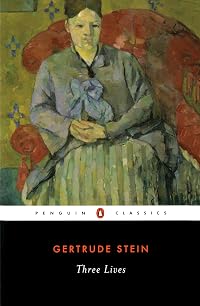
Three Lives
by Gertrude Stein 
On This Page
Description
American writer Gertrude Stein was definitely decades ahead of her time. Injecting experimental and avant-garde elements into her work, she described her method as "literary cubism"—an understandable goal for someone who was close friends with Picasso and many other important artists of the day. Although the collection Three Lives definitely pushes the literary envelope, the stories still manage to convey tender and engaging human portraits of three very different female protagonists..
Tags
Recommendations











Member Reviews
Enjoyed two of the lives!
By sally tarbox on 19 October 2017
Format: Kindle Edition
Three stories about three very different working-class American women; I enjoyed the first and last. The middle (longest- almost a novella at 95p) was a literary achievement but rather a chore to read.
My favourite was 'The Good Anna' - humorous in places, a great character study of a strong-minded German immigrant; a devoted servant but one who liked to rule the roost.
The final 'The Gentle Lena' follows a much weaker character, another German servant but this time a simple-minded girl whose aunt determines to arrange a marriage with a quiet and dutiful - and unwilling - friend's son...
The challenging one was 'Melanctha', whose protagonist is a young show more African-American woman. She has a slightly dodgy past, and when she takes up with a clean-living doctor, he starts to doubt the wisdom of their relationship; his girlfriend seems a mass of contradictions. Stein writes in a style all her own; a conversational style, repeating many statements, laying it on layer after layer to build up an understanding in the reader.
"Melanctha acted now the way she had said it always had been with them. Now it was always Jeff who had to do the asking. Now it was always Jeff who had to ask when would be the next time he should come to see her. Now always she was good and patient to him, and now always she was kind and loving with him, and always Jeff felt it was, that she was good to give him anything he ever asked or wanted, but never now any more for her own sake to make her happy in him. Now she did these things, as if it was just to please her Jeff Campbell, who needed she should now have kindness for him. Always now he was the beggar with them. Always now Melanctha gave it, not of her need but from her bounty to him. Always now Jeff found it getting harder for him." show less
By sally tarbox on 19 October 2017
Format: Kindle Edition
Three stories about three very different working-class American women; I enjoyed the first and last. The middle (longest- almost a novella at 95p) was a literary achievement but rather a chore to read.
My favourite was 'The Good Anna' - humorous in places, a great character study of a strong-minded German immigrant; a devoted servant but one who liked to rule the roost.
The final 'The Gentle Lena' follows a much weaker character, another German servant but this time a simple-minded girl whose aunt determines to arrange a marriage with a quiet and dutiful - and unwilling - friend's son...
The challenging one was 'Melanctha', whose protagonist is a young show more African-American woman. She has a slightly dodgy past, and when she takes up with a clean-living doctor, he starts to doubt the wisdom of their relationship; his girlfriend seems a mass of contradictions. Stein writes in a style all her own; a conversational style, repeating many statements, laying it on layer after layer to build up an understanding in the reader.
"Melanctha acted now the way she had said it always had been with them. Now it was always Jeff who had to do the asking. Now it was always Jeff who had to ask when would be the next time he should come to see her. Now always she was good and patient to him, and now always she was kind and loving with him, and always Jeff felt it was, that she was good to give him anything he ever asked or wanted, but never now any more for her own sake to make her happy in him. Now she did these things, as if it was just to please her Jeff Campbell, who needed she should now have kindness for him. Always now he was the beggar with them. Always now Melanctha gave it, not of her need but from her bounty to him. Always now Jeff found it getting harder for him." show less
The novel covers the lives of three women: Anna, a German-American servant, Melanctha, a single black woman, and Lena, a German immigrant who marries a tailor.
Through the use of repetition, the author draws you so thoroughly into the lives of the characters that it is somewhat uncomfortable for the reader. The middle and longest section about Melanctha in particular made me feel almost like I was engaged in a bad relationship myself. Brilliant proof that poetry and realism mix well, or that at least they can when Gertrude Stein is the writer.
Through the use of repetition, the author draws you so thoroughly into the lives of the characters that it is somewhat uncomfortable for the reader. The middle and longest section about Melanctha in particular made me feel almost like I was engaged in a bad relationship myself. Brilliant proof that poetry and realism mix well, or that at least they can when Gertrude Stein is the writer.
Great, very accessible way to get introduced to Stein who can be difficult (or at least obscure) at times. One has to realize that Stein was trying to do for writing what the Cubists were doing for painting.
I've been reading some of Stein's essays, which are pretty interesting. And I read a William Gass essay about 3 Lives, which was also pretty interesting, and I thought, well, why not?
Why not? Because this book is not particularly interesting. Gass reports reading it in one fevered sitting, then re-reading it obsessively, so deep was his ardor and fascination for the language. I can imagine that, I guess, if it were about one sixth as long (i.e., the length of an average Stein essay). Instead, it's Flaubert with more repetition and an intentionally restricted vocabulary. That's fine. It's important historically. But after I finished (skimming) the last life, I re-read the Gass essay. I would much, much rather read the Gass essay, show more because his writing (in that essay) is better than Stein's (in this text).
That said, Gass is a pretty high bar, and I can imagine returning to 3 Lives later in my life. Perhaps. Perhaps I'd rather just read other bits of Stein, like her essays. show less
Why not? Because this book is not particularly interesting. Gass reports reading it in one fevered sitting, then re-reading it obsessively, so deep was his ardor and fascination for the language. I can imagine that, I guess, if it were about one sixth as long (i.e., the length of an average Stein essay). Instead, it's Flaubert with more repetition and an intentionally restricted vocabulary. That's fine. It's important historically. But after I finished (skimming) the last life, I re-read the Gass essay. I would much, much rather read the Gass essay, show more because his writing (in that essay) is better than Stein's (in this text).
That said, Gass is a pretty high bar, and I can imagine returning to 3 Lives later in my life. Perhaps. Perhaps I'd rather just read other bits of Stein, like her essays. show less
I understand why this book is important to literature but I really did not enjoy it. This was one of a very small handful of books that made me look for excuses not to read. I forced myself to finish it because I was curious but it was not long drawn out process that I don't usually associate with reading.
Please note that I DNF this book at 40 percent. I should have called it at 10 percent actually because this book was a struggle for me to even get into from the start.
I managed the Good Anna's story in this book and started to read Melanchta and had to quit.
The Good Anna storyline was about a German housekeeper. I found it to be repetitive and the constant reusing of the word "good" everywhere almost killed me. Reading about what made Anna the "Good Anna" just felt like I was reading a how to manual. There was no color to anything. It was the Good Anna did X and the Good Anna did Y. Stein tries to talk about Anna's background a bit to explain her, but I just felt bored throughout it.
Melanchta dealt with a young woman who had a black show more father and a mixed race mother. I have no idea where Stein was going in this story since I quit after I started to notice a lot of what I considered racist commentary about "Negroes" in the book. I have no idea if Stein was trying to talk about what she saw as an issue that white Americans had towards blacks or mixed race people at time, or if this is what she really felt, either way I was not in the mood for it and just DNFed after I got to this point. show less
I managed the Good Anna's story in this book and started to read Melanchta and had to quit.
The Good Anna storyline was about a German housekeeper. I found it to be repetitive and the constant reusing of the word "good" everywhere almost killed me. Reading about what made Anna the "Good Anna" just felt like I was reading a how to manual. There was no color to anything. It was the Good Anna did X and the Good Anna did Y. Stein tries to talk about Anna's background a bit to explain her, but I just felt bored throughout it.
Melanchta dealt with a young woman who had a black show more father and a mixed race mother. I have no idea where Stein was going in this story since I quit after I started to notice a lot of what I considered racist commentary about "Negroes" in the book. I have no idea if Stein was trying to talk about what she saw as an issue that white Americans had towards blacks or mixed race people at time, or if this is what she really felt, either way I was not in the mood for it and just DNFed after I got to this point. show less
As seen in the title, Stein narrates the lives of three very different women, not in itself original, but it is the writing style that puts it on the 1001 Books to Read Before You Die list.
The first part follows the live of Anna, a German immigrant who works for Miss Mathilda, though is really the one in control of the household, making herself indispensible to her mistress. As the narrative moves forward, we find out more about Anna, her childhood and move to the States, as well as her family connections. She moves between positions, usually if her control is challenged by another woman, a wife for example. She is a kind woman, giving more than she has.
The second woman, Melanctha, couldn't be more different. It has a very different show more feeling, Melanctha is a young woman with a black father and mixed race mother, race and gender roles are very important in this part, as is sex. Melanctha is not content with her life, she is looking for more than what fate casts as her lot. This is the hardest part to read, not because of the material, rather the way it is presented, it is like listening to someone talking to you, going over the story, repeating details.
Last up is Lena, the saddest of the three women. Another German immigrant, she has the least control over her life, pushed towards an equally reluctant husband.
Took a while to read because of the writing style, which is more of an oral style with a lack of punctuation. I did enjoy it though, it is a rather sad book, especially for a female reader. show less
The first part follows the live of Anna, a German immigrant who works for Miss Mathilda, though is really the one in control of the household, making herself indispensible to her mistress. As the narrative moves forward, we find out more about Anna, her childhood and move to the States, as well as her family connections. She moves between positions, usually if her control is challenged by another woman, a wife for example. She is a kind woman, giving more than she has.
The second woman, Melanctha, couldn't be more different. It has a very different show more feeling, Melanctha is a young woman with a black father and mixed race mother, race and gender roles are very important in this part, as is sex. Melanctha is not content with her life, she is looking for more than what fate casts as her lot. This is the hardest part to read, not because of the material, rather the way it is presented, it is like listening to someone talking to you, going over the story, repeating details.
Last up is Lena, the saddest of the three women. Another German immigrant, she has the least control over her life, pushed towards an equally reluctant husband.
Took a while to read because of the writing style, which is more of an oral style with a lack of punctuation. I did enjoy it though, it is a rather sad book, especially for a female reader. show less
Members
- Recently Added By
Lists

1001 Books You Must Read Before You Die
1,448 works; 1,136 members

Female Author
1,234 works; 66 members

20th Century Literature
1,161 works; 55 members

Best Lesbian Fiction (And Narrative Non-Fiction)
155 works; 36 members

Experimental Literature
141 works; 19 members

Western World's Greatest Books - Project Gutenberg
295 works; 15 members

Fiction about the Working Class
74 works; 10 members

Modernism
140 works; 9 members

Publishing Triangle 100 Best Lesbian and Gay Novels
97 works; 6 members

Overdue Podcast
808 works; 9 members
First Novels
373 works; 17 members

Literary Witches
86 works; 4 members

Harold Bloom - The Western Canon: D. The Chaotic Age
833 works; 24 members
Author Information

185+ Works 13,802 Members
Famous writer Gertrude Stein was born on February 3, 1874 in Allegheny, PA and was educated at Radcliffe College and Johns Hopkins medical school. Stein wrote Three Lives, The Making of Americans, and Tender Buttons, all of which were considered difficult for the average reader. She is most famous for her opera Four Saints in Three Acts and The show more Autobiography of Alice B. Toklas, which was actually an autobiography of Stein herself. With her companion Alice B. Toklas, Stein received the French government's Medaille de la Reconnaissance Francaise for theory work with the American fund for French Wounded in World War I. Gertrude Stein died in Neuilly-ser-Seine, France on July 27, 1946. (Bowker Author Biography) show less
Gertrude Stein has a Legacy Library. Legacy libraries are the personal libraries of famous readers, entered by LibraryThing members from the Legacy Libraries group.
Some Editions
Awards and Honors
Awards
Series
Belongs to Publisher Series
Work Relationships
Is contained in
Great Modern Writers: Three Lives, the Metamorphosis and Other Stories, a Room With a View, Death in Venice, a Portrait by Dover Publications Inc
Common Knowledge
- Canonical title
- Three Lives
- Alternate titles*
- Tre vite
- Original publication date
- 1909
- People/Characters
- Anna; Miss Mathilda; Mrs Lehntman; Mrs Drehten; Melanctha Herbert; Dr Jeff Campbell (show all 11); Rose Johnson; Jane Harden; Lena; Mrs Haydon; Herman Kreder
- Important places
- Bridgeport
- Epigraph
- Donc je suis un malheureux et ce n'est ni ma faute ni celle de la vie.
--Jules Laforgue - First words
- The tradesmen of Bridgepoint learned to dread the sound of 'Miss Mathilda', for with that name the good Anna always conquered.
- Quotations
- There is nothing more dreary than old age in animals. Somehow it is all wrong that they should have grey hair and withered skin, and blind old eyes, and decayed and useless teeth. An old man or an old woman almost always has ... (show all)some tie that seems to bind them to the younger, realer life. They have children or the remembrance of old duties, but a dog that's old and so cut off from all its world of struggle, is like a dreary, deathless Struldbrug, the dreary dragger on of death through life. (p. 74)
- Last words
- (Click to show. Warning: May contain spoilers.)Herman Kreder was very well content now and he always lived very regular and peaceful, and with every day just like the next one, always alone now with his three good, gentle children.
- Original language
- English
*Some information comes from Common Knowledge in other languages. Click "Edit" for more information.
Classifications
Statistics
- Members
- 1,954
- Popularity
- 10,911
- Reviews
- 21
- Rating
- (3.01)
- Languages
- 8 — Czech, English, French, German, Italian, Portuguese, Spanish, Turkish
- Media
- Paper, Audiobook, Ebook
- ISBNs
- 104
- UPCs
- 3
- ASINs
- 50