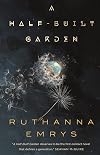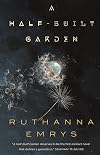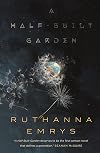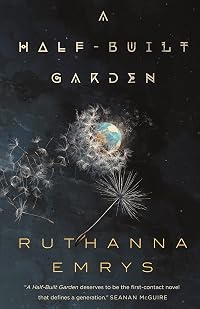
A Half-Built Garden
by Ruthanna Emrys
On This Page
Description
A literary descendent of Ursula K. Le Guin, Ruthanna Emrys crafts a novel of extra-terrestrial diplomacy and urgent climate repair bursting with quiet, tenuous hope and an underlying warmth. A Half-Built Garden depicts a world worth building towards, a humanity worth saving from itself, and an alien community worth entering with open arms. It's not the easiest future to build, but it's one that just might be in reach. On a warm March night in 2083, Judy Wallach-Stevens wakes to a warning of show more unknown pollutants in the Chesapeake Bay. She heads out to check what she expects to be a false alarm--and stumbles upon the first alien visitors to Earth. These aliens have crossed the galaxy to save humanity, convinced that the people of Earth must leave their ecologically-ravaged planet behind and join them among the stars. And if humanity doesn't agree, they may need to be saved by force. But the watershed networks that rose up to save the planet from corporate devastation aren't ready to give up on Earth. Decades ago, they reorganized humanity around the hope of keeping the world livable. By sharing the burden of decision-making, they've started to heal our wounded planet. Now corporations, nation-states, and networks all vie to represent humanity to these powerful new beings, and if anyone accepts the aliens' offer, Earth may be lost. With everyone's eyes turned skyward, the future hinges on Judy's effort to create understanding, both within and beyond her own species. show lessTags
Recommendations











Member Recommendations

Member Reviews
I think this book is spectacular, in the very best traditions of near future speculative fiction, and absolutely fulfilling the promise of such literature to explore grave topics of great importance. I also found it weirdly distressing to read.
Things I loved:
A compelling portrait of our near future world, and the ways that environment and science might fuse to allow climate collectives to actively heal the earth + a really explicit conversation about the harm corporations do and the angst we all feel about why that is central to a lot of our cultures.
The way this tackles family, spouses, offspring and a type of mind blowing maternal supremacy.
The believability of a totally different type of alien contact.
Excellent characters who are show more complex and interesting and appealing.
Lots of pronouns, genders, family constructs, social games — it’s really interesting.
Well-handled character who’s missing an arm. Well handled because it doesn’t define her, she has tech that sometimes assists her, and on the whole it’s just an unremarkable part of her life.
The distressing — I think I just found the whole thing too believable, and it grieves me deeply to think of the damage we continue to do to the world. Also, one of the central tenets of the book is the assertion that all civilizations reach a point where they must use technology to abandon the limitations of planetary life — that there comes a point in species advancement where the choice is extinction of ourselves or our planet. The whole point of the book is to explore this idea, but somehow having it spelled out like that just devastates me.
Anyway. I think it’s brilliant, and I keep thinking about it. show less
Things I loved:
A compelling portrait of our near future world, and the ways that environment and science might fuse to allow climate collectives to actively heal the earth + a really explicit conversation about the harm corporations do and the angst we all feel about why that is central to a lot of our cultures.
The way this tackles family, spouses, offspring and a type of mind blowing maternal supremacy.
The believability of a totally different type of alien contact.
Excellent characters who are show more complex and interesting and appealing.
Lots of pronouns, genders, family constructs, social games — it’s really interesting.
Well-handled character who’s missing an arm. Well handled because it doesn’t define her, she has tech that sometimes assists her, and on the whole it’s just an unremarkable part of her life.
The distressing — I think I just found the whole thing too believable, and it grieves me deeply to think of the damage we continue to do to the world. Also, one of the central tenets of the book is the assertion that all civilizations reach a point where they must use technology to abandon the limitations of planetary life — that there comes a point in species advancement where the choice is extinction of ourselves or our planet. The whole point of the book is to explore this idea, but somehow having it spelled out like that just devastates me.
Anyway. I think it’s brilliant, and I keep thinking about it. show less
The year is 2083. Judy Wallach-Stevens, while monitoring environmental sensors for the Chesapeake Bay Watershed Network, sees a phosphate surge in the Potomac River. She heads out with her baby and her wife, expecting something routine - only to find an alien spacecraft, landed by the river. Baby Dori does what babies do, and Judy must change a diaper in view of the ship. The alien expedition leader emerges: shaped long and low, with many limbs, eyes on stalks, scaled - and she is feeding her own two babies from her body somewhat as Judy does for Dori. The "Ringers" are most insistent on including children in meetings and negotiations, and Judy has inadvertently passed the aliens' first test for humanity. Other tests will follow.
Much of show more the future Earth is organized into watershed networks like Judy's, conserving carbon footprints, intensively monitoring every environmental parameter, continuously improving their methods and knowledge of the Earth system. The watersheds are linked by the dandelion network, a social-media system optimized to promote expertise and consensus in online discussions. Despite a year-round hurricane season, too many extinctions, and a billion people dead in disasters, they think they are making progress toward saving the planet.
But the Ringers solved their own, similar problems thousands of years ago by abandoning their planets and building a Dyson swarm around their sun. Of the several planetary civilizations the two Ringer species have detected, the Earth's is the first that has not become extinct before their arrival. To the aliens, the lesson is imperative. Humans must leave Earth, turning it into building material for vast space settlements, starting soon.
The corporations and governments that wrecked Earth's climate are still around, their scope and power much reduced from our time. The corporations' responses to the Ringers' proposal are less Earth-friendly, aimed at restoring their former power, but also more in tune with the Ringers than those of the watersheds. The US Government also gets involved in negotiations, particularly NASA, still pursuing dreams of humans in space - and are those dreams really so bad? Meanwhile, the dandelion network has been hacked, and the best ideas are no longer foregrounded.
Community is the core of Emrys' story. The dandelion networks, comprising "...algorithms that spoke for the needs of river and tree and air, and gave weight to the values that we strove to preserve in all our problem-solving...", support a view of the individual in society radically different from many that prevail today. Judy wants to operate with constant updates from the network, not with her own decisions - quite differently from SF's standard, heroic, lone protagonists. Beyond the networks, Judy's family and neighborhood, very progressive by today's standards, support her quest to save Earth by directly helping her, and by being a good place to live, where old prejudices have faded - two of the four adults in her household are trans, for example. A crucial plot turn occurs at a Passover seder.
The aliens have their own version of community. They originate from two habitable planets in the same star system - the second species are 9 foot tall, 10 legged furry spiders, sort of, who dwell in trees. A central metaphor for the paired species is their long-ago first contact, when the scaled plains-people reached the planet of the neighboring tree-people: "That's what symbiosis is to us. When we outgrew our worlds, the plains and trees were the next branch for each other - we grasped, and swung, and found our new perch together." It's common for alien families to include persons of both species. Can Judy bring networks, aliens, and Earthly rivals to an understanding that leaves our planet intact?
These are Hal Clement aliens, really. Communication between us and them comes too easily, in service of getting to the ideas part of the story, just as Clement used to do it. The reader must make allowances here. One also misses discussion of the implied, unending, impossible, exponential growth that the aliens' system seems to aim for, which would be an obvious line of argument for Judy and her allies. And there's no mention of the Fermi Paradox, integral to thinking about intelligent life elsewhere.
Emrys has done a great job imagining a climate-stressed future that is not the usual doomscape. Even the corporation minions are not a straight-line extrapolation of today's conservative rich people - for example, their system of personal pronouns is way more complex than that of the watershed networks or anything today. And social media that amplifies facts and sound opinion, not lies? Tell us more. I rarely say this about a book, but this refreshingly optimistic novel could have benefited from being longer. Thinking about it was fun.
Ruthanna Emrys puts acknowledgments at the end for some of her inspirations for this novel. I rate it an extra half star for her friend [[Malka Older]]'s coining of the term "diaperpunk". show less
Much of show more the future Earth is organized into watershed networks like Judy's, conserving carbon footprints, intensively monitoring every environmental parameter, continuously improving their methods and knowledge of the Earth system. The watersheds are linked by the dandelion network, a social-media system optimized to promote expertise and consensus in online discussions. Despite a year-round hurricane season, too many extinctions, and a billion people dead in disasters, they think they are making progress toward saving the planet.
But the Ringers solved their own, similar problems thousands of years ago by abandoning their planets and building a Dyson swarm around their sun. Of the several planetary civilizations the two Ringer species have detected, the Earth's is the first that has not become extinct before their arrival. To the aliens, the lesson is imperative. Humans must leave Earth, turning it into building material for vast space settlements, starting soon.
The corporations and governments that wrecked Earth's climate are still around, their scope and power much reduced from our time. The corporations' responses to the Ringers' proposal are less Earth-friendly, aimed at restoring their former power, but also more in tune with the Ringers than those of the watersheds. The US Government also gets involved in negotiations, particularly NASA, still pursuing dreams of humans in space - and are those dreams really so bad? Meanwhile, the dandelion network has been hacked, and the best ideas are no longer foregrounded.
Community is the core of Emrys' story. The dandelion networks, comprising "...algorithms that spoke for the needs of river and tree and air, and gave weight to the values that we strove to preserve in all our problem-solving...", support a view of the individual in society radically different from many that prevail today. Judy wants to operate with constant updates from the network, not with her own decisions - quite differently from SF's standard, heroic, lone protagonists. Beyond the networks, Judy's family and neighborhood, very progressive by today's standards, support her quest to save Earth by directly helping her, and by being a good place to live, where old prejudices have faded - two of the four adults in her household are trans, for example. A crucial plot turn occurs at a Passover seder.
The aliens have their own version of community. They originate from two habitable planets in the same star system - the second species are 9 foot tall, 10 legged furry spiders, sort of, who dwell in trees. A central metaphor for the paired species is their long-ago first contact, when the scaled plains-people reached the planet of the neighboring tree-people: "That's what symbiosis is to us. When we outgrew our worlds, the plains and trees were the next branch for each other - we grasped, and swung, and found our new perch together." It's common for alien families to include persons of both species. Can Judy bring networks, aliens, and Earthly rivals to an understanding that leaves our planet intact?
These are Hal Clement aliens, really. Communication between us and them comes too easily, in service of getting to the ideas part of the story, just as Clement used to do it. The reader must make allowances here. One also misses discussion of the implied, unending, impossible, exponential growth that the aliens' system seems to aim for, which would be an obvious line of argument for Judy and her allies. And there's no mention of the Fermi Paradox, integral to thinking about intelligent life elsewhere.
Emrys has done a great job imagining a climate-stressed future that is not the usual doomscape. Even the corporation minions are not a straight-line extrapolation of today's conservative rich people - for example, their system of personal pronouns is way more complex than that of the watershed networks or anything today. And social media that amplifies facts and sound opinion, not lies? Tell us more. I rarely say this about a book, but this refreshingly optimistic novel could have benefited from being longer. Thinking about it was fun.
Ruthanna Emrys puts acknowledgments at the end for some of her inspirations for this novel. I rate it an extra half star for her friend [[Malka Older]]'s coining of the term "diaperpunk". show less
2083. Judy Wallach-Stevens, a biochemist working in the Chesapeake Bay watershed, is called out one evening to deal with some unusual readings from a sensor in the Potomac. It's a pleasant night, so she brings her wife and baby daughter along for the ride. What she finds is an alien spacecraft. And, by bringing baby Dori with her, she has inadvertently met the alien race's standard for diplomacy, as the captain of the ship is also a nursing mother. The aliens are there to rescue humanity from their failing planet and bring them into symbiosis -- even if the humans do not all want to go. Judy is convinced that Earth is worth saving, and that humanity has made strides in that direction over the past 50 years. But it will take all of her show more powers of persuasion, especially when there are other human groups with different interests in what the aliens have to offer.
For the most part, I liked this first contact story. Since it's more about diplomacy and negotiation rather than danger, the plot putters along. There's also an air of smugness to Judy's world that grated just a bit. Oh, and I wasn't down for theconsensual polyamorous sex with aliens part. But all in all, the concept was interesting and the story well-told. Recommended for fans of Becky Chambers and other soft sci-fi. show less
For the most part, I liked this first contact story. Since it's more about diplomacy and negotiation rather than danger, the plot putters along. There's also an air of smugness to Judy's world that grated just a bit. Oh, and I wasn't down for the
I just couldn't get into this. Perhaps if it had been set a few hundred years in the future, it would be more plausible. Too much has changed to be plausible in just a few decades, and I don't mean the tech. 40 years is not enough to find societies completely transformed, with very few holdovers from the past, including names, family/marriage units, financial system, music, entertainment, etc. Sure, some people love change and embrace it wholeheartedly, but there are many who don't and they're just missing from this entire worldbuilding.
We have here the story of first contact, in which the alien leaders are mothers carrying small children who will only negotiate with matching representatives. Wryly called diaper-punk. Earth in 2083 still has nations, but they are not as relevant to the lives within their borders as are the watershed co-operatives, who manage the community and environment with an algorithmic real-time networked system. Which, inconveniently for them but not for the corporate relics, starts malfunctioning shortly after the aliens land in the Chesapeake watershed. (I know why it wasn't the Yellow River, but it really should have been). Also, the aliens are sure that humans will welcome being taken off planet to live in the Rings and believe it is so show more necessary that it should be done even without consent. So there are problems to solve, at length and in detail.
The writing is fairly dense; the story doesn't drag, but it's a sluggish flow without clearly marked tropes to hold on to, so the text has to be read closely. Which means that 350 pages make it seem longer than some 600-page books.
Oh, TW: hentai is mentioned where it is relevant in the text. show less
The writing is fairly dense; the story doesn't drag, but it's a sluggish flow without clearly marked tropes to hold on to, so the text has to be read closely. Which means that 350 pages make it seem longer than some 600-page books.
Oh, TW: hentai is mentioned where it is relevant in the text. show less
A work of science fiction unlike anything else I've read—bioregional, anticapitalist, and queer.
We're in the 2080s. Nation states and multinationals have mostly collapsed, and communities are governed on the scale of watersheds. Climate change has taken a toll, but these new governance systems, built on principles of anarchy, decentralization, self-rule, and environmentalism mean that people and the planet actually have a chance of pulling through.
If that isn't enough: a watershed outside of DC makes "first contact" when not one, but two, alien species crash-land nearby, and a process of intragalactic diplomacy begins.
This book is "utopian" in the sense that it imagines a world beyond capitalism (something very few patriarchal authors show more are willing to do). Pronouns and multiple paradigms around gender are a big theme of exploration. Cultural themes of Judaism run through the book. Interspecies sexuality is broached.
Unfortunately, even though the book is progressive in many ways, it doesn't explore themes of animacy or magic. In this regard, it is rather cerebral and left-hemisphere-centric. Even so, it is very much worth a read, even if just to image a future where watershed governance and ecological monitoring are taken for granted. show less
We're in the 2080s. Nation states and multinationals have mostly collapsed, and communities are governed on the scale of watersheds. Climate change has taken a toll, but these new governance systems, built on principles of anarchy, decentralization, self-rule, and environmentalism mean that people and the planet actually have a chance of pulling through.
If that isn't enough: a watershed outside of DC makes "first contact" when not one, but two, alien species crash-land nearby, and a process of intragalactic diplomacy begins.
This book is "utopian" in the sense that it imagines a world beyond capitalism (something very few patriarchal authors show more are willing to do). Pronouns and multiple paradigms around gender are a big theme of exploration. Cultural themes of Judaism run through the book. Interspecies sexuality is broached.
Unfortunately, even though the book is progressive in many ways, it doesn't explore themes of animacy or magic. In this regard, it is rather cerebral and left-hemisphere-centric. Even so, it is very much worth a read, even if just to image a future where watershed governance and ecological monitoring are taken for granted. show less
I think it was a recommendation from Cheryl Morgan that caused me to put this novel on my wishlist. And, by and by, I ended up with a copy of it. A birthday present, I think. I now can’t remember what it was about the recommendation that caught my interest, I remember only something about first contact, and “not your typical science fiction” take on the premise.
A Half-Built Garden, published in 2022, is indeed a first-contact novel. And it is indeed a somewhat different approach to the topic. And it very nearly works. But it’s still worth reading, despite its failures, because it succeeds so well in other areas. The novel is set after climate-crash, and the surviving population of Earth is trying to repair the damage done by show more centuries of unfettered capitalism. Much of the planet is organised into flat social media-organised networks based on major river watersheds. The remains of the multinational corporations have been confined to artificial islands scattered around the world, and have developed a society based on, what seems to be, cosplay and situational gender identities. There is also a much-reduced national administration - which is, in fact, one of the novel’s failings: it’s resolutely US focus, as if planet Earth were the US and the US only (a common failing of US sf, to be honest). (To be fair, watershed networks from other parts of the world are mentioned, and corporate culture is partly derived from Japanese subcultures, but the only government mentioned is the US Administration, and the sensibilities in the novel exclusively reference US culture and society.)
Judy is a new mother in a family of two couples in the Chesapeake watershed. She’s sent to investigate some strange sensor readings on Bear Island… and finds an alien spaceship. Because she has her baby with her, she is contacted by the aliens in the spaceship, who believe children are important in diplomacy. And therein lies something else about the book which never quite works - there are two alien races aboard the spaceships, one that looks like human-sized woodlice, and another that look like giant tarantulas with eyes and mouths on their legs. No one in the book bats an eye at their appearance. In fact, later some of them join the aforementioned human family.
However, there are many things A Half-Built Garden does well. Ignoring the somewhat implausibly easy acceptance of the aliens, despite their physical appearance, the future Earth Emrys has built is both credible and fascinating. The watershed networks are po-faced and self-righteous (and often, well, right) and the leaders in the fight to fix the Earth. The corporates are more interesting culturally and socially, but venal and selfish.
The aliens want to “rescue” humanity by transferring them to the superstructure of habitats in their home system and joining their “symbiosis” (it’s closer to co-dependence and interdependence than actual symbiosis). The watershed networks want to stay on Earth and fix it; some of the aliens would sooner impose symbiosis on humanity, and are encouraged to do so by the corporates. A Half-Built Garden is, essentially, more a novel of “first negotiation” than first contact.
For some reason, I’m reminded in places of the future-set portions of Marge Piercy’s Woman on the Edge of Time, perhaps because there’s a sense of utopia emerging from specific patterns of small-group dynamics. The science underpinning the story is convincing, even if the aliens are not. The main characters are likeable and sympathetic - which is somewhat unusual in current US science fiction. A Half-Built Garden is good, although it does drag a little in parts - but better than many sf novels that were more successful in 2022. show less
A Half-Built Garden, published in 2022, is indeed a first-contact novel. And it is indeed a somewhat different approach to the topic. And it very nearly works. But it’s still worth reading, despite its failures, because it succeeds so well in other areas. The novel is set after climate-crash, and the surviving population of Earth is trying to repair the damage done by show more centuries of unfettered capitalism. Much of the planet is organised into flat social media-organised networks based on major river watersheds. The remains of the multinational corporations have been confined to artificial islands scattered around the world, and have developed a society based on, what seems to be, cosplay and situational gender identities. There is also a much-reduced national administration - which is, in fact, one of the novel’s failings: it’s resolutely US focus, as if planet Earth were the US and the US only (a common failing of US sf, to be honest). (To be fair, watershed networks from other parts of the world are mentioned, and corporate culture is partly derived from Japanese subcultures, but the only government mentioned is the US Administration, and the sensibilities in the novel exclusively reference US culture and society.)
Judy is a new mother in a family of two couples in the Chesapeake watershed. She’s sent to investigate some strange sensor readings on Bear Island… and finds an alien spaceship. Because she has her baby with her, she is contacted by the aliens in the spaceship, who believe children are important in diplomacy. And therein lies something else about the book which never quite works - there are two alien races aboard the spaceships, one that looks like human-sized woodlice, and another that look like giant tarantulas with eyes and mouths on their legs. No one in the book bats an eye at their appearance. In fact, later some of them join the aforementioned human family.
However, there are many things A Half-Built Garden does well. Ignoring the somewhat implausibly easy acceptance of the aliens, despite their physical appearance, the future Earth Emrys has built is both credible and fascinating. The watershed networks are po-faced and self-righteous (and often, well, right) and the leaders in the fight to fix the Earth. The corporates are more interesting culturally and socially, but venal and selfish.
The aliens want to “rescue” humanity by transferring them to the superstructure of habitats in their home system and joining their “symbiosis” (it’s closer to co-dependence and interdependence than actual symbiosis). The watershed networks want to stay on Earth and fix it; some of the aliens would sooner impose symbiosis on humanity, and are encouraged to do so by the corporates. A Half-Built Garden is, essentially, more a novel of “first negotiation” than first contact.
For some reason, I’m reminded in places of the future-set portions of Marge Piercy’s Woman on the Edge of Time, perhaps because there’s a sense of utopia emerging from specific patterns of small-group dynamics. The science underpinning the story is convincing, even if the aliens are not. The main characters are likeable and sympathetic - which is somewhat unusual in current US science fiction. A Half-Built Garden is good, although it does drag a little in parts - but better than many sf novels that were more successful in 2022. show less
Members
- Recently Added By
Lists

Best Science Fiction Novels
816 works; 426 members

Favorite Science Fiction by Women Authors
737 works; 198 members

2023 Hugo Awards -- Eligible Works -- Novels
70 works; 21 members
Recommended Speculative Fiction by Women and People of Color
298 works; 45 members
LGBTQ+ Speculative Fiction
821 works; 51 members

Best Lesbian Fiction (And Narrative Non-Fiction)
155 works; 36 members

2023 Update: The Best Twenty Books You've Read in the Past Five Years
40 works; 3 members

Top Five Books of 2023
767 works; 317 members

VA Festival of the Book 2024
9 works; 1 member

Hopepunk
12 works; 1 member
Author Information

15+ Works 1,699 Members
Some Editions
Awards and Honors
Awards
Common Knowledge
- Original publication date
- 2022-07-26
- Publisher's editor
- Engle-Laird, Carl
- Blurbers
- McGuire, Seanan; Older, Malka; Schroeder, Karl; Beckett, L.X.; Palmer, Ada
Classifications
Statistics
- Members
- 433
- Popularity
- 71,222
- Reviews
- 22
- Rating
- (3.73)
- Languages
- English
- Media
- Paper, Audiobook, Ebook
- ISBNs
- 5
- ASINs
- 2