On This Page
Description
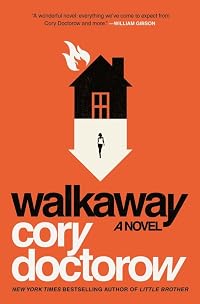
Cory Doctorow's first adult novel in eight years is an epic tale of revolution, love, post-scarcity, and the end of death. Hubert Vernon Rudolph Clayton Irving Wilson Alva Anton Jeff Harley Timothy Curtis Cleveland Cecil Ollie Edmund Eli Wiley Marvin Ellis Espinoza?known to his friends as Hubert, Etc?was too old to be at that Communist party. But after watching the breakdown of modern society, he really has no where left to be?except among the dregs of disaffected youth who party all night show more and heap scorn on the sheep they see on the morning commute. Falling in with Natalie, an ultrarich heiress trying to escape the clutches of her repressive father, the two decide to give up fully on formal society?and walk away. After all, now that anyone can design and print the basic necessities of life?food, clothing, shelter?from a computer, there seems to be little reason to toil within the system. It's still a dangerous world out there, the empty lands wrecked by climate change, dead cities hollowed out by industrial flight, shadows hiding predators, animal and human alike. Still, when the initial pioneer walkaways flourish, more people join them. Then the walkaways discover the one thing the ultrarich have never been able to buy: how to beat death. Now it's war, a war that will turn the world upside down. Fascinating, moving, and darkly humorous, Walkaway is a multigenerational SF thriller about the wrenching changes of the next hundred years-and the very human people who will live their consequences. show lessTags
Recommendations
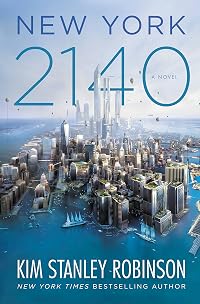

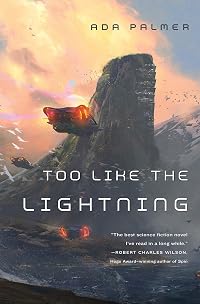
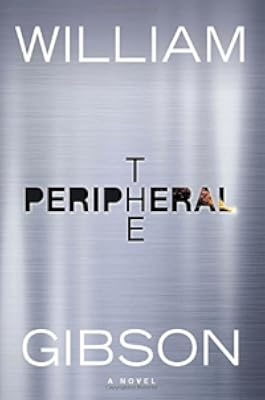

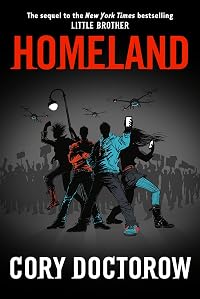

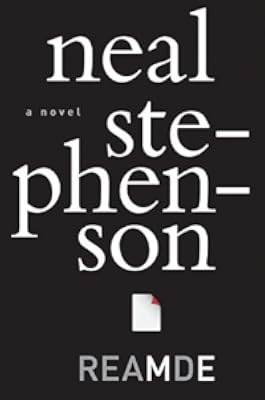
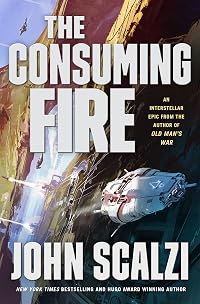
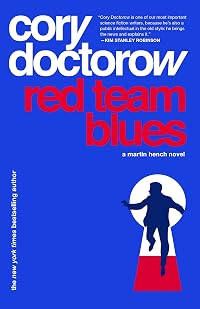
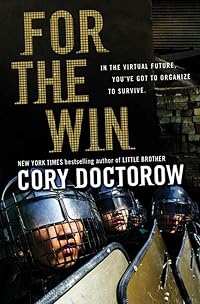
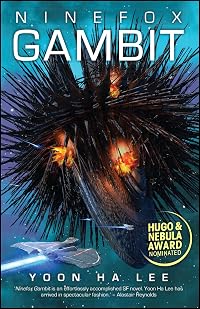
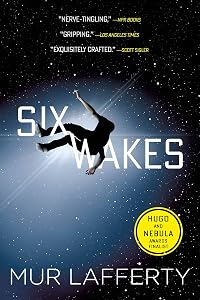
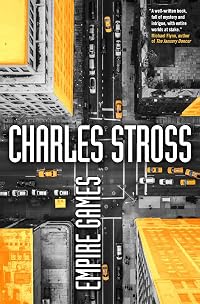
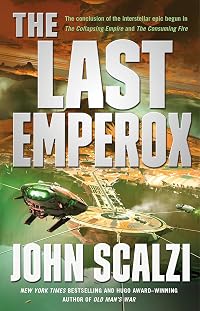
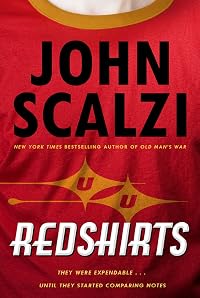
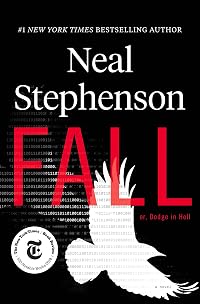
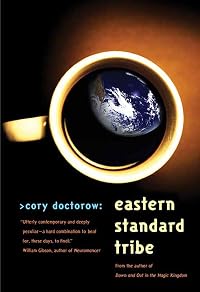
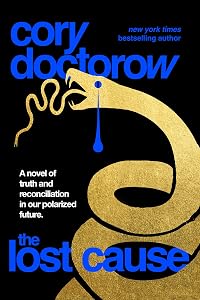


Member Recommendations
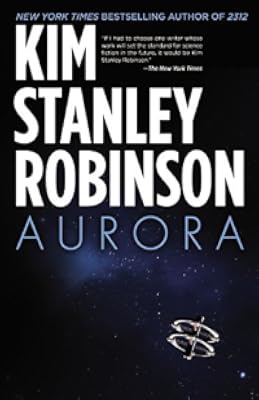
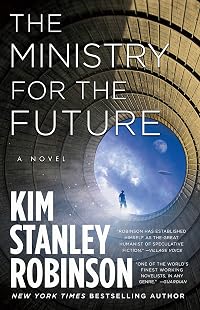
melmore Both works extrapolate from our current situation to imagine not-dissimilar clusterfuck futures. Both are concerned with questions of wealth distribution, resource depletion, human agency, equality, freedom. Both have super-bad-ass female protagonists (who are nonetheless recognizable human beings).
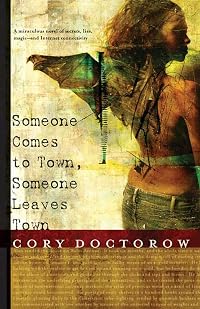
melmore Both works are (among other things) showcases for the elaboration of political and economic arguments. Both strive to represent the full horror of economic oppression, and what happens when the oppressed resist.
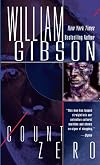
tetrachromat Interesting ideas on how the super rich might spend their money.
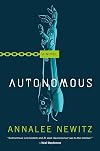
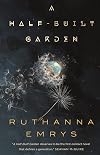
yarmando Both explore the spirit of communities evolving through the blending of different talents and values to solve problems and build the future.
Member Reviews
For some reason, I’ve read a number of novels recently set in the near future, working through the implications of environmental catastrophe, economic inequality, technological advances. I’m growing impatient with many of them because they assume people, in a pinch, will turn on each other, that those who aren’t predators risk being prey. Once the threat of [fill in the blank] comes to pass, we’ll not only lose everything, we’ll be at each others’ throats. This novel is a utopian fork of dystopia by someone who loves technology but doesn’t love the way intellectual property regimes restrict its use. Though I didn’t find it entirely successful as a novel (the prose is . . . prosaic, the technology seems suspiciously show more failure-proof, and the characters won’t stop talking), it poses an interesting thought experiment: what if, in a world of abundance unevenly distributed, people simply walked away from our market-based assumptions and started new communities based on sharing and repurposing rather than ownership and consumerism? What if we refused to want stuff but instead trusted we could make whatever we needed from scraps? (That's a new wrinkle on "freedom from want.") What if resistance was not futile, but also non-violent? What if all the singular technologies Silicon Valley titans dream about, including automation reducing the need to work, the ability to fabricate all manner of things, and even to overcome death itself, weren’t the preserve of the super-rich but rather were developed by people who rejected a precarious gig economy to make a different and better world?
In between long conversations there are battles and kidnappings and sex and mind-bending plot twists as people who die live on as sentient and self-aware backups. Mixed in with “hey, what cool things could we do?” there’s also “what does it mean to be human?” and “why should we put up with things as they are when we could do better? And what does ‘better’ look like?”
Just as humor is harder to pull off than tragedy, writing hope is harder than writing despair. I appreciated the way this novel takes up the big challenges of our day and imagines not just how bad it could get but what alternatives we could create. Above all, I was grateful for the recognition that we aren’t all helpless or selfish at heart, that we have generous impulses that could save us if we put them to work, that when things go wrong, the neighbors will come out to help. As they do. show less
In between long conversations there are battles and kidnappings and sex and mind-bending plot twists as people who die live on as sentient and self-aware backups. Mixed in with “hey, what cool things could we do?” there’s also “what does it mean to be human?” and “why should we put up with things as they are when we could do better? And what does ‘better’ look like?”
Just as humor is harder to pull off than tragedy, writing hope is harder than writing despair. I appreciated the way this novel takes up the big challenges of our day and imagines not just how bad it could get but what alternatives we could create. Above all, I was grateful for the recognition that we aren’t all helpless or selfish at heart, that we have generous impulses that could save us if we put them to work, that when things go wrong, the neighbors will come out to help. As they do. show less
I have mixed feelings about this one. On the one hand, it's very Cory Doctorow, and I've already convinced myself I like him, even if he does have several reader-irritating habits to his writing. On the other hand, he has several reader-irritating habits to his writing. But on the other other hand, he's clearly living in this book's world in his head, and he's so generous with the ideas and details from there that I can't help but appreciate it. On the other other other hand, enough with the details and ideas!
Wow!
I admit I went in blind to this only know the title, the cover, and the fact that I've been a big fan of Cory Doctorow ever since Little Brother. I thought it was going to be something of a thriller with perhaps a political and especially an awesome technological bent to it.
I didn't expect it to be this huge! The ideas in this novel can easily be ranked up with the very biggest novels of the last century.
Let me explain: Walkaway as a term is nothing more than dropping out of the ranks of the norm, of going off to live simply, if not precisely without tech, then at least giving up on the whole rat race that is defined here as the "default". It's not hippies, although there are those, too. It's a collection of all the people that show more this world has no use for, the people that despair under debts they can't pay, lives that bring them no joy, of people who realize that they have always been slaves in everything but name.
These are the people who walked away from it all. It's in the future so we have an honest free beer with open source technologies, 3d printers much more advanced than what we have here that works with everything from clothing to medicines, and the open idealism that collides with regular assholes that you'll find in any human population.
Only, these communities are benefited with social modeling techniques, even newer tech that can scan and model human minds, and much more... in everyone's hands. These are people who gave up on wealth and status to live in all kinds of communes and social experiments, many of which fail but each improves upon the last until better and better open source societies are created, improved upon, and tested... and while this shouldn't have been a big deal to the rest of the world that was busy doing its old thing, the Walkaways stumbled upon success and success, outperforming and making the "Default" society jealous... and you know what jealous people do when they have guns and they want what the defenseless have.
I'm just barely scratching the surface here. There's a lot of great characters, a lot of really beautiful stories and situations and social experiments and theory on human consciousness. There's a lot of tragedy and hope, too, spread out over a great long span of time. A lifetime, you might say. But by the end, who's to say how long that is?
This is really creative and hard-hitting exploratory SF. This is the stuff that will stay in my consciousness long, long after hundreds of lighter SF have rolled through me. This is that kind of novel that can change or break a whole society if it takes off.
Now, I can't say that I absolutely agree with all the points that Doctorow makes, but his vision of the future and the erudition and thoughtful expression of all these fantastic ideas more than makes up for any complaints I may have. He's a believer in humanity. He believes in people.
There's something truly wonderful about that.
Hope. show less
I admit I went in blind to this only know the title, the cover, and the fact that I've been a big fan of Cory Doctorow ever since Little Brother. I thought it was going to be something of a thriller with perhaps a political and especially an awesome technological bent to it.
I didn't expect it to be this huge! The ideas in this novel can easily be ranked up with the very biggest novels of the last century.
Let me explain: Walkaway as a term is nothing more than dropping out of the ranks of the norm, of going off to live simply, if not precisely without tech, then at least giving up on the whole rat race that is defined here as the "default". It's not hippies, although there are those, too. It's a collection of all the people that show more this world has no use for, the people that despair under debts they can't pay, lives that bring them no joy, of people who realize that they have always been slaves in everything but name.
These are the people who walked away from it all. It's in the future so we have an honest free beer with open source technologies, 3d printers much more advanced than what we have here that works with everything from clothing to medicines, and the open idealism that collides with regular assholes that you'll find in any human population.
Only, these communities are benefited with social modeling techniques, even newer tech that can scan and model human minds, and much more... in everyone's hands. These are people who gave up on wealth and status to live in all kinds of communes and social experiments, many of which fail but each improves upon the last until better and better open source societies are created, improved upon, and tested... and while this shouldn't have been a big deal to the rest of the world that was busy doing its old thing, the Walkaways stumbled upon success and success, outperforming and making the "Default" society jealous... and you know what jealous people do when they have guns and they want what the defenseless have.
I'm just barely scratching the surface here. There's a lot of great characters, a lot of really beautiful stories and situations and social experiments and theory on human consciousness. There's a lot of tragedy and hope, too, spread out over a great long span of time. A lifetime, you might say. But by the end, who's to say how long that is?
This is really creative and hard-hitting exploratory SF. This is the stuff that will stay in my consciousness long, long after hundreds of lighter SF have rolled through me. This is that kind of novel that can change or break a whole society if it takes off.
Now, I can't say that I absolutely agree with all the points that Doctorow makes, but his vision of the future and the erudition and thoughtful expression of all these fantastic ideas more than makes up for any complaints I may have. He's a believer in humanity. He believes in people.
There's something truly wonderful about that.
Hope. show less
This was a “standard Cory Doctorow themes” (copyright, politics, some current events, nerd culture) novel, set in a mostly post-scarcity future and showing the conflict between a left-libertarian utopia and the reactionary remnant of a “late capitalism” type economy (ie what we have today, but more so.). A lot of the characters were interesting (although the bad guys were often caricatured, and no real attempt was made to show the benefits of the current system), but ultimately I think the premise (nanoassembly leading to essentially everything being zero cost, and thus potentially zero priced) neglects a lot of both human nature and physical reality. Still, as an interesting economic discussion, it was pretty interesting, and show more overall a very good (if not great) book. show less
I think I need to read more Cory Doctorow. I've only read one other of his works and that was because it was on the 2020 Canada Reads list. Radicalized was a collection of novellas which seemed almost too real to be fiction. This book is more fictiony (is that a word) but I thought it was brilliant.
When there is no work and you are under constant surveillance and most people live in megacities sometimes the only choice is to walk away. That's what Hubert Espinoza (known as Etcetera because he has 19 middle names), Natalie Redwater (who chooses the name Iceweasel) and Seth decide to do. There are a number of communities living in areas the privileged have abandoned and the trio join in one of them. These communities use the gift economy show more so that no one does without. They scavenge for things they need and use 3-D printers to make the rest. Supposedly no-one is in charge of the community and everyone works. When there are threats to the community the inhabitants will just choose to walkaway instead of fighting. Except the people in charge of Default don't like this ancillary system and they are especially concerned when a group of scientists discover how to do complete brain scans that mean people could have eternal life. (it's not that the superrich are opposed to the idea of everlasting life; in fact, they want it but they want it for themselves only) Natalie's father, part of the zottarich establishment, uses mercenaries to kidnap her and hold her captive. Iceweasel manages to get away and reunite with her lover only to face other attacks. Seth and Etcetera also find their own partners but the threesome have a strong friendship. Eventually the walkaway society gains an upper hand but there are lots of trials and tribulations.
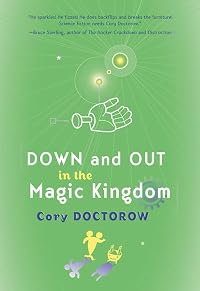
From a review by Sean Gallegher in Ars Technica I learned that Walkaway is a prequel to Down and Out in the Magic Kingdom, the author's debut novel. I'm going to have to get my hands on that book. In the meantime I have holds on a couple of audiobooks including Little Brother so that should keep me going. show less
When there is no work and you are under constant surveillance and most people live in megacities sometimes the only choice is to walk away. That's what Hubert Espinoza (known as Etcetera because he has 19 middle names), Natalie Redwater (who chooses the name Iceweasel) and Seth decide to do. There are a number of communities living in areas the privileged have abandoned and the trio join in one of them. These communities use the gift economy show more so that no one does without. They scavenge for things they need and use 3-D printers to make the rest. Supposedly no-one is in charge of the community and everyone works. When there are threats to the community the inhabitants will just choose to walkaway instead of fighting. Except the people in charge of Default don't like this ancillary system and they are especially concerned when a group of scientists discover how to do complete brain scans that mean people could have eternal life. (it's not that the superrich are opposed to the idea of everlasting life; in fact, they want it but they want it for themselves only) Natalie's father, part of the zottarich establishment, uses mercenaries to kidnap her and hold her captive. Iceweasel manages to get away and reunite with her lover only to face other attacks. Seth and Etcetera also find their own partners but the threesome have a strong friendship. Eventually the walkaway society gains an upper hand but there are lots of trials and tribulations.
From a review by Sean Gallegher in Ars Technica I learned that Walkaway is a prequel to Down and Out in the Magic Kingdom, the author's debut novel. I'm going to have to get my hands on that book. In the meantime I have holds on a couple of audiobooks including Little Brother so that should keep me going. show less
I read this as part of my ongoing exploration of life-extension technology sf for a class I am eventually going to teach. I know of Cory Doctorow, of course, as both an sf writer and a cultural critic, but I have never actually read anything by him before aside from a single short story in a Lou Anders Fast Forward collection, so I was curious to see what I thought. I picked up Walkaway because I had read it was, in part, about mind uploading, and specifically I was intrigued by what I had read, that "[p]art of the process is altering the simulation's mental state into something that will be psychologically okay with being a simulation of a dead person."
This idea is indeed intriguing; unfortunately, you have to read the whole rest of show more the book in order to read about it. This book starts out okay, but then you soon realize that it's a bunch of people giving other people lectures about what an ideal society looks like, repeat for over 350 pages. It's clearly in dialogue with Le Guin's The Dispossessed... it's clearly also so so inferior to The Dispossessed as a utopian text as to be insulting. I dragged myself through to the end of its relentless mediocrity out of some sense of obligation (it's more a series of novellas than a novel, and maybe I would find that one of them worked on its own in a teachable way), and it took me weeks to do it. The actual society is interesting; the characters and plot are not. The mind uploading thing is barely even a significant component of the book, and not really relevant thematically. Dull and rambling. I will not be teaching it! show less
This idea is indeed intriguing; unfortunately, you have to read the whole rest of show more the book in order to read about it. This book starts out okay, but then you soon realize that it's a bunch of people giving other people lectures about what an ideal society looks like, repeat for over 350 pages. It's clearly in dialogue with Le Guin's The Dispossessed... it's clearly also so so inferior to The Dispossessed as a utopian text as to be insulting. I dragged myself through to the end of its relentless mediocrity out of some sense of obligation (it's more a series of novellas than a novel, and maybe I would find that one of them worked on its own in a teachable way), and it took me weeks to do it. The actual society is interesting; the characters and plot are not. The mind uploading thing is barely even a significant component of the book, and not really relevant thematically. Dull and rambling. I will not be teaching it! show less
I wanted to like this book: An exploration of utopian societies, the singularity, reincarnation via simulation, AI, the ingenuity of people; even _stickin' it to The Man_ . . . It had the makings of a great novel but ended up being bogged down by its own ideology, overly clever slang and jargon that makes it almost impenetrable (and I am a techno-dork!), and characters archetypes that were far FAR too stereotypical and impossible to truly identify with. It didn't help that all the characters went by nicknames that obliterated their individuality. All of them. It made them semi-anonymous and difficult to envision.
This book is just too much of too much. I wanted to DNF it, but . . . I don't DNF books. I pushed through. An aggressive show more editor who knew how to say "No" probably could have saved it from itself.
Ugh. Again, I really wanted to like this book and it pains me to write this review. It's a book signed by the author no less. A guy I greatly admire and follow like a fanboy. Alas, this is not a book I can recommend. Sorry, Cory.
...
Hey! In reading the reviews, there are people who seem to like it. So, the audience is out there. That audience simply doesn't include me. :( show less
This book is just too much of too much. I wanted to DNF it, but . . . I don't DNF books. I pushed through. An aggressive show more editor who knew how to say "No" probably could have saved it from itself.
Ugh. Again, I really wanted to like this book and it pains me to write this review. It's a book signed by the author no less. A guy I greatly admire and follow like a fanboy. Alas, this is not a book I can recommend. Sorry, Cory.
...
Hey! In reading the reviews, there are people who seem to like it. So, the audience is out there. That audience simply doesn't include me. :( show less
Members
- Recently Added By
Published Reviews
ThingScore 95
Many will have arguments with the assumptions built into these questions, or find fault with their Panglossian tendency to defer hard questions about the limits of growth or the provision of basic services to those unable to provide for themselves. Yet at a point in history when, to borrow the late Mark Fisher's memorable phrase, "capitalism seamlessly occupies the horizons of the thinkable", show more it's exciting to hear them asked at all, and even more enlivening to encounter a writer prepared to look forward and imagine not the end of the world, but something that bears a passing resemblance to utopia. show less
added by melmore
It's the story of a utopia in progress, as messy as every new thing ever is, told in the form of people talking to each other, arguing with each other and working together to solve problems. It's all about the deep, disturbing, recognizable weirdness of the future that must come from the present we have already made for ourselves, trying to figure out what went wrong and what comes next.
added by melmore
A truly visionary techno-thriller that not only depicts how we might live tomorrow, but asks why we don’t already.
added by melmore
Lists

2018 Hugo Eligible Novels
170 works; 16 members

Exploration of alternative economical systems
40 works; 3 members

To Read
617 works; 7 members

Kirkus Starred Fiction Reviews of Books Published in 2017
412 works; 7 members

Top Five Books of 2017
757 works; 231 members

2017 Locus recommended reading list SciFi
28 works; 2 members

Books Read in 2018
4,360 works; 110 members

Favourite Books
1,819 works; 316 members

Books Read in 2024
4,712 works; 127 members
Author Information

121+ Works 25,959 Members
Writer and activist Cory Doctorow was born in Toronto, Canada on July 17, 1971. In 1999 he co-founded a free software company called Opencola and served as Canadian Regional Director of the Science Fiction and Fantasy Writers of America. For four years he worked as European Affairs Coordinator for the Electronic Frontier Foundation and in 2007 won show more its Pioneer Award. His first novel, Down and Out in the Magic Kingdom, won a Locus Award for Best First Novel. His short story collection A Place So Foreign and Eight More won a Sunburst Award, and his bestselling novel Little Brother received the 2009 Prometheus Award, a Sunburst Award, and the John W. Campbell Memorial Award. Doctorow also writes nonfiction books and articles, and he co-edits the blog Boing Boing. (Bowker Author Biography) show less
Some Editions
Awards and Honors
Awards
Distinctions
Series

Work Relationships
Is contained in
Common Knowledge
- Canonical title
- Walkaway
- Original title
- Walkaway
- Original publication date
- 2017-04-25
- Dedication
- For Erik Stewart and Aaron Swartz. First days, better nations. We fight on.
- First words
- HUBERT VERNON RUDOLPH Clayton Irving Wilson Alva Anton Jeff Harley Timothy Curtis Cleveland Cecil Ollie Edmund Eli Wiley Marvin Ellis Espinoza was too old to be at a Communist party. At twenty-seven, he had seven years on the... (show all) next oldest partier. He felt the demographic void. He wanted to hide behind one of the enormous filthy machines that dotted the floor of the derelict factory. Anything to escape the frank, flat looks from the beautiful children of every shade and size who couldn't understand what an old man was creepering around. -Chapter 1, communist party
- Last words
- (Click to show. Warning: May contain spoilers.)"Welcome home." he said.
- Blurbers
- Gibson, William; Stephenson, Neal; Snowden, Edward; Robinson, Kim Stanley; Tchaikovsky, Adrian; Benkler, Yochai
- Original language
- English
- Canonical DDC/MDS
- 813.6
- Canonical LCC
- PS3604.O27 W35
Classifications
Statistics
- Members
- 1,258
- Popularity
- 19,518
- Reviews
- 48
- Rating
- (3.65)
- Languages
- English, German, Spanish
- Media
- Paper, Audiobook, Ebook
- ISBNs
- 23
- ASINs
- 5