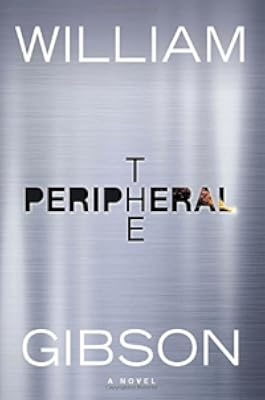
On This Page
Description
Depending on her veteran brother's benefits in a city where jobs outside the drug trade are rare, Flynne assists her brother's latest beta-test tech assignment only to uncover an elaborate murder scheme. "William Gibson returns with his first novel since 2010's New York Times-bestselling Zero History. Where Flynne and her brother, Burton, live, jobs outside the drug business are rare. Fortunately, Burton has his veteran's benefits, for neural damage he suffered from implants during his time show more in the USMC's elite Haptic Recon force. Then one night Burton has to go out, but there's a job he's supposed to do-a job Flynne didn't know he had. Beta-testing part of a new game, he tells her. The job seems to be simple: work a perimeter around the image of a tower building. Little buglike things turn up. He's supposed to get in their way, edge them back. That's all there is to it. He's offering Flynne a good price to take over for him. What she sees, though, isn't what Burton told her to expect. It might be a game, but it might also be murder"-- "New novel from New York Times bestselling author William Gibson"-- show lessTags
Recommendations


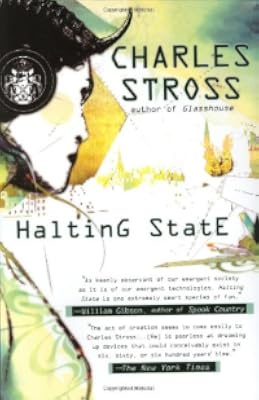
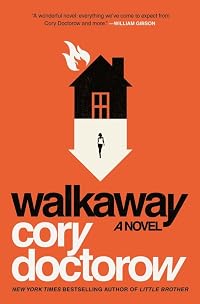

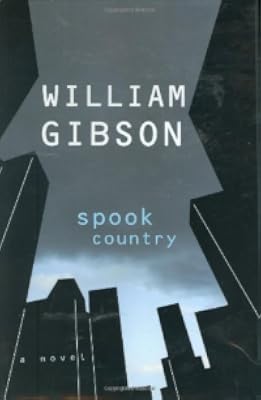
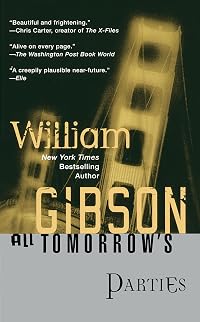






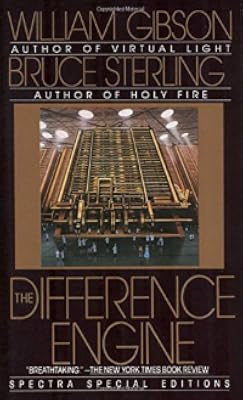
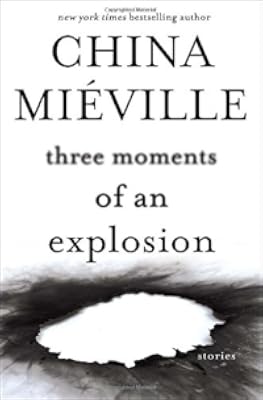
Member Recommendations
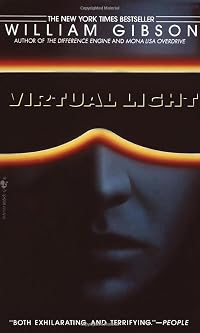
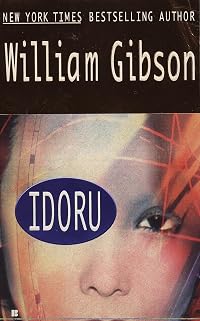
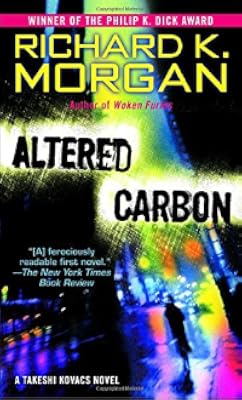
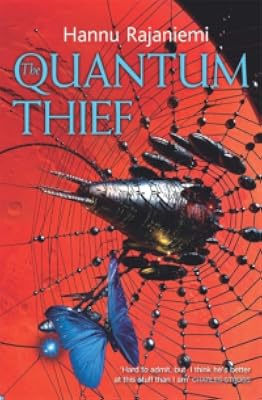
melmore Both works extrapolate from our current situation to imagine not-dissimilar futures. Both are concerned with questions of wealth distribution, resource depletion, human agency, equality, freedom. Both have super bad-ass female protagonists (who are nonetheless recognizable human beings).
11

Member Reviews
"Eras are conveniences, particularly for those who never experienced them. We carve history from totalities beyond our grasp. Bolt labels on the result. Handles. Then speak of the handles as though they were things in themselves."
Yes... but I just have to say, speaking of eras... WOO-HOO - William Gibson is back in the era of the definitely-pretty-far-in-the-future! Not that I didn't wholly love his recent books that were in the right-around-the-corner-future, but I felt like we were catching up... 'The Peripheral' leaps ahead, again, with speculation and extrapolation based on today's technological and social concerns, making the book feel every bit as fresh and timely as 'Neuromancer' did in the 80's.
It also has a purely show more science-fictional premise: a method of contacting alternate realities has been discovered. The exact mechanics of this are hazy, but once an alternate timeline has been contacted, the two remain locked in parallel. It's not possible to physically travel between the two - but information can get through. This means that communication is possible - and, with the creation of 'robot' bodies, a 'virtual' presence can be maintained.
Human nature being what it is, any technology with a potential for abuse probably will be abused.
In a world very much like what our own near-future will probably be like, a group of young adults is caught in a dead-end small-town. The local economy is dependent on illegal drugs. Actual medicines are nearly completely unaffordable for the average person. Veterans of foreign wars are physically and emotionally damaged - and pretty much on their own, with only minimal government benefits. Our protagonist, Flynne (known online as Easy Ice) and her brother occasionally pick up some cash by playing online games for wealthy players' campaigns. They both assume their latest offer is like previous ones... but it turns out to be something weirder. What they're told is a 'game' is no virtual sci-fi world, but an actual future.
And when Flynne witnesses something while online that some people wish she hadn't seen, she and her friends find themselves in danger from people whose existence they can't even have imagined, and up past their necks in bizarre power games in which the fate of their world could be at stake.
"People who couldn't imagine themselves capable of evil were at a major disadvantage in dealing with people who didn't need to imagine, because they already were. ... It was always a mistake, to believe those people were different, special, infected with something that was inhuman, subhuman, fundamentally other."
Excellent, excellent book. (As always, from Gibson.) Highly recommended. show less
Yes... but I just have to say, speaking of eras... WOO-HOO - William Gibson is back in the era of the definitely-pretty-far-in-the-future! Not that I didn't wholly love his recent books that were in the right-around-the-corner-future, but I felt like we were catching up... 'The Peripheral' leaps ahead, again, with speculation and extrapolation based on today's technological and social concerns, making the book feel every bit as fresh and timely as 'Neuromancer' did in the 80's.
It also has a purely show more science-fictional premise: a method of contacting alternate realities has been discovered. The exact mechanics of this are hazy, but once an alternate timeline has been contacted, the two remain locked in parallel. It's not possible to physically travel between the two - but information can get through. This means that communication is possible - and, with the creation of 'robot' bodies, a 'virtual' presence can be maintained.
Human nature being what it is, any technology with a potential for abuse probably will be abused.
In a world very much like what our own near-future will probably be like, a group of young adults is caught in a dead-end small-town. The local economy is dependent on illegal drugs. Actual medicines are nearly completely unaffordable for the average person. Veterans of foreign wars are physically and emotionally damaged - and pretty much on their own, with only minimal government benefits. Our protagonist, Flynne (known online as Easy Ice) and her brother occasionally pick up some cash by playing online games for wealthy players' campaigns. They both assume their latest offer is like previous ones... but it turns out to be something weirder. What they're told is a 'game' is no virtual sci-fi world, but an actual future.
And when Flynne witnesses something while online that some people wish she hadn't seen, she and her friends find themselves in danger from people whose existence they can't even have imagined, and up past their necks in bizarre power games in which the fate of their world could be at stake.
"People who couldn't imagine themselves capable of evil were at a major disadvantage in dealing with people who didn't need to imagine, because they already were. ... It was always a mistake, to believe those people were different, special, infected with something that was inhuman, subhuman, fundamentally other."
Excellent, excellent book. (As always, from Gibson.) Highly recommended. show less
Set in a near future of rural poverty and slightly further future where the 1% of our days has survived an apocalypse and now rule the greatly reduced world, an information-only form of time travel links (and simultaneously breaks the causal link) between the two times. A young woman who thinks she's being paid to play a computer game witnesses what looks like a suspiciously real murder. This sparks a temporal, economic and physical conflict as forces reach back from the future to destroy the witness and possibly her whole world as collateral. However, she can go forward, too, ingeniously, and a race to protect her and prepare her transforms her world, but the key to saving it lies in the future.
Great to see Gibson back doing mad sci show more fi. I love the rough and ready lo-fi vision of industrial laser printers versus the smooth sleek world of nanobot assemblers. Great writing, great characters, and as usual, a crackling portrait of the tensions pulling our world apart and the will to save it. show less
Great to see Gibson back doing mad sci show more fi. I love the rough and ready lo-fi vision of industrial laser printers versus the smooth sleek world of nanobot assemblers. Great writing, great characters, and as usual, a crackling portrait of the tensions pulling our world apart and the will to save it. show less
In most science fiction, the future is a glamour (even when it's a gritty cyber-punk glamour) filled with almost-magical technologies that promise to make the world a different, usually better, place.
William Gibson is a master at casting these glamours, tempting us with not-quite-fantastic extensions of current cutting-edge technologies and dazzling us with intricate social forms that support technology-enabled life-styles that seem to be without constraint.
I am fascinated by his work because, although the glamours are vivid and novel, he invites his readers to see beyond them and understand that the fundamentals of what people do and why they do them remain constant. Gibson's technologies and ecologies are plausible enough to be show more tempting speculations but his people, especially his women, are real enough to make you care what happens to them.
"The Peripheral", published in 2014, was Gibson's first science fiction novel this century. In it he offers us not one but two future times, connected by a mysterious technology that allows people in the two time streams to connect via a telepresence called Peripherals.
The first future is set in a poor town in West Virginia, in the not too distant future, where people are doing what they can to turn a buck, knowing that they're being screwed but powerless to change it. In this world, Flynne, one of the strongest and coolest female characters I've seen in a long time, covers for her brother on a job that's supposed to be testing a game but ends up witnessing a very real-seaming and vicious crime in somewhere far away.
The somewhere far away is a future London, seventy years ahead of Flynne's time. The people there are either rich and ruthless or rich and bored. In both cases they are rich and extremely dangerous. Flynne becomes a bridge between the two worlds and ends up in danger in both.
I won't go into the plot here. If you'd like a summary, here's a better one than I can provide. I want to talk about the impact the book has on me.
I found myself pondering the title. What, in this novel, is The Peripheral? Of course it refers to the tele-presence technology that allows people to be present when their bodies are somewhere else. I think it also refers to how the people in London, see the people in West Virginia, as peripheral to their own existence, on the boundary of the real. Extending that, it made me think that all futures and perhaps pasts, are peripheral. They pull the eye away from the now, which is where reality is happening.
Then I asked myself what Flynne sees as being peripheral and the answer is almost everything that doesn't directly affect the welfare of her and her people. She understand how screwed they all are and how little power they have and she doesn't expect that to change. When wealth appears to arrive, she treats it with suspicion. When she meets the powerful, she is not seduced. She recognises them as predators and tries not to become prey.
In my day-to-day life, I'm paid to imaging the impact of technology on commerce: digitalisation, the Internet of Things, Social Media and so on, so I enjoyed watching William Gibson imagining the world where 3D printing is so commoditised that even a strip mall in Nowhere West Virgina has a local fabrication to order outlet, and the idea of weaponing haptic technology to direct soldiers in combat )making them another form of peripheral and so on. Yet what I enjoyed most was that none of this technology made anything better. The poor are still poor and the powerful will always screw them over.
What makes "The Peripheral" grown-up science fiction isn't the pretty technology but the depth of the society using the technology. The folks in West Virginia have parents and siblings and social affiliations that mean things to them. They are people first and protagonists in an SF novel second.
I think the ending of "The Peripheral" may cause some people problems. It seems to me that Gibson's books have a tendency to stop rather than end. I think this reflects real life, where all endings are artificial to some extent but I understand that some readers may feel sh0rt-changed.
In this case, I rather like the inconclusiveness of the ending. Did they all live happily ever after? Does anybody? Ever?
I think Flynne ended the book financially better off but knowing that her world was hurtling towards hurt that she can't avoid. This was no surprise to her. You take the money when it comes your way and you hope for the best but you know the worst is much more likely. No amount of technology is going to change that.
If you're interested in William Gibson's views on "The Peripheral", take a look a this interview with Flavorwire and this one with The Guardian.
If you'd like to hear an extract from "The Peripheral" click on the SoundCloud link below.
[soundcloud url="https://api.soundcloud.com/tracks/193077522" params="auto_play=false&hide_related=false&show_comments=true&show_user=true&show_reposts=false&visual=true" width="100%" height="450" iframe="true" /] show less
Years since I read "Necromancer" and Gibson is still as good as ever. And as weird. And as challenging. I like a novel that expects something of the reader. It's like real life. The back story isn't laid out for you. You need to pick it up as you go along. And, mostly you will. And for the bits you don't pick up? Well, perhaps it doesn't matter because the whole thing is a stream of twisted reality that just washes over you. Very satisfying.
Gibson's novelty in The Peripheral is that alternate worlds (and timelines) are accessible via a mysterious server, allegedly Chinese. The characters have no evidence that matter travels between timelines: what's clear is that information does. Gibson's focus on the cybernetic aspects renders the specifics of time travel (or space travel) irrelevant to his story, for all that matters is what confronts the characters, none of whom are the technology's inventors or owners. In this way Gibson deftly leaves aside the nature of technology, looking instead at its influence.
The plot borrows from soap opera and spy thriller, with secrets and subterfuge, agendas and cons linking characters and generating action. The difference between this show more story and those genre dramas is the resulting ripples from conflicts have larger amplitude, reach farther shores, than they otherwise would. Technology in effect amplifies the human imprint, and Gibson suggests we are all too willing to wade in without much consideration for this beyond our immediate concerns. It's a surprising yet satisfying return to Golden Age / pulp notions of receiving radio waves from a past or future: messages come through clearly enough, and are indistinguishable from regular radio, so what happens if we begin to treat them, in principle, as another newscast or business opportunity? (And then, my dawning realisation that cyberspace itself, in the original Sprawl stories, was just another radio.)
Is this the first in another trilogy, or a standalone? It's possible the stubs, the apparent time travel are merely simulations.
//
Gibson effectively revisits his Sprawl universe. He returns to a single storyline, as presented in his short stories and Neuromancer, though as in later novels the story is assembled from shards and multiple characters, and superficially is anything but a straightforward narrative. Then too, the setting is a cousin of his fictional Boston-Atlanta Metro Area, now featuring rural Georgia (USA) and a lockdown London. Again, characters quickly find themselves shifted from familiar (to them) contexts to a wider stage, more entangled happenings, with broader implications for their world than their customary. Finally, Gibson uncovers another facet of one of his key themes, usually glossed the street finds its own uses for things, that being the hidden consequences of that tendency. So, not a Sprawl sequel, rather a reboot given what's transpired since those novels, applying similar logic and following up similar concerns. It's a return to form, recognisable yet not a simple rehash.
Gibson somehow levers an outsize payload into his spare prose. Though events come thick and fast, and often occur offstage, and descriptions are limited to what his characters see or think, the resulting mosaic is layered and richly observed. Frequently comments arrive on the page as seemingly tangential remarks in conversation or trivial background settings; in fact, these are the substance of the book. In one scene, Netherton distractedly watches articulated Lego bricks while speaking with Leon of alcoholism laminates & cognitive therapy modules, even as Leon takes a call on his phone and discusses surveillance and personal assistant AI. Overall, a blend of recognisable, slightly improved, and completely foreign technologies in one scene. The eggs and broiled tomato included.
Here "peripheral" is a term for a second body, used when traveling virtually to another timeline: the host body is artificial, though conceived as sophisticated and agile as a real body. A wink at the term used in early PC generations for a second input or output device, and perhaps also the notion of the internet everting and the resulting irrelevance of any distinction between virtual and real. (A headline in February 2015 suggested full-body transplants were "2 years away".)
//
synopsis | Flynne does a favour for Burton, and quickly learns the job is not beta testing a new game environment, or: not only that. Netherton sees his latest event marketing campaign hijacked and decides the best damage control is to walk away, perhaps for good. Lowbeer, relying on AI augmentation and her own extensive personal history, figures the global cataclysm known as The Jackpot connects Flynne and Netherton, and seems willing to bend their needs to her own will. show less
The plot borrows from soap opera and spy thriller, with secrets and subterfuge, agendas and cons linking characters and generating action. The difference between this show more story and those genre dramas is the resulting ripples from conflicts have larger amplitude, reach farther shores, than they otherwise would. Technology in effect amplifies the human imprint, and Gibson suggests we are all too willing to wade in without much consideration for this beyond our immediate concerns. It's a surprising yet satisfying return to Golden Age / pulp notions of receiving radio waves from a past or future: messages come through clearly enough, and are indistinguishable from regular radio, so what happens if we begin to treat them, in principle, as another newscast or business opportunity? (And then, my dawning realisation that cyberspace itself, in the original Sprawl stories, was just another radio.)
Is this the first in another trilogy, or a standalone? It's possible the stubs, the apparent time travel are merely simulations.
//
Gibson effectively revisits his Sprawl universe. He returns to a single storyline, as presented in his short stories and Neuromancer, though as in later novels the story is assembled from shards and multiple characters, and superficially is anything but a straightforward narrative. Then too, the setting is a cousin of his fictional Boston-Atlanta Metro Area, now featuring rural Georgia (USA) and a lockdown London. Again, characters quickly find themselves shifted from familiar (to them) contexts to a wider stage, more entangled happenings, with broader implications for their world than their customary. Finally, Gibson uncovers another facet of one of his key themes, usually glossed the street finds its own uses for things, that being the hidden consequences of that tendency. So, not a Sprawl sequel, rather a reboot given what's transpired since those novels, applying similar logic and following up similar concerns. It's a return to form, recognisable yet not a simple rehash.
Gibson somehow levers an outsize payload into his spare prose. Though events come thick and fast, and often occur offstage, and descriptions are limited to what his characters see or think, the resulting mosaic is layered and richly observed. Frequently comments arrive on the page as seemingly tangential remarks in conversation or trivial background settings; in fact, these are the substance of the book. In one scene, Netherton distractedly watches articulated Lego bricks while speaking with Leon of alcoholism laminates & cognitive therapy modules, even as Leon takes a call on his phone and discusses surveillance and personal assistant AI. Overall, a blend of recognisable, slightly improved, and completely foreign technologies in one scene. The eggs and broiled tomato included.
Here "peripheral" is a term for a second body, used when traveling virtually to another timeline: the host body is artificial, though conceived as sophisticated and agile as a real body. A wink at the term used in early PC generations for a second input or output device, and perhaps also the notion of the internet everting and the resulting irrelevance of any distinction between virtual and real. (A headline in February 2015 suggested full-body transplants were "2 years away".)
//
synopsis | Flynne does a favour for Burton, and quickly learns the job is not beta testing a new game environment, or: not only that. Netherton sees his latest event marketing campaign hijacked and decides the best damage control is to walk away, perhaps for good. Lowbeer, relying on AI augmentation and her own extensive personal history, figures the global cataclysm known as The Jackpot connects Flynne and Netherton, and seems willing to bend their needs to her own will. show less
William Gibson has been a big deal in science fiction for a long time, ever since Neuromancer came out in 1984 and won every sci-fi award in sight. More recently he started writing books situated in the present, starting with Pattern Recognition, set in 2002, which involved our obsession with brands and a mysterious artistic film clip circulating on the internet. That book still managed to have a sci-fi feel to it, as the main character tries to outwit the Russian Mafia concerning the film clip and also pursues answers to her own family's mystery, and so did the present day-situated ones following it. Now he's written a corker that is set in both the near future and a not-so-near future.
As he did with his Bridge trilogy (starting with show more Virtual Light, a favorite of mine), he creates a cohesive, believable environment the reader wants to spend time in, even with its lumps and flaws. Or maybe it's really two such environments. In one, our hero Flynne Fisher is scraping by in rural America with her brother ex-Marine Burton and his veteran friends, when a surveillance job in (what she thinks is) an interactive video game becomes much more. Someone from a different future London has made contact, Flynne sees something she shouldn't, and a time-travel real life game of spies and subterfuge begins.
Wilf Netherton is a PR guy (although not PR as we're used to thinking of it) in the future London. That city and the rest of the world have a fraction of today's population due to something called "the jackpot", but they also have lots of great tech. This includes "peripherals", well-made bodies you can rent and inhabit via projectional headgear. In our world, where Flynne and Burton live, money is hard to come by unless you're "building" illegal drugs, but Flynne's accidental contact with Wilf's world creates a cash infusion that drastically alters the local balance. Those with Wilf in that different future want something only Flynne can give them, and are willing to help her and her cohorts to get it.
If you're like me, you'll be disoriented at the start of the book, as it all comes at you fast and without explanation. But then it starts to sink in, and you start to see and smell and feel it, and then you're hooked. It's another entertaining adventure supplied by someone adept at imagining a future you'd travel to visit, if only you could find the airline. It's great to have Gibson back in top form. The post-ending ending (for me there seemed to be two endings, kind of like that last Lord of the Rings movie) isn't quite as good as the first ending, so I give the book a little less than four stars for that reason. show less
As he did with his Bridge trilogy (starting with show more Virtual Light, a favorite of mine), he creates a cohesive, believable environment the reader wants to spend time in, even with its lumps and flaws. Or maybe it's really two such environments. In one, our hero Flynne Fisher is scraping by in rural America with her brother ex-Marine Burton and his veteran friends, when a surveillance job in (what she thinks is) an interactive video game becomes much more. Someone from a different future London has made contact, Flynne sees something she shouldn't, and a time-travel real life game of spies and subterfuge begins.
Wilf Netherton is a PR guy (although not PR as we're used to thinking of it) in the future London. That city and the rest of the world have a fraction of today's population due to something called "the jackpot", but they also have lots of great tech. This includes "peripherals", well-made bodies you can rent and inhabit via projectional headgear. In our world, where Flynne and Burton live, money is hard to come by unless you're "building" illegal drugs, but Flynne's accidental contact with Wilf's world creates a cash infusion that drastically alters the local balance. Those with Wilf in that different future want something only Flynne can give them, and are willing to help her and her cohorts to get it.
If you're like me, you'll be disoriented at the start of the book, as it all comes at you fast and without explanation. But then it starts to sink in, and you start to see and smell and feel it, and then you're hooked. It's another entertaining adventure supplied by someone adept at imagining a future you'd travel to visit, if only you could find the airline. It's great to have Gibson back in top form. The post-ending ending (for me there seemed to be two endings, kind of like that last Lord of the Rings movie) isn't quite as good as the first ending, so I give the book a little less than four stars for that reason. show less
I remember reading an interview with Gibson once, decades ago, in which he said that he finds it awkward the way people ascribe great technical knowledge to him because he knows very little about computers and other technical matters. He admitted to knowing next to nothing about his own computer at one point, and focused his novels around the snippets of things he did know about science and technology only as a way to create window dressing for his speculations about the human condition in a technologically advanced future.
This, of course, is his particular genius as a writer of speculative fiction. He extracts intriguing insights from the way people change as their worlds change, projecting that forward into a future imagined around show more the direction of sociopolitical and techno-economic (to coin a chintzy buzzword) evolution. His Blue Ant novels dug deep into the present, which I believe served in some respects as a way to recalibrate his sense of the future because of how fast things are changing now, and how easy it is for science fiction (and other speculative fiction) writers to make the mistake of predicting things that look laughably out of place by the time a manuscript hits the presses.
During that recalibration, he seems to have learned some things about accelerating sociopolitical change as much as about accelerating technological adancement. People have commented on the happy endings in the Blue Ant series, but I always detected a hint of concern about the bigger picture and the ominous dangling questions about the greater implications of some things that were not central to the plots of those novels. Perhaps my keen interest in everything Gibsonian allowed me some recalibration as well during that period of Gibson's writing that gave me some insight into the real meaning of how things ended in The Peripheral, because I find myself going through several phases of (mis)understanding of what happened before arriving at a very different conclusion about how this novel ended than many other reviewers.
Let's start somewhere around the beginning before I get to the end:
Take a healthy helping of cynical world view, and apply it as a filter to the (already somewhat bleak, and less-well directed) world of Doctorow's Makers, plus a less dramatically over-the-top variation on the authoritarian hellscape of Doctorow's After the Siege (from his Overclocked anthology). Sprinkle some Breaking Bad, and some . . . no, never mind. I'll never finish describing it this way. Suffice to say he combines all the not-going-away-soon desperation and despair mounting in the present world with the coming-quickly rapidly accelerating cheap plastic (and not shiny at all) technological advancement going on all around us, mediated and propagated by moneyed interests whose only motivations are profit margins and international sociopolitical influence. Upon combination, what we end up with is a future within (most of) our expected lifetimes that is at once both weirdly out of joint with most people's expectations and eerily familiar (and somehow quite inevitable-seeming).
Throw some characters into this who read like emotionally damaged hybrids of the characters in his preceding three trilogies, then connect them by efficient data networking to a future farther ahead of their world than theirs is from ours. In that farther future -- well, imagine how the Tessier-Ashpools and their contemporaries might have developed in a world where the technological singularity mostly just killed people with grinding gradualness, but only people without sufficient resources to protect themselves, which means almost all people, and where that technological singularity spat out a future hindered by the perverse incentives of centralized bureaucratic power so that "post-humans" are still depressingly limited humanity and decadence breeds stagnation.
People die. The good guys are either somewhat hapless and broken (but strong-willed) bystanders swept into a maelstrom beyond their understanding or the chillingly pseudohuman apparatus of various thoroughly inhuman entities, but all of them painted in prose that sweeps the reader into irresistible sympathy with their respective plights. People who recognize the horrific, unacceptable atrocity that would be committed by a particularly vile form of chemical weapon attack later end up casually disintegrating people directly in front of them by simplistically directed nanotech swarms that rapidly "disassemble" their targets, and no guilt or horror seems to follow from this.
Reviews comment on the denouement of The Peripheral as a "happy ending", and sure, there's some "we have lovely romantic pairings and the good guys win" in there, but given their presence in the midst of the dark context of the climax mere pages before that I can't help but note a couple of things that set that whole notion of a happy ending on its head:
1. The lesson of the "jackpot" -- the world-destroying conditions that accompanied the lopsided, pathologically progressing singularity envisioned in this novel -- was recognized by some of the characters: shortsighted authoritarian economic and sociopolitical management is really what destroyed the world. Unfortunately, recognizing it doesn't stop the protagonists and their confederates from setting forth to make the same mistakes, in principle, with only superficial alterations in how things get handled. One might weep for the world they will create, at least initially for the best of intentions.
2. People blithely entered into this "happy ending" without the kind of agonized reflection on how they got there one might hope they should face. Winning, and with spectacular immediate wealth, seems to have a tendency to strip away the humanity that made them the good guys in the first place. In the end, the same weapons used to beat the "bad guys" were the weapons the "good guys" found so horrifically unconscionable when used by the "bad guys" in the beginning. Far from fixing the world, they've become the very people they fought.
I don't know if Gibson intended everything I saw here, but my experience of his writing suggests he probably intended at least 98% of it, and perhaps a lot more that I have not yet recognized.
It's a grim ending, dressed in party clothes, with an impressive level of sophistication and depth of meaning heaped on top of a vividly imagined and artfully described pair of futures that manage to conjure the strangeness of immediately pre-singularity and more distantly post-singularity worlds while still keeping them subject to narrative presentation. For all that and quite a bit more, I find myself unable to give The Peripheral fewer than five out of five stars. show less
This, of course, is his particular genius as a writer of speculative fiction. He extracts intriguing insights from the way people change as their worlds change, projecting that forward into a future imagined around show more the direction of sociopolitical and techno-economic (to coin a chintzy buzzword) evolution. His Blue Ant novels dug deep into the present, which I believe served in some respects as a way to recalibrate his sense of the future because of how fast things are changing now, and how easy it is for science fiction (and other speculative fiction) writers to make the mistake of predicting things that look laughably out of place by the time a manuscript hits the presses.
During that recalibration, he seems to have learned some things about accelerating sociopolitical change as much as about accelerating technological adancement. People have commented on the happy endings in the Blue Ant series, but I always detected a hint of concern about the bigger picture and the ominous dangling questions about the greater implications of some things that were not central to the plots of those novels. Perhaps my keen interest in everything Gibsonian allowed me some recalibration as well during that period of Gibson's writing that gave me some insight into the real meaning of how things ended in The Peripheral, because I find myself going through several phases of (mis)understanding of what happened before arriving at a very different conclusion about how this novel ended than many other reviewers.
Let's start somewhere around the beginning before I get to the end:
Take a healthy helping of cynical world view, and apply it as a filter to the (already somewhat bleak, and less-well directed) world of Doctorow's Makers, plus a less dramatically over-the-top variation on the authoritarian hellscape of Doctorow's After the Siege (from his Overclocked anthology). Sprinkle some Breaking Bad, and some . . . no, never mind. I'll never finish describing it this way. Suffice to say he combines all the not-going-away-soon desperation and despair mounting in the present world with the coming-quickly rapidly accelerating cheap plastic (and not shiny at all) technological advancement going on all around us, mediated and propagated by moneyed interests whose only motivations are profit margins and international sociopolitical influence. Upon combination, what we end up with is a future within (most of) our expected lifetimes that is at once both weirdly out of joint with most people's expectations and eerily familiar (and somehow quite inevitable-seeming).
Throw some characters into this who read like emotionally damaged hybrids of the characters in his preceding three trilogies, then connect them by efficient data networking to a future farther ahead of their world than theirs is from ours. In that farther future -- well, imagine how the Tessier-Ashpools and their contemporaries might have developed in a world where the technological singularity mostly just killed people with grinding gradualness, but only people without sufficient resources to protect themselves, which means almost all people, and where that technological singularity spat out a future hindered by the perverse incentives of centralized bureaucratic power so that "post-humans" are still depressingly limited humanity and decadence breeds stagnation.
People die. The good guys are either somewhat hapless and broken (but strong-willed) bystanders swept into a maelstrom beyond their understanding or the chillingly pseudohuman apparatus of various thoroughly inhuman entities, but all of them painted in prose that sweeps the reader into irresistible sympathy with their respective plights. People who recognize the horrific, unacceptable atrocity that would be committed by a particularly vile form of chemical weapon attack later end up casually disintegrating people directly in front of them by simplistically directed nanotech swarms that rapidly "disassemble" their targets, and no guilt or horror seems to follow from this.
Reviews comment on the denouement of The Peripheral as a "happy ending", and sure, there's some "we have lovely romantic pairings and the good guys win" in there, but given their presence in the midst of the dark context of the climax mere pages before that I can't help but note a couple of things that set that whole notion of a happy ending on its head:
1. The lesson of the "jackpot" -- the world-destroying conditions that accompanied the lopsided, pathologically progressing singularity envisioned in this novel -- was recognized by some of the characters: shortsighted authoritarian economic and sociopolitical management is really what destroyed the world. Unfortunately, recognizing it doesn't stop the protagonists and their confederates from setting forth to make the same mistakes, in principle, with only superficial alterations in how things get handled. One might weep for the world they will create, at least initially for the best of intentions.
2. People blithely entered into this "happy ending" without the kind of agonized reflection on how they got there one might hope they should face. Winning, and with spectacular immediate wealth, seems to have a tendency to strip away the humanity that made them the good guys in the first place. In the end, the same weapons used to beat the "bad guys" were the weapons the "good guys" found so horrifically unconscionable when used by the "bad guys" in the beginning. Far from fixing the world, they've become the very people they fought.
I don't know if Gibson intended everything I saw here, but my experience of his writing suggests he probably intended at least 98% of it, and perhaps a lot more that I have not yet recognized.
It's a grim ending, dressed in party clothes, with an impressive level of sophistication and depth of meaning heaped on top of a vividly imagined and artfully described pair of futures that manage to conjure the strangeness of immediately pre-singularity and more distantly post-singularity worlds while still keeping them subject to narrative presentation. For all that and quite a bit more, I find myself unable to give The Peripheral fewer than five out of five stars. show less
Members
- Recently Added By
Published Reviews
ThingScore 94
"The Gibson of The Peripheral is interested in ideas but he’s also very much interested in big-screen, popcorn-chewing thrills. Unlike more po-faced SF writers, he takes glee in kick-assery of an adolescent sort."
added by bookfitz
"The Peripheral" is engaged with serious ideas — the moral pressure of life in late capitalist society, the state of identity in a world of mingled gamer-selves, online-selves, physical-selves — and through them it achieves the strange effect of making our own accelerated days feel quaint, at least partially analog for a bit longer, "oddly optimistic," still yet to endure anything truly show more apocalyptic. show less
added by bookfitz
"What sets each book apart is the worldbuilding that surrounds that plot kernel. This time around, it’s particularly intriguing."
added by bookfitz
Lists

Top Five Books of 2022
736 works; 272 members

Books to read
2 works; 1 member

Top Five Books of 2014
1,064 works; 398 members

An End of the World Reading List
63 works; 4 members

Speculative Fiction to Read
706 works; 32 members

Character-driven SF
59 works; 1 member

Books Read in 2022
5,166 works; 112 members

Books Read in 2016
4,666 works; 197 members
Author Information

82+ Works 95,912 Members
William Gibson was born on March 17, 1948 in Conway, South Carolina. He dropped out of high school and moved to Canada, where he eventually graduated from the University of British Columbia in 1977. He is the author of Mona Lisa Overdrive, The Peripheral, and Neuromancer, which won the Phillip K. Dick Award, the Hugo Award, and the Nebula Award. show more He also wrote the screenplay for the film Johnny Mnemonic. (Bowker Author Biography) show less
Some Editions
Awards and Honors
Awards
Distinctions
Notable Lists
Series

Belongs to Publisher Series
AD ASTRA (2024)
Work Relationships
Is contained in
Has the adaptation
Common Knowledge
- Canonical title
- The Peripheral
- Original publication date
- 2014-10-28
- People/Characters
- Flynne Fisher; Burton Fisher; Wilf Netherton; Ainsley Lowbeer; Leon; Maria Anathema Ash (show all 27); Ossian Murphy; Conner Penske; Lev Zubov; Macon; Tacoma Raeburn; Janice; Aelita West; Tommy Constantine; Corbell Pickett; Annie Courrèges; Clovis Fearing; Griff Holdsworth; Felicity Gonzales; Clovis Raeburn; Henry Fishbourne; Edward; Daedra West; Shaylene; Rainey; Madison; Lorenzo
- Important places
- London, England, UK
- Important events
- Jackpot
- Related movies
- The Peripheral (2022 | IMDb)
- Epigraph
- I have already told you of the sickness and confusion that comes with time travelling.
--H. G. Wells - Dedication
- To Shannie
- First words
- They didn't think Flynne's brother had PTSD, but that sometimes the haptics glitched him.
- Quotations
- “Why aren’t you up in the future,” Flynne asked him, “flying your washing machine?”
- Last words
- (Click to show. Warning: May contain spoilers.)Always nice to see Flynne.
- Original language
- English
Classifications
Statistics
- Members
- 2,987
- Popularity
- 5,971
- Reviews
- 104
- Rating
- (3.86)
- Languages
- 9 — English, French, German, Greek, Hungarian, Italian, Polish, Spanish, Portuguese (Portugal)
- Media
- Paper, Audiobook, Ebook
- ISBNs
- 43
- ASINs
- 15