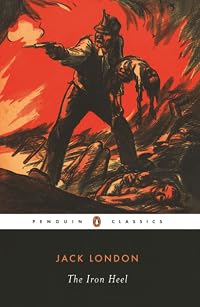
The Iron Heel
by Jack London
On This Page
Description
The Iron Heel is a dystopian novel by American writer Jack London, first published in 1908. Anthony Meredith, a scholar in about the year 2600 AD (or 419 B.O.M. - the Brotherhood of Man), annotates the "Everhard Manuscript", an account that chronicles the years from 1912 to 1932 when the great "Iron Heel" oligarchy rose to power in the United States..
Tags
Recommendations



















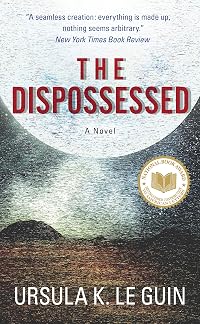
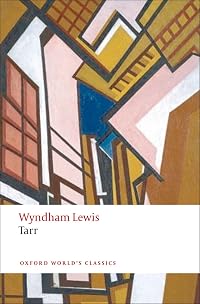
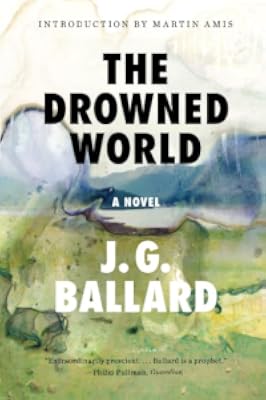


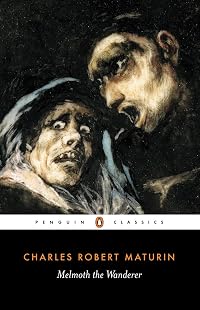


Member Recommendations

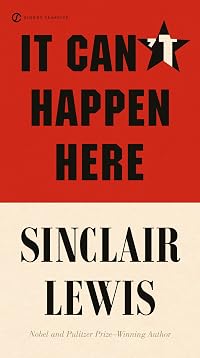
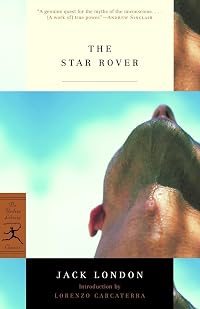
leigonj Both are science fiction written in 1908, inspired by the events of the 1905 Russian Revolution. Both are born of the writings of Marx and Engels.
20

News from Nowhere; or, An Epoch of Rest: Being Some Chapters from a Utopian Romance by William Morris
CGlanovsky Morris's novel could almost read like the future utopia from which London's fictional annotations are written.
melmore Both works are (among other things) showcases for the elaboration of political and economic arguments. Both strive to represent the full horror of economic oppression, and what happens when the oppressed resist.
Member Reviews
3.5/5
What if you were handed a pamphlet by a socialist political protester, but instead of a bullet point list of the ways in capitalism is a scourge on both society and average wage worker, those bullet points were transformed in to a very bare bones novella where characters serve for the to speak the bullet point at you. Perhaps one of the most didactic novels I've ever read, it serves as a display of London's personal view on the political system that he saw progressing in to the future. A warning against a capitalist oligarchy that crushes all labor unions and makes the rich even richer off their backs.
Whether or not you agree with the socialist values that are outlined by the characters, what makes The Iron Heel such an undying show more work is that it pretty accurately described the late stage capitalism that we are now experiencing in 2025. I think your enjoyment of the work hinge largely on your sympathy these socialist values, because if you don't there's really no redeeming quality to most of the exposition. In a way it's similar to Ayn Rand's work in that way, though it's my opinion that London more accurately describes current conditions and the threats that face us.
Creatively, yes, it isn't the most inventive work ever. Too much of the prose is caught up with serving as an agitprop, but there were a few highlights I thought worthy of mention. The framing device, that of a lost diary that is annotated by a publisher from a future socialist utopia, provides at least something to bite on to. Reminded me a lot of the similar device used in City, where it wasn't really necessary, but did add some amount of flavor that I ended up appreciating. Second, London's writing is solid throughout the novel, but he really starts to flex his muscles towards the end of the book when he described a failed revolution attempt in Chicago, and it's a brutal, bloody, and crushing vision that he sees. London's language here is really strong, and I wished there had been more of style included. Really, these creative flashes are glimpses at a much better novel that London never made, something perhaps more closely akin to 1984.
Nevertheless, The Iron Heel is important if for nothing else than as a proto-dytopia that was used by subsequent and superior works, and perhaps without it those works wouldn't exist in the way they do now. show less
What if you were handed a pamphlet by a socialist political protester, but instead of a bullet point list of the ways in capitalism is a scourge on both society and average wage worker, those bullet points were transformed in to a very bare bones novella where characters serve for the to speak the bullet point at you. Perhaps one of the most didactic novels I've ever read, it serves as a display of London's personal view on the political system that he saw progressing in to the future. A warning against a capitalist oligarchy that crushes all labor unions and makes the rich even richer off their backs.
Whether or not you agree with the socialist values that are outlined by the characters, what makes The Iron Heel such an undying show more work is that it pretty accurately described the late stage capitalism that we are now experiencing in 2025. I think your enjoyment of the work hinge largely on your sympathy these socialist values, because if you don't there's really no redeeming quality to most of the exposition. In a way it's similar to Ayn Rand's work in that way, though it's my opinion that London more accurately describes current conditions and the threats that face us.
Creatively, yes, it isn't the most inventive work ever. Too much of the prose is caught up with serving as an agitprop, but there were a few highlights I thought worthy of mention. The framing device, that of a lost diary that is annotated by a publisher from a future socialist utopia, provides at least something to bite on to. Reminded me a lot of the similar device used in City, where it wasn't really necessary, but did add some amount of flavor that I ended up appreciating. Second, London's writing is solid throughout the novel, but he really starts to flex his muscles towards the end of the book when he described a failed revolution attempt in Chicago, and it's a brutal, bloody, and crushing vision that he sees. London's language here is really strong, and I wished there had been more of style included. Really, these creative flashes are glimpses at a much better novel that London never made, something perhaps more closely akin to 1984.
Nevertheless, The Iron Heel is important if for nothing else than as a proto-dytopia that was used by subsequent and superior works, and perhaps without it those works wouldn't exist in the way they do now. show less
Published in 1908 and set in the future, Jack London's The Iron Heel is one of the earliest examples of dystopian fiction. London employs an unusual narrative structure (especially for its time) – a manuscript written by Avis Everhard, wife of famous revolutionist Ernest Everhard, that documents the years of their acquaintance, 1912 – 1932, a time when the tyrannical Oligarchs (the titular “Iron Heel”) were in power. The manuscript is discovered four hundred years later, after the fall of the Iron Heel. Its prologue and annotations are written by the (fictional) historian Anthony Meredith, who provides additional historical context.
London portrays a world in which the ruling elite use their economic power to suppress the show more working class, subvert democratic institutions, and maintain control through violence and coercion. Written decades earlier, it seems prescient with respect to the rise of fascism leading up to World War II. London understood how economic power translates to political control, leading to dismantling democratic institutions, which seems particularly relevant to today's world.
It is a significant work, predating later dystopian novels by Orwell, Huxley, and Zamyatin, but expressing similar themes. I had not realized until recently that London wrote a speculative novel. This novel highlights the cyclical nature of oppression and revolution that any student of history will recognize. Readers of dystopian or speculative fiction will not want to miss this one. show less
London portrays a world in which the ruling elite use their economic power to suppress the show more working class, subvert democratic institutions, and maintain control through violence and coercion. Written decades earlier, it seems prescient with respect to the rise of fascism leading up to World War II. London understood how economic power translates to political control, leading to dismantling democratic institutions, which seems particularly relevant to today's world.
It is a significant work, predating later dystopian novels by Orwell, Huxley, and Zamyatin, but expressing similar themes. I had not realized until recently that London wrote a speculative novel. This novel highlights the cyclical nature of oppression and revolution that any student of history will recognize. Readers of dystopian or speculative fiction will not want to miss this one. show less
'The Iron Heel' is an interestingly inconsistent book, not so much in ideology as in style. It is presented as a hagiography of an unsuccessful revolutionary, written by his wife. The first few chapters include her slightly tiresome habit of breathlessly praising everything he does or says. The account becomes more compelling when the wife herself becomes an active revolutionary and is separated from her husband. At this point, though, events very violent and the book culminates in the horrible bloodbath of an unsuccessful uprising against the titular 'Iron Heel'. The narrator's voice is also significant, however, when she actually comes into contact with the proletariat that the revolution claims to serve. The revolutionaries show more themselves seem mostly bourgeois and Avis (whose name I love, incidentally) sometimes comes off as patronising and condescending.
Given that this book was first published in 1908, I can see why it was so influential. I was particularly struck by the role of women as revolutionaries in situations of extreme peril, which called to mind resistance fighters during the Second World War. I also noted the account of a war between the US and Germany being halted by a general strike. I have read elsewhere ('Children of the Revolution' by Robert Gildea) that on the eve of the First World War simultaneous general strikes were planned in France and Germany with the aim of preventing war. These did not succeed due apparently to chance circumstances, such as the untimely death of a lead organiser. It makes you wonder whether the world would be different if they had.
Jack London's vision of the future seems overly aggressive and simplistic to my eyes, but nonetheless still strikes a chord. His descriptions of the plutocracy/oligarchy look astonishingly similar to the 1%, as we term them today. The ways in which politicians and the media serve the dominant economic ideology seem scarcely to have changed in over a century. However, London's apparent message that violent conflict is the only possible way forward seems depressing. Moreover, current experience of the Arab Spring appears to suggest that sudden violent uprising can result in ongoing destructive civil war. Perhaps reading this book a hundred years after it was written, knowing about the horror of the world wars, short-term violence to achieve a long term utopia no longer seems acceptable. Quite apart from the fact that the term socialism has been tainted by the totalitarian regimes that used that label. I wonder if Jack London would appreciate the irony that possibly the most effective, thriving oligarchic regime in the world still proclaims itself to the be socialist. (I refer of course to China.) This book has relatively little to say about countries outside the US and Europe; the references to Japan seem overtly racist now.
I think 'The Iron Heel' is definitely still worth reading today, apart from anything else to marvel at how little macroeconomics has moved on. I didn't take from it an incitement to revolution so much as a chilling illustration of how a movement seeking to defeat a foe can end up becoming just as bad. At one point Avis comments that followers of the Iron Heel and of the revolution both treat their ideology as a religion, using it to justify torture and killing. This is a very important point, which begs the question, how does one get from the wretched situation described by Avis to the stable utopia stated to be in place hundreds of years later? Unfortunately that is not a question which the book can answer. show less
Given that this book was first published in 1908, I can see why it was so influential. I was particularly struck by the role of women as revolutionaries in situations of extreme peril, which called to mind resistance fighters during the Second World War. I also noted the account of a war between the US and Germany being halted by a general strike. I have read elsewhere ('Children of the Revolution' by Robert Gildea) that on the eve of the First World War simultaneous general strikes were planned in France and Germany with the aim of preventing war. These did not succeed due apparently to chance circumstances, such as the untimely death of a lead organiser. It makes you wonder whether the world would be different if they had.
Jack London's vision of the future seems overly aggressive and simplistic to my eyes, but nonetheless still strikes a chord. His descriptions of the plutocracy/oligarchy look astonishingly similar to the 1%, as we term them today. The ways in which politicians and the media serve the dominant economic ideology seem scarcely to have changed in over a century. However, London's apparent message that violent conflict is the only possible way forward seems depressing. Moreover, current experience of the Arab Spring appears to suggest that sudden violent uprising can result in ongoing destructive civil war. Perhaps reading this book a hundred years after it was written, knowing about the horror of the world wars, short-term violence to achieve a long term utopia no longer seems acceptable. Quite apart from the fact that the term socialism has been tainted by the totalitarian regimes that used that label. I wonder if Jack London would appreciate the irony that possibly the most effective, thriving oligarchic regime in the world still proclaims itself to the be socialist. (I refer of course to China.) This book has relatively little to say about countries outside the US and Europe; the references to Japan seem overtly racist now.
I think 'The Iron Heel' is definitely still worth reading today, apart from anything else to marvel at how little macroeconomics has moved on. I didn't take from it an incitement to revolution so much as a chilling illustration of how a movement seeking to defeat a foe can end up becoming just as bad. At one point Avis comments that followers of the Iron Heel and of the revolution both treat their ideology as a religion, using it to justify torture and killing. This is a very important point, which begs the question, how does one get from the wretched situation described by Avis to the stable utopia stated to be in place hundreds of years later? Unfortunately that is not a question which the book can answer. show less
Actually, this is a crummy novel--it consists mostly of long explanations of political and economic theories and revolutionary ideals, and the main character is a cardboard cutout hero--but it does contain some interesting ideas and speculation about how a political revolution may arise in this country and how the powers that be would react. Wish London were alive to provide some commentary in these times.
Published before World War I, the book provides a good analysis of the oligarchy/middle class/proletariat dynamic. Quite prescient of our current oligarchic times. But as a dystopian fiction read I found it only so-so.
Fascinating, and incredibly relevant today. London had seen poverty, the excesses of extreme capitalism, and a widening ‘wealth gap’ in the America of his day, and like many, advocated socialism as a more humane and fair system. Here he writes a cautionary tale about what he believed the conflict inherent to capitalism between owners and workers would inevitably lead to – civil war, or revolution – and comes across even as advocating it. He does this by presenting a journal from one of the wife of one of the (fictional) early Socialist leaders, uncovered by historians in the future, after man had endured hundreds of years under the “Iron Heel” of an Oligarchy, and then were hundreds of years into a more enlightened show more “Brotherhood of Man”.
I don’t buy all of London’s views, and he obviously didn’t have the benefit of seeing just how disastrously communism would play out in the 20th century, but found his descriptions of the power dynamic between owners and workers, the rich and poor – and all of the implications of that – to be highly compelling. There are so many things to chew on here, as the book includes:
- Criticism of organized religion’s role in attempting to preserve the status quo, vs. preaching the real message of Christ … among other things, quoting several 19th century Southern church leaders justifying slavery.
- Political corruption in the form of lobbyists in Congress eating away at democracy and turning it into a plutocracy, despite voting and what people thought was rule of the people. He also points out decisions like Lochner v. New York (1905), which held that the New York law prohibiting work days longer than 10 hours and work weeks with more than 60 hours was unconstitutional – a sign that wealthy, conservative interests were at play, and which would continue on into the progressive era (something we may see repeating itself in the future).
- Echoes of Tolstoy’s idealistic suggestion to ending war – by the common man simply refusing to participate.
- The wealthy saying criticisms against them amounted to “class hatred” just as we see today on Fox News, and ironically without the self-reflection of what a system that accelerates the wealth gap amounts to. They also believe they are the saviors of society, when the protagonist finds them not only selfish, but surprised by their “absence of intellectual life.”
- London quotes statistics from 1900 as giving this breakdown of Americans: the Plutocratic (in this context, wealthy) class (1%), Middle Class (29%), and Proletarian Class (70%). It’s just fascinating to me to compare this to today, where we have increasing light shed on “the 1%”, which as of 2017 owned 40% of the nation’s wealth, and the bottom 90% owned a shockingly low 20%. In London’s vision, he sees the middle class being squeezed out of existence – and it’s this erosion that we see today.
- Criticism of the small businessmen who were angry about being run out of business by big businessmen, who could use economies of scale to better compete – saying that they had had no problem in successively driving others out of business, were motivated by the same principles, and were swimming upstream to think a system that produced lower costs could be undone. I thought this was fantastic. While I cringe over the big businesses today (e.g. Amazon), London’s comments through his character are insightful. His solution is not to limit the big business (“the machine”, as he calls it), but to have workers own it (or the government), spreading the wealth. He also believed in “excessive income taxes, graduated with ferocity, to destroy large accumulations.”
- The lengths to which the rich will go to preserve their wealth - buying off labor leaders, breaking unions and undermining them at every turn, sending agents out to incite violence so that armed force can be brought in, and most ominously, simply charging illegality of election results and then using violence. If that doesn’t make the hairs stand up on the back of your head, I don’t know what will.
The crisis that threatened American democracy in London’s time was alleviated with social programs following the Depression, leading to rise of the middle class – but we face the problem again in 2019 after decades of the middle class being eroded, starting with the Reagan-era economic policies and tax changes. The novel shows us how full circle we’ve come, and while I don’t think London’s solution of revolution or socialism/communism is the answer, I couldn’t help but feel while reading his book that we’re standing on the same precipice over an abyss, that selfish behavior leads to history inevitably repeating itself, and that grave outcomes are certainly possible – either in the form of violence and a civil war, or a plutocracy that continues to shed all pretenses of being a democracy. It’s chilling, chilling stuff, and fascinating to me how both systems can lead to autocratic power – via the Oligarchy as London describes it here (and which we see examples of), or via communist dictators who brutally enslave their people.
As a novel, it doesn’t hold up as well as it should, particularly in the chapters after the revolution breaks out, because it’s predominantly London essentially narrating events of violence. It’s also got a socialist leader who is too perfect – strong in mind and body, courageous, and uncannily prescient, and in that way, it reminded me of Chernyshevsky’s idealistic man in ‘What Is to be Done?’ Artistically the book works well in its first half, but starts faltering in its second half. I did like the journal format, footnoted centuries later by a fictional historian, an effective technique which allowed London to make comments on events from the late 19th century as well as the future, all seen from a distance.
One might consider reading this book in tandem with Ayn Rand’s ‘Atlas Shrugged,’ because Rand presents a clearly different (and positive) view of industrialists – as leaders, thinkers, and creators, and instead criticized those that dragged them down via bureaucracy, or via 'levelizing' humanity (ala communism). Personally, I think the truth is somewhere in the middle, that absolute communism as in 20th century Russia/China is awful, and absolute capitalism as in the 19th century industrial revolution in Europe/America (and what we’ve trended towards over the last few decades) is also awful. A happy medium is what’s needed.
Quotes:
On business, he provides this footnote for ‘Wall Street’:
“Wall Street – so named from a street in ancient New York, where was situated the stock exchange, and where the irrational organization of society permitted underhanded manipulation of all the industries of the country.”
On lawyers and the rich, from Theodore Roosevelt in a commencement speech to Harvard in 1905:
“We all know that, as things actually are, many of the most influential and most highly renumerated members of the Bar in every center of wealth, make it their special task to work out bold and ingenious schemes by which their wealthy clients, individual or corporate, can evade the laws which were made to regulate, in the interests of the public, the uses of great wealth.”
On plutocracy, from John C. Calhoun:
“A power has risen up in the government greater than the people themselves, consisting of many and various and powerful interests, combined into one mass, and held together by the cohesive power of the vast surplus in the banks.”
And this one, which is stunning, which London says is Abraham Lincoln just before his assassination, but was actually written by John Nicolay, Lincoln’s private secretary a couple of decades after his death (still, wow!):
“I see in the near future a crisis approaching that unnerves me and causes me to tremble for the safety of my country… Corporations have been enthroned, an era of corruption in high places will follow, and the money-power of the country will endeavor to prolong its reign by working upon the prejudice of the people until the wealth is aggregated in a few hands and the Republic is destroyed.”
On the rich, from John Stuart Mill’s ‘On Liberty’:
“Whenever there is an ascendant class, a large portion of the morality emanates from its class interests and its class feelings of superiority.”
On the wealth gap, this from Lord Avebury, and Englishman in the House of Lords, in 1906:
“The unrest in Europe, the spread of socialism, and the ominous rise of Anarchism, are warmings to the governments and the ruling classes that the conditions of the working classes in Europe is becoming intolerable, and that if a revolution is to be avoided some steps must be taken to increase wages, reduce the hours of labor, and lower the prices of the necessities of life.” show less
I don’t buy all of London’s views, and he obviously didn’t have the benefit of seeing just how disastrously communism would play out in the 20th century, but found his descriptions of the power dynamic between owners and workers, the rich and poor – and all of the implications of that – to be highly compelling. There are so many things to chew on here, as the book includes:
- Criticism of organized religion’s role in attempting to preserve the status quo, vs. preaching the real message of Christ … among other things, quoting several 19th century Southern church leaders justifying slavery.
- Political corruption in the form of lobbyists in Congress eating away at democracy and turning it into a plutocracy, despite voting and what people thought was rule of the people. He also points out decisions like Lochner v. New York (1905), which held that the New York law prohibiting work days longer than 10 hours and work weeks with more than 60 hours was unconstitutional – a sign that wealthy, conservative interests were at play, and which would continue on into the progressive era (something we may see repeating itself in the future).
- Echoes of Tolstoy’s idealistic suggestion to ending war – by the common man simply refusing to participate.
- The wealthy saying criticisms against them amounted to “class hatred” just as we see today on Fox News, and ironically without the self-reflection of what a system that accelerates the wealth gap amounts to. They also believe they are the saviors of society, when the protagonist finds them not only selfish, but surprised by their “absence of intellectual life.”
- London quotes statistics from 1900 as giving this breakdown of Americans: the Plutocratic (in this context, wealthy) class (1%), Middle Class (29%), and Proletarian Class (70%). It’s just fascinating to me to compare this to today, where we have increasing light shed on “the 1%”, which as of 2017 owned 40% of the nation’s wealth, and the bottom 90% owned a shockingly low 20%. In London’s vision, he sees the middle class being squeezed out of existence – and it’s this erosion that we see today.
- Criticism of the small businessmen who were angry about being run out of business by big businessmen, who could use economies of scale to better compete – saying that they had had no problem in successively driving others out of business, were motivated by the same principles, and were swimming upstream to think a system that produced lower costs could be undone. I thought this was fantastic. While I cringe over the big businesses today (e.g. Amazon), London’s comments through his character are insightful. His solution is not to limit the big business (“the machine”, as he calls it), but to have workers own it (or the government), spreading the wealth. He also believed in “excessive income taxes, graduated with ferocity, to destroy large accumulations.”
- The lengths to which the rich will go to preserve their wealth - buying off labor leaders, breaking unions and undermining them at every turn, sending agents out to incite violence so that armed force can be brought in, and most ominously, simply charging illegality of election results and then using violence. If that doesn’t make the hairs stand up on the back of your head, I don’t know what will.
The crisis that threatened American democracy in London’s time was alleviated with social programs following the Depression, leading to rise of the middle class – but we face the problem again in 2019 after decades of the middle class being eroded, starting with the Reagan-era economic policies and tax changes. The novel shows us how full circle we’ve come, and while I don’t think London’s solution of revolution or socialism/communism is the answer, I couldn’t help but feel while reading his book that we’re standing on the same precipice over an abyss, that selfish behavior leads to history inevitably repeating itself, and that grave outcomes are certainly possible – either in the form of violence and a civil war, or a plutocracy that continues to shed all pretenses of being a democracy. It’s chilling, chilling stuff, and fascinating to me how both systems can lead to autocratic power – via the Oligarchy as London describes it here (and which we see examples of), or via communist dictators who brutally enslave their people.
As a novel, it doesn’t hold up as well as it should, particularly in the chapters after the revolution breaks out, because it’s predominantly London essentially narrating events of violence. It’s also got a socialist leader who is too perfect – strong in mind and body, courageous, and uncannily prescient, and in that way, it reminded me of Chernyshevsky’s idealistic man in ‘What Is to be Done?’ Artistically the book works well in its first half, but starts faltering in its second half. I did like the journal format, footnoted centuries later by a fictional historian, an effective technique which allowed London to make comments on events from the late 19th century as well as the future, all seen from a distance.
One might consider reading this book in tandem with Ayn Rand’s ‘Atlas Shrugged,’ because Rand presents a clearly different (and positive) view of industrialists – as leaders, thinkers, and creators, and instead criticized those that dragged them down via bureaucracy, or via 'levelizing' humanity (ala communism). Personally, I think the truth is somewhere in the middle, that absolute communism as in 20th century Russia/China is awful, and absolute capitalism as in the 19th century industrial revolution in Europe/America (and what we’ve trended towards over the last few decades) is also awful. A happy medium is what’s needed.
Quotes:
On business, he provides this footnote for ‘Wall Street’:
“Wall Street – so named from a street in ancient New York, where was situated the stock exchange, and where the irrational organization of society permitted underhanded manipulation of all the industries of the country.”
On lawyers and the rich, from Theodore Roosevelt in a commencement speech to Harvard in 1905:
“We all know that, as things actually are, many of the most influential and most highly renumerated members of the Bar in every center of wealth, make it their special task to work out bold and ingenious schemes by which their wealthy clients, individual or corporate, can evade the laws which were made to regulate, in the interests of the public, the uses of great wealth.”
On plutocracy, from John C. Calhoun:
“A power has risen up in the government greater than the people themselves, consisting of many and various and powerful interests, combined into one mass, and held together by the cohesive power of the vast surplus in the banks.”
And this one, which is stunning, which London says is Abraham Lincoln just before his assassination, but was actually written by John Nicolay, Lincoln’s private secretary a couple of decades after his death (still, wow!):
“I see in the near future a crisis approaching that unnerves me and causes me to tremble for the safety of my country… Corporations have been enthroned, an era of corruption in high places will follow, and the money-power of the country will endeavor to prolong its reign by working upon the prejudice of the people until the wealth is aggregated in a few hands and the Republic is destroyed.”
On the rich, from John Stuart Mill’s ‘On Liberty’:
“Whenever there is an ascendant class, a large portion of the morality emanates from its class interests and its class feelings of superiority.”
On the wealth gap, this from Lord Avebury, and Englishman in the House of Lords, in 1906:
“The unrest in Europe, the spread of socialism, and the ominous rise of Anarchism, are warmings to the governments and the ruling classes that the conditions of the working classes in Europe is becoming intolerable, and that if a revolution is to be avoided some steps must be taken to increase wages, reduce the hours of labor, and lower the prices of the necessities of life.” show less
"Did you notice how he began like a lamb—Everhard, I mean, and how quickly he became a roaring lion? He has a splendidly disciplined mind. He would have made a good scientist if his energies had been directed that way." (23)
I knew Jack London wrote a "yellow peril" invasion novel; I had not known that he also wrote a piece of revolutionary science fiction until I was reading Geoffrey Harpham's 1975 essay "Jack London and the Tradition of Superman Socialism." Harpham uses the term "superman socialist" to describe the protagonist of The Iron Heel, Ernest Everhard. According to Harpham, the superman socialist “[m]erg[ed] the vision of Just Society with the idea of the romantic hero” (23). The superman socialist has “scientific, show more factual bases for his sense of superiority” (24), but he “renounces Nietzschean amorality in favor of the proper use of genius in struggling for a better social order” (25). The superman socialist knows his violence is justified because a better world emerges, no matter who dies to create it; Harpham argues that superman socialism uses the same rhetoric as the forces it opposed, calling it “a barbaric American Kiplingism in which the fit survived and the unfit perished, to nobody’s regret—a view which lent itself to a sanction not only of superman socialism, but of empire and militarism as well” (26). I found the concept very useful in writing about Victorian sf novels featuring Darwinism; it seemed to me that the superman socialist was another form of what I call, drawing on Robert Lifton, the biocrat. But I used the concept so much I really felt I ought to go read The Iron Heel for myself!
I read this before H. G. Wells's two "biocratic" novels, Anticipations and A Modern Utopia, simply because I got ahold of it first, but am writing it up afterwards, which is eminently appropriate, not just because it was published later, but because Anticipations was a direct influence on London. In Anticipations, Wells coined the term "People of the Abyss" to refer to what he considered the lowest classes, those who didn't even labor. London actually used the term as the title of a 1903 memoir he wrote about life in London's East End, and he recycles the term here as well. The form of this book feels a bit Wellsian, too, in that it's told in the form of a book manuscript from the future, one written in the mid-20th century, but not published until the 27th, and it includes footnotes from a 27th-century annotator making clear the 20th-century cultural context to a 27th-century audience. Though actually I don't think Wells wrote one of those "found future manuscript" books until The Shape of Things to Come, which was almost three decades later. (The World Set Free seems like a future history book, but this isn't made explicit, and it also comes after Iron Heel.) It is a format others were using around this time; Henry Lazarus's The English Revolution of the Twentieth Century and Frank Attfield Fawkes's Marmaduke, Emperor of Europe are the two that stick out to me. Did London read these? Maybe he read something like them, or maybe he invented his own take on the idea out of whole cloth. The idea of us reading future annotations aimed at an imaginary future audience is clever, and a neat innovation of London, who in explaining what the 20th century takes for granted, makes it clear what the 27th century does not take for granted.
The whole book is thus supposedly by Avis Everhard, the wife of Ernest Everhard, one of the key participants in a failed socialist uprising; it gives Ernest's life and the uprising from her perspective. There's some neat stuff here, especially Avis's slow radicalization and her as a deep cover agent. But much of the later sections of the novel are told at a remove, so we don't actually live the events along with her, but just hear them summarized in retrospect. As a book, it's basically fine, but it does give good insight into a particular kind of early 20th-century socialist thinking, one that I am attempting to surface (albeit in Britain) in my own project. Ernest is a man who believes that only violence can reject capitalism and bring about socialism, and as Harpham says, the main characters seem to be as disgusted by the lower classes they are supposedly helping as they are by the upper classes they are in opposition to. The "superman socialist" decides who lives and who dies, and if you die in the cause of socialism, the death is justified: "It would have meant […] great loss of life, but no revolutionist hesitates at such things" (220). As my epigraph above highlights, Everhard is not—unlike how Lifton defines the biocrat, and unlike the Samurai of Wells's two utopias—a man of science or medicine, but London is keen to highlight that he thinks like a scientist, but sees with even more clarity, and this is what gives him the moral authority that he needs to commit violence. show less
I knew Jack London wrote a "yellow peril" invasion novel; I had not known that he also wrote a piece of revolutionary science fiction until I was reading Geoffrey Harpham's 1975 essay "Jack London and the Tradition of Superman Socialism." Harpham uses the term "superman socialist" to describe the protagonist of The Iron Heel, Ernest Everhard. According to Harpham, the superman socialist “[m]erg[ed] the vision of Just Society with the idea of the romantic hero” (23). The superman socialist has “scientific, show more factual bases for his sense of superiority” (24), but he “renounces Nietzschean amorality in favor of the proper use of genius in struggling for a better social order” (25). The superman socialist knows his violence is justified because a better world emerges, no matter who dies to create it; Harpham argues that superman socialism uses the same rhetoric as the forces it opposed, calling it “a barbaric American Kiplingism in which the fit survived and the unfit perished, to nobody’s regret—a view which lent itself to a sanction not only of superman socialism, but of empire and militarism as well” (26). I found the concept very useful in writing about Victorian sf novels featuring Darwinism; it seemed to me that the superman socialist was another form of what I call, drawing on Robert Lifton, the biocrat. But I used the concept so much I really felt I ought to go read The Iron Heel for myself!
I read this before H. G. Wells's two "biocratic" novels, Anticipations and A Modern Utopia, simply because I got ahold of it first, but am writing it up afterwards, which is eminently appropriate, not just because it was published later, but because Anticipations was a direct influence on London. In Anticipations, Wells coined the term "People of the Abyss" to refer to what he considered the lowest classes, those who didn't even labor. London actually used the term as the title of a 1903 memoir he wrote about life in London's East End, and he recycles the term here as well. The form of this book feels a bit Wellsian, too, in that it's told in the form of a book manuscript from the future, one written in the mid-20th century, but not published until the 27th, and it includes footnotes from a 27th-century annotator making clear the 20th-century cultural context to a 27th-century audience. Though actually I don't think Wells wrote one of those "found future manuscript" books until The Shape of Things to Come, which was almost three decades later. (The World Set Free seems like a future history book, but this isn't made explicit, and it also comes after Iron Heel.) It is a format others were using around this time; Henry Lazarus's The English Revolution of the Twentieth Century and Frank Attfield Fawkes's Marmaduke, Emperor of Europe are the two that stick out to me. Did London read these? Maybe he read something like them, or maybe he invented his own take on the idea out of whole cloth. The idea of us reading future annotations aimed at an imaginary future audience is clever, and a neat innovation of London, who in explaining what the 20th century takes for granted, makes it clear what the 27th century does not take for granted.
The whole book is thus supposedly by Avis Everhard, the wife of Ernest Everhard, one of the key participants in a failed socialist uprising; it gives Ernest's life and the uprising from her perspective. There's some neat stuff here, especially Avis's slow radicalization and her as a deep cover agent. But much of the later sections of the novel are told at a remove, so we don't actually live the events along with her, but just hear them summarized in retrospect. As a book, it's basically fine, but it does give good insight into a particular kind of early 20th-century socialist thinking, one that I am attempting to surface (albeit in Britain) in my own project. Ernest is a man who believes that only violence can reject capitalism and bring about socialism, and as Harpham says, the main characters seem to be as disgusted by the lower classes they are supposedly helping as they are by the upper classes they are in opposition to. The "superman socialist" decides who lives and who dies, and if you die in the cause of socialism, the death is justified: "It would have meant […] great loss of life, but no revolutionist hesitates at such things" (220). As my epigraph above highlights, Everhard is not—unlike how Lifton defines the biocrat, and unlike the Samurai of Wells's two utopias—a man of science or medicine, but London is keen to highlight that he thinks like a scientist, but sees with even more clarity, and this is what gives him the moral authority that he needs to commit violence. show less
Members
- Recently Added By
Lists

1001 Books You Must Read Before You Die
1,448 works; 1,134 members
Best Dystopias
280 works; 277 members

Classics you know you should have read but probably haven't
421 works; 409 members

Best Science Fiction Novels
816 works; 426 members

Best Alternate History
111 works; 60 members

Survey of Classic Dystopias
29 works; 4 members

Best of American Literature
146 works; 9 members

Dystopian and Apocalyptic Literature
350 works; 74 members

Books Read in 2017
4,249 works; 130 members

recalling favorites...
105 works; 2 members

The Works of Jack London
44 works; 1 member

Política - Clásicos
164 works; 2 members

Found manuscripts
35 works; 2 members
Talk Discussions
Past Discussions
Group Read, June 2024: The Iron Heel in 1001 Books to read before you die (June 2024)
Author Information

1,806+ Works 81,911 Members
One of the pioneers of 20th century American literature, Jack London specialized in tales of adventure inspired by his own experiences. London was born in San Francisco in 1876. At 14, he quit school and became an "oyster pirate," robbing oyster beds to sell his booty to the bars and restaurants in Oakland. Later, he turned on his pirate show more associates and joined the local Fish Patrol, resulting in some hair-raising waterfront battles. Other youthful activities included sailing on a seal-hunting ship, traveling the United States as a railroad tramp, a jail term for vagrancy and a hazardous winter in the Klondike during the 1897 gold rush. Those experiences converted him to socialism, as he educated himself through prolific reading and began to write fiction. After a struggling apprenticeship, London hit literary paydirt by combining memories of his adventures with Darwinian and Spencerian evolutionary theory, the Nietzchean concept of the "superman" and a Kipling-influenced narrative style. "The Son of the Wolf"(1900) was his first popular success, followed by 'The Call of the Wild" (1903), "The Sea-Wolf" (1904) and "White Fang" (1906). He also wrote nonfiction, including reportage of the Russo-Japanese War and Mexican revolution, as well as "The Cruise of the Snark" (1911), an account of an eventful South Pacific sea voyage with his wife, Charmian, and a rather motley crew. London's body broke down prematurely from his rugged lifestyle and hard drinking, and he died of uremic poisoning - possibly helped along by a morphine overdose - at his California ranch in 1916. Though his massive output is uneven, his best works - particularly "The Call of the Wild" and "White Fang" - have endured because of their rich subject matter and vigorous prose. (Bowker Author Biography) show less
Some Editions
Awards and Honors
Series
Belongs to Publisher Series
Work Relationships
Is contained in
Novels and Social Writings: The People of the Abyss / The Road / The Iron Heel / Martin Eden / John Barleycorn by Jack London
Common Knowledge
- Canonical title*
- Järnhälen
- Original title
- The Iron Heel
- Original publication date
- 1907
- People/Characters
- Ernest Everhard; Avis Everhard; William Randolph Hearst
- Important places
- Chicago, Illinois, USA; Berkeley, California, USA
- Related movies
- The Iron Mitt (1916 | IMDb); Zheleznaya pyata (1919 | IMDb)
- Epigraph
- "At first, this Earth, a stage so gloomed with woe / You almost sicken at the shifting of the scenes. / And yet be patient. Our Playwright may show / In some fifth act what this Wild Drama means."
- First words
- It cannot be said that the Everhard Manuscript is an important historical document.
- Last words
- (Click to show. Warning: May contain spoilers.)It is to be regretted that she did not live to complete her narrative, for then, undoubtedly, would have been cleared away the mystery that has shrouded for seven centuries the execution of Ernest Everhard.
- Original language
- English
- Canonical DDC/MDS
- 813.087624
- Canonical LCC
- PS3523.O46
*Some information comes from Common Knowledge in other languages. Click "Edit" for more information.
Classifications
- Genres
- Fiction and Literature, Science Fiction, General Fiction
- DDC/MDS
- 813.087624 — Literature & rhetoric American literature in English American fiction in English By type Genre fiction Adventure fiction Speculative fiction Science fiction Dystopian
- LCC
- PS3523 .O46 — Language and Literature American literature American literature Individual authors 1900-1960
- BISAC
Statistics
- Members
- 1,764
- Popularity
- 12,492
- Reviews
- 43
- Rating
- (3.40)
- Languages
- 20 — Catalan, Czech, Danish, English, Esperanto, Estonian, Finnish, French, German, Greek, Hebrew, Hungarian, Italian, Korean, Norwegian (Bokmål), Polish, Portuguese, Spanish, Swedish, Turkish
- Media
- Paper, Audiobook, Ebook
- ISBNs
- 226
- UPCs
- 1
- ASINs
- 55