News from Nowhere; or, An Epoch of Rest: Being Some Chapters from a Utopian Romance
by William Morris 
On This Page
Description
William Morris is most famous for his textile design, but he was also a passionate and active socialist. News From Nowhere explores his socialist ideals in soft science-fiction. A man returns from a socialist meeting and falls into a sleep from which he wakes in a utopian, socialist future..
Tags
Recommendations


























Member Recommendations
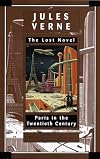
CGlanovsky A dystopian antithesis to Morris's utopia.

CGlanovsky Morris's novel could almost read like the future utopia from which London's fictional annotations are written.

Member Reviews
You couldn't move in the nineteenth century for the sequels, prequels, ripoffs, and rebuttals of Looking Backward. Wikipedia claims there were over 150, and I know of some that aren't on that list. Most of what I've read myself is terrible; Morris is one of the few writers to attempt to write one who came up with something halfway decent. Unfortunately, a halfway decent Victorian utopian tract is still a Victorian utopian tract; this is one of those books where some fellows walks around an ideal society being told how ideal it is. (Wells, of course, skewered the whole subgenre in The Sleeper Awakes.) Morris being Morris, everyone in the future loves arts and crafts. One thing I must praise him for, though, is his understanding that show more social change means revolution and revolution means violence; the narrator's guide says that of course it wasn't a peaceful transition to utopia because the world hadn't been peaceful before utopia: "what peace was there among those poor confused wretches of the nineteenth century? It was war from beginning to end: bitter war, till hope and pleasure put an end to it" (148-49). We're cushioned from the violence, though, because it's all told to us in a history lesson. No dead bodies on the page in this revolution! show less
Do not be too quick to dismiss Morris's speculation as woefully inaccurate. Yes, his "future" more resembles a mythical past than anything else, but to fault him too strongly for that misses the point. His object was less to prognosticate than to urge. Jules Verne's "Paris in the 20th Century" is an example of a 19th Century premonition of how 19th Century trends WOULD be extrapolated into the future; "News from Nowhere" deals in how those trends COULD be contravened. The shape this imagined utopia takes on in its superficial qualities (manners of dress, for instance) is entirely the result of Morris's evident aesthetic prejudices.
Morris was a driving force in the Pre-Raphaelite movement of English painters. Their cause was to reject show more what they saw as the stultifying forms and conventions common in art since the latter half of the Renaissance. As subject-matter, Morris and his fellows generally borrowed subject matter from Medieval history and legend. It's not surprising then that his utopia also dresses itself in those motifs.
Ultimately the substance of Morris's story lies elsewhere. Unlike Verne, he isn't trying to amaze with projected technological advancement. In fact Morris saw the proliferation of machinery as ugly and tending more to increase than lessen the burden of labor on the common man. So the scientific trappings of his future society are mostly hidden. At one point his protagonist sees a water craft propelled down the river by no discernible force, without a sail or a column of smoke to denote a steam engine; briefly wondering at the sight, the observer shrugs it off and continues instead to admire the natural beauty around him.
Morris's goal was to elucidate his vision for the future of our social institutions. He was an active Socialist who wished to establish a convincing alternative to versions of socialism that relied on an authoritarian state. He foresees a world where government occurs locally and democratically. He reasons that most criminal activity arises from class divisions and property disputes and that without these order and security will succeed naturally. With life's necessities shared equally, the requirement for compulsive, unpleasant work will be diminished and labor--imbued with artistic pride--will become a pleasure. show less
Morris was a driving force in the Pre-Raphaelite movement of English painters. Their cause was to reject show more what they saw as the stultifying forms and conventions common in art since the latter half of the Renaissance. As subject-matter, Morris and his fellows generally borrowed subject matter from Medieval history and legend. It's not surprising then that his utopia also dresses itself in those motifs.
Ultimately the substance of Morris's story lies elsewhere. Unlike Verne, he isn't trying to amaze with projected technological advancement. In fact Morris saw the proliferation of machinery as ugly and tending more to increase than lessen the burden of labor on the common man. So the scientific trappings of his future society are mostly hidden. At one point his protagonist sees a water craft propelled down the river by no discernible force, without a sail or a column of smoke to denote a steam engine; briefly wondering at the sight, the observer shrugs it off and continues instead to admire the natural beauty around him.
Morris's goal was to elucidate his vision for the future of our social institutions. He was an active Socialist who wished to establish a convincing alternative to versions of socialism that relied on an authoritarian state. He foresees a world where government occurs locally and democratically. He reasons that most criminal activity arises from class divisions and property disputes and that without these order and security will succeed naturally. With life's necessities shared equally, the requirement for compulsive, unpleasant work will be diminished and labor--imbued with artistic pride--will become a pleasure. show less
My reactions to reading this novel in 1996. Spoilers follow.
This book may very well have been on the Unabomber’s bookshelf. This communistic, arts and crafts tyranny would appeal to the anti-technological Unabomber with his hand crafted bombs. Communism is the explicitly stated philosophy at work here, and Morris was famous for his works on artistic aesthetics. Morris is resolutely anti-technological and explicitly and frequently evokes his beloved 14th century Europe as a model for living. He even dismisses their more reprehensible laws as at least being sincere unlike Victorian laws which, according to him, are repressive and hypocritically justified. To be fair to Morris, two of 14th Century Europe’s problems – plague and show more famine – were not yet really being alleviated by contemporary science – not that Morris really mentions them as problems of 14th century life.
This is not really, despite being frequently mentioned in sf histories, a sf novel. Essentially, it’s a dream vision (more echoes of Morris’ medievalism) of Morris’ utopia. As with all utopias, it has to be criticized on two levels: the literary merits and the merits of the ideas.
On the literary level, this is – given the constraints of the Utopian genre which usually precludes interesting conflicts – fairly well written. It’s witty in parts and includes an interesting and detailed explanation on how 19th century British society evolved into Morris’ utopia – “an epoch of rest” as the subtitle goes.
On the political level, this book is totally unconvincing. Morris makes the usual mistake of socialist/communist utopians in presuming that human nature is mutable according to political and social factors. Morris has a character sweep aside the narrator’s – the dreamer – question on human nature with “The human nature of pauper, of slaves, of slave-holders, or the human nature of wealthy freemen?” This is a tautology since such a version of human nature has to exist before Morris’ “wealthy freemen” can be created.) Not only does Morris make the usual stupid presumptions that man can live in a communist society, indeed an anarchic one here, and simply be persuaded to lead a good, moral life without even being punished when he strays (the culprit will feel bad and mend his ways we're told), but he compounds the problem by not only seeing man as capable of living in a communist world but also as inherently desiring to work and lead a creative life. I think humans (and there is plenty of evidence to back this up) are generally inherently lazy and uncreative. We value energy and creativity in part because of its rarity. To be sure, creativity is fairly widespread but that doesn’t mean everyone wants to be an artisan. (Bookishness is generally discouraged in this world though Morris admits some will still take to it.). Yet, Morris postulates such a utopia where people amuse themselves with farming practices and artisan work out of the Middle Ages. Morris, in his anti-industrial, anti-technological zeal (he snidely has one character remark that machines of production were the only true products of craftsmanship in the Industrial Age) ignores three things: first, that some people’s creativity is only applicable to things in a technological society; second, that those who dwelled in supposed rural bliss (Morris worships nature) flocked to the cities in the Industrial Revolution to make their lives better; third, that hand craftsmanship simply can not provide enough items for the good life he shows. Handcrafted items may be nice, but most people have chosen to opt – voluntarily – for a slight – but still satisfactory – reduction in quality for quantity of goods (I’m speaking of Morris’ goods: furniture, clothes, housewares).
Morris has created an arts and craft hell where man supposedly would be happy to live at a mediaeval level. No, not even mediaeval since his utopia is communistic. Morris also improbably has his utopians longer lived and more beautiful than us because of their pleasant world and work thus totally ignoring even contemporary medical science and sanitation (Of course, Morris doesn’t address Victorian improvements in life due to sanitation.) Morris also postulates the abolishment of legal marriage contracts.
I do have one area of agreement with Morris when he takes contemporary feminists to task for denigrating women who want to be mothers and serve their families. He rightly sees this as a good and natural desire of most women. show less
This book may very well have been on the Unabomber’s bookshelf. This communistic, arts and crafts tyranny would appeal to the anti-technological Unabomber with his hand crafted bombs. Communism is the explicitly stated philosophy at work here, and Morris was famous for his works on artistic aesthetics. Morris is resolutely anti-technological and explicitly and frequently evokes his beloved 14th century Europe as a model for living. He even dismisses their more reprehensible laws as at least being sincere unlike Victorian laws which, according to him, are repressive and hypocritically justified. To be fair to Morris, two of 14th Century Europe’s problems – plague and show more famine – were not yet really being alleviated by contemporary science – not that Morris really mentions them as problems of 14th century life.
This is not really, despite being frequently mentioned in sf histories, a sf novel. Essentially, it’s a dream vision (more echoes of Morris’ medievalism) of Morris’ utopia. As with all utopias, it has to be criticized on two levels: the literary merits and the merits of the ideas.
On the literary level, this is – given the constraints of the Utopian genre which usually precludes interesting conflicts – fairly well written. It’s witty in parts and includes an interesting and detailed explanation on how 19th century British society evolved into Morris’ utopia – “an epoch of rest” as the subtitle goes.
On the political level, this book is totally unconvincing. Morris makes the usual mistake of socialist/communist utopians in presuming that human nature is mutable according to political and social factors. Morris has a character sweep aside the narrator’s – the dreamer – question on human nature with “The human nature of pauper, of slaves, of slave-holders, or the human nature of wealthy freemen?” This is a tautology since such a version of human nature has to exist before Morris’ “wealthy freemen” can be created.) Not only does Morris make the usual stupid presumptions that man can live in a communist society, indeed an anarchic one here, and simply be persuaded to lead a good, moral life without even being punished when he strays (the culprit will feel bad and mend his ways we're told), but he compounds the problem by not only seeing man as capable of living in a communist world but also as inherently desiring to work and lead a creative life. I think humans (and there is plenty of evidence to back this up) are generally inherently lazy and uncreative. We value energy and creativity in part because of its rarity. To be sure, creativity is fairly widespread but that doesn’t mean everyone wants to be an artisan. (Bookishness is generally discouraged in this world though Morris admits some will still take to it.). Yet, Morris postulates such a utopia where people amuse themselves with farming practices and artisan work out of the Middle Ages. Morris, in his anti-industrial, anti-technological zeal (he snidely has one character remark that machines of production were the only true products of craftsmanship in the Industrial Age) ignores three things: first, that some people’s creativity is only applicable to things in a technological society; second, that those who dwelled in supposed rural bliss (Morris worships nature) flocked to the cities in the Industrial Revolution to make their lives better; third, that hand craftsmanship simply can not provide enough items for the good life he shows. Handcrafted items may be nice, but most people have chosen to opt – voluntarily – for a slight – but still satisfactory – reduction in quality for quantity of goods (I’m speaking of Morris’ goods: furniture, clothes, housewares).
Morris has created an arts and craft hell where man supposedly would be happy to live at a mediaeval level. No, not even mediaeval since his utopia is communistic. Morris also improbably has his utopians longer lived and more beautiful than us because of their pleasant world and work thus totally ignoring even contemporary medical science and sanitation (Of course, Morris doesn’t address Victorian improvements in life due to sanitation.) Morris also postulates the abolishment of legal marriage contracts.
I do have one area of agreement with Morris when he takes contemporary feminists to task for denigrating women who want to be mothers and serve their families. He rightly sees this as a good and natural desire of most women. show less
Written in 1890 by William Morris, yes that William Morris, famous for designs on wallpaper, fabric and much, much, more.
You could describe this as sci-fi or as utopian (as opposed to dystopian) or even communist propaganda !
The basic premise is that a man goes to sleep in his room in 1890 in London and wakes up in the same room in the year 2000. In essence this is someone in the past speculating on life in the future. So there are no robots or flying cars because this was written in a pre-technical age.
He meets and becomes friends with people, his cover story is that he has come from a foreign land where they do things differently.
The future he describes is a socialist utopia where people are fit, healthy, well dressed but not in a show more formal way and most importantly they are happy. They are free to pursue their own interests and many of the tasks that support their society are shared and not related to money or profit.
The bit I found interesting was how the people in the future described the past. They mainly described it as the days of slavery. The time when people had no choice but to do dangerous and unhealthy work just to survive and all their Labour’s were To support a handful of wealthy people who lived in luxury while those that supported them had lived that were nasty, brutal and short.
Just before I read that part I had recently read that in the USA around 27% of workers get no annual holidays and a lot out the people who do get annual holidays choose to work through them instead. Slavery? People working to support a handful of rich people? Unfortunately, it sounded all too familiar to me and recent changes like the “gig economy” has served to enslave people even more and while the rich get richer the number of poor just continues to rise.
I’m not labouring a point here as this is pretty much the gist of the book. It is explored in some detail by elaborating on the day to day existence in the people in the future.
It’s well worth a read given that it was written over 120 years ago. show less
You could describe this as sci-fi or as utopian (as opposed to dystopian) or even communist propaganda !
The basic premise is that a man goes to sleep in his room in 1890 in London and wakes up in the same room in the year 2000. In essence this is someone in the past speculating on life in the future. So there are no robots or flying cars because this was written in a pre-technical age.
He meets and becomes friends with people, his cover story is that he has come from a foreign land where they do things differently.
The future he describes is a socialist utopia where people are fit, healthy, well dressed but not in a show more formal way and most importantly they are happy. They are free to pursue their own interests and many of the tasks that support their society are shared and not related to money or profit.
The bit I found interesting was how the people in the future described the past. They mainly described it as the days of slavery. The time when people had no choice but to do dangerous and unhealthy work just to survive and all their Labour’s were To support a handful of wealthy people who lived in luxury while those that supported them had lived that were nasty, brutal and short.
Just before I read that part I had recently read that in the USA around 27% of workers get no annual holidays and a lot out the people who do get annual holidays choose to work through them instead. Slavery? People working to support a handful of rich people? Unfortunately, it sounded all too familiar to me and recent changes like the “gig economy” has served to enslave people even more and while the rich get richer the number of poor just continues to rise.
I’m not labouring a point here as this is pretty much the gist of the book. It is explored in some detail by elaborating on the day to day existence in the people in the future.
It’s well worth a read given that it was written over 120 years ago. show less
“Well,” said Hammond, “our villages are something like the best of such places, with the church or mote-house of the neighbours for their chief building. Only note that there are no tokens of poverty about them: no tumble-down picturesque; which, to tell you the truth, the artist usually availed himself of to veil his incapacity for drawing architecture.
An enjoyable utopian tale by William Morris in which the main character, who asks his hosts to call him Guest although he is obviously meant to be Morris himself, wakes in his own bed in Hammersmith only to find himself in a future world that seems to be based on the Arts and Crafts movement that was so important to Morris.
As usual with utopias this is a satire on modern (i.e. show more late-Victorian) society, but he gets in some more personal seeming digs about about artists, academics and Cambridge University (Oxford's "less interesting sister"). Once of the main features of the future society is that people enjoy making things and that the aesthetics of objects are equally as important as their function, as in the Arts and Crafts Movement. On the surface, it seems like a lovely place to live, but Morris does not touch on what would happen if you were disabled, got ill or had a difficult childbirth.
Guest's new friends take him on a trip up-river to see hte countryside and join in the hay harvest further up the Thames, which ends at what must be William Morris' other home, Kelmscott Manor. Eventually he ends up back in his own bed, but it ends on a hopeful note as rather than being miserable to be back, Guest is filled with hope for the future. show less
An enjoyable utopian tale by William Morris in which the main character, who asks his hosts to call him Guest although he is obviously meant to be Morris himself, wakes in his own bed in Hammersmith only to find himself in a future world that seems to be based on the Arts and Crafts movement that was so important to Morris.
As usual with utopias this is a satire on modern (i.e. show more late-Victorian) society, but he gets in some more personal seeming digs about about artists, academics and Cambridge University (Oxford's "less interesting sister"). Once of the main features of the future society is that people enjoy making things and that the aesthetics of objects are equally as important as their function, as in the Arts and Crafts Movement. On the surface, it seems like a lovely place to live, but Morris does not touch on what would happen if you were disabled, got ill or had a difficult childbirth.
Guest's new friends take him on a trip up-river to see hte countryside and join in the hay harvest further up the Thames, which ends at what must be William Morris' other home, Kelmscott Manor. Eventually he ends up back in his own bed, but it ends on a hopeful note as rather than being miserable to be back, Guest is filled with hope for the future. show less
So this one did not start off on a good footing. The protagonist goes to bed on a dreary winter night and wakes up in a beautiful spring.
Thematically i get what the author is doing but just because your in a utopian future doesn't mean its always sunny in england.
In fact if you want to sell me on a utopia convince me when its raining, anyone can have a utopia in the sun :P .
Then right after arriving our hero goes down to the Thames, which has clear water in it. Again i get the intent, its no longer filled with sewage i guess.. but it is the Thames, its like a tidal estuary river... again utopian futures do not mean the rivers don't get muddy, its a river thats just how they are sometimes!
Anyway, its interesting enough when we get to show more the whys and hows of the utopia although its always a little vague and unconvincing. If this were an alien planet found in star-trek.. no problem, wouln't question how this society could function.. but with human nature being what it is.. its a stretch to say the least.
Also the climate here seems suspicously stable, my pessimism says one bad winter and they'd probably be eating each other ;) .
Once we're given all the info though it just keeps going, despite not really having any proper story to sustain things past the 'this is my utopia, there are many like it but this one is mine' stage. There's a sort of romance thrown in but its a good 50-100 pages longer than it needs to be.
I will say there is a sort of haunting quality to the ending but thats about it. show less
Thematically i get what the author is doing but just because your in a utopian future doesn't mean its always sunny in england.
In fact if you want to sell me on a utopia convince me when its raining, anyone can have a utopia in the sun :P .
Then right after arriving our hero goes down to the Thames, which has clear water in it. Again i get the intent, its no longer filled with sewage i guess.. but it is the Thames, its like a tidal estuary river... again utopian futures do not mean the rivers don't get muddy, its a river thats just how they are sometimes!
Anyway, its interesting enough when we get to show more the whys and hows of the utopia although its always a little vague and unconvincing. If this were an alien planet found in star-trek.. no problem, wouln't question how this society could function.. but with human nature being what it is.. its a stretch to say the least.
Also the climate here seems suspicously stable, my pessimism says one bad winter and they'd probably be eating each other ;) .
Once we're given all the info though it just keeps going, despite not really having any proper story to sustain things past the 'this is my utopia, there are many like it but this one is mine' stage. There's a sort of romance thrown in but its a good 50-100 pages longer than it needs to be.
I will say there is a sort of haunting quality to the ending but thats about it. show less
A book that describes a socialist/communist Utopia in England - whats not to like? - Answer, William Morris' book published in 1890. The hero William Guest (yes very witty) falls asleep after a meeting of the socialist league - he might well have fallen asleep during the meeting of the socialist league, and dreams that he has woken up in some sort of future socialist utopia. To keep the reader guessing, for a short time Guest does not know where he is, but the sun is shinning and everybody that he meets acts kindly and considerately. He then embarks on a journey up the river Thames with his new friends learning from them the joys brought about by common ownership and the ditching of machines.
I found the book weakly thought through with show more it golden glow version of socialism based on handicrafts and the love of nature. Guest learns from an elderly boffin the history of the previous two hundred years as he continues his journey of discovery following the river Thames through sleepy villages that were once commuter hubs for the cockneys. Its all so facile and even worse than that; it is boring. This did not work for me on any level, probably it will be the worst read of the year - 2 stars. show less
I found the book weakly thought through with show more it golden glow version of socialism based on handicrafts and the love of nature. Guest learns from an elderly boffin the history of the previous two hundred years as he continues his journey of discovery following the river Thames through sleepy villages that were once commuter hubs for the cockneys. Its all so facile and even worse than that; it is boring. This did not work for me on any level, probably it will be the worst read of the year - 2 stars. show less
Members
- Recently Added By
Published Reviews
ThingScore 75
added by rat_in_a_cage
Lists

Utopian Anarchist Novels
10 works; 6 members

1898 C.K. Shorter List of Best 100 Novels
100 works; 34 members

The Guardian's 1000 Novels Everyone Must Read
1,005 works; 546 members

Harold Bloom - The Western Canon: C. The Democratic Age
336 works; 15 members

Exploration of alternative economical systems
40 works; 3 members

1,001 BYMRBYD Concensus
723 works; 27 members

Books With the Most Memorable Titles
478 works; 158 members

Book Worlds We'd Like To Visit
322 works; 158 members
Author Information

355+ Works 7,969 Members
Morris was the Victorian Age's model of the Renaissance man. Arrested in 1885 for preaching socialism on a London street corner (he was head of the Hammersmith Socialist League and editor of its paper, The Commonweal, at the time), he was called before a magistrate and asked for identification. He modestly described himself upon publication show more (1868--70) as "Author of "The Earthly Paradise,' pretty well known, I think, throughout Europe." He might have added that he was also the head of Morris and Company, makers of fine furniture, carpets, wallpapers, stained glass, and other crafts; founder of the Society for the Protection of Ancient Buildings; and founder, as well as chief designer, for the Kelmscott Press, which set a standard for fine book design that has carried through to the present. His connection to design is significant. Morris and Company, for example, did much to revolutionize the art of house decoration and furniture in England. Morris's literary productions spanned the spectrum of styles and subjects. He began under the influence of Dante Gabriel Rossetti with a Pre-Raphaelite volume called The Defence of Guenevere and Other Poems (1858); he turned to narrative verse, first in the pastoral mode ("The Earthly Paradise") and then under the influence of the Scandinavian sagas ("Sigurd the Volsung"). After "Sigurd," his masterpiece, Morris devoted himself for a time exclusively to social and political affairs, becoming known as a master of the public address; then, during the last decade of his life, he fused these two concerns in a series of socialist romances, the most famous of which is News from Nowhere (1891). (Bowker Author Biography) show less
William Morris has a Legacy Library. Legacy libraries are the personal libraries of famous readers, entered by LibraryThing members from the Legacy Libraries group.
Some Editions
Awards and Honors
Notable Lists
Series
Belongs to Publisher Series
Work Relationships
Is contained in
Is a reply to
Was inspired by
Common Knowledge
- Canonical title
- News from Nowhere; News from Nowhere; or, An Epoch of Rest: Being Some Chapters from a Utopian Romance
- Original title
- News from Nowhere, or An Epoch of Rest, Being Some Chapters from a Utopian Romance
- Original publication date
- 1890
- First words
- Up at the League, says a friend, there had been one night a brisk conversational discussion, as to what would happen on the morrow of the Revolution, finally shading off into a vigorous statement by various friends of their v... (show all)iews on the fully-developed new society. -Chapter 1, Discussion and Bed
- Original language*
- Englisch
- Canonical DDC/MDS
- 321.07
- Canonical LCC
- HX811 .M67
*Some information comes from Common Knowledge in other languages. Click "Edit" for more information.
Classifications
Statistics
- Members
- 966
- Popularity
- 27,167
- Reviews
- 19
- Rating
- (3.42)
- Languages
- 12 — Catalan, English, Finnish, French, German, Italian, Japanese, Portuguese, Croatian, Spanish, Swedish, Turkish
- Media
- Paper, Audiobook, Ebook
- ISBNs
- 108
- UPCs
- 1
- ASINs
- 30