On This Page
Description
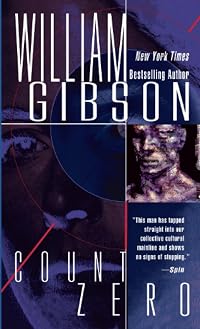
A stylish, street smart, frighteningly probable parable of the future from the visionary, New York Times bestselling author of Neuromancer and Agency.A corporate mercenary wakes in a reconstructed body, a beautiful woman by his side. Then Hosaka Corporation reactivates him, for a mission more dangerous than the one he’s recovering from: to get a defecting chief of R&D—and the biochip he’s perfected—out intact. But this proves to be of supreme interest to certain other show more parties—some of whom aren’t remotely human... show less
Tags
Recommendations
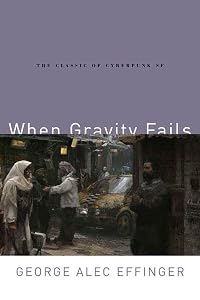
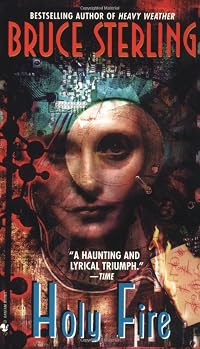
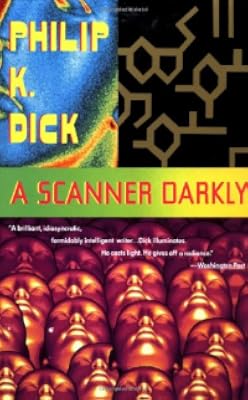
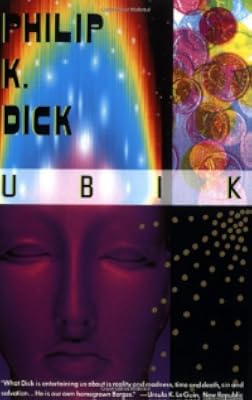

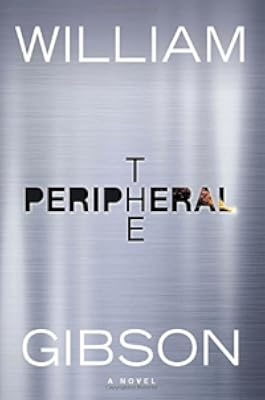
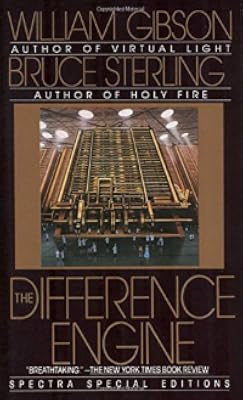
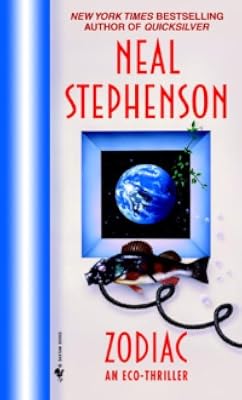
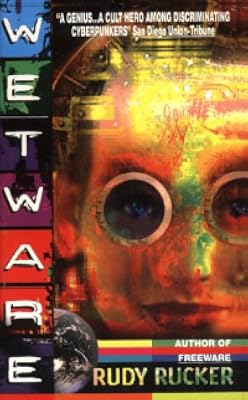

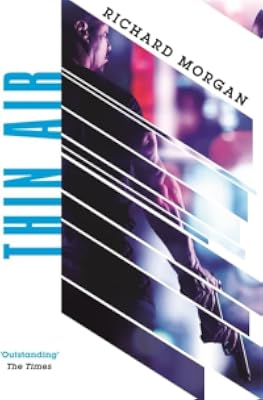
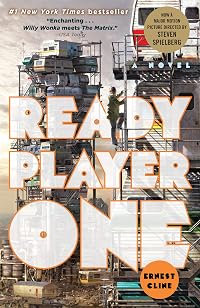
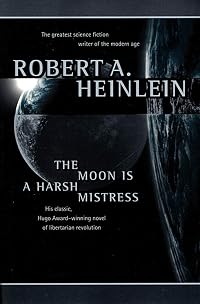
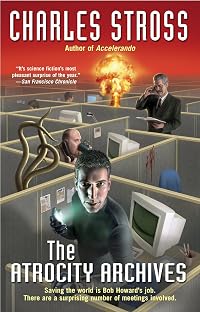
Member Recommendations
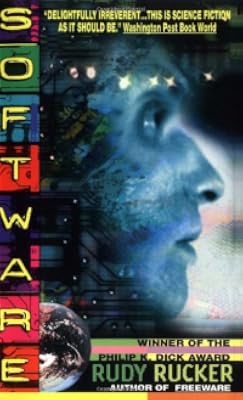
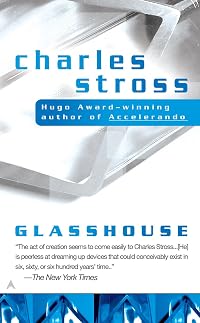
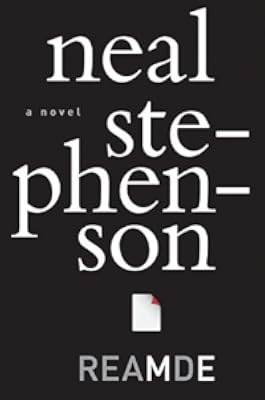
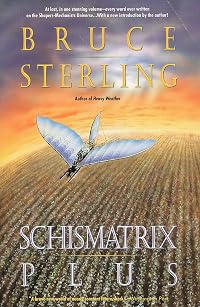
tetrachromat Interesting ideas on how the super rich might spend their money.
Member Reviews
It's funny, because I remember when I read this the first time, all sorts of incomprehension and mistakes jumbled together as I forced my way through. I loved the writing. I loved the writing, the setting, the sci-fi cool, the characters and the three intertwining plots, but in the end I barely had a clue what was going on. The Maas biotech stuff I got, sure, another high-tech maguffin, but the loa and their horses, despite having read Neuromancer and having it all laid out quite clearly in the book itself, I just couldn't work out what they were. The identity of the Boxmaker puzzled me, too. I think I assumed it was some sort of cruel mockery directed at Art and human presumption and pretensions. But Gibson was never anywhere near as show more cynical as cyberpunk the genre was supposed to be, even though the cynicism of the eighties forms part of the texture of the Sprawl novels. Instead, it is strange and lonely and brave and beautiful. 'My song is of time and distance. The sadness is in you.'
Count Zero is carefully plotted, precision engineered, fine-tuned, sleek and streetwise. Three plots: the mercenary Turner who specialises in corporate defections; Marly the art dealer ruined by scandal in Paris, and Bobby the Count, a would-be cowboy hit by lethal ice on his first run and saved by... something. Their stories turn around subterfuge and betrayal, the all-enveloping power of the monstrously rich and the strange interface of voodoo and cyberspace. It's a wild, thrilling ride, and it's a wonder to me that I can grasp now what eluded me then. show less
Count Zero is carefully plotted, precision engineered, fine-tuned, sleek and streetwise. Three plots: the mercenary Turner who specialises in corporate defections; Marly the art dealer ruined by scandal in Paris, and Bobby the Count, a would-be cowboy hit by lethal ice on his first run and saved by... something. Their stories turn around subterfuge and betrayal, the all-enveloping power of the monstrously rich and the strange interface of voodoo and cyberspace. It's a wild, thrilling ride, and it's a wonder to me that I can grasp now what eluded me then. show less
Count Zero may not be the monument that Neuromancer is, but it has passages that Hemingway would have been happy to have written. Count Zero is a postwar story, and Turner is a wounded veteran. In fact, he receives a combat wound similar to that of Jake Barnes in The Sun Also Rises. Jake, of course, didn’t have the high-quality medical care that Turner gets. Gibson’s computer hackers are danger artists like Hemingway’s bullfighters. I wonder if Lady Brett would be a simstim star in Gibson’s world.
God was it refreshing to read this after my last book. Gibson's prose is so much tighter and really gets me sucked in. "Count Zero" is one of those brilliant sequels where it can be a standalone book, but having read "Neuromancer" first just adds so much more. The blending of mysticism and tech is superb, and the three separate character POVs all felt truly unique but meld together at the end so seamlessly. I really love Gibson's cyberpunk.
Very solid followup and a bit easier to follow than Neuromancer. Prescient on the influence of the megacorps and there's more than a little preview of Hubertus Bigend/Cayce Pollard in Josef Virek/Marly here. The voodoo thing is a little bit inscrutable, but then again, it's Gibson, so that's likely the idea.
I liked Count Zero even more than Neuromancer. The complexity of the plot is very satisfying.
The only thing that some might find a hinderance, is that (I am convinced) the book must be read quickly, with the same ferocity as the author wrote/designed it to be, as if mentally gasping for air between sentences, which I like about Gibson's cyberpunk books - Very Invigorating!
The only thing that some might find a hinderance, is that (I am convinced) the book must be read quickly, with the same ferocity as the author wrote/designed it to be, as if mentally gasping for air between sentences, which I like about Gibson's cyberpunk books - Very Invigorating!
ORIGINALLY POSTED AT Fantasy Literature.
"They plot with men, my other selves, and men imagine they are gods."
Several years have passed since Molly and Case freed the AI who calls himself Neuromancer. Neuromancer’s been busy and now his plots have widened to involve several people whom we meet in Count Zero:
Turner is a recently reconstructed mercenary who’s been hired by the Hosaka Corporation to extract Christopher Mitchell and his daughter Angie from Mitchell’s job at Maas Biolabs. Mitchell is the creator of the world’s first biochip, and he’s secretly agreed to move to Hosaka. Extracting an indentured research scientist is a deadly game, but Turner is one of the best.
Bobby “Count Zero” Newmark, who wants to be a console show more cowboy, has just pulled a Wilson (that means he majorly screwed up) on his first attempt at running an unknown icebreaker. He nearly died in the matrix but was saved by a girl he’d never seen before. Now he’s freaked out, on the run, and buildings are exploding behind him as he’s being hunted by a mysterious helicopter with a rocket launcher.
Marly Krushkova lost her art gallery after her boyfriend tried to sell a forgery. Now she’s been hired by Joseph Virek, the world’s richest man, to find the artist who’s creating and selling some strange shadowboxes. These expensive and enigmatic objets d'art seem like collections of random pieces of junk, but they speak to Marly. Using her intuition, and Joseph Virek’s money, she hopes to find the unknown artist.
Other memorable characters are the voodoo priests and priestesses, The Finn, Tally Isham the Sense/Net celebrity, the prophet Wigan Ludgate who thinks God lives in the matrix, a bar owner named Jammer, and a whole mob of Gothicks and Kasuals. All of their stories eventually collide as we discover who’s haunting cyberspace.
Count Zero is the first sequel to William Gibson’s cyberpunk classic Neuromancer. If you haven’t read Neuromancer yet, you’ll probably be lost because Gibson just drops you into his world without instructions, explanations, or technical support. Even though you think you’ve been to his world before (it’s Earth after all), you haven’t, and Gibson never tells us what happened to make it unrecognizable. It appears that large biotech companies are in control (or maybe I should say they’re out of control) and there are no authorities to check their ruthless behaviors. What happened to the U.S. government? Why are so many cities ruined and abandoned? What is “the war” that people keep referring to? Where is the middle class? There are still rich people who buy art, wear stylish clothes, and set trends for the masses, but many of those who try to keep up are illiterate, addicted, and without electricity and clean water. They escape their lives with designer drugs and by plugging into cheap simstim fantasies.
It’s partly these questions, which are never answered, that make Neuromancer’s sequel work so well. Many sequels feel pallid because the world and the characters are no longer new and exciting, but Gibson avoids sequel stagnancy by creating a gaudy and grueling world that we feel like we should understand, and making us desperate for more information (but rarely delivering it).
It also helps that in each book of the Sprawl trilogy, we have new characters to get to know. And you have to admire Gibson’s characters. Not as people, perhaps, but as characters. For example, Bobby (Count Zero) is a total loser. He’s like that obnoxious kid in high school who was always trying so hard to make people like him. Gibson gets this just right, never explaining Bobby to us, but letting us gradually figure him out just by listening to him talk or by seeing things from his perspective. This is carefully and cleverly done for every character.
The plot of Count Zero is fascinating, unique, and unpredictable as Gibson finally brings together all of these weird and colorful events and characters. There are some answers in the end, and the story's connection to Neuromancer is eventually made clear. But there are many questions left to answer, so after you finish Count Zero, you’ll want to have Mona Lisa Overdrive, the concluding novel of the Sprawl trilogy, ready to go.
I listened to Brilliance Audio’s version of Count Zero which was read by one of my favorite voice actors, Jonathan Davis. He is always wonderful and his grimy and jaded male voices are perfect for this kind of novel. My only issue is one I’ve had with Davis before: he has essentially one female voice. I have listened to so many books read by Mr. Davis that I actually feel like this one woman is showing up in all these different novels. (Hey, what are Thecla and Agia and Vlana and Ivrian doing in the Sprawl??) Count Zero has only a few female characters who don’t overlap much, so Davis does well with this story, but I’ll be listening for Angie and Marly next time I’m in Lankhmar. show less
"They plot with men, my other selves, and men imagine they are gods."
Several years have passed since Molly and Case freed the AI who calls himself Neuromancer. Neuromancer’s been busy and now his plots have widened to involve several people whom we meet in Count Zero:
Turner is a recently reconstructed mercenary who’s been hired by the Hosaka Corporation to extract Christopher Mitchell and his daughter Angie from Mitchell’s job at Maas Biolabs. Mitchell is the creator of the world’s first biochip, and he’s secretly agreed to move to Hosaka. Extracting an indentured research scientist is a deadly game, but Turner is one of the best.
Bobby “Count Zero” Newmark, who wants to be a console show more cowboy, has just pulled a Wilson (that means he majorly screwed up) on his first attempt at running an unknown icebreaker. He nearly died in the matrix but was saved by a girl he’d never seen before. Now he’s freaked out, on the run, and buildings are exploding behind him as he’s being hunted by a mysterious helicopter with a rocket launcher.
Marly Krushkova lost her art gallery after her boyfriend tried to sell a forgery. Now she’s been hired by Joseph Virek, the world’s richest man, to find the artist who’s creating and selling some strange shadowboxes. These expensive and enigmatic objets d'art seem like collections of random pieces of junk, but they speak to Marly. Using her intuition, and Joseph Virek’s money, she hopes to find the unknown artist.
Other memorable characters are the voodoo priests and priestesses, The Finn, Tally Isham the Sense/Net celebrity, the prophet Wigan Ludgate who thinks God lives in the matrix, a bar owner named Jammer, and a whole mob of Gothicks and Kasuals. All of their stories eventually collide as we discover who’s haunting cyberspace.
Count Zero is the first sequel to William Gibson’s cyberpunk classic Neuromancer. If you haven’t read Neuromancer yet, you’ll probably be lost because Gibson just drops you into his world without instructions, explanations, or technical support. Even though you think you’ve been to his world before (it’s Earth after all), you haven’t, and Gibson never tells us what happened to make it unrecognizable. It appears that large biotech companies are in control (or maybe I should say they’re out of control) and there are no authorities to check their ruthless behaviors. What happened to the U.S. government? Why are so many cities ruined and abandoned? What is “the war” that people keep referring to? Where is the middle class? There are still rich people who buy art, wear stylish clothes, and set trends for the masses, but many of those who try to keep up are illiterate, addicted, and without electricity and clean water. They escape their lives with designer drugs and by plugging into cheap simstim fantasies.
It’s partly these questions, which are never answered, that make Neuromancer’s sequel work so well. Many sequels feel pallid because the world and the characters are no longer new and exciting, but Gibson avoids sequel stagnancy by creating a gaudy and grueling world that we feel like we should understand, and making us desperate for more information (but rarely delivering it).
It also helps that in each book of the Sprawl trilogy, we have new characters to get to know. And you have to admire Gibson’s characters. Not as people, perhaps, but as characters. For example, Bobby (Count Zero) is a total loser. He’s like that obnoxious kid in high school who was always trying so hard to make people like him. Gibson gets this just right, never explaining Bobby to us, but letting us gradually figure him out just by listening to him talk or by seeing things from his perspective. This is carefully and cleverly done for every character.
The plot of Count Zero is fascinating, unique, and unpredictable as Gibson finally brings together all of these weird and colorful events and characters. There are some answers in the end, and the story's connection to Neuromancer is eventually made clear. But there are many questions left to answer, so after you finish Count Zero, you’ll want to have Mona Lisa Overdrive, the concluding novel of the Sprawl trilogy, ready to go.
I listened to Brilliance Audio’s version of Count Zero which was read by one of my favorite voice actors, Jonathan Davis. He is always wonderful and his grimy and jaded male voices are perfect for this kind of novel. My only issue is one I’ve had with Davis before: he has essentially one female voice. I have listened to so many books read by Mr. Davis that I actually feel like this one woman is showing up in all these different novels. (Hey, what are Thecla and Agia and Vlana and Ivrian doing in the Sprawl??) Count Zero has only a few female characters who don’t overlap much, so Davis does well with this story, but I’ll be listening for Angie and Marly next time I’m in Lankhmar. show less
I feel like I've read the Sprawl series as a set of flashbacks. I started with the most recent, Mona Lisa Overdrive, slammed all the way back to Nueromancer, and then wound up filling in the final blanks in the middle. I don't know if it's because I have all the pieces now or just the way this one was put together, but Count Zero is my favorite of the three. (The only big flaw being the complete lack of Molly).
But what's not to like? Corporate rule may be my "favorite" form of dystopia in fiction - it's just so god damned possible these days - and Gibson loves it as much as I do. There's less out and out techbabble and more story (necessary, I guess, when you have at least three plot lines tangling up together and no dearth of show more worthwhile characters to follow) - although, as usual with the godfather of cyberpunk, most of the techy stuff is right on the nose some 20+ years later.
From what I understand, the reason Gibson let his image of the internet wander so far is that he really didn't have much of a clue about computers when he started writing these things. He heard a few things about it, came up with ideas that sounded cool to him, and went with it. That's how he wound up presenting us with steampunk computers and fractured AI personalities mimicking Vodun spirits and the web itself as a sort of shared hallucination of infinite space and possibility. He didn't know what was considered impossible, so he went ahead and invented it anyway.
Having finished all three of his Sprawl novels, I'd like to see a book of short stories by different authors set in that vast urban landscape. Jack Womack, China Miéville, maybe even someone like Haruki Murakami. Just an idea.
final thought: Putting aside his agile story-telling, his amazing tech predictions, and his ability at world-building, you know what I really do appreciate about Gibson? He offers a sort of hope for his characters at the end, and us through them. Not everyone makes it, but those who do are often better off, thanks to dumb luck and their own effort, at the end than they are at the beginning. And after 8 months of nearly unmitigated dark resolutions, that's something worth having. show less
But what's not to like? Corporate rule may be my "favorite" form of dystopia in fiction - it's just so god damned possible these days - and Gibson loves it as much as I do. There's less out and out techbabble and more story (necessary, I guess, when you have at least three plot lines tangling up together and no dearth of show more worthwhile characters to follow) - although, as usual with the godfather of cyberpunk, most of the techy stuff is right on the nose some 20+ years later.
From what I understand, the reason Gibson let his image of the internet wander so far is that he really didn't have much of a clue about computers when he started writing these things. He heard a few things about it, came up with ideas that sounded cool to him, and went with it. That's how he wound up presenting us with steampunk computers and fractured AI personalities mimicking Vodun spirits and the web itself as a sort of shared hallucination of infinite space and possibility. He didn't know what was considered impossible, so he went ahead and invented it anyway.
Having finished all three of his Sprawl novels, I'd like to see a book of short stories by different authors set in that vast urban landscape. Jack Womack, China Miéville, maybe even someone like Haruki Murakami. Just an idea.
final thought: Putting aside his agile story-telling, his amazing tech predictions, and his ability at world-building, you know what I really do appreciate about Gibson? He offers a sort of hope for his characters at the end, and us through them. Not everyone makes it, but those who do are often better off, thanks to dumb luck and their own effort, at the end than they are at the beginning. And after 8 months of nearly unmitigated dark resolutions, that's something worth having. show less
Members
- Recently Added By
Lists

Best Science Fiction Novels
816 works; 430 members

Best Dystopias
280 works; 272 members

Best Cyberpunk
41 works; 7 members

Dystopian and Apocalyptic Literature
350 works; 74 members
Amazon's 100 Science Fiction & Fantasy Books to Read in a Lifetime
87 works; 23 members

20th Century Literature
1,161 works; 55 members

Top Five Books of 2022
736 works; 272 members

Books Read in 2026
2,131 works; 70 members

Science Fiction and Fantasy
63 works; 4 members

Forced Exposure
83 works; 1 member

Saiyuki Reload Best Summer Reads
159 works; 2 members

Simulated Reality in Fiction
124 works; 7 members

1980s
356 works; 23 members

Favourite Books
1,820 works; 316 members

Books to Recommend to My Niece/Nephew (The late teenage years)
29 works; 3 members

Reading Queue
15 works; 1 member
Survey of Classic Science Fiction
171 works; 48 members
Author Information

William Gibson was born on March 17, 1948 in Conway, South Carolina. He dropped out of high school and moved to Canada, where he eventually graduated from the University of British Columbia in 1977. He is the author of Mona Lisa Overdrive, The Peripheral, and Neuromancer, which won the Phillip K. Dick Award, the Hugo Award, and the Nebula Award. show more He also wrote the screenplay for the film Johnny Mnemonic. (Bowker Author Biography) show less
All Editions
Awards and Honors
Awards
Notable Lists
Series

Belongs to Publisher Series
ハヤカワ文庫 SF (735)
Work Relationships
Common Knowledge
- Canonical title*
- Biochips
- Original title
- Count Zero
- Original publication date
- 1986
- People/Characters
- Bobby Newmark (Count Zero); Angela Mitchell (Angie); Turner; Josef Virek; Marly; Conroy (show all 37); Finn; Wigan; Lucas; Allison; Oakey; Jaylene Slide; Ramirez; Andrea; Leon; Lynch; Webber; Sutcliffe; Pye; Jackie; Rhea; Two-a-Day; Alain; Paco; Harry; Beauvoir; Teddy; Costa; Nathan; Picard; Rudy; Sally; Mr Paleologos; Jammer; Tally Isham; Rez; Jones
- Important places
- The Sprawl; Paris, France; JAL Terminal (Earth orbit)
- Epigraph
- Quiero hacer contigo
lo que la primavera
hace con los cerezos
-- Neruda
COUNT ZERO INTERRUPT - on receiving an interrupt, decrement the counter to zero. - Dedication
- For my D
- First words
- They set a slamhound on Turner's trail in New Delhi, slotted it to his pheromones and the color of his hair.
- Quotations
- "The street tries to find its own uses for things, Mr Turner." [Chiba medic: 69]
As she walked from the Louvre, she seemed to sense some articulated structure shifting to accommodate her course through the city. The waiter would be merely a part of the thing, one limb, a probe or palp. The whole would be ... (show all)larger, much larger. How could she have imagined that it would be possible to live, to move, in the unnatural field of Virek's wealth without suffering distortion? Virek had taken her up, in all her misery, and had rotated her through all the monstrous, invisible stresses of his money, and she had been changed. Of course, she thought, of course: It moves around me constantly, watchful and invisible, the vast and subtle mechanism of Herr Virek's surveillance. [Marly: 73] - Last words
- (Click to show. Warning: May contain spoilers.)Then he smiled. "Well almost always..."
- Original language
- English
- Canonical DDC/MDS
- 813.087628
*Some information comes from Common Knowledge in other languages. Click "Edit" for more information.
Classifications
- Genres
- Science Fiction, Fiction and Literature
- DDC/MDS
- 813.087628 — Literature & rhetoric American literature in English American fiction in English By type Genre fiction Adventure fiction Speculative fiction Science fiction Cyberpunk
- LCC
- PS3557 .I2264 .C66 — Language and Literature American literature American literature Individual authors 1961-
- BISAC
Statistics
- Members
- 8,059
- Popularity
- 1,398
- Reviews
- 77
- Rating
- (3.83)
- Languages
- 19 — Czech, Danish, Dutch, English, Finnish, French, German, Greek, Hungarian, Italian, Japanese, Korean, Polish, Portuguese, Russian, Serbian, Spanish, Swedish, Turkish
- Media
- Paper, Audiobook, Ebook
- ISBNs
- 69
- ASINs
- 26