On This Page
Description
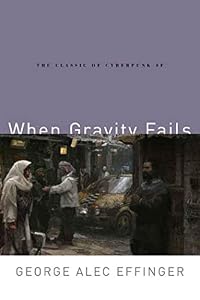
When Gravity Fails, the first Marid novel, is set in a high-tech near future featuring a divided United States and USSR, a world with mind- or mood-altering drugs for any purpose, brains enhanced by electronic hardware, with plug-in memory additions and modules offering the wearer new personalities (James Bond, celebrities), and bodies shaped to perfection by surgery. Marid Audran, an unmodified and fairly honest street survivor, lives in a decadent Arab ghetto, the Budayeen, and against his show more best instincts, becomes involved in a series of inexplicable murders. Some seem like routine assassinations, carried out with an old-fashioned handgun by a man wearing a plug-in James Bond persona; others, involving whores, feature prolonged torture and horrible mutilations. The problem comes to the attention of Budayeen godfather Friedlander Bey, who makes Audran an offer he can't refuse. Audran submits to electronic brain-enhancement in order to track down and deal with the killer or killers. show lessTags
Recommendations

































Member Recommendations

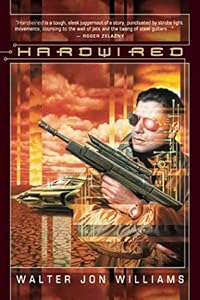
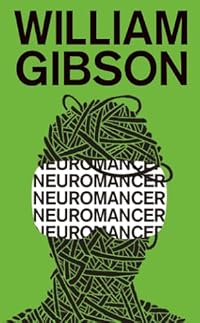
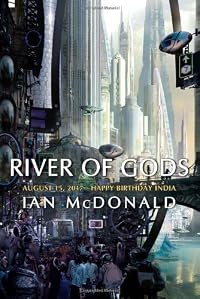
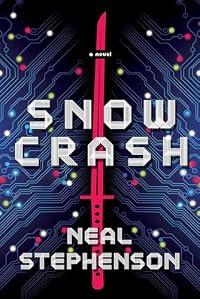
justifiedsinner Similar setting. Similar anti-hero tropes.



Member Reviews
"When Gravity Fails' is an excellent book but it's not for me.
When it came out in 1985, this deeply Noirish tale of murder amongst the demimonde of a Twenty-third Century Arab State where gender modification surgery, and plug-and-play brain implants offering anything from language skills to a new personality, are as common amongst the hustlers, pimps and sex-workers as drink and drugs, must have been well ahead of its time.
The storytelling style makes Chandler seem like a Disney version of Noir and yet it offers a surprisingly compassionate rendering of the inhabitants of the Budayeen, a walled district that is part French Quarter New Orleans and part Casablancan quartiers réservés. The people and the society are beautifully and show more patiently drawn. The plot is subordinate to its setting. The main focus is on how Marîd Audran sees the Budayeen and his role in it.
At the start of the novel, Audran sees himself as a man whose reputation as an 'honest hustler' has earned him enough respect in the community to keep its violence at bay. Although he thinks of himself as a loner who values independence above love and friendship, it seemed to me that he entertained a fundamentally romantic view of the Budayeen and that it is this view of the place that the rest of the novel assaults as Audran's friends and associates are murdered.
'When Gravity Fails' pulled me fully into Audran's world and made it real. This was, in the end, why I abandoned the novel a third of the way through: I just can't abide the Marîd Audran or the world he loves. He leads a hedonistic, aimless, drug-using, thrill-seeking life. He's a wannabe lone wolf with a need to be loved that he lies to himself about and a view of the world that borders on the delusional. I believed in him completely, I just didn't want to spend any more time with him. show less
When it came out in 1985, this deeply Noirish tale of murder amongst the demimonde of a Twenty-third Century Arab State where gender modification surgery, and plug-and-play brain implants offering anything from language skills to a new personality, are as common amongst the hustlers, pimps and sex-workers as drink and drugs, must have been well ahead of its time.
The storytelling style makes Chandler seem like a Disney version of Noir and yet it offers a surprisingly compassionate rendering of the inhabitants of the Budayeen, a walled district that is part French Quarter New Orleans and part Casablancan quartiers réservés. The people and the society are beautifully and show more patiently drawn. The plot is subordinate to its setting. The main focus is on how Marîd Audran sees the Budayeen and his role in it.
At the start of the novel, Audran sees himself as a man whose reputation as an 'honest hustler' has earned him enough respect in the community to keep its violence at bay. Although he thinks of himself as a loner who values independence above love and friendship, it seemed to me that he entertained a fundamentally romantic view of the Budayeen and that it is this view of the place that the rest of the novel assaults as Audran's friends and associates are murdered.
'When Gravity Fails' pulled me fully into Audran's world and made it real. This was, in the end, why I abandoned the novel a third of the way through: I just can't abide the Marîd Audran or the world he loves. He leads a hedonistic, aimless, drug-using, thrill-seeking life. He's a wannabe lone wolf with a need to be loved that he lies to himself about and a view of the world that borders on the delusional. I believed in him completely, I just didn't want to spend any more time with him. show less
I don't even. This book engrossed me, sucked me in, took me to the seediest bar in town, plied me with cheap booze and left without even a kiss. Set in a debaucherous, dangerous slum in a futuristic Muslim country where the tricks might be all-girl, ex-boy or something in between, with more pill popping than Charlie Sheen on a bender, you've got to be a bit open-minded to take the ride on this one.
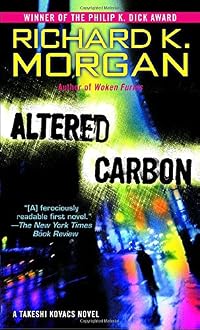
Think hard-boiled noir, crossed with [b:A Scanner Darkly|14817|A Scanner Darkly|Philip K. Dick|https://images.gr-assets.com/books/1388737865s/14817.jpg|1527439] and filled in around the edges with Richard K Morgan's [b:Altered Carbon|40445|Altered Carbon (Takeshi Kovacs, #1)|Richard K. show more Morgan|https://images.gr-assets.com/books/1387128955s/40445.jpg|2095852].
Inshallah.
A Hugo and Nebula nominee deserving of its nominations. Four and a half stars, rounding up, because I'm still thinking about it and tempted to re-read. show less
Think hard-boiled noir, crossed with [b:A Scanner Darkly|14817|A Scanner Darkly|Philip K. Dick|https://images.gr-assets.com/books/1388737865s/14817.jpg|1527439] and filled in around the edges with Richard K Morgan's [b:Altered Carbon|40445|Altered Carbon (Takeshi Kovacs, #1)|Richard K. show more Morgan|https://images.gr-assets.com/books/1387128955s/40445.jpg|2095852].
Inshallah.
A Hugo and Nebula nominee deserving of its nominations. Four and a half stars, rounding up, because I'm still thinking about it and tempted to re-read. show less
When Gravity Fails is the best hardboiled cyberpunk you've never read. Marid Audran is a small-time hustler and fixer in the Budayeen, a red light district in an unnamed Arab city somewhere along the Mediterranean coast in the 23rd century. People still want the same old stuff, mostly sex and drugs, but the big technology is neural implants that give people temporary short-term knowledge and artificial personalities. Marid doesn't use them. His vanity is that he floats above the streets, that his natural brain is more than a match for the amped up thugs and prostitutes.
When his clients, friends, and other street figures begin dying, assassinated by a mysterious person wearing a James Bond personality, and an absolutely bastard of a show more psychopath, Marid has to track down the killer, and compromise every single one of his values and relationships in the service of Friedlander Bey, the crimelord who runs the Budayeen.
What's probably the best part of this book is how resolutely queer it is. It must have been supremely trangressive when published, and remains provocative today. Effinger based the Budayeen on the French Quarter in New Orleans, before it became a tourist theme park. The exotic dancers, bartenders, and prostitutes are treated with a surprising degree of tenderness. Marid's girlfriend is a trans woman, the whole Budayeen packed with people who have remade their bodies and minds in search of their better selves. show less
When his clients, friends, and other street figures begin dying, assassinated by a mysterious person wearing a James Bond personality, and an absolutely bastard of a show more psychopath, Marid has to track down the killer, and compromise every single one of his values and relationships in the service of Friedlander Bey, the crimelord who runs the Budayeen.
What's probably the best part of this book is how resolutely queer it is. It must have been supremely trangressive when published, and remains provocative today. Effinger based the Budayeen on the French Quarter in New Orleans, before it became a tourist theme park. The exotic dancers, bartenders, and prostitutes are treated with a surprising degree of tenderness. Marid's girlfriend is a trans woman, the whole Budayeen packed with people who have remade their bodies and minds in search of their better selves. show less
Maybe I came into this expecting too much after everyone said it was "must-read cyberpunk", but I have to say I was kind of unimpressed. The future in William Gibson's novels or Dick's Do Androids Dream... (not really cyberpunk, but kind of I guess) felt like a very lived-in place, but Effinger's future-Middle-East feels more like a stage set than anything else. There are little glimmers of something better here and there, though, and the ending feels like it could be the lead-in to something even better, so I'm willing to give Marid Audran another shot.
When Gravity Fails ticks all of the checkboxes that are usually left unchecked in science fiction novels and misses the mark on the one box that usually isn’t — the plot.
The characterization of the first-person protagonist, Marîd Audran, is superb. His actions and outlook are influenced strongly by emotions he doesn’t fully control or comprehend. His personality revolves around the deferral of responsibility and he adheres strictly to only that principle and waffles on everything else.
The story from his perspective has the texture of one that was lived, replete with the irrelevant details that naturally lodge in one’s mind with equal or greater strength than the important facts. There are no bird’s-eye view moments nor show more premonitions of scenes to come. We see the central murder mystery just as he sees it: hazy and anticlimactic and solved largely by luck and the unconscious mind.
Technology is introduced tastefully and relied on only to amplify existing thematic undertones. There are no fundamental differences between the future depicted and the reality we live in, only new ways to escape it and to indulge in our vices.
In a way that I would never have predicted before reading, Islam is the glue that holds When Gravity Fails together. It grants the story its color and nuance and without it, the Budayeen does not make sense and the characters lose their compelling luster. Effinger captures and relays what it means to be both a believer and a lowlife in a way that does not make his characters seem merely naive or hypocritical. The most important relationships in the story are between a character and Allah rather than between two people of flesh and blood. Each human interaction is commenced and concluded with his name, ensuring he is always present in any given scene, a mutual friend with whom each has his or her own relationship and between whom the interaction is filtered. Viewed as such, Marîd’s guilt-ridden conscience and intentionally irresponsible demeanor click into focus. Somewhere buried in his repressed mind he is a believer and he lives his life in rebellion against this incorrigible truth.
All of this is to say that When Gravity Fails is a standout science fiction novel that represents the depth of human storytelling that can be attained within the genre. The rich texture of the characters and setting make up for the meandering and slipshod plot if you’re open to a decidedly unconventional character-driven SF novel. show less
The characterization of the first-person protagonist, Marîd Audran, is superb. His actions and outlook are influenced strongly by emotions he doesn’t fully control or comprehend. His personality revolves around the deferral of responsibility and he adheres strictly to only that principle and waffles on everything else.
The story from his perspective has the texture of one that was lived, replete with the irrelevant details that naturally lodge in one’s mind with equal or greater strength than the important facts. There are no bird’s-eye view moments nor show more premonitions of scenes to come. We see the central murder mystery just as he sees it: hazy and anticlimactic and solved largely by luck and the unconscious mind.
Technology is introduced tastefully and relied on only to amplify existing thematic undertones. There are no fundamental differences between the future depicted and the reality we live in, only new ways to escape it and to indulge in our vices.
In a way that I would never have predicted before reading, Islam is the glue that holds When Gravity Fails together. It grants the story its color and nuance and without it, the Budayeen does not make sense and the characters lose their compelling luster. Effinger captures and relays what it means to be both a believer and a lowlife in a way that does not make his characters seem merely naive or hypocritical. The most important relationships in the story are between a character and Allah rather than between two people of flesh and blood. Each human interaction is commenced and concluded with his name, ensuring he is always present in any given scene, a mutual friend with whom each has his or her own relationship and between whom the interaction is filtered. Viewed as such, Marîd’s guilt-ridden conscience and intentionally irresponsible demeanor click into focus. Somewhere buried in his repressed mind he is a believer and he lives his life in rebellion against this incorrigible truth.
All of this is to say that When Gravity Fails is a standout science fiction novel that represents the depth of human storytelling that can be attained within the genre. The rich texture of the characters and setting make up for the meandering and slipshod plot if you’re open to a decidedly unconventional character-driven SF novel. show less
Dirty, gritty, morally ambiguous cyberpunk with a bit of a biopunk feel, too, but more than anything, this was a solid detective fiction.
Was it satisfying to see the one man who'd never let himself get modded fall down the dark hole for the sake of either saving his girl or getting revenge or, just possibly, stopping a horrible killer? Hell yeah.
This came out back in '87 and it was nominated for the hugo for good reason. It's very detailed, full of great cultural stuff, and the concept of personality modding and its execution here, with both the good and the really dark side included, was really great.
I mean, where else can you get a thoroughly Muslim town and a half Muslim/half French main character in the future to casually accept show more the fact that men and women can change genders whenever they want fairly cheaply? How about taking a ride along a personality path as a great hero or a great villain? Heck, someone here had modded themselves to be James Bond and even bought the snazzy suits to go along with his head-mod. It's a lifestyle choice.
Our MC had a pathological fear of all that crazy shit, and if his life wasn't going all crazy with his crazy disappeared chick, he'd never have found himself diving into the really deep end and losing everything he ever thought he valued. Once you go down the road of the detective, it's very hard to ever come back. Sometimes it's your choice, and sometimes the choices are just made for you.
Truly, this is a great noir cyberpunk. show less
Was it satisfying to see the one man who'd never let himself get modded fall down the dark hole for the sake of either saving his girl or getting revenge or, just possibly, stopping a horrible killer? Hell yeah.
This came out back in '87 and it was nominated for the hugo for good reason. It's very detailed, full of great cultural stuff, and the concept of personality modding and its execution here, with both the good and the really dark side included, was really great.
I mean, where else can you get a thoroughly Muslim town and a half Muslim/half French main character in the future to casually accept show more the fact that men and women can change genders whenever they want fairly cheaply? How about taking a ride along a personality path as a great hero or a great villain? Heck, someone here had modded themselves to be James Bond and even bought the snazzy suits to go along with his head-mod. It's a lifestyle choice.
Our MC had a pathological fear of all that crazy shit, and if his life wasn't going all crazy with his crazy disappeared chick, he'd never have found himself diving into the really deep end and losing everything he ever thought he valued. Once you go down the road of the detective, it's very hard to ever come back. Sometimes it's your choice, and sometimes the choices are just made for you.
Truly, this is a great noir cyberpunk. show less
I'll cut this one a good deal of slack in the rating because it was written in 1987 and it is a good read with a real mystery, and the setting is a falafel flavored distillation of all the mean streets. You have to be willing to accept a version of the stumbles into a solution detective and to a good number of arbitrary juxtapositions. What it gains in acceptance of LGBT life paths, in my feelings it loses in the so male I fuck ex-males subtext of the protagonist. Nor can I find much fellow feeling with his max drugs as a first resort, head blind to consequences, approach to life's little stresses. Still, I glad I read this after a few years of getting used to our brave new world rather than when it was first released.
Members
- Recently Added By
Published Reviews
ThingScore 92
This was a book that couldn’t have happened without cyberpunk, but which itself isn’t cyberpunk. There are no hackers here, and almost no computers—though it feels reasonable for the Budayeen that there wouldn’t be. Holoporn, yes, drugs to get you up or down, prostitutes of all genders and some in between, personality modules of anything from salesmen to serial killers via sex kittens, show more but no computers. The street is what comes from cyberpunk, and perhaps the neural wiring, a little. But what Effinger does with it, making it a North African street that really feels like something out of the future of another culture, is entirely his own. show less
added by PhoenixFalls
George Alec Effinger's When Gravity Fails, nominated for both the Hugo and the Nebula awards, is a 1987 cyberpunk thriller that is a perfect example of how exciting the subgenre can and should be.
added by PhoenixFalls
Marid Audran, the protagonist in the series of novels which begin with When Gravity Fails, has many things in common with Sam Spade. Both are down and out detectives making their way in the seedy underside of the city. Instead of Los Angeles, however, Audran works in the Budayeen, the rough part of a future, unnamed North African city.
Although a Muslim, Audran is anything but devout, spending show more the majority of his time popping pills and downing them with alcohol as he mingles with the prostitutes and strippers of the Budayeen. show less
Although a Muslim, Audran is anything but devout, spending show more the majority of his time popping pills and downing them with alcohol as he mingles with the prostitutes and strippers of the Budayeen. show less
added by PhoenixFalls
Lists

Best Noir Fiction
160 works; 14 members

Best Cyberpunk
41 works; 7 members

What Makes This Book So Great
102 works; 16 members

Novels Published in 1987
81 works; 19 members

Speculative Fiction to Read
706 works; 31 members

Genre Benders: Science Fiction + Crime
10 works; 3 members

Jean's Sci Fi/Fantasy Reading list
189 works; 12 members

XB-1: Osobnosti zanru doporucuji
67 works; 1 member

Middle East Fiction
179 works; 15 members

Books Read in 2021
5,361 works; 113 members

Books Read in 2026
1,682 works; 62 members

Slipstream or Interstitial Fiction
160 works; 19 members
Author Information

115+ Works 6,111 Members
Some Editions
Awards and Honors
Awards
Series

Belongs to Publisher Series
Présence du futur (485)
Work Relationships
Is contained in
Has the adaptation
Common Knowledge
- Canonical title*
- Senza tregua
- Original title
- When Gravity Fails
- Original publication date
- 1987
- People/Characters
- Marid Audran; Friedlander Bey; Fuad; Hassan; Yasmin; Saied the Half-Hajj (show all 7); Lieutenant Okking
- Important places
- Budayeen
- Epigraph
- ... He must be the best man in his world and a good enough man for any world ...
He is a lonely man and his pride is that you will treat him as a proud man or be very sorry you ever saw him. He talks as the man of his... (show all) age talks - that is, with rude wit, a lively sense of the grotesque, a disgust for sham, and a contempt for pettiness.
-- Raymond Chandler, The Simple Art Of Murder
When you're lost in the rain in Juarez, and it's Eastertime too
And your gravity fails and negativity don't pull you through
Don't put on any airs when you're down on Rue Morgue Avenue
They got some hungry women ther... (show all)e and they really make a mess out of you.
-- Bob Dylan, Just Like Tom Thumb's Blues - Dedication
- This book is dedicated to the memory of Amber.
"And some there be, which have no memorial." - First words
- Chiriga's nightclub was right in the middle of the Budayeen, eight blocks from the eastern gate, eight blocks from the cemetery.
- Quotations
- I looked at myself in the mirror. I looked awful, but I always look awful in the mirror. I keep myself going with the firm belief that my real face is much better looking.
The longer I observe the way people really act, the happier I am that I never pay attention to them.
When you wander into the highest level of international affairs, it’s almost always dirty. - Last words
- (Click to show. Warning: May contain spoilers.)I probably saved him a small fortune.
- Blurbers
- Card, Orson Scott; Robinson, Spider; Lupoff, Richard A.; Ellison, Harlan; Silverberg, Robert; Martin, George R.R.
- Original language*
- Inglés
*Some information comes from Common Knowledge in other languages. Click "Edit" for more information.
Classifications
Statistics
- Members
- 1,618
- Popularity
- 13,854
- Reviews
- 43
- Rating
- (3.80)
- Languages
- 8 — Czech, English, Finnish, French, German, Italian, Polish, Spanish
- Media
- Paper, Audiobook, Ebook
- ISBNs
- 17
- ASINs
- 10