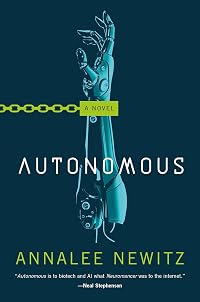
Autonomous
by Annalee Newitz
On This Page
Description
Earth, 2144. Jack is an anti-patent scientist turned drug pirate, traversing the world in a submarine as a pharmaceutical Robin Hood, fabricating cheap scrips for poor people who can't otherwise afford them. But her latest drug hack has left a trail of lethal overdoses as people become addicted to their work, doing repetitive tasks until they become unsafe or insane. Hot on her trail, an unlikely pair: Eliasz, a brooding military agent, and his robotic partner, Paladin. As they race to stop show more information about the sinister origins of Jack's drug from getting out, they begin to form an uncommonly close bond that neither of them fully understand. And underlying it all is one fundamental question: Is freedom possible in a culture where everything, even people, can be owned? show lessTags
Recommendations
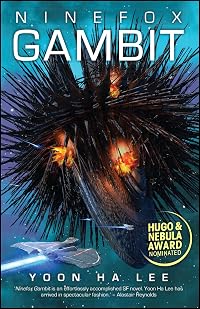

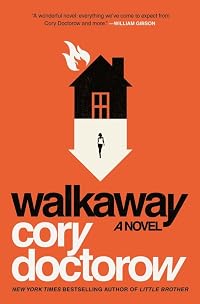
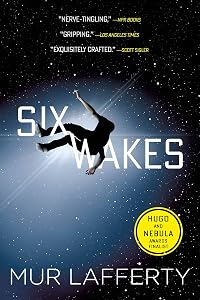
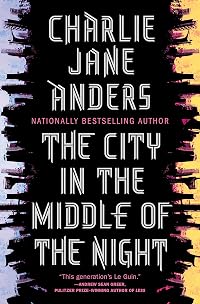
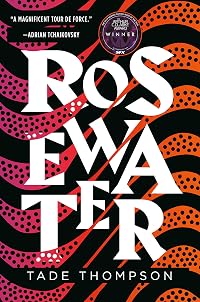
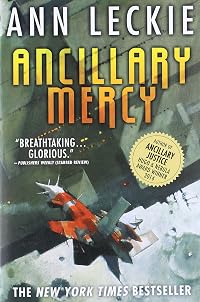
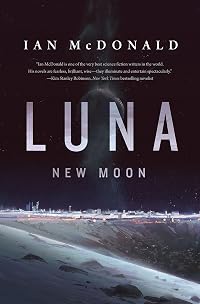
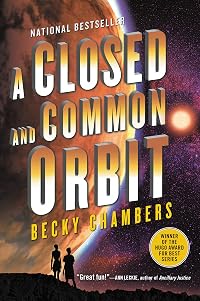
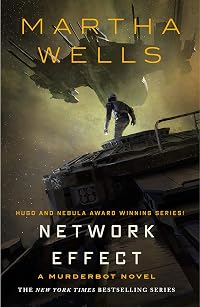
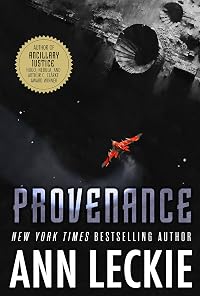
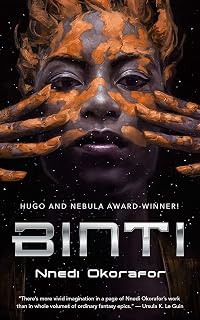
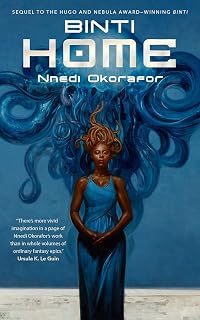



Member Recommendations
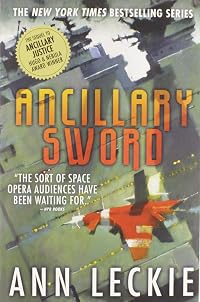
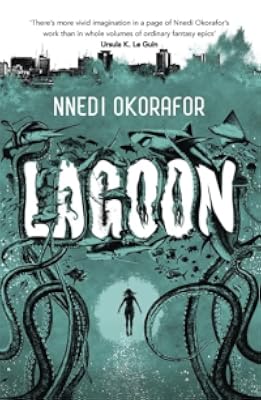
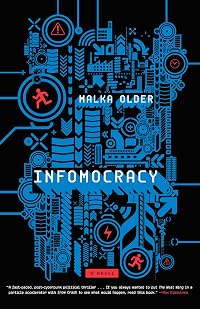
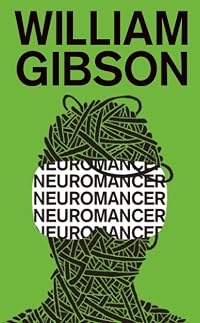
Nexus by Ramez Naam
lavaturtle Counterculture science people making drugs!
lavaturtle Human servitude as the logical conclusion of extreme capitalism
Member Reviews
Oh my, this was a VERY good book. There was a whole lot going on here, in the best kind of way, and to make it even better I ended up getting it for free from TOR.com’s monthly newsletter. Yay for free ebooks!
The story begins by following Jack, a (female) pharmaceutical pirate who travels the world in her chemlab submarine and reverse engineers drugs so that they poor may have access to them. In this world, everything--absolutely everything--is based on patent law. Thanks to genetic engineering, most humans are too. They live alongside numerous sentient bots who are used for a variety of things, and almost none, bot or human, are born free. Instead they have reinstated the indentured servitude system, which works out for some who are show more lucky enough to work their way out. The rest remain slaves.
Jack’s reverse engineering takes a turn for the worst when she frees a drug called Zacuity, meant to make people enjoy their jobs more. Unfortunately, it soon becomes evident that the corporation who created the drug, Zaxy, engineered it to be incredibly addictive, and people begin dying when the drug’s victims go off the rails--a painter refuses to stop painting everything in sight until he collapses from exhaustion; a waterworks engineer develops a newfound passion for her job, and decides to test the system’s efficiency by flooding half of New York. Jack is devastated, and decides that she must find a way to create an antidote, which leads her to call on her former colleagues in the pharmaceutical industry from all over.
Meanwhile, she is being hunted by an organization called the IPC (there are no governments anymore; only corporations), followed by two agents--a human male and a bot--who have been authorized to use deadly force in order to find her. While they are chasing her down, the bot, Paladin, is struggling with its identity as an indentured robot, and we watch as it slowly learns more and more about human interaction. I really enjoyed the passages that were written from Paladin’s perspective, and was especially tickled by the way bots talk to each other, since it’s based on real-life HTTP packets (“I’m SomeBot, you’re Paladin. I’m going to send you some data. Ready? Hey what’s up! That is the end of my data”).
I both simultaneously loved and hated all of the main characters--there are no “good” or “bad” guys here, and by the end of the novel I began to be worried about the conclusion, because I knew someone had to win, and another had to lose, and I didn’t want to see either of them go. Fortunately, the book is wrapped up in a very satisfactory way, and everyone involved gets his or her ending--I would call them happy endings, but this world is too dystopian to use such a positive word. I see there are some spats around here about the way one of the characters, Eliasz, is homophobic. I wasn’t too bothered by that, because although he doesn’t really seem to get over it or "learn his lesson," so to speak, it’s experienced in such an innocent way by Paladin, who has never heard the hateful word he uses, and has no emotional attachment to it either way. I don’t think this was supposed to be a story about overcoming biases, but rather about how a robot would experience and relate to them.
Overall, I really loved what was going on here. If I see anything else by this author crop up, I’m definitely going to be interested. show less
The story begins by following Jack, a (female) pharmaceutical pirate who travels the world in her chemlab submarine and reverse engineers drugs so that they poor may have access to them. In this world, everything--absolutely everything--is based on patent law. Thanks to genetic engineering, most humans are too. They live alongside numerous sentient bots who are used for a variety of things, and almost none, bot or human, are born free. Instead they have reinstated the indentured servitude system, which works out for some who are show more lucky enough to work their way out. The rest remain slaves.
Jack’s reverse engineering takes a turn for the worst when she frees a drug called Zacuity, meant to make people enjoy their jobs more. Unfortunately, it soon becomes evident that the corporation who created the drug, Zaxy, engineered it to be incredibly addictive, and people begin dying when the drug’s victims go off the rails--a painter refuses to stop painting everything in sight until he collapses from exhaustion; a waterworks engineer develops a newfound passion for her job, and decides to test the system’s efficiency by flooding half of New York. Jack is devastated, and decides that she must find a way to create an antidote, which leads her to call on her former colleagues in the pharmaceutical industry from all over.
Meanwhile, she is being hunted by an organization called the IPC (there are no governments anymore; only corporations), followed by two agents--a human male and a bot--who have been authorized to use deadly force in order to find her. While they are chasing her down, the bot, Paladin, is struggling with its identity as an indentured robot, and we watch as it slowly learns more and more about human interaction. I really enjoyed the passages that were written from Paladin’s perspective, and was especially tickled by the way bots talk to each other, since it’s based on real-life HTTP packets (“I’m SomeBot, you’re Paladin. I’m going to send you some data. Ready? Hey what’s up! That is the end of my data”).
I both simultaneously loved and hated all of the main characters--there are no “good” or “bad” guys here, and by the end of the novel I began to be worried about the conclusion, because I knew someone had to win, and another had to lose, and I didn’t want to see either of them go. Fortunately, the book is wrapped up in a very satisfactory way, and everyone involved gets his or her ending--I would call them happy endings, but this world is too dystopian to use such a positive word. I see there are some spats around here about the way one of the characters, Eliasz, is homophobic. I wasn’t too bothered by that, because although he doesn’t really seem to get over it or "learn his lesson," so to speak, it’s experienced in such an innocent way by Paladin, who has never heard the hateful word he uses, and has no emotional attachment to it either way. I don’t think this was supposed to be a story about overcoming biases, but rather about how a robot would experience and relate to them.
Overall, I really loved what was going on here. If I see anything else by this author crop up, I’m definitely going to be interested. show less
Judith "Jack" Chen is a pirate who reverse engineers patented drugs and sells them so that your average Joe and not just rich people can afford their drugs, releases a copy of Zacuity, which turns out to be highly addictive and have some pretty rotten side effects. She's in a race against time to figure out what's wrong with it before the big pharma company releases their official version to the public. Meanwhile, a bot named Paladin is teamed up with human Eliasz to find Jack and arrest her for piracy.
The plot goes back and forth between Jack and Paladin's stories while staying in third-person. This page-turning science fiction set in the 22nd century has some elements of dystopia and cyberthrillers, raising a lot of ethical questions show more both about ownership: can you - should you - have a patent on a drug and for how long? Who has the power to decide? And what happens to autonomy when people and robots can be owned or free? The ending felt a little rushed, but overall this was an entertaining novel by the founding editor of io9. show less
The plot goes back and forth between Jack and Paladin's stories while staying in third-person. This page-turning science fiction set in the 22nd century has some elements of dystopia and cyberthrillers, raising a lot of ethical questions show more both about ownership: can you - should you - have a patent on a drug and for how long? Who has the power to decide? And what happens to autonomy when people and robots can be owned or free? The ending felt a little rushed, but overall this was an entertaining novel by the founding editor of io9. show less
When Neal Stephenson blurbs "Autonomous is to biotech and AI what Neuromancer was to the internet." and then William Gibson further blurbs "Something genuinely and thrillingly new." you expect the book to be good. And it met my expectations in spades.
Jack, formerly Judith, Chen is a genius at biotech. As a student she learned about how giant pharmaceutical companies control drug development and she vowed to change that. Thirty years later, in 2144, things haven't really changed but Jack does her bit by fabricating medicines that are too expensive for many humans and distributing them where they are needed. She finances this good work by fabricating other drugs that she can sell on the black market. Jack is a pirate (and she even lives show more in a pirate ship, well a submarine, in the Arctic Ocean). To her horror she discovers that a drug, Zacuity, which she reverse engineered and sold as a recreational drug, causes extreme addiction. She is determined to put it right but before she can get underway she is boarded by two thieves. She kills the head thief but thinks the other is a robot and just leaves him locked up. Then she finds out that Threezed is human and he was indentured to the man she killed. Jack figures she can drop Threezed off on her way south but Threezed has other ideas. Meanwhile the maker of Zacuity, Zaxy, has set the International Patent Control police on Jack. Eliasz (human) and Paladin (robot) team up to track her down. The hunt takes them from Iqaluit to Vancouver and Las Vegas to Saskatoon and then to Jack's hidey hole in Moose Jaw. They are fearsome opponents. Can Jack escape from their clutches?
There is so much packed into this relatively short book (just 301 pages in hardcover). The big issues is patent protection of course but there is also lots about artificial intelligence and gender identity and sexuality and ...well I could go on and on but you should really read it for yourself. I don't think Newitz is Canadian but she obviously has knowledge about Canada and its geography and culture. You can tell that from the first page where she quotes from The Arrogant Worms song "The Last Saskatchewan Pirate". show less
Jack, formerly Judith, Chen is a genius at biotech. As a student she learned about how giant pharmaceutical companies control drug development and she vowed to change that. Thirty years later, in 2144, things haven't really changed but Jack does her bit by fabricating medicines that are too expensive for many humans and distributing them where they are needed. She finances this good work by fabricating other drugs that she can sell on the black market. Jack is a pirate (and she even lives show more in a pirate ship, well a submarine, in the Arctic Ocean). To her horror she discovers that a drug, Zacuity, which she reverse engineered and sold as a recreational drug, causes extreme addiction. She is determined to put it right but before she can get underway she is boarded by two thieves. She kills the head thief but thinks the other is a robot and just leaves him locked up. Then she finds out that Threezed is human and he was indentured to the man she killed. Jack figures she can drop Threezed off on her way south but Threezed has other ideas. Meanwhile the maker of Zacuity, Zaxy, has set the International Patent Control police on Jack. Eliasz (human) and Paladin (robot) team up to track her down. The hunt takes them from Iqaluit to Vancouver and Las Vegas to Saskatoon and then to Jack's hidey hole in Moose Jaw. They are fearsome opponents. Can Jack escape from their clutches?
There is so much packed into this relatively short book (just 301 pages in hardcover). The big issues is patent protection of course but there is also lots about artificial intelligence and gender identity and sexuality and ...well I could go on and on but you should really read it for yourself. I don't think Newitz is Canadian but she obviously has knowledge about Canada and its geography and culture. You can tell that from the first page where she quotes from The Arrogant Worms song "The Last Saskatchewan Pirate". show less
Picked this up since I really enjoyed one of the author's other works, and the hook is super intriguing. Jack is a great character, and I loved her cohort of counterculture friends and associates. The worldbuilding is central to the story, and does a good job tying together disparate threads about bots and slavery and capitalism and drug companies. Paladin is also a really interesting character who reminds me a bit of Murderbot, and an interesting POV given that until late in the story her perceptions are altered by software . I kept waiting for Eliasz to realize he's on the wrong side, or Paladin to realize that she can do better than someone who fetishizes her body and doesn't understand her at all... but he didn't get there until show more maybe ambiguously at the end, and she didn't get there at all . The ending was variously ambiguous, frustratingly realistic, and hopeful. show less
If everything has a price, can anyone be truly free? This book both asks and answers that question. The answer is no. This is about all the different ways people can be non-autonomous, and probably the key moment in the book is when a human scientists pomously tells a human slave that the difference between robots and humans is that humans are born autonomous. It’s clear, at least in this world, that they’re not.
This is — hmmm. It’s definitely not a book to read if you’re here for sweet queer human/robot romance. (I would, let me note, love to read that book. It’s just not this one.) It’s not the book to read if you’re looking for a happily ever after, or even a resolution beyond “some people live and some people show more die.” But it is a compelling book, with compelling, flawed characters, in an interesting, horrible world. And the trick that Newitz does here, of making every character, no matter how good or bad (not that the lines are at all clear on this), the hero of their own story, is an impressive one.
Worth reading, but only if this is the kind of thing you like. Luckily for me, it is a kind of thing I like. show less
This is — hmmm. It’s definitely not a book to read if you’re here for sweet queer human/robot romance. (I would, let me note, love to read that book. It’s just not this one.) It’s not the book to read if you’re looking for a happily ever after, or even a resolution beyond “some people live and some people show more die.” But it is a compelling book, with compelling, flawed characters, in an interesting, horrible world. And the trick that Newitz does here, of making every character, no matter how good or bad (not that the lines are at all clear on this), the hero of their own story, is an impressive one.
Worth reading, but only if this is the kind of thing you like. Luckily for me, it is a kind of thing I like. show less
World depicted here ticks all the boxes for the world out of the horror novel. World set century ahead of our time, divided not across nations but different economical and trading zones, where everything revolves around the cybernetics, biotechnology, and patent control. When I say patent control I do not mean that pirates and illegals selling bootlegged technology will be caught, sentenced, fined or imprisoned. Oh, not this is world where patent is the only thing that matters - pirates tend to kill themselves or die under very weird circumstances (some even multiple times). Only people present when these "accidents" happen - IPC enforcers tasked with protecting mega-corporation interests and patents, in a license-to-kill way.
And this show more is not even the worst part of this dystopian world. Worst part is that this is world where people are maybe born free, but unless their family does not have means, this is where freedom ends. This is world of masses of people are forced to sell themselves for a period of time (through contracts) - basically they [voluntarily] become slaves - so they can work, get medical help and hope they will ever have something of their own (very very bad vibe with events this and last year). And while legally all these contracts and conditions sound nice on paper, in practice this means slavery for a very long time, so long that some cannot find their way out of it, if for nothing else then because they live short lives.
Besides humans that gate enslaved to corporations there are also robots/AIs and biological artificial entities (both categories are called bots). Being fabricated and not born, bots get indentured for long period (min 10 years) before they are given option to become autonomous. Considering they are treated as property who knows how time management gets manipulated (and I do not mean issues with day-light savings :)).
So as can be seen this is world where everybody talks about freedom and autonomy but in general majority of people are slaves with minimum rights.
There are two story lines here. One where we follow Jack, illegal drugs manufacturer trying to help those at the bottom and her adventures, as she works on correcting huge mistake she made with one of the drugs. Second story line is of Eliasz, IPC human agent and Paladin, IPC armed robot/AI and how they try to find Jack and terminate her illegal activities as requested by one of the drug companies endangered by Jack.
And while chase moves on, with IPC agents tearing through the drug underground and bodies falling right and left, author writes about lots of other things, that might seem unrelated to the main story. Here we are given information on all of the free students, and basically double standards that are always present in young age - rebellion, activism and then (when real life starts) joining the very corporations they rebelled against. We are shown people that are true altruists but aware of how world works so they try to keep their institutes alive [since they can do good] but they also need to keep links to corporations alive. Then come zealots on both sides - radical activists and equally radical enforcers.... and piles of bodies left in their wake. Influence of media, its links with forces to be, social networks and ever present cyberspace monitoring - this book has it all.
Also we are shown how love can grow between biological and non-biological life forms. This was weird, and I was expecting armed bot to say something in lines of "he clogged my missile launcher again" :) I think it could go without physical aspect (I mean..... remember the scene with Cameron Diaz on the windshield in the movie "The Counselor" - weeeeiiiirdd) but OK, even with that story flows OK.
Interestingly, not a single person in the book is actually fighting against enslavement contracts. This may be because majority of characters are free people (Jack, Med, Krish, Frankie, students and various hipster activists, Eliazs). Only indentured persons here are Threezed (character to show terrible effects of slave contracts on children) and Paladin (as a case of autonomy of artificial organisms) - and these two end up as free people. Even as Eliasz walks through Las Vegas slave market and feels sick, he sticks to his own task at hand. Slavery is taken as is, as something that cannot be changed.
So when one takes into account all the talks of students and university researchers it all comes to one thing - lots of hot air and occasional high profile criminal enterprise (not altruistic in nature since drugs here are sold not provided to everyone). And I have to say this is usually how things go in real life because let us not kid ourselves - all those hippies, free sex, love and flowers everywhere in the 1960s became working class people and businessmen and businesswomen in 70's and 80's. Youth is full of rebellion and activism but when reality of life comes in that's when character shows up (and very few want to struggle their whole life, they come to terms with things as they are and in some cases they even become what they abhorred in their youth).
At the end of the story only beacon of light left is Free Lab, as only institution able to provide free drugs and medical help to everyone. Otherwise all the events, all the deaths - they were just a small turbulence that affected only the lives of IPC agents, Jack and her friends. Everyone else? Nope, they did not feel it a bit.
Entire book is a warning on monopolism and rule of technocracy, with majority of people brought down to the level of servitude and inability to live their lives freely. Considering events in last 20-or-so months story strikes too close to home.
Highly recommended. show less
And this show more is not even the worst part of this dystopian world. Worst part is that this is world where people are maybe born free, but unless their family does not have means, this is where freedom ends. This is world of masses of people are forced to sell themselves for a period of time (through contracts) - basically they [voluntarily] become slaves - so they can work, get medical help and hope they will ever have something of their own (very very bad vibe with events this and last year). And while legally all these contracts and conditions sound nice on paper, in practice this means slavery for a very long time, so long that some cannot find their way out of it, if for nothing else then because they live short lives.
Besides humans that gate enslaved to corporations there are also robots/AIs and biological artificial entities (both categories are called bots). Being fabricated and not born, bots get indentured for long period (min 10 years) before they are given option to become autonomous. Considering they are treated as property who knows how time management gets manipulated (and I do not mean issues with day-light savings :)).
So as can be seen this is world where everybody talks about freedom and autonomy but in general majority of people are slaves with minimum rights.
There are two story lines here. One where we follow Jack, illegal drugs manufacturer trying to help those at the bottom and her adventures, as she works on correcting huge mistake she made with one of the drugs. Second story line is of Eliasz, IPC human agent and Paladin, IPC armed robot/AI and how they try to find Jack and terminate her illegal activities as requested by one of the drug companies endangered by Jack.
And while chase moves on, with IPC agents tearing through the drug underground and bodies falling right and left, author writes about lots of other things, that might seem unrelated to the main story. Here we are given information on all of the free students, and basically double standards that are always present in young age - rebellion, activism and then (when real life starts) joining the very corporations they rebelled against. We are shown people that are true altruists but aware of how world works so they try to keep their institutes alive [since they can do good] but they also need to keep links to corporations alive. Then come zealots on both sides - radical activists and equally radical enforcers.... and piles of bodies left in their wake. Influence of media, its links with forces to be, social networks and ever present cyberspace monitoring - this book has it all.
Also we are shown how love can grow between biological and non-biological life forms. This was weird, and I was expecting armed bot to say something in lines of "he clogged my missile launcher again" :) I think it could go without physical aspect (I mean..... remember the scene with Cameron Diaz on the windshield in the movie "The Counselor" - weeeeiiiirdd) but OK, even with that story flows OK.
Interestingly, not a single person in the book is actually fighting against enslavement contracts. This may be because majority of characters are free people (Jack, Med, Krish, Frankie, students and various hipster activists, Eliazs). Only indentured persons here are Threezed (character to show terrible effects of slave contracts on children) and Paladin (as a case of autonomy of artificial organisms) - and these two end up as free people. Even as Eliasz walks through Las Vegas slave market and feels sick, he sticks to his own task at hand. Slavery is taken as is, as something that cannot be changed.
So when one takes into account all the talks of students and university researchers it all comes to one thing - lots of hot air and occasional high profile criminal enterprise (not altruistic in nature since drugs here are sold not provided to everyone). And I have to say this is usually how things go in real life because let us not kid ourselves - all those hippies, free sex, love and flowers everywhere in the 1960s became working class people and businessmen and businesswomen in 70's and 80's. Youth is full of rebellion and activism but when reality of life comes in that's when character shows up (and very few want to struggle their whole life, they come to terms with things as they are and in some cases they even become what they abhorred in their youth).
At the end of the story only beacon of light left is Free Lab, as only institution able to provide free drugs and medical help to everyone. Otherwise all the events, all the deaths - they were just a small turbulence that affected only the lives of IPC agents, Jack and her friends. Everyone else? Nope, they did not feel it a bit.
Entire book is a warning on monopolism and rule of technocracy, with majority of people brought down to the level of servitude and inability to live their lives freely. Considering events in last 20-or-so months story strikes too close to home.
Highly recommended. show less
In the future, society is organized by companies, laws are enforced by the International Property Coalition, and university students engage their drive to self-actualize their morality through the rebellious act of publishing in the public domain. The story opens in a submarine, with a pharmaceutical pirate named Jack who reverse engineers and sells patented drugs. Her work is the only defensible approach, even if it is extremely illegal, she reasons. When Jack releases a new attention-sharpening worker drug onto the streets, however, she finds herself facing a moral dilemma -- and in the crosshairs of a human-bot IPC agent partnership brought online to ferret her out.
With excellent near-future worldbuilding, Autonomous uses the show more imagined future social structure, Jack's questionable-yet-unquestioned morality, and the relationship between the human Eliasz and the bot Paladin to explore all kinds of questions: emotional skill, ethics vs. law, gender, identity, physical essentialism, what it means to be human, where unchecked corporate power might lead, how queerness/sexual transgressiveness is socially inescapable, and more. The adventure is rollicking and light, if a bit cavalier with death, and there is a lot of food for thought in the realistically flawed characteristics.
I found the technical future particularly rich and likely. Newitz nails this area in an impressive display of imagination and face validity, even down to explicitly naming the implicit question of how bots can be perpetually active: they have skin with flexible solar collectors. I had only one quibble: the technical side of Paladin's journey into autonomy is far too pat and narrative-driven.Any old memories that used to be accessible will always be accessible in any copies the IPC made, even if Paladin re-encrypts them in the main location with a new key! She can never make past memories only hers -- she can only truly secure future memories. There could even have been a narrative Point here. Oh well.
The closer you are to tech and to academia, the more this book's charms will resonate. If you're interested in patents, pharma, selfhood, and/or politics, it will resonate even more. I suspect it's likely to be a cult classic, especially in the author's San Franciscan haunts, since the point-of-view is redolent of SF although the story itself never engages the city. Recommended as good fun to folks who touch on the target audience. show less
With excellent near-future worldbuilding, Autonomous uses the show more imagined future social structure, Jack's questionable-yet-unquestioned morality, and the relationship between the human Eliasz and the bot Paladin to explore all kinds of questions: emotional skill, ethics vs. law, gender, identity, physical essentialism, what it means to be human, where unchecked corporate power might lead, how queerness/sexual transgressiveness is socially inescapable, and more. The adventure is rollicking and light, if a bit cavalier with death, and there is a lot of food for thought in the realistically flawed characteristics.
I found the technical future particularly rich and likely. Newitz nails this area in an impressive display of imagination and face validity, even down to explicitly naming the implicit question of how bots can be perpetually active: they have skin with flexible solar collectors. I had only one quibble: the technical side of Paladin's journey into autonomy is far too pat and narrative-driven.
The closer you are to tech and to academia, the more this book's charms will resonate. If you're interested in patents, pharma, selfhood, and/or politics, it will resonate even more. I suspect it's likely to be a cult classic, especially in the author's San Franciscan haunts, since the point-of-view is redolent of SF although the story itself never engages the city. Recommended as good fun to folks who touch on the target audience. show less
Members
- Recently Added By
Lists

Favorite Science Fiction by Women Authors
737 works; 202 members

Best Science Fiction Novels
816 works; 430 members

2018 Hugo Eligible Novels
170 works; 16 members

Dishonorable Mentions of 2018
10 works; 3 members

Otherland Book Club
36 works; 2 members

Wishlist
50 works; 1 member

Books Read in 2019
4,052 works; 110 members

Books Read in 2020
4,379 works; 124 members

Books Read in 2022
5,168 works; 114 members
Author Information

23+ Works 6,066 Members
Annalee Newitz, who writes for the New York Times and New Scientist, is the founder of io9 and the former editor-in-chief of Gizmodo. They are the author of Scatter, Adapt, and Remember and the novels Autonomous and The Future of Another Timeline. They live in San Francisco.
Some Editions
Awards and Honors
Awards
Distinctions
Series
Belongs to Publisher Series
Gallimard, Folio SF (661)
Common Knowledge
- Canonical title
- Autonomous
- Original title
- Autonomous
- Original publication date
- 2017-09-17
- People/Characters
- Judith "Jack" Chen; Paladin; Eliasz; Threezed; Medea "Med" Cohen; Krish Patel (show all 7); Lyle Al-Ajou
- Important places
- Saskatoon, Saskatchewan, Canada; Vancouver, British Columbia, Canada; Moose Jaw, Saskatchewan, Canada; Baffin Island, Nunavut, Canada; Inuvik, Northwest Territories, Canada; Yellowknife, Northwest Territories, Canada (show all 10); Calgary, Alberta, Canada; Iqaluit, Nunavut, Canada; Tunisia; Casablanca, Morocco
- Dedication
- For all the robots who question their programming.
- First words
- The student wouldn't stop doing her homework, and it was going to kill her.
- Last words
- (Click to show. Warning: May contain spoilers.)The man's heart sped up as it always did when she pressed her body close to his; and the bot wrapped her wing shields completely around both of them, creating a private shelter with her armored embrace.
- Blurbers
- Stephenson, Neal; Beukes, Lauren; Doctorow, Cory; Sloan, Robin; Yu, Charles
- Original language
- English
Classifications
Statistics
- Members
- 1,678
- Popularity
- 13,312
- Reviews
- 66
- Rating
- (3.66)
- Languages
- 6 — English, French, German, Italian, Spanish, Turkish
- Media
- Paper, Audiobook, Ebook
- ISBNs
- 20
- ASINs
- 9