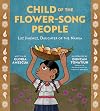
Child of the Flower-Song People: Luz Jiménez, Daughter of the Nahua
by Gloria Amescua
On This Page
Description
Award-winning illustrator Duncan Tonatiuh brings to life debut author Gloria Amescua's lyrical biography of an indigenous Nahua woman from Mexico who taught and preserved her people's culture through modeling for famous artistsShe was Luz Jiménez,
child of the flower-song people,
the powerful Aztec,
who called themselves Nahua—
who lost their land but who did not disappear.
As a young Nahua girl in Mexico during the early 1900s, Luz learned how to grind corn in a metate, to twist yarn show more with her toes, and to weave on a loom. By the fire at night, she listened to stories of her community's joys, suffering, and survival, and wove them into her heart.
But when the Mexican Revolution came to her village, Luz and her family were forced to flee and start a new life. In Mexico City, Luz became a model for painters, sculptors, and photographers such as Diego Rivera, Jean Charlot, and Tina Modotti. These artists were interested in showing the true face of Mexico and not a European version. Through her work, Luz found a way to preserve her people's culture by sharing her native language, stories, and traditions. Soon, scholars came to learn from her.
This moving, beautifully illustrated biography tells the remarkable story of how model and teacher Luz Jiménez became "the soul of Mexico"—a living link between the indigenous Nahua and the rest of the world. Through her deep pride in her roots and her unshakeable spirit, the world came to recognize the beauty and strength of her people.
The book includes an author's note, timeline, glossary, and bibliography. show less
Tags
Recommendations









Member Reviews
One thing I love about picture book biographies is that they often cover less-known subjects in history whose stories are absolutely fascinating because it's the first I'm hearing them (and also just because they are interesting stories!). This biography is about Julia Jiménez (known as Luz Jiménez), an indigenous Mexican woman who went on to be an art model, storyteller, essayist, and linguistic teacher, helping to preserve her culture and language for generations to come. Like the best kind of nonfiction, it inspired me to want to learn more about Luz Jiménez and her contributions to art and literature. Conveniently the book ends with an author's note containing more information, a timeline of Jiménez's life, and a bibliography. show more The illustrations are done in the signature style of award-winning artist Duncan Tonatiuh, so fans of his work will immediately recognize it, although I personally don't care for the flat stylization. show less
uz Jiménez lives with her family in a Mexican village.
They do not speak the language of their Spanish conquerors among themselves. Nahuatl is what they, the descendants of the powerful Aztecs, speak instead. Luz learns how to weave, to make tortillas, and to find medicinal herbs, but she also wants to learn how to read. When the Mexican government decides to “modernize” the Indigenous peoples, Native children are forced to adapt to the European style of dress and to forget their culture and languages. However, Luz does not forget. After her father is killed in a massacre by revolutionary soldiers, her mother flees with her and her sisters to Mexico City, where she comes to the attention of artists, photographers, and show more anthropologists. Finally, Luz’s culture and language are being recognized and appreciated. College students and anthropologists learn and record them before they disappear forever, and Luz is proud to have helped save the flower-song of her people. Amescua succeeds in introducing Luz, who became the embodiment of the “soul of Mexico.” The author’s note serves to fill in any informational gaps. Tonatiuh’s signature artwork once again nearly tells the story by itself. Closely following the text, the illustrations bring Luz to life. (This book was reviewed digitally.)
An important window into the ravages of colonialism and the plight of the Indigenous peoples of Mexico. (timeline, glossary, notes, bibliography) (Picture book/biography. 6-11)
-Kirkus Review show less
They do not speak the language of their Spanish conquerors among themselves. Nahuatl is what they, the descendants of the powerful Aztecs, speak instead. Luz learns how to weave, to make tortillas, and to find medicinal herbs, but she also wants to learn how to read. When the Mexican government decides to “modernize” the Indigenous peoples, Native children are forced to adapt to the European style of dress and to forget their culture and languages. However, Luz does not forget. After her father is killed in a massacre by revolutionary soldiers, her mother flees with her and her sisters to Mexico City, where she comes to the attention of artists, photographers, and show more anthropologists. Finally, Luz’s culture and language are being recognized and appreciated. College students and anthropologists learn and record them before they disappear forever, and Luz is proud to have helped save the flower-song of her people. Amescua succeeds in introducing Luz, who became the embodiment of the “soul of Mexico.” The author’s note serves to fill in any informational gaps. Tonatiuh’s signature artwork once again nearly tells the story by itself. Closely following the text, the illustrations bring Luz to life. (This book was reviewed digitally.)
An important window into the ravages of colonialism and the plight of the Indigenous peoples of Mexico. (timeline, glossary, notes, bibliography) (Picture book/biography. 6-11)
-Kirkus Review show less
Julia Jiménez, known as Luz Jiménez, was born into a Nahua family in Milpa Alta, Mexico in 1897. (Nahuas comprise the largest indigenous group in Mexico. The ancient Aztecs were of Nahua ethnicity.) She became an indigenous Mexican model for such famous artists as Diego Rivera and Frida Kahlo, as well as a Nahuatl-language storyteller.
As a child, Luz loved listening to stories about her Aztec Nahuan ancestors, who were also known as the flower-song people. According to a history by Carlos Herrera Montero printed in The Sopris Sun, Carbondale, Colorado’s nonprofit weekly newspaper:
“The Nahuatl language did not have a specific word for poetry but it did have the concept, a metaphor, ‘flowers and songs’ to indicate poetry. This show more concept was key in their perception of the world and Aztec mythology. It was the search for truth, for God, for the answers to the compelling and ancestral questions of humankind. It was their philosophy and theology. Poetry came from the god Ometeotl, a dual god: the father and the mother, the convergence of masculine and feminine principles.”
Montero explains further that poetry played an important role in daily life:
“Among the Aztec, there was a special kind of priest responsible for calling the locals to gather in a place known as the House of Penance and Prayer, to learn the ‘flowers and songs’ well.”
[Many of these poetic works were destroyed by Hernán Cortés and his men when the Spanish invaded, however. ]
The author tells us that Luz listened to all the old stories and songs and wove them into her heart:
“Through them she tasted bitter sorrow - how the Nahua suffered - and sweet joy - how her people survived. Luz was a child of the flower-song people.”
The government decreed that Spanish should be the language of Mexico, and if students in school were caught wearing Nahua clothes or speaking Nahuatl, they were punished. Amescua writes: “The budding flower in Luz’s heart might have withered. But it did not.”
Instead, Luz got strength from the old Nahua stories, and wanted to protect their ways.
In 1916, the Mexican Revolution came to Milpa Alta. Most of the men, including Luz’s father, were massacred. Luz, her mother, and sisters fled to Mexico City in the night. They struggled to make ends meet until Luz won an indigenous beauty contest and began posing for artists at painting schools. She became the most well-known model in all of Mexico for the most prominent artists:
“The world recognized the beauty and strength of the native people after five hundred years of being in shadows. Through Luz, the world came to know ‘the spirit of Mexico.’”
After the Revolution, Luz returned to Milpa Alta and began teaching Nahua culture, leading anthropologists and artists on tours of her town. One of those anthropologist, also a professor, wrote down all Luz told him in her own language, Nahuatl. Luz became “a living link” to the Aztecs. The professor asked Luz to help him teach Nahuatl at the College of Mexico City.
At long last, the author concludes, Luz realized her dream of becoming a teacher and breathing life into the flower songs of the Nahua.
Back matter includes a timeline, glossary, notes, and bibliography.
Duncan Tonatiuh, who is an award-winning illustrator, creates gorgeous folkloric art work, inspired by Mixtec (native Mexican) codices from the 14th century. He juxtaposes the indigenous style with modern characters and settings. He also uses the pictures to enlarge upon the text. Because the illustrations also tell the story without words, they serves to extend the recommended age range of this book (age 6 and up).
Evaluation: Meticulous research enhanced by outstanding art will help children learn more about the important history of our nearest neighbor to the south. show less
As a child, Luz loved listening to stories about her Aztec Nahuan ancestors, who were also known as the flower-song people. According to a history by Carlos Herrera Montero printed in The Sopris Sun, Carbondale, Colorado’s nonprofit weekly newspaper:
“The Nahuatl language did not have a specific word for poetry but it did have the concept, a metaphor, ‘flowers and songs’ to indicate poetry. This show more concept was key in their perception of the world and Aztec mythology. It was the search for truth, for God, for the answers to the compelling and ancestral questions of humankind. It was their philosophy and theology. Poetry came from the god Ometeotl, a dual god: the father and the mother, the convergence of masculine and feminine principles.”
Montero explains further that poetry played an important role in daily life:
“Among the Aztec, there was a special kind of priest responsible for calling the locals to gather in a place known as the House of Penance and Prayer, to learn the ‘flowers and songs’ well.”
[Many of these poetic works were destroyed by Hernán Cortés and his men when the Spanish invaded, however. ]
The author tells us that Luz listened to all the old stories and songs and wove them into her heart:
“Through them she tasted bitter sorrow - how the Nahua suffered - and sweet joy - how her people survived. Luz was a child of the flower-song people.”
The government decreed that Spanish should be the language of Mexico, and if students in school were caught wearing Nahua clothes or speaking Nahuatl, they were punished. Amescua writes: “The budding flower in Luz’s heart might have withered. But it did not.”
Instead, Luz got strength from the old Nahua stories, and wanted to protect their ways.
In 1916, the Mexican Revolution came to Milpa Alta. Most of the men, including Luz’s father, were massacred. Luz, her mother, and sisters fled to Mexico City in the night. They struggled to make ends meet until Luz won an indigenous beauty contest and began posing for artists at painting schools. She became the most well-known model in all of Mexico for the most prominent artists:
“The world recognized the beauty and strength of the native people after five hundred years of being in shadows. Through Luz, the world came to know ‘the spirit of Mexico.’”
After the Revolution, Luz returned to Milpa Alta and began teaching Nahua culture, leading anthropologists and artists on tours of her town. One of those anthropologist, also a professor, wrote down all Luz told him in her own language, Nahuatl. Luz became “a living link” to the Aztecs. The professor asked Luz to help him teach Nahuatl at the College of Mexico City.
At long last, the author concludes, Luz realized her dream of becoming a teacher and breathing life into the flower songs of the Nahua.
Back matter includes a timeline, glossary, notes, and bibliography.
Duncan Tonatiuh, who is an award-winning illustrator, creates gorgeous folkloric art work, inspired by Mixtec (native Mexican) codices from the 14th century. He juxtaposes the indigenous style with modern characters and settings. He also uses the pictures to enlarge upon the text. Because the illustrations also tell the story without words, they serves to extend the recommended age range of this book (age 6 and up).
Evaluation: Meticulous research enhanced by outstanding art will help children learn more about the important history of our nearest neighbor to the south. show less
Gr 1–5—Striking pre-Columbian illustrations provide a vivid play-by-play of the life of Luz Jiménez, who modeled for
Diego Rivera and others, but whose ultimate mark was in helping to preserve the stories, language, and traditions of
her culture. Essential reading about the impacts of colonialism.
Diego Rivera and others, but whose ultimate mark was in helping to preserve the stories, language, and traditions of
her culture. Essential reading about the impacts of colonialism.
A historically rich story about resilience and cultural preservation.
Ratings
Members
- Recently Added By
Lists

Youth: DEI
296 works; 2 members

SYES Library Wishlist
1,080 works; 4 members
Author Information
2+ Works 133 Members
Awards and Honors
Awards
Distinctions
Notable Lists
Common Knowledge
- People/Characters
- Luz Jiménez
- Important places
- Mexico
Classifications
- Genre
- Picture Books
- DDC/MDS
- 972.08092 — History & geography History of North America Mexico, Central America, West Indies, Bermuda Mexico, Central America, West Indies, Bermuda Later history (1867-)
- LCC
- PZ7.1 .A4985 .C — Language and Literature Fiction and juvenile belles lettres Fiction and juvenile belles lettres Juvenile belles lettres
- BISAC
Statistics
- Members
- 128
- Popularity
- 254,873
- Reviews
- 5
- Rating
- (4.31)
- Languages
- English
- Media
- Paper, Audiobook, Ebook
- ISBNs
- 5