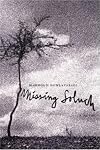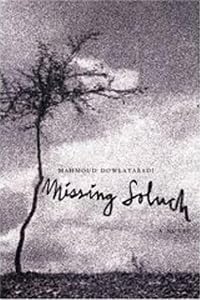
Missing Soluch
by Mahmoud Dowlatabadi
On This Page
Description
Perhaps the most important work in modern Iranian literature, this starkly beautiful novel examines the trials of an impoverished woman and her children living in a remote village in Iran, after the unexplained disappearance of her husband, Soluch. Lyrical yet unsparing, the novel examines her life as she contends with the political corruption, authoritarianism, and poverty of the village. It follows her vacillations between love for Soluch and anger at his absence, and her struggle to raise show more her children without their father. The novel critically evokes the unfulfilled aspirations of modern Iran, portraying a society caught between a past and a future that seem equally weighed down by injustice. This landmark novel -- the first ever written in the everyday language of the Iranian people -- revolutionized Persian literature in its beautiful and daring portrayal of the life of a marginal woman and her struggle to survive. show lessTags
Recommendations














Member Reviews
I found this book utterly punishing. It's slow, microscopic, and about 300 pages too long. Every time I opened it I magically remembered another chore I had to do—or I just decided it was time to take a nap with my hand still marking the page I had left off on.
The phrase that kept coming to mind was "like The Brothers Karamazov but shitty." The two books certainly share several characteristics: family drama, sibling conflict, a town acting as a microcosm for the modernisation struggles of a nation at large, topics of religion, filial loyalty, and class. But the finely drawn characters that populate Dostoyevsky's famous novel are completely absent here—in their place are an unending list of names, scores of villagers practically show more indistinguishable from each other since they all act irrationally, or just like brutes. Nearly every character is a greedy, rude fool, and it gets tiresome to read about the ways they constantly screw each other over.
Mergan is an interesting character, and certainly the most complex, but she's surrounded by the painfully vacuous villagers of Zaminej, who, trapped in their brutal poverty, are like crabs in a bucket, clawing over each other in a futile attempt to get out of the muck. And though I understand Dowlatabadi's message about the ways people dehumanise themselves and each other in the face of such poverty, 500 pages of their incessant backstabbing and tragedies were more than enough. There's screaming and crying and raping and bleeding and hunger and begging and thieving and oh god this fucking book was a nightmare.
____________________
Global Challenge: Iran show less
The phrase that kept coming to mind was "like The Brothers Karamazov but shitty." The two books certainly share several characteristics: family drama, sibling conflict, a town acting as a microcosm for the modernisation struggles of a nation at large, topics of religion, filial loyalty, and class. But the finely drawn characters that populate Dostoyevsky's famous novel are completely absent here—in their place are an unending list of names, scores of villagers practically show more indistinguishable from each other since they all act irrationally, or just like brutes. Nearly every character is a greedy, rude fool, and it gets tiresome to read about the ways they constantly screw each other over.
Mergan is an interesting character, and certainly the most complex, but she's surrounded by the painfully vacuous villagers of Zaminej, who, trapped in their brutal poverty, are like crabs in a bucket, clawing over each other in a futile attempt to get out of the muck. And though I understand Dowlatabadi's message about the ways people dehumanise themselves and each other in the face of such poverty, 500 pages of their incessant backstabbing and tragedies were more than enough. There's screaming and crying and raping and bleeding and hunger and begging and thieving and oh god this fucking book was a nightmare.
____________________
Global Challenge: Iran show less
Missing Soluch is an Iranian novel written while the author was imprisoned without pen or paper - he composed the 500 pages in his head. After his release he copied it down in 70 days. The feat is incredible enough but perhaps not surprising since he also wrote the longest novel in Iranian history, Kalidar, at 3000 pages. Mahmoud Dowlatabadi has often been considered a contender for the Nobel, I hope he lives long enough to see it.
Missing Slouch is a bleak but hopeful novel set in rural Iran in the 1960s, on the cusp of the transformation from an agrarian to urban society, similar to what Steinbeck described in Grapes of Wrath. One of the key plot elements in both novels is the disruption caused by the introduction of the tractor. And show more like Steinbeck, Dowlatabadi writes in a simple spare language about poor people in brutal conditions who somehow find ways to survive no matter how many insults to body and soul. Scenes of violence and brutality will stick with me: Ali Genav nearly beating his wife to death after his mother is crushed by her collapsing house, Hajer's disturbing first sexual encounter with her husband, Abrau attacking his mother with a tractor, an insane camel that attacks Abbas. Beatings, rapes, incest, theft, insanity, physical deformity, ignorance - one would think this is an insufferably bleak novel, and it can be, but through it all there is love and hope that feels more real and honest than any book I have read in a long time.
The accolades this book received are great, yet it never had many reviews, professional or otherwise. The reason is simple, not many people know or even care about pre-revolutionary Iranian village life (much less modern Iranian literature). Yet it is precisely for this reason the novel is so affecting, it's like being dropped into a totally unknown world with no context, one is transported to a new world. The novel is a very accessible introduction to Iranian literature, and a hidden gem. show less
Missing Slouch is a bleak but hopeful novel set in rural Iran in the 1960s, on the cusp of the transformation from an agrarian to urban society, similar to what Steinbeck described in Grapes of Wrath. One of the key plot elements in both novels is the disruption caused by the introduction of the tractor. And show more like Steinbeck, Dowlatabadi writes in a simple spare language about poor people in brutal conditions who somehow find ways to survive no matter how many insults to body and soul. Scenes of violence and brutality will stick with me: Ali Genav nearly beating his wife to death after his mother is crushed by her collapsing house, Hajer's disturbing first sexual encounter with her husband, Abrau attacking his mother with a tractor, an insane camel that attacks Abbas. Beatings, rapes, incest, theft, insanity, physical deformity, ignorance - one would think this is an insufferably bleak novel, and it can be, but through it all there is love and hope that feels more real and honest than any book I have read in a long time.
The accolades this book received are great, yet it never had many reviews, professional or otherwise. The reason is simple, not many people know or even care about pre-revolutionary Iranian village life (much less modern Iranian literature). Yet it is precisely for this reason the novel is so affecting, it's like being dropped into a totally unknown world with no context, one is transported to a new world. The novel is a very accessible introduction to Iranian literature, and a hidden gem. show less
Soluch is missing, no explanation, gone away all on the first page. His wife and three children, must go on, find food, pay bills, the two boys have to work, grab and grub what they can, and the girl must be quickly married off. We never meet Soluch but we feel his absence. We feel hunger, desperation at its most cruel. This picture of tribal life in the 1940's in northeast iran may be a decent description of what rural poverty in Afghanistan may be like today. I was pleased and surprised by a strong woman character with real grit, strong feelings, and toughness that somehow made her a factor in a very brutish situation. As I read this I thought of Frank McCourt's "Angela's Ashes" and of "Texaco" and stories from places of deep, show more entrenched poverty. show less
Ratings
Members
- Recently Added By
Published Reviews
ThingScore 88
Dowlatabadi has created a masterpiece; a story of poverty-stricken villagers whose feelings and fears leave us anguished because their fears capture our imagination, our existential doubts about the meaning of life and death.
added by Stbalbach
"Missing Soluch" is not a perfect book, but it makes a deep impression. It reads like an ancient thing. [It] was one of the most wholesome, transporting books I read this year.
added by Stbalbach
Lists

Writers at Risk
106 works; 17 members
Author Information

37+ Works 359 Members
Some Editions
Awards and Honors
Awards
Common Knowledge
- Canonical title
- Missing Soluch
- Original title
- Ja-ye Khali-ye Soluch
- Original publication date
- 1979
Classifications
- Genres
- Fiction and Literature, General Fiction
- DDC/MDS
- 891.5533 — Literature & rhetoric Literatures of other languages East Indo-European and Celtic literatures Iranian literatures Modern Persian / Farsi literature (8th century CE to present) Persian fiction 1900–2000
- LCC
- PK6561 .D39 .J313 — Language and Literature Indo-Iranian languages and literatures Indo-Iranian philology and literature Iranian philology and literature New Persian Literature Individual authors or works
- BISAC
Statistics
- Members
- 87
- Popularity
- 367,866
- Reviews
- 3
- Rating
- (3.41)
- Languages
- 5 — Dutch, English, German, Norwegian (Bokmål), Swedish
- Media
- Paper, Ebook
- ISBNs
- 7
- ASINs
- 2