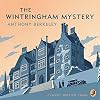
The Wintringham Mystery
by Anthony Berkeley
On This Page
Description
Stephen Munro, a demobbed army officer, reconciles himself to taking a job as a footman to make ends meet. Employed at Wintringham Hall, the delightful but decaying Sussex country residence of the elderly Lady Susan Carey, his first task entails welcoming her eccentric guests to a weekend house-party, at which her bombastic nephew - who recognises Stephen from his former life - decides that an after-dinner séance would be more entertaining than bridge. Then Cicely disappears! With Lady show more Susan reluctant to call the police about what is presumably a childish prank, Stephen and the plucky Pauline Mainwaring take it upon themselves to investigate. But then a suspicious death turns the game into an altogether more serious This classic winter mystery incorporates all the trappings of the Golden Age - a rambling country house, a séance, a murder, a room locked on the inside, with servants, suspects and alibis, a romance - and an ingenious puzzle. First published as a 30-part newspaper serial in 1926 - the year was published, was written by Anthony Berkeley, founder of the famous Detection Club. Also known as , the ran the story as a competition with a prize of £500 (equivalent to £30,000 today) for anyone who guessed the solution correctly. Nobody did - even Agatha Christie entered and couldn't solve it. Can you? show lessTags
Recommendations

























Member Reviews
Anthony Berkeley originally published this as a serialised story titled Cicely Disappears in the Daily Mail, under his pseudonym, A Monmouth Platts. It remained out of print for years, until it was reissued in 2021 by the Collins Crime Club. A classic, country house mystery, that typifies the Golden Age of Crime Writing in English, it nonetheless raises some uncomfortable questions for the reader about class and wealth, antisemitism, and other forms of implicit prejudices.
In The Wintringham Mystery, we begin with our protagonist, Stephen Munro, who, having returned from military service, squanders his fortune and consequently finds himself impoverished. The opening scene consists of Munro relating to Bridger, his valet (and former show more orderly, in the military) that he has to let him go as he can no longer afford to pay his salary. Instead, Munro has - horror of horrors - found himself a job, as a footman, in the house of Lady Susan Carey, an elderly, wealthy woman with a country estate. In a deeply uncomfortable scene that was clearly written to be funny, Munro repeatedly mocks Bridger for failing to react with adequate shock and astonishment to this fall in his employer's status; today, we know that Bridger's lack of response may not only be due to the emotional deficits that Munro attributes to him, but also to the fact that he is currently employed by Munro, and bound by conventions of class that will become more apparent as we go on. If I'm to be uncharitable, I could also say that Bridger isn't particularly shocked by the concept of working for a living, more generally. In a touching display of devotion (or lack of self esteem), Bridger refuses to take Munro's recommendation letter and find himself another valet position, and instead accompanies him to Lady Susan's house, where he takes, I imagine, a substantial paycut, to work as under-gardener.
At Lady Susan's, Munro has difficulty adjusting to being a footman, after having been a gentleman of leisure. The hours are long; the butler, Mr. Martin, does not take a shine to him, and Lady Susan informs him that his name is now William ("We always call the footman 'William'). Lady Susan's upcoming weekend party entails a lot of work, and Munro is clearly unaccustomed to work. When the butler, Martin, lists out his duties, Munro marvels, "It seems to me that the footman's life is not an idle one." Oh, I wanted to smack him! His life is further complicated by the arrival of two people he knew from his former life: Freddie Venables, Lady Susan's nephew and Munro's former classmate from school, and Pauline Mainwaring, his former fiance. In response to Munro's fall from status, they respond differently. Freddie continues to awkwardly treat Munro as an old friend even as Munro serves him drinks, attempts to valet him and carries his luggage; Freddie keeps getting in his way, treating Munro like an old friend (who happens to be cleaning silverware, I don't know) and drawing Lady Susan's ire. Pauline Mainwaring cuts him dead. It turns out she is engaged again, this time to a wealthy financier, who is naturally, Sir Julius Hammerstein, and in accordance with Golden Age Mystery writers' tendencies towards anti-semitism, described unkindly and with reference to all the usual stereotypes. At the garden party are a cast of characters with all sorts of motives and intentions. It doesn't take long before Freddie Venables blurts out to the others that Munro is one of them, albeit in footman's livery, having fallen on hard times. The result is an awkward, un-party like situation: Pauline unbends and chats with him normally, the others refuse to be valeted by one of their own class, unpacking their own clothes, and Munro speaks with as he would normally, even though he's dressed in a footman's livery.
The plot get started with two key developments. The first, is that Cicely, Lady Susan's beloved niece, vanishes. At the start of the book she is evidently distraught and upset about something undisclosed. She initially skips the party to go sailing with friends, but then changes her mind and returns. During an attempted seance (rich people goofing around), the lights are turned off, and when they come back on, she's disappeared. Meanwhile, the butler, increasingly resentful at the way Munro is treated with casual friendliness by the guests, unlike all the other servants, complains to Lady Susan about him. So does Sir Julius Hammerstein, who doesn't like his fiance, Pauline and her ex-fiance, Munro resuming a friendship. Lady Susan decides to solve both problems with one stone: she fires Munro as a footman and rehires him as a detective. Munro moves out of servants quarters into a bedroom in the same house and proceeds to spend the rest of the book ineptly investigating Cicely's disappearance, and trying to decide how he can have his Pauline back, when he's unable to support her in the lifestyle within which she (and he) were raised.
The resolution of the mystery is sufficiently twisty: when first published, the Mail offered prizes for anyone who could solve it before the last chapter was out, and among the unsuccessful applicants was Agatha Christie. While entertaining enough, it is difficult for the modern reader to get around the deep-rooted classism, resting on an implicit, unstated assumption about the intellectual and moral superiority of the rich (in case you were wondering, yes [spoilers for the ending a servant committed the various crimes in the book ]. When Pauline tells Munro that she won't mind being a poor man's wife, and cooking and cleaning, he disputes it, telling her that her enthusiasm will eventually wear off, and she'll grow to resent him and the domestic labor. I'd imagine the very stoic Bridger might have had something to say about that, atleast internally, but instead, he is her "servant for life," because she once greeted him politely and shook his hand. To sum up, the mystery is a nice puzzle, the rest of the book is just out of sync with today's times. show less
In The Wintringham Mystery, we begin with our protagonist, Stephen Munro, who, having returned from military service, squanders his fortune and consequently finds himself impoverished. The opening scene consists of Munro relating to Bridger, his valet (and former show more orderly, in the military) that he has to let him go as he can no longer afford to pay his salary. Instead, Munro has - horror of horrors - found himself a job, as a footman, in the house of Lady Susan Carey, an elderly, wealthy woman with a country estate. In a deeply uncomfortable scene that was clearly written to be funny, Munro repeatedly mocks Bridger for failing to react with adequate shock and astonishment to this fall in his employer's status; today, we know that Bridger's lack of response may not only be due to the emotional deficits that Munro attributes to him, but also to the fact that he is currently employed by Munro, and bound by conventions of class that will become more apparent as we go on. If I'm to be uncharitable, I could also say that Bridger isn't particularly shocked by the concept of working for a living, more generally. In a touching display of devotion (or lack of self esteem), Bridger refuses to take Munro's recommendation letter and find himself another valet position, and instead accompanies him to Lady Susan's house, where he takes, I imagine, a substantial paycut, to work as under-gardener.
At Lady Susan's, Munro has difficulty adjusting to being a footman, after having been a gentleman of leisure. The hours are long; the butler, Mr. Martin, does not take a shine to him, and Lady Susan informs him that his name is now William ("We always call the footman 'William'). Lady Susan's upcoming weekend party entails a lot of work, and Munro is clearly unaccustomed to work. When the butler, Martin, lists out his duties, Munro marvels, "It seems to me that the footman's life is not an idle one." Oh, I wanted to smack him! His life is further complicated by the arrival of two people he knew from his former life: Freddie Venables, Lady Susan's nephew and Munro's former classmate from school, and Pauline Mainwaring, his former fiance. In response to Munro's fall from status, they respond differently. Freddie continues to awkwardly treat Munro as an old friend even as Munro serves him drinks, attempts to valet him and carries his luggage; Freddie keeps getting in his way, treating Munro like an old friend (who happens to be cleaning silverware, I don't know) and drawing Lady Susan's ire. Pauline Mainwaring cuts him dead. It turns out she is engaged again, this time to a wealthy financier, who is naturally, Sir Julius Hammerstein, and in accordance with Golden Age Mystery writers' tendencies towards anti-semitism, described unkindly and with reference to all the usual stereotypes. At the garden party are a cast of characters with all sorts of motives and intentions. It doesn't take long before Freddie Venables blurts out to the others that Munro is one of them, albeit in footman's livery, having fallen on hard times. The result is an awkward, un-party like situation: Pauline unbends and chats with him normally, the others refuse to be valeted by one of their own class, unpacking their own clothes, and Munro speaks with as he would normally, even though he's dressed in a footman's livery.
The plot get started with two key developments. The first, is that Cicely, Lady Susan's beloved niece, vanishes. At the start of the book she is evidently distraught and upset about something undisclosed. She initially skips the party to go sailing with friends, but then changes her mind and returns. During an attempted seance (rich people goofing around), the lights are turned off, and when they come back on, she's disappeared. Meanwhile, the butler, increasingly resentful at the way Munro is treated with casual friendliness by the guests, unlike all the other servants, complains to Lady Susan about him. So does Sir Julius Hammerstein, who doesn't like his fiance, Pauline and her ex-fiance, Munro resuming a friendship. Lady Susan decides to solve both problems with one stone: she fires Munro as a footman and rehires him as a detective. Munro moves out of servants quarters into a bedroom in the same house and proceeds to spend the rest of the book ineptly investigating Cicely's disappearance, and trying to decide how he can have his Pauline back, when he's unable to support her in the lifestyle within which she (and he) were raised.
The resolution of the mystery is sufficiently twisty: when first published, the Mail offered prizes for anyone who could solve it before the last chapter was out, and among the unsuccessful applicants was Agatha Christie. While entertaining enough, it is difficult for the modern reader to get around the deep-rooted classism, resting on an implicit, unstated assumption about the intellectual and moral superiority of the rich (in case you were wondering, yes [spoilers for the ending
This mystery is billed as the one that even Agatha Christie couldn’t guess—it was first published serially and there was a prize available to whoever could guess the solution. I did not guess the solution but found this book a perfectly acceptable Golden Age mystery. I laughed out loud at a couple of places, and the story in general rattled along smoothly.
Written in 1924 was interesting to see the comparsion of writing in that time to current writers writing about that time. People were so much more polite and correct.
It's after the war WWI and times are hard for Stephen so he swallows his pride and takes a job as a footman at a country estate where they’re throwing a big house party. While carrying luggage to guests rooms, answering the door, doing everything the butler directs, his former girlfriend arrives with her new beau, an obnoxious wealthy business man. Needless, to say after a party seance a guest disappears and lots of weird goings on bring Stephen and Pauline back together to search for clues and discover what is really happening.
It's after the war WWI and times are hard for Stephen so he swallows his pride and takes a job as a footman at a country estate where they’re throwing a big house party. While carrying luggage to guests rooms, answering the door, doing everything the butler directs, his former girlfriend arrives with her new beau, an obnoxious wealthy business man. Needless, to say after a party seance a guest disappears and lots of weird goings on bring Stephen and Pauline back together to search for clues and discover what is really happening.
Audiobook
5-star narration from Mike Grady. I'll be looking for more of his narrations.
I found the story itself a bit confusing as I kept losing track of the characters when they switched between surname and forename. This was possibly because I was listening in 'episodes' as I was out walking. I did feel that it was quite drawn out with each character in turn being highlighted as 'the villain' and then dismissed. I don't know whether I will listen to this again.
5-star narration from Mike Grady. I'll be looking for more of his narrations.
I found the story itself a bit confusing as I kept losing track of the characters when they switched between surname and forename. This was possibly because I was listening in 'episodes' as I was out walking. I did feel that it was quite drawn out with each character in turn being highlighted as 'the villain' and then dismissed. I don't know whether I will listen to this again.
So glad I liked this as it adds a whole new backlist to my Golden Age Mystery obsession. Gaping plot holes or not.
Ratings
Members
- Recently Added By
Lists

British Mystery
469 works; 14 members

Christmas Reading
142 works; 5 members

Books Read in 2022
5,226 works; 115 members
Author Information

45+ Works 3,075 Members
A journalist as well as a novelist, Anthony Berkeley was a founding member of the Detection Club and one of crime fiction's greatest innovators. He was one of the first to predict the development of the 'psychological' crime novel and he sometimes wrote under the pseudonym of Francis Iles. He wrote twenty-four novels, ten of which feature his show more amateur detective, Roger Sheringham show less
Common Knowledge
- Canonical title
- The Wintringham Mystery
- Alternate titles
- Cicely disappears
- Original publication date
- 1926 (serial publication) (serial publication); 1927 (book) (book)
- People/Characters
- Stephen Munro
- Original language
- English
- Disambiguation notice
- Originally published serially in the Daily Mirror; first published in book form in 1927 under title Cicely Disappears
Classifications
Statistics
- Members
- 171
- Popularity
- 192,014
- Reviews
- 5
- Rating
- (3.62)
- Languages
- English
- Media
- Paper, Audiobook, Ebook
- ISBNs
- 6
- ASINs
- 6