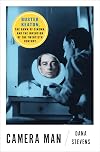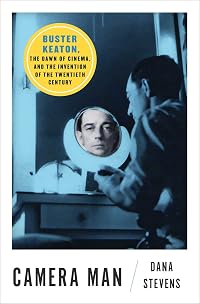
Camera Man: Buster Keaton, the Dawn of Cinema, and the Invention of the Twentieth Century
by Dana Stevens
On This Page
Description
"As one of the most famous faces of silent cinema, Buster Keaton was and continues to be revered for his stoic expressions, clever visual gags, and acrobatic physicality in classics such as Sherlock Jr., The General, and The Cameraman. In this spirited biography, every aspect of Buster Keaton's astonishing life is explored, from his humble beginnings in vaudeville with his parents to his meteoric rise to Hollywood stardom during the silent era. Based on vigorous research of both Keaton and show more the film industry, it also delves into the dark sides of fame, such as Keaton's ill-advised businesses deals and alcoholism, to his unexpected resurgence in the 1940s as his contributions as both an actor and director were finally celebrated. This is a fascinating and uniquely astounding look at both the classic era of Hollywood and one of its most beloved stars"-- show lessTags
Recommendations













Member Reviews
[Camera Man: Buster Keaton, the Dawn of Cinema, and the Invention of the Twentieth Century] is an excellent introduction for those interested in learning how those working in entertainment industry navigated the journey from the days of live vaudeville, through the beginning of silent movies, the introduction of sound, studio moguls, and ultimately reaching the television era. The author, Dana Stevens, is well qualified as a guide, having been film critic for Slate, The New Yorker and similar publications.
She uses the life of Buster Keaton as the narrative framework. Keaton’s career began as a child performer in vaudeville, but he successfully made the transition to movies (silent as well as sound). He had a brief period when he show more worked as an independent film maker but the emerging studio system rejected his visions, keeping him on instead as their expert on physical comedy. There were issues with his (multiple) attempts at marriage and with alcoholism, but he managed to work in television towards the end of his life.
While documenting all of the ups and downs of Keaton’s life, the author brings in a variety of additional personalities – Fatty Arbuckle, Charlie Chaplin, F. Scott Fitzgerald, Irving Thalberg, Jimmy Durante, Judy Garland – while also providing some background on the emergence of industry trends – film magazines, the birth of film criticism, and the risky economics of movie-making.
The prose is quite readable. The only problem I really had with the book was the lack of an index for tracking names and film titles. show less
She uses the life of Buster Keaton as the narrative framework. Keaton’s career began as a child performer in vaudeville, but he successfully made the transition to movies (silent as well as sound). He had a brief period when he show more worked as an independent film maker but the emerging studio system rejected his visions, keeping him on instead as their expert on physical comedy. There were issues with his (multiple) attempts at marriage and with alcoholism, but he managed to work in television towards the end of his life.
While documenting all of the ups and downs of Keaton’s life, the author brings in a variety of additional personalities – Fatty Arbuckle, Charlie Chaplin, F. Scott Fitzgerald, Irving Thalberg, Jimmy Durante, Judy Garland – while also providing some background on the emergence of industry trends – film magazines, the birth of film criticism, and the risky economics of movie-making.
The prose is quite readable. The only problem I really had with the book was the lack of an index for tracking names and film titles. show less
First sentence from the introduction: I first fell for Buster Keaton twenty-five years ago, when he had just turned one hundred. It was the spring of 1996, and I was spending the year studying at the University of Strasbourg, close to the French-German border in Alsace.
Premise/plot: Camera Man is closer to a book of essays than a 'proper' biography. For better or worse. (I am not saying that it is 'for the worse' for every reader.) The focus is rarely solely on Buster Keaton. He's merely a piece of a puzzle in her discussing broader subjects. Her interest is in history, culture, theatre, film, and to a certain degree how terrible, horrible, and obviously wrong (aka cringe-worthy) 'the past' was about anything and everything since it show more doesn't align [close enough to suit] with contemporary opinions, values, morals, and beliefs. The book is certainly not celebrating Buster Keaton's legacy, examining his films for what they are, or diving with any depth into the subject of his life (aka proper biography).
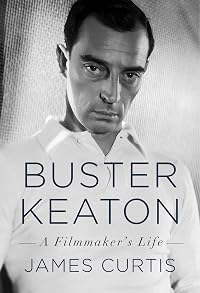
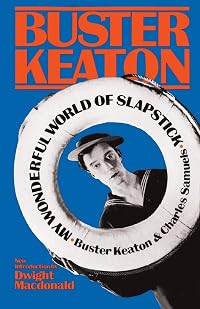
My thoughts: This is my third book about Buster Keaton. I read James Curtis' Buster Keaton: A Filmmakers Life and Buster Keaton's own autobiography My Wonderful World of Slapstick. I was disappointed with this one. I wanted more of the focus to be on Buster Keaton--professionally, personally, the work itself. He was ACTOR, DIRECTOR, EDITOR, GAG WRITER, STUNT MAN. Plenty of angles the book could have examined. Though perhaps the author's way of viewing Keatons' work with the lens of who could possibly be offended by this and how outraged should I be on their behalf it is perhaps a blessing in disguise that she limits her discussion of Buster Keaton to what she does. Though the author claims to have fallen for Buster Keaton, it seems more like a shallow fall that she has long since recovered from. She also takes the approach that his life might as well have ended after Steamboat Bill Jr. [And she's no fan of The General. In fact at times I get the idea she isn't really even a fan of slapstick comedy].
While I was mainly disappointed with this one, I will share what I appreciated. The first third of this one--perhaps a little more--where the focus is on the history of vaudeville and Buster Keaton's stage career as a child/young man--was solidly engaging. I had high hopes that her examination of his film career would be equally so. But here the focus shifts to other filmmakers, other films, other actors, film critics. More specifically in what voices were being heard and which were being "suppressed" or "oppressed" and the like. Obviously, the author's feminist world view is central to who she is and how she views the world. So I think depending on YOUR expectations, this one might prove worth reading? It was not for me in the end. I don't want someone telling me how I should react to Buster Keaton's movies. show less
Premise/plot: Camera Man is closer to a book of essays than a 'proper' biography. For better or worse. (I am not saying that it is 'for the worse' for every reader.) The focus is rarely solely on Buster Keaton. He's merely a piece of a puzzle in her discussing broader subjects. Her interest is in history, culture, theatre, film, and to a certain degree how terrible, horrible, and obviously wrong (aka cringe-worthy) 'the past' was about anything and everything since it show more doesn't align [close enough to suit] with contemporary opinions, values, morals, and beliefs. The book is certainly not celebrating Buster Keaton's legacy, examining his films for what they are, or diving with any depth into the subject of his life (aka proper biography).
My thoughts: This is my third book about Buster Keaton. I read James Curtis' Buster Keaton: A Filmmakers Life and Buster Keaton's own autobiography My Wonderful World of Slapstick. I was disappointed with this one. I wanted more of the focus to be on Buster Keaton--professionally, personally, the work itself. He was ACTOR, DIRECTOR, EDITOR, GAG WRITER, STUNT MAN. Plenty of angles the book could have examined. Though perhaps the author's way of viewing Keatons' work with the lens of who could possibly be offended by this and how outraged should I be on their behalf it is perhaps a blessing in disguise that she limits her discussion of Buster Keaton to what she does. Though the author claims to have fallen for Buster Keaton, it seems more like a shallow fall that she has long since recovered from. She also takes the approach that his life might as well have ended after Steamboat Bill Jr. [And she's no fan of The General. In fact at times I get the idea she isn't really even a fan of slapstick comedy].
While I was mainly disappointed with this one, I will share what I appreciated. The first third of this one--perhaps a little more--where the focus is on the history of vaudeville and Buster Keaton's stage career as a child/young man--was solidly engaging. I had high hopes that her examination of his film career would be equally so. But here the focus shifts to other filmmakers, other films, other actors, film critics. More specifically in what voices were being heard and which were being "suppressed" or "oppressed" and the like. Obviously, the author's feminist world view is central to who she is and how she views the world. So I think depending on YOUR expectations, this one might prove worth reading? It was not for me in the end. I don't want someone telling me how I should react to Buster Keaton's movies. show less
A well-done appreciation of the Great Stone Face. My only criticism is that the author goes on a few lengthy digressions that are only tangentially related to Keaton (eg: Mabel Normand and the plight of women creators in early Hollywood, the screenwriting career of F. Scott Fitzgerald). These diversions are either interesting stories that provide context for the world at the time or feel like frustrating distractions that have you wondering when we’ll get back to the guy whose face is on the cover.
This is a fascinating look at the life and career of Buster Keaton. It isn't exactly a straightforward biography: Stevens uses Keaton's life as a vehicle to explore the evolution of the film industry, with diversions into related topics such as child labor laws, the role of women in the film industry, the rise of film critics, the history of Alcoholics Anonymous, and other topics relevant to Keaton's life. Stevens has been obsessed with Keaton for a long time, and so has the rather annoying habit of assuming that the reader already knows the broad outline of Keaton's life and career, which sometimes made it feel like I might be missing something, but aside from that, I found this to be a very enjoyable read. It was a great excuse to show more watch some Keaton movies. show less
This one is a biography of Buster Keaton. It's been years since I read a Keaton bio, but this one piqued my interest. (The fact that the author was giving a presentation at a screening of Keaton's Go West that I attended might have influenced me a bit.) Unlike a typical biography, Ms. Stevens interweaves the account of Buster's life with reports of other people and events of the time. I was treated to excurses on things like the Gerry Society, the Childs restaurant chain, the birth of film fandom, and personalities such as Roscoe Arbuckle, Bert Williams, and F. Scott Fitzgerald. Depending on the topic, I was either fascinated or bored, but all in all I appreciated the approach. I'm very glad I checked this one out. Ms. Steven created a show more new experience out of a familiar story.
--J. show less
--J. show less
Oh my god this is the lightest piece of triteness i have come across in a while. If you a looking for some kind of look at another century or some well thought out appreciation of a great artist this is not the book. This is like some NPR announcer going over wikipedia articles for thing relating to whatever current "Zeitgeist" they might have in their tiny little heads. Really atrocious writing. Like a person who learned how to write at some school for writers. Precious, leaden, flat and mind numbing are the adjectives that come to mind.
Ratings
Members
- Recently Added By
Lists

Top Five Books of 2022
736 works; 272 members

Entertainment
174 works; 1 member

Club Read's Recommended Nonfiction Written by Women
618 works; 30 members
Author Information
5+ Works 582 Members
Awards and Honors
Common Knowledge
- People/Characters
- Buster Keaton
- Important places
- Hollywood, Los Angeles, California, USA
- Canonical DDC/MDS
- 791.43092
Classifications
- Genres
- Biography & Memoir, Nonfiction, History, General Nonfiction
- DDC/MDS
- 791.43092 — Arts & recreation Recreation, sports, and performing arts Public performances Motion pictures, radio, television, podcasting Motion pictures Standard subdivisions History, geographic treatment, biography; description, critical appraisal of specific companies and studios {for specific films see 791.437} Biography
- LCC
- PN2287 .K4 .S74 — Language and Literature Literature (General) Literature (General) Drama Dramatic representation. The theater Special regions or countries
- BISAC
Statistics
- Members
- 152
- Popularity
- 215,340
- Reviews
- 6
- Rating
- (3.69)
- Languages
- English
- Media
- Paper, Audiobook, Ebook
- ISBNs
- 6
- ASINs
- 3