Mr Pye
by Mervyn Peake
There is 1 current discussion about this work.
On This Page
Description
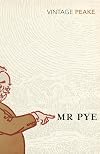
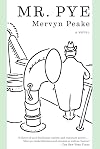
Equipped with love, Mr Harold Pye lands on the island of Sark, his mission to convert the islanders into a crusading force for the undiluted goodness that he feels within. The extraordinary inhabitants of the island range fromthe formidable Miss George in her purple busby to the wanton, raven-haired Tintagieu, 'five foot three inches of sex'. Mr Pye, however, is prone to excess and in the increasingly personalised struggle between good and evil, excess is very nearly his downfall.Tags
Recommendations




















Member Recommendations
CGlanovsky Religious themes. Physical transformation of characters.
Member Reviews
Like Miss Hargreaves, Mr Pye arrives - in Sark, this being Peake - as a disruptor, in his case for the good, and not conjured up by another, except his Great Pal. Casting goodness and love on his quarry island of just the right size, it all starts to unravel with the arrival of a very real, very dead, very smelly white whale carcass. I very much wanted his curiosity about his wings to get the better of him, so was temporarily disappointed when that didn't happen, and then was left wondering if I was meant to draw a moral conclusion - if so it was going to be a bit glib. A joyous romp otherwisde, with some wonderful characters, and early on some very enjoyable linguistic scene-setting. Wonderful illustrations.
Oh dear. Much as I love Peake (his writings and his art), such whimsy is not to my taste. Sadder still, the wonderfully rich language of the Gormenghast books is largely absent. Consequently, I find it hard to give it a meaningful rating, but have tried to judge it in its own right, rather than as a work of Peake.
Perhaps I should side with Tintagieu, when she asks
"Can't a thing just be itself without its having to mean something?"
Photo of Peake's painting of The Avenue, on display in the Guernsey museum and art gallery, 3 May 2017
Art Echoing Life?
It's an odd little book that both reflects and contradicts aspects of Peake, his life and his beliefs.
It is set on the small island of Sark (near Brittany, NW France), where he lived for two show more very happy periods of his life (and where his youngest child, Clare, was born). It pokes gentle fun at local characters, including an artist (Thorpe) who is probably a comical view of himself.
Too many passages in the opening chapters read like a travel guide. I suppose that emphasises the importance of place (as in Titus Groan and Gormenghast), but it's rather too much, not very interesting, detail for those unfamiliar with the island. But now that I have been there, I understand the beauty.
Photo of Grande Greve, Little Sark, from La Coupée, 2 May 2017
The eponymous Mr Pye is an evangelist of an unspecified faith, who refers to God as the Great Pal and wants to bring love and joy to a community divided by petty differences. In contrast, although Peake's parents worked at a missionary hospital, he was not religious at all (though his wife was raised a Catholic, so they sent their children to Catholic schools).
Plot
It's more of a situation than a plot; it rambles along, and you keep waiting for something to happen (or some rich descriptions), but mostly in vain.
Middle-aged Mr Pye goes to Sark, and sets about exploring the island, then people's hearts, and then, he hopes, to bring them together in harmony. He uses self-esteem, self-confidence and charm to ingratiate himself:
"Not all [islanders] were pleased to be accosted... but their impatience was drained away as [he] smiled back at them with such demonstrable love."
That, and a whistle that is callow, saucy and knowledgeable, plus "the electric current of his love"!
His vision is
"A Sark purified by its own recognition of the supernatural, purified by the ceaseless battle for self-improvement... [but without]... private grievance, jealousy and feuds".
Why?
We never learn what prompted him to evangelism in general or Sark specifically, and we don't really know what happens at the end of the story. We don't really get to see how he intends to implement his grand ideas or what the consequences would be. We don't really get to know anything much about his beliefs, and no religious books or figures are mentioned, other than his Great Pal.
La Coupée, photographed from Sark, looking towards Little Sark, 2 May 2017
Magical Realism
The most interesting part is the magical realism (a term not coined at the time), when he sprouts angelic wings. As these become increasingly prominent and inconvenient, he struggles to make them go away, eventually concluding that he is too good, and therefore needs to sin a bit. Then, he develops a taste for inept mischief and although the wings go, horns develop. You can guess most of the rest . However, even that feels like a series of anecdotes, rather than anything more.
Despite all the detail of the island and its residents, and its quasi-religious theme, neither of the island's churches is mentioned, and I think a vicar is only mentioned once. You'd think he might feel threatened by the competition and crop up more often.
Themes
I guess it's about good and evil and the balance between the two, and also the difference between mere naughtiness and actual evil, but it's not funny enough to be an outright comedy, but it doesn't really seem to have much of a point about these themes, other than comedic.
Or maybe there isn’t really one. Peake had no need to invent a world for this story, and he wrote if fairly quickly, because he needed the money. It’s the only adult book of his that was published with his illustrations.
Peake's drawing of Mr Pye
Quotes
I found a few:
• "The sun gloating on the unrippled water and the blank and zoneless bliss of an empty mind."
• "The imprisoned harbour where the emerald water had become rippled with expectancy."
• "Everything he did or said seemed curiously out of focus."
• He was so frustratingly nice that "Miss Dredger, fighting down a desire to smash the window to let out her soul".
• "Along the tortuous passages of the caves the hollow echoes rumbled and the billows hissed and slapped the slimy walls."
• "his face naked with integrity"
• "a walk so hesitant as to look almost like a disease of the legs"
• A full moon "ribbed the edges of the precipitous cliffs and was reflected in the sheen of the sands"
• "the gloating light; the rhythm of the rocks"
• "so flat a face that it seemed to have been created by some sculptor who, experimenting with the art of low relief, was inquisitive to know quite how low a relief could go without disappearing altogether."
• "A faint thickening of the horizon implied France, and piled above this tenuous implication there were great domes of cloud."
• "A gaunt, cadaverous man and it was impossible to see him without being reminded of the bone formations that underline the flesh."
• "The charm was still there, but it was now more like the charm of something vaguely dangerous, like a baby with a razor."
• in a "claustrophobic skirt... her legs were screaming for freedom."
• Re painting (remember, Peake was an artist as well as a writier), "colour... is a process of elimination. It is the distillation of an attitude. It is a credo."
• "An absolute silence not only reigned but appeared to extend its empire."
Photo of bluebells and other wild flowers on cliffs of Sark, 2 May 2017
See also
• A similar, but much shorter story, is Marcel Aymé's The State of Grace, which I reviewed HERE, including a free link to a slightly abridged version of it.
• All my Peake/Gormenghast reviews (including biographies/memoirs and books about his art) are on a shelf,
HERE. show less
Perhaps I should side with Tintagieu, when she asks
"Can't a thing just be itself without its having to mean something?"
Photo of Peake's painting of The Avenue, on display in the Guernsey museum and art gallery, 3 May 2017
Art Echoing Life?
It's an odd little book that both reflects and contradicts aspects of Peake, his life and his beliefs.
It is set on the small island of Sark (near Brittany, NW France), where he lived for two show more very happy periods of his life (and where his youngest child, Clare, was born). It pokes gentle fun at local characters, including an artist (Thorpe) who is probably a comical view of himself.
Too many passages in the opening chapters read like a travel guide. I suppose that emphasises the importance of place (as in Titus Groan and Gormenghast), but it's rather too much, not very interesting, detail for those unfamiliar with the island. But now that I have been there, I understand the beauty.
Photo of Grande Greve, Little Sark, from La Coupée, 2 May 2017
The eponymous Mr Pye is an evangelist of an unspecified faith, who refers to God as the Great Pal and wants to bring love and joy to a community divided by petty differences. In contrast, although Peake's parents worked at a missionary hospital, he was not religious at all (though his wife was raised a Catholic, so they sent their children to Catholic schools).
Plot
It's more of a situation than a plot; it rambles along, and you keep waiting for something to happen (or some rich descriptions), but mostly in vain.
Middle-aged Mr Pye goes to Sark, and sets about exploring the island, then people's hearts, and then, he hopes, to bring them together in harmony. He uses self-esteem, self-confidence and charm to ingratiate himself:
"Not all [islanders] were pleased to be accosted... but their impatience was drained away as [he] smiled back at them with such demonstrable love."
That, and a whistle that is callow, saucy and knowledgeable, plus "the electric current of his love"!
His vision is
"A Sark purified by its own recognition of the supernatural, purified by the ceaseless battle for self-improvement... [but without]... private grievance, jealousy and feuds".
Why?
We never learn what prompted him to evangelism in general or Sark specifically, and we don't really know what happens at the end of the story. We don't really get to see how he intends to implement his grand ideas or what the consequences would be. We don't really get to know anything much about his beliefs, and no religious books or figures are mentioned, other than his Great Pal.
La Coupée, photographed from Sark, looking towards Little Sark, 2 May 2017
Magical Realism
The most interesting part is the magical realism (a term not coined at the time), when
Despite all the detail of the island and its residents, and its quasi-religious theme, neither of the island's churches is mentioned, and I think a vicar is only mentioned once. You'd think he might feel threatened by the competition and crop up more often.
Themes
I guess it's about good and evil and the balance between the two, and also the difference between mere naughtiness and actual evil, but it's not funny enough to be an outright comedy, but it doesn't really seem to have much of a point about these themes, other than comedic.
Or maybe there isn’t really one. Peake had no need to invent a world for this story, and he wrote if fairly quickly, because he needed the money. It’s the only adult book of his that was published with his illustrations.
Peake's drawing of Mr Pye
Quotes
I found a few:
• "The sun gloating on the unrippled water and the blank and zoneless bliss of an empty mind."
• "The imprisoned harbour where the emerald water had become rippled with expectancy."
• "Everything he did or said seemed curiously out of focus."
• He was so frustratingly nice that "Miss Dredger, fighting down a desire to smash the window to let out her soul".
• "Along the tortuous passages of the caves the hollow echoes rumbled and the billows hissed and slapped the slimy walls."
• "his face naked with integrity"
• "a walk so hesitant as to look almost like a disease of the legs"
• A full moon "ribbed the edges of the precipitous cliffs and was reflected in the sheen of the sands"
• "the gloating light; the rhythm of the rocks"
• "so flat a face that it seemed to have been created by some sculptor who, experimenting with the art of low relief, was inquisitive to know quite how low a relief could go without disappearing altogether."
• "A faint thickening of the horizon implied France, and piled above this tenuous implication there were great domes of cloud."
• "A gaunt, cadaverous man and it was impossible to see him without being reminded of the bone formations that underline the flesh."
• "The charm was still there, but it was now more like the charm of something vaguely dangerous, like a baby with a razor."
• in a "claustrophobic skirt... her legs were screaming for freedom."
• Re painting (remember, Peake was an artist as well as a writier), "colour... is a process of elimination. It is the distillation of an attitude. It is a credo."
• "An absolute silence not only reigned but appeared to extend its empire."
Photo of bluebells and other wild flowers on cliffs of Sark, 2 May 2017
See also
• A similar, but much shorter story, is Marcel Aymé's The State of Grace, which I reviewed HERE, including a free link to a slightly abridged version of it.
• All my Peake/Gormenghast reviews (including biographies/memoirs and books about his art) are on a shelf,
HERE. show less
An enjoyable, non-taxing and inventive fantasy about Mr. Pye who soon discovers the pit-falls of over enthusiastic proselytising on his mission to Sark, Channel Islands.
A light but still penetrating satire, with characters that you can't help be both fond of and amused by (as the author obviously is too). Contains much of the trademark wit and wryness and sheer *oddness* of his Gormenghast books, although on a much smaller scale, and peppered with his delightfully quirky illustrations to great effect.
The literal symptoms of moral dilemmas, Peake carves his way around the island of Sark and jaunts Mr Pye through his maze of brambled descriptive writing. Mervyn at his subtle comic best, a pleasant read and Mr Pye himself could have been a character easily plucked from a Brecht or Dickens novel, so well tailored is he.
I frequently read at work. People ask me whta the book I'm reading is about. I was about 3/4 the way through Mr. Pye and I was still replying, "I have no idea."
Mr. Pye loves the world, loves the Great Pal, and wants to bring everyone on the island of Sark along with him. He isn't ready to take it to extremes, however, and an attempt at a balancing act has him going far in the other direction. Basically, Mr. Pye is a very frustrating man. The end, though, is utterly worth a smile.
Mr. Pye loves the world, loves the Great Pal, and wants to bring everyone on the island of Sark along with him. He isn't ready to take it to extremes, however, and an attempt at a balancing act has him going far in the other direction. Basically, Mr. Pye is a very frustrating man. The end, though, is utterly worth a smile.
Equipped with love, Mr Pye lands on the island of Sark; his mission is to convert the inhabitants into a crusading force for the undiluted goodness that he feels within. Mr Pye is, however, prone to excess and this is very nearly his downfall.
Members
- Recently Added By
Lists

A Novel Cure
742 works; 23 members
Talk Discussions
Current Discussions
OT: Extraordinary Editions - MR PYE in Folio Society Devotees (March 13)
Author Information

47+ Works 17,137 Members
Awards and Honors
Common Knowledge
- Original title
- Mr Pye
- Original publication date
- 1953
- People/Characters
- Harold Pye; Tintagieu; Miss Dredger; Thorpe; Miss George
- Important places
- Sark, Channel Islands
- First words
- 'Sark.'
- Last words
- (Click to show. Warning: May contain spoilers.)And the Islanders saw how he had alredy mastered his wings and was beginning to soar in slow wide arcs, and how he was now far out to sea and dwindling until he was only visible to those of keenest vision, and then, even to these he was lost, and this island was suddenly empty - and was nothing but a long wasp-waisted rock.
Classifications
Statistics
- Members
- 513
- Popularity
- 58,627
- Reviews
- 12
- Rating
- (3.57)
- Languages
- English, Estonian, French, Swedish
- Media
- Paper, Audiobook, Ebook
- ISBNs
- 11
- ASINs
- 9