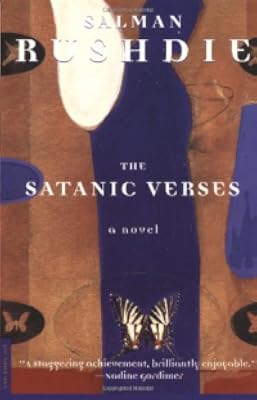
The Satanic Verses
by Salman Rushdie
On This Page
Description
A hijacked jumbo jet blows apart high above the English Channel. Two figures, Gibreel and Saladin, are washed up on an English beach. Soon curious changes occur--Gibreel seems to have acquired a halo, while Saladin grows hooves and bumps at his temples. They are transformed into living symbols of what is angelic and evil. This is the initial act in an odyssey that merges the actual with the imagined.Tags
Recommendations
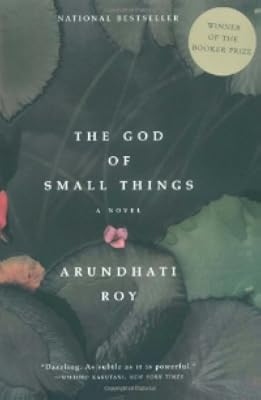
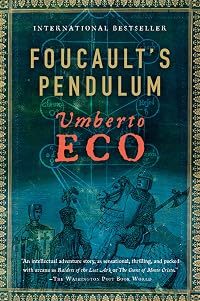
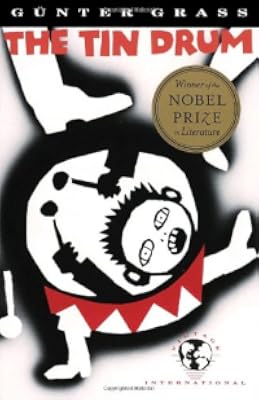
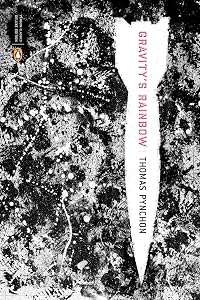











Member Recommendations
Cecrow 'Joseph Anton' is Rushdie's memoir about the fatwa following publication of 'The Satanic Verses'.

by chwiggy


CGlanovsky Deals with religion and includes physical transformation of characters.
by anonymous user
by chwiggy

Cecrow Magical realism in the Bible's backyard.
Member Reviews
Rushdie's subject is the immigrant experience, the feeling of being alien in a home you wish to make your own, or scornfully resist making yours. How you can make yourself at home, or think you have, only to have a single label make you other again. How you can believe you have left your old identity behind, only to have it recapture you without warning. As Rushdie wrote in his 2012 memoir, the experience "puts into crisis everything about the migrating individual or group, everything about identity and selfhood and culture and belief. So if this is a novel about migration it must be that act of putting in question. It must perform the crisis it describes."
There's a frequent blurring of the line in these pages between reality and show more fantasy, not just for the characters but for the reader as well. 'Magical realism' doesn't strictly apply, with everyone trying to rationalize the unbelievable or declare it madness. But fantastical things do occur in this story, as the mysterious narrator assures us. A man becomes an angel, and another becomes a devil, after surviving an impossible explosion and tumble through the air. A man relives the ancient past in not-quite-dreams, speaks to a ghost riding a magic carpet and influences the weather. Another man infests the dreams of others. No sooner is an unusual element dismissed as make-believe or madness than evidence appears that proves otherwise. Or does it?
In other words, this novel is 'performing the crisis' of the immigration experience, as promised. It isn't often that an author feels obliged to explain his novel after the fact; but then neither is it often that an author finds himself the victim of a death sentence issued by a foreign power, forcing him into hiding for a decade and having to remain vigilant thereafter, only to be wounded by a stabbing on stage at a live event in 2022. Reading this novel had zero negative impact on my outsider's view of Islam, for whatever that's worth. show less
There's a frequent blurring of the line in these pages between reality and show more fantasy, not just for the characters but for the reader as well. 'Magical realism' doesn't strictly apply, with everyone trying to rationalize the unbelievable or declare it madness. But fantastical things do occur in this story, as the mysterious narrator assures us. A man becomes an angel, and another becomes a devil, after surviving an impossible explosion and tumble through the air. A man relives the ancient past in not-quite-dreams, speaks to a ghost riding a magic carpet and influences the weather. Another man infests the dreams of others. No sooner is an unusual element dismissed as make-believe or madness than evidence appears that proves otherwise. Or does it?
In other words, this novel is 'performing the crisis' of the immigration experience, as promised. It isn't often that an author feels obliged to explain his novel after the fact; but then neither is it often that an author finds himself the victim of a death sentence issued by a foreign power, forcing him into hiding for a decade and having to remain vigilant thereafter, only to be wounded by a stabbing on stage at a live event in 2022. Reading this novel had zero negative impact on my outsider's view of Islam, for whatever that's worth. show less
Somehow, despite my Salman Rushdie phase in college, I was always too intimidated to read The Satanic Verses. (Probably the 561 pages had something to do with it.) This copy has been on my shelves all that time, and when I finally started reading it I wanted to scream WHY WAS I TOO SCARED TO READ THIS FOR SO LONG? I forgot how much I ENJOY Rushdie's writing, and the race riots/police-incited conflict near the end felt just as timely as ever.
Look. I am 100% sure that there are LAYERS AND LAYERS of context and commentary that just flew right over my head reading this, but I didn't care in the least.
Look. I am 100% sure that there are LAYERS AND LAYERS of context and commentary that just flew right over my head reading this, but I didn't care in the least.
I thought this book was a masterpiece. There are few books, masterpieces or no, with as much life as this one, as much taste and sound and texture. Rushdie writes in a style and league of his own, with every sentence carrying hills of meaning, with every image and metaphor grandly realized. This book is famous for causing a lot of controversy in the Islamic community, but don't read it for the shock factor. You should read it because it's literature and it offers a glimpse of a world that not many Westerners get to see.
The Satanic Verses starts with two Indian men, Gibreel Farishta and Saladin Chamcha, who are involved in a plane crash to England that changes Gibreel into an angel and Saladin into a devil. With this basic premise, show more Rushdie spins a tale about race, religion, morality, language, and the immigrant experience. I think it is an excellent example of a postcolonial novel in that it celebrates plurality and the confusion of cultural and racial identity. This is reflected in Rushdie's intertexual, playful language. Things shift in his writing, things change, things morph into other things, bright and shining.
Rushdie is a master of the craft, and even though he writes in very specific British-Indian-Islamic context, his story touches upon issues that are universal. I myself am an immigrant from a non-Western culture to a Western culture and I saw a lot of what I have gone through in this book. show less
The Satanic Verses starts with two Indian men, Gibreel Farishta and Saladin Chamcha, who are involved in a plane crash to England that changes Gibreel into an angel and Saladin into a devil. With this basic premise, show more Rushdie spins a tale about race, religion, morality, language, and the immigrant experience. I think it is an excellent example of a postcolonial novel in that it celebrates plurality and the confusion of cultural and racial identity. This is reflected in Rushdie's intertexual, playful language. Things shift in his writing, things change, things morph into other things, bright and shining.
Rushdie is a master of the craft, and even though he writes in very specific British-Indian-Islamic context, his story touches upon issues that are universal. I myself am an immigrant from a non-Western culture to a Western culture and I saw a lot of what I have gone through in this book. show less
The Satanic Verses by Salman Rushdie is a sprawling kaleidoscope of a novel that defies simple description, weaving together as it does themes of identity, immigration, loyalty and betrayal, faith, and metamorphosis, all told in a magical realism style. The main plotline follows two Indian expatriates, Gibreel Farishta, a Bollywood superstar, and Saladin Chamcha, a voiceover artist, as they miraculously survive a fall from an exploding plane over England. Transformed both physically and spiritually—Gibreel gains a halo and assumes the persona of an archangel, while Saladin morphs into a demonic figure—they wrestle with the fragmented identities and existential crises of immigrants moving from East to West. The novel’s structure is show more nonlinear, interspersing their surreal journeys with dreamlike, often satirical episodes involving the Prophet Mahound, a thinly veiled reimagining of the Prophet Muhammad, and the incendiary "Satanic verses" that cast doubt on divine revelation. The result is an audacious, richly textured mosaic that provides a moving examination into the nature of personal and cultural transformation.
It seems impossible to review this book without addressing the controversy it caused upon publication. The most divisive aspects of the tale lie in its depictions of religion and the treatment of sacred Islamic history. The passages involving Mahound, his followers, and the Satanic verses incident—a disputed episode suggesting that certain verses in the Quran might have been influenced by the Devil—provoked widespread outrage. To some readers, Rushdie’s irreverent portrayals of holy figures and his satirical tone were seen as blasphemous. Particularly inflammatory was the portrayal of Mahound’s followers as opportunistic or corrupt, as well as the suggestion that the divine message could be tainted by human ambition or error. This perceived sacrilege culminated in a fatwa issued by Ayatollah Khomeini that called for Rushdie’s death. That incident catapulted both book and author into a global maelstrom and placed them squarely in that fraught intersection between free expression and religious devotion.
Ultimately, that controversy is a detraction because The Satanic Verses is more of a fierce exploration of the modern immigrant experience than anything else. Indeed, the novel is a masterpiece of literary craftsmanship, containing stunning and playful prose, philosophical depth, and moments of piercing humor. Rushdie’s command of the magical realism genre—which is very tricky to pull off properly—is nothing short of brilliant, as he fuses the mythic and the mundane into a narrative that is both disorienting and profoundly meaningful. On the other hand, it is worth noting that the book’s dense, nonlinear structure and the layers of allegory and symbolism can be challenging, demanding a lot of patience and close reading (and even rereading, at some points). For me, though, those challenges were amply rewarded by the author’s transcendent storytelling power; on that dimension, this effort falls just short of equaling his remarkable Midnight’s Children. It is a novel that aims to provoke and enlighten in equal measure, which it does with sufficient success to earn its place as both a literary triumph and a lightning rod for cultural debate. This is bold, boundary-pushing literature that is easy to recommend to anyone who is willing and able to tackle it with open eyes. show less
It seems impossible to review this book without addressing the controversy it caused upon publication. The most divisive aspects of the tale lie in its depictions of religion and the treatment of sacred Islamic history. The passages involving Mahound, his followers, and the Satanic verses incident—a disputed episode suggesting that certain verses in the Quran might have been influenced by the Devil—provoked widespread outrage. To some readers, Rushdie’s irreverent portrayals of holy figures and his satirical tone were seen as blasphemous. Particularly inflammatory was the portrayal of Mahound’s followers as opportunistic or corrupt, as well as the suggestion that the divine message could be tainted by human ambition or error. This perceived sacrilege culminated in a fatwa issued by Ayatollah Khomeini that called for Rushdie’s death. That incident catapulted both book and author into a global maelstrom and placed them squarely in that fraught intersection between free expression and religious devotion.
Ultimately, that controversy is a detraction because The Satanic Verses is more of a fierce exploration of the modern immigrant experience than anything else. Indeed, the novel is a masterpiece of literary craftsmanship, containing stunning and playful prose, philosophical depth, and moments of piercing humor. Rushdie’s command of the magical realism genre—which is very tricky to pull off properly—is nothing short of brilliant, as he fuses the mythic and the mundane into a narrative that is both disorienting and profoundly meaningful. On the other hand, it is worth noting that the book’s dense, nonlinear structure and the layers of allegory and symbolism can be challenging, demanding a lot of patience and close reading (and even rereading, at some points). For me, though, those challenges were amply rewarded by the author’s transcendent storytelling power; on that dimension, this effort falls just short of equaling his remarkable Midnight’s Children. It is a novel that aims to provoke and enlighten in equal measure, which it does with sufficient success to earn its place as both a literary triumph and a lightning rod for cultural debate. This is bold, boundary-pushing literature that is easy to recommend to anyone who is willing and able to tackle it with open eyes. show less
The Satanic Verses was the first Salman Rushdie book that I heard of, and yet it took me a decade to get to it. In the meantime I've read, and greatly enjoyed, a few of his other works. Finally though, I cracked open his magnum opus.
This book first gained fame shortly after it came out (in the late '80s) because a fatwa was issued against him for writing it. I never did much research into why, but assumed it had something to do with religion, the most violent of things. I was right about that, but also shocked that it was so tame. I've read countless books that were much harsher towards religion, but who's author's never suffered the same fate as Rushdie.
The book itself was great though, and I'm glad I read it. Once I got over the show more fact that there wasn't going to be anything too crazy, I was able to get into and thoroughly enjoy it. With previous Rushdie books I found that it took quite a few pages for me to really dive in, and if I went a day or two without reading it was like starting over. The Satanic Verses was different, in that it hooked me from almost the first page and it was memorable enough that even when I didn't read from it for a few days, I was still able to pick it back up and be instantly mesmerized.
Other reviews I've read have complained about how complicated it was, how it was hard to follow what was going on. I completely disagree, and found it to be the perfect amount of difficult. There are times when the reader isn't sure when things are taking place; is it three thousand years ago or just last week. It takes place while the Quran is being written, but also one of the characters is driving a Mercedes. Still, it's not too hard to follow, and it's magic realism for feck's sake; it's not supposed to make perfect sense.
The main characters are deep and amusing and because of Rushdie's fantastic writing, I felt like I could relate to all of them. The book was over five hundred pages, but felt like it could have gone on for five hundred more and not felt too long. As usual, I don't have too much more to write about it but would love if someone else who read it wants to have a conversation. show less
This book first gained fame shortly after it came out (in the late '80s) because a fatwa was issued against him for writing it. I never did much research into why, but assumed it had something to do with religion, the most violent of things. I was right about that, but also shocked that it was so tame. I've read countless books that were much harsher towards religion, but who's author's never suffered the same fate as Rushdie.
The book itself was great though, and I'm glad I read it. Once I got over the show more fact that there wasn't going to be anything too crazy, I was able to get into and thoroughly enjoy it. With previous Rushdie books I found that it took quite a few pages for me to really dive in, and if I went a day or two without reading it was like starting over. The Satanic Verses was different, in that it hooked me from almost the first page and it was memorable enough that even when I didn't read from it for a few days, I was still able to pick it back up and be instantly mesmerized.
Other reviews I've read have complained about how complicated it was, how it was hard to follow what was going on. I completely disagree, and found it to be the perfect amount of difficult. There are times when the reader isn't sure when things are taking place; is it three thousand years ago or just last week. It takes place while the Quran is being written, but also one of the characters is driving a Mercedes. Still, it's not too hard to follow, and it's magic realism for feck's sake; it's not supposed to make perfect sense.
The main characters are deep and amusing and because of Rushdie's fantastic writing, I felt like I could relate to all of them. The book was over five hundred pages, but felt like it could have gone on for five hundred more and not felt too long. As usual, I don't have too much more to write about it but would love if someone else who read it wants to have a conversation. show less
The satanic verses is a book whose reputation precedes it. I found it an exciting read, dazzling, even, if I’m allowed such an over-used blurb cliché, for the book is all over the place and will shower you with impatient joy and breathless erudition.
The main plot deals with two Indian expats in London, Gibreel Farishta and Saladin Chamcha, and how they explore their love-hate relationship with London (“Ellowen-Deeowen”) and Englishness through a series of semi-mythical sequences that may or may not be in-universe fictional echoes of each other. In one layer, Gibreel and Saladin miraculously survive a fall out of a terrorist-exploded airplane in mid-flight, drop into the sea, and swim ashore, where they each meet a series of odd show more characters. Each finds himself developing increasingly strange and magical powers that drive them towards extremes on the good-vs-evil spectrum.Saladin grows horns, goat legs and an epic case of sulphuric halitosis; Gibreel grows a halo and hallucinates giving Islamic revelations to the prophet Mahound.
(This, incidentally, pushes this book beyond “magical realism” territory and firmly into the “fantasy” genre. But that is my opinion, and not a hill I’m willing to die on.)
Interspersed with their wanderings through London’s postcolonial underbelly are other stories with other protagonists. One is a Historical Fiction (-ish) retelling of the beginnings of Islam; another is a fairy tale (-ish) about the foot pilgrimage of an entire Indian village to Mecca, led by a magical, butterfly-covered girl, and who experience a series of maybe-miracles on the road. These stories (and others) are thematically related to the main event, but crossovers do happen. It is not entirely clear whether these are hallucinations, dreams, phantasms orin-universe movies, perhaps based on in-universe hallucinations, etc. . The book takes a very playful attitude to narrative -- at some point, the author himself appears in a cheeky cameo.
Rushdie’s writing style is equally ebullient, with stream-of-consciousness puns and rephrasings stacked on top of each other, ADHD-like, and it relies on cleverness and sheer force of agitation to propel things forward. Motifs, themes and narrative echoes do tie things together, though, especially past the halfway mark.
This was an electrifying read. The satanic verses transforms an immigrant’s belonging to a duality of cultures into a kaleidoscopic dazzle, or a funhouse, surrounded by weird copies and echoes of the self. I’m not sure if the contents quite match up to the sensational fireworks of the presentation, but style over content this is most definitely not. show less
The main plot deals with two Indian expats in London, Gibreel Farishta and Saladin Chamcha, and how they explore their love-hate relationship with London (“Ellowen-Deeowen”) and Englishness through a series of semi-mythical sequences that may or may not be in-universe fictional echoes of each other. In one layer, Gibreel and Saladin miraculously survive a fall out of a terrorist-exploded airplane in mid-flight, drop into the sea, and swim ashore, where they each meet a series of odd show more characters. Each finds himself developing increasingly strange and magical powers that drive them towards extremes on the good-vs-evil spectrum.
(This, incidentally, pushes this book beyond “magical realism” territory and firmly into the “fantasy” genre. But that is my opinion, and not a hill I’m willing to die on.)
Interspersed with their wanderings through London’s postcolonial underbelly are other stories with other protagonists. One is a Historical Fiction (-ish) retelling of the beginnings of Islam; another is a fairy tale (-ish) about the foot pilgrimage of an entire Indian village to Mecca, led by a magical, butterfly-covered girl, and who experience a series of maybe-miracles on the road. These stories (and others) are thematically related to the main event, but crossovers do happen. It is not entirely clear whether these are hallucinations, dreams, phantasms or
Rushdie’s writing style is equally ebullient, with stream-of-consciousness puns and rephrasings stacked on top of each other, ADHD-like, and it relies on cleverness and sheer force of agitation to propel things forward. Motifs, themes and narrative echoes do tie things together, though, especially past the halfway mark.
This was an electrifying read. The satanic verses transforms an immigrant’s belonging to a duality of cultures into a kaleidoscopic dazzle, or a funhouse, surrounded by weird copies and echoes of the self. I’m not sure if the contents quite match up to the sensational fireworks of the presentation, but style over content this is most definitely not. show less
“Fact is, religious faith, which encodes the highest aspirations of the human race, is now, in our country, the servant of lowest instincts, and God is the creature of evil.”
Fanatics swirl through Salman Rushdie’s surreal vision in [The Satanic Verses], heralded by an archangel and a devil falling from an exploding sky over the murky waters of the English Channel. Gibreel Fashita and Saladin Chamcha miraculously survive a terrorist bombing in the sky over London. As they fall, they go through a transformation, Gibreel in his mind and Saladin in his physical appearance. Deposited on a moor and taken in by an elderly widow, their transformations continue, Gibreel begins to lose touch with reality in spiritual dreams where he is an show more archangel and herald of an apocalypse, while Saladin undergoes a temporary physical metamorphosis into a goat-like demon.
If the psychedelic visions suffered by the two descending chrysalis aren’t enough to set the stage, Rushdie reveals his strategy in one of Gibreel’s early dreams. Washed up at Rosa Diamond’s home, convalescing through his transformation, he dreams of Rosa’s past in Argentina, where she and her husband met and were married. The dream, like many of Gibreel’s is an amalgamation of past and present and future, but it focuses on a gift from an amorous neighbor to Rosa: a copy of Amerigo Vespucci’s account of his voyages. The writer is described: “The man was a notorious fantasist, of course … but fantasy can be stronger than fact.” Rushdie announces his perspective with this description, announces that the fantasies he is about to weave will instruct, will uncover the truths of the world as he sees them.
The truth? Fanaticism, in all its many forms, whether religious or political or material or social, is a deadly distortion. And Rushdie gives no quarter to any platform. In one of Gibreel’s many dream lives, he consorts with Ayesha, a street urchin who convinces a village to walk a pilgrimage to Mecca through the Arabian Sea. Mizra Saeed, an unbeliever, refuses to walk with the pilgrims, following them in a Mercedes, heckling and cajoling them at every stop to abandon their suicide mission. Rushdie satirizes material fanaticism in the passage, “One day he got back to the station wagon to find that an empty coconut-shell thrown from the window of a passing bus had smashed his laminated windscreen, which looked, now, like a spider’s web full of diamond flies. He had to knock all the pieces out, and the glass diamonds seemed to be mocking him as they fell on to the road and into the car, they seemed to speak of the transience and worthlessness of earthly possession, but a secular man lives in the world of things and Mizra Saeed did not intend to be broken as easily as a windscreen.”
Rushdie turns his eye to social and political fanaticism as well, describing one character’s strength as a “perfect control of the languages that mattered: sociological, socialistic, black-radical, anti-anti-anti-racist, demagogic, oratorical, sermonic: the languages of power.” And the story follows Saladin through a Kafkaesque ordeal at the hands of the police who charge him for his attempt to enter the country illegally with his fall from the exploding plane, and then later through a race riot sparked by the police murder of a racial activist. As with his other stories, Rushdie carefully examines the difficulty of racial identity in a modern world where borders and associations are constantly shifting. Saladin himself is deeply conflicted about his own identity. Though an Indian Muslim, he struggles to leave Bombay and Islam behind, aching to be affiliated with London, to be a Brit. But as the book closes, Saladin returns to his childhood home and reconciles with his father and his family, achieving a measure of contentment.
But Rushdie reserves the better part of his energy for religious fanaticism. As the leading quote above demonstrates, there is a hair’s breadth between heartfelt spiritual fervor and selfish, corruptive misuse. Of the most controversial passages from [Satanic Verses] are Gibreel’s dreams of Mahound, a thinly veiled re-telling of Muhammad’s life. Rushdie’s most striking image in these accounts is a battle between Gibreel and a Pagan goddess. During the battle in the skies, the villagers below run toward the Imam’s palace for shelter. As he fights at the Imam’s will, Gibreel observes the Imam below lying in the palace court, his mouth yawning open at the gates, as the fleeing people march into his mouth and he swallows them whole. In another dream, Baal, a poet, serves as Mahound’s scribe. As the Prophet speaks, Baal begins to alter the words. Surprised at first with his own boldness, he becomes frightened that the Prophet didn’t catch on, that his doubts about the divinity of the Prophet and the message had been right all along. And in Gibreel’s dreams about Ayesha’s pilgrimage, she grows ever more strict and fanatical. When she is challenged, she disassociates herself, claiming only to be a Messenger and promising, vaguely, that the pilgrim’s sacrifices will be richly rewarded. Eventually, one of the pilgrims finally challenges her directly, “Then tell me why your God is so anxious to destroy the innocent? What’s he afraid of? Is he so unconfident that he needs us to die to prove our love?”
Sadly, the question that the pilgrim, and Rushdie, seem to avoid is a deeper one about whether the sacrifice and devotion is required by God for fulfillment of his own need or rather as a way to transmute the pilgrim’s own heart. In other words, while Ayesha may be driven by her own selfish desires, the pilgrim’s premise is faulty – that God requires something because he needs it. A perfectly reasonable alternative is that God requires sacrifice and devotion because the pilgrim needs it, and that Ayesha and Mahound and other religious fanatics, have corrupted the divine. Rushdie almost gets to this perspective – during one of the Imam’s rants, he says, “We long for the eternal, and I am eternity.” This is essentially a reshaping of Solomon’s proclamation in Ecclesiastes 3:11: “He has also set eternity in the human heart; yet no one can fathom what God has done from beginning to end.”
While Rushdie laments the consequences of fanaticism, he also revels in the beautiful, messy contradictions of the world. Alleluia Cone, Gibreel’s real life lover, but also the mold for Al-Lat, the Pagan goddess, in Gibreel’s dream world, is told by her father, a Polish émigré and survivor of a wartime prison camp, about “the most dangerous of all the lies we are fed in our lives. … Anybody ever tries to tell you how this most beautiful and most evil of planets is somehow homogeneous, composed only of reconcilable elements, that it all adds up, you get on the phone to the straightjacket tailor. … The world is incompatible, just never forget it, gaga. Ghosts, Nazis, saints, all alive at the same time; in one spot, blissful happiness, while down the road, the inferno. You can’t ask for a wilder place.” Much of this sentiment is reduced into Gibreel and Saladin’s own minds, hyper-focusing the wild diversity of thought and emotion into the mind of one man alone, its larger manifestation projected onto the face of the earth in a Felliniesque muddle.
The story of [The Satanic Verses] sadly escaped the pages of the book, allowing Rushdie an even wider arena for his message. Islamic fundamentalists viewed the work as blasphemous and the Ayatollah Khomeini called for a fatwa against Rushdie. The book was reviled and burned by these fundamentalists. Politicians, including high-ranking British parliament members, called for the book to be banned, fearing religious and racial violence. Attempts were made on Rushdie’s life. When he went into hiding and received protective police assistance, the fatwa was shifted to include publishers and translators. A Japanese translator was stabbed to death; an Italian translator survived a stabbing; a Norwegian publisher survived a shooting; and 37 people were killed in Turkey when a Turkish translator was targeted. The fanatical reaction to the publication of the book could’ve easily been an epilogue to the book itself.
Ultimately, [The Satanic Verses] is a solid, if extremely subtle book. Though it doesn’t seem subtle from the subject matter, so much religious and racial material underpins the book that many of the connections can be missed. Thankfully, the Rushdie’s skillfully provides an evocative and thought provoking story that can be read on multiple levels. Nothing about the book on its face should’ve caused the fanatical reaction, but that’s just Rushdie winking at us all.
Bottom Line: Another epic of magical realism; the irony of the book is rooted in the fanatical reaction the book engendered, mirroring Rushdie’s own themes.
4 bones!!!!! show less
Fanatics swirl through Salman Rushdie’s surreal vision in [The Satanic Verses], heralded by an archangel and a devil falling from an exploding sky over the murky waters of the English Channel. Gibreel Fashita and Saladin Chamcha miraculously survive a terrorist bombing in the sky over London. As they fall, they go through a transformation, Gibreel in his mind and Saladin in his physical appearance. Deposited on a moor and taken in by an elderly widow, their transformations continue, Gibreel begins to lose touch with reality in spiritual dreams where he is an show more archangel and herald of an apocalypse, while Saladin undergoes a temporary physical metamorphosis into a goat-like demon.
If the psychedelic visions suffered by the two descending chrysalis aren’t enough to set the stage, Rushdie reveals his strategy in one of Gibreel’s early dreams. Washed up at Rosa Diamond’s home, convalescing through his transformation, he dreams of Rosa’s past in Argentina, where she and her husband met and were married. The dream, like many of Gibreel’s is an amalgamation of past and present and future, but it focuses on a gift from an amorous neighbor to Rosa: a copy of Amerigo Vespucci’s account of his voyages. The writer is described: “The man was a notorious fantasist, of course … but fantasy can be stronger than fact.” Rushdie announces his perspective with this description, announces that the fantasies he is about to weave will instruct, will uncover the truths of the world as he sees them.
The truth? Fanaticism, in all its many forms, whether religious or political or material or social, is a deadly distortion. And Rushdie gives no quarter to any platform. In one of Gibreel’s many dream lives, he consorts with Ayesha, a street urchin who convinces a village to walk a pilgrimage to Mecca through the Arabian Sea. Mizra Saeed, an unbeliever, refuses to walk with the pilgrims, following them in a Mercedes, heckling and cajoling them at every stop to abandon their suicide mission. Rushdie satirizes material fanaticism in the passage, “One day he got back to the station wagon to find that an empty coconut-shell thrown from the window of a passing bus had smashed his laminated windscreen, which looked, now, like a spider’s web full of diamond flies. He had to knock all the pieces out, and the glass diamonds seemed to be mocking him as they fell on to the road and into the car, they seemed to speak of the transience and worthlessness of earthly possession, but a secular man lives in the world of things and Mizra Saeed did not intend to be broken as easily as a windscreen.”
Rushdie turns his eye to social and political fanaticism as well, describing one character’s strength as a “perfect control of the languages that mattered: sociological, socialistic, black-radical, anti-anti-anti-racist, demagogic, oratorical, sermonic: the languages of power.” And the story follows Saladin through a Kafkaesque ordeal at the hands of the police who charge him for his attempt to enter the country illegally with his fall from the exploding plane, and then later through a race riot sparked by the police murder of a racial activist. As with his other stories, Rushdie carefully examines the difficulty of racial identity in a modern world where borders and associations are constantly shifting. Saladin himself is deeply conflicted about his own identity. Though an Indian Muslim, he struggles to leave Bombay and Islam behind, aching to be affiliated with London, to be a Brit. But as the book closes, Saladin returns to his childhood home and reconciles with his father and his family, achieving a measure of contentment.
But Rushdie reserves the better part of his energy for religious fanaticism. As the leading quote above demonstrates, there is a hair’s breadth between heartfelt spiritual fervor and selfish, corruptive misuse. Of the most controversial passages from [Satanic Verses] are Gibreel’s dreams of Mahound, a thinly veiled re-telling of Muhammad’s life. Rushdie’s most striking image in these accounts is a battle between Gibreel and a Pagan goddess. During the battle in the skies, the villagers below run toward the Imam’s palace for shelter. As he fights at the Imam’s will, Gibreel observes the Imam below lying in the palace court, his mouth yawning open at the gates, as the fleeing people march into his mouth and he swallows them whole. In another dream, Baal, a poet, serves as Mahound’s scribe. As the Prophet speaks, Baal begins to alter the words. Surprised at first with his own boldness, he becomes frightened that the Prophet didn’t catch on, that his doubts about the divinity of the Prophet and the message had been right all along. And in Gibreel’s dreams about Ayesha’s pilgrimage, she grows ever more strict and fanatical. When she is challenged, she disassociates herself, claiming only to be a Messenger and promising, vaguely, that the pilgrim’s sacrifices will be richly rewarded. Eventually, one of the pilgrims finally challenges her directly, “Then tell me why your God is so anxious to destroy the innocent? What’s he afraid of? Is he so unconfident that he needs us to die to prove our love?”
Sadly, the question that the pilgrim, and Rushdie, seem to avoid is a deeper one about whether the sacrifice and devotion is required by God for fulfillment of his own need or rather as a way to transmute the pilgrim’s own heart. In other words, while Ayesha may be driven by her own selfish desires, the pilgrim’s premise is faulty – that God requires something because he needs it. A perfectly reasonable alternative is that God requires sacrifice and devotion because the pilgrim needs it, and that Ayesha and Mahound and other religious fanatics, have corrupted the divine. Rushdie almost gets to this perspective – during one of the Imam’s rants, he says, “We long for the eternal, and I am eternity.” This is essentially a reshaping of Solomon’s proclamation in Ecclesiastes 3:11: “He has also set eternity in the human heart; yet no one can fathom what God has done from beginning to end.”
While Rushdie laments the consequences of fanaticism, he also revels in the beautiful, messy contradictions of the world. Alleluia Cone, Gibreel’s real life lover, but also the mold for Al-Lat, the Pagan goddess, in Gibreel’s dream world, is told by her father, a Polish émigré and survivor of a wartime prison camp, about “the most dangerous of all the lies we are fed in our lives. … Anybody ever tries to tell you how this most beautiful and most evil of planets is somehow homogeneous, composed only of reconcilable elements, that it all adds up, you get on the phone to the straightjacket tailor. … The world is incompatible, just never forget it, gaga. Ghosts, Nazis, saints, all alive at the same time; in one spot, blissful happiness, while down the road, the inferno. You can’t ask for a wilder place.” Much of this sentiment is reduced into Gibreel and Saladin’s own minds, hyper-focusing the wild diversity of thought and emotion into the mind of one man alone, its larger manifestation projected onto the face of the earth in a Felliniesque muddle.
The story of [The Satanic Verses] sadly escaped the pages of the book, allowing Rushdie an even wider arena for his message. Islamic fundamentalists viewed the work as blasphemous and the Ayatollah Khomeini called for a fatwa against Rushdie. The book was reviled and burned by these fundamentalists. Politicians, including high-ranking British parliament members, called for the book to be banned, fearing religious and racial violence. Attempts were made on Rushdie’s life. When he went into hiding and received protective police assistance, the fatwa was shifted to include publishers and translators. A Japanese translator was stabbed to death; an Italian translator survived a stabbing; a Norwegian publisher survived a shooting; and 37 people were killed in Turkey when a Turkish translator was targeted. The fanatical reaction to the publication of the book could’ve easily been an epilogue to the book itself.
Ultimately, [The Satanic Verses] is a solid, if extremely subtle book. Though it doesn’t seem subtle from the subject matter, so much religious and racial material underpins the book that many of the connections can be missed. Thankfully, the Rushdie’s skillfully provides an evocative and thought provoking story that can be read on multiple levels. Nothing about the book on its face should’ve caused the fanatical reaction, but that’s just Rushdie winking at us all.
Bottom Line: Another epic of magical realism; the irony of the book is rooted in the fanatical reaction the book engendered, mirroring Rushdie’s own themes.
4 bones!!!!! show less
Members
- Recently Added By
Published Reviews
ThingScore 50
Talent? Not in question. Big talent. Ambition? Boundless ambition. Salman Rushdie is a storyteller of prodigious powers, able to conjure up whole geographies, causalities, climates, creatures, customs, out of thin air. Yet, in the end, what have we? As a display of narrative energy and wealth of invention, ''The Satanic Verses'' is impressive. As a sustained exploration of the human condition, show more it flies apart into delirium. show less
added by jlelliott
Los Versos Satánicos; Novela 1988, Conj de Editoriales Españolas 1989; Salman Rushide; India - Inglaterra.
Hasta las personas que no leen habrán escuchado hablar alguna vez de este libro y/o de su autor; yo era uno de aquellos a finales de los 80’s. Cuando empezé a leer en el ‘94 sabía que éste sería uno de esos libros que leería alguna vez. No recuerdo haberlo visto y dejado pasar: show more simplemente no lo encontraba, pero tampoco lo buscaba. Y ahora, caminando por una librería de segunda mano lo encontré en primera edición española, en buen estado y a un precio razonable: y habían 2 ejemplares. Para los fanáticos islámicos es blasfemo desde que el Ayatolá Jomeini sentenciara una fatwa en febrero del ‘89 condenando a muerte a Rushdie por escribir tal obra. Vamos al libro:
De sus 9 capítulos sólo la parte 1 del Cap 1 me pareció la más difícil de digerir: la conversa y pensamientos de los hindúes-musulmanos Gibreel Farishta y Saladim Chamcha durante la caída en la explosíon del avión sobre Londres.
En esta primera historia lo interesante es la metamorfosis que se da con la sobrevivencia y renacimiento: Farishta en el Arcángel Gabriel, con aureola y todo, y Chamcha en Shaitan, con pequeños cuernos naciendo de sus sienes, y poseedor de un aliento sulfúrico. En capítulos posteriores la descripción de la metamorfosis del segundo, acostumbrándose a su nueva condición de macho cabrío es magistral.: mucha ironía y humor negro en esos capítulos.
Farishta, actor e ídolo del cine hindúe, y Chamcha, el hombre de las mil y una voces, que se abrió paso haciendo comerciales de tv, ganándose de a pocos un lugar en esa misma indústria, anglófilo, y desencantado de su fé y su cultura, adoptando como suya la inglesa (quizá el alter ego de Rushidie). Luego de caer en la playa londinense Chamcha, en plena metamorfosis, es arrestado y ultrajado por la policía inglesa en el apartamento de Rosa Diamond, mientras que Farishta , vestido con ropas del difunto esposo de ésta es hasta respetado por los mismos policías, sin necesidad de mencionar palabra alguna. Ahí hay un primer punto de quiebre: el angélico guarda silencio mientras ve como su amigo es arrestado y clamándole que cuente a sus captores lo ocurrido, mientras que el diabólico es maltratado, humillado y arrestado injustamente, sin darle la mínima opción de defenderse, ni escucharlo, de decirles que él es uno de los dos únicos sobrevivientes de la explosión de avión.
La segunda historia: Ayesha, la bella joven con su nube de mariposas amarillas que la siguen por donde vaya, que influenciada en sueños por el arcángel Gabriel inicia un recorrido convenciendo a todo un pueblo ir hacia la Meca en una peregrinación bíblica. Aquí también las historias de Mishal, y su esposo Mizra Saed con su ateísmo, tratando de disuadir a su mujer enferma en no escuchar las palabras de Ayesha rinden grandes páginas del libro.
La tercera historia es sobre Mahound (se supone que es Mahoma), el comerciante que se convierte en profeta, quien inicia una religión en un desértico pueblo, Jahilia, y, quien inspirado por el Arcángel Gabriel quien le hablaba en sueños en el Monte Cone incluye unos versos dictados por él, pero luego cree que quien le recitó esos versos fue Shaitan. Rushidie hace ver que ni de Shaitan, ni del arcángel salieron aquellos versos, tan solo de la cabeza de Mahound. Esta historia es corta y una de las menos interesantes en comparación con las dos primeras, pero es la que debe haber iniciado la ira del Ayatolá Jomeini.
Todo un clásico de la literatura contemporánea. Imprescindible show less
Hasta las personas que no leen habrán escuchado hablar alguna vez de este libro y/o de su autor; yo era uno de aquellos a finales de los 80’s. Cuando empezé a leer en el ‘94 sabía que éste sería uno de esos libros que leería alguna vez. No recuerdo haberlo visto y dejado pasar: show more simplemente no lo encontraba, pero tampoco lo buscaba. Y ahora, caminando por una librería de segunda mano lo encontré en primera edición española, en buen estado y a un precio razonable: y habían 2 ejemplares. Para los fanáticos islámicos es blasfemo desde que el Ayatolá Jomeini sentenciara una fatwa en febrero del ‘89 condenando a muerte a Rushdie por escribir tal obra. Vamos al libro:
De sus 9 capítulos sólo la parte 1 del Cap 1 me pareció la más difícil de digerir: la conversa y pensamientos de los hindúes-musulmanos Gibreel Farishta y Saladim Chamcha durante la caída en la explosíon del avión sobre Londres.
En esta primera historia lo interesante es la metamorfosis que se da con la sobrevivencia y renacimiento: Farishta en el Arcángel Gabriel, con aureola y todo, y Chamcha en Shaitan, con pequeños cuernos naciendo de sus sienes, y poseedor de un aliento sulfúrico. En capítulos posteriores la descripción de la metamorfosis del segundo, acostumbrándose a su nueva condición de macho cabrío es magistral.: mucha ironía y humor negro en esos capítulos.
Farishta, actor e ídolo del cine hindúe, y Chamcha, el hombre de las mil y una voces, que se abrió paso haciendo comerciales de tv, ganándose de a pocos un lugar en esa misma indústria, anglófilo, y desencantado de su fé y su cultura, adoptando como suya la inglesa (quizá el alter ego de Rushidie). Luego de caer en la playa londinense Chamcha, en plena metamorfosis, es arrestado y ultrajado por la policía inglesa en el apartamento de Rosa Diamond, mientras que Farishta , vestido con ropas del difunto esposo de ésta es hasta respetado por los mismos policías, sin necesidad de mencionar palabra alguna. Ahí hay un primer punto de quiebre: el angélico guarda silencio mientras ve como su amigo es arrestado y clamándole que cuente a sus captores lo ocurrido, mientras que el diabólico es maltratado, humillado y arrestado injustamente, sin darle la mínima opción de defenderse, ni escucharlo, de decirles que él es uno de los dos únicos sobrevivientes de la explosión de avión.
La segunda historia: Ayesha, la bella joven con su nube de mariposas amarillas que la siguen por donde vaya, que influenciada en sueños por el arcángel Gabriel inicia un recorrido convenciendo a todo un pueblo ir hacia la Meca en una peregrinación bíblica. Aquí también las historias de Mishal, y su esposo Mizra Saed con su ateísmo, tratando de disuadir a su mujer enferma en no escuchar las palabras de Ayesha rinden grandes páginas del libro.
La tercera historia es sobre Mahound (se supone que es Mahoma), el comerciante que se convierte en profeta, quien inicia una religión en un desértico pueblo, Jahilia, y, quien inspirado por el Arcángel Gabriel quien le hablaba en sueños en el Monte Cone incluye unos versos dictados por él, pero luego cree que quien le recitó esos versos fue Shaitan. Rushidie hace ver que ni de Shaitan, ni del arcángel salieron aquellos versos, tan solo de la cabeza de Mahound. Esta historia es corta y una de las menos interesantes en comparación con las dos primeras, pero es la que debe haber iniciado la ira del Ayatolá Jomeini.
Todo un clásico de la literatura contemporánea. Imprescindible show less
added by manigna
Lists

1001 Books You Must Read Before You Die
1,448 works; 1,134 members

The Guardian's 1000 Novels Everyone Must Read
1,005 works; 551 members

Classics you know you should have read but probably haven't
421 works; 409 members

Unread books
1,063 works; 87 members

Radcliffe's 100 Best Novel of the 20th Century
100 works; 32 members

Best of World Literature
435 works; 52 members
501 Must-Read Books
529 works; 71 members

Magic Realism
371 works; 51 members

The Top Ten: Writers Pick Their Favorite Books
240 works; 31 members

Philosophical Fiction
97 works; 27 members
20th Century Literature
1,161 works; 54 members

Booker Prize
491 works; 62 members

Banned Books Week 2014
268 works; 63 members

Slipstream or Interstitial Fiction
160 works; 19 members
Favourite Books
1,819 works; 316 members
Banned or Challenged Books
400 works; 41 members

All Things India
95 works; 21 members
1980s
356 works; 23 members
Best Satire
188 works; 29 members
Didactic Fiction
29 works; 3 members

Literature by People of Color
81 works; 9 members

Best First Lines
133 works; 8 members

Speculative Fiction: Slipstream Literature
166 works; 16 members

Best Mythic Fiction
35 works; 6 members
1,001 BYMRBYD Concensus
723 works; 27 members

Books Read in 2014
2,343 works; 87 members

Top 50 Favourite Books
50 works; 2 members
Shaking a Leg
111 works; 3 members
Banned and Challenged Books List
14 works; 3 members

A Novel Cure
742 works; 23 members

I Can't Finish This Book
189 works; 22 members

Authors from India
3 works; 1 member

Man Booker Prize Longlist 1988
6 works; 1 member

Stories set in the Middle East
14 works; 2 members

hopes
34 works; 1 member
Overdue Podcast
806 works; 9 members

99 Bücher, die man gelesen haben muss
37 works; 1 member

Booker Prize Shortlist: Titles Not Yet Read
161 works; 4 members

Speculative Fiction from around the World
610 works; 18 members

Myth (Reuse and Retelling)
188 works; 24 members

Favorite Books from the 1980s
27 works; 3 members

Powell's 50 Books for 50 Years
50 works; 4 members

Books Read in 2022
5,226 works; 115 members

Yet another list
68 works; 1 member

recalling favorites...
105 works; 2 members

Indian Diaspora
42 works; 2 members

2022
17 works; 1 member

Books recommended by Calgary Public Library staff
1,588 works; 4 members
Widely acclaimed, one book per year
105 works; 3 members
The Complete Rory Gilmore Reading List
506 works; 5 members
Our Favorite Banned Books
138 works; 122 members

Recommended Reading : 600 Classics Reviewed, Editors of Salem Press, 2015
634 works; 6 members

BitLife
212 works; 4 members

The Books I Read in 2016
54 works; 1 member
Banned Books
40 works; 2 members
Books by Cancelled People
40 works; 2 members

Books Read in 2013
1,630 works; 51 members

Devilish Books
15 works; 3 members
Read These Too
458 works; 9 members
Accidents in Fiction
22 works; 5 members

Books Read in 2025
4,129 works; 98 members

Most Popular Books Tagged India
36 works; 5 members
Talk Discussions
Past Discussions
Salman Rushdie and The Satanic Verses in Banned Books (August 2023)
The Satanic Verses in Book talk (August 2023)
Group Read, September 2022: The Satanic Verses in 1001 Books to read before you die (September 2022)
1001 Group Read: The Satanic Verses in 1001 Books to read before you die (January 2011)
Author Information

93+ Works 69,984 Members
Salman Rushdie was born in India on June 19, 1947. He was raised in Pakistan and educated in England. His novels include Grimus, Shame, The Satanic Verses, Haroun and the Sea of Stories, The Moor's Last Sigh, The Ground Beneath Her Feet, Fury, Shalimar the Clown, The Enchantress of Florence, Luka and the Fire of Life, and The Golden House. His show more non-fiction works include Joseph Anton, Imaginary Homelands, The Jaguar Smile, and Step across This Line. He also wrote a collection of short stories entitled East, West. He has received numerous awards including the Whitbread Prize for Best Novel twice, the James Tait Black Prize, the French Prix du Meilleur Livre Étranger, the Booker Prize in 1981 for Midnight's Children, and the 2014 PEN/Pinter Prize. (Bowker Author Biography) show less
Some Editions
Awards and Honors
Series
Belongs to Publisher Series
Work Relationships
Is replied to in
Inspired
Has as a study
Has as a supplement
Has as a commentary on the text
Has as a student's study guide
Common Knowledge
- Canonical title*
- I versetti satanici
- Original title
- The Satanic Verses
- Original publication date
- 1988
- People/Characters
- Gibreel Farishta; Saladin Chamcha; Changez Chamchawala; Alleluia Cone; Zeenat Vakil; Mahound (show all 13); Gabriel, the Angel (Gibreel); Muhammad (Mahound); Shaitan; Hind bint Utbah; Baal; Ayesha; Ayatollah Khomeini
- Important places
- London, England, UK; Jahilia; Shaandaar Cafe; Bombay, India; Airstrip One, Oceania (referenced); Mecca, Saudi Arabia (Jahilia) (show all 7); Arabian Sea
- Epigraph
- "Satan, being thus confined to a vagabond, wandering, unsettled condition, is without any certain abode; for though he has, in consequence of his angelic nature, a kind of empire in the liquid waste or air, yet this is certai... (show all)nly part of his punishment, that he is... without any fixed place, or space, allowed him to rest the sole of his foot upon." ~ daniel defoe, the history of the devil
- Dedication
- Dedicated to the individuals and organizations who have supported this publication.
- First words
- "To be born again " sang Gibreel Farishta tumbling from the heavens, "first you have to die. Ho ji! Ho ji! To land upon the bosomy earth, first one needs to fly Tat-taa! Take-thun! How to ever smile again, if first you won't ... (show all)cry? How to win the darling's love, mister, without a sigh? Baba, if you want to get born again..." Just before dawn one winter's morning, New Year's Day or thereabouts, two real, full-grown, living men fell from a great height, twenty-nine thousand and two feet, towards the English Channel, without benefit of parachutes or wings, out of a clear sky. -Chapter 1
- Quotations
- If you live in the twentieth century you do not find it hard to see yourself in those, more desperate than yourself, who seek to shape it to their will.
“Then tell me why your God is so anxious to destroy the innocent? What's he afraid of? Is he so unconfident that he needs us to die to prove our love?”
With death comes honesty.
Dr. Faustus sacrificed eternity in return for two dozen years of power; the writer agrees to the ruination of his life, and gains (but only if he's lucky) maybe not eternity, but posterity, at least. Either way ... it's the D... (show all)evil who wins.
What kind of idea are you? - Last words
- (Click to show. Warning: May contain spoilers.)He stood at the window of his childhood and looked out at the Arabian Sea. The moon was almost full; moonlight, stretching from the rocks of Scandal Point out to the far horizon, created the illusion of a silver pathway, like a parting in the water's shining hair, like a road to miraculous lands. He shook his head; could no longer believe in fairy-tales. Childhood was over, and the view from this window was no more than an old and sentimental echo. To the devil with it! Let the bulldozers come. If the old refused to die, the new could not be born. "Come along," Zeenat Vakil's voice said at his shoulder. It seemed that in spite of all his wrong-doing, weakness, guilt--in spite of his humanity--he was getting another chance. There was no accounting for one's good fortune, that was plain. There it simply was, taking his elbow in its hand. "My place," Zeeny offered. "Let's get the hell out of here. "I'm coming," he answered her, and turned away from the view.
- Publisher's editor
- Mayer, Peter; Gottlieb, Robert
- Blurbers
- Gordimer, Nadine; Carter, Angela
- Original language*
- Inglese
- Canonical DDC/MDS
- 823.914
- Canonical LCC
- PR6068.U757
*Some information comes from Common Knowledge in other languages. Click "Edit" for more information.
Classifications
Statistics
- Members
- 13,544
- Popularity
- 561
- Reviews
- 153
- Rating
- (3.74)
- Languages
- 23 — Catalan, Chinese, Czech, Danish, Dutch, English, Finnish, French, German, Greek, Hebrew, Hungarian, Italian, Lithuanian, Norwegian (Bokmål), Norwegian, Polish, Portuguese, Romanian, Croatian, Slovenian, Spanish, Swedish
- Media
- Paper, Audiobook, Ebook
- ISBNs
- 130
- UPCs
- 1
- ASINs
- 57