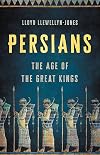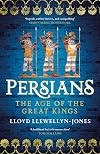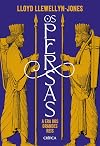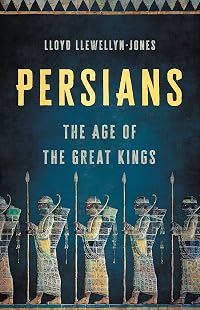
Persians: The Age of the Great Kings
by Lloyd Llewellyn-Jones
On This Page
Description
"The Achaemenid Persian kings ruled over the largest empire of antiquity, stretching from Libya to the steppes of Asia and from Ethiopia to Pakistan. From the palace-city of Persepolis, Cyrus the Great, Darius, Xerxes, and their heirs reigned supreme for centuries until the conquests of Alexander of Macedon brought the empire to a swift and unexpected end in the late 330s BCE. In Persians, historian Lloyd Llewellyn-Jones tells the epic story of this dynasty and the world it ruled. Drawing show more on Iranian inscriptions, cuneiform tablets, art, and archaeology, he shows how the Achaemenid Persian Empire was the world's first superpower--one built, despite its imperial ambition, on cooperation and tolerance. This is the definitive history of the Achaemenid dynasty and its legacies in modern-day Iran, a book that completely reshapes our understanding of the ancient world."--Amazon. show lessTags
Recommendations











Member Reviews
History is generally written by the victors; thus, attempting to come to a coherent understanding of a foe, especially one deemed "the other," can prove challenging. Such is especially true about the Achaemenid Persians.
The author has set out to write a history of the Persians which attempts to distance itself from the self-congratulating Greek narratives about who the Persians were and what they were about, instead attempting to let the Persians tell their own story based on inscriptional and archaeological evidence from the ancient Near East.
The author sets forth the story of the Persians from their arrival on the Iranian plains until Darius the Great; he then spends time talking about Persian religion, culture, court, harem, show more slavery, and other cultural aspects; he then tells the story from Xerxes until the end of the empire at the hands of Alexander the Great. The epilogue details modern Iran's relationship with the Achaemenid heritage.
The goal of de-centering Greek witness is commendable even if impractical: the author is still forced to grapple with the Greek sources at almost every opportunity because of the paucity of other source. Nevertheless, he does well to elevate our view and understanding of the Persians: they did create the first world empire worthy of the name, established greater stability than was seen before with the Assyrians/Babylonians or after under the Seleucids; developed a bureaucratic system which would become the model for all future world empires; and maintained their strength throughout, falling prey to a brilliant and powerful Alexander. The author notes, and it is worth the reminder, that the Persians are spoken of favorably in the Old Testament, even though there did seem to be a couple of rebellions in Judea that could have caused great distress.
While it is important to not allow the Greeks to define the way we understand the Persians, we must also remember that the Achaemenid Persians presented themselves the way they wanted to be seen. Yes, the Greek invasions were probably not as significant to the Persians as they were to the Greeks, but that does not mean they are insignificant; relative Persian silence may actually be rather deafening. Why the author feels the need to be apologetic about the slave system in Persia is historically baffling; of course there were slaves, as there were in the previous and future empires. Doesn't make it right or good, of course; but it comes with the territory.
Nevertheless, it is a recently updated history of the Persians, which is always good to have, and provides a good perspective. Recommended.
**--galley received as part of early review program show less
The author has set out to write a history of the Persians which attempts to distance itself from the self-congratulating Greek narratives about who the Persians were and what they were about, instead attempting to let the Persians tell their own story based on inscriptional and archaeological evidence from the ancient Near East.
The author sets forth the story of the Persians from their arrival on the Iranian plains until Darius the Great; he then spends time talking about Persian religion, culture, court, harem, show more slavery, and other cultural aspects; he then tells the story from Xerxes until the end of the empire at the hands of Alexander the Great. The epilogue details modern Iran's relationship with the Achaemenid heritage.
The goal of de-centering Greek witness is commendable even if impractical: the author is still forced to grapple with the Greek sources at almost every opportunity because of the paucity of other source. Nevertheless, he does well to elevate our view and understanding of the Persians: they did create the first world empire worthy of the name, established greater stability than was seen before with the Assyrians/Babylonians or after under the Seleucids; developed a bureaucratic system which would become the model for all future world empires; and maintained their strength throughout, falling prey to a brilliant and powerful Alexander. The author notes, and it is worth the reminder, that the Persians are spoken of favorably in the Old Testament, even though there did seem to be a couple of rebellions in Judea that could have caused great distress.
While it is important to not allow the Greeks to define the way we understand the Persians, we must also remember that the Achaemenid Persians presented themselves the way they wanted to be seen. Yes, the Greek invasions were probably not as significant to the Persians as they were to the Greeks, but that does not mean they are insignificant; relative Persian silence may actually be rather deafening. Why the author feels the need to be apologetic about the slave system in Persia is historically baffling; of course there were slaves, as there were in the previous and future empires. Doesn't make it right or good, of course; but it comes with the territory.
Nevertheless, it is a recently updated history of the Persians, which is always good to have, and provides a good perspective. Recommended.
**--galley received as part of early review program show less
A fast-paced and informative account of the Achaemenid rulers of ancient Persia, culminating with Alexander's defeat of Darius III in 330 BC. The story is ne replete with ruthless ambitions, unforgiving retributions, and epic failures and achievements. For a reader from the subcontinent, what may be of greatest interest is the widely divergent paths taken by two descendants of what was probably a shared Indo-Iranian, or Aryan, cultural world: the close parallels between old Persian and Vedic Sanskrit make them seem almost as dialects of a common ancestor language, with parallels in liturgy, rituals, and so on. The Indian branch developed highest realms of speculative and spiritual thinking that emphasized the unity of all things, show more whereas the Iranian branch developed (or descended?) into a starkly dualistic and retributive view that surely must have influenced the further development of western thought in the Semitic-Christian versions with its prediction of a fight to death between the forces of Good and Evil, the redemption in the final destruction of the world, Armageddon, Apocalypse, and other such implacable world scenarios. To the average reader, the unreasonable levels of violence in the Persian world, and by extension in the modern world shaped mainly by Western Judeo-Christian values, would probably be ascribable to this unrelentingly dualistic view first broadcast by the Persians. show less
I was drawn to this title when I heard the author was "Drawing on Iranian inscriptions, cuneiform tablets, art, and archaeology..." Using such deep and recent sources, here is told the story from the tribal roots of the Persians in competition with the Medes, through the long-lived rivalry with Greece, a golden age of empire building, and final transformation into a Hellenized nation under the conquering Macedonians. There are plenty of illustrations and the writing is engaging and lively. Personally, I would have liked to hear more of the ancient voices in direct translation while being very pleased with this book. Supporting material includes a dramatis personae and detailed bibliography. A very interesting Epilogue looking back from show more modern Iran (where the author has very positive research experiences) and explains an adoration of Cyrus The Great and his age by a largely young and secular population enduring theocratic rule. show less
Of course, any history of the Persian Empire is particularly interesting. Although it was relatively short-lived (from about 559 to 330 BCE), it dates from a period when we first have quite a few written sources. In the case of the Persian Empire, these are predominantly Greek, and therefore suspect, because for the Greeks Persia usually was the great enemy. The author of this book, Lloyd Llewellyn-Jones, puts this in the spotlight and claims to offer nothing less than a correction to that distorted Greek image. His intention is to rely mainly on other sources than Greek ones. Unfortunately, he only lives up to this to a limited extent. His account still seems to be based mainly on Greek sources, and the picture he paints of the Persian show more leaders (with Cyrus II and Darius the Great as epigones, of course) is just as degrading as, for example, the one Herodotus made. Only the chapters on Persian culture give a bit more space to Persian voices themselves. Moreover, towards the end the book contains a remarkable number of narrative passages, full of fictional descriptions, and without citing source (obviously, they must be Greek ones). Strange. So, this definitely makes for an interesting read, but this book doesn't deliver what it promises. More on this in my History account on Goodreads: https://www.goodreads.com/review/show/4266316617. Thanks to Netgalley for an Advanced Reading Copy. show less
For someone who loves to criticize the Greeks and their handling of Persia, he certainly falls into the trap of using Herodotus and Arrian rather straightforwardly and without critical thought.
He also calls his book "The Persians" and what it should really be is "The Achaemenids." Because he doesn't stretch beyond there to Parthia or Sasania, which would have been more interesting.
He also calls his book "The Persians" and what it should really be is "The Achaemenids." Because he doesn't stretch beyond there to Parthia or Sasania, which would have been more interesting.
https://fromtheheartofeurope.eu/persians-the-age-of-the-great-kings-by-lloyd-lle...
This book is about the Persian empire of the Achaemenids, starting with Cyrus II in the sixth century BCE, with the explicit intention of redressing history’s bias towards the Greeks whose side of the story has become the standard account.
I regret to say that I gave up on it before finishing the second chapter. I found the style too novelistic – how on earth can a historian tell us what was going through Cyrus’ mind at crucial stages, or give us details of what he was wearing on a particular day? This might have been excusable if the writing was sourced through footnotes or even GRRRRR endnotes, but there are none apart from a list of further show more reading.
Very disappointing; I had been looking forward to a proper analysis of a part of history I don’t know much about, but this ain’t it. show less
This book is about the Persian empire of the Achaemenids, starting with Cyrus II in the sixth century BCE, with the explicit intention of redressing history’s bias towards the Greeks whose side of the story has become the standard account.
I regret to say that I gave up on it before finishing the second chapter. I found the style too novelistic – how on earth can a historian tell us what was going through Cyrus’ mind at crucial stages, or give us details of what he was wearing on a particular day? This might have been excusable if the writing was sourced through footnotes or even GRRRRR endnotes, but there are none apart from a list of further show more reading.
Very disappointing; I had been looking forward to a proper analysis of a part of history I don’t know much about, but this ain’t it. show less
Ratings
Members
- Recently Added By
Published Reviews
ThingScore 83
From Cyrus to Xerxes and beyond, the rulers of premodern Iran have been distorted by mythologies that privileged their rivals.
added by jeremybakernz
Llewellyn-Jones (ancient history, Cardiff Univ.) brings forth a view of ancient Persia that is rich in tradition and historical significance.
added by jeremybakernz
This volume by Lloyd Llewellyn-Jones is an intriguing and engaging book about the Achaemenid empire. The book begins around 1000 BC, explaining the roots and backgrounds of how the Achaemenids came to power, and ends with the fall of Darius III, who was conquered by Alexander the great.
Llewellyn-Jones has successfully dealt with the scarcity of sources on the subject. Despite the abundance of show more information about the Achaemenids in Greek historians such as Xenophon and Herodotus, he has chosen to treat their accounts with a touch of skepticism, and rightfully so. Given the history of the Greco-Persian wars, the Greeks may not have been impartial narrators of the history of Persia. Llewellyn-Jones has therefore extensively used non-Greek sources to illustrate the origins of the Achaemenids and frequently countered Greek historians on their general representation of Achaemenid kings. For instance, the author’s portrayal of Cambyses, unlike the common portrayal of him as an inept king, depicts him as powerful and resilient, even if not as competent as Cyrus. The author has used archaeological findings and non-Greek textual sources such as Babylonian cuneiform tablets extensively in order to avoid a Hellenocentric approach and instead to reconstruct what possibly could be the “Persian version”. show less
Llewellyn-Jones has successfully dealt with the scarcity of sources on the subject. Despite the abundance of show more information about the Achaemenids in Greek historians such as Xenophon and Herodotus, he has chosen to treat their accounts with a touch of skepticism, and rightfully so. Given the history of the Greco-Persian wars, the Greeks may not have been impartial narrators of the history of Persia. Llewellyn-Jones has therefore extensively used non-Greek sources to illustrate the origins of the Achaemenids and frequently countered Greek historians on their general representation of Achaemenid kings. For instance, the author’s portrayal of Cambyses, unlike the common portrayal of him as an inept king, depicts him as powerful and resilient, even if not as competent as Cyrus. The author has used archaeological findings and non-Greek textual sources such as Babylonian cuneiform tablets extensively in order to avoid a Hellenocentric approach and instead to reconstruct what possibly could be the “Persian version”. show less
added by cinaedus
Lists

Top Five Books of 2022
736 works; 272 members

infjsarah's wishlist
408 works; 2 members

Library Non-Fiction
164 works; 1 member

Mesopotamia
2 works; 1 member

TBR Insta
81 works; 1 member
Author Information

17+ Works 657 Members
Lloyd Llewellyn-Jones is Professor of Ancient History at Cardiff University.
Common Knowledge
- Canonical title
- Persians: The Age of the Great Kings
- Original title
- Persians: The Age of the Great Kings
- Original publication date
- 2022-04
- People/Characters
- Cyrus II, King of Persia; Darius I, King of Persia "Darius the Great"; Xerxes I, son of Darius I, king of Achaemenid Empire, married Esther "Xerxes the Great"; Artaxerxes I, king of Persia, son of Xerses; Darius III
- Important places
- Persepolis, Iran; Susa, Persia; Babylon
- Important events
- Greco-Persian Wars
- Epigraph
- A bowl of wine is the Mirror of Alexander -
Look, it displays the state of King Darius' realm to us.
-Hafez - Dedication
- To my students, past and present, for joining me on the journey back to Persia.
- First words
- At the Nowruz festival in the spring of 488 BCE, the time in which the Persians celebrated their New Year with feasting, partying, and gift-giving, Darius, Great King, King of Kings, King of All Lands, the Achaemenid... (show all), sat on his throne in the heart of his palace-city of Persepolis and magnanimously received the homage of his empire.
- Last words
- (Click to show. Warning: May contain spoilers.)Long may the Great Kings reign.
- Blurbers
- Holland, Tom; Goldsworthy, Adrian; Montefiore, Simon Sebag; Ahmed, Samira; Daryaee, Touraj; King, Helen (show all 8); Dodson, Aidan M.; Stuttard, David
Classifications
Statistics
- Members
- 432
- Popularity
- 71,262
- Reviews
- 6
- Rating
- (3.97)
- Languages
- 5 — Dutch, English, Italian, Portuguese, Spanish
- Media
- Paper, Audiobook, Ebook
- ISBNs
- 13
- ASINs
- 6