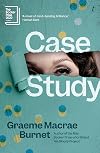
Case Study
by Graeme Macrae Burnet
On This Page
Description
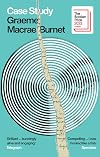
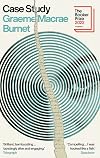
Shortlisted for the 2022 Gordon Burn Prize - Shortlisted for the 2022 Ned Kelly Awards - Longlisted for the 2022 Booker Prize The Booker-shortlisted author of His Bloody Project blurs the lines between patient and therapist, fiction and documentation, and reality and dark imagination. London, 1965. 'I have decided to write down everything that happens, because I feel, I suppose, I may be putting myself in danger,' writes an anonymous patient, a young woman investigating her sister's suicide. show more In the guise of a dynamic and troubled alter-ego named Rebecca Smyth, she makes an appointment with the notorious and roughly charismatic psychotherapist Collins Braithwaite, whom she believes is responsible for her sister's death. But in this world of beguilement and bamboozlement, neither she nor we can be certain of anything. Case Study is a novel as slippery as it is riveting, as playful as it is sinister, a meditation on truth, sanity, and the instability of identity by one of the most inventive novelists of our time. show lessTags
Recommendations






















Member Reviews
Divided Memories
Read by: Caroline Hewett
Length: 9hours 10 minutes
Mind Parasites, The Divided Self, sanity and madness in the sexual sixties, oh it all came roaring back to me as I read Graeme Macrae Burnet’s Case Study. The idea that craziness was in the eye of the beholder, that psychiatrists were the mad ones, that the nuclear family was dangerous - all this was layered onto the slowly growing acceptance that woman have sexual feelings too.
I found Case Study a difficult and patchy read. This may have been because of the structure of the book, which is divided into alternating chapters between diary notebooks and third person descriptions of an unqualified pop-psychologist - both the notebooks and the psych being fictional.
The show more diaries are those of a disturbed young woman who is journaling her quest to discover if the self-educated psychologist Collins Braithwaite is responsible for her sister’s death. She tricks Braithwaite into taking her on as a patient, using the fake name of Rebecca Smyth. All this is with the background of Swinging Sixties London.
Are the notebooks genuine or not? The fictional writer of the novel is unsure. The notebooks have no provenance. The writer of the notebooks presents herself to the reader as demure, introverted sexually-ignorant, much like de Maurier’s nameless character in her novel Rebecca. Both de Maurier’s and Macrae Burner’s Rebecca’s are sexually provocative and flirtatious. Case Study is full of fiction upon fiction. At times I think it’s just too clever for its own good.
There’s a lot of darkness and a lot of humour. It’s both funny and sad as we see the sexually-provocative Rebecca gradually take control of the demure sexually repressed young woman who has invented her. The scene where Rebecca seduces a young man in a snug in a London bar and the two personalities start talking to each other is a brilliant piece of comedy noire.
I had to read the novel in half-hour chunks, as the writings of R.D. Laing and his ilk contributed to the breakup of my first marriage. In retrospect at the anti-psychiatry movement of the ‘60s and ‘70s was probably necessary for the development of theories of mental illness. But back then, along with other social upheavals, it took a heavy toll.
Graeme Macrae captures the times so well, and even though some readers have nitpicked at minor details such as placing a Lyons teashop in the wrong (by a few meters) place, as he points out in his Postscript to the Second Edition, these are minor and have no bearing on the story.
Having lived and worked in London 1969 through 1971 I can vouch for the authenticity of Graeme Macrae’s description of London as it pertains to the novel.
I will certainly be reading more from this writer, and though I found it difficult to read, I feel this was more because of my own experiences revolving around the subject matter.
The sex scene in the snug will go down in my memory along with Flaubert’s Emma Leon and in the coach at Lyon, and the car-wash scene in Julian Barnes’s Before She Met Me. show less
Read by: Caroline Hewett
Length: 9hours 10 minutes
Mind Parasites, The Divided Self, sanity and madness in the sexual sixties, oh it all came roaring back to me as I read Graeme Macrae Burnet’s Case Study. The idea that craziness was in the eye of the beholder, that psychiatrists were the mad ones, that the nuclear family was dangerous - all this was layered onto the slowly growing acceptance that woman have sexual feelings too.
I found Case Study a difficult and patchy read. This may have been because of the structure of the book, which is divided into alternating chapters between diary notebooks and third person descriptions of an unqualified pop-psychologist - both the notebooks and the psych being fictional.
The show more diaries are those of a disturbed young woman who is journaling her quest to discover if the self-educated psychologist Collins Braithwaite is responsible for her sister’s death. She tricks Braithwaite into taking her on as a patient, using the fake name of Rebecca Smyth. All this is with the background of Swinging Sixties London.
Are the notebooks genuine or not? The fictional writer of the novel is unsure. The notebooks have no provenance. The writer of the notebooks presents herself to the reader as demure, introverted sexually-ignorant, much like de Maurier’s nameless character in her novel Rebecca. Both de Maurier’s and Macrae Burner’s Rebecca’s are sexually provocative and flirtatious. Case Study is full of fiction upon fiction. At times I think it’s just too clever for its own good.
There’s a lot of darkness and a lot of humour. It’s both funny and sad as we see the sexually-provocative Rebecca gradually take control of the demure sexually repressed young woman who has invented her. The scene where Rebecca seduces a young man in a snug in a London bar and the two personalities start talking to each other is a brilliant piece of comedy noire.
I had to read the novel in half-hour chunks, as the writings of R.D. Laing and his ilk contributed to the breakup of my first marriage. In retrospect at the anti-psychiatry movement of the ‘60s and ‘70s was probably necessary for the development of theories of mental illness. But back then, along with other social upheavals, it took a heavy toll.
Graeme Macrae captures the times so well, and even though some readers have nitpicked at minor details such as placing a Lyons teashop in the wrong (by a few meters) place, as he points out in his Postscript to the Second Edition, these are minor and have no bearing on the story.
Having lived and worked in London 1969 through 1971 I can vouch for the authenticity of Graeme Macrae’s description of London as it pertains to the novel.
I will certainly be reading more from this writer, and though I found it difficult to read, I feel this was more because of my own experiences revolving around the subject matter.
The sex scene in the snug will go down in my memory along with Flaubert’s Emma Leon and in the coach at Lyon, and the car-wash scene in Julian Barnes’s Before She Met Me. show less
Having read and enjoyed the author’s His Bloody Project, I was interested in reading his latest, Case Study, which was longlisted for the 2022 Booker Prize.
A writer, GMB, had written about Collins Braithwaite, a 1960s psychotherapist and member of the anti-psychiatry movement. He has been toying with the idea of writing Braithwaite’s biography when he is contacted by Martin Grey offering him six notebooks written by his cousin who was once Braithwaite’s patient.
The novel alternates between a notebook and biographical information about Braithwaite. The notebooks are a first person account written by an unnamed young woman whose older sister Veronica recently committed suicide. Under the pseudonym of Rebecca Smyth, she visits show more Braithwaite believing he bears responsibility for Veronica’s death. As the notebooks progress, the narrator sinks into depression and becomes confused about her own identity: she begins to see Rebecca as a separate person. She loses sight of her initial objective in seeing the psychotherapist and becomes invested in his “therapy.”
Braithwaite is an imposter with no real training as a psychotherapist. He himself admits that his talent is in listening: “’time and again, I was told of my perceptiveness, of how I understood. All I did was listen. When a visitor arrives believing you are some kind of guru, your thoughts are already invested with profundity.’” He is very egotistical and manipulative. I found him repugnant.
The unnamed narrator I found much more interesting. She is, to say the least, odd. For instance, “He took my bag from the floor. I was terrified for a moment that he was going to find the dead mouse wrapped in tissue paper” and “I hand replaced the [telephone] receiver and wiped it clean of my fingerprints” and an optimistic period in her life she describes as an “embarrassing interlude.” The persona she adopts to visit Braithwaite she comes to see as an individual separate from her. Some of her comments suggest she suffers from dissociative identity disorder: “I sometimes wonder whether I shouldn’t let her take over completely.”
Readers come to realize that this narrator is not reliable. She claims, “I have no talent for dissembling,” but she is good at pretending and lying in her therapy sessions. Her ease at adopting a false persona should inspire one to ask what other truths she is hiding. Should her notebooks be accepted as the truth or a version of it?
The novel examines the nature of self and suggests that we all wear masks or adopt identities depending on the situation; perhaps we should “embrace the idea that a person is not a single self, but a bundle of personae.” We are all, like the song that Rebecca hears, great pretenders, or as Braithwaite says, “’phoneys. . . . You’d be a lot happier if you accepted it.’” Maybe we all have multiple personalities and that in itself is not a disorder.
The book offers interesting ideas for the reader to consider; I did not, however, find the novel as entertaining as His Bloody Project.
Note: Please check out my reader's blog (https://schatjesshelves.blogspot.com/) and follow me on Twitter (@DCYakabuski). show less
A writer, GMB, had written about Collins Braithwaite, a 1960s psychotherapist and member of the anti-psychiatry movement. He has been toying with the idea of writing Braithwaite’s biography when he is contacted by Martin Grey offering him six notebooks written by his cousin who was once Braithwaite’s patient.
The novel alternates between a notebook and biographical information about Braithwaite. The notebooks are a first person account written by an unnamed young woman whose older sister Veronica recently committed suicide. Under the pseudonym of Rebecca Smyth, she visits show more Braithwaite believing he bears responsibility for Veronica’s death. As the notebooks progress, the narrator sinks into depression and becomes confused about her own identity: she begins to see Rebecca as a separate person. She loses sight of her initial objective in seeing the psychotherapist and becomes invested in his “therapy.”
Braithwaite is an imposter with no real training as a psychotherapist. He himself admits that his talent is in listening: “’time and again, I was told of my perceptiveness, of how I understood. All I did was listen. When a visitor arrives believing you are some kind of guru, your thoughts are already invested with profundity.’” He is very egotistical and manipulative. I found him repugnant.
The unnamed narrator I found much more interesting. She is, to say the least, odd. For instance, “He took my bag from the floor. I was terrified for a moment that he was going to find the dead mouse wrapped in tissue paper” and “I hand replaced the [telephone] receiver and wiped it clean of my fingerprints” and an optimistic period in her life she describes as an “embarrassing interlude.” The persona she adopts to visit Braithwaite she comes to see as an individual separate from her. Some of her comments suggest she suffers from dissociative identity disorder: “I sometimes wonder whether I shouldn’t let her take over completely.”
Readers come to realize that this narrator is not reliable. She claims, “I have no talent for dissembling,” but she is good at pretending and lying in her therapy sessions. Her ease at adopting a false persona should inspire one to ask what other truths she is hiding. Should her notebooks be accepted as the truth or a version of it?
The novel examines the nature of self and suggests that we all wear masks or adopt identities depending on the situation; perhaps we should “embrace the idea that a person is not a single self, but a bundle of personae.” We are all, like the song that Rebecca hears, great pretenders, or as Braithwaite says, “’phoneys. . . . You’d be a lot happier if you accepted it.’” Maybe we all have multiple personalities and that in itself is not a disorder.
The book offers interesting ideas for the reader to consider; I did not, however, find the novel as entertaining as His Bloody Project.
Note: Please check out my reader's blog (https://schatjesshelves.blogspot.com/) and follow me on Twitter (@DCYakabuski). show less
Another of Burnet's faux-biographical-research stories in the vein of His Bloody Project. He's good enough at these that you may end up googling some of the characters to see if they existed... some did, some didn't. (Susanna Clarke pulls off something similar in her Piranesi, with which this one has some similarities, and which I liked a lot.) This one comprises a series of journal-type notebooks, kept by a young woman who believes that a controversial, egotistical blowhard of a therapist (or "untherapist") has driven her sister to suicide. Taking on an assumed (or is it?) identity, she presents herself as a patient / client (though he prefers the term "visitor") of A. Collins Braithwaite, to observe and engage with him and perhaps show more find out just what went on between him and her sister. Interspersed with the notebooks are passages from a biography of Braithwaite by someone with the initials GMB, which generally depicts an era of turmoil, bombast, rebellion and reaction in the field of psychiatry in 1960's London, including the work of R.D. Laing (who did in fact exist). Braithwaite is both an acolyte and a furious rebel, not to mention pretty repulsive (I kept picturing him as Steve Bannon). Spoiler: we never do really find out what happened to the sister, except to the extent that we see Braithwaite responding to someone with suicidal thoughts with "Well, what's stopping you?" Mostly, this story tangles with the idea of "self" (sometimes capitalized, sometimes not) - contradictory, overlapping selves, whose delusions, perceptions, and actions should (in Braithwaite and Laing's thought) be observed and taken seriously as a true expression of their reality and not simply exterminated by insulin comas, lobotomies, or electroshock. And surprisingly, this is actually all rather fun to read as our young journal-keeper fences with Braithwaite, but also slides deeper into her own conflicted "selves."
I round this down to 3 stars because the ending - as others have reported - just rather peters out. The "author" eventually meets the reclusive individual (a "cousin" of the young journal-keeper) who had given him his entrée to this story, with an unsurprising revelation. Braithwaite has a change of heart and behavior - which does him little good. And the sense of "Swinging London" in the 1960s is very much in the background and not particularly vivid. But still - an interesting, crafty, and skillful interweaving of story, character, identity and ideas that made it a clever and enjoyable read. show less
I round this down to 3 stars because the ending - as others have reported - just rather peters out. The "author" eventually meets the reclusive individual (a "cousin" of the young journal-keeper) who had given him his entrée to this story, with an unsurprising revelation. Braithwaite has a change of heart and behavior - which does him little good. And the sense of "Swinging London" in the 1960s is very much in the background and not particularly vivid. But still - an interesting, crafty, and skillful interweaving of story, character, identity and ideas that made it a clever and enjoyable read. show less
I enjoyed this — it made me laugh out loud at several points due to the occasional absurdity of its narrator’s mannerisms and speech patterns.
It did feel a bit anachronistic — the voice of the woman felt as though it had been plucked from a Dickensian theatre production, and felt a bit out of place in the mid-60s London, although perhaps I’m just a bit ignorant of that scene.
Otherwise, it had a lot to say about psychology, societal expectations and cults of celebrity. How much of that was successfully conveyed? I don’t know! But I enjoyed listening to the audiobook.
It did feel a bit anachronistic — the voice of the woman felt as though it had been plucked from a Dickensian theatre production, and felt a bit out of place in the mid-60s London, although perhaps I’m just a bit ignorant of that scene.
Otherwise, it had a lot to say about psychology, societal expectations and cults of celebrity. How much of that was successfully conveyed? I don’t know! But I enjoyed listening to the audiobook.
Drawing on the writings of Collins Braithwaite, a fictional psychotherapist, who achieved a degree of fame and notoriety in 1960s London, Macrae Burnet has fashioned a fascinating novel that examines both Braithwaite and how mental health was and is regarded by the wider public. Into the purported facts about Braithwaite, Macrae Burnet has woven the text of notebooks, supposedly written by veronica as she attempts to unravel the truth about her sister, who she believes was driven to committing suicide after consulting Braithwaite. In order to investigate this, Veronica herself, becomes a patient of his under an assumed name. As a result of her consultations, she imperfectively and gradually becomes torn between her original self and her show more assumed persona who has a very different character. This divide impacts not only her investigation, but also the rest of her life and relationships. The result is a wholly absorbing and entertaining recreation of the times, but also an examination of how someone may change as their life progresses. show less
This novel tells the story of psychotherapist and enfant terrible Collins Braithewaite and the story of a young woman who seeks therapy from him under false pretenses, using the form of excerpts from a biography and the diaries of the young woman.
This is primarily the story of a seriously disturbed woman, whose issues are exacerbated by Braithewaite, a self-involved and arrogant man whose behavior, even in sixties London, was abominable. I like this style of writing -- a collection of fictional documents -- quite a bit and Burnet is skilled at this format, keeping the reader trapped between the unreliable journals and segments of a dry biography. There's a lot left out, but the result is hard to put down.
This is primarily the story of a seriously disturbed woman, whose issues are exacerbated by Braithewaite, a self-involved and arrogant man whose behavior, even in sixties London, was abominable. I like this style of writing -- a collection of fictional documents -- quite a bit and Burnet is skilled at this format, keeping the reader trapped between the unreliable journals and segments of a dry biography. There's a lot left out, but the result is hard to put down.
i'd wanted to read this because it hits some points of interest for me - 1960s, r.d. laing, history of psychotherapy. on that front i will say it absolutely delivered. i thought the writing was compelling and the book was an easy read, took me a matter of days. this book's greatest strength is the character work, which is multi-faceted and intelligent, and points to a great deal of thought.
HOWEVER, as for some ** SPOILERS **, i found the ending super unsatisfying. i love a good twist and i figured from reviews that there was one coming, but i'd also hoped for at least some clarity as to how the "story" relates to "reality" (in-universe). instead we get an open, ~how much is really real?~ ending, which i can't really be bothered with. i show more understand the thought process behind it and obviously don't mind a bit of ambiguity, but i prefer a book that can commit to its own truth. though i guess that's the point? lol show less
HOWEVER, as for some ** SPOILERS **, i found the ending super unsatisfying. i love a good twist and i figured from reviews that there was one coming, but i'd also hoped for at least some clarity as to how the "story" relates to "reality" (in-universe). instead we get an open, ~how much is really real?~ ending, which i can't really be bothered with. i show more understand the thought process behind it and obviously don't mind a bit of ambiguity, but i prefer a book that can commit to its own truth. though i guess that's the point? lol show less
Members
- Recently Added By
Lists

Books Read in 2023
5,547 works; 145 members

Fiction: Crime, Detective, Mystery
350 works; 3 members

Dublin Literary Award 2023 Longlist
67 works; 5 members
Author Information

7+ Works 2,937 Members
Awards and Honors
Awards
Distinctions
Series
Belongs to Publisher Series
Impedimenta (248)
Common Knowledge
- Canonical title
- Case Study
- Original title
- Case Study
- Original publication date
- 2021
- People/Characters
- Rebecca Smyth; Collins Braithwaite
- Important places
- London, England, UK
- First words
- Towards the end of 2019 I received an email from a Mr, Martin Grey of Clacton-on-Sea. -Preface
I have decided to write down everything that happens, because I feel, I suppose, I may be putting myself in danger, and if proved to be right (a rare occurrence admittedly), this notebook might serve as some kind of evidence.... (show all) -The First Notebook - Last words
- (Click to show. Warning: May contain spoilers.)She had the air of an aging but still elegant actress.
- Original language*
- Engels
- Canonical DDC/MDS
- 823.92
- Canonical LCC
- PR6102.U7553
*Some information comes from Common Knowledge in other languages. Click "Edit" for more information.
Classifications
Statistics
- Members
- 444
- Popularity
- 69,013
- Reviews
- 20
- Rating
- (3.69)
- Languages
- 7 — Dutch, English, French, German, Polish, Romanian, Spanish
- Media
- Paper, Audiobook, Ebook
- ISBNs
- 21
- ASINs
- 7