On This Page
Description
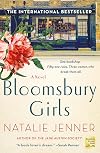
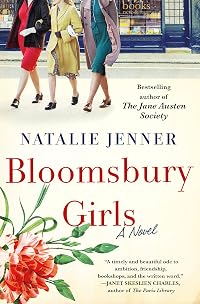
"Natalie Jenner, the internationally bestselling author of The Jane Austen Society, returns with a compelling and heartwarming story of post-war London, a century-old bookstore, and three women determined to find their way in a fast-changing world in Bloomsbury Girls. Bloomsbury Books is an old-fashioned new and rare book store that has persisted and resisted change for a hundred years, run by men and guided by the general manager's unbreakable fifty-one rules. But in 1950, the world is show more changing, especially the world of books and publishing, and at Bloomsbury Books, the girls in the shop have plans: Vivien Lowry: Single since her aristocratic fiance was killed in action during World War II, the brilliant and stylish Vivien has a long list of grievances--most of them well justified and the biggest of which is Alec McDonough, the Head of Fiction. Grace Perkins: Married with two sons, she's been working to support the family following her husband's breakdown in the aftermath of the war. Torn between duty to her family and dreams of her own. Evie Stone: In the first class of female students from Cambridge permitted to earn a degree, Evie was denied an academic position in favor of her less accomplished male rival. Now she's working at Bloomsbury Books while she plans to remake her own future. As they interact with various literary figures of the time--Daphne Du Maurier, Ellen Doubleday, Sonia Blair (widow of George Orwell), Samuel Beckett, Peggy Guggenheim, and others--these three women with their complex web of relationships, goals and dreams are all working to plot out a future that is richer and more rewarding than anything society will allow"-- show lessTags
Recommendations


















Member Reviews
Natalie Jenner's The Jane Austen Society, a fictionalized version of the founding of the Society and the saving and preservation of Chawton Cottage, was a charming, delicious read for lovers of all things Austen. This latest novel, Bloomsbury Girls, is another delightful novel. It is not quite a proper sequel but it follows a character from the previous book, Evie Stone. Occurring several years after The Jane Austen Society ends, this is Evie's story and several of the characters from the original novel make an appearance here.
It's 1950. Evie has graduated from Cambridge University, one of the first women granted a degree, but she is passed over for a research position in favor of a less qualified man. Unwilling to return home and show more abandon her research, she applies to work at Bloomsbury Books in London, cataloguing their chaotic rare books section. The day she arrives for her interview, Mr. Dutton, the general manager, suffers an epileptic seizure. Evie acts calmly in the face of the medical crisis, getting hired even as Mr. Dutton leaves the store on a stretcher. The new and rare bookstore has long been a dusty, traditional baston of male writers' works but Mr. Dutton's medical leave gives the women who work there, Evie, Vivien Lowery, whose upper crust fiance was killed in WWII, Grace Perkins, a mother of two in an unhappy marriage and the sole breadwinner in her family, room to implement their more progressive ideas about how the store should run. But when Mr. Dutton returns and things go back to the status quo, the women have no intention of quietly relinquishing their hard won power and influence.
The novel is the story of strong and determined women who are finding their way to live the lives they want. Tired of quietly and/or resentfully following the rules, making the tea, and staying in their places, they reach their breaking points and start to actively push against what is expected of them, both in their jobs and in society in general. They learn to ask for something bigger and to expect more than they are begrudgingly given. There are some light romantic elements here but they serve to emphasize the biggest ills of 1950s society: misogyny, racism, classism, and homophobia. Each chapter starts with one of the 51 non-negotiable rules of the shop that Mr. Dutton has framed and by which all employeess must abide at all times. Jenner then cleverly shows throughout the chapter how the rule, which might seem at first blush to be reasonable, can be circumvented or fails in specific instances. She has captured beautifully the undercurrents of workplace politics and the silent, non-verbal ways in which the women communicate their unhappiness and disagreement right under the noses of the men. The continual discrimination woven through the plot is infuriating but very true to life of the time (and not that far off from today either). There are fun cameos of famous writers and members of high society as well as characters from the previous book, almost all of whom back the women in their rebellion. Those in the book world who know their history will be delighted by the extended reference to Sunwise Turn in New York City. And the well-deserved ending will have the reader cheering. Similarly to the ending of an Austen novel, there is a quick and simple description of what each of the major characters has gone on to do by or after the end of the primary story. Readers who loved The Jane Austen Society, readers interested in neglected nineteenth century women writers, readers who enjoy seeing women overcome the handicaps society imposes on them, and readers who appreciate a slow building but ultimately victorious rebellion will be well rewarded with this engaging and winsome novel. show less
It's 1950. Evie has graduated from Cambridge University, one of the first women granted a degree, but she is passed over for a research position in favor of a less qualified man. Unwilling to return home and show more abandon her research, she applies to work at Bloomsbury Books in London, cataloguing their chaotic rare books section. The day she arrives for her interview, Mr. Dutton, the general manager, suffers an epileptic seizure. Evie acts calmly in the face of the medical crisis, getting hired even as Mr. Dutton leaves the store on a stretcher. The new and rare bookstore has long been a dusty, traditional baston of male writers' works but Mr. Dutton's medical leave gives the women who work there, Evie, Vivien Lowery, whose upper crust fiance was killed in WWII, Grace Perkins, a mother of two in an unhappy marriage and the sole breadwinner in her family, room to implement their more progressive ideas about how the store should run. But when Mr. Dutton returns and things go back to the status quo, the women have no intention of quietly relinquishing their hard won power and influence.
The novel is the story of strong and determined women who are finding their way to live the lives they want. Tired of quietly and/or resentfully following the rules, making the tea, and staying in their places, they reach their breaking points and start to actively push against what is expected of them, both in their jobs and in society in general. They learn to ask for something bigger and to expect more than they are begrudgingly given. There are some light romantic elements here but they serve to emphasize the biggest ills of 1950s society: misogyny, racism, classism, and homophobia. Each chapter starts with one of the 51 non-negotiable rules of the shop that Mr. Dutton has framed and by which all employeess must abide at all times. Jenner then cleverly shows throughout the chapter how the rule, which might seem at first blush to be reasonable, can be circumvented or fails in specific instances. She has captured beautifully the undercurrents of workplace politics and the silent, non-verbal ways in which the women communicate their unhappiness and disagreement right under the noses of the men. The continual discrimination woven through the plot is infuriating but very true to life of the time (and not that far off from today either). There are fun cameos of famous writers and members of high society as well as characters from the previous book, almost all of whom back the women in their rebellion. Those in the book world who know their history will be delighted by the extended reference to Sunwise Turn in New York City. And the well-deserved ending will have the reader cheering. Similarly to the ending of an Austen novel, there is a quick and simple description of what each of the major characters has gone on to do by or after the end of the primary story. Readers who loved The Jane Austen Society, readers interested in neglected nineteenth century women writers, readers who enjoy seeing women overcome the handicaps society imposes on them, and readers who appreciate a slow building but ultimately victorious rebellion will be well rewarded with this engaging and winsome novel. show less
Thanks to St. Martin's Publishing Group & NetGalley for a digital advance reader's copy. All comments and opinions are my own.
I loved this book! The writing, the characters, the plot, the themes, the twists and turns! This was cleverly written, with dashes of humor, plenty of wit, and authentic observations of the time period. In a nutshell, it’s a lovely historical novel of three women who work in a bookstore in 1950s London, still feeling the repercussions of the war but straining for independence and freedom.
Author Natalie Jenner eloquently writes: “Grace and Vivien had joined the shop just as the world was emerging from the ashes of war. Life back then had seemed full of possibility and freedom, especially for the women who had show more taken charge while the men were off fighting….but the past had a way of slipping back through even the thinnest of cracks in a fractured world. Women such as Vivien and Grace had hoped for a fresh beginning for everyone…those in power would always hold on to any excess supply, even to the bitter end.”
So this is one of the themes, women’s growing independence from men’s support, to be successful and confident in their own power. The theme of women’s friendship is also portrayed in the book, and skillfully woven into the plot in a clever way that reminded me of Paul Newman and Robert Redford’s 1973 movie The Sting.
Early on the novel introduces the various relationships of those who work in the bookshop. There are infatuations, a romance, a love/hate attraction. But this isn’t really a love story. With the themes of men vs. women, power vs. influence, and wealth vs. scarcity, Jenner depicts longstanding sexism, the changing attitudes of women, and the first hints of post-war feminism.
This is Jenner’s second novel, with some of the same characters from her debut The Jane Austen Society. I loved that novel as well, and highly recommend it, but you can easily read this one first. I guarantee you’ll be looking for the other one the minute you finish Bloomsbury Girls – it’s that good! I couldn’t put down this novel and thoroughly enjoyed the interactions of the characters and the way so many connections perfectly fell into place, creating a heartwarming, satisfying read.
I also admired the skillful way Jenner inserts many real people into the novel: Samuel Beckett, Daphne du Maurier, Ellen Doubleday. And I enjoyed the entertaining device of beginning each chapter with one of the bookstore manager’s 51 rules – each one somehow flouted in that chapter.
The third woman working in the bookstore, scholar Evie Stone, believes that her study of the past was worthwhile, but wanted what she discovered there to echo forward as well. She knew “that the past, present, and future were all connected, even if she was not able to discern how. Evie hoped to share the words and ideas of women long gone from this earth, women who could no longer speak but, in their determination to not stay silent, could still have an effect, even now.”
This is an uplifting, entertaining story of the world being given a second chance after the war, of women working together to support and empower each other, with the goal of promoting female authors, especially rediscovering women writers who’ve been overlooked – forgotten, ignored, dismissed. I highly recommend this feel-good 5+ star book! show less
I loved this book! The writing, the characters, the plot, the themes, the twists and turns! This was cleverly written, with dashes of humor, plenty of wit, and authentic observations of the time period. In a nutshell, it’s a lovely historical novel of three women who work in a bookstore in 1950s London, still feeling the repercussions of the war but straining for independence and freedom.
Author Natalie Jenner eloquently writes: “Grace and Vivien had joined the shop just as the world was emerging from the ashes of war. Life back then had seemed full of possibility and freedom, especially for the women who had show more taken charge while the men were off fighting….but the past had a way of slipping back through even the thinnest of cracks in a fractured world. Women such as Vivien and Grace had hoped for a fresh beginning for everyone…those in power would always hold on to any excess supply, even to the bitter end.”
So this is one of the themes, women’s growing independence from men’s support, to be successful and confident in their own power. The theme of women’s friendship is also portrayed in the book, and skillfully woven into the plot in a clever way that reminded me of Paul Newman and Robert Redford’s 1973 movie The Sting.
Early on the novel introduces the various relationships of those who work in the bookshop. There are infatuations, a romance, a love/hate attraction. But this isn’t really a love story. With the themes of men vs. women, power vs. influence, and wealth vs. scarcity, Jenner depicts longstanding sexism, the changing attitudes of women, and the first hints of post-war feminism.
This is Jenner’s second novel, with some of the same characters from her debut The Jane Austen Society. I loved that novel as well, and highly recommend it, but you can easily read this one first. I guarantee you’ll be looking for the other one the minute you finish Bloomsbury Girls – it’s that good! I couldn’t put down this novel and thoroughly enjoyed the interactions of the characters and the way so many connections perfectly fell into place, creating a heartwarming, satisfying read.
I also admired the skillful way Jenner inserts many real people into the novel: Samuel Beckett, Daphne du Maurier, Ellen Doubleday. And I enjoyed the entertaining device of beginning each chapter with one of the bookstore manager’s 51 rules – each one somehow flouted in that chapter.
The third woman working in the bookstore, scholar Evie Stone, believes that her study of the past was worthwhile, but wanted what she discovered there to echo forward as well. She knew “that the past, present, and future were all connected, even if she was not able to discern how. Evie hoped to share the words and ideas of women long gone from this earth, women who could no longer speak but, in their determination to not stay silent, could still have an effect, even now.”
This is an uplifting, entertaining story of the world being given a second chance after the war, of women working together to support and empower each other, with the goal of promoting female authors, especially rediscovering women writers who’ve been overlooked – forgotten, ignored, dismissed. I highly recommend this feel-good 5+ star book! show less
Set in a multi-level, century old London bookstore, the charming Bloomsbury Girls features three women, new employee Evelyn Stone (who appeared in The Jane Austen Society), saleswoman Vivien Lowry, and secretary Grace Perkins.
For Evie, a former servant girl and one of the first women to earn a degree from Cambridge, securing a position at Bloomsbury Books is a necessary first step in supporting herself, the second is finding an obscure but valuable title she is sure is languishing somewhere among the stock.
Vivien, still mourning the death of her fiancé in the war, is tired of the manager’s fifty-one rules which dictate how the store is run. and keeps her perpetually subservient to her male colleague, Alec McDonough. An aspiring show more author, she wants to modernise the store’s rather stale fiction department stock and host regular literary events.
Grace, a mother of two trapped in an unhappy marriage, is supportive of Vivien’s ideas for change, especially as she knows Bloomsbury Books is struggling financially, and she relies on her position to support her family.
There is a strong theme of feminine empowerment through the novel as these three women fight to realise their hopes and ambitions. Chafing at numerous experiences of discrimination and unjust restrictions placed on them simply for being female, they are determined to change things. Vivien is the boldest of the three, sharp and impassioned she openly objects to society’s misogyny. Evie feels just as strongly about being treated unfairly as Vivien, but her rebellion is quieter and more calculated. Grace’s priorities are quite different to those of her single colleagues, but her action to reclaim her agency is arguably the bravest, given the conventions of the time. Each women experiences character growth as the story unfolds and I found all three to be appealing
Despite its strong feminist aspect, romance also has a place in the novel. Evie forms an attachment to Ash Ramaswamy, who manages the store’s science and naturalism floor, which is both awkward and sweet. The relationship that develops between Grace and Bloomsbury Books owner, Jeremy Baskin (the 11th Earl Baskin), is unconventional given the circumstances but also lovely, while Vivien and Alec’s love/hate relationship is quite entertaining.
Jenner touches on other forms of discrimination with incidents relating to class, race, and homosexuality. Ash, for example, is regularly the target of racism which has also affected his career, and the store manager feels the need to hide his long term relationship with the third floor rare book buyer. The author also notes the changing in English society in the wake of WWII.
With Jenner’s descriptive writing, I could easily envision the old-fashioned elegance of Bloomsbury Books. I liked that the chapter headings were drawn from Mr Dutton’s fifty-one store rules. The pace of the novel is quite sedate but the resolution is very satisfying.
I found Bloomsbury Girls to be an engaging historical read, and the cameo’s from noted literary figures such as Daphne Du Maurier, Ellen Doubleday, Peggy Guggenheim, and Noel Coward, are a delightful bonus for booklovers. show less
For Evie, a former servant girl and one of the first women to earn a degree from Cambridge, securing a position at Bloomsbury Books is a necessary first step in supporting herself, the second is finding an obscure but valuable title she is sure is languishing somewhere among the stock.
Vivien, still mourning the death of her fiancé in the war, is tired of the manager’s fifty-one rules which dictate how the store is run. and keeps her perpetually subservient to her male colleague, Alec McDonough. An aspiring show more author, she wants to modernise the store’s rather stale fiction department stock and host regular literary events.
Grace, a mother of two trapped in an unhappy marriage, is supportive of Vivien’s ideas for change, especially as she knows Bloomsbury Books is struggling financially, and she relies on her position to support her family.
There is a strong theme of feminine empowerment through the novel as these three women fight to realise their hopes and ambitions. Chafing at numerous experiences of discrimination and unjust restrictions placed on them simply for being female, they are determined to change things. Vivien is the boldest of the three, sharp and impassioned she openly objects to society’s misogyny. Evie feels just as strongly about being treated unfairly as Vivien, but her rebellion is quieter and more calculated. Grace’s priorities are quite different to those of her single colleagues, but her action to reclaim her agency is arguably the bravest, given the conventions of the time. Each women experiences character growth as the story unfolds and I found all three to be appealing
Despite its strong feminist aspect, romance also has a place in the novel. Evie forms an attachment to Ash Ramaswamy, who manages the store’s science and naturalism floor, which is both awkward and sweet. The relationship that develops between Grace and Bloomsbury Books owner, Jeremy Baskin (the 11th Earl Baskin), is unconventional given the circumstances but also lovely, while Vivien and Alec’s love/hate relationship is quite entertaining.
Jenner touches on other forms of discrimination with incidents relating to class, race, and homosexuality. Ash, for example, is regularly the target of racism which has also affected his career, and the store manager feels the need to hide his long term relationship with the third floor rare book buyer. The author also notes the changing in English society in the wake of WWII.
With Jenner’s descriptive writing, I could easily envision the old-fashioned elegance of Bloomsbury Books. I liked that the chapter headings were drawn from Mr Dutton’s fifty-one store rules. The pace of the novel is quite sedate but the resolution is very satisfying.
I found Bloomsbury Girls to be an engaging historical read, and the cameo’s from noted literary figures such as Daphne Du Maurier, Ellen Doubleday, Peggy Guggenheim, and Noel Coward, are a delightful bonus for booklovers. show less
The female employees of the long standing and prominent Bloomsbury Books of London have long been underestimated. Kept in check by the proprietor's long list of rules and kept busy by the different male department heads, Grace, Vivien and new employee, Evie have worked not so silently in the background. Grace took the job at Bloomsbury books to escape her husband's failing mental health after the war. Vivien's fiancé was killed during the war, and she is looking to move on and also publish her own works. Evie is on her own rare book finding mission after graduating from Cambridge. When the women team up to bring in a female author for an event, they realize their strength together and when Evie finally tracks down the rare book she's show more been chasing, they discover they have leverage to create their own path.
Bloomsbury Girls is set in 1950 London, a time where women who realized their independence and worth during World War II are now being regulated to back to their original roles by the returning men. The writing brought me into the world of Bloomsbury Books, and I could imagine the shop and each department fully. The women of Bloomsbury Books caught my attention from the beginning with their spunk and tenacity. Evie's single-minded quest for finding a rare book by a young female author is extraordinary. I enjoyed watching Evie grow, branch out in the world, find connections with others and become a mastermind planner for using the book as a steppingstone to improve her life. I loved Vivian's small acts of defiance and her friendships that she found with Daphne Du Maurier, Ellen Doubleday, Sonia Blair, and Peggy Guggenheim. It was wonderful to see these strong women prospering. Grace is fighting more of a personal battle at home, Bloomsbury Books gave her the strength to get out of an abusive situation. I loved that a book was able to bring Grace, Vivien and Evie together and aid them in finding a path to independence and creating equal footing in a man's world. Bloomsbury Girls is a heartfelt, exciting and character driven historical fiction read.
This book was received for free in return for an honest review. show less
Bloomsbury Girls is set in 1950 London, a time where women who realized their independence and worth during World War II are now being regulated to back to their original roles by the returning men. The writing brought me into the world of Bloomsbury Books, and I could imagine the shop and each department fully. The women of Bloomsbury Books caught my attention from the beginning with their spunk and tenacity. Evie's single-minded quest for finding a rare book by a young female author is extraordinary. I enjoyed watching Evie grow, branch out in the world, find connections with others and become a mastermind planner for using the book as a steppingstone to improve her life. I loved Vivian's small acts of defiance and her friendships that she found with Daphne Du Maurier, Ellen Doubleday, Sonia Blair, and Peggy Guggenheim. It was wonderful to see these strong women prospering. Grace is fighting more of a personal battle at home, Bloomsbury Books gave her the strength to get out of an abusive situation. I loved that a book was able to bring Grace, Vivien and Evie together and aid them in finding a path to independence and creating equal footing in a man's world. Bloomsbury Girls is a heartfelt, exciting and character driven historical fiction read.
This book was received for free in return for an honest review. show less
I've been on a winning streak with books lately, and here's another one. This book is like 84, Charing Cross Road on steroids. Not to say that this is an epistolary novel, because it's not. But it IS a book about very different people working at a London bookstore around WWII.
Almost every character is a book unto themselves, without being stereotyped. Almost everyone has a secret of one sort or another. The title refers to the three women of the story, and how they navigate what is still very clearly a man's world, and ultimately turn it upside down. Real authors and people connected to the literary world are brought into the book, and used as pawns, in a way, in the "war" between men and women working in the shop.
I have only two show more negative things to say about this delightful book. One, I was expecting and hoping for one particular relationship to head in a certain way and it didn't, so I like to believe it did. Secondly, I'm devastated that I can never read this book for the first time again. It was funny, sweet, mysterious, suspenseful and entertaining. I found it hard to put down and savored every word.
Thank you, NetGalley, for the chance to read and review this book. All opinions expressed are given freely and are mine. show less
Almost every character is a book unto themselves, without being stereotyped. Almost everyone has a secret of one sort or another. The title refers to the three women of the story, and how they navigate what is still very clearly a man's world, and ultimately turn it upside down. Real authors and people connected to the literary world are brought into the book, and used as pawns, in a way, in the "war" between men and women working in the shop.
I have only two show more negative things to say about this delightful book. One, I was expecting and hoping for one particular relationship to head in a certain way and it didn't, so I like to believe it did. Secondly, I'm devastated that I can never read this book for the first time again. It was funny, sweet, mysterious, suspenseful and entertaining. I found it hard to put down and savored every word.
Thank you, NetGalley, for the chance to read and review this book. All opinions expressed are given freely and are mine. show less
What a great read of perseverance, living in the rebuilding after WWII in England. We follow three spunky woman as they go about their lives, and each has ended up at the Bloomsbury Books!
The three woman are, Vivien, Grace and Evie, different, of course, but forging their way in a man’s world. Yes, they have to make the tea, for me it was coffee, but these woman are talented and gifted, and we walk in their shoes!
There are a lot of twists and turns, and some hard subjects are dealt with, the author does a great job with these.
We hobnob with some famous people, George Orwell, Daphne Du Maurier, Peggy Guggenheim, Samuel Beckett, and we are there to see the delightful part they play in this read! I loved it!
A read that quickly became a show more page turner, and I really wanted to continue on with their lives!
I received this book through Net Galley and St. Martin’s Press, and was not required to give a positive review. show less
The three woman are, Vivien, Grace and Evie, different, of course, but forging their way in a man’s world. Yes, they have to make the tea, for me it was coffee, but these woman are talented and gifted, and we walk in their shoes!
There are a lot of twists and turns, and some hard subjects are dealt with, the author does a great job with these.
We hobnob with some famous people, George Orwell, Daphne Du Maurier, Peggy Guggenheim, Samuel Beckett, and we are there to see the delightful part they play in this read! I loved it!
A read that quickly became a show more page turner, and I really wanted to continue on with their lives!
I received this book through Net Galley and St. Martin’s Press, and was not required to give a positive review. show less
I loved The Jane Austen Society, so when I heard Natalie Jenner had another book-related novel, I said yes, please! Bloomsbury Girls takes Evie Stone from Jenner’s first novel, and places her, along with a strong cast of characters, in the book shop Bloomsbury Books. Jenner does an admirable job of transporting the reader back to post-WWII England as many strive to find new lives in the ever-changing aftermath of the war. Class distinctions and the place of women and minorities in a new world are explored amid the bookshelves of a grand, but struggling bookstore. And for the bibliophiles among us, there are plenty of interactions with publishing notables and favorite authors. (My favorite, Daphne DuMaurier, plays an integral role.) show more The struggles of a society are mirrored in the microcosm of the bookstore. Characterization is a strong point of this book. Main and supporting characters alike are fully developed. I listened to the audiobook version of the novel which was excellently read by Juliet Stevenson. If you are a fan of audiobooks, I suggest you download this one soon.
Bloomsbury Girls is an outstanding general market novel that I won’t hesitate to recommend. Filled with historical detail, societal issues that make one think, and characters to love, it is a recommended read.
Recommended.
Audience: adults.
(I received a link to the audiobook from AustenProse. All opinions expressed are mine alone.) show less
Bloomsbury Girls is an outstanding general market novel that I won’t hesitate to recommend. Filled with historical detail, societal issues that make one think, and characters to love, it is a recommended read.
Recommended.
Audience: adults.
(I received a link to the audiobook from AustenProse. All opinions expressed are mine alone.) show less
Members
- Recently Added By
Lists

Globe and Mail | Canadian Fiction: May 28, 2022
10 works; 1 member
Globe and Mail | Canadian Fiction: June 4, 2022
10 works; 1 member

Globe and Mail | Canadian Fiction: June 11, 2022
10 works; 1 member

Globe and Mail | Canadian Fiction: June 25, 2022
10 works; 1 member

Globe and Mail | Canadian Fiction: June 18, 2022
10 works; 2 members

Books Read in 2022
5,168 works; 114 members
Globe and Mail | Canadian Fiction: July 2, 2022
10 works; 1 member
Author Information

6 Works 2,236 Members
Some Editions
Awards and Honors
Notable Lists
RUSA CODES Listen List (Listen-Alike – Listen-Alike to “Iona Iverson’s Rules for Commuting” by Clare Pooley – 2023)
Series

Common Knowledge
- Canonical title
- Bloomsbury Girls
- Original publication date
- 2022
- Important places
- Bloomsbury, London
Classifications
Statistics
- Members
- 655
- Popularity
- 44,130
- Reviews
- 44
- Rating
- (3.98)
- Languages
- 7 — English, Finnish, French, German, Italian, Portuguese, Spanish
- Media
- Paper, Audiobook, Ebook
- ISBNs
- 26
- ASINs
- 8