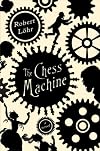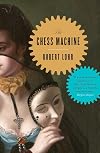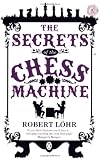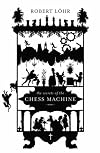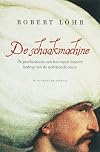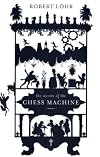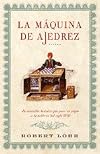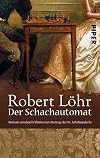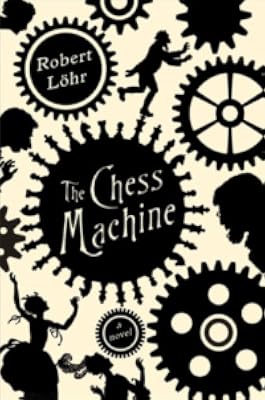
The Chess Machine
by Robert Löhr
On This Page
Description
Based on a true story, The Chess Machine is the breathtaking historical adventure of a legendary invention that astounded all who crossed its path.Vienna, 1770: Baron Wolfgang von Kempelen unveils a strange and amazing invention: the Mechanical Turk, a sensational and unbeatable chess-playing automaton. But what the Habsburg court hails as the greatest innovation of the century is really nothing more than a brilliant illusion. The chess machine is secretly operated from inside by the Italian show more dwarf Tibor, a God-fearing social outcast whose chess-playing abilities and diminutive size make him the perfect accomplice in this grand hoax. Von Kempelen and his helpers tour his remarkable invention all around Europe to amaze and entertain the public, but despite many valiant attempts and close calls, no one is able to beat the extraordinary chess machine. The crowds all across Europe adore the Turk, and the success of Baron von Kempelen seems assured. But when a beautiful and seductive countess dies under mysterious circumstances in the presence of the automaton, the Mechanical Turk falls under a cloud of suspicion, and the machine and his inventor become the targets of espionage, persecution, and aristocratic intrigue. What is the dark secret behind this automaton, and what strange powers does it hold? The Chess Machine is a daring and remarkable tale, based on a true story, full of envy, lust, scandal, and deception. show lessTags
Recommendations


































Member Reviews
The idea that this was based on actual events intrigued me, but I soon realized that it was mostly fiction. The actual events associated with von Kempelen's chess machine are not well documented and the actual machine is long lost. I was hoping that we had diaries or letters or some such to draw from, but we don't and the author's imagination had to fill in much of the story.
That's not to say the story wasn't interesting or compelling. It was. The story is told in mostly the linear style with occasional flashes forward in time. This reassures us that certain characters prevail or at least survive, but does not diminish the suspense; we want to know what happened and how. The human element was obviously the most fascinating. As soon as show more von Kempelen 'rescued' Tibor, I knew it would only be a matter of time until it became strained. The balance of power in that relationship was very much on the side of Tibor until von Kempelen managed to tie Tibor to a murder. When Tibor tired of being the chess machine's brain and tried to make a break for freedom, von Kempelen's threats of exposure, prison and possible execution transformed his at will chess-playing to virtual enslavement.
Von Kempelen could not separate his life from the machine no matter how ruinous it became for him. The dead woman's brother wished revenge. His wife begged him to give up the chess machine. A rival machinist, still stung by his loss to The Turk, planted a spy in von Kempelen's household to ferret out the secret of the chess automaton. Tibor was tired and his engineer wanted to leave his employ as well. But von Kempelen would not stop. He craved the fame and fortune that came with exhibiting The Turk. He also feared he would never be able to top it.
The Turk itself is very interesting and at the same time, hard to imagine. We've come so far from mechanical clockwork devices that it's difficult to envision such a contraption. It was basically a large cabinet with a mechanical man built into the side and facing a chessboard on its surface. The automaton was dressed as a Turk and thus the name. The cabinet design concealed a compartment where Tibor would work the machinery and execute The Turk's moves. This was done without direct visual aid and depended too much on ideal circumstances. When the Empress decides that her match must take place outside in the blazing summer sun it becomes a disaster.
It was touted as a thinking machine which is unimaginable to me because of its mechanical nature. How could anyone think that this collection of gears and wheels could actually reason? But as clockwork was the height of machinery advancement, the people thought it could. Except for the rival machinist who knew there had to be a trick. This man turned over many ideas in his head about what could really be driving the automaton. Maybe it was von Kempelen himself since he was never far from the apparatus during play. He even checked the inside to see if there was a man in there (the cabinet itself was so cleverly designed, people could look right in both sides and never see Tibor). But since the cabinet was too small for a regular sized person to hide in he dismissed the idea without it occurring to him that it might be a dwarf. The attitudes toward dwarves by the normally statured are astounding to me; they were abominations or works of the devil and many people didn't even count them as human. Of course it didn't occur to them that one might be the secret to the whole operation.
The writing is fairly straightforward and reads somewhat like an encyclopedia. I'm not sure if this is due to the author or the translation. What is lost in verve is made up for in pacing and plot structure. Luckily for me, as I'm not a chess player nor have much interest in the game, not much of the novel is taken up by play information or lots of boring lists of moves or gambits. It is interesting though to read about how popular a pastime it was and how so many people could play. The ending is a bit weak, but it does build a great amount of tension so the calmness of the final chapter is necessary. There are some nice comeuppances along the way, too, but no revenge is complete.
There are few sympathetic characters. Tibor himself is the most sympathetic. Dwarfism is a heavy burden for him and he seems to go from master to master and has not lived a truly independent life. He is also often targeted for theft, betrayal and cruel practical jokes. He is very religious and his transgressions and sins really trouble him. The author says he transformed von Kempelen's true character as recorded by his contemporaries, but he had to for the sake of the fiction he wove around the facts. It is too bad there isn't more documentation, but given the heavy secrecy surrounding The Turk, it's not surprising. It's also quite sad that the automaton itself hasn't survived. It would be something to see. show less
That's not to say the story wasn't interesting or compelling. It was. The story is told in mostly the linear style with occasional flashes forward in time. This reassures us that certain characters prevail or at least survive, but does not diminish the suspense; we want to know what happened and how. The human element was obviously the most fascinating. As soon as show more von Kempelen 'rescued' Tibor, I knew it would only be a matter of time until it became strained. The balance of power in that relationship was very much on the side of Tibor until von Kempelen managed to tie Tibor to a murder. When Tibor tired of being the chess machine's brain and tried to make a break for freedom, von Kempelen's threats of exposure, prison and possible execution transformed his at will chess-playing to virtual enslavement.
Von Kempelen could not separate his life from the machine no matter how ruinous it became for him. The dead woman's brother wished revenge. His wife begged him to give up the chess machine. A rival machinist, still stung by his loss to The Turk, planted a spy in von Kempelen's household to ferret out the secret of the chess automaton. Tibor was tired and his engineer wanted to leave his employ as well. But von Kempelen would not stop. He craved the fame and fortune that came with exhibiting The Turk. He also feared he would never be able to top it.
The Turk itself is very interesting and at the same time, hard to imagine. We've come so far from mechanical clockwork devices that it's difficult to envision such a contraption. It was basically a large cabinet with a mechanical man built into the side and facing a chessboard on its surface. The automaton was dressed as a Turk and thus the name. The cabinet design concealed a compartment where Tibor would work the machinery and execute The Turk's moves. This was done without direct visual aid and depended too much on ideal circumstances. When the Empress decides that her match must take place outside in the blazing summer sun it becomes a disaster.
It was touted as a thinking machine which is unimaginable to me because of its mechanical nature. How could anyone think that this collection of gears and wheels could actually reason? But as clockwork was the height of machinery advancement, the people thought it could. Except for the rival machinist who knew there had to be a trick. This man turned over many ideas in his head about what could really be driving the automaton. Maybe it was von Kempelen himself since he was never far from the apparatus during play. He even checked the inside to see if there was a man in there (the cabinet itself was so cleverly designed, people could look right in both sides and never see Tibor). But since the cabinet was too small for a regular sized person to hide in he dismissed the idea without it occurring to him that it might be a dwarf. The attitudes toward dwarves by the normally statured are astounding to me; they were abominations or works of the devil and many people didn't even count them as human. Of course it didn't occur to them that one might be the secret to the whole operation.
The writing is fairly straightforward and reads somewhat like an encyclopedia. I'm not sure if this is due to the author or the translation. What is lost in verve is made up for in pacing and plot structure. Luckily for me, as I'm not a chess player nor have much interest in the game, not much of the novel is taken up by play information or lots of boring lists of moves or gambits. It is interesting though to read about how popular a pastime it was and how so many people could play. The ending is a bit weak, but it does build a great amount of tension so the calmness of the final chapter is necessary. There are some nice comeuppances along the way, too, but no revenge is complete.
There are few sympathetic characters. Tibor himself is the most sympathetic. Dwarfism is a heavy burden for him and he seems to go from master to master and has not lived a truly independent life. He is also often targeted for theft, betrayal and cruel practical jokes. He is very religious and his transgressions and sins really trouble him. The author says he transformed von Kempelen's true character as recorded by his contemporaries, but he had to for the sake of the fiction he wove around the facts. It is too bad there isn't more documentation, but given the heavy secrecy surrounding The Turk, it's not surprising. It's also quite sad that the automaton itself hasn't survived. It would be something to see. show less
Loosely based on actual events in 18th century Europe, The Secrets of the Chess Machine tells the story of the Baron von Kempelen, whom having seen a demonstration of magnetism and claiming that he could invent something even more remarkable is challenged by Maria Theresia, the Empress of Hapsburg, to do so within six months. The result is the Mechanical Turk, a chess-playing automaton. However, the Mechanical Turk is nothing but a cunning hoax for hidden inside the machine behind clockwork gear wheels that do nothing and are purely for show is Tibor, an Italian dwarf with astonishing chess-playing abilities. Tibor is deeply religious whilst Baron von Kempelen is in reality a conman. After gaining Tibor's release from a Venetian dungeon show more the Baron persuades him to utilise his God-given talents in order to fool audiences throughout the Empire.
There have been much written about the Mechanical Turk in later decades but little is known about it's early days so this is a purely fictional account. Initially the Turk was only meant to have one performance in front of the Empress but she is so astonished by it she orders the Baron continue showing it. However, when a woman mysteriously dies after one of its performances suspicion falls on von Kempelen and the Turk, they become targets for intrigue and religious persecution.
On the whole I found the characters are engaging and it is obvious that the author has done his research of the period giving the reader a feel for the machinations of Hapsburg court life and in many respects the murder mystery is secondary but always remains plausible. Far more important is the motivation that drives von Kempelen, who is already relatively successful, to carry out his charade.
That is not to say that I felt that it wasn't without its issues. The author was a journalist before turning author and at times it reads more like a news editorial instead of a true novel. There are also a couple of time shifts which felt rather clunky. Despite these minor faults I still felt that overall it was an enjoyable, worthwhile read. show less
There have been much written about the Mechanical Turk in later decades but little is known about it's early days so this is a purely fictional account. Initially the Turk was only meant to have one performance in front of the Empress but she is so astonished by it she orders the Baron continue showing it. However, when a woman mysteriously dies after one of its performances suspicion falls on von Kempelen and the Turk, they become targets for intrigue and religious persecution.
On the whole I found the characters are engaging and it is obvious that the author has done his research of the period giving the reader a feel for the machinations of Hapsburg court life and in many respects the murder mystery is secondary but always remains plausible. Far more important is the motivation that drives von Kempelen, who is already relatively successful, to carry out his charade.
That is not to say that I felt that it wasn't without its issues. The author was a journalist before turning author and at times it reads more like a news editorial instead of a true novel. There are also a couple of time shifts which felt rather clunky. Despite these minor faults I still felt that overall it was an enjoyable, worthwhile read. show less
(Reprinted from the Chicago Center for Literature and Photography [cclapcenter.com].)
As regular readers know, one of the topics that often comes up here at the CCLaP website is of the slippery line between what we commonly refer to as "mainstream" literature versus "genre;" of not only where that line should be drawn, but of how we look at books differently based on what side it falls, not to mention the different smaller lines that can be drawn once you're on one side or another. For example, I'm a general fan of the science-fiction genre, as are many of CCLaP's readers; but then within sci-fi, I myself am a particular fan of a subgenre known as "steampunk." A play on the '80s sci-fi term "cyberpunk," it is basically a mix of show more speculative fiction and Victorian-era (or older) historical fiction, running with science-fictiony concepts based on real events from the time period; for example, what the world would've been like if computers had actually been invented back then instead of the 1950s, which actually did almost happen in real life except for the prototypes' prohibitive costs and enormous space requirements back then. At its aesthetic heart, steampunk is basically the attempt to take various high-tech concepts from our real present day, and "retrofit" them into beautifully-designed wood and metal forms, to imagine a world where robots work off of burning coal and double as exquisite objets de art, all for the good of our Glorious Queen and Her Empire.
That's why I was so excited, after all, to pick up German writer Robert Lohr's first novel, the very smart and fun action adventure The Chess Machine; because it too can be technically counted as a steampunk novel, although in this case is set around a hundred years before most of the genre's other examples, or in other words the late 1700s. And that's because, interestingly enough, the core of the novel's storyline is based around an actual object with shady origins: an actual "Mechanical Turk" chess-playing automaton, in reality an elaborate hoax, well-known as a touring historical item in the 1800s but with society having collectively forgotten its beginnings. Lohr uses this lost origin to his advantage, taking the object itself and moving backwards in time creatively to imagine a colorful and danger-filled Vienna, when a cloudy haze existed between magic and science and where lots of hucksters were ready to step in and take advantage of it. The result is a delightfully exciting story, one that has more potential mainstream appeal than other steampunk novels because of it being rooted in reality; it is a book sure to thrill not only nerdy hard-edged sci-fi fans such as myself, but also those who love the mystery genre and straight-ahead historical fiction as well. There's a reason, after all, that the book rights have already been sold in twenty countries, and it wouldn't surprise me to hear of a major Hollywood deal at any moment too.
So as mentioned, probably the best place to start a discussion of The Chess Machine is regarding its actual historical origins -- that the titular machine at the center of the plot actually used to exist, created by an Austrian named Baron Wolfgang von Kempelen in the 1770s, at a time when such other "automatons" as mechanical cuckoo clocks and artificial writing machines were being unveiled in Europe as well. And although it was filled with real mechanics, Kempelen's chess-playing machine was in fact an elaborate hoax; it was a chess-playing human inside of it the whole time, with an ingenious series of sliding cubbyholes within the contraption, so that the player could shift from space to space as Kempelen opened the various doors of the device one at a time. It was a time when so-called "miraculous" things were being done every day, aided by the newfound popularity of the scientific process; that's why few people questioned the idea of a brass-and-wood machine somehow having artificial intelligence, and why so many people took the Turk's ability to play chess at face value. The machine in fact ended up touring for almost 80 years under various owners, with various small periods of "retirement" for continual technological improvements to the hoax; among other storied destinations, the real Turk ended up playing such luminaries as Benjamin Franklin, Napoleon Bonaparte, and Edgar Allen Poe, before accidentally being destroyed in a warehouse fire in the 1850s. And believe it or not, despite several dozen people learning the secret of the Turk over those 80 years, not one of them blabbed it in public until after the Turk had been destroyed; Kempelen in fact spent his entire life being regarded as a mechanical genius, going to his grave in the early 1800s without any of his peers being the wiser.
What Lohr does, then, is take all the elements of the real story I just laid out, then start filling in the holes with fictional details; of what kind of person Kempelen might have been like, for example, to want to pull a fast one on both royalty and the general public for so long, or of what kind of person might have been actually inside the machine and playing the chess matches back then. And this is in fact an important thing about The Chess Machine to know right away; that when such details are at the discretion of Lohr, he deliberately chooses outlandishly entertaining options, in order to weave a semi-fantastical and always-thrilling action-based plot, one not really grounded that much in reality but definitely a gripping yarn. In Lohr's world, for example, the first hidden player of the Turk's history is none other than a mentally brilliant dwarf who happens to be a criminal, and just happens to be a strict Catholic, and who just happens to be terrified of small, enclosed spaces as well; yes, it's quite lucky that all those traits happen to be the most entertaining ones that we as readers could've had in such a situation!
I guess the point I'm trying to make is that it's adventure-novel logic on display in The Chess Machine; that much like the Indiana Jones movies, you need to be ready to go down that non-real road that Lohr is leading you, and accept all the freakishly coincidental and always visually arresting things going on within this far-fetched storyline. If you're able to do that, though, you're going to find a briskly-paced thriller with all kinds of fun almost magical elements, a story that always stays rooted in reality but sometimes only barely. It's a world of royal courts and shadowy back roads; a world of both political intrigue and soap-opera-like melodrama. At the same time, though, it's an ingenious look at retrofitted technology as well; a step-by-step guide as to how such a machine actually worked, using techniques relying on magnetism and other scientific principles that would take another hundred years to catch on with the general public. It's a nerd action tale that doubles as a historical murder mystery! I love it!
In fact, I'm having a hard time even coming up with anything specifically negative to point out about The Chess Machine, except of course for the obvious one -- that no matter how well a genre piece it is, it's still a genre piece, which means that people who don't like this genre in general are bound to not like this novel either, and will never end up liking it no matter what changes are made. I admit that I'm a fan of not only historical fiction but also caper tales and also steampunk settings; this novel combines all three, so of course I'm going to eat it up like the freaking genre sheep I am. It's part of the natural biases that come with me being a human being as well as an arts critic, that there are certain subjects I personally gravitate towards and certain ones I simply don't care for; in general I think it's simply best to acknowledge this bias and move on, instead of pretending my bias doesn't exist in the first place. All you Nerdy McNerds out there like me are bound to love The Chess Machine, while others are bound to roll their eyes and mutter "Ugh!" merely at the sight of the front cover; as is sometimes the case here, I guess I'll just leave my review at that, and simply admit that I definitely am one of those Nerdy McNerds who adores elaborate little stories like this, although also acknowledge that it's not for everyone.
Out of 10:
Story: 9.3
Characters: 9.4
Style: 9.5
Overall: 9.4 show less
As regular readers know, one of the topics that often comes up here at the CCLaP website is of the slippery line between what we commonly refer to as "mainstream" literature versus "genre;" of not only where that line should be drawn, but of how we look at books differently based on what side it falls, not to mention the different smaller lines that can be drawn once you're on one side or another. For example, I'm a general fan of the science-fiction genre, as are many of CCLaP's readers; but then within sci-fi, I myself am a particular fan of a subgenre known as "steampunk." A play on the '80s sci-fi term "cyberpunk," it is basically a mix of show more speculative fiction and Victorian-era (or older) historical fiction, running with science-fictiony concepts based on real events from the time period; for example, what the world would've been like if computers had actually been invented back then instead of the 1950s, which actually did almost happen in real life except for the prototypes' prohibitive costs and enormous space requirements back then. At its aesthetic heart, steampunk is basically the attempt to take various high-tech concepts from our real present day, and "retrofit" them into beautifully-designed wood and metal forms, to imagine a world where robots work off of burning coal and double as exquisite objets de art, all for the good of our Glorious Queen and Her Empire.
That's why I was so excited, after all, to pick up German writer Robert Lohr's first novel, the very smart and fun action adventure The Chess Machine; because it too can be technically counted as a steampunk novel, although in this case is set around a hundred years before most of the genre's other examples, or in other words the late 1700s. And that's because, interestingly enough, the core of the novel's storyline is based around an actual object with shady origins: an actual "Mechanical Turk" chess-playing automaton, in reality an elaborate hoax, well-known as a touring historical item in the 1800s but with society having collectively forgotten its beginnings. Lohr uses this lost origin to his advantage, taking the object itself and moving backwards in time creatively to imagine a colorful and danger-filled Vienna, when a cloudy haze existed between magic and science and where lots of hucksters were ready to step in and take advantage of it. The result is a delightfully exciting story, one that has more potential mainstream appeal than other steampunk novels because of it being rooted in reality; it is a book sure to thrill not only nerdy hard-edged sci-fi fans such as myself, but also those who love the mystery genre and straight-ahead historical fiction as well. There's a reason, after all, that the book rights have already been sold in twenty countries, and it wouldn't surprise me to hear of a major Hollywood deal at any moment too.
So as mentioned, probably the best place to start a discussion of The Chess Machine is regarding its actual historical origins -- that the titular machine at the center of the plot actually used to exist, created by an Austrian named Baron Wolfgang von Kempelen in the 1770s, at a time when such other "automatons" as mechanical cuckoo clocks and artificial writing machines were being unveiled in Europe as well. And although it was filled with real mechanics, Kempelen's chess-playing machine was in fact an elaborate hoax; it was a chess-playing human inside of it the whole time, with an ingenious series of sliding cubbyholes within the contraption, so that the player could shift from space to space as Kempelen opened the various doors of the device one at a time. It was a time when so-called "miraculous" things were being done every day, aided by the newfound popularity of the scientific process; that's why few people questioned the idea of a brass-and-wood machine somehow having artificial intelligence, and why so many people took the Turk's ability to play chess at face value. The machine in fact ended up touring for almost 80 years under various owners, with various small periods of "retirement" for continual technological improvements to the hoax; among other storied destinations, the real Turk ended up playing such luminaries as Benjamin Franklin, Napoleon Bonaparte, and Edgar Allen Poe, before accidentally being destroyed in a warehouse fire in the 1850s. And believe it or not, despite several dozen people learning the secret of the Turk over those 80 years, not one of them blabbed it in public until after the Turk had been destroyed; Kempelen in fact spent his entire life being regarded as a mechanical genius, going to his grave in the early 1800s without any of his peers being the wiser.
What Lohr does, then, is take all the elements of the real story I just laid out, then start filling in the holes with fictional details; of what kind of person Kempelen might have been like, for example, to want to pull a fast one on both royalty and the general public for so long, or of what kind of person might have been actually inside the machine and playing the chess matches back then. And this is in fact an important thing about The Chess Machine to know right away; that when such details are at the discretion of Lohr, he deliberately chooses outlandishly entertaining options, in order to weave a semi-fantastical and always-thrilling action-based plot, one not really grounded that much in reality but definitely a gripping yarn. In Lohr's world, for example, the first hidden player of the Turk's history is none other than a mentally brilliant dwarf who happens to be a criminal, and just happens to be a strict Catholic, and who just happens to be terrified of small, enclosed spaces as well; yes, it's quite lucky that all those traits happen to be the most entertaining ones that we as readers could've had in such a situation!
I guess the point I'm trying to make is that it's adventure-novel logic on display in The Chess Machine; that much like the Indiana Jones movies, you need to be ready to go down that non-real road that Lohr is leading you, and accept all the freakishly coincidental and always visually arresting things going on within this far-fetched storyline. If you're able to do that, though, you're going to find a briskly-paced thriller with all kinds of fun almost magical elements, a story that always stays rooted in reality but sometimes only barely. It's a world of royal courts and shadowy back roads; a world of both political intrigue and soap-opera-like melodrama. At the same time, though, it's an ingenious look at retrofitted technology as well; a step-by-step guide as to how such a machine actually worked, using techniques relying on magnetism and other scientific principles that would take another hundred years to catch on with the general public. It's a nerd action tale that doubles as a historical murder mystery! I love it!
In fact, I'm having a hard time even coming up with anything specifically negative to point out about The Chess Machine, except of course for the obvious one -- that no matter how well a genre piece it is, it's still a genre piece, which means that people who don't like this genre in general are bound to not like this novel either, and will never end up liking it no matter what changes are made. I admit that I'm a fan of not only historical fiction but also caper tales and also steampunk settings; this novel combines all three, so of course I'm going to eat it up like the freaking genre sheep I am. It's part of the natural biases that come with me being a human being as well as an arts critic, that there are certain subjects I personally gravitate towards and certain ones I simply don't care for; in general I think it's simply best to acknowledge this bias and move on, instead of pretending my bias doesn't exist in the first place. All you Nerdy McNerds out there like me are bound to love The Chess Machine, while others are bound to roll their eyes and mutter "Ugh!" merely at the sight of the front cover; as is sometimes the case here, I guess I'll just leave my review at that, and simply admit that I definitely am one of those Nerdy McNerds who adores elaborate little stories like this, although also acknowledge that it's not for everyone.
Out of 10:
Story: 9.3
Characters: 9.4
Style: 9.5
Overall: 9.4 show less
The Chess Machine is based on actual events that occurred during 1770 in Pressburg, what is today the capital of Slovakia, Bratislava. During an era in which science and entertainment were still closely related, the Habsburg Empire became enthralled with Wolfgang von Kempelen's unexpected invention, a chess-playing automation that became known as the Mechanical Turk. This machine, fronted by a turban-wearing "mechanical Turk" who moved his own chess pieces with a life-like right arm and hand easily defeated the best chess players it encountered in exhibition matches around the empire.
Kemplen's invention brought him instant fame and seemed certain to also bring him his fortune. After all, he had invented the first machine that was show more capable of thought, a machine that could, in fact, think better than the human beings it encountered. But, as many of Kemplen's scientific rivals suspected, the Mechanical Turk was too good to be true. Rather than having created a thinking machine, Kemplen had instead built an automation that depended entirely on the chess-playing dwarf who was hidden inside the wooden box housing the useless clockworks that appeared to make the machine work.
Tibor Scardenelli, the Italian dwarf, hired by Kemplen to be the brains of his machine, is a remarkable chess player but he soon begins to tire of the secret life he is forced to live. Tibor comes to feel that he is living a prisoner's life, always locked away in one room of Kemplen's home or inside the chess machine itself. For the sake of keeping the illusion of a chess-playing automation alive, no one can be allowed to know of his existence. Despite Tibor's growing uneasiness with the scam that he is so large a part of, everything goes well for the chess machine until one of Kemplen's court rivals manages to place his lover, Galatea, into the Kemplen household as a spy. In time, Galatea, known to Kemplen as his house servant Elise, comes to know the truth.
But Kemplen and his team have bigger problems than Elise. After a performance at the ball celebrating the marriage of Marie Antoinette and Louis XVI, a young countess is found dead. There are no witnesses to her death but she has left traces of her rouge on the Turk's face, and many come to believe that the Turk has seduced and murdered the woman. Especially taken with this notion is the young woman's brother who is determined to take revenge on the Turk and its owner.
Much like one of his own chess pieces, Wolfgang von Kemplen soon finds himself being pushed into defensive moves that require more and more ruthlessness on his part. His Mechanical Turk comes to own him in a way that he never owned the Turk.
Robert Lohr's The Chess Machine is filled with the level of period detail and unforgettable characters that can make historical fiction so rewarding. But at the same time this is a novel full of adventure and psychological insights, one with a story that will stay with the reader for a long time.
Rated at: 3.5 show less
Kemplen's invention brought him instant fame and seemed certain to also bring him his fortune. After all, he had invented the first machine that was show more capable of thought, a machine that could, in fact, think better than the human beings it encountered. But, as many of Kemplen's scientific rivals suspected, the Mechanical Turk was too good to be true. Rather than having created a thinking machine, Kemplen had instead built an automation that depended entirely on the chess-playing dwarf who was hidden inside the wooden box housing the useless clockworks that appeared to make the machine work.
Tibor Scardenelli, the Italian dwarf, hired by Kemplen to be the brains of his machine, is a remarkable chess player but he soon begins to tire of the secret life he is forced to live. Tibor comes to feel that he is living a prisoner's life, always locked away in one room of Kemplen's home or inside the chess machine itself. For the sake of keeping the illusion of a chess-playing automation alive, no one can be allowed to know of his existence. Despite Tibor's growing uneasiness with the scam that he is so large a part of, everything goes well for the chess machine until one of Kemplen's court rivals manages to place his lover, Galatea, into the Kemplen household as a spy. In time, Galatea, known to Kemplen as his house servant Elise, comes to know the truth.
But Kemplen and his team have bigger problems than Elise. After a performance at the ball celebrating the marriage of Marie Antoinette and Louis XVI, a young countess is found dead. There are no witnesses to her death but she has left traces of her rouge on the Turk's face, and many come to believe that the Turk has seduced and murdered the woman. Especially taken with this notion is the young woman's brother who is determined to take revenge on the Turk and its owner.
Much like one of his own chess pieces, Wolfgang von Kemplen soon finds himself being pushed into defensive moves that require more and more ruthlessness on his part. His Mechanical Turk comes to own him in a way that he never owned the Turk.
Robert Lohr's The Chess Machine is filled with the level of period detail and unforgettable characters that can make historical fiction so rewarding. But at the same time this is a novel full of adventure and psychological insights, one with a story that will stay with the reader for a long time.
Rated at: 3.5 show less
Robert Löhr's The Chess Machine (translated from the German by Andrea Bell and published by Penguin in 2007) is a fictionalized version of the story of the Mechanical Turk, a historical hoax produced by Wolfgang von Kempelen and exhibited around Europe in the final decades of the 18th century (and extant until 1854, when it was destroyed in a Philadelphia fire). While we don't know too much at all about the original operator of the Turk, Löhr has given us a character in the person of Tibor, an Italian dwarf plucked from jail by Kempelen and effectively held hostage as the Turk's inner workings.
Tibor, von Kempelen, and the erstwhile assistant Jakob soon discover that their secret is going to be a tough one to keep hidden, and that the show more steps they have to take to keep the Turk in operation might be troubling ones.
I enjoyed this book; the story held my interest, the writing was excellent, and the way Löhr manages to turn the narrative itself into a very complicated chess match was very well done.
http://philobiblos.blogspot.com/2010/10/book-review-chess-machine.html show less
Tibor, von Kempelen, and the erstwhile assistant Jakob soon discover that their secret is going to be a tough one to keep hidden, and that the show more steps they have to take to keep the Turk in operation might be troubling ones.
I enjoyed this book; the story held my interest, the writing was excellent, and the way Löhr manages to turn the narrative itself into a very complicated chess match was very well done.
http://philobiblos.blogspot.com/2010/10/book-review-chess-machine.html show less
Al contrario de lo hace este libro, comenzaré por el inicio. Esta novela está inspirada en hechos veridicos nos habla de una autómata que juega ajedrez...que básicamente es un enano encerrado en una incomodisima caja. Conforme este invento va ganando popularidad, gracias a sus interminables triunfos frente a la nobleza.
La novela engancha, empieza por el final (el meollo del asunto te lo dicen no en la primera página sino en el primer párrafo) pero ello no impide que disfrutes el trayecto.
El mayor problema de esta historia radica en no siempre fluye, hay párrafos que presentan hechos nuevos pero es confuso la manera en que son introducidos, no pasa durante toda la novela pero cuando sucede es un poco chocante.
Una buena narración, show more muy bien documentada, fácil y rápida de leer. show less
La novela engancha, empieza por el final (el meollo del asunto te lo dicen no en la primera página sino en el primer párrafo) pero ello no impide que disfrutes el trayecto.
El mayor problema de esta historia radica en no siempre fluye, hay párrafos que presentan hechos nuevos pero es confuso la manera en que son introducidos, no pasa durante toda la novela pero cuando sucede es un poco chocante.
Una buena narración, show more muy bien documentada, fácil y rápida de leer. show less
Very interesting story based on history, with characters I felt invested in. I only have a few minor issues with the story; one of which is the decision to use deception from the get-go. I believe they would have earnestly tried to make a chess playing machine and when that did not succeed, then go with deception as Plan B. Otherwise, superb from beginning to end!
Members
- Recently Added By
Published Reviews
ThingScore 50
Yet none of these ideas is developed to a point where it drives either plot or character; they are merely an arcane embellishment to a pacy historical thriller.
added by prosperosbook
Istorijska pustolovina o legendarnom pokušaju obmane koja oduzima dah.
Od venecijanske tamnice do carskog dvora u Beču, od plemićkih palata do uličica jevrejske četvrti – uzbudljiv istorijski i pustolovni roman o najčuvenijoj prevari 18. veka.
Kada je godine 1770. dvorski savetnik Volfgang fon Kempelen na habzburškom dvoru predstavio svoju mašinu koja igra šah, čovek-mašina važio show more je za najveličanstveniju tekovinu veka. Ali u unutrašnjosti mašine, zapravo, krio se jedan patuljak – i taj čovečji mozak pokazao se ujedno kao umirući i, na kraju, smrtan. Od tada, senzacija koja je predstavljena u Presburgu ubrzo postaje najomiljeniji eksponat u Ugarskom carstvu. Ono što habzburški dvor proglašava za najveći pronalazak veka, nije ništa drugo do sjajna obmana: mozak automata je čovek – Tibor, Italijan patuljastog rasta, upravlja iz utrobe automata „Turčinom koji igra šah“. Čovek-mašina postaje meta špijunaže, crkvene hajke i plemićkih spletkarenja – i Tibor mora da nadraste samog sebe da ne bi propao zajedno sa šahovskom mašinom. show less
Od venecijanske tamnice do carskog dvora u Beču, od plemićkih palata do uličica jevrejske četvrti – uzbudljiv istorijski i pustolovni roman o najčuvenijoj prevari 18. veka.
Kada je godine 1770. dvorski savetnik Volfgang fon Kempelen na habzburškom dvoru predstavio svoju mašinu koja igra šah, čovek-mašina važio show more je za najveličanstveniju tekovinu veka. Ali u unutrašnjosti mašine, zapravo, krio se jedan patuljak – i taj čovečji mozak pokazao se ujedno kao umirući i, na kraju, smrtan. Od tada, senzacija koja je predstavljena u Presburgu ubrzo postaje najomiljeniji eksponat u Ugarskom carstvu. Ono što habzburški dvor proglašava za najveći pronalazak veka, nije ništa drugo do sjajna obmana: mozak automata je čovek – Tibor, Italijan patuljastog rasta, upravlja iz utrobe automata „Turčinom koji igra šah“. Čovek-mašina postaje meta špijunaže, crkvene hajke i plemićkih spletkarenja – i Tibor mora da nadraste samog sebe da ne bi propao zajedno sa šahovskom mašinom. show less
added by Sensei-CRS
Lists

Troublesome bodies
110 works; 7 members
Author Information

7 Works 737 Members
Some Editions
Awards and Honors
Distinctions
Common Knowledge
- Canonical title
- The Chess Machine
- Original title
- Der Schachautomat: Roman um den brillantesten Betrug des 18. Jahrhunderts
- Alternate titles
- The Secrets of the Chess Machine
- Original publication date
- 2005
- People/Characters
- Wolfgang von Kempelen; Tibor Scardanelli; Jakob; Maria Theresa; Friedrich Knaus; Elise (show all 8); Janos Andrassy; Ibolya Jesenák
- Important places
- Bratislava, Slovakia (as Pressburg); Vienna, Austria; Neuchâtel, Neuchâtel, Switzerland; Venice, Veneto, Italy
- First words
- On the way from Vienna to Paris with his family Wolfgang von Kempelen stopped in Neuchâtel, where on 11 March 1783, at the inn on the marketplace, he presented his legendary chess machine, an android in Turkish robes that co... (show all)uld play chess.
- Last words
- (Click to show. Warning: May contain spoilers.)The chess playing turk dies in its eighty-fourth year of life, fifty years and a hundred days after its creator.
- Original language
- German
Classifications
Statistics
- Members
- 598
- Popularity
- 48,812
- Reviews
- 22
- Rating
- (3.45)
- Languages
- 15 — Danish, Dutch, English, Finnish, French, German, Greek, Icelandic, Italian, Norwegian (Bokmål), Portuguese, Romanian, Serbian, Spanish, Swedish
- Media
- Paper, Audiobook, Ebook
- ISBNs
- 40
- ASINs
- 7