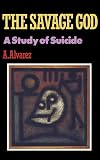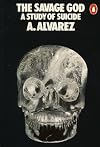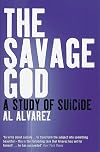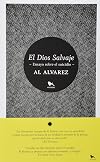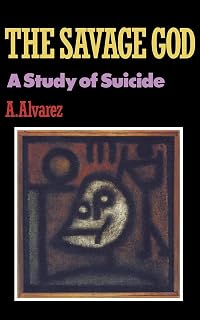
The Savage God: A Study of Suicide
by A. Alvarez
On This Page
Description
This book explores suicide as it has never been described before. It is a deep compassionate insight into the realm of self-destruction from a personal, literary, and existential point of view. The author dispels the preconception that suicide is either a terrifying aberration or something to be ignored altogether. He documents and explores historically man's changing attitudes toward suicide: from the various primitive societies, the Greek and Roman cultures, to the development of the show more suicidal martyrdom of the early Christian church, the later concept of suicide as a mortal sin to be savagely punished, and the counterrevolutionary attitude of the late nineteenth century which shifted the responsibility of suicide from the individual to society. He continues with a discussion of the theories which have been developed about suicide. From there, he explores the minds and emotional states of Dante, Cowper, Donne, Chatterton, and others, explaining the death trend in their works. He sees revealed in literature the voyage of the suicide in past centuries and today. He returns to a personal view of suicide at the close of the book as he chronicles his attempt on his own life. He brings the reader through a journey where one sees the act of suicide as the end of a long experience, an emptiness so isolated and violent--making life into such a paper-thin reality--that it surrenders.-- show lessTags
Recommendations
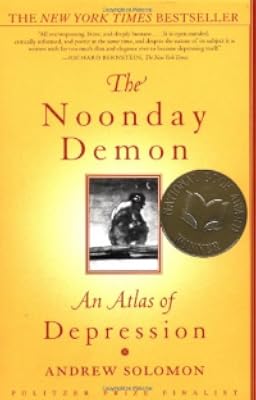
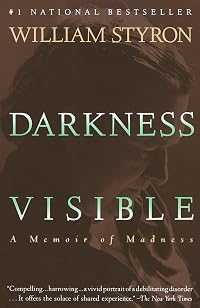
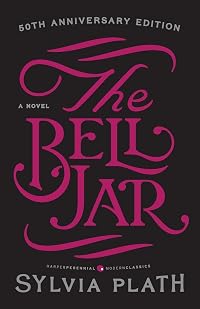
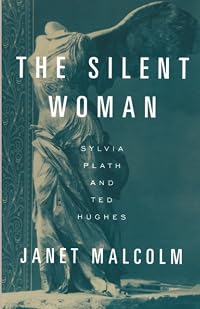











Member Recommendations

Member Reviews
This book has been around for fifty years; the copy I borrowed from the library looks its age. The black cloth spine has faded to gray, and the covers have strips to match after being shelved between two books not as tall. It shows signs of use—-I estimate it's been read about ten times, or once every five years or so.
I'm immersing myself in Sylvia Plath at the moment, and I saw this referenced. A second reason I'm glad I came across it is that I recently read a well-meaning but ultimately unsatisfying anti-suicide tract disguised as a novel. The Savage God (the title is from Yeats, number three on the list of book title sources, after the Bible and Shakespeare) is a more substantial treatment of the topic.
Alvarez knew Sylvia Plath show more and her husband, Ted Hughes. The book opens with his memoir of their friendship and of Plath's suicide, which is why it appeared listed among further reading at the end of a reference article on her. Alvarez, too, attempted suicide. His account of that episode closes the book, a counterpart to the opening memoir.
The book's main body is divided into three parts of unequal length, with Part Three slightly longer than the first two parts combined. Part One, The Background, briefly traces the history of attitudes toward suicide, from pagan abhorrence to the Stoic embrace of the act. I felt Alvarez did an excellent job of tracing the varying Christian attitude. Both Old and New Testaments record acts of taking one's own like, but not polemically. Augustine had a significant role in the church's condemnation of it. Alvarez points out that this was when martyrdom was becoming rare; until then, it was superfluous to take one's own life since there was ample opportunity to die for one's faith. From the early middle ages to modern times, anyone who committed suicide was made to suffer severe post-mortem dishonor (exclusion from cemeteries, desecration of the corpse, forfeit of his estate to the state).
In Part Two, Alvarez describes six common fallacies about suicide, theories about it in sociology and psychology, and what Alvarez calls feelings about suicide (the complex motives of those who attempt it).
All of this is preliminary to the focus of Alvarez's inquiry: suicide and literature. This is not primarily about how suicide is treated in literature (Goethe's Werther does come up, but Emma Bovary, Anna Karenina, and others do not). Instead, Alvarez investigates suicide reflected in the life and attitudes of writers, beginning with Dante. From him, Alvarez turns to John Donne, the first to write a defense of taking one's own life, then to Thomas Chatterton, who became the prototype of the poet as tragic martyr to his art, a pattern for the Romantic age that followed. Kierkegaard and Dostoevsky are emblematic of the transition to the twentieth century. Then the absurd carnage of World War One laid the groundwork for Dada, in which suicide became stylized as a work of art. In the final chapter, with the same title as the book, Alvarez sums up his thesis with a survey of literature in the half-century between the Great War and the time of this book's writing, beginning with Wilfried Owen. Owen did not commit suicide but returned to the trenches even though he needn't have. But he felt impelled to witness and record the "blindfold look" of those he served alongside, the response to senseless slaughter.
This numbness is characteristic, for Alvarez, of the modern world. "Under the energy, appetite, and constant diversity of the moderns arts," he writes, "is that obdurate core of blankness and insentience which no amount of creative optimism and effort can wholly break down or remove." Alvarez posits two ways in which art has responded to this. One he calls Totalitarian Art, which is not, he notes, the same as traditional art in a totalitarian society. Rather, it is minimal art, stripped of all that traditionally marks the production of creative individuals, since such creators are of no use to the totalitarian state. The opposite is what Alvarez calls Extremist Art. Not nihilist, as Dada was, nor solely confessional, as the Beats are, this is produced by those who have studied and absorbed the forms of technical mastery T. S. Eliot and others of the prior generation, yet confronts the "violent confusions" of its time. Alvarez names as the leading exponents of this style in English-language poetry Robert Lowell, John Berryman, Ted Hughes, and Sylvia Plath. Theirs is poetry that reveals the poet's life; nevertheless, it's the work that is important. The breakdown of one or the suicide of another "adds nothing to the work and proves nothing about it."
In the case of Plath, Alvarez is convinced that her death was the result of a miscalculation. Whereas an attempt ten years earlier was meticulously planned and seemingly insulated against discovery, this one seemed ambivalent (next to her body was a note with the name and telephone number of her doctor). "Her calculation went wrong and she lost," he writes, adding that she wouldn't have approved readers coming to her work because her death had somehow validated the writing.
Alvarez researched his topic extensively, and the result is not light reading. Instead, it is challenging, both in its thesis and prose (which some readers might find dense, although I admired it). In the end, the book can either be viewed as using the lives of writers to illustrate changing attitudes toward suicide or as a work of literary criticism that employs the topos of suicide to dissect and analyze literary trends. I thought it was an ambitious work, well worth reading. show less
I'm immersing myself in Sylvia Plath at the moment, and I saw this referenced. A second reason I'm glad I came across it is that I recently read a well-meaning but ultimately unsatisfying anti-suicide tract disguised as a novel. The Savage God (the title is from Yeats, number three on the list of book title sources, after the Bible and Shakespeare) is a more substantial treatment of the topic.
Alvarez knew Sylvia Plath show more and her husband, Ted Hughes. The book opens with his memoir of their friendship and of Plath's suicide, which is why it appeared listed among further reading at the end of a reference article on her. Alvarez, too, attempted suicide. His account of that episode closes the book, a counterpart to the opening memoir.
The book's main body is divided into three parts of unequal length, with Part Three slightly longer than the first two parts combined. Part One, The Background, briefly traces the history of attitudes toward suicide, from pagan abhorrence to the Stoic embrace of the act. I felt Alvarez did an excellent job of tracing the varying Christian attitude. Both Old and New Testaments record acts of taking one's own like, but not polemically. Augustine had a significant role in the church's condemnation of it. Alvarez points out that this was when martyrdom was becoming rare; until then, it was superfluous to take one's own life since there was ample opportunity to die for one's faith. From the early middle ages to modern times, anyone who committed suicide was made to suffer severe post-mortem dishonor (exclusion from cemeteries, desecration of the corpse, forfeit of his estate to the state).
In Part Two, Alvarez describes six common fallacies about suicide, theories about it in sociology and psychology, and what Alvarez calls feelings about suicide (the complex motives of those who attempt it).
All of this is preliminary to the focus of Alvarez's inquiry: suicide and literature. This is not primarily about how suicide is treated in literature (Goethe's Werther does come up, but Emma Bovary, Anna Karenina, and others do not). Instead, Alvarez investigates suicide reflected in the life and attitudes of writers, beginning with Dante. From him, Alvarez turns to John Donne, the first to write a defense of taking one's own life, then to Thomas Chatterton, who became the prototype of the poet as tragic martyr to his art, a pattern for the Romantic age that followed. Kierkegaard and Dostoevsky are emblematic of the transition to the twentieth century. Then the absurd carnage of World War One laid the groundwork for Dada, in which suicide became stylized as a work of art. In the final chapter, with the same title as the book, Alvarez sums up his thesis with a survey of literature in the half-century between the Great War and the time of this book's writing, beginning with Wilfried Owen. Owen did not commit suicide but returned to the trenches even though he needn't have. But he felt impelled to witness and record the "blindfold look" of those he served alongside, the response to senseless slaughter.
This numbness is characteristic, for Alvarez, of the modern world. "Under the energy, appetite, and constant diversity of the moderns arts," he writes, "is that obdurate core of blankness and insentience which no amount of creative optimism and effort can wholly break down or remove." Alvarez posits two ways in which art has responded to this. One he calls Totalitarian Art, which is not, he notes, the same as traditional art in a totalitarian society. Rather, it is minimal art, stripped of all that traditionally marks the production of creative individuals, since such creators are of no use to the totalitarian state. The opposite is what Alvarez calls Extremist Art. Not nihilist, as Dada was, nor solely confessional, as the Beats are, this is produced by those who have studied and absorbed the forms of technical mastery T. S. Eliot and others of the prior generation, yet confronts the "violent confusions" of its time. Alvarez names as the leading exponents of this style in English-language poetry Robert Lowell, John Berryman, Ted Hughes, and Sylvia Plath. Theirs is poetry that reveals the poet's life; nevertheless, it's the work that is important. The breakdown of one or the suicide of another "adds nothing to the work and proves nothing about it."
In the case of Plath, Alvarez is convinced that her death was the result of a miscalculation. Whereas an attempt ten years earlier was meticulously planned and seemingly insulated against discovery, this one seemed ambivalent (next to her body was a note with the name and telephone number of her doctor). "Her calculation went wrong and she lost," he writes, adding that she wouldn't have approved readers coming to her work because her death had somehow validated the writing.
Alvarez researched his topic extensively, and the result is not light reading. Instead, it is challenging, both in its thesis and prose (which some readers might find dense, although I admired it). In the end, the book can either be viewed as using the lives of writers to illustrate changing attitudes toward suicide or as a work of literary criticism that employs the topos of suicide to dissect and analyze literary trends. I thought it was an ambitious work, well worth reading. show less
As one of the few holistic discussions of what is perhaps the one remaining taboo in our permissive society, Al Alvarez's book on suicide, The Savage God, is welcome even if just for its mere existence. Alvarez writes well and with compassion, particularly in the bookend chapters when he addresses the suicide of his friend Sylvia Plath and his own attempted suicide. In these chapters the book is an honest and erudite memoir, and very readable.
In between, however, are Marmite chapters addressing suicide more abstractly. Alvarez largely ignores the perhaps more fruitful psychological and philosophical discussion on self-slaughter in favour of the dense approach of literary criticism (the title of the book comes from a poem by Yeats). He show more looks into how suicide has been tackled in Western culture from Dante in the Middle Ages through to the modern, post-Nietzschean 'God is dead' West we are still trying to navigate nearly fifty years after Alvarez published his book. "Suicide has permeated western culture like a dye that cannot be washed out," he asserts on page 235, and like many others he struggles to isolate it from the fabric in order to understand it. At times it seems like there's so much to say about it that there's nothing to say about it.
The best that can be hoped for, it seems, are moments of "temporary clarity" much like the ones that even the most confused of suicides find when they make their choice (pg. 107). If there is, in life, only an "uneasy and perilous freedom" as an alternative to the artifices of religion, science and politics (pg. 150), then it is freedom nonetheless. This sort of cultural diagnosis may be off-putting for some, and certainly Alvarez's book becomes too focused on the suicidal and depressed artists and creatives ("the aristocrats of death," he quotes Daniel Stern on page 165, "God's graduate students, acting out their theses") rather than all the regular people who also commit suicide for many different reasons. This distorts his analysis, even if it is sometimes more interesting, but many people will have lost their way in the often dry literary criticism long before Alvarez starts talking about 'Arnoldian concepts' (pg. 275) like an academic monograph.
Nevertheless, he is always honest and compassionate – and, importantly, seeking. His observations are astute and his conclusion, insofar as he has one, hints at the problem of trying to be too definitive about the topic. Those who talk about it as a disease, he writes on page 307, are as puzzling as those who previously called it a sin; the closest thing that can be said with any proportionality is that it is a "terrible but utterly natural reaction to the strained, narrow, unnatural necessities we sometimes create for ourselves". Perhaps when this lucid (and daunting) diagnosis is more widely accepted in our culture – which still seems trapped in the 'mental illness' whirligig (gotta keep those pill companies solvent, young men of the West!) – perhaps then we finally begin to discuss, cleanly and honestly, our last great taboo. show less
In between, however, are Marmite chapters addressing suicide more abstractly. Alvarez largely ignores the perhaps more fruitful psychological and philosophical discussion on self-slaughter in favour of the dense approach of literary criticism (the title of the book comes from a poem by Yeats). He show more looks into how suicide has been tackled in Western culture from Dante in the Middle Ages through to the modern, post-Nietzschean 'God is dead' West we are still trying to navigate nearly fifty years after Alvarez published his book. "Suicide has permeated western culture like a dye that cannot be washed out," he asserts on page 235, and like many others he struggles to isolate it from the fabric in order to understand it. At times it seems like there's so much to say about it that there's nothing to say about it.
The best that can be hoped for, it seems, are moments of "temporary clarity" much like the ones that even the most confused of suicides find when they make their choice (pg. 107). If there is, in life, only an "uneasy and perilous freedom" as an alternative to the artifices of religion, science and politics (pg. 150), then it is freedom nonetheless. This sort of cultural diagnosis may be off-putting for some, and certainly Alvarez's book becomes too focused on the suicidal and depressed artists and creatives ("the aristocrats of death," he quotes Daniel Stern on page 165, "God's graduate students, acting out their theses") rather than all the regular people who also commit suicide for many different reasons. This distorts his analysis, even if it is sometimes more interesting, but many people will have lost their way in the often dry literary criticism long before Alvarez starts talking about 'Arnoldian concepts' (pg. 275) like an academic monograph.
Nevertheless, he is always honest and compassionate – and, importantly, seeking. His observations are astute and his conclusion, insofar as he has one, hints at the problem of trying to be too definitive about the topic. Those who talk about it as a disease, he writes on page 307, are as puzzling as those who previously called it a sin; the closest thing that can be said with any proportionality is that it is a "terrible but utterly natural reaction to the strained, narrow, unnatural necessities we sometimes create for ourselves". Perhaps when this lucid (and daunting) diagnosis is more widely accepted in our culture – which still seems trapped in the 'mental illness' whirligig (gotta keep those pill companies solvent, young men of the West!) – perhaps then we finally begin to discuss, cleanly and honestly, our last great taboo. show less
Objetivamente es un libro imperfecto, lo suficientemente riguroso para ser un ensayo al que darle pelota y tener pretensiones de seriedad. Subjetivamente me encantó, me hizo recordar sueños recurrentes y me dejó lleno del tipo de preguntas que solo se contestan cuando alguna experiencia te tira la respuesta a la cara.
A literary and philosophical investigation on death and suicide, but this is something much more than that. This is a deeply personal book, and does not seem clinical or insensitive.
The book begins with a suicide and ends with an attempt. Sylvia Plath, the great tragedy of her death - and our dear author, who has mercifully survived, if only to tell us about this torment.
Sandwiched in between these very personal stories is a careful and tender analysis of the myths, beliefs, and possible grasping and contradictory attempts at understanding suicide. The curious contradictions of statistics - suicide rates are highest in post-Soviet countries, South Korea, Japan, and northern Europe - and lowest in Haiti, Latin America, and the Caribbean. show more Is it solely a factor of weather? Perhaps not - the majority of suicides are in May, and often on Wednesdays.
Next the three categories of suicide - as sacrifice, as way of escaping from physical sickness, as act of despair.
After this, historical attitudes, and suicide as literature. The Ancient classical societies recognized it as sacrifice, perhaps. So did the early Christians, who praised the defiant martyrs. By the Middle Ages, self-death, self-murder, was a grave sin. Dante consigned suicides to the 7th Circle of the Inferno, turned into trees and eaten by Harpies. The Romantics again respected the artists and creators who fell to suicide - The Sorrows of Young Werther spawned copypcats - and the Dadaists worshiped it. Death as an art itself. Radical political groups still do. Sacrifice for the nation, for an idea, a race, a belief.
The trend of the creator and self-destroyer continues today. Plath, John Berryman, Hunter S. Thompson, David F. Wallace. Part of a thorned lineage dating to Socrates. Alvarez postulates long and hard upon this bitter connection.
This is a deeply honest book, which will provide comfort and something like understanding to the sufferer, the mourner, and the mourner alike. Suicide today is still seldom spoken of, and Alvarez speaks of it with candor and sympathy. All the better for us all. show less
The book begins with a suicide and ends with an attempt. Sylvia Plath, the great tragedy of her death - and our dear author, who has mercifully survived, if only to tell us about this torment.
Sandwiched in between these very personal stories is a careful and tender analysis of the myths, beliefs, and possible grasping and contradictory attempts at understanding suicide. The curious contradictions of statistics - suicide rates are highest in post-Soviet countries, South Korea, Japan, and northern Europe - and lowest in Haiti, Latin America, and the Caribbean. show more Is it solely a factor of weather? Perhaps not - the majority of suicides are in May, and often on Wednesdays.
Next the three categories of suicide - as sacrifice, as way of escaping from physical sickness, as act of despair.
After this, historical attitudes, and suicide as literature. The Ancient classical societies recognized it as sacrifice, perhaps. So did the early Christians, who praised the defiant martyrs. By the Middle Ages, self-death, self-murder, was a grave sin. Dante consigned suicides to the 7th Circle of the Inferno, turned into trees and eaten by Harpies. The Romantics again respected the artists and creators who fell to suicide - The Sorrows of Young Werther spawned copypcats - and the Dadaists worshiped it. Death as an art itself. Radical political groups still do. Sacrifice for the nation, for an idea, a race, a belief.
The trend of the creator and self-destroyer continues today. Plath, John Berryman, Hunter S. Thompson, David F. Wallace. Part of a thorned lineage dating to Socrates. Alvarez postulates long and hard upon this bitter connection.
This is a deeply honest book, which will provide comfort and something like understanding to the sufferer, the mourner, and the mourner alike. Suicide today is still seldom spoken of, and Alvarez speaks of it with candor and sympathy. All the better for us all. show less
Brilliant. Two complaints: 1) somehow Alvarez manages to completely skip over the Victorians (how can a book about suicide and literature ignore Tennyson's "Two Voices"?) and 2) he gets mired in the usual nonsense about mid-20th century verse. The first is rather inexcusable; the second was only a matter of pushing through fifteen or so full pages. Well worth the effort for the rest of the book. Might have convinced me to read Dostoevsky's "Demons" next.
A rather personal but detailed study of suicide by a man whose life has been marled by it; he investigates it historically, theoretically and empirically -- he knew Plath and tried to tale his own life. Rather more insightful.than Minois.
(Original Review, 2002)
“Suicide is, after all, the result of a choice. However impulsive the action and confused the motives, at the moment when a man finally decides to take his own life he achieves a certain temporary clarity. Suicide may be a declaration of bankruptcy which passes judgment on a life as one long history of failure. But it is a decision which, by its very finality, is not wholly a failure. There is, I believe, a whole class of suicides who take their own lives not in order to die but to escape confusion, to clear their heads. They deliberately use suicide to create an unencumbered reality for themselves or to break through the patterns of obsession and necessity which they have unwittingly imposed on their show more lives.”
In “The Savage God - A Study of Suicide” by Al Alvarez
Hughes and Plath were two big poetic figures maybe too alike in their creative powers that sooner or later one had to give way. Hughes wrote some good poetry like “Hawk in the Rain” and “Lupercal”, drawing on a mytho-poetic creation of nature. Hughes was a broody Yorkshireman who grew up in Mythlmroyd, near Hardcastle Crags, he avoided the type of poetry turned out by the Movement poets and Alvarez wrote a piece on this called "Against the Gentility Principle" as an intro to a book of poetry. Alvarez also wrote "The Savage God": A Study of Suicide", has permeated Western culture like a dye that cannot be washed out." Although the aims of this compelling, compassionate work are broadly cultural and literary, the narrative is rooted in personal experience: it begins with a long memoir of Sylvia Plath, and ends with an account of the author's own suicide attempt. Within this dramatic framework, Alvarez launches his inquiry into the final taboo of human behaviour, and traces changing attitudes towards suicide from the perspective of literature. He follows the black thread leading from Dante through Donne and the romantic agony, to the “Savage God” at the heart of modern literature. show less
“Suicide is, after all, the result of a choice. However impulsive the action and confused the motives, at the moment when a man finally decides to take his own life he achieves a certain temporary clarity. Suicide may be a declaration of bankruptcy which passes judgment on a life as one long history of failure. But it is a decision which, by its very finality, is not wholly a failure. There is, I believe, a whole class of suicides who take their own lives not in order to die but to escape confusion, to clear their heads. They deliberately use suicide to create an unencumbered reality for themselves or to break through the patterns of obsession and necessity which they have unwittingly imposed on their show more lives.”
In “The Savage God - A Study of Suicide” by Al Alvarez
Hughes and Plath were two big poetic figures maybe too alike in their creative powers that sooner or later one had to give way. Hughes wrote some good poetry like “Hawk in the Rain” and “Lupercal”, drawing on a mytho-poetic creation of nature. Hughes was a broody Yorkshireman who grew up in Mythlmroyd, near Hardcastle Crags, he avoided the type of poetry turned out by the Movement poets and Alvarez wrote a piece on this called "Against the Gentility Principle" as an intro to a book of poetry. Alvarez also wrote "The Savage God": A Study of Suicide", has permeated Western culture like a dye that cannot be washed out." Although the aims of this compelling, compassionate work are broadly cultural and literary, the narrative is rooted in personal experience: it begins with a long memoir of Sylvia Plath, and ends with an account of the author's own suicide attempt. Within this dramatic framework, Alvarez launches his inquiry into the final taboo of human behaviour, and traces changing attitudes towards suicide from the perspective of literature. He follows the black thread leading from Dante through Donne and the romantic agony, to the “Savage God” at the heart of modern literature. show less
Members
- Recently Added By
Published Reviews
ThingScore 25
Bis zum Epilog steht man hilflos vor dem Pelemele von geschwätziger Selbstbeschuldigung und Exkulpation, dem Chaos an Informationen, Anekdoten und Gerüchten, untermischt mit Kurzdarstellungen verschiedener Theorien über den Suizid. Zwar entwirrt nun auch der Epilog diese Wirrnis nicht. Doch eröffnet er den LeserInnen ein gewisses Verständnis für das Buch. Beim zweiten "Fall", den der show more Autor abschließend schildert, handelt es sich nämlich um ihn selbst. Das Bekenntnis, daß er ein "gescheiterter Selbstmörder" sei, kommt allerdings sehr überraschend. Kann er das denn sein, bei so wenig Verständnis für die Tat und noch weniger Einfühlungsvermögen denjenigen gegenüber, die sie vollziehen? Doch Überraschung und Zweifel halten nicht lange an. Denn schnell wird nun deutlich, daß das Buch aus einem einzigen Grund geschrieben wurde, dem nämlich, sich vom eigenen Suizidversuch zu distanzieren, ihn in so weite Ferne wie nur irgend möglich zu rücken. Die Strategie, die Alvarez wählt, um ihn als unwiederholbare Vergangenheit und im Grunde gar nicht eigene Tat von sich zu weisen, besteht darin, sich als Opfer einer nun ein für alle Mal überwundenen geistigen Umnachtung darzustellen. show less
added by Indy133
Lists

Bibliography for How to be a Heroine
148 works; 12 members
Author Information

39+ Works 2,136 Members
A. Alvarez is the author of the acclaimed Where Did It Go All Right: A Memoir as well as the classic The Savage God: A Study of Suicide, The Biggest Game in Town, and several other works. His work has long appeared in The New Yorker and the New York Review of Books
Awards and Honors
Distinctions
Common Knowledge
- Original title
- The Savage God: A Study of Suicide
- Original publication date
- 1971
- People/Characters
- Plath, Sylvia
- Related movies*
- Sylvia (2003 | IMDb)
- Epigraph
- After us the Savage God - W.B. Yeats
- Dedication
- To Anne
- First words
- When I was at school there was an unusually sweet-tempered rather disorganized physics master who was continually talking, in a joky way, about suicide.
- Last words
- (Click to show. Warning: May contain spoilers.)I assume now that death, when it finally comes, will probably be nastier than suicide, and certainly a great deal less convenient.
- Blurbers
- Stengel, Erwin
*Some information comes from Common Knowledge in other languages. Click "Edit" for more information.
Classifications
- Genres
- Nonfiction, Literature Studies and Criticism, Biography & Memoir, History, Philosophy
- DDC/MDS
- 364.1522 — Society, government, & culture Social problems and social services Crime Criminal offenses Offenses against the person Homicide Suicide
- LCC
- HV6545 .A55 — Social sciences Social pathology. Social and public welfare. Criminology Social pathology. Social and public welfare. Criminology Crimes and offenses
- BISAC
Statistics
- Members
- 689
- Popularity
- 41,602
- Reviews
- 13
- Rating
- (3.74)
- Languages
- 10 — Dutch, English, French, German, Italian, Norwegian (Bokmål), Polish, Portuguese, Spanish, Swedish
- Media
- Paper, Ebook
- ISBNs
- 24
- ASINs
- 14