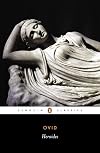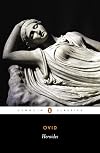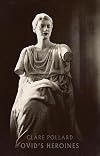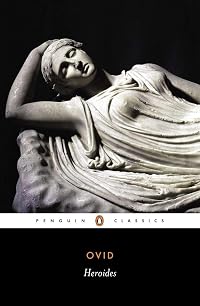
Heroides [in translation]
by Ovid
On This Page
Description
In the twenty-one poems of the Heroides, Ovid gave voice to the heroines and heroes of epic and myth. These deeply moving literary epistles reveal the happiness and torment of love, as the writers tell of their pain at separation, forgiveness of infidelity or anger at betrayal. The faithful Penelope wonders at the suspiciously long absence of Ulysses, while Dido bitterly reproaches Aeneas for too eagerly leaving her bed to follow his destiny, and Sappho - the only historical figure portrayed show more here - describes her passion for the cruelly rejecting Phaon. In the poetic letters between Paris and Helen the lovers seem oblivious to the tragedy prophesied for them, while in another exchange the youthful Leander asserts his foolhardy eagerness to risk his life to be with his beloved Hero. show lessTags
Recommendations
















Member Reviews
I'll confess to being skeptical when picking this book up. I knew the Heroides had a low reputation (unfairly, I now realise) and I hadn't rated Pollard's own work that highly before.
However this turned out to be a great discovery. The Heroides deserve to be much better known, as they once were - and it seems clear that only misogyny has hampered their reputation in recent centuries.
Pollard herself does a fine job with the translation. Personally I found some of the decisions a little *too* anachronistic - e.g. the use of the word 'slag': which took me back to my schooldays, but doesn't achieve the Read-this-by-the-Trevi-Fountain magic that was aimed for. Beyond this, Pollard's direct style works perfectly: putting the emotion show more front-and-centre rather than cluttering it up with fussy syntax.
Glad to have been introduced to this. show less
However this turned out to be a great discovery. The Heroides deserve to be much better known, as they once were - and it seems clear that only misogyny has hampered their reputation in recent centuries.
Pollard herself does a fine job with the translation. Personally I found some of the decisions a little *too* anachronistic - e.g. the use of the word 'slag': which took me back to my schooldays, but doesn't achieve the Read-this-by-the-Trevi-Fountain magic that was aimed for. Beyond this, Pollard's direct style works perfectly: putting the emotion show more front-and-centre rather than cluttering it up with fussy syntax.
Glad to have been introduced to this. show less
31. Heroides by Ovid, translated by Harold Isbell
original date: circa 16 bce
translated 1990
format: Paperback
acquired: Half-Price Books in October 2016
read: July 8-22
rating: 4
There are, apparently, many different Ovids, or he was a writer who worked in multiple distinctly independent styles. I would have said that differently if I hadn't started Metamorphoses before reviewing, and I would have had a vastly different impression of this if I hadn't read Amores and The Art of Love beforehand. Ovid's love poems introduced me to a hyper-witty and hyper-clever really knowledgeable but insincere poet. This was not that voice.
Heroides is a collection of letters written mainly by spurned heroines in Greek mythology to lovers. Fifteen of the show more letters come from the likes Penelope, Ariadne or Medea, or more obscure women like Laodamia to Protestilaus or Canace to Marcareus. The sixteenth letter comes from Sappho. And six more are back and forth with lovers. Paris writes Helen to woo her, and Helen writes back with what amounts to something that is not no. And so on.
I'm sure the modern ear can find much to make fun of, and any reader in any age will easily pick up the many levels of satire. But, oddly, these aspects don't color these letters. On the surface they are sincere. The heavy satire is mostly in the situations, the set-up if you like. The letters themselves are straightforward... often romantic, even when or because they are bitter. And they are occasionally moving. Laodamia's letter to Protestilaus stands out. In mythology Protestilaus leaves for Troy shortly after their marriage, and becomes the first casualty in the Trojan war. He is brought back to life for three hours to see Laodamia, who afterward commits suicide. She writes this letter as an unknowing widow. I found it a memorable and touching letter of love, bitter in its irony and yet tangible. Phyllus writes to Demophoon who, when she fell for him only to be abandoned, was not only hurt, but ruined. And she writes longingly.
A note about the translator, Harold Isbell. There are many oddities about him that give me pause. He was a bank director, not a professor. He provides a summary of each major character, a wonderful resource, but they are iffy and partial summaries. Each is simplified leaving a clean and often appealing impression, but one that may contradict or disregard major versions of these stories. His citations of ancient literature are incomplete and a bit haphazard. And, despite all his notes, he never once brings up anything about the translation or original Latin. But, I really enjoyed reading this. So... ??
2017
https://www.librarything.com/topic/260412#6128883 show less
original date: circa 16 bce
translated 1990
format: Paperback
acquired: Half-Price Books in October 2016
read: July 8-22
rating: 4
There are, apparently, many different Ovids, or he was a writer who worked in multiple distinctly independent styles. I would have said that differently if I hadn't started Metamorphoses before reviewing, and I would have had a vastly different impression of this if I hadn't read Amores and The Art of Love beforehand. Ovid's love poems introduced me to a hyper-witty and hyper-clever really knowledgeable but insincere poet. This was not that voice.
Heroides is a collection of letters written mainly by spurned heroines in Greek mythology to lovers. Fifteen of the show more letters come from the likes Penelope, Ariadne or Medea, or more obscure women like Laodamia to Protestilaus or Canace to Marcareus. The sixteenth letter comes from Sappho. And six more are back and forth with lovers. Paris writes Helen to woo her, and Helen writes back with what amounts to something that is not no. And so on.
I'm sure the modern ear can find much to make fun of, and any reader in any age will easily pick up the many levels of satire. But, oddly, these aspects don't color these letters. On the surface they are sincere. The heavy satire is mostly in the situations, the set-up if you like. The letters themselves are straightforward... often romantic, even when or because they are bitter. And they are occasionally moving. Laodamia's letter to Protestilaus stands out. In mythology Protestilaus leaves for Troy shortly after their marriage, and becomes the first casualty in the Trojan war. He is brought back to life for three hours to see Laodamia, who afterward commits suicide. She writes this letter as an unknowing widow. I found it a memorable and touching letter of love, bitter in its irony and yet tangible. Phyllus writes to Demophoon who, when she fell for him only to be abandoned, was not only hurt, but ruined. And she writes longingly.
A note about the translator, Harold Isbell. There are many oddities about him that give me pause. He was a bank director, not a professor. He provides a summary of each major character, a wonderful resource, but they are iffy and partial summaries. Each is simplified leaving a clean and often appealing impression, but one that may contradict or disregard major versions of these stories. His citations of ancient literature are incomplete and a bit haphazard. And, despite all his notes, he never once brings up anything about the translation or original Latin. But, I really enjoyed reading this. So... ??
Ariadne to Theseus
You would have died in the twisting halls without
the string that I gave to be your guide.
You said to me, 'I swear by these perils that
as long as we live, you will be mine.'
We are alive, Theseus, but I am not yours;
---
Laodamia to Protestilaus
I'm told the winds detain you at Aulis;
where were these winds when you sailed from me?
Then the tides should have risen against your oars;
then was the time for a raging surf.
I could have kissed my lord and given him more
requests, I wanted to say so much.
But you were hurried away by a wind your
crew loved; it was not a lover's wind.
---
Leander to Hero (across the water)
she is so near, but 'almost' starts tears.
2017
https://www.librarything.com/topic/260412#6128883 show less
SB-2
Jul 13, 2021Catalan
RG-3
Mar 12, 2021 (Edited)Catalan
publi ovidi nasó
Oct 30, 2018Spanish
Ratings
Members
- Recently Added By
Lists

Epistolary Books
105 works; 27 members

Literary Works Read in College
316 works; 15 members

Truly old classics
63 works; 6 members

Harold Bloom - The Western Canon: A. The Theocratic Age
97 works; 13 members

Epistolary Non-Fiction (Letters and Correspondence)
99 works; 5 members

Favorite Epistolary Fiction
143 works; 144 members

In Our Time books
4,934 works; 2 members
Author Information

Publius Ovidius Naso (20 March 43 BC--AD 17/18), known as Ovid. Born of an equestrian family in Sulmo, Ovid was educated in rhetoric in Rome but gave it up for poetry. He counted Horace and Propertius among his friends and wrote an elegy on the death of Tibullus. He became the leading poet of Rome but was banished in 8 A.D. by an edict of Augustus show more to remote Tomis on the Black Sea because of a poem and an indiscretion. Miserable in provincial exile, he died there ten years later. His brilliant, witty, fertile elegiac poems include Amores (Loves), Heroides (Heroines), and Ars Amatoris (The Art of Love), but he is perhaps best known for the Metamorphoses, a marvelously imaginative compendium of Greek mythology where every story alludes to a change in shape. Ovid was admired and imitated throughout the Middle Ages and Renaissance. Chaucer, Spenser, Shakespeare, and Jonson knew his works well. His mastery of form, gift for narration, and amusing urbanity are irresistible. (Bowker Author Biography) show less
Some Editions
Awards and Honors
Notable Lists
Series
Belongs to Publisher Series
Work Relationships
Is contained in
Has as a study
Common Knowledge
- Canonical title
- Heroides [in translation]
- Original publication date
- 25-15 BCE
- Original language
- Latin
- Disambiguation notice
- Heroides in translation.
Classifications
- Genres
- Poetry, Fiction and Literature
- DDC/MDS
- 871.01 — Literature & rhetoric Latin & Italic literatures Latin poetry Latin poets Classical period to 500CE
- LCC
- PA6522 .H4 .I8 — Language and Literature Greek language and literature. Latin language and literature Roman literature Individual authors Ovid
- BISAC
Statistics
- Members
- 667
- Popularity
- 43,357
- Reviews
- 5
- Rating
- (3.89)
- Languages
- 12 — Catalan, Czech, Dutch, English, French, Italian, Latin, Norwegian (Bokmål), Polish, Portuguese, Spanish, Turkish
- Media
- Paper, Ebook
- ISBNs
- 44
- ASINs
- 5