On This Page
Description
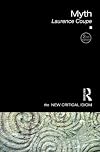
Laurence Coupe offers students a crucial overview of the evolution of 'myth', from the ancient Greek definitions to those of a range of contemporary thinkers. This introductory volume: provides an introduction to both the theory of myth and the making of myth explores the uses made of the term 'myth' within the fields of literary criticism, anthropology, cultural studies, feminism, Marxism and psychoanalysis discusses the association between modernism, postmodernism, myth and history show more familiarises the reader with themes such as the dying god, the quest for the grail, the relation between 'chaos' and 'cosmos', and the vision of the end of time illustrates the relation between myth, culture and literature with discussions of poetry, fiction, film and popular song. show lessTags
Recommendations






Member Reviews
I liked it, even though it's very dense reading.
But I'm rather astonished that Coupe can talk about myths of creation, fertility, deliverance, and heroism without ever mentioning nonpatriarchal versions of same. I think there is exactly one literary myth he discusses that was written by a woman, Frankenstein, and obviously Mary Shelley was not a modern feminist. He never mentions modern Paganism, and hardly any goddesses even when talking about classical mythology. And Gaia theory, ecopsychology, etc., only refer to men. This could've been so much more interesting and insightful if he'd found a way to include the viewpoints of people who are not men, which are > 1/2 of humanity.
But I'm rather astonished that Coupe can talk about myths of creation, fertility, deliverance, and heroism without ever mentioning nonpatriarchal versions of same. I think there is exactly one literary myth he discusses that was written by a woman, Frankenstein, and obviously Mary Shelley was not a modern feminist. He never mentions modern Paganism, and hardly any goddesses even when talking about classical mythology. And Gaia theory, ecopsychology, etc., only refer to men. This could've been so much more interesting and insightful if he'd found a way to include the viewpoints of people who are not men, which are > 1/2 of humanity.
I read this book as part of reference material I used for a critical study. What I like about Coupe is that he doesn't rely overtly on the reference material of others, and his own critical voice and opinions are well devised and thought out. His analysis is broken down in parts: Reading Myth and Mythic Reading, each section containing sections devoted to Oder, Chaos, Ends, Truth, Psyche and History. In this short work he covers a lot of ground across diverse media material but always returns to his heading concept as not to isolate his own theory as a critical study of that particular subject material.
I am not yet sure what I think of this. I've only read it "once" (meaning, I've only made it to the last page once, but there were numerous cases of re-reading passages, sections, and even entire chapters in the process), and I plan to read it again and I expect to want to read it a third time. In one respect, that means it's not great. Just looking at the text, it doesn't look like it would be as dense as it is, but there's a lot of po-mo wordplay and lack of clarity about the subjects of sentences that made it hard for me to stay with him in places.
The book is divided into two parts, one about 'reading myth' and the other about 'mythic reading'. The latter is 'about' various literary theories of myth. The former, I'm not quite sure. show more In both parts there is a great deal of lit-crit analysis of mythical elements in various fictional works, somewhat more in the first part than in the latter. It's all very interesting but after a 'single' reading I don't think I understand his argument well enough to know what to think of it. (Allow me to say that I have a Ph.D. in American anthropology; believe me, I know from ambiguous writing.)
If you do attempt this, pay particular attention to the introduction and make damned sure you understand his usage of the 'three P words' (paradigm, perfection, and possibility, IIRC) and the theorists with whom he particularly associates each one (Burke, Cupitt, and someone whose name escapes me, too), because they lie at the core of his (Coupe's) own ideas about myth. show less
The book is divided into two parts, one about 'reading myth' and the other about 'mythic reading'. The latter is 'about' various literary theories of myth. The former, I'm not quite sure. show more In both parts there is a great deal of lit-crit analysis of mythical elements in various fictional works, somewhat more in the first part than in the latter. It's all very interesting but after a 'single' reading I don't think I understand his argument well enough to know what to think of it. (Allow me to say that I have a Ph.D. in American anthropology; believe me, I know from ambiguous writing.)
If you do attempt this, pay particular attention to the introduction and make damned sure you understand his usage of the 'three P words' (paradigm, perfection, and possibility, IIRC) and the theorists with whom he particularly associates each one (Burke, Cupitt, and someone whose name escapes me, too), because they lie at the core of his (Coupe's) own ideas about myth. show less
Ratings
Members
- Recently Added By
Author Information
6 Works 136 Members
Series

Common Knowledge
- Canonical title
- Myth
- Original title
- Myth
- Original publication date
- 1997
- Original language
- English
Classifications
- Genres
- Nonfiction, Literature Studies and Criticism, Religion & Spirituality, General Nonfiction, History
- DDC/MDS
- 201.3 — Religion The Bible & Christianity Religious mythology, general classes of religion, interreligious relations and attitudes, social theology Mythology and mythological foundations
- LCC
- BL304 .C68 — Philosophy, Psychology and Religion Religions. Mythology. Rationalism Religions. Mythology. Rationalism The myth. Comparative mythology
- BISAC
Statistics
- Members
- 93
- Popularity
- 345,293
- Reviews
- 3
- Rating
- (3.38)
- Languages
- English, Russian
- Media
- Paper, Ebook
- ISBNs
- 7
- ASINs
- 2