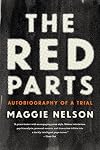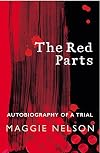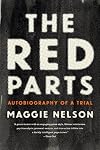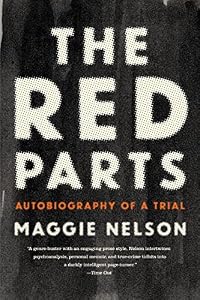
The Red Parts: Autobiography of a Trial
by Maggie Nelson
On This Page
Description
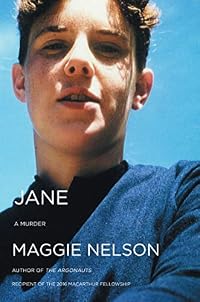
A chilling genre-busting memoir by a major American essayist Late in 2004, Maggie Nelson was looking forward to the publication of her book Jane: A Murder, a narrative in verse about the life and death of her aunt, who had been murdered thirty-five years before. The case remained unsolved, but Jane was assumed to have been the victim of an infamous serial killer in Michigan in 1969.Then, one November afternoon, Nelson received a call from her mother, who announced that the case had been show more reopened; a new suspect would be arrested and tried on the basis of a DNA match. Over the months that followed, Nelson found herself attending the trial with her mother and reflecting anew on the aura of dread and fear that hung over her family and childhood-an aura that derived not only from the terrible facts of her aunt's murder but also from her own complicated journey through sisterhood, daughterhood, and girlhood. The Red Parts is a memoir, an account of a trial, and a provocative essay that interrogates the American obsession with violence and missing white women, and that scrupulously explores the nature of grief, justice, and empathy. show lessTags
Recommendations


































Member Recommendations
schmootc This book is a melding of true crime and memoir that is very readable. The catalyst is a crime, but how the author is affected by the crime/reacts to it is where the focus lies.
Member Reviews
During the late 1960’s, in Ann Arbor, Michigan, there was a serial killer loose. 7 young women, all residing in and around Ann Arbor were brutally raped and killed. John Norman Collins was accused, tried and convicted of these crimes. I was 10 or 11 years old at the time and have vivid memories of the news reports. That is the reason I picked up this book.
Maggie Nelson's aunt was believed to be one of Collins victims (she is not included in the count above). The case could not be made and Jane’s (Maggie’s aunt) case was put aside as a cold case file.
In 2005 Nelson was in the last steps of publishing a memoir/poetry book entitled Jane: A Murder. At this exact moment in time, The Michigan State Police contacted her and told her they show more had been re-working the case for years and they believed they finally had Jane’s murderer.
The Red Parts delves into not only Jane’s life, but Maggie’s own childhood. She examines her own childhood grief, her Mother’s grief and how it all melts together. Maggie and her mother attended the trial, 30 some years after the fact, and so we do see the case the State Police had made. However, this book is more about how this 30 year old murder shaped Maggie’s life.
“I know what I want is impossible. If I can make my language flat enough, exact enough, if i can rinse each sentence clean enough, like washing a stone over and over again in river water, if I can find the the right perch or crevice from which to record everything, if i can give myself enough white space, maybe I could do it. I could tell you this story while walking out of this story. I could-it all could-just disappear”
It is a mesmerizing read that I found myself reading late into the night.
Highly recommended. show less
Maggie Nelson's aunt was believed to be one of Collins victims (she is not included in the count above). The case could not be made and Jane’s (Maggie’s aunt) case was put aside as a cold case file.
In 2005 Nelson was in the last steps of publishing a memoir/poetry book entitled Jane: A Murder. At this exact moment in time, The Michigan State Police contacted her and told her they show more had been re-working the case for years and they believed they finally had Jane’s murderer.
The Red Parts delves into not only Jane’s life, but Maggie’s own childhood. She examines her own childhood grief, her Mother’s grief and how it all melts together. Maggie and her mother attended the trial, 30 some years after the fact, and so we do see the case the State Police had made. However, this book is more about how this 30 year old murder shaped Maggie’s life.
“I know what I want is impossible. If I can make my language flat enough, exact enough, if i can rinse each sentence clean enough, like washing a stone over and over again in river water, if I can find the the right perch or crevice from which to record everything, if i can give myself enough white space, maybe I could do it. I could tell you this story while walking out of this story. I could-it all could-just disappear”
It is a mesmerizing read that I found myself reading late into the night.
Highly recommended. show less
In 2004, as Maggie Nelson is preparing to release her poetry collection JANE: A MURDER, she receives word that police believe they have found the man responsible for her aunt Jane's death decades before. In THE RED PARTS: AUTOBIOGRAPHY OF A TRIAL, the author explores her involvement in the investigation of the killer, primarily through research for her poetry collection, and her experiences as the investigation moves to arrest of the suspect and eventually the trial itself. Through this, the reader is taken, ultimately, on a journey to come to terms with whose life really matters in society.
This is not a "true crime" story or a courtroom transcript. Instead, Maggie Nelson weaves a thoughtful and emotionally expressive narrative of the show more grief her family endured during the initial investigation in 1969, and the new grief that she and the remaining family members experience through the current proceedings. You learn about the lasting impacts of the tragedy on Maggie's loved ones, and how those effects seeped into other relationships. She so masterfully and gracefully incorporates her memoir into the framework of the trial that the reader is left feeling the full breadth of emotions along with the author.
There are also deep-dives into aspects of criminal investigation that you don't often find in memoirs. The author writes in depth about the role of DNA analysis in modern investigations, and the analysis of the findings, since that technology wasn't available at the time of her aunt's initial murder trial. It is staggering to understand just how much can be known about a crime from the DNA that is left behind. You also find out how news programs and true-crime TV shows interact with victims and their families during these proceedings, the interactions of which are about as uncompassionate and exploitative as you would expect.
While the climax of THE RED PARTS is the jury's verdict in the trial, there is no grand expression of devastation or jubilance on either side. There is still an uneasiness for the author, because what good does this trial ultimately achieve? Her aunt is still dead, and an old man's life has been irrevocably changed. There are many questions probed in this autobiography of a trial, with few answers...much like life (and death) itself. It is the journey of Maggie Nelson's writing that makes this a gripping and emotional book - putting context to a life cut short. show less
This is not a "true crime" story or a courtroom transcript. Instead, Maggie Nelson weaves a thoughtful and emotionally expressive narrative of the show more grief her family endured during the initial investigation in 1969, and the new grief that she and the remaining family members experience through the current proceedings. You learn about the lasting impacts of the tragedy on Maggie's loved ones, and how those effects seeped into other relationships. She so masterfully and gracefully incorporates her memoir into the framework of the trial that the reader is left feeling the full breadth of emotions along with the author.
There are also deep-dives into aspects of criminal investigation that you don't often find in memoirs. The author writes in depth about the role of DNA analysis in modern investigations, and the analysis of the findings, since that technology wasn't available at the time of her aunt's initial murder trial. It is staggering to understand just how much can be known about a crime from the DNA that is left behind. You also find out how news programs and true-crime TV shows interact with victims and their families during these proceedings, the interactions of which are about as uncompassionate and exploitative as you would expect.
While the climax of THE RED PARTS is the jury's verdict in the trial, there is no grand expression of devastation or jubilance on either side. There is still an uneasiness for the author, because what good does this trial ultimately achieve? Her aunt is still dead, and an old man's life has been irrevocably changed. There are many questions probed in this autobiography of a trial, with few answers...much like life (and death) itself. It is the journey of Maggie Nelson's writing that makes this a gripping and emotional book - putting context to a life cut short. show less
Disappointed is too strong - just not what I was expecting.
"Maggie Nelson’s aunt was murdered in Michigan in 1969. Thirty-five years later, just as Nelson had completed writing a poetry collection about her, the case was reopened when new DNA evidence emerged."
She and her mom attend the trial, and she muses about autopsy photos, childhood memories, relationship troubles, death, identity. Whe was young when her father died suddenly, after her mom left him, and her sister went through a long period of rebellion.
I enjoyed it but I think I expected it to be more about the crime and the criminal, like most true crime books. It's fitting that instead it's about the victim and the marks her death left on those who loved her.
I feel sorry show more that this wasn't a hard read for me, though it made me sad. I feel a bit bad about my avid reading of true crime books, and my curiosity about the killer's thoughts and motives, instead of about the victim. But victims are the passive one in that partnership, aren't they, even though they have rich lives of their own. We can try to focus on them - news articles describing the victims of some killer so we can see they were people - but we wouldn't even know about them but for the murderer. show less
"Maggie Nelson’s aunt was murdered in Michigan in 1969. Thirty-five years later, just as Nelson had completed writing a poetry collection about her, the case was reopened when new DNA evidence emerged."
She and her mom attend the trial, and she muses about autopsy photos, childhood memories, relationship troubles, death, identity. Whe was young when her father died suddenly, after her mom left him, and her sister went through a long period of rebellion.
I enjoyed it but I think I expected it to be more about the crime and the criminal, like most true crime books. It's fitting that instead it's about the victim and the marks her death left on those who loved her.
I feel sorry show more that this wasn't a hard read for me, though it made me sad. I feel a bit bad about my avid reading of true crime books, and my curiosity about the killer's thoughts and motives, instead of about the victim. But victims are the passive one in that partnership, aren't they, even though they have rich lives of their own. We can try to focus on them - news articles describing the victims of some killer so we can see they were people - but we wouldn't even know about them but for the murderer. show less
Maggie Nelson has written a powerful and deeply personal memoir that explores the world of quiet, enduring grief that settles on a family after suffering a horrific act of violence. Nelson doesn't seek easy answers or sentimental comforts, but rather delves unflinchingly into her own complicated life and the lives of her family as they revisit a tragedy that has left its stamp on them all for over three decades. One of the most haunting and original works I have had the pleasure of reading.
Maggie Nelson's Aunt Jane was murdered in 1969, 4 years before Nelson was born. She grew up knowing about the murder, and as an adult wrote a book about it, "Jane." Over the years it was presumed that Jane was murdered by a serial killer who was convicted for murdering other women. Then, in 2004 just "Jane" was about to be published, new DNA evidence identified Jane's actual murderer. Over the next months, Nelson attended the trial with her mother.
Despite its subtitle, this is not a true crime book, nor is it really an account of a murder trial, which is what I was expecting. Instead, it was more about Nelson's life, loves, and thoughts, which I really wasn't interested in. The New York Times asked, "{D}oes she want Jane's life to show more matter...or her own?" Exactly.
2 stars show less
Despite its subtitle, this is not a true crime book, nor is it really an account of a murder trial, which is what I was expecting. Instead, it was more about Nelson's life, loves, and thoughts, which I really wasn't interested in. The New York Times asked, "{D}oes she want Jane's life to show more matter...or her own?" Exactly.
2 stars show less
Brilliantly haunting first-person account of the author's aunt Jane's murder and the doors of grief and loss it opens for the author and her family.
More Maggie Nelson please. I've spent the summer reading her and havent' had this much fun with a single author's work in 20 years. I hope someone clone's Ms. Nelson, or at least her books, before I run out.
Members
- Recently Added By
Lists

Best Feminist Literature
188 works; 26 members

Club Read's Recommended Nonfiction Written by Women
618 works; 30 members

Reading Glasses Podcast
410 works; 3 members
Author Information

17+ Works 5,717 Members
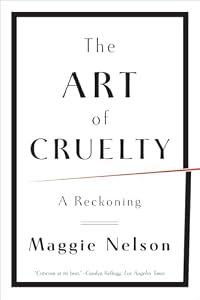
Maggie Nelson is a poet, critic, and nonfiction author of several books including The Argonauts, The Art of Cruelty: A Reckoning, Bluets, and Jane: A Murder: She teaches in the School of Critical Studies at CalArts and lives in Los Angeles, California.
Awards and Honors
Common Knowledge
- Canonical title*
- Die roten Stellen: Autobiographie eines Prozesses
- Original title
- The Red Parts: Autobiography of a Trial
- Original publication date
- 2007
- Dedication
- For Christina Crosby and Janet Jakobsen, who train in the fire, and do the world justice.
- First words
- We have every reason to believe this case is moving swiftly toward a successful conclusion.
- Original language
- English
*Some information comes from Common Knowledge in other languages. Click "Edit" for more information.
Classifications
- Genres
- Biography & Memoir, Nonfiction
- DDC/MDS
- 362.88 — Society, Government, and Culture Social problems and social services Social Welfare Problems of and services to other groups People affected by criminal acts
- LCC
- HV6529 .N46 — Social sciences Social pathology. Social and public welfare. Criminology Social pathology. Social and public welfare. Criminology Crimes and offenses
- BISAC
Statistics
- Members
- 538
- Popularity
- 55,051
- Reviews
- 10
- Rating
- (3.86)
- Languages
- Dutch, English, French, German
- Media
- Paper, Audiobook, Ebook
- ISBNs
- 17
- ASINs
- 4