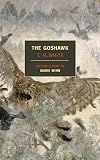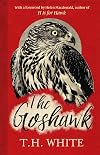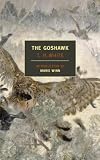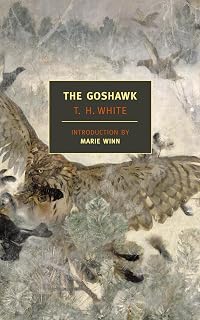
The Goshawk
by T. H. White
On This Page
Description
The predecessor to Helen Macdonald's H Is for Hawk, T. H. White's nature-writing classic, The Goshawk, asks the age-old question. What is it that binds human beings to other animals? White, author of The Once and Future King and Mistress Masham's Repose, was a young writer who found himself rifling through old handbooks of falconry. A particular sentence-"the bird reverted to a feral state"-seized his imagination, and, White later wrote, "A longing came to my mind that I should be able to do show more this myself. The word 'feral' has a kind of magical potency which allied itself to two other words, 'ferocious' and 'free.'" Immediately White wrote to Germany to acquire a young goshawk. Gos, as White named the bird, was ferocious and Gos was free, and White had no idea how to break him in beyond the ancient (and, as it happened, long superseded) practice of depriving him of sleep, which meant that he, White, also went without rest. Slowly man and bird entered a state of delirium and intoxication, of attraction and repulsion that looks very much like love. White kept a daybook describing his volatile relationship with Gos-at once a tale of obsession, a comedy of errors, and a hymn to the hawk. It was this that became The Goshawk, one of modern literature's most memorable and surprising encounters with the wilderness-as it exists both within us and without. show lessTags
Recommendations

















Member Recommendations

Member Reviews
I started reading 'H is for Hawk', and realised I didn't want to read a book about a book by an author I thought of fondly without reading the book itself first. So off I set on a quest, to re-read the Once and Future King and then to read 'The Goshawk'.
It is an odd little book to our modern sensibilities. Journaling in (often tedious) detail his attempts to train his hawk Gos, many of the chapters are just called 'Monday', 'Tuesday' etc. The first half is about the training, the second half aboutwhat happens when he loses Gos , and then there are two brief sections at the end, , one which is 'I got another hawk and she managed to catch a rabbit', and a second which is a later afterword, saying 'here are the important things I had to show more hide in the main book, like I'm pretty convinced Gos is dead, I was a terrible hawk trainer and most of what I did was wrong, and the bit where I kept going 'probably sparrowhawks' was because they turned out to be Hobbies' The ending feels terribly rushed after the minutiae of the first parts of the book.
I have engaged enough with other perspectives on the book to know that basically all modern falconers think T H White is Doing it Wrong TM, and was even in those days, so it is a weird book of someone mostly doing the wrong thing and then failing at the thing they are doing. There is a sense of the bumbling interloper being helped out by the locals. Much of what he does feels hideously cruel to modern animal ethics, and indeed not necessary OK in his own time (the bit where he goes 'bird lime is banned, but I was so incompetent when I tried it I didn't catch any birds, so maybe that's all OK' for example!
There are some lovely bits of prose, as you would expect with White. I think my favourite is when he has to be up very early in the morning, and describes himself as being a slave to the orders of the night before, mechanically enacting them, which is just spot on. show less
It is an odd little book to our modern sensibilities. Journaling in (often tedious) detail his attempts to train his hawk Gos, many of the chapters are just called 'Monday', 'Tuesday' etc. The first half is about the training, the second half about
I have engaged enough with other perspectives on the book to know that basically all modern falconers think T H White is Doing it Wrong TM, and was even in those days, so it is a weird book of someone mostly doing the wrong thing and then failing at the thing they are doing. There is a sense of the bumbling interloper being helped out by the locals. Much of what he does feels hideously cruel to modern animal ethics, and indeed not necessary OK in his own time (the bit where he goes 'bird lime is banned, but I was so incompetent when I tried it I didn't catch any birds, so maybe that's all OK' for example!
There are some lovely bits of prose, as you would expect with White. I think my favourite is when he has to be up very early in the morning, and describes himself as being a slave to the orders of the night before, mechanically enacting them, which is just spot on. show less
T H White - The Goshawk
A misanthropic man meets a misanthropic bird so let battle commence.
This is an autobiographical account of White's struggle to train a goshawk to be a companion and hunting bird. White was a man in touch with the natural world, who valued the friendship of animals rather than fellow human beings. He welcomed the challenge of training a goshawk, without any detailed knowledge of falconry, relying on his own observations and knowledge of the natural world. It is a rugged and curiously unemotional story, told straight from the falconer's glove.
The book was published in 1951, however it feels much older than that. It was completed some fifteen years earlier and so represents the epoch just before the second world show more war. The style of writing feels even older as there are few references to the modernist styles of Joyce, Lawrence or Woolf. White muses on his fledgling career as a writer at the start of his story after two earlier attempts at science fiction:
"But what an earth was the book to be about? It would be about the efforts of a second rate philosopher who lived alone in a wood, being tired of most humans in any case, to train a person who was not human, but a bird."
The goshawk arrives trying to force its way out of a cloth covered box and the author's task has begun. After managing to settle the bird down he prepares to spend three days awake in order for the bird to tire itself into sleep. This seems to be a task that White has invented for himself and although he is right to say that there are no easy options, this course of action seems to be masochistic. Every time that White approached the bird it would 'bate': that is flap his wing enough to tumble off the perch and hang upside down fastened by his tress, finally he has success as the bird feels comfortable enough to sleep. The next six weeks are spent with the bird as almost a constant fixture on his gloved hand. White got used to doing most things with one hand using his free hand to write daily notes of his progress. The book is therefore a summary of these daily notes as Whites ambition is to achieve the five great milestones of falcon training: the moment when the bird first ate, the moment when it gave in to its master after the watch, the moment when it flew to his fist, the moment when it flew to him from a distance of 100 yards and the moment when it made its kill.
The bird proves difficult to master and White finds himself taking one step forward and then almost immediately two steps back. It increases his natural pessimism and the situation in 1936 with the fascists in power in Germany and Italy increases his bitter mood:
'In the end one did not need European civilisation, did not need power, did not need most of ones fellow men, who were saturated by both these: finally would not need oneself.'
It becomes a fierce struggle between man and bird as to who would be master and this reader felt that they probably deserved each other. The strengths of the book are the details of this struggle and White's observations of the countryside around him. It is the height of summer, but there are many days of bad weather and this book is a gloomy struggle: relentless and unrelieving. I had enough of White and his goshawk long before the end of the book 3 stars. show less
A misanthropic man meets a misanthropic bird so let battle commence.
This is an autobiographical account of White's struggle to train a goshawk to be a companion and hunting bird. White was a man in touch with the natural world, who valued the friendship of animals rather than fellow human beings. He welcomed the challenge of training a goshawk, without any detailed knowledge of falconry, relying on his own observations and knowledge of the natural world. It is a rugged and curiously unemotional story, told straight from the falconer's glove.
The book was published in 1951, however it feels much older than that. It was completed some fifteen years earlier and so represents the epoch just before the second world show more war. The style of writing feels even older as there are few references to the modernist styles of Joyce, Lawrence or Woolf. White muses on his fledgling career as a writer at the start of his story after two earlier attempts at science fiction:
"But what an earth was the book to be about? It would be about the efforts of a second rate philosopher who lived alone in a wood, being tired of most humans in any case, to train a person who was not human, but a bird."
The goshawk arrives trying to force its way out of a cloth covered box and the author's task has begun. After managing to settle the bird down he prepares to spend three days awake in order for the bird to tire itself into sleep. This seems to be a task that White has invented for himself and although he is right to say that there are no easy options, this course of action seems to be masochistic. Every time that White approached the bird it would 'bate': that is flap his wing enough to tumble off the perch and hang upside down fastened by his tress, finally he has success as the bird feels comfortable enough to sleep. The next six weeks are spent with the bird as almost a constant fixture on his gloved hand. White got used to doing most things with one hand using his free hand to write daily notes of his progress. The book is therefore a summary of these daily notes as Whites ambition is to achieve the five great milestones of falcon training: the moment when the bird first ate, the moment when it gave in to its master after the watch, the moment when it flew to his fist, the moment when it flew to him from a distance of 100 yards and the moment when it made its kill.
The bird proves difficult to master and White finds himself taking one step forward and then almost immediately two steps back. It increases his natural pessimism and the situation in 1936 with the fascists in power in Germany and Italy increases his bitter mood:
'In the end one did not need European civilisation, did not need power, did not need most of ones fellow men, who were saturated by both these: finally would not need oneself.'
It becomes a fierce struggle between man and bird as to who would be master and this reader felt that they probably deserved each other. The strengths of the book are the details of this struggle and White's observations of the countryside around him. It is the height of summer, but there are many days of bad weather and this book is a gloomy struggle: relentless and unrelieving. I had enough of White and his goshawk long before the end of the book 3 stars. show less
Extraordinarily vivid story of the process of training a hawk. These birds are utterly without pity and hawking is a sport that has endured for millennia. Unfortunately T.H. White was completely ignorant of how to do this other than through reference books written hundreds of years ago, so he set out in the old style to “man” or break the goshawk to his will by depriving it of sleep for days on end, and himself in the process. The author was fantastically strong minded in groping his ignorant way forwards with the training process but was also in a very dark place himself. The book is a product of this and of its time; it was published in 1951.
Relates a time when the author bought a young wild goshawk and attempted to tame it, using several old books on falconry as a guide- with outdated methods. I am not, of course, a falconer myself but I've read just enough about it to recognize when things were going wrong. White admired and loved the bird for its fierce beauty, but also seemed to mostly want to dominate it and take pride in forcing it to his will- so it seemed to be all one step forward and two steps back. He didn't have a mentor and succumbed to very human failings- frustration, impatience, brash decisions. Some of the scenes are hard to read, I cringed for the bird. But there's also riveting descriptions, and interesting little asides (also many that really wandered or show more at least I had no frame of reference). My favorite passage was how the hawk carefully examined water when once he was set on a board in a small pool, and eventually dipped his feathers to bathe. I liked very much the author's joy and satisfaction in figuring out and making things to use in his endeavors. Also appreciated how brutally honest the whole account was- White tells at the end, how later on he successfully trained other hawks (using more modern methods I gather) and explains plainly how many of his efforts didn't work and why, in hindsight. If I hadn't read H is for Hawk I might not have approached this one, so I'm very glad I read the other first, as it gave me more perspective.
from the Dogear Diary show less
from the Dogear Diary show less
A very well written account of a half-assed attempt to man a Goshawk by the author of The Once and Future King. The author seems preoccupied, peculiar and cruel. I didn't really understand this book until I read Helen MacDonald's H is for Hawk (q.v.).
Even though it lacks that extra layer of symbolism and grief as an explanation for the primal need for connection and blood-lust in H is for Hawk, this book is still a fascinating book on falconry and the inevitable struggle between one man's inexplicable obsession (although this can be supplied by the reader after reading H is for Hawk for some background knowledge of White himself) and the untameable wildness of nature.
Best served as supplementary reading for MacDonald's H is for Hawk.
Aside: if I ever decide to arrange my books with the idea that they would have interesting conversations with their neighbours, I'd put The Goshawk between H is for Hawk and Shakespeare, particularly The Taming of the Shrew for reasons listed in The show more Goshawk itself. show less
Best served as supplementary reading for MacDonald's H is for Hawk.
Aside: if I ever decide to arrange my books with the idea that they would have interesting conversations with their neighbours, I'd put The Goshawk between H is for Hawk and Shakespeare, particularly The Taming of the Shrew for reasons listed in The show more Goshawk itself. show less
Well worth a read, but it's an uncomfortable one. Like a cross between The Old Man and the Sea and The Go-between! I found myself sympathising with White's stubbornness, admiring his perseverance and loving his account of fox-hunting. I was fascinated by the hawk himself, and his first bath is absolutely charming, beautifully - and I hope faithfully - described by White. The observations seem pretty sincere, even where they're in ignorance, so you learn with White. Gos' detestation of meat after all the early over-feeding is captivating, and his own human observations - including his reflections on 'The Taming of the Shrew' are illuminating too. I the end though, I wanted him to feel punished, humiliated, broken, wretched, not drinking show more champagne. Did "God" who made the lamb also make these clumsy, callous, victorious men? Well yes, he did. [I read "H s for Hawk" immediately after reading this.] show less
Members
- Recently Added By
Lists

Best Biographies, Autobiographies and Memoirs
465 works; 160 members

Books Read in 2018
4,360 works; 110 members

Favorite Animal Non-Fiction
293 works; 144 members
Author Information

49+ Works 31,630 Members
Terence Hanbury White was born on May 29, 1906 in Bombay, India. He attended Cheltenham College, Gloucestershire, and Queen's College, Cambridge. The success of his autobiography, England Have My Bones, allowed him to leave teaching after six years and devote his time to writing. Although he wrote a wide array of novels and some poetry, he is best show more known for The Once and Future King, his four-volume retelling of the legend of King Arthur, which became the basis for both the musical, Camelot, and the Disney film, The Sword in the Stone. White died on January 17, 1964, while returning home from a lecture tour in America. (Bowker Author Biography) show less
Some Editions
Awards and Honors
Distinctions
Series
Belongs to Publisher Series
Work Relationships
Has as a commentary on the text
Common Knowledge
- Canonical title
- The Goshawk
- Original title
- The Goshawk
- Original publication date
- 1951
- Epigraph
- Attilae Hunnorum Regi hominum
trucelentissimo, qui flagellum Dei
dictus fuit, ita placuit Astur, ut in
insigni, galea, & pileo eum coron-
atum gestaret.
Aldrovandus - First words
- When I first saw him he was a round thing like a clothes basket covered with sacking.
- Quotations
- It has never been easy to learn life from books.
- Last words
- (Click to show. Warning: May contain spoilers.)But Hark! the cry is Astur,
And Lo! the ranks divide,
And the Great Lord of Luna
Comes with his stately stride. - Blurbers
- Ramsey, Guy
- Original language
- English
Classifications
Statistics
- Members
- 647
- Popularity
- 44,641
- Reviews
- 13
- Rating
- (3.80)
- Languages
- 5 — Dutch, English, German, Italian, Spanish
- Media
- Paper, Audiobook, Ebook
- ISBNs
- 24
- ASINs
- 17