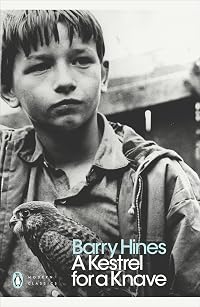
A Kestrel for a Knave
by Barry Hines
On This Page
Description
This is the unsentimental story of the remarkable relationship between the desperate Billy, a friendless boy living in a soulless northern town, and the equally destructive, fierce kestrel, Kes, which he raises from the nest.Tags
Recommendations










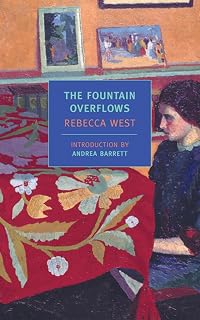

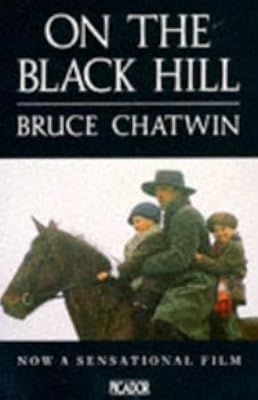
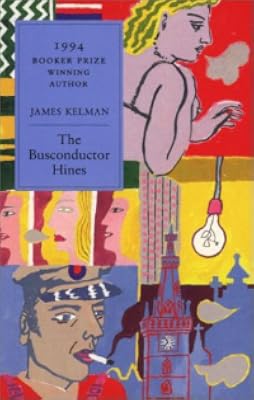
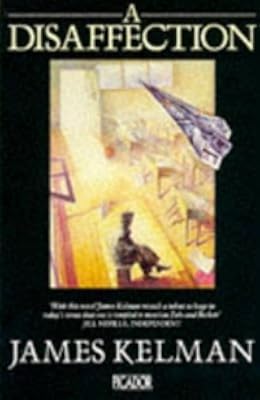






Member Recommendations

PilgrimJess Another book where the main character has low expectations in life.
Member Reviews
A Kestrel for a Knave by Barry Hines was originally published in 1968. This classic coming-of-age story is about Billy Casper, a young working class boy who lives with his mother and brother on a huge housing estate in South Yorkshire. The story unfolds over the course of one day with flashbacks to give the reader some backstory. Billy is a troubled youth who gets in trouble at home, in the neighbourhood and at school.
Billy lives a bleak life, his mother appears indifferent to her boys and is in the habit of bringing men home with her some nights. Billy’s brother, Jud, is older and is working full time at the local pit mine. Billy and Jud have an adversarial relationship with the bigger Jud usually getting the upper hand. In show more flashback, we learn that Billy caught a young kestrel and has trained it. This is a boy who is never going to get an opportunity to escape what fate has in store for him. There is no higher education waiting for him, he will most likely end up working in the same pit mine as his brother. His escape from his daily life is his kestrel, he can release the bird and watch it soar into the air and fly high above the dreary world. On this particular day, Jud’s bullying and rough ways cause Billy to make a decision that ends up costing him dearly. In the course of this one day, the bleakness and hopelessness that is Billy’s life is vividly illustrated.
A Kestrel For A Knave is not a charming or sentimental story. Instead the author highlights the harshness of Billy’s life that is filled with bullying and neglect. The reader is left with a sense of inevitability about what a narrow future awaits this boy. Although sad, this story evokes strong emotions and is a powerful tale. show less
Billy lives a bleak life, his mother appears indifferent to her boys and is in the habit of bringing men home with her some nights. Billy’s brother, Jud, is older and is working full time at the local pit mine. Billy and Jud have an adversarial relationship with the bigger Jud usually getting the upper hand. In show more flashback, we learn that Billy caught a young kestrel and has trained it. This is a boy who is never going to get an opportunity to escape what fate has in store for him. There is no higher education waiting for him, he will most likely end up working in the same pit mine as his brother. His escape from his daily life is his kestrel, he can release the bird and watch it soar into the air and fly high above the dreary world. On this particular day, Jud’s bullying and rough ways cause Billy to make a decision that ends up costing him dearly. In the course of this one day, the bleakness and hopelessness that is Billy’s life is vividly illustrated.
A Kestrel For A Knave is not a charming or sentimental story. Instead the author highlights the harshness of Billy’s life that is filled with bullying and neglect. The reader is left with a sense of inevitability about what a narrow future awaits this boy. Although sad, this story evokes strong emotions and is a powerful tale. show less
“It's fierce, an' it's wild, an' it's not bothered about anybody, not even about me right. And that's why it's great.”
Firstly a quick summary for those of you, who unlike me, are not old old enough to remember the 1969 film adaptation of this book. Set in an unnamed 1960s northern England mining town, Billy Casper lives with his inept mother and bullying older brother and is often left to fend for himself. At school Billy is viewed by most as a troublemaker, bullied by teachers and students alike. One night Billy steals a kestrel chick from its nest, rears and pores all his love and passion into it. Pretty simple tale then? Or maybe not.
Many, many years ago I served in the Royal Navy and when some years later, as part of my show more resettlement package before returning to 'civvy' street, I visited HMP Dartmoor with an idea of becoming a prison warder. Now whilst I recall little about the actual visit itself, what I certainly do remember was my sense of dread when the prison gate closed behind me. And I was only visiting.
If like me, when you read Mary Shelley's Frankenstein you wonder just who is the real monster, Victor or the creature, in this book you wonder who is the real prisoner? Kes or Billy? Yes, Kes was taken from its family and is kept in a garden shed only allowed out to exercise yet Billy is also a prisoner. Only instead of one keeper Billy has many. Society.
Billy has no tangible aspirations in life. He will leave school virtually illiterate and a future marked by low expectations and little chance of real freedom. Those who have an opportunity to guide him, (family, teachers and the careers officer), instead treat him with indifference and violence. In fact most of the teachers at Billy's school have given up trying to teach preferring instead to try to flog knowledge into the boys. Whereas Kes, when off the leash, has the opportunity to fly away, non-lifer prisoners have the chance of reforming and staying out of prison Billy has little chance of escaping his pitiful lot. A point underlined right at the end, when despite knowing that he is likely to be given a good thrashing by his brother he meekly returns home to an empty house and goes to bed, he has virtually given up before his adult life has even begun. He believes that the highpoint of his life is already behind him.
I found this a heart-rending read but amid the hardship and broken dreams there is humour and a healthy dose of Northern banter, I particularly enjoyed the ridiculously competitive PE teacher. Hines depiction of the countryside and the kestrels themselves is beautifully written. I wish I could say that this book was a product of its time I fear that there are still pockets of hopelessness today. Kids whose only future seems to be one spent in low value, low pay work or on social security. This means that this book is still relevant today and as such is a real gem. show less
Firstly a quick summary for those of you, who unlike me, are not old old enough to remember the 1969 film adaptation of this book. Set in an unnamed 1960s northern England mining town, Billy Casper lives with his inept mother and bullying older brother and is often left to fend for himself. At school Billy is viewed by most as a troublemaker, bullied by teachers and students alike. One night Billy steals a kestrel chick from its nest, rears and pores all his love and passion into it. Pretty simple tale then? Or maybe not.
Many, many years ago I served in the Royal Navy and when some years later, as part of my show more resettlement package before returning to 'civvy' street, I visited HMP Dartmoor with an idea of becoming a prison warder. Now whilst I recall little about the actual visit itself, what I certainly do remember was my sense of dread when the prison gate closed behind me. And I was only visiting.
If like me, when you read Mary Shelley's Frankenstein you wonder just who is the real monster, Victor or the creature, in this book you wonder who is the real prisoner? Kes or Billy? Yes, Kes was taken from its family and is kept in a garden shed only allowed out to exercise yet Billy is also a prisoner. Only instead of one keeper Billy has many. Society.
Billy has no tangible aspirations in life. He will leave school virtually illiterate and a future marked by low expectations and little chance of real freedom. Those who have an opportunity to guide him, (family, teachers and the careers officer), instead treat him with indifference and violence. In fact most of the teachers at Billy's school have given up trying to teach preferring instead to try to flog knowledge into the boys. Whereas Kes, when off the leash, has the opportunity to fly away, non-lifer prisoners have the chance of reforming and staying out of prison Billy has little chance of escaping his pitiful lot. A point underlined right at the end, when despite knowing that he is likely to be given a good thrashing by his brother he meekly returns home to an empty house and goes to bed, he has virtually given up before his adult life has even begun. He believes that the highpoint of his life is already behind him.
I found this a heart-rending read but amid the hardship and broken dreams there is humour and a healthy dose of Northern banter, I particularly enjoyed the ridiculously competitive PE teacher. Hines depiction of the countryside and the kestrels themselves is beautifully written. I wish I could say that this book was a product of its time I fear that there are still pockets of hopelessness today. Kids whose only future seems to be one spent in low value, low pay work or on social security. This means that this book is still relevant today and as such is a real gem. show less
I have owned this book for years, and have very hazy memories of having read it when I was much younger.
It is the story of Billy, who lives with his single mum and his abusive older brother in a northern mining community in the 1960s (?).
It is a gritty slice-of-real-life book, grim at the start and grim at the end, and grim for quite a lot of the middle. Billy is no angel, lightfingered and close mouthed and always looking for small ways to get back at his brother. But it really shows the world that shapes him, the lack of love, lack of respect, and the unfair (and sometimes sadistic) ways the system treats him.
The thing that makes Billy the subject of this book is that he has stolen a kestrel chick and a book on falconry, and managed show more to train his beautiful, fierce bird Kes. From Billy's skill and Billy's patience and the way Billy so clearly sees the beauty in Kes we see so much of value in Billy, hidden from most of the world.
It is all a bit laid on with a trowel in places - Billy is told to write the tallest tale he can think of in English, and we get such simple wholesome things, like a good breakfast, and chips and beans for his tea, and his Dad coming home and a trip to the pictures.
The ending is bleak and sad and strange. What happens to Billy? Have we as a country failed so many poor angry young men? Do we still? show less
It is the story of Billy, who lives with his single mum and his abusive older brother in a northern mining community in the 1960s (?).
It is a gritty slice-of-real-life book, grim at the start and grim at the end, and grim for quite a lot of the middle. Billy is no angel, lightfingered and close mouthed and always looking for small ways to get back at his brother. But it really shows the world that shapes him, the lack of love, lack of respect, and the unfair (and sometimes sadistic) ways the system treats him.
The thing that makes Billy the subject of this book is that he has stolen a kestrel chick and a book on falconry, and managed show more to train his beautiful, fierce bird Kes. From Billy's skill and Billy's patience and the way Billy so clearly sees the beauty in Kes we see so much of value in Billy, hidden from most of the world.
It is all a bit laid on with a trowel in places - Billy is told to write the tallest tale he can think of in English, and we get such simple wholesome things, like a good breakfast, and chips and beans for his tea, and his Dad coming home and a trip to the pictures.
The ending is bleak and sad and strange. What happens to Billy? Have we as a country failed so many poor angry young men? Do we still? show less
It's hard to imagine how Barry Hines's evocative character study could have been much better than it is. The afterword certainly suggests a couple of alterations, but frankly I really enjoyed his story as it was - and I got a lot more out of it than I had hoped.
I've never been a big fan of books set in a school; perhaps my own experiences are still too recent in my memory; perhaps it is because I have accidentally become a teacher myself, although no more than a lowly English language teacher in foreign private schools. But that changed with 'A Kestrel For A Knave.' The writing is full of life and colour, enough to balance the dim greyness of the landscape and city life described. There is comedy here, too, though it is run through with show more a great sadness, like a clown being stabbed. show less
I've never been a big fan of books set in a school; perhaps my own experiences are still too recent in my memory; perhaps it is because I have accidentally become a teacher myself, although no more than a lowly English language teacher in foreign private schools. But that changed with 'A Kestrel For A Knave.' The writing is full of life and colour, enough to balance the dim greyness of the landscape and city life described. There is comedy here, too, though it is run through with show more a great sadness, like a clown being stabbed. show less
It took me 40p to get truely involved in this story - approx. 1/4 of the book. That quarter sets the background for what is to come in the remainder, when the protagonist, Billy, goes to school and one day shows the hilarity, banality, hopelessness and tragedy that surely will be a microcosm of Billy's whole life.
For me, school was not nearly so grim as for Billy, but I could relate strongly to his experience; casual cruelty (from teachers), injustice, bullying, that one teacher who is still capable of seeing pupils as human beings, fighting a losing battle against the indifference of all the others. Best days of our lives? I always thought that was some kind of sick joke. I was never so glad as to be out of that environment. Billy is show more 15 and will shortly be out of it, too. He doesn't have the fun and excitement of University and myriad possibilities afterward to look forward to, though. He's not that bright and there aren't many options. All he really knows is that he doesn't want to go down the pit. A mine that twenty years later would probably be closed, like almost every other in Britain, leaving him almost middle aged with no useful skills, not that he or the author would have known that. Since his father left home, his mother is going through the motions of raising him, more interested in her affairs, his brother hates him and there's little money. About the only thing Billy has of any value, and that to him alone, is the kestrel he trained himself. Is that enough?
Powerful, simple writing carries this story of working class northern Britain in the 1960s to an end likely to induce despair. show less
For me, school was not nearly so grim as for Billy, but I could relate strongly to his experience; casual cruelty (from teachers), injustice, bullying, that one teacher who is still capable of seeing pupils as human beings, fighting a losing battle against the indifference of all the others. Best days of our lives? I always thought that was some kind of sick joke. I was never so glad as to be out of that environment. Billy is show more 15 and will shortly be out of it, too. He doesn't have the fun and excitement of University and myriad possibilities afterward to look forward to, though. He's not that bright and there aren't many options. All he really knows is that he doesn't want to go down the pit. A mine that twenty years later would probably be closed, like almost every other in Britain, leaving him almost middle aged with no useful skills, not that he or the author would have known that. Since his father left home, his mother is going through the motions of raising him, more interested in her affairs, his brother hates him and there's little money. About the only thing Billy has of any value, and that to him alone, is the kestrel he trained himself. Is that enough?
Powerful, simple writing carries this story of working class northern Britain in the 1960s to an end likely to induce despair. show less
This is a simple story - a boy, his kestrel and his environment in a northern mining town surrounded by countryside. Hines tells it with an almost obsessive eye for detail - the tics of a hyperactive young boy, scuffing his feet along a path; the 'how to' guide to falconry, the scruffy, hard worn mining town teetering on the edge of respectability. The story is about the love of a boy for his kestrel, but it's also about chances and possibilities , glimpsed by Mr Farthing, the school teacher who spots something wonderful in Billy's story about falconry, or even the chance Billy's brother Jud has of £10 to take him away from the mine for a whole week. Chances are hard won, easy to miss and all too often gone forever.
This was the book that put Barnsley on the map in literary terms in 1968, made more famous by Ken Loach's film Kes the following year. The author paints a sharp picture of life at the time and there is some evocative description of the countryside where Billy Casper found his kestrel. But I'm afraid I found the narrative dull and have given up just over a quarter of the way through.
Members
- Recently Added By
Lists

The Guardian's 1000 Novels Everyone Must Read
1,005 works; 551 members

1001 Books You Must Read Before You Die
1,448 works; 1,134 members

1001 Children's Books You Must Read Before You Grow Up
774 works; 101 members
Best of British Literature
226 works; 41 members

...read all, pay nowt (Books set in Yorkshire)
86 works; 14 members

1,001 BYMRBYD Concensus
723 works; 27 members

Books for Reluctant Readers
18 works; 3 members

Books You Read During High School (For School)
301 works; 53 members

Fiction about the Working Class
74 works; 10 members

Books Read in 2020
4,379 works; 124 members

Review 4
37 works; 3 members

Books Read in 2016
4,666 works; 199 members

Schwob Nederland
207 works; 2 members

A Novel Cure
742 works; 23 members

Best Sellers / Popular 1968
237 works; 5 members

On the pile
20 works; 1 member
Author Information

15+ Works 1,408 Members
Melvin Barry Hines was born in Hoyland Common, England on June 30, 1939. He trained as an apprentice mining surveyor before studying physical education at Loughborough Training College. He taught for two years in a London comprehensive before returning northern England to teach physical education. His debut novel, The Blinder, was published in show more 1966. His other novels included Signs, Unfinished Business, The Heart of It, and Elvis over England. A Kestrel for a Knave, The Gamekeeper, The Price of Coal, and Looks and Smiles were adapted to films by Ken Loach, with Hines writing the screenplays. Hines wrote intermittently for radio and television. His works included Billy's Last Stand, Speech Day, Two Men from Derby, and Threads. He was diagnosed with Alzheimer's disease in 2007. He died on March 18, 2016 at the age of 76. (Bowker Author Biography) show less
Some Editions
Awards and Honors
Notable Lists
Series
Belongs to Publisher Series
Work Relationships
Is contained in
Has the adaptation
Has as a student's study guide
Common Knowledge
- Canonical title
- A Kestrel for a Knave
- Original title
- A kestrel for a knave
- Alternate titles
- Kes
- Original publication date
- 1968
- People/Characters
- Billy Casper
- Important places
- South Yorkshire, England, UK
- Related movies
- Kes (1970 | IMDb); Kes (1969 | IMDb)
- Epigraph
- 'An Eagle for an Emperor, a Gyrfalcon for a King; a Peregrine for a Prince, a Saker for a Knight, a Merlin for a Lady; a Goshawk for a Yeoman, a Sparrowhawk for a Priest, a Musket for a Holy water Clerk, a Kestrel for a Knave... (show all).'
Selected from the Boke of St Albans, 1486, and a Harleian manuscript. - First words
- There were no curtains up.
- Last words
- (Click to show. Warning: May contain spoilers.)He buried the hawk in the field just behind the shed; went in, and went to bed.
- Original language
- English
- Disambiguation notice
- This is the novel. Please do not combine with any stage adaptations.
Classifications
- Genres
- Fiction and Literature, General Fiction, Children's Books, Young Adult
- DDC/MDS
- 813 — Literature & rhetoric American literature in English American fiction in English
- LCC
- PZ4 .H6628 .K — Language and Literature Fiction and juvenile belles lettres Fiction and juvenile belles lettres Fiction in English
- BISAC
Statistics
- Members
- 1,202
- Popularity
- 20,734
- Reviews
- 20
- Rating
- (3.86)
- Languages
- 11 — Chinese, Danish, Dutch, English, French, German, Italian, Norwegian, Polish, Spanish, Swedish
- Media
- Paper, Audiobook, Ebook
- ISBNs
- 45
- ASINs
- 22