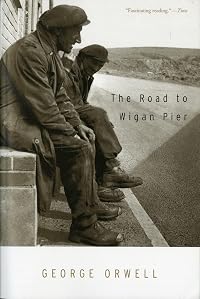
The Road to Wigan Pier
by George Orwell 
On This Page
Description
When Orwell went to the north of England in the thirties to find out how industrial workers lived, he not only observed but shared in their experience. He stayed in cramped, dreary lodgings and subsisted on the scant, cheerless diet of the poor. He went down into the coal mines and walked crouching, as the miners did, through a one- to three-mile passage too low to stand up in. He watched the back-breaking, dangerous labor of men whose net pay then averaged $575 a year. And he knew the show more unemployed, those who had been out of work for so long they had sunk beyond despair into an inhuman apathy. In his searing yet beautiful account of life on the bottom rung, Orwell asks himself why Socialism-which alone, he felt, could conserve human values from the ravages of industrialism-had so little appeal. His answer was a harsh critique of the Socialism and Socialists of his time. show lessTags
Recommendations










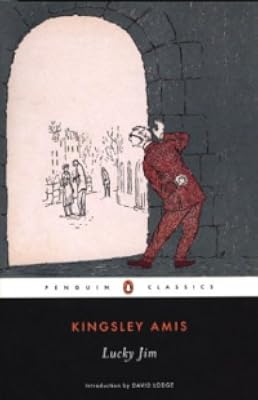
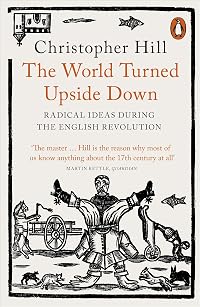

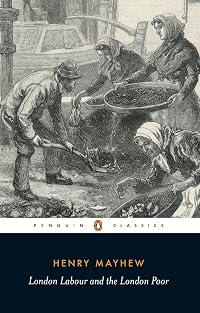
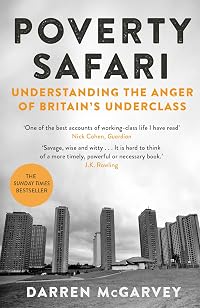






Member Recommendations



John_Vaughan On re-reading these two books it is hard to believe that these two works were written almost at the same time and about the same culture. One by Blair deliberatly self-impoverished and on foot, one by Morton - by car!

Member Reviews
Alright, let me tell you about George Orwell's The Road to Wigan Pier – seriously, if you haven't read this, you're missing out. It's a book that hits you right in the gut, even 80 years after it was written.
So, picture this: it's the 1930s, and a left-wing book club basically sends Orwell up to the industrial heartlands of northern England. His mission? To really get down and dirty, investigate, and record the grim reality of working-class life. And boy, did he deliver. This wasn't some academic, armchair study. Orwell went all in. He wasn't just observing; he was living it. He went into the absolute deepest, darkest parts of the coal mines, experiencing the back-breaking, dangerous work first hand. He stayed in those notoriously show more dilapidated and often filthy workers' houses, seeing the poverty and despair up close.
And what he brought back, using just the tip of his pen, is just incredible. He vividly paints a picture of every single aspect of those coal miners' lives – the exhaustion, the camaraderie, the hunger, the constant threat of injury, the sheer struggle to survive. Reading it today, honestly, it's still shockingly true. The despair and poverty he describes in those pages have this terrifying, raw power that just transcends time and national boundaries. You feel it deep down, and it makes you think about similar struggles happening even now, all over the world.
But The Road to Wigan Pier isn't just a brutal snapshot of hardship; it's also Orwell's own personal journey. It's his "road to socialism," where he really digs deep into his own conscience. Born into the British middle class, he openly discusses how he slowly but surely started to question, and then ultimately despise, the rigid class barriers that carved up British society back then. For him, at its core, socialism boils down to two incredibly simple, yet profound, ideas: "justice and freedom." And you can feel that conviction burning through his writing.
Seriously, this book is a masterpiece. It's not just a historical document; it's a profound exploration of empathy, class, and the human condition. It's powerful, it's moving, and it's shockingly relevant. If you want a book that makes you think, makes you feel, and genuinely stays with you long after you've turned the last page, then you absolutely have to pick this one up. Can't recommend it enough! show less
So, picture this: it's the 1930s, and a left-wing book club basically sends Orwell up to the industrial heartlands of northern England. His mission? To really get down and dirty, investigate, and record the grim reality of working-class life. And boy, did he deliver. This wasn't some academic, armchair study. Orwell went all in. He wasn't just observing; he was living it. He went into the absolute deepest, darkest parts of the coal mines, experiencing the back-breaking, dangerous work first hand. He stayed in those notoriously show more dilapidated and often filthy workers' houses, seeing the poverty and despair up close.
And what he brought back, using just the tip of his pen, is just incredible. He vividly paints a picture of every single aspect of those coal miners' lives – the exhaustion, the camaraderie, the hunger, the constant threat of injury, the sheer struggle to survive. Reading it today, honestly, it's still shockingly true. The despair and poverty he describes in those pages have this terrifying, raw power that just transcends time and national boundaries. You feel it deep down, and it makes you think about similar struggles happening even now, all over the world.
But The Road to Wigan Pier isn't just a brutal snapshot of hardship; it's also Orwell's own personal journey. It's his "road to socialism," where he really digs deep into his own conscience. Born into the British middle class, he openly discusses how he slowly but surely started to question, and then ultimately despise, the rigid class barriers that carved up British society back then. For him, at its core, socialism boils down to two incredibly simple, yet profound, ideas: "justice and freedom." And you can feel that conviction burning through his writing.
Seriously, this book is a masterpiece. It's not just a historical document; it's a profound exploration of empathy, class, and the human condition. It's powerful, it's moving, and it's shockingly relevant. If you want a book that makes you think, makes you feel, and genuinely stays with you long after you've turned the last page, then you absolutely have to pick this one up. Can't recommend it enough! show less
This was an interesting and insightful read and though it was written some eighty years ago it is remarkably current, timeless in many ways. There is much to stop and ponder over; for example:
This book is well written and Orwell's descriptions and turns of phrase do not disappoint; one (amongst others) that amused me was:
Here you come upon the important fact that every revolutionary opinion draws part of its strength from a secret conviction that nothing can be changed.Orwell pulled some things into all-too-sharp a focus for some tastes back then, which are just as challenging and eye-averting today in our so-called 'inclusive-all embracing-anything-goes' society.
This book is well written and Orwell's descriptions and turns of phrase do not disappoint; one (amongst others) that amused me was:
Generally the crumbs from breakfast were still on the table at supper. Ishow more
used to get to know individual crumbs by sight and watch their progress up and down the table from day to day.Such observations seemed to add a certain surrealness to the work that I liked and did not detract from the serious nature of the book. show less
"… the mentality of the English governing class. First you condemn a family to live on thirty shillings a week…"
The Road to Wigan Pier is that rarest of all things: a timeless polemic. The first part of the book is documentary-like, as George Orwell immerses himself in the lives of the Northern English working-class. It is a horrifying and ruthless depiction – and still, remarkably, only a few generations removed from us – written with great penetration and perception. The effect with regard to the mining communities of Yorkshire and Lancashire is something like what John Steinbeck was soon to do with the Okies in The Grapes of Wrath: humanize them, not with condescension but with dignity.
You see the comprehensiveness of the show more degradation, from the black horror of the mines themselves, through the slums and the scrabbling in the dirt, all the way to the "petty inconvenience and indignity… of having to do everything at other people's convenience" (pg. 44). The depiction alone would be enough to convince you of the desolation, but Orwell's humanity and skill with the pen can make you despair, and weep at the wretched tragedy of it. It is as fine a piece of polemical writing as you are likely to find.
"… and then you have the damned impertinence to tell them how they are to spend their money." (pg. 92)
The second part of the book is where the controversy is. Orwell moves from his documentary focus to provide a commentary on class politics. In one respect, this is brilliant and useful: Orwell is incredibly perceptive on class, and he is withering in his analysis of the Socialists, particularly what we would nowadays call the 'champagne socialists' and their "sniffish middle-class superiority" (pg. 162). He notes the near-fatal "prevalence of cranks" in an ideology that seems to draw "with magnetic force every fruit-juice drinker, nudist, sandal-wearer, sex-maniac, Quaker, 'Nature Cure' quack, pacifist and feminist in England" (pg. 161). The book could have been written this year, except that nobody is this fearless now, and if you cannot see the modern analogues then you've not been paying close enough attention to the news.
But rather than just railing against proto-SJWs (as gleeful as that is to read), Orwell's scorn for this sort of 'socialist' is justified by his earlier documentary focus on the miners. These fine people are really, truly, heavily suffering, and the prevalence of these Socialist puritans not only does nothing to help, but actively hinders the alleviation of the plight of the working class, because they hog the soapbox and misdirect the social impetus.
In light of this, it is strange that part two of the book also engages in a somewhat quixotic defence of Socialism. Orwell assumes a distinction between Socialism and Socialists – that is, between the ideology and its adherents – that is not at all clear, and launches a plea for 'liberty and dignity' to return to the Socialist 'movement'. Given he had earlier cautioned against "scoutmasterish bellows of good will" (pg. 149), it is strange that Orwell so keenly falls into this trap himself. He assumes that Socialism is being cast in a "misleading light" (pg. 197), rather than considering that there might be something in the ideology itself that attracts such petty malevolents, and will continue to do so, and that even if Orwell could attain his Socialist purity, the weeds would inevitably return to the garden again. The only reason this does not sink the book is that, a) Orwell actually paid his dues in living among the working class, in a clearly genuine attempt to understand, and b) it is a view he rectified in his later (and more prominent) work, particularly Animal Farm, which makes the very point that the ideology is inherently compromised.
So all's well that ends well, and if Orwell did not reach the right conclusion in Wigan Pier, he at least reached it in his writing career. (A career that was far too short; one yearns to know what he would have made of MAD or the Winter of Discontent, let alone the reigning modern SJW malignancy.) He writes fearlessly and with wit, making some great and enduring points, and the book flows easily in the way that only a great polemic can.
Orwell is perceptive and humane and he practiced what he preached. And he's got their number, these Communists who "will be Fascists five years hence" (pg. 169). It's just a shame he wasn't yet ready to break from Socialist ideology, because if he had banished his political angst sooner, he might have recognized the importance of one of his earlier observations: "when you are underfed, harassed, bored and miserable, you don't want to eat dull wholesome food. You want something a little bit 'tasty'." (pg. 88). Men are not piano keys, as Dostoevsky wrote, and if all was perfect and orderly, man would choose to disrupt it, just for the mortal sake of it. We don't want utopia. We want to be free to spout heresy. We want to get drunk and fear God. show less
The Road to Wigan Pier is that rarest of all things: a timeless polemic. The first part of the book is documentary-like, as George Orwell immerses himself in the lives of the Northern English working-class. It is a horrifying and ruthless depiction – and still, remarkably, only a few generations removed from us – written with great penetration and perception. The effect with regard to the mining communities of Yorkshire and Lancashire is something like what John Steinbeck was soon to do with the Okies in The Grapes of Wrath: humanize them, not with condescension but with dignity.
You see the comprehensiveness of the show more degradation, from the black horror of the mines themselves, through the slums and the scrabbling in the dirt, all the way to the "petty inconvenience and indignity… of having to do everything at other people's convenience" (pg. 44). The depiction alone would be enough to convince you of the desolation, but Orwell's humanity and skill with the pen can make you despair, and weep at the wretched tragedy of it. It is as fine a piece of polemical writing as you are likely to find.
"… and then you have the damned impertinence to tell them how they are to spend their money." (pg. 92)
The second part of the book is where the controversy is. Orwell moves from his documentary focus to provide a commentary on class politics. In one respect, this is brilliant and useful: Orwell is incredibly perceptive on class, and he is withering in his analysis of the Socialists, particularly what we would nowadays call the 'champagne socialists' and their "sniffish middle-class superiority" (pg. 162). He notes the near-fatal "prevalence of cranks" in an ideology that seems to draw "with magnetic force every fruit-juice drinker, nudist, sandal-wearer, sex-maniac, Quaker, 'Nature Cure' quack, pacifist and feminist in England" (pg. 161). The book could have been written this year, except that nobody is this fearless now, and if you cannot see the modern analogues then you've not been paying close enough attention to the news.
But rather than just railing against proto-SJWs (as gleeful as that is to read), Orwell's scorn for this sort of 'socialist' is justified by his earlier documentary focus on the miners. These fine people are really, truly, heavily suffering, and the prevalence of these Socialist puritans not only does nothing to help, but actively hinders the alleviation of the plight of the working class, because they hog the soapbox and misdirect the social impetus.
In light of this, it is strange that part two of the book also engages in a somewhat quixotic defence of Socialism. Orwell assumes a distinction between Socialism and Socialists – that is, between the ideology and its adherents – that is not at all clear, and launches a plea for 'liberty and dignity' to return to the Socialist 'movement'. Given he had earlier cautioned against "scoutmasterish bellows of good will" (pg. 149), it is strange that Orwell so keenly falls into this trap himself. He assumes that Socialism is being cast in a "misleading light" (pg. 197), rather than considering that there might be something in the ideology itself that attracts such petty malevolents, and will continue to do so, and that even if Orwell could attain his Socialist purity, the weeds would inevitably return to the garden again. The only reason this does not sink the book is that, a) Orwell actually paid his dues in living among the working class, in a clearly genuine attempt to understand, and b) it is a view he rectified in his later (and more prominent) work, particularly Animal Farm, which makes the very point that the ideology is inherently compromised.
So all's well that ends well, and if Orwell did not reach the right conclusion in Wigan Pier, he at least reached it in his writing career. (A career that was far too short; one yearns to know what he would have made of MAD or the Winter of Discontent, let alone the reigning modern SJW malignancy.) He writes fearlessly and with wit, making some great and enduring points, and the book flows easily in the way that only a great polemic can.
Orwell is perceptive and humane and he practiced what he preached. And he's got their number, these Communists who "will be Fascists five years hence" (pg. 169). It's just a shame he wasn't yet ready to break from Socialist ideology, because if he had banished his political angst sooner, he might have recognized the importance of one of his earlier observations: "when you are underfed, harassed, bored and miserable, you don't want to eat dull wholesome food. You want something a little bit 'tasty'." (pg. 88). Men are not piano keys, as Dostoevsky wrote, and if all was perfect and orderly, man would choose to disrupt it, just for the mortal sake of it. We don't want utopia. We want to be free to spout heresy. We want to get drunk and fear God. show less
A journey north in 1936, commissioned by the publisher Gollancz, produced Orwell's vivid and impassioned documentary of unemployment and proletarian life.
Despite holding a variety of jobs as teacher, storekeeper, and bookstore manager, Orwell wrote incessantly although often without great popular or financial success. Beginning in 1933 he published a book a year for seven years: four novels, one book of semi-autobiography (Down and Out in Paris and London [1933]), one piece of brilliant investigative journalism (The Road to Wigan Pier [1936]) and the best single book on the Spanish Civil War (Homage to Catalonia [1938]), all produced while Orwell worked full time at other jobs. He also wrote book reviews for a number of English journals show more and began to hone the mastery of the essay that was to make him the greatest practitioner of this deceptively difficult literary form in the first half of the twentieth century. Two of his essays written during these years, 'A Hanging' (1931) and 'Shooting an Elephant' (1936), define the modern essay form. They are direct, powerful, brief studies that stay with the reader for years.
Although most of Orwell's early books were reviewed positively, only The Road to Wigan Pier was a financial success. It was commissioned by the successful publisher Victor Gollancz and later adopted by the Left Book Club controlled by him. It sold around 47,000 copies in various editions, a large figure for its day. The Road to Wigan Pier also revealed a side of Orwell that was to make him controversial. Gollancz wanted and got a brilliant depiction of the evils of capitalism in Orwell's portrait of the English coal mining industry in the midst of the depression, but he also received a shock. The second half of the book contained a sustained attack on the failures of socialism and socialists. In order to make the case for socialism, Orwell found it necessary to start by attacking its flaws. As with Christianity, he shrewdly noted, 'the worst advertisement for Socialism is its adherents'.
Orwell ridiculed the pretensions and idiosyncrasies of English socialism in an oft-quoted passage in The Road to Wigan Pier. 'One sometimes gets the impression that the mere words 'Socialism' and 'Communism' draw towards them with magnetic force every fruit-juice drinker, nudist, sandal-wearer, sex-maniac, Quaker, 'Nature Cure' quack, pacifist and feminist in England'. Harsh, even unfair, but containing just enough truth to hit home.
This book is a tour of a depressed and beaten-down part of England during the 1930S, where there is widespread unemployment and misery among the working class. Orwell writes, "People like me were brought up to believe that the working classes smell, that they actually have a distinct odour. And to keep away from them.... That's what I thought until I went and lived in their houses and went to their factories and down their mines. I realized how difficult it is to keep clean with these jobs. And the employer gives you a house or a little cottage that doesn't have a bath -- further problems." The communist press, from that day on, never seemed to publish an article about Orwell in which they did not claim that he had said he thought the working classes smelled. So you can be as clear as you like -- but there will always be those trying to ensure that more people will read their lies than your truth. show less
Despite holding a variety of jobs as teacher, storekeeper, and bookstore manager, Orwell wrote incessantly although often without great popular or financial success. Beginning in 1933 he published a book a year for seven years: four novels, one book of semi-autobiography (Down and Out in Paris and London [1933]), one piece of brilliant investigative journalism (The Road to Wigan Pier [1936]) and the best single book on the Spanish Civil War (Homage to Catalonia [1938]), all produced while Orwell worked full time at other jobs. He also wrote book reviews for a number of English journals show more and began to hone the mastery of the essay that was to make him the greatest practitioner of this deceptively difficult literary form in the first half of the twentieth century. Two of his essays written during these years, 'A Hanging' (1931) and 'Shooting an Elephant' (1936), define the modern essay form. They are direct, powerful, brief studies that stay with the reader for years.
Although most of Orwell's early books were reviewed positively, only The Road to Wigan Pier was a financial success. It was commissioned by the successful publisher Victor Gollancz and later adopted by the Left Book Club controlled by him. It sold around 47,000 copies in various editions, a large figure for its day. The Road to Wigan Pier also revealed a side of Orwell that was to make him controversial. Gollancz wanted and got a brilliant depiction of the evils of capitalism in Orwell's portrait of the English coal mining industry in the midst of the depression, but he also received a shock. The second half of the book contained a sustained attack on the failures of socialism and socialists. In order to make the case for socialism, Orwell found it necessary to start by attacking its flaws. As with Christianity, he shrewdly noted, 'the worst advertisement for Socialism is its adherents'.
Orwell ridiculed the pretensions and idiosyncrasies of English socialism in an oft-quoted passage in The Road to Wigan Pier. 'One sometimes gets the impression that the mere words 'Socialism' and 'Communism' draw towards them with magnetic force every fruit-juice drinker, nudist, sandal-wearer, sex-maniac, Quaker, 'Nature Cure' quack, pacifist and feminist in England'. Harsh, even unfair, but containing just enough truth to hit home.
This book is a tour of a depressed and beaten-down part of England during the 1930S, where there is widespread unemployment and misery among the working class. Orwell writes, "People like me were brought up to believe that the working classes smell, that they actually have a distinct odour. And to keep away from them.... That's what I thought until I went and lived in their houses and went to their factories and down their mines. I realized how difficult it is to keep clean with these jobs. And the employer gives you a house or a little cottage that doesn't have a bath -- further problems." The communist press, from that day on, never seemed to publish an article about Orwell in which they did not claim that he had said he thought the working classes smelled. So you can be as clear as you like -- but there will always be those trying to ensure that more people will read their lies than your truth. show less
My third Orwell in as many weeks, if you’re keeping score.
Part 1 is his tour through the living conditions of the working class in industrial Lancashire and Yorkshire, primarily coal miners and the unemployed. Part 2 is an examination of the feelings of middle class British socialists (virtually all British socialists, Orwell included, being middle class) and the British working class (virtually none of them socialists) towards each other. He concludes that British class feeling is basically impossible to eradicate and that British socialists would do well to stop vilifying the middle class, i.e., themselves, because everybody can smell a phony.
It was first published with grave reservations by noted lefty publisher Victor Gollancz as show more a selection of the Left Book Club. He tried to get Orwell to let him publish part 1 without part 2, but Orwell refused. The compromise was that Gollancz published the whole thing but also included a forward he wrote in which he more or less apologizes to every member of the Left Book Club and repudiates all of part 2, which includes gems like this:
"The first thing that must strike any outside observer is that Socialism, in its developed form is a theory confined entirely to the middle classes. The typical Socialist is not, as tremulous old ladies imagine, a ferocious-looking working man with greasy overalls and a raucous voice. He is either a youthful snob-Bolshevik who in five years’ time will quite probably have made a wealthy marriage and been converted to Roman Catholicism; or, still more typically, a prim little man with a white-collar job, usually a secret teetotaller and often with vegetarian leanings, with a history of Nonconformity behind him, and, above all, with a social position which he has no intention of forfeiting. This last type is surprisingly common in Socialist parties of every shade; it has perhaps been taken over en bloc from the old Liberal Party. In addition to this there is the horrible—the really disquieting—prevalence of cranks wherever Socialists are gathered together. One sometimes gets the impression that the mere words ‘Socialism’ and ‘Communism’ draw towards them with magnetic force every fruit-juice drinker, nudist, sandal-wearer, sex-maniac, Quaker, ‘Nature Cure’ quack, pacifist, and feminist in England."
(Tag yourself in that last bit.)
Think of all of those sad British lefties in 1937, crying into their warm beers when they read that.
Even so, part 1 was compelling enough that I am convinced that no owner of a colliery has ever been admitted to Heaven. Absolutely brutal. show less
Part 1 is his tour through the living conditions of the working class in industrial Lancashire and Yorkshire, primarily coal miners and the unemployed. Part 2 is an examination of the feelings of middle class British socialists (virtually all British socialists, Orwell included, being middle class) and the British working class (virtually none of them socialists) towards each other. He concludes that British class feeling is basically impossible to eradicate and that British socialists would do well to stop vilifying the middle class, i.e., themselves, because everybody can smell a phony.
It was first published with grave reservations by noted lefty publisher Victor Gollancz as show more a selection of the Left Book Club. He tried to get Orwell to let him publish part 1 without part 2, but Orwell refused. The compromise was that Gollancz published the whole thing but also included a forward he wrote in which he more or less apologizes to every member of the Left Book Club and repudiates all of part 2, which includes gems like this:
"The first thing that must strike any outside observer is that Socialism, in its developed form is a theory confined entirely to the middle classes. The typical Socialist is not, as tremulous old ladies imagine, a ferocious-looking working man with greasy overalls and a raucous voice. He is either a youthful snob-Bolshevik who in five years’ time will quite probably have made a wealthy marriage and been converted to Roman Catholicism; or, still more typically, a prim little man with a white-collar job, usually a secret teetotaller and often with vegetarian leanings, with a history of Nonconformity behind him, and, above all, with a social position which he has no intention of forfeiting. This last type is surprisingly common in Socialist parties of every shade; it has perhaps been taken over en bloc from the old Liberal Party. In addition to this there is the horrible—the really disquieting—prevalence of cranks wherever Socialists are gathered together. One sometimes gets the impression that the mere words ‘Socialism’ and ‘Communism’ draw towards them with magnetic force every fruit-juice drinker, nudist, sandal-wearer, sex-maniac, Quaker, ‘Nature Cure’ quack, pacifist, and feminist in England."
(Tag yourself in that last bit.)
Think of all of those sad British lefties in 1937, crying into their warm beers when they read that.
Even so, part 1 was compelling enough that I am convinced that no owner of a colliery has ever been admitted to Heaven. Absolutely brutal. show less
George Orwell is most famous for literary marvels like 1984 and Animal Farm, which both revolves around governmental oppression in one way or another, but what about the rest of his work? Recently I got my hands on a few of Orwell's lesser known books and I must say that this one in particular, The Road to Wigan Pier, is definitely still applicable today. The graphic,unforgettable descriptions of the social injustices in England's social classes is literally still a problem (if you don't believe me, just think about the spikes that London's elites are putting up to deter homeless people from sleeping near their homes/workplaces). Although the situation might've changed somewhat from coal-mining to unemployment or lower-class living, show more there is still a class difference, which makes The Road to Wigan Pier as relevant today as it was back then. Furthermore, it showcases poverty in a way that is gripping, thought-provoking, and - for lack of a better description - grim beyond belief. Nevertheless, I found it extremely informative, not only about the class differences, but because of the vivid descriptions he uses to paint the foreboding world he explores.
The Road to Wigan Pier is divided into two parts: The first part explores, as mentioned above, the bleak working-class lifestyle in Yorkshire, the West Midlands, and Lancashire. However, the second part of the book is somewhat less of a documentary and more of a personal "solution" to the problem. Here, Orwell explores and discusses the relevance of implementing socialism in order to improve living standards in a whole. It's quite a controversial twist in pace (it was controversial back in the day and I'm sure it would still raise a few eyebrows), but what can I say? The guy made a few valid points.
This book might not fall into the taste of everyone, but it's - in my opinion - necessary to read. I finished it in a few days, even though it isn't fiction. It's a real depiction of life back then and life right now, the circumstances are just a bit different. So, if you're in the mood to read about injustice in a whole, and if you want to weigh your problems against the problems of the past, or if you want to just stick it to the elitist 1 Percenters that's making you work like a slave to fill their own pockets ... then yes, you should absolutely get your hands on this book.
In all honesty, I'm surprised it wasn't on any of my reading lists in university.
(Review originally posted on www.tentaclebooks.com) show less
The Road to Wigan Pier is divided into two parts: The first part explores, as mentioned above, the bleak working-class lifestyle in Yorkshire, the West Midlands, and Lancashire. However, the second part of the book is somewhat less of a documentary and more of a personal "solution" to the problem. Here, Orwell explores and discusses the relevance of implementing socialism in order to improve living standards in a whole. It's quite a controversial twist in pace (it was controversial back in the day and I'm sure it would still raise a few eyebrows), but what can I say? The guy made a few valid points.
This book might not fall into the taste of everyone, but it's - in my opinion - necessary to read. I finished it in a few days, even though it isn't fiction. It's a real depiction of life back then and life right now, the circumstances are just a bit different. So, if you're in the mood to read about injustice in a whole, and if you want to weigh your problems against the problems of the past, or if you want to just stick it to the elitist 1 Percenters that's making you work like a slave to fill their own pockets ... then yes, you should absolutely get your hands on this book.
In all honesty, I'm surprised it wasn't on any of my reading lists in university.
(Review originally posted on www.tentaclebooks.com) show less
This is George Orwell's classic description of the terrible living and working conditions in industrial towns, particularly among the miners, in the north of England in the mid 1930s, including but not limited to Wigan. Orwell's style is simple and direct and draws you in to the miseries he describes in a way that only the best journalists or commentators can do. In the generally less highly regarded second half of the book, Orwell recounts his views on socialism and different types and characteristics of socialists, many of which he thinks give socialism a bad name. Many of these comments were controversial and Victor Gollancz, editor of the Left Book Club insisted on writing a foreword to the published version of the book to some show more extent debunking these views, though it seems to me he raises some interesting points for reflection by the Labour movement then and now. Less controversially, he looks ahead to the overwhelming need for all those on the left, and indeed all who believe in social justice and decency, to unite to fight the growing menace of fascism (this was written after Hitler had marched into the Rhineland and Italy had invaded Abyssinia). Occasionally, this second half gets a little repetitive but Orwell is never less than thoroughly readable and should be studied by anyone interested in politics, whatever their own views. show less
Members
- Recently Added By
Published Reviews
(Retracing...)
Orwell said he would find little to interest him in Barnsley, which was a kindness compared to his verdict on Sheffield: "It seems to me, by daylight, one of the most appalling places I have ever seen." From his two months in the north, one image stayed with him above all others; a pale young woman "with the usual draggled, exhausted look … I thought how dreadful a destiny it show more was to be kneeling in the gutter in a back alley in Wigan, in the bitter cold, prodding a stick up a blocked drain. At that moment she looked up and caught my eye, and her expression was as desolate as I have ever seen; it struck me that she was thinking just the same as I was."
We cannot know if he was right, but it seems a rare moment, in a book about human sympathy, of connection between the man raised to be an officer of the empire and the proletariat that, however much he wished to embrace, repelled him still. Jack Hilton, the man who set him on the road to Wigan, hated the book, judging it a failure and falling out with the author. "So George went to Wigan and he might have stayed at home. He wasted money, energy and wrote piffle," was his damning verdict. Victor Gollancz disagreed, but with strong reservations. He finally published it as part of the Left Book Club series, but included a foreword in which he rebutted Orwell's colourful views on the "fruit-drinkers" of the middle-class liberal elite, fearful that his readership might take offence. In a later edition, against the author's wishes, he deleted the polemical second section altogether. show less
Orwell said he would find little to interest him in Barnsley, which was a kindness compared to his verdict on Sheffield: "It seems to me, by daylight, one of the most appalling places I have ever seen." From his two months in the north, one image stayed with him above all others; a pale young woman "with the usual draggled, exhausted look … I thought how dreadful a destiny it show more was to be kneeling in the gutter in a back alley in Wigan, in the bitter cold, prodding a stick up a blocked drain. At that moment she looked up and caught my eye, and her expression was as desolate as I have ever seen; it struck me that she was thinking just the same as I was."
We cannot know if he was right, but it seems a rare moment, in a book about human sympathy, of connection between the man raised to be an officer of the empire and the proletariat that, however much he wished to embrace, repelled him still. Jack Hilton, the man who set him on the road to Wigan, hated the book, judging it a failure and falling out with the author. "So George went to Wigan and he might have stayed at home. He wasted money, energy and wrote piffle," was his damning verdict. Victor Gollancz disagreed, but with strong reservations. He finally published it as part of the Left Book Club series, but included a foreword in which he rebutted Orwell's colourful views on the "fruit-drinkers" of the middle-class liberal elite, fearful that his readership might take offence. In a later edition, against the author's wishes, he deleted the polemical second section altogether. show less
added by John_Vaughan
Lists

Best of Travel Narratives
142 works; 28 members

Top Five Books of 2013
1,562 works; 715 members

20th Century Literature
1,161 works; 55 members

Jordan B. Peterson's Recommended Books
104 works; 5 members

1930s
262 works; 5 members

Well-Educated Mind
150 works; 3 members

The Well-Educated Mind, Susan Wise Bauer, 2016
179 works; 3 members
Reading LIst
648 works; 1 member

Novels with a city or town in the title
61 works; 1 member

LT picks: Blue Books
197 works; 44 members
Author Information

393+ Works 221,493 Members
George Orwell was born Eric Arthur Blair on June 25, 1903 in Motihari in Bengal, India and later studied at Eton College for four years. He was an assistant superintendent with the Indian Imperial Police in Burma. He left that position after five years and moved to Paris, where he wrote his first two books: Burmese Days and Down and Out in Paris show more and London. He then moved to Spain to write but decided to join the United Workers Marxist Party Militia. After being decidedly opposed to communism, he served in the British Home Guard and with the Indian Service of the BBC during World War II. After the war, he wrote for the Observer and was literary editor for the Tribune. His best known works are Animal Farm and 1984. His other works include A Clergyman's Daughter, Keep the Aspidistra Flying, The Road to Wigan Pier, Homage to Catalonia, and Coming Up for Air. He died on January 21, 1950 at the age of 46. (Bowker Author Biography) show less
George Orwell has a Legacy Library. Legacy libraries are the personal libraries of famous readers, entered by LibraryThing members from the Legacy Libraries group.
Some Editions
Awards and Honors
Series
Belongs to Publisher Series
Work Relationships
Common Knowledge
- Canonical title
- The Road to Wigan Pier
- Original title
- The road to Wigan Pier
- Original publication date
- 1937
- People/Characters
- George Orwell
- Important places
- England, UK
- First words
- The first sound in the mornings was the clumping of the mill-girls' clogs down the cobbled street.
Foreword: This Foreword is addressed to members of the Left book Club (to whom The Road to Wigan Pier is being sent as the March Choice), and to them alone: members of the general public are asked to ignore ... (show all)it. - Quotations
- [those who live in Letchworth] every fruit-juice drinker, nudist, sandal wearer, sex maniac, escaped Quaker, "Nature Cure" quack, pacifist and feminist in England,
If only the sandals and the pistachio-coloured shirts could be put in a pile and burnt, and every vegetarian, teetotaller, and creeping Jesus sent home to Welwyn Garden City to do his yoga exercise quietly. - Last words
- (Click to show. Warning: May contain spoilers.)And then perhaps this misery of class-prejudice will fade away, and we of the sinking middle class - the private schoolmaster, the half-starved free-lance journalist, the colonel's spinster daughter with £75 a year, the jobless Cambridge graduate, the ship's officer without a ship, the clerks, the civil servants, the commercial travellers, and the thrice-bankrupt drapers in the country towns - may sink without further struggles into the working class where we belong, and probably when we get there it will not be so dreadful as we feared, for, after all, we have nothing to lose but our aitches.
- Original language
- English
Classifications
- Genres
- Nonfiction, Biography & Memoir
- DDC/MDS
- 305.56209428 — Society, government, & culture Social sciences, sociology & anthropology Social group - Age, Gender, Ethnicity People by social and economic levels Lower, alienated, excluded classes Working class History, geographic treatment, biography Europe England and Wales
- LCC
- HD8390 .O7 — Social sciences Industries. Land use. Labor Industries. Land use. Labor Labor. Work. Working class By region or country
- BISAC
Statistics
- Members
- 3,979
- Popularity
- 3,942
- Reviews
- 54
- Rating
- (3.82)
- Languages
- 17 — Czech, Danish, Dutch, English, Finnish, French, German, Hungarian, Italian, Japanese, Norwegian (Bokmål), Portuguese, Romanian, Slovenian, Spanish, Swedish, Turkish
- Media
- Paper, Audiobook, Ebook
- ISBNs
- 101
- ASINs
- 70