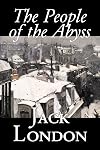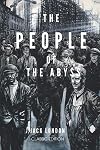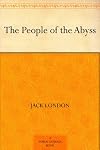
The People of the Abyss
by Jack London
On This Page
Description
The beloved author of such works as The Call of the Wild, White Fang, and The Sea Wolf turns his keen eye to social realism in The People of the Abyss. In this fascinating volume, Jack London recounts his first-hand experiences living in the slums of the city that bears his name. Read the non-fiction account that brought world-wide attention to the appalling conditions facing England's working poor in the early twentieth century..
Tags
Recommendations
































Member Recommendations



Member Reviews
This is a very interesting, enlightening and informative account of the author's firsthand experience of life in the east end of 1902 London.
Each chapter provided wonderful insights into the lives of the various poverty-stricken residents- their abodes, work, diet, workhouse experiences, interaction with local authorities, etc.
The book is well written and flows smoothly despite the fact that it is also imparting purportedly factual information. While I have no doubt that many accounts were substantially accurate, it is also clear that the author used hyperbole to make his ideological points.
My only mild complaint is that the author's conclusory ideological statements are not only wrong but off putting. Thankfully, despite good show more intentions his socialist outlook never took hold in society. show less
Each chapter provided wonderful insights into the lives of the various poverty-stricken residents- their abodes, work, diet, workhouse experiences, interaction with local authorities, etc.
The book is well written and flows smoothly despite the fact that it is also imparting purportedly factual information. While I have no doubt that many accounts were substantially accurate, it is also clear that the author used hyperbole to make his ideological points.
My only mild complaint is that the author's conclusory ideological statements are not only wrong but off putting. Thankfully, despite good show more intentions his socialist outlook never took hold in society. show less
'The People of the Abyss' contains Jack London's reporting on London’s appalling poverty in 1902. (This double London will probably make the review confusing, for which I apologise.) Jack London, the American novelist and essayist, explored and experienced the East End and wrote with a great depth of feeling and empathy about what he found there. Thus, I found the book very depressing, as I’d thought that urban poverty had to some extent been alleviated by the turn of the century. Certainly not, it seems that squalid, overcrowded housing, pollution, inhumanely low wages, and hunger remained the rule for a huge proportion of London dwellers.
It was rather timely for me to read this book now, as I’ve recently been discussing the show more topic of entrenched unemployment with the undergraduate students I sometimes teach. Nowadays, it is easy to talk carelessly about the welfare safety net as something solid, which can be snipped away at without any particular ill effects. At least, it is easy for very privileged and naive undergraduates to think this way, as they have never experienced poverty or unemployment. It’s all theory to them. Whereas London demonstrates the brutal reality of a city without a safety net; homelessness, starvation, and death await those unable to find enough work.
As well as simply witnessing the terrible poverty on display and bringing it to the reader’s attention, London condemns those who try ineffectively to help and, if anything, make things worse. He is scathing of the workhouses and other institutions that provide a last resort for the destitute. Towards the end of the book, he broadly outlines the solution needed to alleviate the situation; 'better management' as he puts it. London was a staunch socialist, as displayed in the other book of his that I’ve read [b:The Iron Heel|929783|The Iron Heel|Jack London|https://images.gr-assets.com/books/1334104139s/929783.jpg|951056]. Although he is more enthusiastic than analytical, he produces an extremely effective indictment of laissez-faire economics and the extremes of inequality that they promote. Sadly, this is still an argument that needs to be made and thus this book remains relevant. Countering the insidious narratives of deserving and undeserving poor, which have now returned with a vengeance to the UK, London invites you to sympathise with the terrible plight of individuals trapped in a system. The people of the abyss (or les misérables as the French put it) cannot escape, merely survive and suffer until their premature death. show less
It was rather timely for me to read this book now, as I’ve recently been discussing the show more topic of entrenched unemployment with the undergraduate students I sometimes teach. Nowadays, it is easy to talk carelessly about the welfare safety net as something solid, which can be snipped away at without any particular ill effects. At least, it is easy for very privileged and naive undergraduates to think this way, as they have never experienced poverty or unemployment. It’s all theory to them. Whereas London demonstrates the brutal reality of a city without a safety net; homelessness, starvation, and death await those unable to find enough work.
As well as simply witnessing the terrible poverty on display and bringing it to the reader’s attention, London condemns those who try ineffectively to help and, if anything, make things worse. He is scathing of the workhouses and other institutions that provide a last resort for the destitute. Towards the end of the book, he broadly outlines the solution needed to alleviate the situation; 'better management' as he puts it. London was a staunch socialist, as displayed in the other book of his that I’ve read [b:The Iron Heel|929783|The Iron Heel|Jack London|https://images.gr-assets.com/books/1334104139s/929783.jpg|951056]. Although he is more enthusiastic than analytical, he produces an extremely effective indictment of laissez-faire economics and the extremes of inequality that they promote. Sadly, this is still an argument that needs to be made and thus this book remains relevant. Countering the insidious narratives of deserving and undeserving poor, which have now returned with a vengeance to the UK, London invites you to sympathise with the terrible plight of individuals trapped in a system. The people of the abyss (or les misérables as the French put it) cannot escape, merely survive and suffer until their premature death. show less
Jack London's "People of the Abyss" is two-fisted, brawling journalism from a master of the craft. I read "People of the Abyss" and reviewed it back in 2009. I then posted the review on Amazon dot com. I don't know what came of it because it's no longer there. I've put it up here because I like it a lot and I believe that some of the readers here will like it, too. So lace up your boxin' gloves cuz here it comes, folks- - - -
"People of the Abyss"
When somebody says "muckraker," I recall names such as Lincoln Steffens, Ray Stannard Baker, Upton Sinclair, Ida Tarbell, Izzy Stone and a few others. I never put Jack London in that category because books I associated with his name ("White Fang," "The Sea Wolf," et al.) were works of adventure show more fiction. I was aware of London's socialist-labor sympathies having read a few of his short stories: romances such as "South of the Slot" come to mind. But I never knew Jack London for a muckraker.
Now I've read "People of the Abyss," I'm willing to allow that Jack London was a muckraker. Still, I note that London's approach to muckraking was different than some. Where Ida Tarbell (for example) did years of research, gathered mountains of documented evidence and used something like 800 pages to expose the fetid monstrosity of John D. Rockefeller, Jack London did only a few weeks of legwork, composed just one airtight analogy and used only 232 pages to expose the fetid monstrosity of the British Empire and of civilization as we all know it.
"People of the Abyss" is jack London's eyewitness description of what laissez-faire capitalism ultimately wreaks upon the working class. He saw it all when, in the summer of 1902, he went to England disguised as a merchant seaman on the beach. Arriving in England, the American author dove headlong into the reeking labor ghetto at the notorious East End of London.
Walking the same mean streets that Jack the Ripper stalked just 12 years earlier, the American writer spent several months living the life of London's poor. He wore the rags. He ate the swill. He slept out in the weather. He visited lodgings in which families of six, eight or more dwelt in single, 7x8-foot rooms with no heat or water. He stayed in Dickensian workhouses. He visited hospitals that made people sick and asylums that drove people crazy. He worked for pennies a day while he watched multitudes of people slog through filth, disease and starvation to achieve misery, despair and death.
In this writer's ken, Jack London never wrote a book that didn't contain a purple passage or two. No surprise, then: "People of the Abyss" houses a few purple spots. But if London was a passionate writer, he was also a damned good one. He understood that rhetoric won't stand without facts to support it. He also understood that a long recitation of bald facts will alienate most readers. Accordingly, London's "Abyss" uses few statistics and those few statistics are shrewdly chosen. The following paragraph (p. 178) is about as thick as the narrative gets:
"The figures are appalling: 1.8 million people in London live on the poverty line and below it, and another one million live with one week's wages between them and pauperism. In all of England and Wales, eighteen percent of the whole population are driven to the parish for relief, and in London, according to the statistics of the London County Council, twenty-one percent of the whole population are driven to the parish for relief. Between being "driven to the parish for relief" and being an out-and-out pauper there is a great difference, yet London supports 123,000 paupers, quite a city of folk in themselves. One of every four in London dies on public charity, while 939 out of every 1,000 in the United Kingdom die in poverty; 8 million simply struggle on the ragged edge of starvation, and 20 million more are not comfortable in the simple and clean sense of the word."
The bulk of London's narration describes with horrid clarity what it meant to be "driven to the parish for relief" and to be "not comfortable in the simple and clean sense of the word." Here it should suffice to say that in America today, free-range cattle and hogs are typically more "comfortable" than poor Britons of 1902.
For all it tells a depressing story, "People of the Abyss" is an almighty good book that offers today's American reader plenty to think about. Tales of parents who killed themselves after murdering children for whom they could not provide ring all too familiar in the ears of any American working stiff today. Even more chilling is the realization that we today are led by a pack of evil morons who want to do away with "entitlements" such as Social Security, Medicare, and Food Stamps so we can all enjoy the good old days that (they assure us) prevailed in America before such foolish and wasteful programs existed.
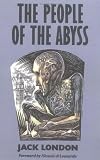
Jack London was a great writer who never wrote better than he reads in this swaggering reprint from California's Sonoma State University and Joseph Simon, Publisher. The Sonoma State edition of "People of the Abyss" features the author's gritty, b&w photographs of Blighty's poor and their life in the ghetto. , a Foreword by Clarence Stasz, and a Preface by the author. This particular edition features an artsy hardcover and a sturdy, protective slipcase!
Best of all is Jack London's narration. The tone of the author in this particular work will curl your hair, stiffen your spine, and stand you right up on your hind legs. "The People of the Abyss" -- Read it. Get mad. Join a union. Raise Hell!
"The People of the Abyss"
Jack London
Sonoma State University Press
ISBN (0-934710-03-1) show less
"People of the Abyss"
When somebody says "muckraker," I recall names such as Lincoln Steffens, Ray Stannard Baker, Upton Sinclair, Ida Tarbell, Izzy Stone and a few others. I never put Jack London in that category because books I associated with his name ("White Fang," "The Sea Wolf," et al.) were works of adventure show more fiction. I was aware of London's socialist-labor sympathies having read a few of his short stories: romances such as "South of the Slot" come to mind. But I never knew Jack London for a muckraker.
Now I've read "People of the Abyss," I'm willing to allow that Jack London was a muckraker. Still, I note that London's approach to muckraking was different than some. Where Ida Tarbell (for example) did years of research, gathered mountains of documented evidence and used something like 800 pages to expose the fetid monstrosity of John D. Rockefeller, Jack London did only a few weeks of legwork, composed just one airtight analogy and used only 232 pages to expose the fetid monstrosity of the British Empire and of civilization as we all know it.
"People of the Abyss" is jack London's eyewitness description of what laissez-faire capitalism ultimately wreaks upon the working class. He saw it all when, in the summer of 1902, he went to England disguised as a merchant seaman on the beach. Arriving in England, the American author dove headlong into the reeking labor ghetto at the notorious East End of London.
Walking the same mean streets that Jack the Ripper stalked just 12 years earlier, the American writer spent several months living the life of London's poor. He wore the rags. He ate the swill. He slept out in the weather. He visited lodgings in which families of six, eight or more dwelt in single, 7x8-foot rooms with no heat or water. He stayed in Dickensian workhouses. He visited hospitals that made people sick and asylums that drove people crazy. He worked for pennies a day while he watched multitudes of people slog through filth, disease and starvation to achieve misery, despair and death.
In this writer's ken, Jack London never wrote a book that didn't contain a purple passage or two. No surprise, then: "People of the Abyss" houses a few purple spots. But if London was a passionate writer, he was also a damned good one. He understood that rhetoric won't stand without facts to support it. He also understood that a long recitation of bald facts will alienate most readers. Accordingly, London's "Abyss" uses few statistics and those few statistics are shrewdly chosen. The following paragraph (p. 178) is about as thick as the narrative gets:
"The figures are appalling: 1.8 million people in London live on the poverty line and below it, and another one million live with one week's wages between them and pauperism. In all of England and Wales, eighteen percent of the whole population are driven to the parish for relief, and in London, according to the statistics of the London County Council, twenty-one percent of the whole population are driven to the parish for relief. Between being "driven to the parish for relief" and being an out-and-out pauper there is a great difference, yet London supports 123,000 paupers, quite a city of folk in themselves. One of every four in London dies on public charity, while 939 out of every 1,000 in the United Kingdom die in poverty; 8 million simply struggle on the ragged edge of starvation, and 20 million more are not comfortable in the simple and clean sense of the word."
The bulk of London's narration describes with horrid clarity what it meant to be "driven to the parish for relief" and to be "not comfortable in the simple and clean sense of the word." Here it should suffice to say that in America today, free-range cattle and hogs are typically more "comfortable" than poor Britons of 1902.
For all it tells a depressing story, "People of the Abyss" is an almighty good book that offers today's American reader plenty to think about. Tales of parents who killed themselves after murdering children for whom they could not provide ring all too familiar in the ears of any American working stiff today. Even more chilling is the realization that we today are led by a pack of evil morons who want to do away with "entitlements" such as Social Security, Medicare, and Food Stamps so we can all enjoy the good old days that (they assure us) prevailed in America before such foolish and wasteful programs existed.
Jack London was a great writer who never wrote better than he reads in this swaggering reprint from California's Sonoma State University and Joseph Simon, Publisher. The Sonoma State edition of "People of the Abyss" features the author's gritty, b&w photographs of Blighty's poor and their life in the ghetto. , a Foreword by Clarence Stasz, and a Preface by the author. This particular edition features an artsy hardcover and a sturdy, protective slipcase!
Best of all is Jack London's narration. The tone of the author in this particular work will curl your hair, stiffen your spine, and stand you right up on your hind legs. "The People of the Abyss" -- Read it. Get mad. Join a union. Raise Hell!
"The People of the Abyss"
Jack London
Sonoma State University Press
ISBN (0-934710-03-1) show less
Jack London’s memoir about the time he spent in London’s East End in 1902. It is a piece of immersive journalist in which he poses as an American sailor temporarily out of work. He describes his first-hand experiences of walking the streets at night, attempting to obtain menial work, and enduring many travails. The author observes the lives of many people, including singles, families, and children, describing overcrowded housing, comparatively high rental fees, rampant illnesses, and lack of job opportunities. He takes British society to task for not doing enough to keep these people from starvation and death.
He cites many statistics of the time as to how much people made and the costs of obtaining the merest basics to eke out a show more living, often throwing individuals into debt and a massive downward spiral. It brings to light the full impact of industrialization, and the resulting gaps between the fortunate and the unfortunate. These true stories are heartbreaking. I am always interested in reading about the past, especially when written by those who lived in the time period. This is one of Jack London’s first works, before he became an acclaimed author. It illuminates a period in history, but also offers lessons for our own time. Though the depths of deprivation may not be quite the same, many of these issues are still with us. show less
He cites many statistics of the time as to how much people made and the costs of obtaining the merest basics to eke out a show more living, often throwing individuals into debt and a massive downward spiral. It brings to light the full impact of industrialization, and the resulting gaps between the fortunate and the unfortunate. These true stories are heartbreaking. I am always interested in reading about the past, especially when written by those who lived in the time period. This is one of Jack London’s first works, before he became an acclaimed author. It illuminates a period in history, but also offers lessons for our own time. Though the depths of deprivation may not be quite the same, many of these issues are still with us. show less
"It is rather hard to tell a tithe of what I saw. Much of it is untellable. But in a general way I may say that I saw a nightmare, a fearful slime that quickened the pavement with life, a mess of unmentionable obscenity that put into eclipse the 'nightly horror' of Picadilly and the Strand. It was a menagerie of garmented bipeds that looked something like humans and more like beasts, and to complete the picture, brass-buttoned keepers kept order among them when they snarled too fiercely."
That was what Jack London saw on his first visit to the London docks and, despite his claim that it is 'rather hard to tell', this marvellous book does a better job of telling it than many another work, either of fiction or of history, that attempts to show more bring to life the squalor of 19th century London.
It was in 1902 that London (the author) visited London (the city) and lived as an out-of-work man on its streets while investigating the lives of the thousands of men and women for whom that was an everyday reality. The stories that feature here are some of the most heartbreaking you will find anywhere. The vicious circle of near-endless searching for a place to sleep or a crust to eat - a search that left little time for the most important job of all, looking for work, demonstrates the unfairness of a system in which a person, once caught up in it, can only spiral further and further down to the depths (the 'abyss') that can only end in death - from starvation, disease or suicide.
It is not so much the appalling conditions in which life had to be lived as the sheer inability for anyone, once caught up in this spiral, ever to emerge from it that so raises the hackles of both reader and writer and it is to London's credit that the majority of the book is written in a white hot fury. He apportions blame wherever it is due - with the government, the rich, even the charities and social workers who do their best to relieve the conditions but from a position of very little understanding.
Just how much social change was brought about by this book at the time of publication I do not know. Sadly, no book can ever do quite enough and the number of people still (over 100 years later) sleeping on the streets in the capital are evidence of that but perhaps this reissue will do something, if not to change that situation, then at least to help the rest of us understand a plight we can only be grateful we do not have to experience ourselves.
A superb book - not just angry, righteous and worthy but a damn good read too. show less
That was what Jack London saw on his first visit to the London docks and, despite his claim that it is 'rather hard to tell', this marvellous book does a better job of telling it than many another work, either of fiction or of history, that attempts to show more bring to life the squalor of 19th century London.
It was in 1902 that London (the author) visited London (the city) and lived as an out-of-work man on its streets while investigating the lives of the thousands of men and women for whom that was an everyday reality. The stories that feature here are some of the most heartbreaking you will find anywhere. The vicious circle of near-endless searching for a place to sleep or a crust to eat - a search that left little time for the most important job of all, looking for work, demonstrates the unfairness of a system in which a person, once caught up in it, can only spiral further and further down to the depths (the 'abyss') that can only end in death - from starvation, disease or suicide.
It is not so much the appalling conditions in which life had to be lived as the sheer inability for anyone, once caught up in this spiral, ever to emerge from it that so raises the hackles of both reader and writer and it is to London's credit that the majority of the book is written in a white hot fury. He apportions blame wherever it is due - with the government, the rich, even the charities and social workers who do their best to relieve the conditions but from a position of very little understanding.
Just how much social change was brought about by this book at the time of publication I do not know. Sadly, no book can ever do quite enough and the number of people still (over 100 years later) sleeping on the streets in the capital are evidence of that but perhaps this reissue will do something, if not to change that situation, then at least to help the rest of us understand a plight we can only be grateful we do not have to experience ourselves.
A superb book - not just angry, righteous and worthy but a damn good read too. show less
 This review was written for LibraryThing Early Reviewers.
In 1902, Jack London went to the city of London and spent a few months posing as an unemployed American sailor in the East End slums. He lived with them, on the streets and in workhouses, and in The People of the Abyss he reports back on the living conditions he found there. They are horrific. Starvation, filth, disease... people standing hours in line trying to get a spot to sleep for the night, unable to find or keep jobs. Many of the people London met were merely unlucky - an illness, a death in the family, an injury that cost them a job, the "thing that happened" - and the next thing they knew they were homeless, no longer able to make ends meet (sounds familiar, no? The more things change, the more they stay the same). It is show more difficult reading, and London only hints at some of the worst of the problems.
As other reviewers have said, this is by no means an unbiased, just-the-facts-ma'am book. London was outraged by what he saw. In the book, he lays blame at the feet of the government, society, the lack of jobs, and even do-gooders, stopping just short of calling for class revolution. For what it is worth, an outraged Jack London is a compulsively readable Jack London, for this reviewer. So, so difficult to put down. show less
As other reviewers have said, this is by no means an unbiased, just-the-facts-ma'am book. London was outraged by what he saw. In the book, he lays blame at the feet of the government, society, the lack of jobs, and even do-gooders, stopping just short of calling for class revolution. For what it is worth, an outraged Jack London is a compulsively readable Jack London, for this reviewer. So, so difficult to put down. show less
This review was written for LibraryThing Early Reviewers.What Jacob Riis did for New York City with his photos of tenements, Jack London did for London with his book, The People of the Abyss. The abyss that he referred to was the squalid East End of London, where the poorest of the poor lived and died.
All of the horrors are there, described not by a dispassionate historian keeping a professional distance in his reporting, but in eyewitness accounts of and interviews with people living in appalling conditions.
What I found most horrifying about this book is that so many things haven’t changed since it was written at the turn of the last century. His descriptions of homeless people forced by the police to literally walk all night due to a law which forbade sleeping in public places brought to show more mind the sweeps done in our own cities, forcing the homeless off the streets and out of our sight.
Healthcare was an issue then just as it is now. Families were forced into poverty and sometimes starvation when the husband, the main breadwinner, was injured, became ill or died. The majority of bankruptcies in our own time are caused by overwhelming medical bills.
More than a century ago when this book was written, when a man was out of work due to illness or injury, his wife was unable to adequately support the family because the only jobs open to her paid too little. Sadly, in our own time, women are still not able to adequately provide for their families on their own because they are paid, on average, 70 cents for every dollar a man earns doing the same job. A statistic that should outrage everyone (but strangely doesn’t) is that post-divorce, children slide down the economic scale, sometimes into poverty thanks to their mothers’ inability to earn a living comparable to their fathers who actually ascend the economic ladder post-divorce due their higher earning power.
The cost of housing, rents equal to half their income, brings to mind the mortgage crisis we are suffering today. As the cost of housing during the last real estate bubble, reached stratospheric levels, families were forced to pay more and more of their income for housing, leaving little to actually live on. All it takes is a job loss or catastrophic illness for them to find themselves on the street as the banks foreclose on their homes. Their counterparts a century ago faced a similar fate for the same reasons. Job loss or illness resulted in the loss of the tiny rooms that they rented.
Yet for all the similarities, there are important differences. We have laws governing the workplace and a social safety net that prevents the worst of the gruesome results of illness and unemployment described in this book. Laws about workplace safety and working hours prevent employers from exploiting their workers. Unemployment insurance replaces a portion of lost wages. Food stamps and free or reduced cost meals in schools stave off starvation.
We have come a long way since 1902. After reading this book, I realized that we still have a long way to go. show less
All of the horrors are there, described not by a dispassionate historian keeping a professional distance in his reporting, but in eyewitness accounts of and interviews with people living in appalling conditions.
What I found most horrifying about this book is that so many things haven’t changed since it was written at the turn of the last century. His descriptions of homeless people forced by the police to literally walk all night due to a law which forbade sleeping in public places brought to show more mind the sweeps done in our own cities, forcing the homeless off the streets and out of our sight.
Healthcare was an issue then just as it is now. Families were forced into poverty and sometimes starvation when the husband, the main breadwinner, was injured, became ill or died. The majority of bankruptcies in our own time are caused by overwhelming medical bills.
More than a century ago when this book was written, when a man was out of work due to illness or injury, his wife was unable to adequately support the family because the only jobs open to her paid too little. Sadly, in our own time, women are still not able to adequately provide for their families on their own because they are paid, on average, 70 cents for every dollar a man earns doing the same job. A statistic that should outrage everyone (but strangely doesn’t) is that post-divorce, children slide down the economic scale, sometimes into poverty thanks to their mothers’ inability to earn a living comparable to their fathers who actually ascend the economic ladder post-divorce due their higher earning power.
The cost of housing, rents equal to half their income, brings to mind the mortgage crisis we are suffering today. As the cost of housing during the last real estate bubble, reached stratospheric levels, families were forced to pay more and more of their income for housing, leaving little to actually live on. All it takes is a job loss or catastrophic illness for them to find themselves on the street as the banks foreclose on their homes. Their counterparts a century ago faced a similar fate for the same reasons. Job loss or illness resulted in the loss of the tiny rooms that they rented.
Yet for all the similarities, there are important differences. We have laws governing the workplace and a social safety net that prevents the worst of the gruesome results of illness and unemployment described in this book. Laws about workplace safety and working hours prevent employers from exploiting their workers. Unemployment insurance replaces a portion of lost wages. Food stamps and free or reduced cost meals in schools stave off starvation.
We have come a long way since 1902. After reading this book, I realized that we still have a long way to go. show less
This review was written for LibraryThing Early Reviewers.Members
- Recently Added By
Lists

1001 Books You Must Read Before You Die
1,448 works; 1,136 members

My Year Spent Doing Something Stupid so I Could Write This Book
34 works; 6 members

The Works of Jack London
44 works; 1 member

Jim's recs
3 works; 1 member
Author Information

1,809+ Works 82,102 Members
One of the pioneers of 20th century American literature, Jack London specialized in tales of adventure inspired by his own experiences. London was born in San Francisco in 1876. At 14, he quit school and became an "oyster pirate," robbing oyster beds to sell his booty to the bars and restaurants in Oakland. Later, he turned on his pirate show more associates and joined the local Fish Patrol, resulting in some hair-raising waterfront battles. Other youthful activities included sailing on a seal-hunting ship, traveling the United States as a railroad tramp, a jail term for vagrancy and a hazardous winter in the Klondike during the 1897 gold rush. Those experiences converted him to socialism, as he educated himself through prolific reading and began to write fiction. After a struggling apprenticeship, London hit literary paydirt by combining memories of his adventures with Darwinian and Spencerian evolutionary theory, the Nietzchean concept of the "superman" and a Kipling-influenced narrative style. "The Son of the Wolf"(1900) was his first popular success, followed by 'The Call of the Wild" (1903), "The Sea-Wolf" (1904) and "White Fang" (1906). He also wrote nonfiction, including reportage of the Russo-Japanese War and Mexican revolution, as well as "The Cruise of the Snark" (1911), an account of an eventful South Pacific sea voyage with his wife, Charmian, and a rather motley crew. London's body broke down prematurely from his rugged lifestyle and hard drinking, and he died of uremic poisoning - possibly helped along by a morphine overdose - at his California ranch in 1916. Though his massive output is uneven, his best works - particularly "The Call of the Wild" and "White Fang" - have endured because of their rich subject matter and vigorous prose. (Bowker Author Biography) show less
Some Editions
Series
Belongs to Publisher Series
Work Relationships
Common Knowledge
- Canonical title
- The People of the Abyss
- Original title
- The people of the abyss
- Alternate titles*
- La gente del abismo; El pueblo del abismo
- Original publication date
- 1903
- Important places*
- Londres, Angleterre, Royaume-Uni
- Epigraph
- The chief priests and rulers cry:- /
“O Lord and Master, not ours the guilt, /
We build but as our fathers built; /
Behold thine images how they stand /
Sovereign and sole through all our land. /
“O... (show all)ur task is hard—with sword and flame, /
To hold thine earth forever the same, /
And with sharp crooks of steel to keep, / Still as thou leftest them, thy sheep.” /
Then Christ sought out an artisan, /
A low-browed, stunted, haggard man, /
And a motherless girl whose fingers thin /
Crushed from her faintly want and sin. /
These set he in the midst of them, /
And as they drew back their garment hem /
For fear of defilement, “Lo, here,” said he, /
“The images ye have made of me.”
JAMES RUSSELL LOWELL. - First words
- The experiences related in this volume fell to me in the summer of 1902. I went down into the under-world of London with an attitude of mind which I may best liken to that of the explorer.
- Last words
- (Click to show. Warning: May contain spoilers.)There can be no mistake. Civilisation has increased man’s producing power an hundred-fold, and through mismanagement the men of Civilisation live worse than the beasts, and have less to eat and wear and protect them from the elements than the savage Innuit in a frigid climate who lives to-day as he lived in the stone age ten thousand years ago.
*Some information comes from Common Knowledge in other languages. Click "Edit" for more information.
Classifications
- Genre
- Nonfiction
- DDC/MDS
- 305.56909421 — Society, government, & culture Social sciences, sociology & anthropology Social group - Age, Gender, Ethnicity People by social and economic levels Lower, alienated, excluded classes Poor people History, geographic treatment, biography Europe England & Wales London
- LCC
- HV4086 .L66 .L66 — Social sciences Social pathology. Social and public welfare. Criminology Social pathology. Social and public welfare. Protection, assistance and relief Poor in cities. Slums
- BISAC
Statistics
- Members
- 777
- Popularity
- 36,164
- Reviews
- 30
- Rating
- (4.08)
- Languages
- 13 — Chinese, Danish, English, French, German, Italian, Japanese, Norwegian (Bokmål), Portuguese (Portugal), Russian, Spanish, Swedish, Turkish
- Media
- Paper, Audiobook, Ebook
- ISBNs
- 150
- ASINs
- 41