On This Page
Description
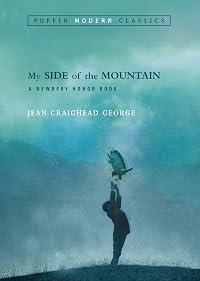
A young boy relates his adventures during the year he spends living alone in the Catskill Mountains including his struggle for survival, his dependence on nature, his animal friends, and his ultimate realization that he needs human companionship.Tags
Recommendations
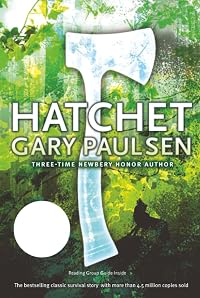
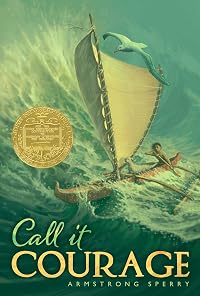
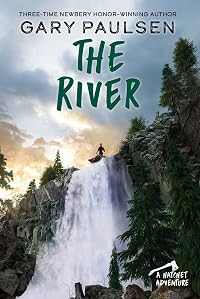
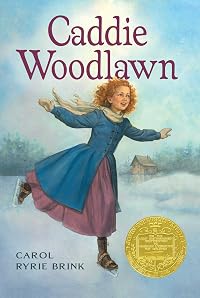


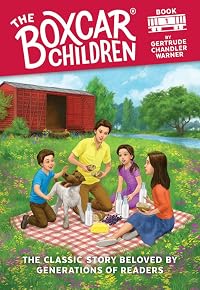
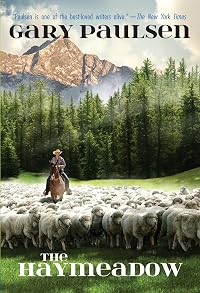

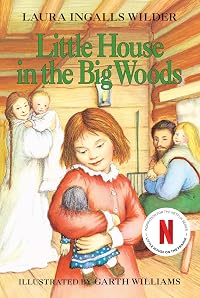
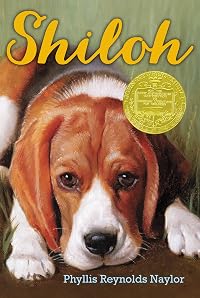

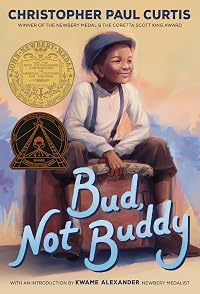
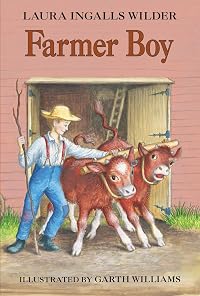
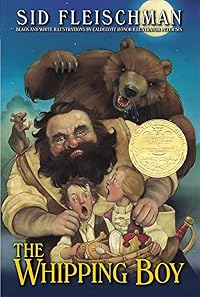
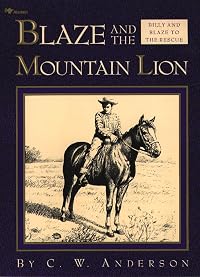
Member Recommendations


Member Reviews
I really needed a win after starting (and giving up on) 3 separate books so when I picked up My Side of the Mountain by Jean Craighead George I felt pretty confident considering it was a Newberry Honor winner. The introduction made me laugh because it was all about the author's experience running away from home and coming back very shortly afterward. (I was gone such a short amount of time when I was a kid that my mom didn't even know that I'd left.) This book gave me strong Hatchet vibes from the outset. Our main character, Sam Gribley, doesn't so much as run away as inform his family that he is going to leave and live off the ancestral family land in the Catskills. Like most parents, they think he's bluffing and that he'll be back show more shortly...but he doesn't come back. He actually makes it to the Catskills and proceeds to become self-sufficient. He learns how to strike flint for fire, smoke out a tree to make a warm home, train a falcon to hunt wild game, sew a deerskin outfit, and develop varied (and tasty) recipes. This is a story of survival, independence, and the beauty of nature. It turned out to be exactly what I needed to get past the duds I'd recently picked. If you (or a reader in your life) enjoy fast paced adventure stories that are heavily descriptive (with intermittent pencil illustrations) My Side of the Mountain is for you. 8/10 show less
There is something so satisfying about survival stories. For one, I feel like reading them prepares me to face similar challenges should they ever come my way. (Actually, I seriously doubt I'm any closer to being able to start a fire from flint and steel just because Sam Gribley explained how in this book--but still! I have some small idea! Right? Sigh. This is like how I thought I could make cheese from raw milk after reading [b:Little House in the Big Woods|8337|Little House in the Big Woods (Little House, #1)|Laura Ingalls Wilder|http://photo.goodreads.com/books/1266449708s/8337.jpg|1200805] isn't it?)
Anyway. Survival stories have a natural rhythm and drive. There's just that basic question hanging out there: can the hero face down show more the elements and, you know, survive? Sam Gribley totally brings his troubles on himself, too, because he runs away from home. That might take away a little from the excitement of the struggle for survival, like in [b:A Girl Named Disaster|133775|A Girl Named Disaster (Orchard Classics)|Nancy Farmer|http://photo.goodreads.com/books/1200867028s/133775.jpg|1160483] where Nhamo has no choice but to run away, but it also is kind of cool the way Sam takes charge of his life and decides how he wants to live. Props, Sam.
So here's to an excellent survival story! The audiobook was very good. show less
Anyway. Survival stories have a natural rhythm and drive. There's just that basic question hanging out there: can the hero face down show more the elements and, you know, survive? Sam Gribley totally brings his troubles on himself, too, because he runs away from home. That might take away a little from the excitement of the struggle for survival, like in [b:A Girl Named Disaster|133775|A Girl Named Disaster (Orchard Classics)|Nancy Farmer|http://photo.goodreads.com/books/1200867028s/133775.jpg|1160483] where Nhamo has no choice but to run away, but it also is kind of cool the way Sam takes charge of his life and decides how he wants to live. Props, Sam.
So here's to an excellent survival story! The audiobook was very good. show less
Let's face it. The story is far-fetched, especially the ending. Yet, during a pandemic I can see the value of the story in a unique perspective: A boy self-quarantines and learns to be self-sufficient. He develops a deep appreciation for nature. In the end, he also learns that he needs human contact. His family and he decide to be "alone together".
A fascinating journal - it recounts a year in the life of Sam Gribley, a boy who escape from home in the crowded city of New York to life in the wilderness in the Catskills. It’s sort of a "Walden meets Robinson Crusoe” - the children’s edition.
It is his desire to get away from a large family and crowded apartment that initially drives him to the woods. Also the dream of living free and independent with noone to bother him. Fascinating to find out how he survives building a shelter, making clothes and hunting for food - and trying to make it through winter with stored up provisions. He also captures and trains a peregrine falcon named Frightful. And slowly he befriends a teacher and even his father comes to visit during Christmas. show more
He has not run a way in that sense. His father has an idea of where he is - also the local librarian where he comes to read about plants and wild life in order to survive. I wonder…it all sounds quite incredible that a boy should be left alone like that for so long…but maybe not so incredible back in 1950’s. Well, the suspension of disbelief and all that.
During winter there’s a growing conflict in Sam. The disire to be alone and the desire of human fellowship - there’s a good coming-of-age story as well in My Side of the Mountain. show less
It is his desire to get away from a large family and crowded apartment that initially drives him to the woods. Also the dream of living free and independent with noone to bother him. Fascinating to find out how he survives building a shelter, making clothes and hunting for food - and trying to make it through winter with stored up provisions. He also captures and trains a peregrine falcon named Frightful. And slowly he befriends a teacher and even his father comes to visit during Christmas. show more
He has not run a way in that sense. His father has an idea of where he is - also the local librarian where he comes to read about plants and wild life in order to survive. I wonder…it all sounds quite incredible that a boy should be left alone like that for so long…but maybe not so incredible back in 1950’s. Well, the suspension of disbelief and all that.
During winter there’s a growing conflict in Sam. The disire to be alone and the desire of human fellowship - there’s a good coming-of-age story as well in My Side of the Mountain. show less
I reread this classic young adult novel about escaping to nature when a family member told me they could read it over and over. I have a sense I read this in 5th grade because I was instantly in the woods with Sam Gribley and his falcon, Frightful. Though idealistic at times (imagine: a preteen boy with city living only surviving a winter in the Catskills on nothing but his wits) idealistic is actually what the doctor ordered. The desire to escape, not be found, in conflict with loneliness and the human need for community was the book's most poignant moments. My family member was right - this one will get a prominent place on the shelf and re-read again and again with my child and to pass the time in a sylvan oasis in my mind.
This novel suffers a bad case of what I call "Tom Sawyer Syndrome", and by that I mean that it is a childrens' book with a main character adults seem to adore, but if a kid were ever to actually do the things the kid in this book does, the adults in his life would never stand for it. The boy in the story, Sam, runs away from home and lives alone in the wilderness for over a year (on the side of the titular mountain). Why is it that kids in these survival tales are glamourized, but adults living out in the wild are all portrayed as either (1) ass-raping hillbillies a'la Deliverance; (2) right-wing psychopaths a'la Ted Kaczynski; (3) pitiful, directionless lost-soul types like that guy Chris in Into the Wild; or (4) groussing crumudgeons show more like Henry David Theoreau in Thoughts from Walden Pond? The only positive wilderness-living adults I can think of in literature are the ones who are stranded in some remote location against their will, like Robinson Crusoe. That's too bad, because there actually are some people (adults) out there who really could survive in the wild, and that is pretty amazing. On the other hand, the idea of a twelve year old raised in an urban environment just going out and surviving and thriving the way Sam does in this story is ludicrous. Even if he did manage to catch enough fish and gather enough berries to feed himself I just think it's very likely he'd die of exposure, or fall prey so some animal eventually. All the boy-wonder Disney adventure crap in My Side of the Mountain is pure naïve self-delusion. If there are any twelve year old city kids out there who were taken by this story, and who are entertaining the idea of running away from home to become a solitary self-reliant mountain man, I would encourage them to consider the following list of things much more likely to happen than the adventures Sam had in this book:
1) His parents notice he's gone missing, and alert the police, who easily identify him at the bus station and bring him home.
2) Sam's parents anticipate he would go to the abandoned family farm upstate, and wait for him there.
3) Sam comes to his senses early on, realizes there is no realistic way he can live in the wild, and returns home in less than a week.
4) Sam abandons the whole idea of living in the wild and goes off to try to live with friends or family (who probably tell his parents what's up)
5) Sam trusts some stranger he meets on the bus, or hitchhiking up to the old family farm. His abused body is found in a ditch a few days later, or -best possible case scenerio- a private eye his family hired locates him a few years later in Tijuana dancing on tables for crack and candy bars.
6) Sam gets lost in the woods and starves to death.
7) Sam gets lost in the woods and freezes to death.
8) Sam gets eaten by a bear.
9) Sam falls, breaks a bone, and dies in the woods of starvation or dehydration.
10) Sam gets eaten by a bear. I listed this twice because seriously, that's what would happen.
So accepting the irrefutible fact that Sam would be eaten by a bear, I have to wonder why a story like this gets to be such a classic. I think it plays into both children and adults' fantasies about kids growing up and becoming independent. Many parents must look at their obese kids sitting for hours each day on the sofa, completely incapable of any original thought, but fully versed in the latest comings and goings of the Kardashian sisters, and they must think to themselves: "Gee, I wish my kids would run away from home and develop useful survival skills in the wilderness (and get eaten by a bear)." And it's true; it would be better and healthier for everybody if that would happen more often. On the other hand, kids sit around, as they have since the dawn of time, wishing they had more independence, embarrassed of the hypocritical life they must lead, which forces them to continually say things to their parents like "It's my life, and I can do what I want! ...but can I borrow the keys to the car tonight?" A book like this must seem wonderful to them... Sam goes off into the wild, with nobody to answer to, and carves out an existance for himself. Of course it would be more fun if he also had his cellphone and laptop with internet access, so he could check on Wikipedia whether those funny looking mushrooms are poisonous or not, and access to Facebook, so he could "update" his friends every 10 minutes, with helpful missives like "Still raining out here. I'm getting hungry again... think I'll check and see whether any new berries grew on that bush I saw earlier." Of course, Facebook or not, the kid would still eventually end up getting eaten by a bear. show less
1) His parents notice he's gone missing, and alert the police, who easily identify him at the bus station and bring him home.
2) Sam's parents anticipate he would go to the abandoned family farm upstate, and wait for him there.
3) Sam comes to his senses early on, realizes there is no realistic way he can live in the wild, and returns home in less than a week.
4) Sam abandons the whole idea of living in the wild and goes off to try to live with friends or family (who probably tell his parents what's up)
5) Sam trusts some stranger he meets on the bus, or hitchhiking up to the old family farm. His abused body is found in a ditch a few days later, or -best possible case scenerio- a private eye his family hired locates him a few years later in Tijuana dancing on tables for crack and candy bars.
6) Sam gets lost in the woods and starves to death.
7) Sam gets lost in the woods and freezes to death.
8) Sam gets eaten by a bear.
9) Sam falls, breaks a bone, and dies in the woods of starvation or dehydration.
10) Sam gets eaten by a bear. I listed this twice because seriously, that's what would happen.
So accepting the irrefutible fact that Sam would be eaten by a bear, I have to wonder why a story like this gets to be such a classic. I think it plays into both children and adults' fantasies about kids growing up and becoming independent. Many parents must look at their obese kids sitting for hours each day on the sofa, completely incapable of any original thought, but fully versed in the latest comings and goings of the Kardashian sisters, and they must think to themselves: "Gee, I wish my kids would run away from home and develop useful survival skills in the wilderness (and get eaten by a bear)." And it's true; it would be better and healthier for everybody if that would happen more often. On the other hand, kids sit around, as they have since the dawn of time, wishing they had more independence, embarrassed of the hypocritical life they must lead, which forces them to continually say things to their parents like "It's my life, and I can do what I want! ...but can I borrow the keys to the car tonight?" A book like this must seem wonderful to them... Sam goes off into the wild, with nobody to answer to, and carves out an existance for himself. Of course it would be more fun if he also had his cellphone and laptop with internet access, so he could check on Wikipedia whether those funny looking mushrooms are poisonous or not, and access to Facebook, so he could "update" his friends every 10 minutes, with helpful missives like "Still raining out here. I'm getting hungry again... think I'll check and see whether any new berries grew on that bush I saw earlier." Of course, Facebook or not, the kid would still eventually end up getting eaten by a bear. show less
Very enjoyable. Not believable in every way, but a sweet story filled with things dear to my heart. I enjoyed spending time these last few days before bed in the forest of the Catskills with Sam in a hollowed out Hemlock tree, eating and drinking from turtle shells, meeting upcoming challenges and always in tune with nature. Nice way to fall asleep.
Near the end, when Sam convened his imaginary "forum" with friends he had met while in the wild, discussing storms and how to make a spring suit, that made me smile big.
The ending was a little peculiar, not expected, but of course it had to come to an end somehow. I'll be thinking about that for a while.
Nice, gentle read.
Near the end, when Sam convened his imaginary "forum" with friends he had met while in the wild, discussing storms and how to make a spring suit, that made me smile big.
The ending was a little peculiar, not expected, but of course it had to come to an end somehow. I'll be thinking about that for a while.
Nice, gentle read.
Members
- Recently Added By
Lists

Favorite Childhood Books
1,651 works; 515 members

Best Newbery Honor Books
257 works; 32 members

School Library Journal - 2012 Top 100 Children's Novels
68 works; 8 members
1001 Children's Books You Must Read Before You Grow Up
774 works; 101 members

Best middle grade books
130 works; 24 members
NPRs Ultimate Backseat Bookshelf: 100 Must-Reads for kids 9-14
222 works; 30 members
Best Books About Animals
143 works; 48 members

Elevenses
316 works; 88 members
Mensa for Kids Excellence in Reading Award Program (Grades 4-6)
64 works; 9 members

Best Children's Books You've Read
197 works; 74 members
Honey For a Child's Heart
1,152 works; 25 members
Childhood Favorites
427 works; 24 members

Read the book and saw the movie
1,170 works; 195 members

Sonlight Books
1,487 works; 25 members
Ambleside Books
459 works; 18 members

Satori Smiles Children's Book List
262 works; 7 members

CCE 1000 Good Books List
1,033 works; 12 members

Children's Classics Worth Reading
68 works; 9 members

Newbery Honor Books By Year - I - 1922-1980
199 works; 3 members

4th Grade Books
312 works; 5 members

Wilderness Survival (Hatchet readers)
19 works; 1 member

KID BOOKS
54 works; 1 member

LibraryThingers' 1001 Books You Must Read Before You Die
442 works; 30 members

Romalda Spalding's Writing Road To Reading
213 works; 3 members

6th Grade
68 works; 4 members

Five star books
1,767 works; 110 members

Recommended Reading List
219 works; 1 member
Before Austen Comes Aesop
318 works; 9 members

Boy/girl trees/nature/water etc cover--children's/YA fiction
316 works; 5 members

Read in 1999
62 works; 1 member

1970s
657 works; 23 members
Books I've Read More Than Once
602 works; 49 members

Books We Love to Reread
688 works; 296 members

Books We Loved As Children
603 works; 252 members
EGBERTINA'S List of childhood books worthy of merit or unspeakable delight
155 works; 6 members
Children's Adventure
53 works; 4 members

Main Character is aged 10-19
362 works; 6 members

Books Read in 2021
5,361 works; 114 members
Best Books of the 20th Century
193 works; 5 members

Survival, camping -- children's/young adult fiction
35 works; 3 members

Favorite Books from the 1950s
33 works; 2 members

Female Author
1,234 works; 67 members
One Book, Many Authors
441 works; 40 members

Recommended Nature Writing
346 works; 180 members

A's favorite novels
100 works; 3 members
Nifty Fifties
129 works; 14 members

al.vick-series
381 works; 2 members
Overdue Podcast
806 works; 9 members

Books About Boys
175 works; 15 members

Frequently sought stories - Name that Book group
149 works; 11 members

Best Survival Stories
97 works; 15 members

1950s
340 works; 22 members
The Five Books That Represent Us
391 works; 148 members
Author Information

167+ Works 56,656 Members
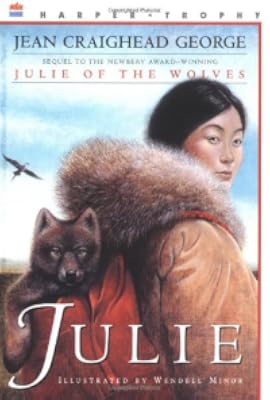
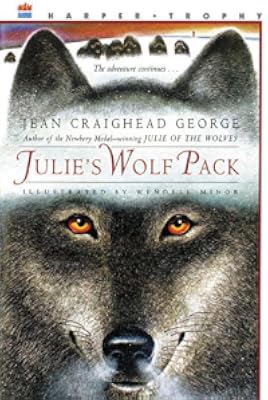
Jean Craighead George was born on July 2, 1919 in Washington, D.C. She received degrees in English and science from Pennsylvania State University. She began her career as a reporter for the International News Service. In the 1940s she was a member of the White House press corps for The Washington Post. During her lifetime, she wrote over 100 show more novels including My Side of the Mountain, which was a 1960 Newbery Honor Book, On the Far Side of the Mountain, Julie of the Wolves, which won the Newbery Medal, Julie, and Julie's Wolf Pack. She also wrote two guides to cooking with wild foods and an autobiography entitled Journey Inward. In 1991, she became the first winner of the School Library Media Section of the New York Library Association's Knickerbocker Award for Juvenile Literature. She died on May 15, 2012 at the age of 92. (Bowker Author Biography) show less
Some Editions
Awards and Honors
Awards
Distinctions
Series

Belongs to Publisher Series
Scholastic (TK 1294)
Vintage Scholastic (TK1294)
Work Relationships
Is contained in
Has the adaptation
Has as a reference guide/companion
Has as a student's study guide
Common Knowledge
- Canonical title
- My Side of the Mountain
- Original title
- My Side of the Mountain
- Original publication date
- 1959
- People/Characters
- Sam Gribley; Frightful; The Baron Weasel; Jesse Coon James; Dad; Bando (show all 9); Matt Spell; Miss Turner; Tom Sidler (Mr. Jacket)
- Important places
- Catskill Mountains, New York, USA
- Related movies
- My Side of the Mountain (1969 | IMDb)
- Dedication
- This book is dedicated to many people -
to that gang of youngsters who inhabited the trees and waters of the Potomac River so many years ago, and to the bit of Sam Gribley in the children and adults around me now.... (show all)i> - First words
- I am on my mountain in a tree home that people have passed without ever knowing that I am there.
- Last words
- (Click to show. Warning: May contain spoilers.)"That's how it is until you are eighteen, Sam," she said. And that ended it.
- Original language
- English
- Disambiguation notice
- Please do not combine Jean Craighead George's original novel, My Side of the Mountain, with the film treatment of the same name. Thank you.
Classifications
Statistics
- Members
- 14,551
- Popularity
- 505
- Reviews
- 162
- Rating
- (4.02)
- Languages
- 6 — Chinese, Dutch, English, French, Italian, Spanish
- Media
- Paper, Audiobook, Ebook
- ISBNs
- 68
- ASINs
- 48