
Jean Craighead George (1919–2012)
Author of My Side of the Mountain
About the Author
Jean Craighead George was born on July 2, 1919 in Washington, D.C. She received degrees in English and science from Pennsylvania State University. She began her career as a reporter for the International News Service. In the 1940s she was a member of the White House press corps for The Washington show more Post. During her lifetime, she wrote over 100 novels including My Side of the Mountain, which was a 1960 Newbery Honor Book, On the Far Side of the Mountain, Julie of the Wolves, which won the Newbery Medal, Julie, and Julie's Wolf Pack. She also wrote two guides to cooking with wild foods and an autobiography entitled Journey Inward. In 1991, she became the first winner of the School Library Media Section of the New York Library Association's Knickerbocker Award for Juvenile Literature. She died on May 15, 2012 at the age of 92. (Bowker Author Biography) show less
Series
Works by Jean Craighead George
Everglades Wildguide: The Natural History of Everglades National Park, Florida (1988) 58 copies, 2 reviews
Exploring Adventure Fiction: Wonderful Wizard of Oz/On the Far Side of the Mountain (1992) 23 copies
Arctic Son (DVD) 4 copies
Scylla 3 copies
My Side Of The Mountain Experiencing Literature in the Classroom Teaching Guide Lesson Plans (1990) 2 copies
Journeys 1 copy
Scylla the Humpback Whale 1 copy
Artic Son 1 copy
River Rats Inc. 1 copy
To Kill a Waterfall 1 copy
The Gorilla Gang 1 copy
morning, noon, and night 1 copy
The First Thanksgiving 1 copy
The Wolves Are back 1 copy
How to Talk to Your Dog 1 copy
Julie of The World 1 copy
Mi Rincón el la Montaña 1 copy
Books 1 copy
La casa nell'albero 1 copy
Mi refugio en la montaña 1 copy
Jean Craighead George Set: My Side of the Mountain + There's an Owl in the Shower + The Talking Earth (1997) 1 copy
Chuyện cô gái Julie 1 copy
Cheaper By the Dozen 1 copy
ONE DAY IN THE DESERT 1 copy
ONE DAY IN THE ALPINE TUNDRA 1 copy
The Tarantula in My Purse 1 copy
Associated Works
A Newbery Zoo: A dozen animal stories by Newbery Award-winning authors (1995) — Contributor — 39 copies, 2 reviews
Cricket Magazine, Vol. 6, No. 4, December 1978 — Contributor — 1 copy
Summertime, Vol. 18, No. 2, July 2, 1971 — Contributor — 1 copy
Summertime, Vol. 18, No. 3, July 9, 1971 — Contributor — 1 copy
Summertime, Vol. 18, No. 6, July 30, 1971 — Contributor — 1 copy
Summertime, Vol. 18, No. 7, August 6, 1971 — Contributor — 1 copy
Tagged
Common Knowledge
- Canonical name
- George, Jean Craighead
- Legal name
- George, Jean Carolyn Craighead
- Birthdate
- 1919-07-02
- Date of death
- 2012-05-15
- Gender
- female
- Education
- Pennsylvania State University (BA|1941)
- Occupations
- journalist
author
editor
children's book author - Organizations
- Washington Post
- Awards and honors
- Regina Medal (2003)
- Relationships
- George, Twig C. (daughter)
George, John L. (spouse)
George, Craig (son) - Cause of death
- congestive heart failure
- Nationality
- USA
- Birthplace
- Washington, D.C., USA
- Places of residence
- Chappaqua, New York, USA
Ann Arbor, Michigan, USA
Poughkeepsie, New York, USA - Place of death
- Valhalla, New York, USA
- Associated Place (for map)
- New York, USA
Members
Reviews

After reading this book I am so disgusted I don't even know if I can write an appropriate response. I really feel like Jean Craighead George should have better sense than this. The book is composed of vignettes about famous animals who, according to the preface, "are more outstanding than others" and are "true stories of individuals who...became beloved in their own right."
I would say "who became beloved in service to the propagation of greedy American idealism, manifest destiny, and show more corporate consumerism." Many of these stories take place in the late 19th or early 20th century so I am skeptical of her sources. Likewise, there is no acknowledgement of the fact that many of the conditions under which these animals lived then would now be considered abusive.
There is the opening story of "Balto- Indomitable Sled Dog" who was forced to mush through 80 mile-an-hour winds and blizzards to complete "in five days a trip that usually took the mail train 25 days." All just to bring antitoxins to a few people in some po-dunk town no one ever heard of who were dying from diptheria. It may have been a noble cause, and certainly this sled dog deserves lasting tribute, but there is no acknowledgement on the part of the author that those were in fact horrible conditions to put animals through. It may not have been the author's intent to write a book that took a position on animal welfare; however, she is taking a position by omission.
Then there is the story of Punxsutawney Phil, the poor groundhog who can't get any peace because he keeps getting ripped out of hibernation for some top-hatted idiots who want to make a game out of guessing whether or not spring will come early. Again, in describing the animal's living conditions, the author is passively condoning the right to use and abuse animals for human entertainment, and a particularly stupid and pointless endeavor at that: " Phil is carried home to his zoo. He is not beautiful... Groundhogs devour gardens,crops, flowers and grass. They are easily tamed. These, like Phil, all love to sit on human laps, mow grass all summer and sleep all winter. They are the perfect pet."
Sickening.
Then there is the chapter on the Pacing White Mustang, where the author's opening line is: "In the days when there were still buffalos, Native Americans, and U.S. Cavalry on the Great Plains, the Pacing White Mustang lived in wild splendor somewhere 'out west'" (Buffalo typo in the text itself.) Sorry.. but technically I'd say there still are Native Americans on the Great Plains, they've just been shoved onto crappy reservations.
George's tale of the white mustang goes on to talk about how the rumors were finally confirmed when "In 1832 [Washington Irving] sighted the magnificent white stallion while on a tour of the prairies with the Commissioner of Indian Affairs." George then proceeds to tell a tale of how an army general and his captains attempt to catch the white stallion and other wild horses for the army. In no way does the author even illuminate for the read at all why the army was there, what Irving was REALLY doing with the Commissioner of Indian Affairs, or the fact that perhaps there are no more herds of wild horses or buffalo because of the rampant massacres and horrific bloodshed carried out in the name of the United States conquering the West.
To follow that, George then adds a chapter on Smokey Bear-- a badly burned bear cub who was rescued in a forest fire and then confined to a zoo and made into a real-life Smokey the Bear. No mention of zoo conditions in the 1950s. Again, George fails to address any environmental implications of human actions or the fact that these animals are being required to work in service to human consumerism. It is widely acknowledged by ecologists, biologists and conservationists that the Smokey the Bear campaign actually caused significant damage to wild forests because it also advocated the prevention of naturally occurring forest fires in order to preserve human infrastructure when in fact those forest fires are needed to keep a forest healthy. There are, by the way, even certain species of plants and trees that can only release their seeds in forest fires. By keeping forests from naturally burning, undergrowth and brush build up and then when a fire does occur, it burns much hotter and longer than it would naturally, causing far more damage because of human interventions.
The next chapter is on Scannon, Lewis and Clark's retriever, who was taught to kill other animals along their trip in order to bring specimens back for the president. Nevermind that again the subtext is about the brutal rape of the land in America's conquest of the West and its vast natural resources.
When I got to the chapter on "Blind Tom: Working Hero of the Railroad" I really couldn't take anymore. I saw something about the 25,000 working horses that helped to build the mighty railroad and then had a rage blackout.
I haven't read Julie of the Wolves since I was a kid (maybe??) so I really don't remember what it was about, but I definitely don't trust Jean Craighead George to be writing children's nonfiction. The book's perspective is completely distorted, or at the very, very least, way out of date and out of touch. I was really disappointed and very angry after reading this book. show less
I would say "who became beloved in service to the propagation of greedy American idealism, manifest destiny, and show more corporate consumerism." Many of these stories take place in the late 19th or early 20th century so I am skeptical of her sources. Likewise, there is no acknowledgement of the fact that many of the conditions under which these animals lived then would now be considered abusive.
There is the opening story of "Balto- Indomitable Sled Dog" who was forced to mush through 80 mile-an-hour winds and blizzards to complete "in five days a trip that usually took the mail train 25 days." All just to bring antitoxins to a few people in some po-dunk town no one ever heard of who were dying from diptheria. It may have been a noble cause, and certainly this sled dog deserves lasting tribute, but there is no acknowledgement on the part of the author that those were in fact horrible conditions to put animals through. It may not have been the author's intent to write a book that took a position on animal welfare; however, she is taking a position by omission.
Then there is the story of Punxsutawney Phil, the poor groundhog who can't get any peace because he keeps getting ripped out of hibernation for some top-hatted idiots who want to make a game out of guessing whether or not spring will come early. Again, in describing the animal's living conditions, the author is passively condoning the right to use and abuse animals for human entertainment, and a particularly stupid and pointless endeavor at that: " Phil is carried home to his zoo. He is not beautiful... Groundhogs devour gardens,crops, flowers and grass. They are easily tamed. These, like Phil, all love to sit on human laps, mow grass all summer and sleep all winter. They are the perfect pet."
Sickening.
Then there is the chapter on the Pacing White Mustang, where the author's opening line is: "In the days when there were still buffalos, Native Americans, and U.S. Cavalry on the Great Plains, the Pacing White Mustang lived in wild splendor somewhere 'out west'" (Buffalo typo in the text itself.) Sorry.. but technically I'd say there still are Native Americans on the Great Plains, they've just been shoved onto crappy reservations.
George's tale of the white mustang goes on to talk about how the rumors were finally confirmed when "In 1832 [Washington Irving] sighted the magnificent white stallion while on a tour of the prairies with the Commissioner of Indian Affairs." George then proceeds to tell a tale of how an army general and his captains attempt to catch the white stallion and other wild horses for the army. In no way does the author even illuminate for the read at all why the army was there, what Irving was REALLY doing with the Commissioner of Indian Affairs, or the fact that perhaps there are no more herds of wild horses or buffalo because of the rampant massacres and horrific bloodshed carried out in the name of the United States conquering the West.
To follow that, George then adds a chapter on Smokey Bear-- a badly burned bear cub who was rescued in a forest fire and then confined to a zoo and made into a real-life Smokey the Bear. No mention of zoo conditions in the 1950s. Again, George fails to address any environmental implications of human actions or the fact that these animals are being required to work in service to human consumerism. It is widely acknowledged by ecologists, biologists and conservationists that the Smokey the Bear campaign actually caused significant damage to wild forests because it also advocated the prevention of naturally occurring forest fires in order to preserve human infrastructure when in fact those forest fires are needed to keep a forest healthy. There are, by the way, even certain species of plants and trees that can only release their seeds in forest fires. By keeping forests from naturally burning, undergrowth and brush build up and then when a fire does occur, it burns much hotter and longer than it would naturally, causing far more damage because of human interventions.
The next chapter is on Scannon, Lewis and Clark's retriever, who was taught to kill other animals along their trip in order to bring specimens back for the president. Nevermind that again the subtext is about the brutal rape of the land in America's conquest of the West and its vast natural resources.
When I got to the chapter on "Blind Tom: Working Hero of the Railroad" I really couldn't take anymore. I saw something about the 25,000 working horses that helped to build the mighty railroad and then had a rage blackout.
I haven't read Julie of the Wolves since I was a kid (maybe??) so I really don't remember what it was about, but I definitely don't trust Jean Craighead George to be writing children's nonfiction. The book's perspective is completely distorted, or at the very, very least, way out of date and out of touch. I was really disappointed and very angry after reading this book. show less
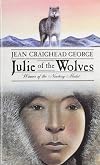
Stories that have a female protagonist that do not center on domestic life or romance are always refreshing. And if they are written by a woman, all the better.
Besides being a good outdoor adventure that kept me intrigued all the way through, I am mulling over its larger story and meaning. Filled with native traditions, imperialism and capitalism, limitations of gender-defined roles, all of that packed into a book aimed at younger readers. That's a good thing.
The last few paragraphs show more surprised me at how sad they hit me. Realistic but sad. I understand George wrote a couple of sequels, but I'm not ready for them. I want to savor this one and its ending and to think how the life of Julie/Miyax might have continued, drifting in and out of my thoughts for a while. show less
Besides being a good outdoor adventure that kept me intrigued all the way through, I am mulling over its larger story and meaning. Filled with native traditions, imperialism and capitalism, limitations of gender-defined roles, all of that packed into a book aimed at younger readers. That's a good thing.
The last few paragraphs show more surprised me at how sad they hit me. Realistic but sad. I understand George wrote a couple of sequels, but I'm not ready for them. I want to savor this one and its ending and to think how the life of Julie/Miyax might have continued, drifting in and out of my thoughts for a while. show less

Acclaimed children's author Jean Craighead George, who won the Newbery Medal for her 1972 novel, Julie of the Wolves, and who is known for (amongst other things) her excellent works of picture-book natural history, turns to the subject of the giant tortoises of the Galápagos Islands in this informative and ultimately moving picture-book. Beginning one million years ago, she describes how a great flood brought tortoises to the islands off the west coast of South America, and how and why they show more likely evolved into the diverse species eventually found by European explorers. She also describes how many of these species came to be extinct, and concludes with the story of Lonesome George, the last of the Pinta Island tortoises, who died in 2012...
Published posthumously in 2013 - like the eponymous tortoise, George the author died in 2012 - Galápagos George offers a fascinating and poignant glimpse of the evolution and extinction of a species. I didn't expect to finish the story with a lump in my throat, but that's exactly the state I was in, as I read about Lonesome George withdrawing for the last time into his shell. The accompanying watercolor artwork from the prolific and talented Wendell Minor, who has illustrated many of the author's other titles, from The Wolves Are Back to The Last Polar Bear, is beautiful, and perfectly captures the majesty, mystery and allure of these wonderful creatures. An informative afterword gives a list of terms, a timeline, and a list of further sources, both print and online. All in all, a wonderful book, one I would recommend to all young nature lovers, as well as to anyone looking for picture-books that describe the (likely) process of the evolution of the Galápagos tortoises. show less
Published posthumously in 2013 - like the eponymous tortoise, George the author died in 2012 - Galápagos George offers a fascinating and poignant glimpse of the evolution and extinction of a species. I didn't expect to finish the story with a lump in my throat, but that's exactly the state I was in, as I read about Lonesome George withdrawing for the last time into his shell. The accompanying watercolor artwork from the prolific and talented Wendell Minor, who has illustrated many of the author's other titles, from The Wolves Are Back to The Last Polar Bear, is beautiful, and perfectly captures the majesty, mystery and allure of these wonderful creatures. An informative afterword gives a list of terms, a timeline, and a list of further sources, both print and online. All in all, a wonderful book, one I would recommend to all young nature lovers, as well as to anyone looking for picture-books that describe the (likely) process of the evolution of the Galápagos tortoises. show less
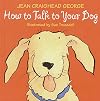
It saddens me to think of children using the advice from this book, published in 2000, with their beloved pets.
Excerpts like, "How do you say 'I'm the boss'? The most effective way is to put your mouth on his muzzle." Wait...what? Did I fall back into the 1960s, when we believed we had have domination over our pets lest they control us. And there's also "Keep telling your dog you're in charge." Yes, because that's the foundation of all strong relationships. (Eye roll.) I wonder how many show more human-dog relationships have been damaged because of these expert "tips".
The one thing this book has going for it is the amazing illustrations by Sue Truesdell. Too bad they don't make up for the badly misinformed "guidance" that make up the text of this book! show less
Excerpts like, "How do you say 'I'm the boss'? The most effective way is to put your mouth on his muzzle." Wait...what? Did I fall back into the 1960s, when we believed we had have domination over our pets lest they control us. And there's also "Keep telling your dog you're in charge." Yes, because that's the foundation of all strong relationships. (Eye roll.) I wonder how many show more human-dog relationships have been damaged because of these expert "tips".
The one thing this book has going for it is the amazing illustrations by Sue Truesdell. Too bad they don't make up for the badly misinformed "guidance" that make up the text of this book! show less
Lists
Sonlight Books (3)
al.vick-series (1)
Summer Reading (1)
6th Grade (1)
1950s (1)
My Wishlist - YA (1)
Nifty Fifties (1)
Newbery Adjacent (1)
Winter Books (1)
Overdue Podcast (1)
Female Author (1)
1964 Project (1)
Read in 1999 (3)
Books About Boys (1)
Elevenses (2)
1970s (2)
KID BOOKS (1)
4th Grade Books (1)
Spring Reading (1)
Five star books (1)
Ambleside Books (1)
B-B to Get (1)
Awards


You May Also Like


Associated Authors
Statistics
- Works
- 166
- Also by
- 13
- Members
- 56,489
- Popularity
- #259
- Rating
- 3.9
- Reviews
- 651
- ISBNs
- 857
- Languages
- 14
- Favorited
- 21

