On This Page
Description
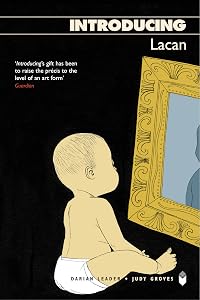
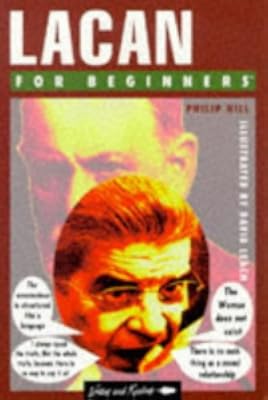
Jacques Lacan is now regarded as a major psychoanalytical theorist alongside Freud and Jung, although recognition has been delayed by fierce arguments over his ideas. Written by a leading Lacanian analyst, "Introducing Lacan" guides the reader through his innovations, including his work on paranoia, his addition of structural linguistics to Freudianism and his ideas on the infant 'mirror phase'. It also traces Lacan's influence in postmodern critical thinking on art, literature, philosophy show more and feminism. This is the ideal introduction for anyone intrigued by Lacan's ideas but discouraged by the complexity of his writings. show lessTags
Recommendations




















Member Reviews
My rationale for reading 'Introducing Lacan' was that I aspire one day to finish a book by Slavoj Žižek. Žižek is a contemporary left-wing political philosopher who shares my fascination with Robespierre, so of course I want to read his books. Unfortunately, my attempts thus far have been stymied by Žižek's copious use of Lacanian terms (and other philosophical/psychological language that I don't understand). A quick internet search is insufficient to provide clarity, especially as I've never studied psychology.
So, did this book help me understand Lacan's ideas and, by extension, language? Yes, insofar as I previously didn't understand them at all. That said, I think I need to reread this book at least once and maybe read another show more similar text. I am certainly not ready to explain Lacan's graph of desire, although the idea of it appeals. That said, Lacan is supposed to be difficult, so I'm not surprised. Moreover, I now feel like I want to read more about psychoanalysis, which it turns out is rather fascinating.
The elements of Lacan's work that I found most approachable concerned language (a structure) as distinct from speech (a performance). I liked Lacan's thoughts on the process of assigning meaning to language during childhood. The idea of a chain of signifiers, which reveal meaning in the space between them, is also useful. I've always found the importance of words to human identity and personality very interesting. (At one point, I had this idea that a human soul consists of a tangle of words; I strongly identified human consciousness with use of words. Then I came across a thought experiment - a baby is born that can use none of the five senses and grows up unable to sense their surroundings or communicate. Can they be said to possess consciousness as we understand it? If so, would they spontaneously structure their thoughts in words, without any external example of language to follow? I have no answers, but that thought experiment blew my mind. And ruined any clarity I ever had about whether I believed in a human soul.)
Other terms that I now have at least some understanding of thanks to this book: jouissance, phantasy, transference (which Lacan understood differently to Freud, it seems), and the phallus. I liked the irony of the word phallus being used so frequently at one point in this book that it lost all meaning. This amused me because to Lacan 'the phallus' is (as I understand it) always an absent object, not meaningless but literally meaning nothing(ness). This also made me wonder to what extent the labelling of abstract concepts with gendered words embeds prejudices within psychoanalysis. At the time Freud and Lacan were writing, the feminist critiques of structural misogyny hadn't happened. Moreover, Lacan apparently considered the basis of men's and women's sexuality to be fundamentally different, which apart from any other problems presupposes a strict gender binary. I presume subsequent psychoanalytic theorists have addressed this? Dammit, the problem with reading an introduction to a previously unknown field is that I now want to know more about it.
I suppose in that case this book can be said to have done its work. I feel much better informed about Lacan's life and work, I have learned some of the key terms he used, and there are various concepts which I didn't grasp but might with further research (such as the castration complex, 'not-all', and 'sinthome'). The book was quick to read and flowed well, probably because the cartoons and other imagery seemed better integrated into the text than was the case in 'Introducing Focault'. I particularly liked the illustration used for the concept of a circular square. show less
So, did this book help me understand Lacan's ideas and, by extension, language? Yes, insofar as I previously didn't understand them at all. That said, I think I need to reread this book at least once and maybe read another show more similar text. I am certainly not ready to explain Lacan's graph of desire, although the idea of it appeals. That said, Lacan is supposed to be difficult, so I'm not surprised. Moreover, I now feel like I want to read more about psychoanalysis, which it turns out is rather fascinating.
The elements of Lacan's work that I found most approachable concerned language (a structure) as distinct from speech (a performance). I liked Lacan's thoughts on the process of assigning meaning to language during childhood. The idea of a chain of signifiers, which reveal meaning in the space between them, is also useful. I've always found the importance of words to human identity and personality very interesting. (At one point, I had this idea that a human soul consists of a tangle of words; I strongly identified human consciousness with use of words. Then I came across a thought experiment - a baby is born that can use none of the five senses and grows up unable to sense their surroundings or communicate. Can they be said to possess consciousness as we understand it? If so, would they spontaneously structure their thoughts in words, without any external example of language to follow? I have no answers, but that thought experiment blew my mind. And ruined any clarity I ever had about whether I believed in a human soul.)
Other terms that I now have at least some understanding of thanks to this book: jouissance, phantasy, transference (which Lacan understood differently to Freud, it seems), and the phallus. I liked the irony of the word phallus being used so frequently at one point in this book that it lost all meaning. This amused me because to Lacan 'the phallus' is (as I understand it) always an absent object, not meaningless but literally meaning nothing(ness). This also made me wonder to what extent the labelling of abstract concepts with gendered words embeds prejudices within psychoanalysis. At the time Freud and Lacan were writing, the feminist critiques of structural misogyny hadn't happened. Moreover, Lacan apparently considered the basis of men's and women's sexuality to be fundamentally different, which apart from any other problems presupposes a strict gender binary. I presume subsequent psychoanalytic theorists have addressed this? Dammit, the problem with reading an introduction to a previously unknown field is that I now want to know more about it.
I suppose in that case this book can be said to have done its work. I feel much better informed about Lacan's life and work, I have learned some of the key terms he used, and there are various concepts which I didn't grasp but might with further research (such as the castration complex, 'not-all', and 'sinthome'). The book was quick to read and flowed well, probably because the cartoons and other imagery seemed better integrated into the text than was the case in 'Introducing Focault'. I particularly liked the illustration used for the concept of a circular square. show less
The classic short graphic guide to Lacan is written by Darian Leader who is generally worth reading in his own right. However, the graphic format should not be confused with simplicity - this is a difficult liitle book because Lacan is very difficult. You may need to read it more than once to 'get' it.
Lacan is worth the effort but perhaps with a critical eye towards the Freudian framework within which he was writing. Perhaps he might best be thought of as someone struggling to find the language for what it is to be a human being and contributing significant insights without, in the end, succeeding.
A useful introduction but only the first step on a very long journey which you may not want to take - if only because life is short and show more there is no guarantee that the train will end up where you want to be. show less
Lacan is worth the effort but perhaps with a critical eye towards the Freudian framework within which he was writing. Perhaps he might best be thought of as someone struggling to find the language for what it is to be a human being and contributing significant insights without, in the end, succeeding.
A useful introduction but only the first step on a very long journey which you may not want to take - if only because life is short and show more there is no guarantee that the train will end up where you want to be. show less
This series of books is heavy on illustrations, and does a good job of explaining complicated ideas while being fun, concise, and accurate. This one on Lacan provides a nice introduction to his some of his psychological theories, but due to the complexity of his ideas it is not quite as easy to follow as some other books in the series, so some sections benefit from re-reading.
One of Lacan's most influential theories is the "Mirror Stage" of child development, which answers a question posed by Freud. In addition to this, a lot of his other work expands upon Freud, so some familiarity with his writings is recommended before attempting Lacan. Apart from Freudian stuff, Lacan also had some interesting ideas on Language, and the use of show more symbolic logic in describing psychological and sociological theories, so there's really a lot of ideas packed into this short book. Lacan isn't the easiest thinker to get to grips with, but this intoduction does a good job of explaining his theories so that they can be understood by the general reader. Definitely recommended if you want to start learning about Lacan, but for those who haven't read much psychology then Freud would be a better starting place. show less
One of Lacan's most influential theories is the "Mirror Stage" of child development, which answers a question posed by Freud. In addition to this, a lot of his other work expands upon Freud, so some familiarity with his writings is recommended before attempting Lacan. Apart from Freudian stuff, Lacan also had some interesting ideas on Language, and the use of show more symbolic logic in describing psychological and sociological theories, so there's really a lot of ideas packed into this short book. Lacan isn't the easiest thinker to get to grips with, but this intoduction does a good job of explaining his theories so that they can be understood by the general reader. Definitely recommended if you want to start learning about Lacan, but for those who haven't read much psychology then Freud would be a better starting place. show less
This is an engaging text that helped me understand Lacanian theory, or at least gave me more words for it, but more importantly gives helpful context for Lacan's work. I didn't laugh but I could have, once, but I decided not to.
Me parece que a teoria lacaniana é demasiado complexa para tudo que este livro quer abarcar, pois ele vai além do mero introducing e aborda temas que só quem se aprofundou na teoria tem acesso total de entendimento.
Jacques Lacan (1901-1981) highly influential and hugely controversial French psychoanalyst and psychiatrist. Using methods from structural linguistics and topology he built on and developed further Freudian theory. This text gives a glimpse of Lacan’s ideas, their development over a lifetime and their roots with Freud and in his own clinical practice. Notwithstanding the title much remains obscure. That may be a good thing: over-simplification of complex ideas is no help to understanding. The text comes alive in the graphic images. It is enjoyable to follow even if getting lost at times. If this short outline tempts further study it has achieved its aim. (VIII-10)
This book literally got me through grad school. After days and days of reading sentences of Lacan over and over in the hopes of understanding something, anything- even if it was wrong- this book came and created light out of darkness! Highly recommended to anyone studying Lacan!
Members
- Recently Added By
Author Information

42+ Works 1,264 Members
Darian Leader is a psychoanalyst practising in London. He is a member of the Centre for Freudian Analysis and Research and of the College of Psychoanalysts - UK. He is the author of Why Do Women Write More Letters Than They Post?, Promises Lovers Make When It Gets Late, Freud's Footnotes and Stealing the Mona Lisa, and co-author, with David show more Corfield, of Why Do People Get Ill'. show less
8+ Works 934 Members
Series

Common Knowledge
- Canonical title
- Introducing Lacan
- Original title
- Lacan for beginners
- Original publication date
- 1996
- People/Characters
- Jacques Lacan
Classifications
- Genres
- Nonfiction, Philosophy, General Nonfiction, Literature Studies and Criticism
- DDC/MDS
- 150.195 — Philosophy & psychology Psychology Emotions, Relationships, & Family Theory And Instruction Systems, schools, viewpoints Psychoanalytic systems
- LCC
- BF109 .L28 .L43 — Philosophy, Psychology and Religion Psychology Psychology
- BISAC
Statistics
- Members
- 426
- Popularity
- 72,744
- Reviews
- 9
- Rating
- (3.69)
- Languages
- Chinese, English, Spanish
- Media
- Paper, Ebook
- ISBNs
- 8
- ASINs
- 4