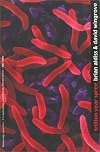
Trillion Year Spree: The History of Science Fiction
by Brian Wilson Aldiss, David Wingrove
On This Page
Description
A quick overview of the history of science fiction that covers the highlights.Tags
Recommendations

















Member Recommendations


Member Reviews
A history of SF, comprehensively examined, always in the author's witty voice. Frequently, Aldiss shares his critical, or personal opinion of a specific work. At such times, I found myself almost inevitably disagreeing with him. So be it. My esteem for the work remains intact despite having different tastes.
Perhaps the most important place for the history of a genre to begin is with defining its topic. Aldiss and Wingrove open by calling science fiction "the search for a definition of mankind in the universe which will stand in our advanced but confused state of knowledge (science), and is characteristically cast in the Gothic or post-Gothic mode" (25). Later they clarify that the Gothic emphasizes "the distant and unearthly" and carries "us into an entranced world from which horrid revelations start" (35). This definition is at least partly circular, for it makes Frankenstein (1818) the first work of sf-- but it seems to have been designed to do so. Every now and then they let loose with another (usually perceptive) defining show more
- nugget:
- Stipulations apply only to individual writers, not a genre. (155)
- One of the pleasures of sf is considering its plausibility, experiencing a “sense of veracity” (155). Perhaps this is why so much early sf has plausibility-increasing frame stories? (Frankenstein, The Last Man, The Mummy!, The Narrative of Arthur Gordon Pym, The Purple Cloud, &c.)
- Sf is like Nazism(!) in that both link modernity and the past into a sort of "technological romanticism" (176).
- Prophecy is uninteresting. (340)
- Good sf speculates and entertains. (363)
- The delight of a first novel (in a series) is a new world; the delight of later novels is reacquaintance. (398) Not necessarily lesser, just different.
The most useful thing that Aldiss and Wingrove do with genre is simply to be very, very careful about it. They point out that genres exist for readers, writers, and publishers, and though Swift was certainly not writing sf (they push against the tendency of genre fans to claim things for their genre), readers now read Swift for much the same reason that they read Wells or Asimov. Hence, their history of the genre charts not just works that exist within the genre, but the works that the genre is responding to, other works read by its readers, and writers outside of the genre undertaking similar projects.
They do fall into the trap of confusing the rhetorical project of genre with its features. For example, they mention Hardy as someone who has a "tremulous awareness set against the encompassing mysteries of space and time" and deals with the scientific revelations of his time, including Darwin (98). Surely the thing that stops Hardy from being an sf writer is that he doesn’t undertake a transposition of reality that relies on our advanced state of knowledge? But according to Aldiss and Wingrove, the reasons Hardy is not an sf writer are: 1) the changes in the social order he records aren't for novelty or sensation, but to impact characterization, 2) his tone is not rapid and light, and 3) he is a genius, whereas sf attracts talents at best (99-100). None of these are defining aspects of sf: Le Guin gives us changes in the social order for characterization, no one would accuse Orwell of being rapid and light, and sf has probably had more than one genius, and even if it hadn't that’s a stupid thing to say. But otherwise, their tracing of these people outside the genre is perhaps one of the most interesting aspects of their project, as is their careful delineation of who is connected to whom within the genre: when discussing the 1930s, they separate out the magazine tradition of Gernsback and Campbell from folks responding to the same ideas like Čapek, Kafka, Huxley, and Lewis.
Their discussion of 19th-century sf is interesting, but not groundbreaking. I suspect the Frankenstein thing was at the time, but now it's a critical commonplace! (Still right, though.) Part of the problem with this section is that it doesn't get the time the other ones do; the careful delineation that shines in most of the book isn't present here, with utopian fiction, future-war fiction, Verne, and the dime novels all dealt with together a little carelessly. His connection to Sherlock Holmes is nice: in talking with a friend, I suggested that both sf and mysteries rely on the existence of a rational universe to some degree.
Another book that is going to seriously damage my bank balance as I have made 4 pages of notes of books I want to read.
This book has grown out of Aldiss' original Billion Year Spree which was published in 1973 and takes the story of Science Fiction into the mid eighties. Aldiss makes a strong case for Mary Shelley's Frankenstein published on 11 march 1818 as being the first real science fiction novel, but he devotes three chapters on what came before and how those books contained elements of what we understand as science fiction. Apart from Frankenstein there are good chapters on Gothic novels, Edgar Allan Poe, H G Wells and Edgar Rice Buroughs and the pulp fiction magazines of the 1930's and beyond. Liberally sprinkled are references show more to novels and short stories that are of interest. As the history comes into the nineteen fifties then there are more books and authors to consider and so some critical decisions have to be taken as to what to include and it would appear that literary merit is the prime consideration.
Each decade or period under discussion is introduced by a short commentary on scientific developments and world politics, but these are very short and mostly set the scene for how events shaped the thoughts and ideas of writers in the genre. There is a useful potted history of the publication and printing issues of science fiction novels and magazines, but all of this does not get in the way of the primary function of this book which is to introduce the reader to the authors and their works. There are short extracts from some of the books under consideration which serve to give the reader an idea of the literary (or otherwise) style of the writers. Aldiss himself is responsible for much of the early part of the book and is not afraid to give his opinions and to sound warnings about some reputations that have been built around book sales. Robert Heinlein, Asimov and L Ron Hubbard come in for much criticism as do many of the pulp fiction writers, but overall there is a genuine love of the genre and an enthusiasm that made me want to go out and read many of the books discussed.
Aldiss admits that the genre is sometimes difficult to pin down, but I think he does a good job in excluding some of the more overt fantasy novels and an equally good job of including more mainstream authors that occasionally write novels with some science fiction content. This is a great book for anybody interested in science fiction and especially for those that want some pointers as to what to read. It is no longer up to date (the latest books under consideration were published in 1986], but is fairly comprehensive of the period it covers. I rate this as 3.5 stars. show less
This book has grown out of Aldiss' original Billion Year Spree which was published in 1973 and takes the story of Science Fiction into the mid eighties. Aldiss makes a strong case for Mary Shelley's Frankenstein published on 11 march 1818 as being the first real science fiction novel, but he devotes three chapters on what came before and how those books contained elements of what we understand as science fiction. Apart from Frankenstein there are good chapters on Gothic novels, Edgar Allan Poe, H G Wells and Edgar Rice Buroughs and the pulp fiction magazines of the 1930's and beyond. Liberally sprinkled are references show more to novels and short stories that are of interest. As the history comes into the nineteen fifties then there are more books and authors to consider and so some critical decisions have to be taken as to what to include and it would appear that literary merit is the prime consideration.
Each decade or period under discussion is introduced by a short commentary on scientific developments and world politics, but these are very short and mostly set the scene for how events shaped the thoughts and ideas of writers in the genre. There is a useful potted history of the publication and printing issues of science fiction novels and magazines, but all of this does not get in the way of the primary function of this book which is to introduce the reader to the authors and their works. There are short extracts from some of the books under consideration which serve to give the reader an idea of the literary (or otherwise) style of the writers. Aldiss himself is responsible for much of the early part of the book and is not afraid to give his opinions and to sound warnings about some reputations that have been built around book sales. Robert Heinlein, Asimov and L Ron Hubbard come in for much criticism as do many of the pulp fiction writers, but overall there is a genuine love of the genre and an enthusiasm that made me want to go out and read many of the books discussed.
Aldiss admits that the genre is sometimes difficult to pin down, but I think he does a good job in excluding some of the more overt fantasy novels and an equally good job of including more mainstream authors that occasionally write novels with some science fiction content. This is a great book for anybody interested in science fiction and especially for those that want some pointers as to what to read. It is no longer up to date (the latest books under consideration were published in 1986], but is fairly comprehensive of the period it covers. I rate this as 3.5 stars. show less
An interesting, opinionated, literate view of Science Fiction, scarily enough now 20 years old. It examines the history of SF and then goes into a decade by decade examination of SF since about 1890. The chapter on the future of SF was extremely interesting, notably when you look at what actually happened in the late 80's and early 90's. A bit of a plough through book but interesting and well written with a lot of examples.
It was funny for me to read it in light of the fact that I've read such a chunk of the authors mentioned, particularly when I was younger. Now that I'm older I prefer Fantasy to SF but still this book made me want to revisit some of my teenage favourites.
It was funny for me to read it in light of the fact that I've read such a chunk of the authors mentioned, particularly when I was younger. Now that I'm older I prefer Fantasy to SF but still this book made me want to revisit some of my teenage favourites.
http://nhw.livejournal.com/1013390.html
It is a big big book about the history of science fiction from Mary Shelley's Frankenstein to 1986 (with a very brief postscript for the 2001 edition). I was surprised how much of the argument of the book was already familiar to me. I guess I must have internalised it from poring over the writings of John Clute. Still, Aldiss makes some very interesting points to fill out the basic lines about Shelley, Gernsback and what happened in between.
One really striking omission is the influence of broadcast sf - cinema does get a look in, as an essential part of the cultural background as Aldiss and Wingrove see it, but Star Trek and Doctor Who are barely mentioned, and Douglas Adams' name comes up show more precisely twice - first as making lots of money from Robert Sheckley's ideas, second as just making lots of money. (Indeed, the whole second last chapter is basically about how Heinlein, Asimov, Herbert, Hubbard and van Vogt were getting money for old rope in the most recent period, though there are kinder words for Arthur C. Clarke and Frederik Pohl.)
I'm sure there are gaps but I'm bad at spotting them; Aldiss berates himself in his afterword for completely missing Terry Pratchett in his survey of more recent sf, and there will of course be others. It's also interesting that I simply haven't heard of several of the writers described as up-and-coming in the 1970s and 1980s. More for my reading list, I guess. Anyway, it's a very interesting read. show less
It is a big big book about the history of science fiction from Mary Shelley's Frankenstein to 1986 (with a very brief postscript for the 2001 edition). I was surprised how much of the argument of the book was already familiar to me. I guess I must have internalised it from poring over the writings of John Clute. Still, Aldiss makes some very interesting points to fill out the basic lines about Shelley, Gernsback and what happened in between.
One really striking omission is the influence of broadcast sf - cinema does get a look in, as an essential part of the cultural background as Aldiss and Wingrove see it, but Star Trek and Doctor Who are barely mentioned, and Douglas Adams' name comes up show more precisely twice - first as making lots of money from Robert Sheckley's ideas, second as just making lots of money. (Indeed, the whole second last chapter is basically about how Heinlein, Asimov, Herbert, Hubbard and van Vogt were getting money for old rope in the most recent period, though there are kinder words for Arthur C. Clarke and Frederik Pohl.)
I'm sure there are gaps but I'm bad at spotting them; Aldiss berates himself in his afterword for completely missing Terry Pratchett in his survey of more recent sf, and there will of course be others. It's also interesting that I simply haven't heard of several of the writers described as up-and-coming in the 1970s and 1980s. More for my reading list, I guess. Anyway, it's a very interesting read. show less
I'm a casual fan of science fiction - I know what I like and otherwise steer fairly clear of the genre to avoid the inevitable allegations of puerility and geekdom that my wife throws at me for reading novels about spaceships and little green men.
Brian Aldiss is a prolific British Sci Fi writer who cares very much about his genre, and in particular believes it to have been unfairly maligned by people such as my wife.
While that's probably true, it adversely colours this book in two ways: Firstly, Aldiss writes far too intellectually and "worthily", meaning as writer he comes across as pretentious and (what is worse) dull; secondly he tends to relegate of material which isn't "serious" science fiction (but which is generally more show more entertaining) to other cateogories such as "fantasy" which, to his mind, don't count. I think this is the mistake: Science Fiction at its heart is a poular, pulp sort of genre, no amount of post facto rationalisation will alter the fact that it is Lucas and Spielberg who are the backbone of (cinematic) Science Fiction, not Kubrick and Tarkovsky.
It's a very heavy (physically as well as textually), long winded book. Having completed the first three or four chapters (in which Edgar Allen Poe gets a somewhat surprisingly extended mention) I have given up on the project of reading Trillion Dollar Spree from cover to cover, and now intend to use to dip into from time to time instead. Or, at any rate, just to stick on the bookshelf, comforted in the knowledge that it's there and I *can* dip into it from time to time, if I feel like it. show less
Brian Aldiss is a prolific British Sci Fi writer who cares very much about his genre, and in particular believes it to have been unfairly maligned by people such as my wife.
While that's probably true, it adversely colours this book in two ways: Firstly, Aldiss writes far too intellectually and "worthily", meaning as writer he comes across as pretentious and (what is worse) dull; secondly he tends to relegate of material which isn't "serious" science fiction (but which is generally more show more entertaining) to other cateogories such as "fantasy" which, to his mind, don't count. I think this is the mistake: Science Fiction at its heart is a poular, pulp sort of genre, no amount of post facto rationalisation will alter the fact that it is Lucas and Spielberg who are the backbone of (cinematic) Science Fiction, not Kubrick and Tarkovsky.
It's a very heavy (physically as well as textually), long winded book. Having completed the first three or four chapters (in which Edgar Allen Poe gets a somewhat surprisingly extended mention) I have given up on the project of reading Trillion Dollar Spree from cover to cover, and now intend to use to dip into from time to time instead. Or, at any rate, just to stick on the bookshelf, comforted in the knowledge that it's there and I *can* dip into it from time to time, if I feel like it. show less
Aldiss touches on all of it. Great overview of sci-fi.
Members
- Recently Added By
Lists

Recommend the 20 best books you've read in the last five years
2,168 works; 607 members
Author Information

564+ Works 27,465 Members
Brian W. Aldiss was born in Dereham, United Kingdom on August 18, 1925. In 1943, he joined the Royal Signals regiment, and saw action in Burma. After World War II, he worked as a bookseller at Oxford University. His first book, The Brightfount Diaries, was published in 1955. His first science fiction novel, Non-Stop (Starship in the United show more States), was published in 1958. He wrote more than 80 books including Hothouse, Greybeard, The Helliconia Trilogy, The Squire Quartet, Frankenstein Unbound, The Malacia Tapestry, Walcot, and Mortal Morning. His short story Super-Toys Last All Summer Long was the basis for the film A.I. Artificial Intelligence. He has received numerous awards for his work including two Hugo Awards, the Nebula Award, the John W. Campbell Memorial Award, and an OBE for services to literature. He was also an anthologist and an artist. He was the editor of 40 anthologies including Introducing SF, The Penguin Science Fiction Omnibus, Space Opera, Space Odysseys, Galactic Empires, Evil Earths, and Perilous Planets. He was an abstract artist and his first solo exhibition, The Other Hemisphere, was held in Oxford in August-September 2010. He died on August 19, 2017 at the age of 92. (Bowker Author Biography) show less

56+ Works 7,967 Members
David Wingrove is the Hugo Award-winning co-author (with Brian Aldiss) of The Trillion Year Spree: The History of Science Fiction. He is also the co-author of the first three MYST books - novelisations of one of the world's bestselling computer games. He lives in north London with his wife and four daughters.
Some Editions
Awards and Honors
Awards
Series
Belongs to Publisher Series
Work Relationships
Is an expanded version of
Common Knowledge
- Canonical title*
- Trillió éves dáridó : A science fiction története
- Original publication date
- 1986
- Disambiguation notice
- I would argue that "Billion Year Spree" and "Trillion Year Spree" are distinct works. -ASYB
*Some information comes from Common Knowledge in other languages. Click "Edit" for more information.
Classifications
Statistics
- Members
- 457
- Popularity
- 67,195
- Reviews
- 10
- Rating
- (4.01)
- Languages
- English, German, Hungarian, Japanese
- Media
- Paper
- ISBNs
- 11