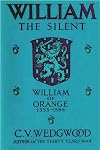
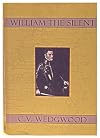
William the Silent
by C. V. Wedgwood
On This Page
Description
In this book, first published in 1944, the distinguished historian C. V. Wedgwood takes as her subject here the figure of William, Count of Nassau and Prince of Orange, who led the revolt of the Netherlands against the Spain of Philip II. The book is not only a masterpiece of biographical writing but a rich portrait of an age-a period of political, religious, and economic ferment that dramatically shaped the history of early modern Europe.Tags
Recommendations

































Member Reviews
http://nhw.livejournal.com/955162.html
A very interesting and passionate biography of the leader of the successful Dutch revolt against Spanish rule in the mid-16th century. I had not appreciated how central present-day Belgium was to the Netherlands as a whole up until then: the capital at Brussels, the main trading port being Antwerp. And although there was always a gradient from Francophone to Dutch-speaking, and increasingly from Catholic to Protestant, as you go from south to north, it's easy to imagine how a slightly different set of historical circumstances could have led to a very different border between today's Netherlands and Belgium, or even no border at all; the military balance was always fragile, and local allegiances in show more the extensive boundary zone volatile.
Wedgwood's book was published in 1944, and there's clearly an implicit parallel between the Dutch fight against Spanish oppression and the second world war, with William the Silent being portrayed as an almost Churchillian figure; also, of course, his descendant Queen Wilhelmina, exiled in England and Canada during the war, would have been a well-known personality to the British reader of the time. I have to say that I felt a bit suspicious of Wedgwood's nuances on a couple of occasions, given the likely didactic intent of the book. show less
A very interesting and passionate biography of the leader of the successful Dutch revolt against Spanish rule in the mid-16th century. I had not appreciated how central present-day Belgium was to the Netherlands as a whole up until then: the capital at Brussels, the main trading port being Antwerp. And although there was always a gradient from Francophone to Dutch-speaking, and increasingly from Catholic to Protestant, as you go from south to north, it's easy to imagine how a slightly different set of historical circumstances could have led to a very different border between today's Netherlands and Belgium, or even no border at all; the military balance was always fragile, and local allegiances in show more the extensive boundary zone volatile.
Wedgwood's book was published in 1944, and there's clearly an implicit parallel between the Dutch fight against Spanish oppression and the second world war, with William the Silent being portrayed as an almost Churchillian figure; also, of course, his descendant Queen Wilhelmina, exiled in England and Canada during the war, would have been a well-known personality to the British reader of the time. I have to say that I felt a bit suspicious of Wedgwood's nuances on a couple of occasions, given the likely didactic intent of the book. show less
A great biography that brings out the man, his personality, his family and Dynastic place as well as his political decisions. I was very surprised by how clear the writing was and how much of a feel you get for the Netherlands in the middle of the 1500's. My only complaints are minor, it's annoying when the writing is in English but many quotes are in their original language. Also this is primarily a political biography so there isn't much on his military campaigns.
A very solid 4 stars and I highly recommend it for anyone interested in the period, no matter their level of knowledge.
A very solid 4 stars and I highly recommend it for anyone interested in the period, no matter their level of knowledge.
When the Netherlands referred to much of the northwest corner of Europe (Holland, Friesland, Flanders, Luxembourg) it was ruled by the Spanish, and when the influences of the Reformation clashed with the ruling church, Willem of Nassau was forced to walk the fine line between obedience to his king, Philip, and his inclination to fairness, particularly to his subjects in the Netherlands. The hardening of mind of Philip led to serious persecution of people who wanted to profess a faith other than the Roman faith, and pushed William closer to his people. Once the 'North' was settled, it was the turn of the "South' - the latter was hard to win, and harder to maintain, and is now not part of the modern Netherlands.
The book is well written, show more although the style of writing is a bit old fashioned at times. It provides a through understanding of William, and also a great background to the formation of the Netherlands.
(A comment was made elsewhere about the quotations in a language other then English - they do not appear in my edition, at least not without a translation.) show less
The book is well written, show more although the style of writing is a bit old fashioned at times. It provides a through understanding of William, and also a great background to the formation of the Netherlands.
(A comment was made elsewhere about the quotations in a language other then English - they do not appear in my edition, at least not without a translation.) show less
Ratings
Members
- Recently Added By
Author Information

34+ Works 4,597 Members
Awards and Honors
Awards
Series
Belongs to Publisher Series
Common Knowledge
- Original publication date
- 1944
- People/Characters
- William I, Prince of Orange (William the Silent); Maria of Hungary, Regent of the Netherlands; François-Hercule, Duke of Anjou and Alençon; Philip II, King of Spain
- Quotations
- Blinded, stunned, he did not doubt the murderer's success: 'I forgive him my death,' he gasped.
Classifications
- Genres
- History, Nonfiction, Biography & Memoir, General Nonfiction, Religion & Spirituality
- DDC/MDS
- 940 — History & geography History of Europe History of Europe
- LCC
- DH188 .W7 .W4 — History of Europe, Asia, Africa and Oceania Low Countries – Benelux Countries History of Low Countries. Benelux Countries History By period Wars of Independence, 1555-1648
- BISAC
Statistics
- Members
- 185
- Popularity
- 176,368
- Reviews
- 3
- Rating
- (3.69)
- Languages
- Dutch, English, French, Spanish
- Media
- Paper, Ebook
- ISBNs
- 10
- ASINs
- 12