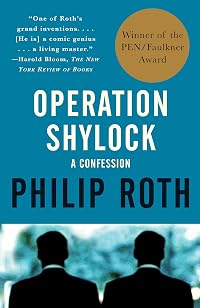
Operation Shylock: A Confession
by Philip Roth
On This Page
Description
What if a look-alike stranger stole your name, usurped your biography, and went about the world pretending to be you? In his extraordinary new book, his most ingenious and original work since Portnoy's Complaint, Philip Roth confronts his double, an impostor whose self-appointed task is to lead the Jews out of Israel and back to Europe, a Moses in reverse and a monstrous nemesis to the "real" Philip Roth. Suspenseful, hilarious, hugely impassioned, pulsing with intelligence and narrative show more energy, Operation Shylock is at once a spy story, a political thriller, a meditation on identity, and a confession. This master novelist has never been more demonically brilliant than in the re-creation of his frightening and mysterious journey through the volatile Middle East. Operation Shylock is Philip Roth's twentieth published book - and perhaps his very best. show lessTags
Recommendations










Member Reviews
An excellent work by an excellent writer. I can say more. Roth confronts his double in the Jewish homeland of Israel using the Demjanjuk nazi war crimes trial to discourse on the state of Israel--from both pro and con viewpoints and also on the Jewish diaspora. After his impersonator has made noise in Israel suggesting a return of European jews to their European roots in effect saving them either from 1) being overrun and exterminated in a second holocaust or 2) being part of a country that has lost all moral credibility having saved itself from annihilation by going nuclear against its enemies the real Roth is reluctantly drawn over to Jerusalem to confront his double. Many twists and turns abound--his being manipulated by an old show more Palestinian friend from his college days in Chicago and by agents from the Mossad. Having a short time before these events been a victim of a bad prescription that led nearly to a mental breakdown Philip is feeling more than a little fragile, confused and paranoid. Confrontations with ideologues of all stripes including his double--a dead ringer cancer patient and former private detective with a drop dead gorgeous former anti-semite girlfriend abound between disertations on the politics and enmities of the region. Roth strives to maintain reality with some shred of objectivity.
One of the most humorous of Roth's works. I'm not sure any other American writer could pull this off with the same elan. Maybe Nathan Englander. It moves along nice and easy from beginning to end with hardly a hitch. There's nothing at all to complain about in terms of ambition, plot, execution or language. For a 400 page work--everything is essential--there is no wastage. For someone who has never read Philip Roth--this would be a good one to begin with. show less
One of the most humorous of Roth's works. I'm not sure any other American writer could pull this off with the same elan. Maybe Nathan Englander. It moves along nice and easy from beginning to end with hardly a hitch. There's nothing at all to complain about in terms of ambition, plot, execution or language. For a 400 page work--everything is essential--there is no wastage. For someone who has never read Philip Roth--this would be a good one to begin with. show less
What, really, is one's identity? Is it singular and constant, owned and known by ourselves alone? Or, is it varying, multiple and contradictory, shifting according memory, circumstances, time, events, other's influences on our lives? Roth, in this fascinating, complex "novel" (is it?), poses many questions about the malleability and uncertainty of identity, whether one's own, of those we encounter or of a people.
He begins the story with his experience with "madness", a period of extreme mental disorder brought on, it's finally determined, by a sleeping pill that produced psychosis in some. (This apparently actually happened to him.) Clearly, his identity as a prolific writer, one of America's most renowned and brilliant authors, is show more utterly altered during this time; he is a different person. As he recovers, he learns that another man claiming to be "Philip Roth" is in Israel gaining attention in the press by espousing a new diasporism for the Jews -- that they should leave Israel and return to Europe, their homeland for many centuries. This doppelganger "Philip Roth" so closely resembles the real Roth in appearance that he fools even those who personally know Roth. The motive behind his plan is that the future portends the destruction, yet again, of the Jewish people, either by their hostile Arab neighbors or by their use of the atomic bomb in defense, which would destroy their moral standing in the world.
The real Roth vacillates between ignoring the imposter or strongly confronting him to playing along with the farce of this outrageous impersonation. He encounters George Ziad, a Palestinian, a friend from many years ago at university, who, in contrast to his former worldly perspective and broad views, is completely obsessed with the injustice of the Israeli occupation of his homeland. Roth gives to Ziad and others the impression that it is indeed he who is advocating this scheme of emigration. (Including a humorous riff on how an American Jew (Irving Berlin) with beautiful subtly destroyed Christian conceptions of the divinity and sanctity of Christ.)
A parallel motif in the story is the trial in an Israeli court of John Demjanjuk, aka "Ivan the Terrible", who is charged with being the monstrous camp guard who sadistically put many Jews to death in the gas chamber. Demjanjuk, too, has another identity, that of a naturalized American citizen, a auto factory worker from Cleveland who led a typical American life. Questions of his real identity, is he the horrendous Ivan or the banal John, the auto worker?, surround the proceedings.
Then there's the identity of the Jewish people themselves and, by extension, the Jewish state. Has the identity of the Holocaust survivors been so completely transformed by their experience that they no longer bear any resemblance to who they once were? If they have a new identity (and how could they not?) what are we to make of it? Roth opines harshly on the personna of "victimhood" that the Jews and the state of Israel portray and use in a self-righteous and cynical fashion to perpetuate their political and national hegemony over the Palestinians and validate the legitimacy of their claims to statehood. Are they as "occupiers" of Palestine mirroring, even if much less viciously and vilely, the position of their former tyrants?
Of course, no one in the story is who or what he seems on the surface. The phony Roth has a different real life, or is his revelation about his true identity false? He is a cancer-doomed zealot who is using his resemblance to Roth as a means to satisfy his life-sustaining needs. Rpth's Arab friend, despite his overt and fervid hatred of the Israeli's might or might not be their collaborator; while he suggests he is a confidant of high authorities in the PLO, he perhaps is in the service of the Mossad. Smilesburger, at first an aging caricature of a Jewish immigrant to America now returned to Israel, is really a powerful operative of the Mossad. Ziad works to enlist Roth to meet in Athens with a group of Jews who are ostensibly secretly funding the PLO, a contact that will bring about a meeting with Arafat, which the PLO can then exploit for publicity purposes. Roth resists, but Smilesburger urges him to go to this meeting as a spy for the Israeli's to enable the Massoud to counter their financial ties with the PLO. By the end of the book, Smilesburger is attempting to persuade Roth to excise from his book the details of the Athens encounter as it is inimical to the interests of Israel. Roth does so, but leaves the impression that this "confession" is based on true events, not a work of fiction.
Along the way through the story Roth expounds deeply into the manifestations of anti-Semitism that existed and continue. He writes, as the leading American novelist on matters of Jewish sensibility, of ideas and perspectives that no other contemporary author can put forth with more intensity.
Many critics have put Operation Shylock, along with American Pastoral and The Human Stain, as among the finest works of 20th century American literature. It's hard to disagree. show less
He begins the story with his experience with "madness", a period of extreme mental disorder brought on, it's finally determined, by a sleeping pill that produced psychosis in some. (This apparently actually happened to him.) Clearly, his identity as a prolific writer, one of America's most renowned and brilliant authors, is show more utterly altered during this time; he is a different person. As he recovers, he learns that another man claiming to be "Philip Roth" is in Israel gaining attention in the press by espousing a new diasporism for the Jews -- that they should leave Israel and return to Europe, their homeland for many centuries. This doppelganger "Philip Roth" so closely resembles the real Roth in appearance that he fools even those who personally know Roth. The motive behind his plan is that the future portends the destruction, yet again, of the Jewish people, either by their hostile Arab neighbors or by their use of the atomic bomb in defense, which would destroy their moral standing in the world.
The real Roth vacillates between ignoring the imposter or strongly confronting him to playing along with the farce of this outrageous impersonation. He encounters George Ziad, a Palestinian, a friend from many years ago at university, who, in contrast to his former worldly perspective and broad views, is completely obsessed with the injustice of the Israeli occupation of his homeland. Roth gives to Ziad and others the impression that it is indeed he who is advocating this scheme of emigration. (Including a humorous riff on how an American Jew (Irving Berlin) with beautiful subtly destroyed Christian conceptions of the divinity and sanctity of Christ.)
A parallel motif in the story is the trial in an Israeli court of John Demjanjuk, aka "Ivan the Terrible", who is charged with being the monstrous camp guard who sadistically put many Jews to death in the gas chamber. Demjanjuk, too, has another identity, that of a naturalized American citizen, a auto factory worker from Cleveland who led a typical American life. Questions of his real identity, is he the horrendous Ivan or the banal John, the auto worker?, surround the proceedings.
Then there's the identity of the Jewish people themselves and, by extension, the Jewish state. Has the identity of the Holocaust survivors been so completely transformed by their experience that they no longer bear any resemblance to who they once were? If they have a new identity (and how could they not?) what are we to make of it? Roth opines harshly on the personna of "victimhood" that the Jews and the state of Israel portray and use in a self-righteous and cynical fashion to perpetuate their political and national hegemony over the Palestinians and validate the legitimacy of their claims to statehood. Are they as "occupiers" of Palestine mirroring, even if much less viciously and vilely, the position of their former tyrants?
Of course, no one in the story is who or what he seems on the surface. The phony Roth has a different real life, or is his revelation about his true identity false? He is a cancer-doomed zealot who is using his resemblance to Roth as a means to satisfy his life-sustaining needs. Rpth's Arab friend, despite his overt and fervid hatred of the Israeli's might or might not be their collaborator; while he suggests he is a confidant of high authorities in the PLO, he perhaps is in the service of the Mossad. Smilesburger, at first an aging caricature of a Jewish immigrant to America now returned to Israel, is really a powerful operative of the Mossad. Ziad works to enlist Roth to meet in Athens with a group of Jews who are ostensibly secretly funding the PLO, a contact that will bring about a meeting with Arafat, which the PLO can then exploit for publicity purposes. Roth resists, but Smilesburger urges him to go to this meeting as a spy for the Israeli's to enable the Massoud to counter their financial ties with the PLO. By the end of the book, Smilesburger is attempting to persuade Roth to excise from his book the details of the Athens encounter as it is inimical to the interests of Israel. Roth does so, but leaves the impression that this "confession" is based on true events, not a work of fiction.
Along the way through the story Roth expounds deeply into the manifestations of anti-Semitism that existed and continue. He writes, as the leading American novelist on matters of Jewish sensibility, of ideas and perspectives that no other contemporary author can put forth with more intensity.
Many critics have put Operation Shylock, along with American Pastoral and The Human Stain, as among the finest works of 20th century American literature. It's hard to disagree. show less
Reason Read: tbr takedown, reading 1001. Apparently this book is about exploring identity, and the blurring of fiction/reality, This book has two Philip Roths and a lot of dialogue about Jewish state verses the Jewish diaspora. I think it is a timely book considering the current events. Philip Roth the author has questioned the Israel state, which he has done in this book. Philip may write about being Jewish he is a self proclaimed atheist. As a book where reality and fiction are blurred it is not original and he often claimed that the book was "true" but that the Massad had pressured him into publishing it as fiction. In this book there are many mentions of other authors including Bellow who he apparently did not think was much of an show more author. He also talked about several other Jewish authors. Another device used by Roth is the "doppelganger". Mostly I think the novel is about the relationship of the author with his creations. I don't think this is original either. I like the idea of the book but found it repetitive and longer than necessary. The writing is praised for its energy and complexity but also criticized for being slow or overly self-referential. I might tend toward the criticism over the praise as it felt like a long exercise of being too filled with one's self.
Points in the book
1. Diasporism: the creation of "Diasporism," a counter-exodus movement advocating that Jews return to Europe
2. The Demjanjuk trial: a real event. This was supposedly Ivan the terrible.
3. Operation Shylock: the namesake of the book is a Mossad-backed spy operation designed to root out American Jews who secretly finance the PLO, a goal that the narrator becomes involved in as he impersonates his doppelgänger.
Character development; the main thing is the author's with the imposter who really seemed like just another facet of the author. The interaction between the two drives the novel, exploring themes of identity, the Jewish experience, and the intersection of personal and political conflict, particularly surrounding Zionism and the Israeli-Palestinian conflict.
Will you enjoy this book? "if you appreciate postmodern literary experiments and dark, satirical explorations of identity, politics, and the line between fact and fiction. However, if you prefer more straightforward, traditional narratives, it may be an exhausting or confusing read." I did like the political aspects of the novel and felt it was a timely read. I also did not like the sexual and explicit language used in the story.
I rated the nook 2.8 but used 3 stars. show less
Points in the book
1. Diasporism: the creation of "Diasporism," a counter-exodus movement advocating that Jews return to Europe
2. The Demjanjuk trial: a real event. This was supposedly Ivan the terrible.
3. Operation Shylock: the namesake of the book is a Mossad-backed spy operation designed to root out American Jews who secretly finance the PLO, a goal that the narrator becomes involved in as he impersonates his doppelgänger.
Character development; the main thing is the author's with the imposter who really seemed like just another facet of the author. The interaction between the two drives the novel, exploring themes of identity, the Jewish experience, and the intersection of personal and political conflict, particularly surrounding Zionism and the Israeli-Palestinian conflict.
Will you enjoy this book? "if you appreciate postmodern literary experiments and dark, satirical explorations of identity, politics, and the line between fact and fiction. However, if you prefer more straightforward, traditional narratives, it may be an exhausting or confusing read." I did like the political aspects of the novel and felt it was a timely read. I also did not like the sexual and explicit language used in the story.
I rated the nook 2.8 but used 3 stars. show less
Philip Roth is the only author I can forgive for 6 page long paragraphs. As my friend Rachel recently said, "He makes language his bitch," and that is certainly true in Operation Shylock: A Confession.
On the surface, this book is about a fake Philip Roth, running around Jerusalem, speaking to the press, giving lectures, and otherwise living off the fame of the real Philip Roth. The book though, like all of Roth's, is of course about much more than that.
The real story is that of the conflict between Zionists and those who believe in diaspora. And no, I didn't really know much about either of those terms before reading this book. Of the dozen or so Roth novels I've read, this is definitely one of the least accessible, and while I did show more enjoy it immensely, it was much more academic than many of his novels.
This novel taught me things, and it was a shining example of Roth's abilities, but in the end it lacked the heart I need to really get immersed in a novel. show less
On the surface, this book is about a fake Philip Roth, running around Jerusalem, speaking to the press, giving lectures, and otherwise living off the fame of the real Philip Roth. The book though, like all of Roth's, is of course about much more than that.
The real story is that of the conflict between Zionists and those who believe in diaspora. And no, I didn't really know much about either of those terms before reading this book. Of the dozen or so Roth novels I've read, this is definitely one of the least accessible, and while I did show more enjoy it immensely, it was much more academic than many of his novels.
This novel taught me things, and it was a shining example of Roth's abilities, but in the end it lacked the heart I need to really get immersed in a novel. show less
3.5 stars.
So... I read this pretty fast, since it was a required read for my crazy-shit class, and I didn't realize I had to finish it until one day before (and I was then only 70-ish pages in...).
And it was a pretty cool read, I have to say. The best thing about it was how it maintained my interest throughout. I found myself continuing to read not only because I had to, but because I genuinely wanted to know what the fuck was going on (not that I actually got any concrete answers. Heh-heh.) I think that's always a big factor in the goodness of any kind of book.
As I expected, this book focused on many of the themes we've been dealing with in class: Doubles, materiality, and paratext to name a few. I'm not going to go into any of this show more because we've only just begun discussing this book and also because this is the kind of book that you have to go into blind and just let yourself be manipulated freely.
So, yeah. A very decent read. show less
So... I read this pretty fast, since it was a required read for my crazy-shit class, and I didn't realize I had to finish it until one day before (and I was then only 70-ish pages in...).
And it was a pretty cool read, I have to say. The best thing about it was how it maintained my interest throughout. I found myself continuing to read not only because I had to, but because I genuinely wanted to know what the fuck was going on (not that I actually got any concrete answers. Heh-heh.) I think that's always a big factor in the goodness of any kind of book.
As I expected, this book focused on many of the themes we've been dealing with in class: Doubles, materiality, and paratext to name a few. I'm not going to go into any of this show more because we've only just begun discussing this book and also because this is the kind of book that you have to go into blind and just let yourself be manipulated freely.
So, yeah. A very decent read. show less
Operation Shylock is the story of Philip Roth traveling to Israel to meet his doppelganger, who is posing as the author and promoting Diasporism - that Jews should abandon Israel as an outdated idea and re-establish themselves elsewhere. The real Roth, of course, finds himself mixed up in this agenda, and the book explores the connection between the Jewish identity and the land of Israel, and where exactly a Jew's place in the world *is.* There are no answers offered, only these questions.
The book is pretty dense at times in politics and religion, so a background in both would be useful, but even without it Operation Shylock is a good and thought-provoking read.
The book is pretty dense at times in politics and religion, so a background in both would be useful, but even without it Operation Shylock is a good and thought-provoking read.
This is not my favorite book by Philip Roth, an author whom I greatly admire. The book examines set in 1980's Israel, examines the conflict between the Israeli's and Palestinians. Roth created a doppelganger, in order to more fully explore both sides of a contentious issue. His double is purporting to be him, and is supporting a theory of "diasporism", that is; the Jewish people are safer and more fully embracing life if they return to Europe. By creating a body double, Roth presents his ambivalence regarding the formation and settlement of Israel by the Jewish people and the state of Israeli- Arab relations. The book has been described as "comic" and hilarious. I found the manic tone exhausting.
Members
- Recently Added By
Lists

1001 Books You Must Read Before You Die
1,448 works; 1,134 members

Novels from The Guardian's Great American Novelist Tournament
148 works; 24 members

Jewish Books
367 works; 24 members

Pen/Faulkner Winners and Finalists
178 works; 9 members

Books Read in 2016
4,666 works; 199 members
Harold Bloom - The Western Canon: D. The Chaotic Age
833 works; 24 members

Pulitzer Prize for Fiction - Finalists
88 works; 9 members

The Torchlight List
95 works; 1 member
Author Information

121+ Works 74,734 Members
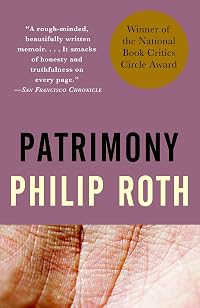
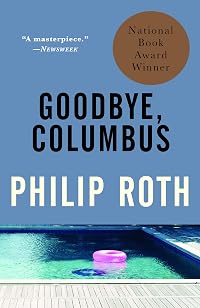
Philip Milton Roth was born in Newark, New Jersey on March 19, 1933. He attended Rutgers University for one year before transferring to Bucknell University where he completed a B.A. in English with highest honors in 1954. He received an M.A. from the University of Chicago in 1955. His first book, Goodbye, Columbus, received the National Book Award show more in 1960. His other books include Letting Go, When She Was Good, Portnoy's Complaint, My Life as a Man, The Ghostwriter, Zuckerman Unbound, I Married a Communist, The Plot Against America, The Facts, The Anatomy Lesson, Exit Ghost, Deception, Nemesis, Everyman, Indignation, and The Humbling. He won the National Book Critic Circle Awards in 1987 for his novel The Counterlife and in 1992 for his memoir Patrimony: A True Story. He won the PEN/Faulkner Award for Fiction in 1993 for Operation Shylock: A Confession and in 2001 for The Human Stain, the National Book Award in 1995 for Sabbath's Theater, and the Pulitzer Prize in 1998 for American Pastoral. He stopped writing in 2010. He died from congestive heart failure on May 22, 2018 at the age of 85. (Bowker Author Biography) show less
Some Editions
Awards and Honors
Series
Belongs to Publisher Series
Meulenhoff editie (1337)
Gallimard, Folio (2937)
Work Relationships
Common Knowledge
- Canonical title
- Operation Shylock: A Confession
- Original title
- Operation Shylock : A confession
- Alternate titles*
- Operatie Shylock : een bekentenis
- Original publication date
- 1993
- People/Characters*
- Philip Roth; John Demjanjuk; Moishe Pipik
- Important places
- Jerusalem
- Important events*
- Proces Demjanjuk (1988)
- Epigraph*
- Zo bleef Jakob alleen achter. En een man worstelde met hem, totdat de dag aanbrak.
Genesis 32:24
Mijn hele wezen verkeert in schrille tegenstrijd met zichzelf.
Het bestaan is kennelijk een conflict...
Kierkegaard - Dedication*
- Voor Claire
- First words*
- Om juridische redenen heb ik in dit boek een aantal feiten moeten veranderen.
- Last words*
- (Click to show. Warning: May contain spoilers.)'Laat je leiden door je joodse geweten.'
- Original language
- English US
*Some information comes from Common Knowledge in other languages. Click "Edit" for more information.
Classifications
Statistics
- Members
- 1,656
- Popularity
- 13,527
- Reviews
- 23
- Rating
- (3.65)
- Languages
- 14 — Czech, Danish, Dutch, English, Estonian, French, German, Greek, Italian, Polish, Portuguese, Spanish, Swedish, Turkish
- Media
- Paper, Audiobook, Ebook
- ISBNs
- 43
- UPCs
- 1
- ASINs
- 20