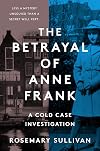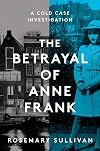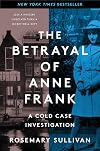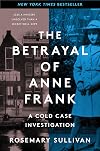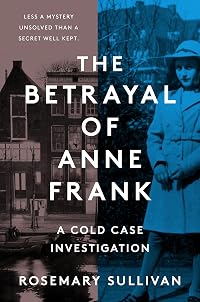
The Betrayal of Anne Frank: A Cold Case Investigation
by Rosemary Sullivan
On This Page
Description
Less a mystery unsolved than a secret well kept...Using new technology, recently discovered documents and sophisticated investigative techniques, an international team—led by an obsessed retired FBI agent—has finally solved the mystery that has haunted generations since World War II: Who betrayed Anne Frank and her family? And why?
Over thirty million people have read The Diary of a Young Girl, the journal teen-aged Anne Frank kept while living in an attic with her family and four other show more people in Amsterdam during World War II, until the Nazis arrested them and sent them to a concentration camp. But despite the many works—journalism, books, plays and novels—devoted to Anne's story, none has ever conclusively explained how these eight people managed to live in hiding undetected for over two years—and who or what finally brought the Nazis to their door.
With painstaking care, retired FBI agent Vincent Pankoke and a team of indefatigable investigators pored over tens of thousands of pages of documents—some never before seen—and interviewed scores of descendants of people familiar with the Franks. Utilizing methods developed by the FBI, the Cold Case Team painstakingly pieced together the months leading to the infamous arrest—and came to a shocking conclusion.
The Betrayal of Anne Frank: A Cold Case Investigation is the riveting story of their mission. Rosemary Sullivan introduces us to the investigators, explains the behavior of both the captives and their captors and profiles a group of suspects. All the while, she vividly brings to life wartime Amsterdam: a place where no matter how wealthy, educated, or careful you were, you never knew whom you could trust.
Supplemental enhancement PDF accompanies the audiobook.
. show less
Tags
Recommendations




Member Reviews
I started reading this book just prior to all the recent news coverage and suspension of the Dutch publishing of the book.
Even before that news broke by the time I hit page 30 I had a serious question about the team behind this book.
But first, I feel it needs to be pointed out that Rosemary Sullivan who wrote this book was hired by the team to write the book. Much, if not all, of the book is research the team did. The conclusion therefore is the team’s not Sullivan’s. This doesn’t let Sullivan completely off the hook for the hot mess this book is, but the team aspect should be noted. The main members of the team that are most often mentioned are Thijis Bayens, Luc Gerrits, Pieter van Twisk, Vince Pankoke, and Monique Koemans. show more Additionally, I will not be using the name of the notary who was a member of the Jewish Council during WII because the support for the conclusion that he is guilty is so weak. Also spoilers.
And the team aspect is important. By page 30, Sullivan has introduced the major players of the Cold Case Team and not one single member is a historian whose area of focus is the Holocaust. There are historians but Sullivan describes them as public historians or “young historians” (and if you look up the young historians, they are described as public historians). Now public historians are important because of their training and knowledge of archives and research. But a specialist in the Holocaust would also be important. It should be noted that Sullivan includes not only a list of the team but also a list a consultants, and at least two of the consultants do seem to specialize in history of the second World War. One in art, and another in the Dutch police. However, a Dutch news source is reporting that one of the historian is claiming he only spoke with a member of the team twice and doesn’t know why he was listed as being associated with the project on a grant application (see here.
A historian who works in the field of Holocaust studies would have given more depth to the knowledge of the Jewish Councils as well as the use of Jewish informers by the Germans and Dutch police to catch other Jews. When dealing with both these issues the book lack depth and makes very board statements without nuance or even context. The chapter about Jewish Councils, for instance, lacks depth, is too general, and seems to be designed to steer the reader into accepting a claim put forward without proof.
But it is not just the lack of a historian that raises questions. There are a few strange pieces, like how the team leaders seem to be surprised at the friction between the two Anne Frank Trusts -the one that runs the house (Anne Frank House) and the one that owns the copyright (Anne Frank Fonds). There was a lawsuit between the two in 2015, and if the team started research six years, it seems really surprising that the men seem clueless about the issues, which is strange considering. Also, while the Fonds is usually portrayed as the more strictly correct and controlling of the two foundations (it does really protect copyright), they raise a good point about the proposed title “A Cold Case Diary: Anne Frank” - it wasn’t just Anne and Otto Frank who were betrayed – though at times the book seems to put forward that view. There is also a line about how an investigator looking at outside of the house and knowing that there was secret place inside as he stand outside of the house a few years ago. While he has a point, it also is strange because he is standing there with the knowledge of what it was. There also is a line that basically says it is impossible to find someone in the Netherlands who doesn’t have a connection to WWII, which seems like a slap to immigrants.
But the real issue is with the accusation. The Cold Case Team contends that the Jewish Council had a list of Jews in hiding and that the notary had access to this list and basically traded it (or a location on the list) for the lives of himself and his family.
The first problem is that the story of Jewish Council having a list comes from a German who also contends that the list was made because Jews in hiding put the hiding address return address. So the source of the story is a bit suspect.
Second problem is that no historian of the Holocaust has ever seen such a list connected to any Jewish Council. The Cold Case Team has no proof, no document that proves such a list existed.
Thirdly, the Cold Case Team cannot prove that even if such a list exist (and there is no proof of such list existing in regards to any Jewish Council) that the Annex address was on it. The team presumes that such list existed and assumes that the Annex was on it because an informer said something. And why the informer went to the Council and not to the Dutch police or Germans instead is confusing.
Fourthly, the Cold Case Team presumes because there the notary was not deported and wasn’t in one of two hiding places, he and his wife were not in hiding even though his children were. (After reading the book, I found historians who stated there is proof that the notary and his wife were in fact in hiding. One is : here
Finally, there is how the book and what seems to be the team deals with granddaughter of the notary. Sullivan notes that the name of the woman was changed at her request, and then name of the man who hide her mother was also not mentioned out of respect for privacy. The granddaughter is described as being her fifties and having being born after the death of her grandfather (the notary who died in 1950). We are told that the notary’s wife (the grandmother) died in 1968 and that the grand daughter had the task of going though “their Amsterdam home”. Later, we are told that the granddaughter had no memory of her grandparents speaking about being hiding. The thing is how would she have a memory of her grandfather saying anything if she was born after he died. Not to mention, if the interviews occurred in 2018 and 2019 and she was in her fifties, how old was she when her grandmother died? For instance, if the granddaughter was 60 in 2017, she would have been born in 1957, which meant she was, according to the book, responsible for cleaning out her grandmother’s house when she was 11.
I’m confused. There is either fudging of dates, translation issues, or just bad writing here.
Also the Dutch news is reporting that the granddaughter is saying her grandfather was in hiding at the time.
Also, the book moves from using words such as “likely” to describe the suscept to words that indicate and imply iron clad conviction of guilt on behalf of the team.
Finally, even before reading the book, I had an issue with the title and I wonder if it is a Dutch to English translation issue. Betrayal implies something personal. For me (and maybe it is just me), if someone betrayed you to the Nazis it was someone you trusted with the knowledge, not someone who came across the knowledge (who would be an informer). So betrayal is a strange word to use, and it does seem the Dutch is different because at points Sullivan talks about Dutch people being charged with betrayal. This is confusing because she also at times uses betrayal and collaborating interchangeably or than as two different things. But more importantly, if giving up a family you had never meet was something you had to do to save your family, is it a betrayal? And aren’t the Nazis still to blame?
The book does not seem to consider this point or the pressure put on people to inform (or how unusual the Annex people in terms of numbers or even the risks those who hide Jews took).
What is most surprising about this is that no editor on the HarperCollins team said, “hey, wait a sec maybe we should have some historian fact checking this shit”. Because this shit is dangerous. You already have jerks saying that the Dutch publisher is in the pocket of the Jewish conspiracy controlling world bs. No, the book is not peer reviewed or fact checked. It is a bad book. Christ, why the hell didn’t any review pick up on these problems? show less
Even before that news broke by the time I hit page 30 I had a serious question about the team behind this book.
But first, I feel it needs to be pointed out that Rosemary Sullivan who wrote this book was hired by the team to write the book. Much, if not all, of the book is research the team did. The conclusion therefore is the team’s not Sullivan’s. This doesn’t let Sullivan completely off the hook for the hot mess this book is, but the team aspect should be noted. The main members of the team that are most often mentioned are Thijis Bayens, Luc Gerrits, Pieter van Twisk, Vince Pankoke, and Monique Koemans. show more Additionally, I will not be using the name of the notary who was a member of the Jewish Council during WII because the support for the conclusion that he is guilty is so weak. Also spoilers.
And the team aspect is important. By page 30, Sullivan has introduced the major players of the Cold Case Team and not one single member is a historian whose area of focus is the Holocaust. There are historians but Sullivan describes them as public historians or “young historians” (and if you look up the young historians, they are described as public historians). Now public historians are important because of their training and knowledge of archives and research. But a specialist in the Holocaust would also be important. It should be noted that Sullivan includes not only a list of the team but also a list a consultants, and at least two of the consultants do seem to specialize in history of the second World War. One in art, and another in the Dutch police. However, a Dutch news source is reporting that one of the historian is claiming he only spoke with a member of the team twice and doesn’t know why he was listed as being associated with the project on a grant application (see here.
A historian who works in the field of Holocaust studies would have given more depth to the knowledge of the Jewish Councils as well as the use of Jewish informers by the Germans and Dutch police to catch other Jews. When dealing with both these issues the book lack depth and makes very board statements without nuance or even context. The chapter about Jewish Councils, for instance, lacks depth, is too general, and seems to be designed to steer the reader into accepting a claim put forward without proof.
But it is not just the lack of a historian that raises questions. There are a few strange pieces, like how the team leaders seem to be surprised at the friction between the two Anne Frank Trusts -the one that runs the house (Anne Frank House) and the one that owns the copyright (Anne Frank Fonds). There was a lawsuit between the two in 2015, and if the team started research six years, it seems really surprising that the men seem clueless about the issues, which is strange considering. Also, while the Fonds is usually portrayed as the more strictly correct and controlling of the two foundations (it does really protect copyright), they raise a good point about the proposed title “A Cold Case Diary: Anne Frank” - it wasn’t just Anne and Otto Frank who were betrayed – though at times the book seems to put forward that view. There is also a line about how an investigator looking at outside of the house and knowing that there was secret place inside as he stand outside of the house a few years ago. While he has a point, it also is strange because he is standing there with the knowledge of what it was. There also is a line that basically says it is impossible to find someone in the Netherlands who doesn’t have a connection to WWII, which seems like a slap to immigrants.
But the real issue is with the accusation. The Cold Case Team contends that the Jewish Council had a list of Jews in hiding and that the notary had access to this list and basically traded it (or a location on the list) for the lives of himself and his family.
The first problem is that the story of Jewish Council having a list comes from a German who also contends that the list was made because Jews in hiding put the hiding address return address. So the source of the story is a bit suspect.
Second problem is that no historian of the Holocaust has ever seen such a list connected to any Jewish Council. The Cold Case Team has no proof, no document that proves such a list existed.
Thirdly, the Cold Case Team cannot prove that even if such a list exist (and there is no proof of such list existing in regards to any Jewish Council) that the Annex address was on it. The team presumes that such list existed and assumes that the Annex was on it because an informer said something. And why the informer went to the Council and not to the Dutch police or Germans instead is confusing.
Fourthly, the Cold Case Team presumes because there the notary was not deported and wasn’t in one of two hiding places, he and his wife were not in hiding even though his children were. (After reading the book, I found historians who stated there is proof that the notary and his wife were in fact in hiding. One is : here
Finally, there is how the book and what seems to be the team deals with granddaughter of the notary. Sullivan notes that the name of the woman was changed at her request, and then name of the man who hide her mother was also not mentioned out of respect for privacy. The granddaughter is described as being her fifties and having being born after the death of her grandfather (the notary who died in 1950). We are told that the notary’s wife (the grandmother) died in 1968 and that the grand daughter had the task of going though “their Amsterdam home”. Later, we are told that the granddaughter had no memory of her grandparents speaking about being hiding. The thing is how would she have a memory of her grandfather saying anything if she was born after he died. Not to mention, if the interviews occurred in 2018 and 2019 and she was in her fifties, how old was she when her grandmother died? For instance, if the granddaughter was 60 in 2017, she would have been born in 1957, which meant she was, according to the book, responsible for cleaning out her grandmother’s house when she was 11.
I’m confused. There is either fudging of dates, translation issues, or just bad writing here.
Also the Dutch news is reporting that the granddaughter is saying her grandfather was in hiding at the time.
Also, the book moves from using words such as “likely” to describe the suscept to words that indicate and imply iron clad conviction of guilt on behalf of the team.
Finally, even before reading the book, I had an issue with the title and I wonder if it is a Dutch to English translation issue. Betrayal implies something personal. For me (and maybe it is just me), if someone betrayed you to the Nazis it was someone you trusted with the knowledge, not someone who came across the knowledge (who would be an informer). So betrayal is a strange word to use, and it does seem the Dutch is different because at points Sullivan talks about Dutch people being charged with betrayal. This is confusing because she also at times uses betrayal and collaborating interchangeably or than as two different things. But more importantly, if giving up a family you had never meet was something you had to do to save your family, is it a betrayal? And aren’t the Nazis still to blame?
The book does not seem to consider this point or the pressure put on people to inform (or how unusual the Annex people in terms of numbers or even the risks those who hide Jews took).
What is most surprising about this is that no editor on the HarperCollins team said, “hey, wait a sec maybe we should have some historian fact checking this shit”. Because this shit is dangerous. You already have jerks saying that the Dutch publisher is in the pocket of the Jewish conspiracy controlling world bs. No, the book is not peer reviewed or fact checked. It is a bad book. Christ, why the hell didn’t any review pick up on these problems? show less
Three and a half stars. I couldn't put this down. I blew through it in three days, and I try not to do that with books this long. I couldn't help it. As a result, I lowered the rating a little from five stars--my brain was absorbing just so much in so little time, and it was exhausting, but that's on me. What an incredibly thorough book and investigation. Every single theory that has been put forth is explored. Relationships between who and what, and there are SO many, are painstakingly examined and explained for people who might not know. The book points out that there are three official versions of the journal, and that the most widely read one has several censored passages. The book further mentions the ABC miniseries I watched, show more which is available for free on Youtube and stars Hannah Taylor Gordon. The miniseries refers to several paragraphs that had been censored from the version of the diary that gets read in the US.
The investigation t0ok five years, a team of people interviewing dozens of others and examining so much evidence of all different forms, and the development and use of brand new technology. It also explains why each of these are important in ways readers can understand. The book explains at length the historical and societal forces at work that I've never heard covered, and it added a richness and understanding I wouldn't have had otherwise. It doesn't pardon any of this, but it explains a lot. I'm so glad the investigative team succeeded in the ways that they did. I'm glad I sat down and read this. show less
The investigation t0ok five years, a team of people interviewing dozens of others and examining so much evidence of all different forms, and the development and use of brand new technology. It also explains why each of these are important in ways readers can understand. The book explains at length the historical and societal forces at work that I've never heard covered, and it added a richness and understanding I wouldn't have had otherwise. It doesn't pardon any of this, but it explains a lot. I'm so glad the investigative team succeeded in the ways that they did. I'm glad I sat down and read this. show less
This book became quite controversial shortly after its publication. Lots of critics argued that the conclusion of who betrayed the people hiding at Prinsengracht 263 couldn't be certain, so long after the fact, and that it was irresponsible to accuse anyone.
I found the case that the team made compelling, but of course I heard only their argument. Nonetheless, they put forth a plausible argument.
Whether they're right or not, the book includes a lot of detail on the conduct of the various police forces and the occupying German troops and administrators during the war, as well as some good explanations about the Dutch resistance and how it worked. There's good detail on collaborators as well.
I do have some complaints. The author talks show more about "the Microsoft AI" and "the AI database," but never describes the technology. I'm confident that there wasn't any magical tech at hand; they just digitized a bunch of stuff, made it easy to search, maybe wrote some good data science code to comb through it, look for patterns. It was good work, no doubt, but calling it "AI" seems like an attempt to legitimize their results because an artificial intelligence did the work. Not true -- it was a lot of investigative work by people.
I found the book both interesting and informative. I've spent a great deal of time in Amsterdam and know the city well. I now have a wealth of new locations and events to weave into the story of this place. show less
I found the case that the team made compelling, but of course I heard only their argument. Nonetheless, they put forth a plausible argument.
Whether they're right or not, the book includes a lot of detail on the conduct of the various police forces and the occupying German troops and administrators during the war, as well as some good explanations about the Dutch resistance and how it worked. There's good detail on collaborators as well.
I do have some complaints. The author talks show more about "the Microsoft AI" and "the AI database," but never describes the technology. I'm confident that there wasn't any magical tech at hand; they just digitized a bunch of stuff, made it easy to search, maybe wrote some good data science code to comb through it, look for patterns. It was good work, no doubt, but calling it "AI" seems like an attempt to legitimize their results because an artificial intelligence did the work. Not true -- it was a lot of investigative work by people.
I found the book both interesting and informative. I've spent a great deal of time in Amsterdam and know the city well. I now have a wealth of new locations and events to weave into the story of this place. show less
I was 12 or 13 when I read Diary of a Young Girl. It was my first look at the horrors of the Holocaust and it was very difficult to process the book in my mind - especially since I was about the same age as Anne when she wrote in her diary.
One of the main questions that people ask at the Anne Frank museum in Amsterdam is 'who betrayed Anne Frank'? There has been a lot of investigation and several books on this subject over the years because Anne became a symbol of the cruelties of war. In 2017, a group of scientists and detectives got together to do a cold case study on the betrayal. They believed that with all of the computer resources at hand, they could finally find out who turned in the names of the Frank family. They poured through show more tens of thousands of pages of documents and talked to people who knew Anne and her family before the war started. They talked to descendants whose parents had told them stories about the Frank family and they found documents that had never been seen before and came up the name of the person that they thought MIGHT have been the person they were looking for.
I really enjoyed the first part of the book that talked about the family before the war, about their life in hiding and what happened on that last day before they were captured. Once the book turned to the work of the cold case team, it got pretty bogged down. I was impressed with their dedication of the cold case team and how computers helped them find more documents plus helped them compare their findings
It's been over 60 years since the Frank family was discovered in the Annex and finding out the person who betrayed them can't change anything. In a way the cold case team violated one of Otto Frank's principals to not make money off of the death of his daughter and his family. In my mind, this group did just that. Overall, the results of this team weren't very credible despite all of the hard work that they put into it. show less
One of the main questions that people ask at the Anne Frank museum in Amsterdam is 'who betrayed Anne Frank'? There has been a lot of investigation and several books on this subject over the years because Anne became a symbol of the cruelties of war. In 2017, a group of scientists and detectives got together to do a cold case study on the betrayal. They believed that with all of the computer resources at hand, they could finally find out who turned in the names of the Frank family. They poured through show more tens of thousands of pages of documents and talked to people who knew Anne and her family before the war started. They talked to descendants whose parents had told them stories about the Frank family and they found documents that had never been seen before and came up the name of the person that they thought MIGHT have been the person they were looking for.
I really enjoyed the first part of the book that talked about the family before the war, about their life in hiding and what happened on that last day before they were captured. Once the book turned to the work of the cold case team, it got pretty bogged down. I was impressed with their dedication of the cold case team and how computers helped them find more documents plus helped them compare their findings
It's been over 60 years since the Frank family was discovered in the Annex and finding out the person who betrayed them can't change anything. In a way the cold case team violated one of Otto Frank's principals to not make money off of the death of his daughter and his family. In my mind, this group did just that. Overall, the results of this team weren't very credible despite all of the hard work that they put into it. show less
There is an alternative universe, I’m sure, where Elie Wiesel and Anne Frank BOTH survived the war and spent decades writing to the world about it.
In some sense, I come off wondering why bother with this, as the principals are long dead. But this was a fascinating read. I’m glad it went on sale when it did.
In some sense, I come off wondering why bother with this, as the principals are long dead. But this was a fascinating read. I’m glad it went on sale when it did.
Vince Pankoke, a FBI investigator was surprised to learn on a visit to Anne Frank House, that the betrayer of the Franks was never discovered. He became part of a team to treat that issue as a cold case investigation. After five years of work, the team came to the conclusion that a factory worker at Otto Frank's spice and pectin business had been the culprit. However, after seventy years when many of the witnesses are dead and some did not wish to assist, could the team be sure of their conclusion? That is up to the reader to decide. It is fascinating to follow the dogged research by the team into the background of each suspect and how they reach their conclusions of innocence or guilt.
As the author follows the investigation, she gives show more the reader mountains of information on the war in the Netherlands, the actions of the Nazis in the Netherlands and how the Dutch reacted to the invasion. Many fought in secret ways hiding Jews and especially Jewish children for the entire war period while others supported the Germans for financial gain or because they were believers in the Nazi doctrine. show less
As the author follows the investigation, she gives show more the reader mountains of information on the war in the Netherlands, the actions of the Nazis in the Netherlands and how the Dutch reacted to the invasion. Many fought in secret ways hiding Jews and especially Jewish children for the entire war period while others supported the Germans for financial gain or because they were believers in the Nazi doctrine. show less
Members
- Recently Added By
Lists

Globe and Mail | Canadian Non-Fiction: Feb. 19, 2022
10 works; 1 member
Globe and Mail | Canadian Non-Fiction: Feb. 12, 2022
10 works; 1 member
Globe and Mail | Canadian Non-Fiction: Feb. 26, 2022
10 works; 1 member
Globe and Mail | Canadian Non-Fiction: Feb. 5, 2022
10 works; 1 member
Globe and Mail | Canadian Non-Fiction: Jan. 29, 2022
10 works; 1 member
Globe and Mail | Canadian Non-Fiction: March 5, 2022
10 works; 1 member

Globe and Mail | Canadian Non-Fiction: March 12, 2022
10 works; 1 member
Globe and Mail | Canadian Non-Fiction: March 19, 2022
10 works; 1 member

Globe and Mail | Canadian Non-Fiction: April 16, 2022
10 works; 1 member
Globe and Mail | Canadian Non-Fiction: April 2, 2022
10 works; 1 member
Globe and Mail | Canadian Non-Fiction: March 26, 2022
10 works; 1 member
Globe and Mail | Canadian Non-Fiction: April 9, 2022
10 works; 1 member

Globe and Mail | Canadian Non-Fiction: April 23, 2022
10 works; 1 member
Globe and Mail | Canadian Non-Fiction: April 30, 2022
10 works; 1 member

2022 Christmas Gifts
60 works; 13 members

Top Five Books of 2023
5 works; 1 member

Books Read in 2023
5,638 works; 147 members

Club Read's Recommended Nonfiction Written by Women
618 works; 30 members
Author Information

28+ Works 1,935 Members
Rosemary Sullivan has written poetry, short fiction, biography, literary criticism, reviews, and articles, and has edited numerous anthologies. Her biography of Gwendolyn MacEwen, Shadow Maker, won the Governor General's Award, the UBC Medal for Canadian Biography, and the Toronto Book Award. She also wrote the bestselling biography Stalin's show more Daughter-winner of the Hilary Weston Writers' Trust Prize, the BC National Non-Fiction Award, and the RBC Taylor Prize, among other awards; as well as By Heart, a biography of Elizabeth Smart; and the personal memoir The Guthrie Road. Her other books include the critically acclaimed Villa Air-Bel, Labyrinth of Desire, and Memory-Making, as well as The Space a Name Makes, which won the Gerald Lampert Memorial Award. She is a professor emeritus at the University of Toronto and has been awarded Guggenheim, Camargo, and Trudeau fellowships. She is a recipient of the Lorne Pierce Medal, awarded by the Royal Society of Canada, for her contribution to Canadian literature and culture and is an Officer of the Order of Canada. show less
Awards and Honors
Notable Lists
Common Knowledge
- Canonical title
- The Betrayal of Anne Frank: A Cold Case Investigation
- Important places
- The Secret Annex, Prinsengracht 263-265, Amsterdam, North Holland, Netherlands
- Important events
- World War II, German Occupation of the Netherlands; Holocaust
- First words
- I landed at Amsterdam's Schiphol Airport on Friday, May 3, 2019, and took a taxi to an address on Spuistraat, in the very center of Amsterdam.
Classifications
- Genres
- General Nonfiction, History, Nonfiction, Biography & Memoir
- DDC/MDS
- 940.53 — History & geography History of Europe History of Europe 1918- World War II, 1939-1945
- LCC
- DS135 .N6 .F73595 — History of Europe, Asia, Africa and Oceania Asia History of Asia Israel (Palestine). The Jews Jews outside of Palestine
- BISAC
Statistics
- Members
- 764
- Popularity
- 36,865
- Reviews
- 17
- Rating
- (3.92)
- Languages
- 7 — Dutch, English, French, Italian, Portuguese (Portugal), Spanish, Swedish
- Media
- Paper, Audiobook, Ebook
- ISBNs
- 32
- ASINs
- 9