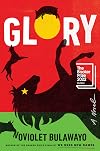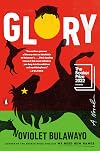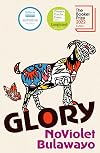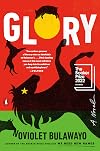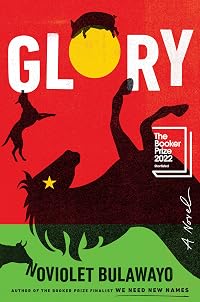
Glory
by NoViolet Bulawayo
On This Page
Description
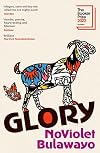
"An explosive novel about the chaos of revolution, Glory centres around the unexpected fall of Old Horse, a long-serving leader of a fictional African country, and the drama that follows for an unruly nation of animals on the path to true liberation. Inspired by the unexpected fall by coup, in November 2017, of Robert Mugabe--Zimbabwe's president who took office in 1980 and...never left--Bulawayo's bold, vividly imagined novel shows a country imploding, narrated by a chorus of animal voices show more who unveil the ruthlessness and cold strategy required to uphold the illusion of absolute power, and to overthrow it completely. As with her debut novel We Need New Names, Bulawayo's fierce voice and lucid imagery immerses us in the daily life of a traumatized nation, revealing the dazzling life force and irrepressible wit that lies barely concealed beneath the surface of seemingly bleak circumstances. At the center of this tumult is Destiny, who has returned to the motherland from America to bear witness to revolution--and, unwittingly, narrate the secret history and the potential legacy of the women who have quietly pulled the strings in this country. The animal kingdom--its connection to our primal responses and resonance in the mythology, folktales, and fairytales that define cultures the world over--unmasks the surreality of contemporary global politics to help us understand our world more clearly, even as Bulwayo plucks us right out of it. Glory is a blockbuster, an exhilarating ride, and crystalizes a turning point in history with the texture and nuance that only the greatest of fiction can"-- show lessTags
Recommendations









Member Reviews
“This is not an animal farm but Jidada with a -da and another -da!“
Wow! I loved this book. It is so clever. It hit my sense of humor while still making important points about abuse of power in our world.
NoViolet Bulawayo was born in Zimbabwe. She has created a fable around Zimbabwean history that is easily transferrable to authoritarian situations in other countries. Zimbabwe is here renamed Jidada. Using animals as characters, the author tells the story of the country’s political turmoil after the fall of the Old Horse (representing Robert Mugabe). After initial celebrations and optimism for the future of the country, the people find more of the same when the Old Horse’s Vice President takes over. Instead of the promised show more free/fair/credible elections, the Vice President simply refuses to honor the vote in favor of the opposition, seizes power, and continues the cycle of oppression. The country endures greed, corruption, violence, disappearances, and other human rights abuses.
Bulawayo’s writing is playful, colorful, and occasionally quite humorous. The advantage of using fable is that it can convey sharp social commentary in a way that is delightful to read while not losing sight of the weighty issues it addresses. The language also draws on the African traditions of oral storytelling, which are evident in repetitive phrasing and unique words.
In the past few years, I have read a number of books that reference the history of Zimbabwe, so I was familiar with the events portrayed in this story. Anyone interested in the history of Africa and its challenges in finding ethical leadership will likely enjoy this book. Those not living in Africa can find a clear warning about the path to dictatorship and what can happen when civil rights are disregarded. It won’t be a fit for everyone’s taste, but it definitely matches mine. I am very glad I read it and am adding it to my favorites. Tholukuthi hey! Highly recommended! I am adding it to my favorites.
Memorable Passages:
“I don’t care what haters say, talking about we’re not even following our own constitution, at least it’s our constitution we’re not following. And the day we actually decide to follow it, everyone will see why they call it one of the best in the world.”
“She’d learn too that not only were they breathing fiascoes with no love or respect whatsoever for the nation they purported to serve, yes, tholukuthi toads with no leadership, no ethics, no principles, no sense of justice, no compassion, no discipline, no honesty, no idea of what real service to the nation looked like, but they were also no better than the very oppressors they’d replaced.”
“Time veers, leaps backward. We trip on our own hopes, we teeter, hurtle into a red past we now know has been here all along, lurking like a crocodile. And before we can ask ourselves if what we’re seeing is really what we’re seeing—war is upon us. As it was upon us in the last election, just like it was upon us in the one before that, as it was upon us in the election prior to that, yes, tholukuthi as it has always been upon us. There is the all-too-familiar thwack-smash of hard weapon on flesh, gunshots, screams.”
“[T]he children of the nation found themselves standing hungry and thirsty and hopeless and penniless in the queues, tholukuthi Tuvy’s [the new dictator’s] eyes watching them from old election posters that promised a new and better Jidada they now understood, with a heartbreaking knowledge, would never ever come, was never meant to come.” show less
Wow! I loved this book. It is so clever. It hit my sense of humor while still making important points about abuse of power in our world.
NoViolet Bulawayo was born in Zimbabwe. She has created a fable around Zimbabwean history that is easily transferrable to authoritarian situations in other countries. Zimbabwe is here renamed Jidada. Using animals as characters, the author tells the story of the country’s political turmoil after the fall of the Old Horse (representing Robert Mugabe). After initial celebrations and optimism for the future of the country, the people find more of the same when the Old Horse’s Vice President takes over. Instead of the promised show more free/fair/credible elections, the Vice President simply refuses to honor the vote in favor of the opposition, seizes power, and continues the cycle of oppression. The country endures greed, corruption, violence, disappearances, and other human rights abuses.
Bulawayo’s writing is playful, colorful, and occasionally quite humorous. The advantage of using fable is that it can convey sharp social commentary in a way that is delightful to read while not losing sight of the weighty issues it addresses. The language also draws on the African traditions of oral storytelling, which are evident in repetitive phrasing and unique words.
In the past few years, I have read a number of books that reference the history of Zimbabwe, so I was familiar with the events portrayed in this story. Anyone interested in the history of Africa and its challenges in finding ethical leadership will likely enjoy this book. Those not living in Africa can find a clear warning about the path to dictatorship and what can happen when civil rights are disregarded. It won’t be a fit for everyone’s taste, but it definitely matches mine. I am very glad I read it and am adding it to my favorites. Tholukuthi hey! Highly recommended! I am adding it to my favorites.
Memorable Passages:
“I don’t care what haters say, talking about we’re not even following our own constitution, at least it’s our constitution we’re not following. And the day we actually decide to follow it, everyone will see why they call it one of the best in the world.”
“She’d learn too that not only were they breathing fiascoes with no love or respect whatsoever for the nation they purported to serve, yes, tholukuthi toads with no leadership, no ethics, no principles, no sense of justice, no compassion, no discipline, no honesty, no idea of what real service to the nation looked like, but they were also no better than the very oppressors they’d replaced.”
“Time veers, leaps backward. We trip on our own hopes, we teeter, hurtle into a red past we now know has been here all along, lurking like a crocodile. And before we can ask ourselves if what we’re seeing is really what we’re seeing—war is upon us. As it was upon us in the last election, just like it was upon us in the one before that, as it was upon us in the election prior to that, yes, tholukuthi as it has always been upon us. There is the all-too-familiar thwack-smash of hard weapon on flesh, gunshots, screams.”
“[T]he children of the nation found themselves standing hungry and thirsty and hopeless and penniless in the queues, tholukuthi Tuvy’s [the new dictator’s] eyes watching them from old election posters that promised a new and better Jidada they now understood, with a heartbreaking knowledge, would never ever come, was never meant to come.” show less
For me, this book landed in an interesting way. I like modern architecture . . .and when I see it, I love it in many, many forms. But if I happen to see, say, Cathedrale Notre-Dame . . .yeah, it's not modern, but like WOW, right?
That's exactly how I felt about this book. I don't like satire as a general rule, and this book was certainly satirical. And I hate magical realism, and this book had touches of that. And usually, I like stories that are told in straightforward language, but with original telling details that say it all. And this book was more like a super talented preacher was giving a brilliant sermon - - rhythmic and repetitive (in a good way) and more lush.
And all I can say at the end, is wow.
Did I like it? Well, I show more wouldn't want this to be my everyday reading experience, and I wouldn't necessarily seek another book like it out. But when you stumble upon something masterful, you know. show less
That's exactly how I felt about this book. I don't like satire as a general rule, and this book was certainly satirical. And I hate magical realism, and this book had touches of that. And usually, I like stories that are told in straightforward language, but with original telling details that say it all. And this book was more like a super talented preacher was giving a brilliant sermon - - rhythmic and repetitive (in a good way) and more lush.
And all I can say at the end, is wow.
Did I like it? Well, I show more wouldn't want this to be my everyday reading experience, and I wouldn't necessarily seek another book like it out. But when you stumble upon something masterful, you know. show less
Though I did not exactly enjoy this book, it did provoke a lot of thought and reflection and I admired it for that. The subject matter is deadly serious, but treated in a fanciful, somewhat fantastical vein. The setting is African country "Jidada" (aka Zimbabwe) and its violent political history. The author distances us from the horror by portraying the characters as animals, a la "Animal Farm". Unlike "AF" however, the thoughts and feelings in "Glory" are 100% human. I think this is an approach that works because if the characters were depicted as as humans, the tragic events would probably have been too much. The fairy tale elements let the author spin ever more baroque and over the top examples of unchecked despotism, but also allows show more her to fashion a hopeful ending that feels possible, even though the odds are against it in the real world. Reality check: the despot who succeeded the hated Robert Mugabe as president of Zimbabe in 2017 is still in power. show less
3.5⭐
“This is not an animal farm but Jidada with a -da and another -da!”
NoViolet Bulawayo’s Glory is an allegorical novel set in a fictional African country, Jidada, with an animal population throughout - anthropomorphic horses, dogs, pigs, goats, and chickens and others – comprising the ruling class, military, ministers and the commoners. Inspired by the 2017 coup that led to the removal of Robert Mugabe, Zimbabwe's president of nearly four decades from power, the story begins with the long-serving President, Father of the Nation, Old Horse, hailed for liberating Jidada from its colonizers decades ago, being removed from power by a carefully orchestrated coup. The removal of their leader was a cause for celebration, but when show more the Old Horse’s former Vice President, Tuvius “Tuvy” Delight Shasha ( a character based on Mugabe’s successor Emmerson Mnangagwa) quickly assumes the position of power - The Savior –with his own set of sycophants and yes-men at his beck and call- the Jidadans’ hopes for a better future are soon dashed. As the narrative progresses, political turmoil ensues - a seemingly never-ending cycle of corruption, megalomania, and oppression. Amidst the chaos, we meet Destiny, who has recently returned to her homeland after a long exile. Her family had suffered during the Old Horse’s regime and was witness to some of the most horrific violence in the history of the nation. She returns only to see history repeating itself under the new leadership. She shares in the pain and disillusionment of those who had hoped for their country’s better future but remains hopeful that a revolution with new and powerful voices would lead their country forward and prove to be a catalyst for positive change.
Overall, I found Glory to be a creative, thought-provoking and powerful read that manages to convey a strong message under a veneer of absurdity and humor. In several interviews and her Booker Library write-up the author has talked about how she was inspired by George Orwell’s Animal Farm while framing this novel. This is a lengthy novel - long drawn and descriptive and suffers from mild repetition (the frequency of certain words/phrases in the narrative could be a tad distracting for the reader but proved entertaining in audio narration)- but the author manages to weave a compelling narrative. It took me a while to get used to the tone and pace of the narrative , but as the story progressed (around the 20% mark), I was immersed. The author references several real characters and events from the past and present and and some of the horrific real events that are referred to within this story (including the Gukurahundi genocide of 1982) are hard to read. The nod to native folklore and storytelling enriches the narrative, and the humor and satirical elements render the bleak parts of this story easier to read. The author's characterizations of strong female characters ("femals") in this novel - be it the Old Horse's power hungry wife or the women actively opposing corruption and tyranny is worth mentioning and lends a feminist tone to the narrative.
While I initially found the anthropomorphism amusing, given the length of this novel, I can’t help but wonder whether this novel would have been equally (or even more, for that matter) impactful had the characters not been presented as talking animals who behave (almost in all respects) like human beings. Though the author’s story is inspired by Zimbabwe's political climate and the aftermath of Mugabe’s regime, all we need to do is take a look at the world around us- despots in power, regimes that have fallen, the state of contemporary politics the world around - and appreciate the timeliness and relevance of this novel.
I paired my reading with the excellent audio narration by Chipo Chung which truly enhanced my experience.
“Tholukuthi through these tales we learned there were in fact many untold narratives that were left out of the Seat of Power’s tales of the nation, that were excluded from Jidada’s great books of history. That the nation’s stories of glory were far from being the whole truth, and that sometimes the Seat of Power’s truths were actually half-truths and mistruths as well as deliberate erasures. Which in turn made us understand the importance not only of narrating our own stories, our own truths, but of writing them down as well so they were not taken from us, never altered, tholukuthi never erased, never forgotten.”
Connect with me!
My Blog
Instagram show less
“This is not an animal farm but Jidada with a -da and another -da!”
NoViolet Bulawayo’s Glory is an allegorical novel set in a fictional African country, Jidada, with an animal population throughout - anthropomorphic horses, dogs, pigs, goats, and chickens and others – comprising the ruling class, military, ministers and the commoners. Inspired by the 2017 coup that led to the removal of Robert Mugabe, Zimbabwe's president of nearly four decades from power, the story begins with the long-serving President, Father of the Nation, Old Horse, hailed for liberating Jidada from its colonizers decades ago, being removed from power by a carefully orchestrated coup. The removal of their leader was a cause for celebration, but when show more the Old Horse’s former Vice President, Tuvius “Tuvy” Delight Shasha ( a character based on Mugabe’s successor Emmerson Mnangagwa) quickly assumes the position of power - The Savior –with his own set of sycophants and yes-men at his beck and call- the Jidadans’ hopes for a better future are soon dashed. As the narrative progresses, political turmoil ensues - a seemingly never-ending cycle of corruption, megalomania, and oppression. Amidst the chaos, we meet Destiny, who has recently returned to her homeland after a long exile. Her family had suffered during the Old Horse’s regime and was witness to some of the most horrific violence in the history of the nation. She returns only to see history repeating itself under the new leadership. She shares in the pain and disillusionment of those who had hoped for their country’s better future but remains hopeful that a revolution with new and powerful voices would lead their country forward and prove to be a catalyst for positive change.
Overall, I found Glory to be a creative, thought-provoking and powerful read that manages to convey a strong message under a veneer of absurdity and humor. In several interviews and her Booker Library write-up the author has talked about how she was inspired by George Orwell’s Animal Farm while framing this novel. This is a lengthy novel - long drawn and descriptive and suffers from mild repetition (the frequency of certain words/phrases in the narrative could be a tad distracting for the reader but proved entertaining in audio narration)- but the author manages to weave a compelling narrative. It took me a while to get used to the tone and pace of the narrative , but as the story progressed (around the 20% mark), I was immersed. The author references several real characters and events from the past and present and and some of the horrific real events that are referred to within this story (including the Gukurahundi genocide of 1982) are hard to read. The nod to native folklore and storytelling enriches the narrative, and the humor and satirical elements render the bleak parts of this story easier to read. The author's characterizations of strong female characters ("femals") in this novel - be it the Old Horse's power hungry wife or the women actively opposing corruption and tyranny is worth mentioning and lends a feminist tone to the narrative.
While I initially found the anthropomorphism amusing, given the length of this novel, I can’t help but wonder whether this novel would have been equally (or even more, for that matter) impactful had the characters not been presented as talking animals who behave (almost in all respects) like human beings. Though the author’s story is inspired by Zimbabwe's political climate and the aftermath of Mugabe’s regime, all we need to do is take a look at the world around us- despots in power, regimes that have fallen, the state of contemporary politics the world around - and appreciate the timeliness and relevance of this novel.
I paired my reading with the excellent audio narration by Chipo Chung which truly enhanced my experience.
“Tholukuthi through these tales we learned there were in fact many untold narratives that were left out of the Seat of Power’s tales of the nation, that were excluded from Jidada’s great books of history. That the nation’s stories of glory were far from being the whole truth, and that sometimes the Seat of Power’s truths were actually half-truths and mistruths as well as deliberate erasures. Which in turn made us understand the importance not only of narrating our own stories, our own truths, but of writing them down as well so they were not taken from us, never altered, tholukuthi never erased, never forgotten.”
Connect with me!
My Blog
Instagram show less
Shortlisted for the Booker Prize 2022
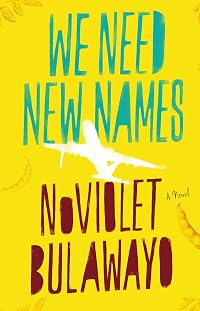
This is Bulawayo's second Booker longlisted novel, but I have yet to read the first ([b:We Need New Names|15852479|We Need New Names|NoViolet Bulawayo|https://i.gr-assets.com/images/S/compressed.photo.goodreads.com/books/1352225506l/15852479._SY75_.jpg|21600154]). I was not entirely sure what to expect, but on the whole I was pleasantly surprised by this.
It is influenced by and superficially similar to [b:Animal Farm|170448|Animal Farm|George Orwell|https://i.gr-assets.com/images/S/compressed.photo.goodreads.com/books/1325861570l/170448._SY75_.jpg|2207778], but for me was a more interesting book, perhaps because the politics of Zimbabwe is inevitably covered with a first world slant by the British show more media. Bulawayo's perspective is more about how the politics affects ordinary people, particularly those who do not belong to the ruling party's main ethnic group. And although the setting is primarily Zimbabwe, this is never explicitly stated and most of the names have been changed, and most of the characters are assigned animal characteristics in a way that rarely intrudes on the more important subject matter of the story.
Well worth reading, and I wouldn't be disappointed if this makes the shortlist. show less
This is Bulawayo's second Booker longlisted novel, but I have yet to read the first ([b:We Need New Names|15852479|We Need New Names|NoViolet Bulawayo|https://i.gr-assets.com/images/S/compressed.photo.goodreads.com/books/1352225506l/15852479._SY75_.jpg|21600154]). I was not entirely sure what to expect, but on the whole I was pleasantly surprised by this.
It is influenced by and superficially similar to [b:Animal Farm|170448|Animal Farm|George Orwell|https://i.gr-assets.com/images/S/compressed.photo.goodreads.com/books/1325861570l/170448._SY75_.jpg|2207778], but for me was a more interesting book, perhaps because the politics of Zimbabwe is inevitably covered with a first world slant by the British show more media. Bulawayo's perspective is more about how the politics affects ordinary people, particularly those who do not belong to the ruling party's main ethnic group. And although the setting is primarily Zimbabwe, this is never explicitly stated and most of the names have been changed, and most of the characters are assigned animal characteristics in a way that rarely intrudes on the more important subject matter of the story.
Well worth reading, and I wouldn't be disappointed if this makes the shortlist. show less
My second from the Booker 2022 longlist (and first from the shortlist)
43. Glory by NoViolet Bulawayo
reader: Chipo Chung
published: 2022
format: 16:10 audible audiobook (416 pages in hardcover)
acquired: August 23 listened: Aug 23 – Sep 11
rating: 3½
genre/style: Contemporary Fiction theme: Booker 2022
locations: Zimbabwe
about the author: NoViolet Bulawayo is the penname of Elizabeth Zandile Tshele. She was born 1981 in Tsholotsho Zimbabwe, and is currently in a creative writing fellowship at Stanford University.
A satire on Zimbabwe, part brilliant, part satire dump.
This is an important and creative work but there is no getting around that it's really difficult to get through. Bulawayo, a native of Zimbabwe, was apparently (according to show more Wikipedia) writing a history of the country, and instead came out with an [Animal Farm]-like satire. The book opens with a heavy satire on the last days of Robert Mugabe's rule, on his mental weakness as he aged, on his imperious wife of that time, and on the power struggle with the vice president Emmerson Mnangagwa, who would replace Mugabe after a coup in 2017. Mugabe was president from independence in 1980 through his removal in 2017, and oversaw the catastrophic financial collapse of the country in the 1990's. He is infamous not only for his sunglasses, but also for his autocratic rule where his main focus was always on his own power and wealth, two things that certainly did not help the countries dead economy.
I found the satire that opens the book funny and creative. I was expecting to get tired of it, but it kept me entertained a while. Listening on audio, I was still happy with it 2 hours in, and entertained with the various intonations of the fictional country's name, fully given as "Jidada.. with a da- and another da". But it just kept going. Four hours in I was really tired of it. I thought even the reader was getting tired, because she slowed down, giving extra-emphasis to the satire (the reading is excellent). I posted on Litsy about abandoning it, and one person there encouraged me, telling me it will get better when I get to Destiny about halfway through. It does. Destiny, a scarred native of Zimbabwe, returns, broken, to her country, and learns of her heritage, a dark catalogue of awful repression that I knew nothing about. (I had always assumed a country that named itself Zimbabwe must have a decently happy history. The truth is about the opposite.)
So, I made it through. I really liked meeting Destiny and her family history. I appreciated the creativity and all Bulawayo did here. Also I'm glad I'm not on the Booker committee, because I would not want to read this a second time. I'm exhausted thinking about it.
2022
https://www.librarything.com/topic/342768#7944075 show less
43. Glory by NoViolet Bulawayo
reader: Chipo Chung
published: 2022
format: 16:10 audible audiobook (416 pages in hardcover)
acquired: August 23 listened: Aug 23 – Sep 11
rating: 3½
genre/style: Contemporary Fiction theme: Booker 2022
locations: Zimbabwe
about the author: NoViolet Bulawayo is the penname of Elizabeth Zandile Tshele. She was born 1981 in Tsholotsho Zimbabwe, and is currently in a creative writing fellowship at Stanford University.
A satire on Zimbabwe, part brilliant, part satire dump.
This is an important and creative work but there is no getting around that it's really difficult to get through. Bulawayo, a native of Zimbabwe, was apparently (according to show more Wikipedia) writing a history of the country, and instead came out with an [Animal Farm]-like satire. The book opens with a heavy satire on the last days of Robert Mugabe's rule, on his mental weakness as he aged, on his imperious wife of that time, and on the power struggle with the vice president Emmerson Mnangagwa, who would replace Mugabe after a coup in 2017. Mugabe was president from independence in 1980 through his removal in 2017, and oversaw the catastrophic financial collapse of the country in the 1990's. He is infamous not only for his sunglasses, but also for his autocratic rule where his main focus was always on his own power and wealth, two things that certainly did not help the countries dead economy.
I found the satire that opens the book funny and creative. I was expecting to get tired of it, but it kept me entertained a while. Listening on audio, I was still happy with it 2 hours in, and entertained with the various intonations of the fictional country's name, fully given as "Jidada.. with a da- and another da". But it just kept going. Four hours in I was really tired of it. I thought even the reader was getting tired, because she slowed down, giving extra-emphasis to the satire (the reading is excellent). I posted on Litsy about abandoning it, and one person there encouraged me, telling me it will get better when I get to Destiny about halfway through. It does. Destiny, a scarred native of Zimbabwe, returns, broken, to her country, and learns of her heritage, a dark catalogue of awful repression that I knew nothing about. (I had always assumed a country that named itself Zimbabwe must have a decently happy history. The truth is about the opposite.)
So, I made it through. I really liked meeting Destiny and her family history. I appreciated the creativity and all Bulawayo did here. Also I'm glad I'm not on the Booker committee, because I would not want to read this a second time. I'm exhausted thinking about it.
2022
https://www.librarything.com/topic/342768#7944075 show less
Glory (Chatto & Windus) by NoViolet Bulawayo is one of the titles on this year’s interesting Booker Prize longlist. It follows an animal community in a fictional African country (Jidada with a -da and another -da) that has a noble horse as its long running president and Father of the Nation, who led the revolution way back that secured its independence from the Colonials. Packs of vicious dogs as ‘Defenders’ use violence to ensure that he stays there. Until he doesn’t, and a coup decides to topple him after four decades in charge and a popular uprising promises to establish a glorious new regime that will rid the country of its corruption, poverty, and brutality. But, what do you know, the promise of a new world and a clean show more sweep turns out to be just mere waffle and only brings in more of the same, if not more so. It rings so true and one can’t help wringing one’s hands at the inevitability of it all and despair at politics - accepting the unacceptable and inaction encouraging abuse. It’s an old but very familiar story that plays out in front of a unperceptive and negligent audience.; veni, vidi, nihil feci. It’s a terrific book and a clever tale, beautifully told. show less
Members
- Recently Added By
Published Reviews
ThingScore 75
Inspired by George Orwell’s Animal Farm, Glory is set in the animal kingdom of Jidada. After a 40-year rule, the “Old Horse” is ousted in a coup, along with his much-despised wife, a donkey named Marvellous.
added by bergs47
Lists

Global Reads: Books Set in Africa
19 works; 3 members

2023 Women's Prize for Fiction Longlist
16 works; 11 members

Dublin Literary Award 2023 Longlist
67 works; 5 members
Author Information

5+ Works 2,035 Members
Some Editions
Awards and Honors
Awards
Distinctions
Series
Belongs to Publisher Series
Empúries Narrativa (616)
Common Knowledge
- Canonical title
- Glory
- Original publication date
- 2022
- Important places
- Jidada
Classifications
Statistics
- Members
- 474
- Popularity
- 64,170
- Reviews
- 12
- Rating
- (3.56)
- Languages
- Catalan, English, French, German
- Media
- Paper, Audiobook, Ebook
- ISBNs
- 18
- ASINs
- 3