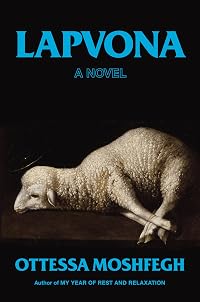
Lapvona
by Ottessa Moshfegh
On This Page
Description
"In a village in a medieval fiefdom buffeted by natural disasters, a motherless shepherd boy finds himself the unlikely pivot of a power struggle that puts all manner of faith to a savage test, in a spellbinding novel that represents Ottessa Moshfegh's most exciting leap yet Little Marek, the abused and delusional son of the village shepherd, never knew his mother; his father told him she died in childbirth. One of life's few consolations for Marek is his enduring bond with the blind village show more midwife, Ina, who suckled him when he was a baby, as she did so many of the village's children. Ina's gifts extend beyond childcare: she possesses a unique ability to communicate with the natural world. Her gift often brings her the transmission of sacred knowledge on levels far beyond those available to other villagers, however religious they might be. For some people, Ina's home in the woods outside of the village is a place to fear and to avoid, a godless place. Among their number is Father Barnabas, the town priest and lackey for the depraved lord and governor, Villiam, whose hilltop manor contains a secret embarrassment of riches. The people's desperate need to believe that there are powers that be who have their best interests at heart is put to a cruel test by Villiam and the priest, especially in this year of record drought and famine. But when fate brings Marek into violent proximity to the lord's family, new and occult forces upset the old order. By year's end, the veil between blindness and sight, life and death, the natural world and the spirit world, will prove to be very thin indeed"-- show lessTags
Recommendations

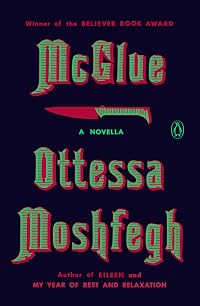


Member Reviews
Lapvona feels misanthropic at times. Nobody - not Marek, not Jude, not Ida, not Villiam, not Lisbeth -- comes off as likable in the traditional sense of the term. But they are intensely authentic characters.
So much of this book, and so much of Marek's arc, is centered around faith and God. Running contrast to horrific crimes, death, and punishment is a belief that pain will bring these characters closer to their Lord. Conversely, as the situation in Lapvona turns dire, the story almost turns atheistic, as the poor suffer and die during drought and the powerful sit pretty, away from harm.
It becomes easy to see the mirror Moshfegh is holding up to our current day-and-age, warts and all. The discussions of classism, faith, and personal show more strife, not to mention the abundance of greed and fury prevalent in even the meekest characters, feels intensely modern, despite the book being set long, long ago.
It's worth a read. Definitely not what I was expecting. show less
So much of this book, and so much of Marek's arc, is centered around faith and God. Running contrast to horrific crimes, death, and punishment is a belief that pain will bring these characters closer to their Lord. Conversely, as the situation in Lapvona turns dire, the story almost turns atheistic, as the poor suffer and die during drought and the powerful sit pretty, away from harm.
It becomes easy to see the mirror Moshfegh is holding up to our current day-and-age, warts and all. The discussions of classism, faith, and personal show more strife, not to mention the abundance of greed and fury prevalent in even the meekest characters, feels intensely modern, despite the book being set long, long ago.
It's worth a read. Definitely not what I was expecting. show less
Taking place some time during the medieval period, the people of Lapvona are ruled by the volatile and eccentric Lord Villiam. Among them is 13 yr old Marek, "the abused and delusional son of Jude the Shepherd, who believes his mother died giving birth to him." In Spring, Jude - similar to "Judas," betrays Marek by giving him away to Lord Villiam without a second thought. In Summer, Lapvona experiences severe drought and the people succumb to famine. As the dead reappear in the Autumn, the thin veneer of control begins to slip. It is in Winter, the season of death, where all the sinfulness and offenses culminate, but where the hope of resurrection always lies.
I hesitate to call this one horror, even though it is frequently listed as show more such. It's disturbing and twisted, but not at all traditionally terrifying or horrifying. However, the author must have consulted various medieval folk tales because their writing style compliments the period perfectly. Confirming my suspicions, Jude the Shepherd references the threefold death early on. It's a common motif in Celtic folk tales and usually in response to 3 great offenses. As the story progresses, the deaths unfold in the manner of a fall from a great height, a wounding, and a poison. As the famine continues, it truly becomes a Danse Macabre. Marek's desire for penance and affection becomes cyclical with Lord Villiam's desire for amusement (no matter how cruel) - a last dance so to speak.
Beyond the deeper literary themes are characters who are unyielding, exposed, desperate, unhinged, pathetic and disdainful. This book isn't about comeuppance, fairness or righteous justice, it's an examination of a servile, passive people that would rather divert blame and suffer rather than seek out progressive change. Lapvona will leave you feeling helpless and unsettled, if a little reflective. show less
I hesitate to call this one horror, even though it is frequently listed as show more such. It's disturbing and twisted, but not at all traditionally terrifying or horrifying. However, the author must have consulted various medieval folk tales because their writing style compliments the period perfectly. Confirming my suspicions, Jude the Shepherd references the threefold death early on. It's a common motif in Celtic folk tales and usually in response to 3 great offenses. As the story progresses, the deaths unfold in the manner of a fall from a great height, a wounding, and a poison. As the famine continues, it truly becomes a Danse Macabre. Marek's desire for penance and affection becomes cyclical with Lord Villiam's desire for amusement (no matter how cruel) - a last dance so to speak.
Beyond the deeper literary themes are characters who are unyielding, exposed, desperate, unhinged, pathetic and disdainful. This book isn't about comeuppance, fairness or righteous justice, it's an examination of a servile, passive people that would rather divert blame and suffer rather than seek out progressive change. Lapvona will leave you feeling helpless and unsettled, if a little reflective. show less
My first impression of Lapvona was that it is written like a Bosch painting. My mental picture of the characters in the grubby little medieval town consisted of figures that look like owl-headed sheep beasts, deformed men with odd weapons, piglet faced humans dressed in fine clothing, strange sexual proclivities carried out by uncaring overlords, and so on.
Their world is corrupt, dirty, impoverished and awful. Malnutrition runs rampant. One character has an eating disorder amid a famine caused by drought. The peasants eat dirt and drink contaminated water. She lives at the lord's house and has food, but limits herself to one leaf of cabbage to serve God.
Heinous crimes are commonplace. People punish themselves through flagellation and show more various other means of self-abuse.
If the priestly class weren't there to prop up the lordly class, the peasant class would ask more questions and be less stupid. The pampered, doltish lords rely upon fear for power, and for that they require the priest to instill fear of the afterlife.
Moshfegh takes them all to the stockade and gives them a good spanking. I hope we get that GOT series set in Flea Bottom and she write the scripts. show less
Their world is corrupt, dirty, impoverished and awful. Malnutrition runs rampant. One character has an eating disorder amid a famine caused by drought. The peasants eat dirt and drink contaminated water. She lives at the lord's house and has food, but limits herself to one leaf of cabbage to serve God.
Heinous crimes are commonplace. People punish themselves through flagellation and show more various other means of self-abuse.
If the priestly class weren't there to prop up the lordly class, the peasant class would ask more questions and be less stupid. The pampered, doltish lords rely upon fear for power, and for that they require the priest to instill fear of the afterlife.
Moshfegh takes them all to the stockade and gives them a good spanking. I hope we get that GOT series set in Flea Bottom and she write the scripts. show less
Lapvona by Ottessa Moshfegh
My rating: 5 of 5 stars
I hadn’t read any Ottessa Moshfegh in a couple of years and so I’d forgotten the biting, bleak, grimy thrill of her work! I’ve previously read My Year of Rest and Relaxation and Eileen, both I rated as 4 out of 5. The former I didn’t love as much as I wanted to but it tickled something in the dark corners of my brain. I preferred the latter, but it wasn’t quite tight enough to provide a wholly satisfying read. Unfortunately, I read both in the years I didn’t write reviews so my exact thoughts are lost to time!
# How gross/disturbing is Lapvona?
Lapvona is now my favourite of the three, this one had the extra dose of weirdness and grotesquery that it turns out is a flavour I show more really enjoy! I didn’t realise this for long because so many reviews harp on about how disgusting and disturbing this book is, but honestly I don’t think it is that bad? Yes, there are lots of disturbing scenes (grown men nursing on an old lady, for example) but otherwise abuse, violence, cannibalism, rape, and implied paedophilia felt sadly unsurprising and even expected, given the brutal mediaeval world in which this is set. The style is sardonic and matter-of-fact, nothing gets lingered on. There are some gory descriptions but I found them more absurd than revolting.
Where you land on the “this is disgusting” scale will probably depend on what you read before! Having read, and loved, the work of Angela Carter (The Passion of New Eve left a lasting impression, don’t read that one with the flu!) and Martin Amis (especially Money) in my student days I have to say Lapvona wasn’t too eyebrow-raising!
# Plot
Lapvona is the name of a fictional medieval fiefdom populated by staunchly religious peasant farmers who are ruled over by a supremely silly and selfish Lord Villiam, and the charlatan Father Barnabas who uses his sermons to control the villagers.
The story is told in a simplistic fairytale style, and on the surface is about the rise of a young mistreated peasant boy… But don’t expect to find any love or happiness! This was written by Ottessa Moshfegh!
I’ve seen some reviews complaining about a lack of plot, and that’s fair. Things just happen and it all feels quite random (as is often the case with fairy tales), but I liked that. It made sense with the darkly comic vibe, and how brutal life is in Lapvona. This is a novel more concerned with shining a light on how fucking horrible and selfish people can be, how religion can be a tool for the benefit of those in power and desperate people will cling to it to produce some reason for the troubles in their miserable lives.
# Ugliness
Everyone in this story is awful… But in an interesting way! Ottessa Moshfegh is excellent at writing the ugly; she loves to magnify the selfish, the petty and all the dark feelings that make up being a human and in this, she goes more extreme than the previous books I’ve read.
The story hops around various POV characters but the main, at least at the beginning, is a thirteen-year-old Marek. Marek should perhaps be sympathetic due to his physical deformities (he’s short, hunchbacked with a twisted spine and misshapen, lopsided face) and his terrible abusive father, Jude. However Marek derives a perverse pleasure from his suffering, subscribing wholeheartedly to the doctrine that it brings you closer to God and heaven, and this gives him an attitude of pious superiority as he seeks both abuse and pity. Coupled with a simpering subservient manner, a tendency to jealousy, and a lack of intelligence and self-awareness, this overall combination makes him quite the impressively repulsive character in a novel full of horrible characters!
He lived for hardship. It gave him cause to prove himself superior to his mortal suffering.
Almost all the other characters are similarly narrow-minded and selfish. There is also his father, Jude, a brutish man who loves animals tenderly but is nothing but cruel to his own son and “his woman.” Jude has staunch black-and-white thinking and lacks self-awareness, just as Marek does. He regularly self-flagellates to atone for his sins, but Marek suspects he also finds pleasure in the pain. Father and son make quite the pair!
Ina, the elderly village witch and retired wet nurse is the only significant feminine presence in this book. She may appear on the surface to offer comfort and, with her abilities to community with nature, a different perspective but she has no warmth to her and is no better than the rest. She’s equally self-serving and opportunistic (even rude and ungrateful to the birds who aid her!), although given her treatment in her youth that’s easier to understand.
‘Then cook him for me. I’m hungry.’ She was serious. ‘And then I can nurse you, I’m sure.’ ‘What about heaven, Ina? Don’t you want to go?’ ‘It doesn’t matter,’ she said. ‘I won’t know anyone.’
# Scarcity
The reason why the villagers in this book are so selfish, and that they cling to Father Barnabas preaching is because everything is scarce in Lapvona. There is not enough food or water, there is no education or leisure time, and there is precious little love or kindness. All the villagers do is toil in the field producing goods for Lord Villiam’s profit. They are always in survival mode which, as I learned from reading Daring Greatly, breeds a culture of judgment and shame, and leaves little room for compassion.
But secretly, Marek was a little pleased that he was bleeding and that surely the broken bucket would be reason enough for Jude to give him a sound beating when he got home. Pain was good, Marek felt. It brought him closer to his father’s love and pity.
Even when Marek receives unlikely good fortune, he’s so self-absorbed and uncritical that he never connects the contrast between the life the Lord leads or even conversations he hears with conditions in the village. He never has a single thought about helping anybody else. I thought the contrast of him eating a peach in blissful ignorance while visiting the starving village was fantastic.
The few times a character offers aid to another it always has an underlying motive of needing it expecting something in return. Or it’s to earn God’s favour, not for the sake of helping a fellow human.
# Excess
While Lapvonians are starving to death their Lord Villiam is a spoiled, narcissistic and ridiculous man who eats and drinks endlessly. He has his servants constantly perform for him, he wants to be entertained every second of the day. The contrast between life at the castle and life in the village becomes more extreme, and an obvious allegory for our modern world, where the same things are happening on a larger scale.
The rise of Donald Trump and the egregiously transparent tactics used to get him into power are not that different to how Villiam and Father Barnabas manipulate the villagers. They tell them stories about bandits and ridiculous justifications for the drought, all while withholding lifesaving resources.
That was his primary function as the village priest: to listen to the confessions of the people down below and report any sagging dispositions or laziness to the man above. Terror and grief were good for morale, Villiam believed.
It’s no coincidence that sheep are the main livestock in Lapvona, and a sheep is on the cover of the book. The village definitely has a herd mentality, with Barnabas as their shepherd. But equally, Barnabas is afraid of the people realising he is a fraud, that he doesn’t actually know anything about religion, and then turning against him. This is why they keep them afraid and united against bandit attacks.
# I loved it
I enjoy this dark, dry, weird humour when it’s done well. Ottessa Moshfegh has such a distinct style, she’s excellent at this bleak sardonic atmosphere. This one has lots of gore in it but I felt it was more grotesquely cartoonish (eyeballs flopping around, an old lady with horse eyes jammed in her sockets.. there is a lot of eye stuff…). I liked all the references to shit and blood, I could practically smell this book. There is something refreshing and hilarious to me about lamb shit being referenced so nonchalantly.
I’ve also been watching The Great recently which has a similarly brutal and revolting vibe! I fucking love it. Lord Villiam might actually be a little less volatile and violent than Emperor Peter in that show! Lapvona was also an interesting contrast to The Snow Song, both books having a fairy tale style and small village settings controlled by religious ignorance and scarcity.
Lapvona did encourage a little self-reflection on my own selfish tendencies, and the fact that humanity never changes.. we just invent new ways to fuck each other over.
I hovered for a while on whether this is a 4 or a 5 star read for me, and I decided to push it up to 5 stars/sheep because this weird fucked-up little book did light up my brain! I just would not recommend it to everyone!
If anyone has recommendations for more authors like Ottessa Moshfegh (or Mona Awad) I’d love to see them in the comments!
Find this review and more on my blog.
# REVIEW SUMMARY
## I LIKED
- Twisted, ugly, dark, and a little absurd! I enjoy the tone.
- I enjoyed all the horrible characters!
- The themes are topical and gave me some food for thought.
- It’s definitely memorable!
## I DIDN’T LIKE
- Honestly, no notes!
View all my reviews show less
My rating: 5 of 5 stars
I hadn’t read any Ottessa Moshfegh in a couple of years and so I’d forgotten the biting, bleak, grimy thrill of her work! I’ve previously read My Year of Rest and Relaxation and Eileen, both I rated as 4 out of 5. The former I didn’t love as much as I wanted to but it tickled something in the dark corners of my brain. I preferred the latter, but it wasn’t quite tight enough to provide a wholly satisfying read. Unfortunately, I read both in the years I didn’t write reviews so my exact thoughts are lost to time!
# How gross/disturbing is Lapvona?
Lapvona is now my favourite of the three, this one had the extra dose of weirdness and grotesquery that it turns out is a flavour I show more really enjoy! I didn’t realise this for long because so many reviews harp on about how disgusting and disturbing this book is, but honestly I don’t think it is that bad? Yes, there are lots of disturbing scenes (grown men nursing on an old lady, for example) but otherwise abuse, violence, cannibalism, rape, and implied paedophilia felt sadly unsurprising and even expected, given the brutal mediaeval world in which this is set. The style is sardonic and matter-of-fact, nothing gets lingered on. There are some gory descriptions but I found them more absurd than revolting.
Where you land on the “this is disgusting” scale will probably depend on what you read before! Having read, and loved, the work of Angela Carter (The Passion of New Eve left a lasting impression, don’t read that one with the flu!) and Martin Amis (especially Money) in my student days I have to say Lapvona wasn’t too eyebrow-raising!
# Plot
Lapvona is the name of a fictional medieval fiefdom populated by staunchly religious peasant farmers who are ruled over by a supremely silly and selfish Lord Villiam, and the charlatan Father Barnabas who uses his sermons to control the villagers.
The story is told in a simplistic fairytale style, and on the surface is about the rise of a young mistreated peasant boy… But don’t expect to find any love or happiness! This was written by Ottessa Moshfegh!
I’ve seen some reviews complaining about a lack of plot, and that’s fair. Things just happen and it all feels quite random (as is often the case with fairy tales), but I liked that. It made sense with the darkly comic vibe, and how brutal life is in Lapvona. This is a novel more concerned with shining a light on how fucking horrible and selfish people can be, how religion can be a tool for the benefit of those in power and desperate people will cling to it to produce some reason for the troubles in their miserable lives.
# Ugliness
Everyone in this story is awful… But in an interesting way! Ottessa Moshfegh is excellent at writing the ugly; she loves to magnify the selfish, the petty and all the dark feelings that make up being a human and in this, she goes more extreme than the previous books I’ve read.
The story hops around various POV characters but the main, at least at the beginning, is a thirteen-year-old Marek. Marek should perhaps be sympathetic due to his physical deformities (he’s short, hunchbacked with a twisted spine and misshapen, lopsided face) and his terrible abusive father, Jude. However Marek derives a perverse pleasure from his suffering, subscribing wholeheartedly to the doctrine that it brings you closer to God and heaven, and this gives him an attitude of pious superiority as he seeks both abuse and pity. Coupled with a simpering subservient manner, a tendency to jealousy, and a lack of intelligence and self-awareness, this overall combination makes him quite the impressively repulsive character in a novel full of horrible characters!
He lived for hardship. It gave him cause to prove himself superior to his mortal suffering.
Almost all the other characters are similarly narrow-minded and selfish. There is also his father, Jude, a brutish man who loves animals tenderly but is nothing but cruel to his own son and “his woman.” Jude has staunch black-and-white thinking and lacks self-awareness, just as Marek does. He regularly self-flagellates to atone for his sins, but Marek suspects he also finds pleasure in the pain. Father and son make quite the pair!
Ina, the elderly village witch and retired wet nurse is the only significant feminine presence in this book. She may appear on the surface to offer comfort and, with her abilities to community with nature, a different perspective but she has no warmth to her and is no better than the rest. She’s equally self-serving and opportunistic (even rude and ungrateful to the birds who aid her!), although given her treatment in her youth that’s easier to understand.
‘Then cook him for me. I’m hungry.’ She was serious. ‘And then I can nurse you, I’m sure.’ ‘What about heaven, Ina? Don’t you want to go?’ ‘It doesn’t matter,’ she said. ‘I won’t know anyone.’
# Scarcity
The reason why the villagers in this book are so selfish, and that they cling to Father Barnabas preaching is because everything is scarce in Lapvona. There is not enough food or water, there is no education or leisure time, and there is precious little love or kindness. All the villagers do is toil in the field producing goods for Lord Villiam’s profit. They are always in survival mode which, as I learned from reading Daring Greatly, breeds a culture of judgment and shame, and leaves little room for compassion.
But secretly, Marek was a little pleased that he was bleeding and that surely the broken bucket would be reason enough for Jude to give him a sound beating when he got home. Pain was good, Marek felt. It brought him closer to his father’s love and pity.
Even when Marek receives unlikely good fortune, he’s so self-absorbed and uncritical that he never connects the contrast between the life the Lord leads or even conversations he hears with conditions in the village. He never has a single thought about helping anybody else. I thought the contrast of him eating a peach in blissful ignorance while visiting the starving village was fantastic.
The few times a character offers aid to another it always has an underlying motive of needing it expecting something in return. Or it’s to earn God’s favour, not for the sake of helping a fellow human.
# Excess
While Lapvonians are starving to death their Lord Villiam is a spoiled, narcissistic and ridiculous man who eats and drinks endlessly. He has his servants constantly perform for him, he wants to be entertained every second of the day. The contrast between life at the castle and life in the village becomes more extreme, and an obvious allegory for our modern world, where the same things are happening on a larger scale.
The rise of Donald Trump and the egregiously transparent tactics used to get him into power are not that different to how Villiam and Father Barnabas manipulate the villagers. They tell them stories about bandits and ridiculous justifications for the drought, all while withholding lifesaving resources.
That was his primary function as the village priest: to listen to the confessions of the people down below and report any sagging dispositions or laziness to the man above. Terror and grief were good for morale, Villiam believed.
It’s no coincidence that sheep are the main livestock in Lapvona, and a sheep is on the cover of the book. The village definitely has a herd mentality, with Barnabas as their shepherd. But equally, Barnabas is afraid of the people realising he is a fraud, that he doesn’t actually know anything about religion, and then turning against him. This is why they keep them afraid and united against bandit attacks.
# I loved it
I enjoy this dark, dry, weird humour when it’s done well. Ottessa Moshfegh has such a distinct style, she’s excellent at this bleak sardonic atmosphere. This one has lots of gore in it but I felt it was more grotesquely cartoonish (eyeballs flopping around, an old lady with horse eyes jammed in her sockets.. there is a lot of eye stuff…). I liked all the references to shit and blood, I could practically smell this book. There is something refreshing and hilarious to me about lamb shit being referenced so nonchalantly.
I’ve also been watching The Great recently which has a similarly brutal and revolting vibe! I fucking love it. Lord Villiam might actually be a little less volatile and violent than Emperor Peter in that show! Lapvona was also an interesting contrast to The Snow Song, both books having a fairy tale style and small village settings controlled by religious ignorance and scarcity.
Lapvona did encourage a little self-reflection on my own selfish tendencies, and the fact that humanity never changes.. we just invent new ways to fuck each other over.
I hovered for a while on whether this is a 4 or a 5 star read for me, and I decided to push it up to 5 stars/sheep because this weird fucked-up little book did light up my brain! I just would not recommend it to everyone!
If anyone has recommendations for more authors like Ottessa Moshfegh (or Mona Awad) I’d love to see them in the comments!
Find this review and more on my blog.
# REVIEW SUMMARY
## I LIKED
- Twisted, ugly, dark, and a little absurd! I enjoy the tone.
- I enjoyed all the horrible characters!
- The themes are topical and gave me some food for thought.
- It’s definitely memorable!
## I DIDN’T LIKE
- Honestly, no notes!
View all my reviews show less
In an unclear low country of the vague Middle Ages, Marek, a dirt-poor, disfigured, dimwitted and morally muddled teenage boy, is browbeaten with anti-love by his cruel parents and the superstitious village folk of Lapvona. Marek, who has no prospects beyond sheepherding, commits an ambiguous murder which serendipitously brings upon his becoming the wealthy ward of a tyrannically bat-shit lord of the manor on the hill. Indeed, almost everyone in this god-fearing limbo is bat-shit, mean, and treacherous. And Marek, stuck with his disabled body and ethics is the natural heir of Lapvonian Christian hypocrisy. What sort of "lord" is Marek even capable of becoming? Ironically, the one adult role model Marek has limited encounter with is a show more thoughtful but ignored town elder. After living long life here as a pawn of injustice, baronial spoliation, man-made natural disasters, and false piety, the elder is rising to the realization that folk who claim to be servants of God are in truth only motivated by fear, vanity, and power. Moshfegh's fantasyland Lapvona is a sinister, violent, and sad land, but also devastatingly imagined and joylessly hilarious. The reader is challenged in completely grasping Moshfegh's intended parable about the traps of Christian ideology; that and whether Marek, the agnostic teenage antihero, will be saved or doomed. show less
Cruel parable that reminded me of ‘Harvest’ by Jim Crace, also situated in a village lorded over by a wealthy, uncaring landlord, in the Middle Ages, in a story that is beset with incest, rape, pillage, hunger, and drought.
The story is related in five parts following the seasons, starting and ending with Spring. We follow Marek, a deformed bastard of an incestuous relation, who grows up with his stepdad the sheepherder. When Marek decides during a surge of angry envy to kill the landlord’s spoiled son (by throwing him off a steep edge), he has to live with the ironic consequences – his stepfather cedes his adopted son to the landlord as a substitute. This landlord Villiam is quite playful, spending his days in idle games show more involving people singing for him, throwing edibles at servants, eating and vomiting at excess in sausage eating contests and nocturnal adventures and conversations with the village priest, concocting new ways to exploit Lapvona’s villagers. Despite his idle playfulness, the landlord is not stupid, he practises all the tricks in the book to extort the villagers: mobilising a gang of robbers to pillage the village and reap the benefits, tell the villagers during a drought that the sale of the harvest fell thru because their goods were stolen on the way to the market, blaming the drought on the devil and the villagers’ disobedient ways while hoarding the water in his own dam. He despises his wife, who cheats on him with the stable master. Hence he asks the stable master to bring in a famous singer from a place at one day travelling distance, has him assassinated and next drives his wife to despair (she escapes at night never to be seen again, her horse is found with his eyes carved out - the very same eyes that Ina the village witch-herbalist is subsequently seen using).
The story is concluded in a typical macabre, and yet plausible way: the landlord marries the deaf mute mom of Marek, who escaped from the nunnery, and arrived at the castle after being raped and impregnated by Marek's dad. Marek has been adopted as the landlord's son. On discovery of the pregnancy, the landlord declares that his newly married wife bears the child of God – that should increase his popularity amongst pilgrims. But when he delays payment of taxes due, and fails to explain the disappearance of his former wife, a sister to the overlord, the game is up. The overlord sends poisoned wine, and somehow this wine wipes out everyone, except Marek and his (foster) dad the new stable master. Marek is the new landlord in name, being completely dominated by the overlord and his tugs.
Moshfegh’s writings are quite graphic and in-the-face. When she writes about Ina, the blind herbalist, who was exorcized (when her family died of a strange disease and Ina didn’t) and who can speak with birds, that she feels lonely, she observes ‘When she asked the birds what to do, they answered that they didn’t know anything about love, that love was a distinctly human defect which God had created to counterbalance the power of human greed.’ show less
The story is related in five parts following the seasons, starting and ending with Spring. We follow Marek, a deformed bastard of an incestuous relation, who grows up with his stepdad the sheepherder. When Marek decides during a surge of angry envy to kill the landlord’s spoiled son (by throwing him off a steep edge), he has to live with the ironic consequences – his stepfather cedes his adopted son to the landlord as a substitute. This landlord Villiam is quite playful, spending his days in idle games show more involving people singing for him, throwing edibles at servants, eating and vomiting at excess in sausage eating contests and nocturnal adventures and conversations with the village priest, concocting new ways to exploit Lapvona’s villagers. Despite his idle playfulness, the landlord is not stupid, he practises all the tricks in the book to extort the villagers: mobilising a gang of robbers to pillage the village and reap the benefits, tell the villagers during a drought that the sale of the harvest fell thru because their goods were stolen on the way to the market, blaming the drought on the devil and the villagers’ disobedient ways while hoarding the water in his own dam. He despises his wife, who cheats on him with the stable master. Hence he asks the stable master to bring in a famous singer from a place at one day travelling distance, has him assassinated and next drives his wife to despair (she escapes at night never to be seen again, her horse is found with his eyes carved out - the very same eyes that Ina the village witch-herbalist is subsequently seen using).
The story is concluded in a typical macabre, and yet plausible way: the landlord marries the deaf mute mom of Marek, who escaped from the nunnery, and arrived at the castle after being raped and impregnated by Marek's dad. Marek has been adopted as the landlord's son. On discovery of the pregnancy, the landlord declares that his newly married wife bears the child of God – that should increase his popularity amongst pilgrims. But when he delays payment of taxes due, and fails to explain the disappearance of his former wife, a sister to the overlord, the game is up. The overlord sends poisoned wine, and somehow this wine wipes out everyone, except Marek and his (foster) dad the new stable master. Marek is the new landlord in name, being completely dominated by the overlord and his tugs.
Moshfegh’s writings are quite graphic and in-the-face. When she writes about Ina, the blind herbalist, who was exorcized (when her family died of a strange disease and Ina didn’t) and who can speak with birds, that she feels lonely, she observes ‘When she asked the birds what to do, they answered that they didn’t know anything about love, that love was a distinctly human defect which God had created to counterbalance the power of human greed.’ show less
Like all of Moshfegh's novels, Lapvona has a way of making the reader (at least this reader) feel pleasantly unsettled while reading it. Lapvona is a village that doesn't seem so much like a real place as something out of a (very dark) fairy tale, and this is the story of a year of misfortunes that befall its inhabitants. The people of Lapvona are all wrapped in complex webs of delusions of their own making, which enable them to cope with the dismal realities of their lives. When someone's delusions begin to unravel, it does not go well for them. There are not many who either want to give up their delusions or can successfully do so. Grigor seems to be one, an enlightenment perhaps brought on by smoking a little weed, which leads him to show more turn his back on the village as a whole and take to the woods as a hermit. And perhaps Agata is another, although she has absolutely no agency in her life and, with her tongue cut out, cannot even express whatever it is that she believes. Moshfegh tells Lapvona's story plainly and flatly, hiding none of the depravities of this world. It's easy to draw parallels between Lapvona and our own society, but what are we to do with that? Moshfegh offers no answers to that question. show less
Members
- Recently Added By
Lists

Books Read in 2022
5,166 works; 112 members

Books Set in Small Towns and Villages
278 works; 16 members

Strange Towns
49 works; 7 members

Fiction Published in 2022
21 works; 1 member

Witchy Fiction
253 works; 126 members

Llibres que he llegit el 2025
81 works; 2 members

el
1,139 works; 1 member
Author Information

20+ Works 12,631 Members
Ottessa Moshfegh is a fiction writer. She was awarded the Plimpton Prize for her stories in The Paris Review and granted a creative writing fellowship from the National Endowment for the Arts. She is currently a Wallace Stegner fellow at Stanford. Her title My Year of Rest and Relaxation made the bestseller list in 2018. (Bowker Author Biography)
Some Editions
Awards and Honors
Awards
Distinctions
The Guardian Book of the Day (2022-07-06)
Common Knowledge
- Canonical title
- Lapvona
- Original publication date
- 2022
- Quotations
- There was no right way to deal with grief, of course. When God gives you more than you can tolerate, you turn to instinct. And instinct is a force beyond anyone's control.
- Original language
- English
Classifications
Statistics
- Members
- 1,529
- Popularity
- 15,031
- Reviews
- 40
- Rating
- (3.52)
- Languages
- 8 — Catalan, Dutch, English, French, German, Italian, Polish, Spanish
- Media
- Paper, Audiobook, Ebook
- ISBNs
- 27
- ASINs
- 6