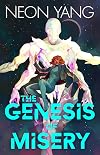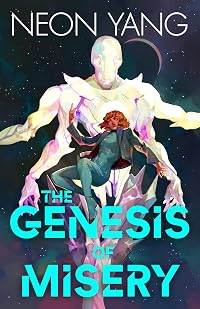
The Genesis of Misery
by Neon Yang
On This Page
Description
It's an old, familiar story: a young person hears the voice of an angel saying they have been chosen as a warrior to lead their people to victory in a holy war. But Misery Nomaki (she/they) knows they are a fraud. Raised on a remote moon colony, they don't believe in any kind of god. Their angel is a delusion, brought on by hereditary space exposure. Yet their survival banks on mastering the holy mech they are supposedly destined for, and convincing the Emperor of the Faithful that they are show more the real deal. The deeper they get into their charade, however, the more they start to doubt their convictions. What if this, all of it, is real?A reimagining of Joan of Arc's story given a space opera, giant robot twist, the Nullvoid Chronicles is a story about the nature of truth, the power of belief, and the interplay of both in the stories we tell ourselves. show lessTags
Recommendations






Member Reviews
After dealing with a novel that started out strongly, then went down hill rapidly, it was a pleasure to read a book where the author has their act together across the board. Misery Nomaki, a street punk who wants to do some living before she loses her mind like her mother did, is only able to act on her drives once she begins a conversational relationship with a being she interprets as having the nature of an angel; it's from there that the fun begins. How much you're going to like this novel is going to depend on how you feel about how Yang puts distance between the reader and Misery, as our main character becomes the stuff of legend, and starts buying into the legend herself. I personally am looking forward to the rest of the trilogy, show more as if it's anything like Yang's "Tensorate" novellas, she's in no hurry to give up her secrets. show less
This is an intriguing giant robot tale with good flow and engaging characters with a bit of multi-gendered spice. Misery is the turbulent "girl with something extra", well except for being a nixen who uses pronouns she/they, of ambiguous religious faith do to harsh treatment by her guardian brother, who was starting a clerical career while dealing with her intransigence and hiding her proscribed abilities. But when she is brought to court and later prison after both her delusion and the church call her the 9th Messiah destined to end the war with the Heretics, her belief in her own cause takes over. Neon Yang uses framing and the language of skepticism in telling a tale of person moved by faith and enabled by politics so that the reader show more is never the believer the MC and their associates are. show less
this is an important newish writer in this field, and it's a fine first novel, after some brilliant novellas. it's a study of young Misery as Joan of Arc in a far-future space opera, fighting an intensive religious war with glorious and misguided conviction. brilliantly written, but it's difficult at times to keep that conviction on track when Misery's singularly ecstatic point of view as Chosen conflicts too much with her assessment of the real situation on the ground. a wonderfully detailed world though, well worth every glimpse we get of it. and the story itself has a lot to say.
Oh boy. This is a mess. I want to be kinder, but I disliked so much about this one. It managed to be both pretentious and ridiculously informal/fanfic-y in the worst way at the same time ("yeet"? Please, please do not use "yeet" in your actual prose).
Misery Nomaki (she/they) has the stone-working powers that killed her mother and drove her mad, but it also makes her a saint. A vision of an angel visits Misery and leads her to the Empire, where two powerful factions want to use her powers to win a war. As Misery grows closer one of the side's royals, the angel begins to convince her of her divinity and the madness grows.
Right away, I clashed with the writing style. Introducing the character's pronouns in parentheses, in the actual text, show more ended up being really distracting. Why couldn't Yang work the pronoun introduction into dialogue/text? If there was some other reason, as in, it was because the strange "other figure" (I don't want to spoil anything) from the prologue is the one telling this story, and giving pronouns would fit its dialog style (however, it doesn't match Misery's).
There were also minor things that became pretty massive annoyances as time went on, like how this religion is really kind of a stand-in for Christianity (specifically Catholicism). This kind of world building where things are blatant but just not named (or is just named something else, but it's exactly the same) is beginning to grate on my nerves.
ALSO: stop calling Ruin (Misery's angel) a delusion! He is a hallucination! How did no one on the editing team correct this? It seems like a small thing, but it's really not, considering so much about psychosis is misrepresented and misunderstood. And there were so many expressions like, "smiles like a psychopath." Honestly, I don't care if it's the most gender diverse book in the world—if it's ableist as hell, why would I want to read it??
The editing was also poor throughout. Misery would suddenly want to avoid someone who was her sponsor and the only safe person she had in a new, unfamiliar place (it didn't make sense), there would be paragraphs of summary about things that happened chapters earlier, that were actual scenes. Why weren't those shown to us … in those actual scenes? It's like the author chose not to backtrack, and the editor just shrugged it off. Everything is overwritten and could easily be trimmed. Part of it reads like someone's online blog—which is probably what appeals to a certain demographic.
Misery also bothered me, she tried to be the most special main character there ever was: "not ideal, but nothing in her life ever is;" "most people would be scared of [x], not Misery." WE GET IT, SHE'S SUPER SPECIAL. She's also good at everything, of course, as well, and has a magical amulet that she's annoyingly ignorant about. Nearly every other page we're beaten over the head about this amulet that obviously is magical and important and she just oh-so-conveniently doesn't see it. It's like 1/3 of the way through, the plot is just bombarded with YA tropes that only serve to overcomplicate an already overwritten plot.
Sure, space mechs are cool, holy stones are cool, all of these things are pretty darn interesting, but when you put them altogether… Do they really make sense as a story? All of these parts are so disparate, there from completely different plots, or even worlds.
"I fucked up," Misery says, wondering why Ruin's absence feels punitive—right after she's murdered hundreds of people and wanted to murder even more. LMAO. "Hindsight is laser-guided, and perfectly useless, but she sees clearly now that causing mass murder and mayhem was a mistake." Until that moment, she had a strong moral compass—but then suddenly it's mass murder and she doesn't understand why it's bad—and the next chapter she believes herself to be holy after being a firm nonbeliever.
I'll be honest, I originally DNF'd this book at page 37 (of 417, lol) because the writing is so insufferable to me, personally. ("The unbreakable cord razors against her neck, cutting off bloodflow. Bitch, how dare?"; "The pews here, otoh, are stacked with row after row of shiny…"; "There is no joy in this. Only bad vibes."; "If she wasn't born circling void madness, this would surely yeet her into its orbit.")
HOWEVER, I do like Ruin, Misery's "angel." And I also really love the interludes delving into the historical lore behind ALISS, the factions that eventually split to become the Faithful (basically, Catholics) and the Heretics (those who believe in science).
I also started to lose interest once the book found its footing in military sci-fi. Obey or die, belittling others, loss of self, the same stuff that goes on in the military in real life. It's not fun or interesting to read (for me). Plus, the book made it sound like training went on for months and months — it was only weeks?? You barely learn to master an oven or fryer in that amount of time, let alone an angel mech!
I wish I was more intelligent, so I could critique this in a real, meaningful way, but this is what I've got. If Misery's story was supposed to be about religious fanaticism and how it can warp and change people beyond recognition, I didn't see it. Her transition to this genocidal Holy figure was so fast, we readers didn't even get to experience it.
Other reviewers have nailed the problems I also have with Misery and gender expression/euphoria, especially on storygraph. (I'd quote them, but I seem to have lost the links.)
The whole thing attempts way too much, the editing is too lax and sloppy. There are a lot of wildly ambitious ideas, and despite myself the ending did intrigue me with how it might lead into a second book, but I think the author just struggled with everything that they wanted to include. Their unlikable character/protagonist was unfortunately uninteresting, as well as the narration, and even if I'm curious I don't think I could handle another book. show less
Misery Nomaki (she/they) has the stone-working powers that killed her mother and drove her mad, but it also makes her a saint. A vision of an angel visits Misery and leads her to the Empire, where two powerful factions want to use her powers to win a war. As Misery grows closer one of the side's royals, the angel begins to convince her of her divinity and the madness grows.
Right away, I clashed with the writing style. Introducing the character's pronouns in parentheses, in the actual text, show more ended up being really distracting. Why couldn't Yang work the pronoun introduction into dialogue/text? If there was some other reason, as in, it was because the strange "other figure" (I don't want to spoil anything) from the prologue is the one telling this story, and giving pronouns would fit its dialog style (however, it doesn't match Misery's).
There were also minor things that became pretty massive annoyances as time went on, like how this religion is really kind of a stand-in for Christianity (specifically Catholicism). This kind of world building where things are blatant but just not named (or is just named something else, but it's exactly the same) is beginning to grate on my nerves.
ALSO: stop calling Ruin (Misery's angel) a delusion! He is a hallucination! How did no one on the editing team correct this? It seems like a small thing, but it's really not, considering so much about psychosis is misrepresented and misunderstood. And there were so many expressions like, "smiles like a psychopath." Honestly, I don't care if it's the most gender diverse book in the world—if it's ableist as hell, why would I want to read it??
The editing was also poor throughout. Misery would suddenly want to avoid someone who was her sponsor and the only safe person she had in a new, unfamiliar place (it didn't make sense), there would be paragraphs of summary about things that happened chapters earlier, that were actual scenes. Why weren't those shown to us … in those actual scenes? It's like the author chose not to backtrack, and the editor just shrugged it off. Everything is overwritten and could easily be trimmed. Part of it reads like someone's online blog—which is probably what appeals to a certain demographic.
Misery also bothered me, she tried to be the most special main character there ever was: "not ideal, but nothing in her life ever is;" "most people would be scared of [x], not Misery." WE GET IT, SHE'S SUPER SPECIAL. She's also good at everything, of course, as well, and has a magical amulet that she's annoyingly ignorant about. Nearly every other page we're beaten over the head about this amulet that obviously is magical and important and she just oh-so-conveniently doesn't see it. It's like 1/3 of the way through, the plot is just bombarded with YA tropes that only serve to overcomplicate an already overwritten plot.
Sure, space mechs are cool, holy stones are cool, all of these things are pretty darn interesting, but when you put them altogether… Do they really make sense as a story? All of these parts are so disparate, there from completely different plots, or even worlds.
"I fucked up," Misery says, wondering why Ruin's absence feels punitive—right after she's murdered hundreds of people and wanted to murder even more. LMAO. "Hindsight is laser-guided, and perfectly useless, but she sees clearly now that causing mass murder and mayhem was a mistake." Until that moment, she had a strong moral compass—but then suddenly it's mass murder and she doesn't understand why it's bad—and the next chapter she believes herself to be holy after being a firm nonbeliever.
I'll be honest, I originally DNF'd this book at page 37 (of 417, lol) because the writing is so insufferable to me, personally. ("The unbreakable cord razors against her neck, cutting off bloodflow. Bitch, how dare?"; "The pews here, otoh, are stacked with row after row of shiny…"; "There is no joy in this. Only bad vibes."; "If she wasn't born circling void madness, this would surely yeet her into its orbit.")
HOWEVER, I do like Ruin, Misery's "angel." And I also really love the interludes delving into the historical lore behind ALISS, the factions that eventually split to become the Faithful (basically, Catholics) and the Heretics (those who believe in science).
I also started to lose interest once the book found its footing in military sci-fi. Obey or die, belittling others, loss of self, the same stuff that goes on in the military in real life. It's not fun or interesting to read (for me). Plus, the book made it sound like training went on for months and months — it was only weeks?? You barely learn to master an oven or fryer in that amount of time, let alone an angel mech!
I wish I was more intelligent, so I could critique this in a real, meaningful way, but this is what I've got. If Misery's story was supposed to be about religious fanaticism and how it can warp and change people beyond recognition, I didn't see it. Her transition to this genocidal Holy figure was so fast, we readers didn't even get to experience it.
Other reviewers have nailed the problems I also have with Misery and gender expression/euphoria, especially on storygraph. (I'd quote them, but I seem to have lost the links.)
The whole thing attempts way too much, the editing is too lax and sloppy. There are a lot of wildly ambitious ideas, and despite myself the ending did intrigue me with how it might lead into a second book, but I think the author just struggled with everything that they wanted to include. Their unlikable character/protagonist was unfortunately uninteresting, as well as the narration, and even if I'm curious I don't think I could handle another book. show less
One might say this book is "Joan of Arc's story in space & with mechs," but with the interesting concepts & characters, it becomes so much more. I generally found the writing style engaging, though the occasional use of modern slang was weird. Characters had strong personalities - some went through a sudden, major change partway through the book. It made sense in the story, though I feel it made them less distinct. The main character was unlikeable, which I think worked well for the story, but I'd understand others not being able to tolerate that. This book ends with a lot of loose ends, & I'm looking forward to when the next in the series is released.
Thank you to NetGalley and Tor Books for the ARC in exchange for my honest review.
This one is hard for me to rate/review. There were a lot of concepts I really liked about the book and I was really compelled by the idea. It started a little slow and some of that was just getting used to the universe and terms. The middle really picked up and I was super invested and then I felt like it slowed down again. Some of the parts seemed really disparate and felt like they had different tones which led to the book not feeling like it flowed well for me. One of the big things for me was after the big event in the middle of the book (which was the part I loved and got really invested in) the characters really seemed to change. And I get that they show more went through something life/self altering but I felt like the princess became an entirely different person and didn't retain much of her old personality. I would have loved more detail and background on the world too (but maybe this is my fault for simultaneously listening to another space opera that was twice the length of this). show less
This one is hard for me to rate/review. There were a lot of concepts I really liked about the book and I was really compelled by the idea. It started a little slow and some of that was just getting used to the universe and terms. The middle really picked up and I was super invested and then I felt like it slowed down again. Some of the parts seemed really disparate and felt like they had different tones which led to the book not feeling like it flowed well for me. One of the big things for me was after the big event in the middle of the book (which was the part I loved and got really invested in) the characters really seemed to change. And I get that they show more went through something life/self altering but I felt like the princess became an entirely different person and didn't retain much of her old personality. I would have loved more detail and background on the world too (but maybe this is my fault for simultaneously listening to another space opera that was twice the length of this). show less
What an amazing ride this book was! Action packed and never slowed down. I loved the religious aspects of the story and the way different types of stone did different types of powers. The world building was phenomenal. I really would love to see another story in this world because the characters were very interesting and I just wanted to know more about them. Update, how did I not know this was going to be a trilogy?! I'm freaking stoked!
Members
- Recently Added By
Lists

LGBTQ+ Speculative Fiction
821 works; 51 members

Books Mentioned in the A+ Autostraddle Pop Up Discords Nov 2022 & Dec 2022
223 works; 3 members

Fiction with Women's Names in the Title
378 works; 15 members

top 100
39 works; 1 member

List of Removed Books from Nimitz Library
353 works; 1 member

Books with Giant Robots
32 works; 2 members
Author Information

30+ Works 3,194 Members
Some Editions
Awards and Honors
Awards
Series
Belongs to Publisher Series
Common Knowledge
- Original publication date
- 2022
- Dedication
- FOR MY FELLOW EVA COPILOTS.
THE ROBOT AWAITS. - Publisher's editor
- Pillai, Devi
- Blurbers
- Wells, Martha; Newitz, Annalee; Elliott, Kate
- Original language
- English
Classifications
Statistics
- Members
- 388
- Popularity
- 80,579
- Reviews
- 12
- Rating
- (3.54)
- Languages
- English
- Media
- Paper, Audiobook, Ebook
- ISBNs
- 4
- ASINs
- 3