On This Page
Description
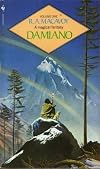
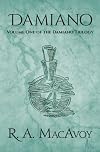
Set against the turbulent backdrop of the Italian Renaissance, this alternate history takes place in a world where real faith-based magic exists. Our hero is Damiano Dalstrego. He is a wizard's son, an alchemist, and the heir to dark magics. But he is also an innocent, a young scholar and musician befriended by the Archangel Raphael, who instructs him in the lute. To save his beloved city from war, Damiano leaves his cloistered life and sets out on a pilgrimage, seeking the aid of the show more powerful sorceress Saara as he walks the narrow path between light and shadow, accompanied only by his talking dog. But his road is filled with betrayal, disillusionment, and death, and Damiano is forced to confront his dark heritage, unleashing the hellish force of his awesome powers to protect those he loves. The further volumes of this tale are Damiano's Lute and Raphael. show lessTags
Recommendations

















Member Reviews
Absolutely lovely fantasy novel, set in Renaissance Italy, featuring an endearingly good-hearted, sweet-natured hero who is by heritage a witch and by preference an alchemst, plays the lute - literally taught by an angel - and cooks up medicine for townsfolk who don't all appreciate or even like him. It's not a nice world, however. The town is invaded by mercenaries and the townsfolk flee, leaving him behind. He sets out after them, accompanied only by his talking dog, and determines to keep them and the town safe from war and conflict, little realising what a daunting task he sets himself: selling his soul to the devil being only one of his varied efforts.
It all has the feel of some sly medieval tale, Dante by way of Eco, with an show more innocent everyman beset by worldly and otherworldly problems alike, with his willingness to make almost absurd personal and spiritual sacrifices for people who barely know him and generally don't appreciate him and a town that he only loves because it happens to be where he lives, propels him headlong to a kind of saintliness that would be ridiculous and even cruel if Damiano wasn't intelligent enough to be aware of it.
Damiano is fun, clever, touching and unusual, about the cost of being nice for the sake of it in a world with lots of bad in it. show less
It all has the feel of some sly medieval tale, Dante by way of Eco, with an show more innocent everyman beset by worldly and otherworldly problems alike, with his willingness to make almost absurd personal and spiritual sacrifices for people who barely know him and generally don't appreciate him and a town that he only loves because it happens to be where he lives, propels him headlong to a kind of saintliness that would be ridiculous and even cruel if Damiano wasn't intelligent enough to be aware of it.
Damiano is fun, clever, touching and unusual, about the cost of being nice for the sake of it in a world with lots of bad in it. show less
Another book I've had on my shelf for far too many years unread. I finally delved into it and couldn't put it down. The character of Damiano, his desire to save his town from history's forgetfulness, and the warmth of the character of Archangel Raphael are all well-woven and interesting characters. Plus, having a central character in the middle ages who is also near-sighted is an interesting way to show his all-too-humanness. The ending was surprising and got me to find the second two books in the trilogy, if only to find out how the battle with Lucifer turns out.
Damiano is an enchanting, charming novel that has a lot of the features I like in my fantasy novels. It's set in an alternate medieval Italy, one of my favorite settings, and the magic is wild and unexplained - something I really enjoy among the recent trend of explaining everything like it's a science textbook instead of a genre novel. There's also a talking dog, which is always fun. Damiano is the protagonist, and he's interesting, likeable, and goes through significant growth. There's not a ton of action, instead the plot is moved along by Damiano's introspection and internal struggle. Religion is a major theme of the book, and characters - especially Damiano - are simultaneous comforted and troubled by it. I'm not religious myself, show more but after reading Between Two Fires, To Reign In Hell, and God's Demon in the last couple years, I always like when books feature angels and demons. And while Raphael, the archangel who serves as Damiano's companion, doesn't feature on screen as often as I thought he would have, he plays a major role in Damiano's development and in the climax of the novel.
This is a classic fantasy novel. It's not grimdark, and there's not much violence, or even much action. It's written in a different style than most modern novels, less Joe Abercrombie and more Patricia McKillip. It's a quick, short read and I'm looking forward to reading the rest of the trilogy when I get around to it. show less
This is a classic fantasy novel. It's not grimdark, and there's not much violence, or even much action. It's written in a different style than most modern novels, less Joe Abercrombie and more Patricia McKillip. It's a quick, short read and I'm looking forward to reading the rest of the trilogy when I get around to it. show less
Damiano is volume one in a fantasy trilogy set in an alternative medieval/early Renaissance Italy where witches have real powers but are not persecuted by the church although people are wary of them. Damiano Delstrego, a naive young man in his early 20s, lives alone since his father, also a witch, died after a spell went wrong. Damiano is a musician and plays the lute, and an alchemist who makes medicines for the local community.
When the story opens, he is being given a lute lesson by his teacher, the archangel Rafael. He eventually realises that soldiers have arrived who serve a rival power - not the Savoy masters he is accustomed to - and that all the townsfolk, apart from the town drunk, have fled. After being questioned by the show more leader of the soldiers, he uses his powers to escape, meaning to warn his fellow townsfolk that they have been betrayed by the drunk and the soldiers know where they are hiding.
So begins Damiano's wanderings in which he is accompanied by his talking dog, Macchiata (Spot) and acquires a stubborn but brave horse, Festelligambe. He encounters robbers, and dead or dying villagers slaughtered by the soldiers his townsfolk are fleeing, and events alter his goals to involve an ill-advised deal with the devil and a search for Saara, a Finnish witch whom he recalls his father saying was the greatest witch in the Italies. In the course of this, he meets a streetwise boy called Gaspare who later becomes an important character. Throughout the story, Damiano wrestles with the issue of whether, as a witch, he is already damned, despite the fact that he attends Mass like any good son of the church.
The writing is vivid and beautifully done, and is probably the best feature of the book, as the subject matter is often quite depressing. Strangely enough, given that this was written years before another fantasy trilogy, Chaos Walking, something very similar befalls his dog companion, who is one of the best characters in the book. The fantasy setting is original and has great potential, but Damiano is rather an irritating character with his dreaminess and stubborness and prevarication. Therefore, the balance of pros and cons means a 3-star rating. show less
When the story opens, he is being given a lute lesson by his teacher, the archangel Rafael. He eventually realises that soldiers have arrived who serve a rival power - not the Savoy masters he is accustomed to - and that all the townsfolk, apart from the town drunk, have fled. After being questioned by the show more leader of the soldiers, he uses his powers to escape, meaning to warn his fellow townsfolk that they have been betrayed by the drunk and the soldiers know where they are hiding.
So begins Damiano's wanderings in which he is accompanied by his talking dog, Macchiata (Spot) and acquires a stubborn but brave horse, Festelligambe. He encounters robbers, and dead or dying villagers slaughtered by the soldiers his townsfolk are fleeing, and events alter his goals to involve an ill-advised deal with the devil and a search for Saara, a Finnish witch whom he recalls his father saying was the greatest witch in the Italies. In the course of this, he meets a streetwise boy called Gaspare who later becomes an important character. Throughout the story, Damiano wrestles with the issue of whether, as a witch, he is already damned, despite the fact that he attends Mass like any good son of the church.
The writing is vivid and beautifully done, and is probably the best feature of the book, as the subject matter is often quite depressing. Strangely enough, given that this was written years before another fantasy trilogy, Chaos Walking, something very similar befalls his dog companion, who is one of the best characters in the book. The fantasy setting is original and has great potential, but Damiano is rather an irritating character with his dreaminess and stubborness and prevarication. Therefore, the balance of pros and cons means a 3-star rating. show less
It had been years since I read the book, but I remembered they lyrical language. When it became affordable on Kindle, I got it. I finally sat down to re-read it, holding my breath, hoping it was as good as I remembered. I was not disappointed.
The writing is at least as good as I remembered. Now that I am older and have my own little dog, I find the Damiano and his little dog to be even more fascinating. I cried for Damiano as he encountered evil and rejoiced at the simple faith his dog had in him. I found Raphael to be a complexly drawn being. I stopped several times to think about what was written. My favorite quotations are below.
Besides, Damiano, the important questions involve not the intent of God toward us but the soul’s own show more duty, and you know that clearly, don’t you?
We live our lives bound by our little tasks and possessions and never know how free we could be unless God sees fit to pry us away from them.
To be damned is only not to love.
If you enjoy an alternate history fantasy that includes a heavy dose of Christian background (appropriate for Renaissance Italy), then I think you would enjoy it. Be aware that the Christianity presented is from an alternate history and may not align always with your beliefs. Still the story is quite good and I enjoy philosophical fiction. show less
The writing is at least as good as I remembered. Now that I am older and have my own little dog, I find the Damiano and his little dog to be even more fascinating. I cried for Damiano as he encountered evil and rejoiced at the simple faith his dog had in him. I found Raphael to be a complexly drawn being. I stopped several times to think about what was written. My favorite quotations are below.
Besides, Damiano, the important questions involve not the intent of God toward us but the soul’s own show more duty, and you know that clearly, don’t you?
We live our lives bound by our little tasks and possessions and never know how free we could be unless God sees fit to pry us away from them.
To be damned is only not to love.
If you enjoy an alternate history fantasy that includes a heavy dose of Christian background (appropriate for Renaissance Italy), then I think you would enjoy it. Be aware that the Christianity presented is from an alternate history and may not align always with your beliefs. Still the story is quite good and I enjoy philosophical fiction. show less
Solid historical fantasy, set in 15th century Italy, where the black death is sweeping Europe, and people with money and military power are taking advantage and taking cities. That's the plot, a general is in Damiano's city, trying to take it. Damiano tries to convince the general to work for the city, but he refuses, and our main hero goes on a quest to search for peace and save it. It's darker that I expected, and it rises difficult question of duty, responsability, honor and sacrifice. The writing is also way better than anticipated, just because nobody talks about this book, or author, which is a shame. Because of the simple plot, and very few characters it feels as sword and sorcery, but because of the understated but sprawling show more world building and, as the kids say, soft magic system it's almost high fantasy. It's something in between, whatever it's called. Great stuff. show less
3.5 stars http://www.fantasyliterature.com/reviews/damiano/
Young Damiano Delstrego is now the head of his house after his father, a witch, was killed when a spell went horribly wrong. Damiano is also a musician, an alchemist, and a witch, but heƒ??s a good Christian, too, and he tries to use his powers only for good. ThatÂ??s why he refused to help the army who came to take over his town, though they offered him riches. Instead, Damiano decides to follow the townsfolk whoÂ??ve fled for the hills. He wants to warn them that the army plans to find and plunder them. HeÂ??s particularly worried about Carla, the girl he has a crush on. He also wants to seek the aid of a powerful sorceress.
So, with an Italian medieval village behind show more him and the towering Alps ahead, Damiano sets off in the snow with his lute and his beloved talking dog, Macchiata. Along the way, Damiano has a few mishaps, witnesses brutal deeds done by Roman soldiers, gets some inspiration from the archangel Rafael, finds out some uncomfortable facts about his father, and is offered a deal by the devil. He also learns that thereÂ??s more to life than his dog, his lute, and Carla.
Damiano is the first volume of R.A. MacAvoyÂ??s DAMIANO trilogy, a historical fantasy set in Renaissance Italy. MacAvoyÂ??s prose is lovely and she makes the most of her setting, with allusions to real historical people, events, religious beliefs, literature, and art. The story takes place in winter and all the brutal events that Damiano witnesses seem especially vile when set against the whiteness of the winter alpine landscape.
I didnÂ??t love the plot as much as I loved the writing and the setting, but this is more of a personal preference rather than any problem with the plot itself. Though it depicts some ugly events, Damiano, his talking dog, and the beautiful angel were a little too sweetly innocent for me. The main focus is DamianoÂ??s struggle with his desire to use his powers for good and his discovery that sometimes itÂ??s hard to know whatÂ??s right and wrong. HeÂ??s also worried about his soul because Satan has informed him that, since heÂ??s a witch, heÂ??s automatically damned. I didnÂ??t find this to be riveting subject matter, but I thought the excellent writing made up for it.
Though the DAMIANO books were marketed to adults, I think this coming of age story will be appealing to teenagers, and itÂ??s certainly written more beautifully than most YA fantasy is. ItÂ??s so lovely, in fact, that I plan to try the second book, DamianoÂ??s Lute. This story has plenty of potential. IÂ??m listening to Audible FrontiersÂ?? version and am very pleased with Nicholas TecoskyÂ??s narration. show less
Young Damiano Delstrego is now the head of his house after his father, a witch, was killed when a spell went horribly wrong. Damiano is also a musician, an alchemist, and a witch, but heƒ??s a good Christian, too, and he tries to use his powers only for good. ThatÂ??s why he refused to help the army who came to take over his town, though they offered him riches. Instead, Damiano decides to follow the townsfolk whoÂ??ve fled for the hills. He wants to warn them that the army plans to find and plunder them. HeÂ??s particularly worried about Carla, the girl he has a crush on. He also wants to seek the aid of a powerful sorceress.
So, with an Italian medieval village behind show more him and the towering Alps ahead, Damiano sets off in the snow with his lute and his beloved talking dog, Macchiata. Along the way, Damiano has a few mishaps, witnesses brutal deeds done by Roman soldiers, gets some inspiration from the archangel Rafael, finds out some uncomfortable facts about his father, and is offered a deal by the devil. He also learns that thereÂ??s more to life than his dog, his lute, and Carla.
Damiano is the first volume of R.A. MacAvoyÂ??s DAMIANO trilogy, a historical fantasy set in Renaissance Italy. MacAvoyÂ??s prose is lovely and she makes the most of her setting, with allusions to real historical people, events, religious beliefs, literature, and art. The story takes place in winter and all the brutal events that Damiano witnesses seem especially vile when set against the whiteness of the winter alpine landscape.
I didnÂ??t love the plot as much as I loved the writing and the setting, but this is more of a personal preference rather than any problem with the plot itself. Though it depicts some ugly events, Damiano, his talking dog, and the beautiful angel were a little too sweetly innocent for me. The main focus is DamianoÂ??s struggle with his desire to use his powers for good and his discovery that sometimes itÂ??s hard to know whatÂ??s right and wrong. HeÂ??s also worried about his soul because Satan has informed him that, since heÂ??s a witch, heÂ??s automatically damned. I didnÂ??t find this to be riveting subject matter, but I thought the excellent writing made up for it.
Though the DAMIANO books were marketed to adults, I think this coming of age story will be appealing to teenagers, and itÂ??s certainly written more beautifully than most YA fantasy is. ItÂ??s so lovely, in fact, that I plan to try the second book, DamianoÂ??s Lute. This story has plenty of potential. IÂ??m listening to Audible FrontiersÂ?? version and am very pleased with Nicholas TecoskyÂ??s narration. show less
Members
- Recently Added By
Lists

music to my eyes
86 works; 12 members

BingoDOG - Animals in Adult Fiction
78 works; 20 members

Forced Exposure
83 works; 1 member
Author Information

19+ Works 7,082 Members
Some Editions
Awards and Honors
Awards
Series

Belongs to Publisher Series
Goldmann Fantasy (23866)
Work Relationships
Is contained in
Common Knowledge
- Canonical title
- Damiano
- Original title
- Damiano
- Original publication date
- 1984-01
- People/Characters
- Paul Breton; Damiano Delstrego; Carla Denezzi; Paolo Denezzi; Till Eulenspiegel; Macchiata (Spot) (show all 9); General Pardo; Pierre Paris; Raphael, the Angel (Archangel)
- Important places
- Partestrada, Italy
- Epigraph
- What thou lovest well remains, the rest is dross
What thou lovest well shall not be reft from thee
What thou lovest well is thy true heritage
Ezra Pound, The Pisan Cantos LXXXI - Dedication
- This novel is dedicated to Pierre Bensusan, the musician, whose face on an album cover inspired the character of Damiano and whose music could inspire Raphael himself.
- Quotations
- Besides, Damiano, the important questions involve not the intent of God toward us but the soul’s own duty, and you know that clearly, don’t you?
We live our lives bound by our little tasks and possessions and never know how free we could be unless God sees fit to pry us away from them.
To be damned is only not to love. - Original language*
- Englisch
*Some information comes from Common Knowledge in other languages. Click "Edit" for more information.
Classifications
Statistics
- Members
- 698
- Popularity
- 40,836
- Reviews
- 11
- Rating
- (3.71)
- Languages
- English, German
- Media
- Paper, Audiobook, Ebook
- ISBNs
- 9
- ASINs
- 7