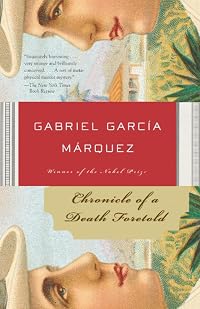
Chronicle of a Death Foretold
by Gabriel Garcia Marquez
On This Page
Description
A man returns to the town where a baffling murder took place twenty-seven years earlier, determined to get to the bottom of the story. Just hours after marrying the beautiful Angela Vicario, everyone agrees, Bayardo San Roman returned his bride in disgrace to her parents. Her distraught family forced her to name her first lover; and her twin brothers announced their intention to murder Santiago Nasar for dishonoring their sister.Yet if everyone knew the murder was going to happen, why did show more no one intervene to stop it? The more that is learned, the less is understood, and as the story races to its inexplicable conclusion, an entire society—not just a pair of murderers—is put on trial.
. show less
Tags
Recommendations

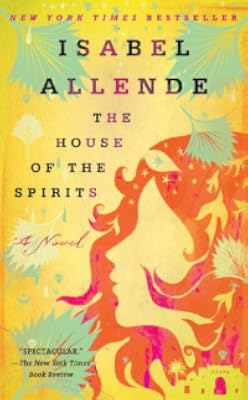
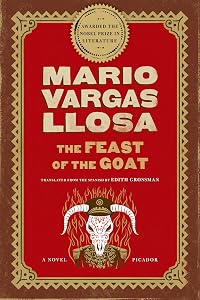
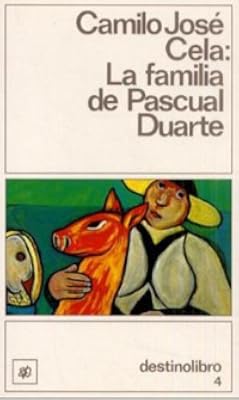
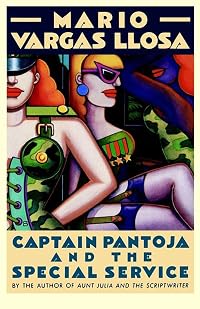













Member Recommendations
AaronPt Both are odd, short novels that mess around with the conventions of crime fiction.
Member Reviews
Fictionalized Honour Killing
Review of the Vintage paperback edition (2003) translated from the Spanish language original "Crónica de una muerte anunciada" (1981) by Gregory Rabassa.
I recently acquired a copy of the Estonian language translation edition Väljakuulutatud mõrva kroonika (1996/reprint 2021) of this book and not having read it previously I decided to read it in parallel with the English translation. This would assist me if I had any difficulties with reading in my Estonian heritage language.
Chronicle of a Death Foretold relates a fictionalized version of a story that Márquez was told of a 1951 murder in his hometown of Sucre, Colombia, where he lived for a period from when he was 10 years old in 1937. By the time of the show more murder he was no longer living there and had heard about it from his godbrother. The differences in the novella from the true-life story are described in a section of its English language Wikipedia entry.
In the book version, there is a major wedding in the town where almost the entire populace joins the celebration. However not too long into the wedding night, the groom returns the bride to her family saying that she was not a virgin and that he rebukes her as his wife. After being beaten by her mother, the bride provides the name of her lover, a town dandy named Santiago Nasar. The brides' two twin brothers vow to kill Nasar and spend the early morning hours preparing to do so and announcing their intent to everyone they meet. Despite attempts by a few to prevent the crime, most of the populace ignores the threat or does nothing to prevent it being carried out.
Márquez takes this basis and creates an elaborately winding story that constantly jumps from the day of the event into flashbacks and then flashforwards to 27 years later, when the 'author' is making an investigation of the events and interviewing the participants who are still living. Various mysteries are involved, the primary one being that perhaps Nasar wasn't even guilty but was instead a scapegoat for someone whose name the bride didn't want to reveal. Most of his actions seem to indicate his innocence, but there are hints that he wasn't exactly honourable (a household servant seeks to protect her young daughter from being in contact with him). The other mystery is what seems like a conspiracy on the part of most of the town to let the murder occur even though it seems the brothers are hoping to have it prevented by telling everyone they can.
These various moral quandaries and questions about revenge and family honour make this a harrowing and immersive but also an empathetic and pitiful reading experience. Estonian review to follow in several days.
Trivia and Link
The Spanish language Wikipedia entry for the book provides an extensive list of characters (turn web translator on). This is extremely helpful if you are trying to keep track of who is who since there are so many of them.
Mild spoiler discussing the final dialogue. The ending is foretold throughout the book, but I've blocked this just in case anyone wants to avoid reading these final sentences.
I thought the translation of the final dialogue was odd, as it is an older woman (named as the aunt of the author, Wenefrida Márquez) addressing Santiago Nasar and he answers by calling her 'child'. Checking the original Spanish, it seems to have been a compromise choice, rather than translating "niña" as 'girl'. The Estonian translation gives it as 'proua' i.e. 'madam', which makes more sense.
Review of the Vintage paperback edition (2003) translated from the Spanish language original "Crónica de una muerte anunciada" (1981) by Gregory Rabassa.
I recently acquired a copy of the Estonian language translation edition Väljakuulutatud mõrva kroonika (1996/reprint 2021) of this book and not having read it previously I decided to read it in parallel with the English translation. This would assist me if I had any difficulties with reading in my Estonian heritage language.
Chronicle of a Death Foretold relates a fictionalized version of a story that Márquez was told of a 1951 murder in his hometown of Sucre, Colombia, where he lived for a period from when he was 10 years old in 1937. By the time of the show more murder he was no longer living there and had heard about it from his godbrother. The differences in the novella from the true-life story are described in a section of its English language Wikipedia entry.
In the book version, there is a major wedding in the town where almost the entire populace joins the celebration. However not too long into the wedding night, the groom returns the bride to her family saying that she was not a virgin and that he rebukes her as his wife. After being beaten by her mother, the bride provides the name of her lover, a town dandy named Santiago Nasar. The brides' two twin brothers vow to kill Nasar and spend the early morning hours preparing to do so and announcing their intent to everyone they meet. Despite attempts by a few to prevent the crime, most of the populace ignores the threat or does nothing to prevent it being carried out.
Márquez takes this basis and creates an elaborately winding story that constantly jumps from the day of the event into flashbacks and then flashforwards to 27 years later, when the 'author' is making an investigation of the events and interviewing the participants who are still living. Various mysteries are involved, the primary one being that perhaps Nasar wasn't even guilty but was instead a scapegoat for someone whose name the bride didn't want to reveal. Most of his actions seem to indicate his innocence, but there are hints that he wasn't exactly honourable (a household servant seeks to protect her young daughter from being in contact with him). The other mystery is what seems like a conspiracy on the part of most of the town to let the murder occur even though it seems the brothers are hoping to have it prevented by telling everyone they can.
These various moral quandaries and questions about revenge and family honour make this a harrowing and immersive but also an empathetic and pitiful reading experience. Estonian review to follow in several days.
Trivia and Link
The Spanish language Wikipedia entry for the book provides an extensive list of characters (turn web translator on). This is extremely helpful if you are trying to keep track of who is who since there are so many of them.
Mild spoiler discussing the final dialogue. The ending is foretold throughout the book, but I've blocked this just in case anyone wants to avoid reading these final sentences.
I thought the translation of the final dialogue was odd, as it is an older woman (named as the aunt of the author, Wenefrida Márquez) addressing Santiago Nasar and he answers by calling her 'child'. Checking the original Spanish, it seems to have been a compromise choice, rather than translating "niña" as 'girl'. The Estonian translation gives it as 'proua' i.e. 'madam', which makes more sense.
-¡Santiago, hijo --le gritó-, qué te pasa!
Santiago Nasar la reconoció.
-Que me mataron, niña Wene -dijo.
"Santiago, my son," she shouted to him, "what has happened to you!"
[Santiago Nasar recognized her.]*
"They've killed me, Wene child," he said.
* this sentence is omitted in the English translation.
Very intriguing novella from Latin America's best writer. So many cultural themes of Columbia and Latin America, in general, are expressed by the characters. I found myself chuckling throughout the book since most everyone in the town knew of the impending murder but did nothing to stop it. Some dark humor, perhaps, but Garcia Marquez uses it to shed some light on cultural norms and expectations.
My first Márquez novel. And I shamelessly admit I finished it in one sitting.
Chronicle of a Death Foretold stays true to its title as it reeks of the mortality from start to finish. It is first and foremost a tragedy done in the name of a lady's "lost honour." We recognise how the concept of virginity not only harshly and brutally smears a woman's dignity and character but also its function in most patriarchally-established religions. How come we expect women to retain this so-called purity yet let men run sexually amok without a bat of an eyelash? But I digress.
Chronicle of a Death Foretold understandably never deals with this question due to the setting of its narrative. Though a central factor within its themes, it is a record of show more murder that neither solves nor investigates, and it grips you with the familial entanglements and unfortunate circumstances that contributed to the eventual demise of its (certainly innocent) victim. How a whole town drops their hands with disregard, closes their eyes in disbelief then strolls along the streets with their feckless bodies until they need to involve themselves to the tragic violence. They have no responsibility but they can share a story or two about the victim and moments before the murder happened. It's quite an expected, yet a repulsive (and honest) depiction of small-town horrors and superstitions. The outcome, therefore, is a contradiction of eye-witness accounts which muddles and perturbs the whole incident. And it further asks if the victim's social class and self-satisfied personality ever played for the (maybe) underlying hatred (of the town and perhaps, even the woman) that paid for her violation. Written in seizing fever of wrath and gory dread, Chronicle of a Death Foretold is short, shocking, and savage. show less
Chronicle of a Death Foretold stays true to its title as it reeks of the mortality from start to finish. It is first and foremost a tragedy done in the name of a lady's "lost honour." We recognise how the concept of virginity not only harshly and brutally smears a woman's dignity and character but also its function in most patriarchally-established religions. How come we expect women to retain this so-called purity yet let men run sexually amok without a bat of an eyelash? But I digress.
Chronicle of a Death Foretold understandably never deals with this question due to the setting of its narrative. Though a central factor within its themes, it is a record of show more murder that neither solves nor investigates, and it grips you with the familial entanglements and unfortunate circumstances that contributed to the eventual demise of its (certainly innocent) victim. How a whole town drops their hands with disregard, closes their eyes in disbelief then strolls along the streets with their feckless bodies until they need to involve themselves to the tragic violence. They have no responsibility but they can share a story or two about the victim and moments before the murder happened. It's quite an expected, yet a repulsive (and honest) depiction of small-town horrors and superstitions. The outcome, therefore, is a contradiction of eye-witness accounts which muddles and perturbs the whole incident. And it further asks if the victim's social class and self-satisfied personality ever played for the (maybe) underlying hatred (of the town and perhaps, even the woman) that paid for her violation. Written in seizing fever of wrath and gory dread, Chronicle of a Death Foretold is short, shocking, and savage. show less
This chilling novella does what it says on the cover: it gives us a blow-by-blow account of the brutal murder of one Santiago Nasar, a wealthy young man, son of an Arab businessman in a small, unnamed Caribbean town. This killing is not just "foretold" in the sense of being "predicted", but also in the sense that the murderers - the Vicario brothers - publicly announce that they intend to kill Nasar in revenge for his taking their sister's virginity. Indeed, they seem to hope that somebody will stop them. Shockingly, no one does.
The narrative approach reminded me of a very different book - [b:The Virgin Suicides|10956|The Virgin Suicides|Jeffrey Eugenides|https://d.gr-assets.com/books/1319032910s/10956.jpg|812415] . As in Eugenides's show more (later) novel, the narrator, a friend of both the murderers and their victim, returns to his hometown more than two decades after the event, and tries to piece together an objective report about a tragic occurrence which left a mark on the whole town. What concerns Gabriel Garcia Marquez in this novel, however, is the notion of communal responsibility. Can a whole town be guilty of complicity in a murder perpetrated by identifiable individuals? How can it be that the civil and religious authorities fail to stop a pre-announced crime? Is there such a thing as an "honour killing"? Are we ruled by fate, or is destiny another excuse we rely on to justify our faults and failures?
These weighty philosophical considerations are addressed in a slim book which reads increasingly like a parable. It is a work which delights at every turn, in which comedy sits alongside tragedy, in which passages of biblical simplicity suddenly flower into lyrical metaphors. This is an unputdownable thriller which reads like a prose poem.
In an age where we tend to hail any well-written novel as the latest masterpiece, it is salutary to read a work by a real master at the height of his powers. show less
The narrative approach reminded me of a very different book - [b:The Virgin Suicides|10956|The Virgin Suicides|Jeffrey Eugenides|https://d.gr-assets.com/books/1319032910s/10956.jpg|812415] . As in Eugenides's show more (later) novel, the narrator, a friend of both the murderers and their victim, returns to his hometown more than two decades after the event, and tries to piece together an objective report about a tragic occurrence which left a mark on the whole town. What concerns Gabriel Garcia Marquez in this novel, however, is the notion of communal responsibility. Can a whole town be guilty of complicity in a murder perpetrated by identifiable individuals? How can it be that the civil and religious authorities fail to stop a pre-announced crime? Is there such a thing as an "honour killing"? Are we ruled by fate, or is destiny another excuse we rely on to justify our faults and failures?
These weighty philosophical considerations are addressed in a slim book which reads increasingly like a parable. It is a work which delights at every turn, in which comedy sits alongside tragedy, in which passages of biblical simplicity suddenly flower into lyrical metaphors. This is an unputdownable thriller which reads like a prose poem.
In an age where we tend to hail any well-written novel as the latest masterpiece, it is salutary to read a work by a real master at the height of his powers. show less
Whenever there is an unidentified narrator I always think of the Great and Terrible Oz, hiding behind his curtain. In Chronicle of a Death Foretold our narrator is not a Baum-inspired little man, but rather an unnamed friend of the murder victim, years after the fact recounting the downfall of Santiago Nasar. As the title of the novella indicates, everyone knew Santiago Nasar's life was in danger, but no one did anything about it. "There had never been a death more foretold" (p 50). As an aside, this could be a commentary on our society today. Everyone feels outrage - yet no one is stepping up to do something (anything!) about it. Distraction dictates the assumption someone else will take care of it. Or they are hoping so.
On the eve of show more Angela Vicaro's wedding her new husband discovers she did not come to their marriage bed a virgin. Oh the shame! Outraged and humiliated, he drags her back to her mother who beats her severely until she confesses. When Santiago Nasar is named responsible for Angela's deflowering, her twin brothers speak of revenge. They speak long and loud before they actually seek it. Woven throughout the entire story is the theme of foreshadowing. Even Santiago missed the signs of his own demise illustrated by his ominous dreams. He even misses the note slipped under his door. Then there is the obvious. The twins brag openly about how they are going to kill Santiago. A shopkeeper tells the murderers to wait until later out of respect for the bishop. The drunkards talk of the upcoming murder. Police officers ignore everyone. The church ignores, too. The entire community ignores the talk. Was it the distraction of the arrival of a bishop? Was it communal judgment that Santiago was getting what he deserved? show less
On the eve of show more Angela Vicaro's wedding her new husband discovers she did not come to their marriage bed a virgin. Oh the shame! Outraged and humiliated, he drags her back to her mother who beats her severely until she confesses. When Santiago Nasar is named responsible for Angela's deflowering, her twin brothers speak of revenge. They speak long and loud before they actually seek it. Woven throughout the entire story is the theme of foreshadowing. Even Santiago missed the signs of his own demise illustrated by his ominous dreams. He even misses the note slipped under his door. Then there is the obvious. The twins brag openly about how they are going to kill Santiago. A shopkeeper tells the murderers to wait until later out of respect for the bishop. The drunkards talk of the upcoming murder. Police officers ignore everyone. The church ignores, too. The entire community ignores the talk. Was it the distraction of the arrival of a bishop? Was it communal judgment that Santiago was getting what he deserved? show less
All the masterful storytelling of Marquez in a short form. We see into the lives and morals of a Columbian village that is torn apart by a murder that everyone knew will happen but failed to prevent. Some think the threat is not real, some approve the honor killing, and those trying to do something are stopped by trivial accidents. The story unfolds in memories, re-tellings, jumping back and forth in time, and we feel drawn into the time and place, and a certain code of honor and morality.
This chilling novella does what it says on the cover: it gives us a blow-by-blow account of the brutal murder of one Santiago Nasar, a wealthy young man, son of an Arab businessman in a small, unnamed Caribbean town. This killing is not just "foretold" in the sense of being "predicted", but also in the sense that the murderers - the Vicario brothers - publicly announce that they intend to kill Nasar in revenge for his taking their sister's virginity. Indeed, they seem to hope that somebody will stop them. Shockingly, no one does.
The narrative approach reminded me of a very different book - [b:The Virgin Suicides|10956|The Virgin Suicides|Jeffrey Eugenides|https://d.gr-assets.com/books/1319032910s/10956.jpg|812415] . As in Eugenides's show more (later) novel, the narrator, a friend of both the murderers and their victim, returns to his hometown more than two decades after the event, and tries to piece together an objective report about a tragic occurrence which left a mark on the whole town. What concerns Gabriel Garcia Marquez in this novel, however, is the notion of communal responsibility. Can a whole town be guilty of complicity in a murder perpetrated by identifiable individuals? How can it be that the civil and religious authorities fail to stop a pre-announced crime? Is there such a thing as an "honour killing"? Are we ruled by fate, or is destiny another excuse we rely on to justify our faults and failures?
These weighty philosophical considerations are addressed in a slim book which reads increasingly like a parable. It is a work which delights at every turn, in which comedy sits alongside tragedy, in which passages of biblical simplicity suddenly flower into lyrical metaphors. This is an unputdownable thriller which reads like a prose poem.
In an age where we tend to hail any well-written novel as the latest masterpiece, it is salutary to read a work by a real master at the height of his powers. show less
The narrative approach reminded me of a very different book - [b:The Virgin Suicides|10956|The Virgin Suicides|Jeffrey Eugenides|https://d.gr-assets.com/books/1319032910s/10956.jpg|812415] . As in Eugenides's show more (later) novel, the narrator, a friend of both the murderers and their victim, returns to his hometown more than two decades after the event, and tries to piece together an objective report about a tragic occurrence which left a mark on the whole town. What concerns Gabriel Garcia Marquez in this novel, however, is the notion of communal responsibility. Can a whole town be guilty of complicity in a murder perpetrated by identifiable individuals? How can it be that the civil and religious authorities fail to stop a pre-announced crime? Is there such a thing as an "honour killing"? Are we ruled by fate, or is destiny another excuse we rely on to justify our faults and failures?
These weighty philosophical considerations are addressed in a slim book which reads increasingly like a parable. It is a work which delights at every turn, in which comedy sits alongside tragedy, in which passages of biblical simplicity suddenly flower into lyrical metaphors. This is an unputdownable thriller which reads like a prose poem.
In an age where we tend to hail any well-written novel as the latest masterpiece, it is salutary to read a work by a real master at the height of his powers. show less
Members
- Recently Added By
Published Reviews
ThingScore 100
In short, one expects from ''Chronicle of a Death Foretold'' another powerful dose of the fabulous and surreal. But behold! While in no way resembling conventional social realism, ''Chronicle'' is not nearly so fantastic as Garcia Marquez's earlier novels. It contains a powerfully plausible plot - a dream-like detective story, really, that pursues the questions of why and how two young men show more have undertaken a brutal murder that they actually had not wanted to commit. show less
added by jlelliott
Lists

Magic Realism
371 works; 52 members

1001 Books You Must Read Before You Die
1,448 works; 1,134 members

Best of World Literature
435 works; 52 members

Recommend the 20 best books you've read in the last five years
2,168 works; 601 members

1980s
356 works; 23 members
Las 100 Mejores Novelas en Castellano del Siglo XX
105 works; 13 members

magic realism novels
44 works; 11 members

Latin American Literature
50 works; 11 members

Short and Sweet
246 works; 24 members

Latin America
45 works; 6 members

Books with Twins
175 works; 12 members

Authors from Colombia
5 works; 1 member

Spanish Language in English Translation
19 works; 2 members

Books Read in 2017
4,249 works; 130 members

Blue Pyramid 1,276 Best Books of All Time
1,248 works; 32 members
Las 100 mejores novelas de la literatura hispanoamericana
96 works; 1 member

Read
293 works; 4 members

Florida
366 works; 3 members

To get
3 works; 1 member
Las 100 mejores novelas de la literatura hispanoamericana (cicutadry)
100 works; 1 member

Widely acclaimed, one book per year
105 works; 3 members

School Made Us Read It
380 works; 196 members

Tagged by Tim or Meh!
91 works; 9 members

Unread books
1,063 works; 87 members
Author Information

401+ Works 147,443 Members
Gabriel García Márquez was born in Aracataca, Colombia on March 6, 1927. After studying law and journalism at the National University of Colombia in Bogota, he became a journalist. In 1965, he left journalism, to devote himself to writing. His works included Leaf Storm, No One Writes to the Colonel, The Evil Hour, One Hundred Years of Solitude, show more Love in the Time of Cholera, The Autumn of the Patriarch, Chronicle of a Death Foretold, The General in His Labyrinth, Clandestine in Chile, and the memoir Living to Tell the Tale. He won the Nobel Prize for Literature in 1982. He died on April 17, 2014 at the age of 87. (Bowker Author Biography) show less
Some Editions
Awards and Honors
Awards
Distinctions
Notable Lists
Series
Belongs to Publisher Series
Work Relationships
Is contained in
Collected Novellas (Leaf Storm, No One Writes to the Colonel, Chronicle of a Death Foretold) by Gabriel García Márquez
One Hundred Years of Solitude | Love in the Time of Cholera | Chronicle of a Death Foretold by Gabriel Garcia Marquez
Gabriel Garcia Marquez Collection: Love in the Time of Cholera, One Hundred Years of Solitude, Chronicle of a Death Foretold, of Love and Other Demons, the Story of a Shipwrecked Sai by Gabriel García Márquez
Big Mama’s Funeral | Innocent Erendira and Other Stories | Eyes of a Blue Dog | The Autumn of the Patriarch | Chronicle of a Death Foretold by Gabriel Garcia Marquez
Has as a reference guide/companion
Has as a study
Common Knowledge
- Canonical title
- Chronicle of a Death Foretold
- Original title
- Crónica de una muerte anunciada
- Alternate titles*
- Yokokusareta satsujin no kiroku
- Original publication date
- 1981
- People/Characters
- Angela Vicario; Bayardo San Roman; Santiago Nasar
- Important places
- Colombia
- Related movies*
- Cronaca di una morte annunciata (1987 | IMDb)
- Epigraph
- the hunt for love
is haughty falconry
Gil Vicente
the pursuit of love
is like falconry
(first American edition) - First words
- On the day they were going to kill him, Santiago Nasar got up at five-thirty in the morning to wait for the boat the bishop was coming on.
- Last words
- (Click to show. Warning: May contain spoilers.)Then he went into his house through the back door that had been open since six and fell on his face in the kitchen.
- Blurbers
- Fowles, John; Frostrup, Mariella
- Original language
- Spanish
*Some information comes from Common Knowledge in other languages. Click "Edit" for more information.
Classifications
Statistics
- Members
- 11,060
- Popularity
- 838
- Reviews
- 198
- Rating
- (3.91)
- Languages
- 57 — Afrikaans, Albanian, Arabic, Armenian, Basque, Belarusian, Bulgarian, Catalan, Czech, Danish, Dutch, English, Esperanto, Estonian, Finnish, French, Georgian, German, Irish, Galician, Greek, Hebrew, Hindi, Hungarian, Icelandic, Indonesian, Italian, Japanese, Korean, Latvian, Lithuanian, Macedonian, Maori, Multiple languages, Norwegian (Bokmål), Norwegian, Farsi/Persian, Polish, Romanian, Russian, Serbian, Croatian, Slovak, Slovenian, Spanish, Swedish, Tagalog, Thai, Turkish, Urdu, Welsh, Yiddish, Portuguese (Portugal), Portuguese (Brazil), Chinese, traditional, Chinese, simplified, All languages
- Media
- Paper, Audiobook, Ebook
- ISBNs
- 213
- UPCs
- 1
- ASINs
- 70